分类: world

  • Inheemsen eisen grondenrechten en gerechtigheid tijdens protestmars

    Inheemsen eisen grondenrechten en gerechtigheid tijdens protestmars

    On May 3, 2026, a wave of unrest swept through central Paramaribo, Suriname, as hundreds of Indigenous demonstrators and their supporters took to the streets to demand long-overdue recognition of their territorial land rights, holding the Surinamese government accountable for years of broken promises and escalating environmental harm to their traditional territories.

    The demonstration kicked off early Saturday with a peaceful march through the city’s downtown core, organized by a coalition of Indigenous community leaders and environmental activists. Midway through the march, participants paused to honor the memory of Martinus Wolfjager and Ivanildo Dijksteel, two Indigenous men who were killed during violent 2023 protests in the village of Pikin Saron on May 2 that same year. According to family members and supporters of the two men, Wolfjager and Dijksteel were already in handcuffs when police officers shot them at close range. That 2023 unrest left multiple vehicles and buildings burned, and several people taken hostage amid long-simmering tensions over resource extraction on Indigenous lands.

    After concluding the march, the group headed first to Suriname’s National Assembly to deliver a formal petition outlining their core demands. Tensions flared at the assembly when demonstrators rejected statements offered by two sitting legislators, Ivanildo Plein from the National Party of Suriname (NPS) and Jennifer Vreedzaam from the National Democratic Party (NDP). In their petition, Indigenous leaders outlined that the Surinamese government continues to issue commercial resource extraction concessions within their traditional residential and hunting lands, resulting in widespread contamination of rivers and creeks that have left many communities without safe, drinkable water. The petition stressed that the cumulative pressure on Indigenous communities across the country has grown to an unsustainable, unbearable level.

    Protest organizers also drew direct attention to the government’s ongoing failure to implement binding international court rulings on Indigenous territorial rights. They added that Indigenous activists now face severe, decades-long prison sentences for their advocacy, creating a pattern of unequal justice that punishes marginalized communities for defending their homelands.

    Following the confrontation at the National Assembly, the protest group moved to the Cabinet of the President, where they delivered a second copy of their petition. Chief of Staff Sergio Akiemboto accepted the document on behalf of President Jennifer Simons. Speakers at the site, including prominent environmental activist Erlan Fleur, made clear that the era of empty negotiations is over, calling for immediate, concrete intervention from the national government to address the crisis.

    Demonstrators also stopped at Suriname’s Court of Justice, where they called for transparent, equal application of the law, pointing to what they describe as a clear pattern of double standards in the justice system’s handling of the 2023 Pikin Saron events. Five Indigenous men who were arrested in connection to the unrest originally received an 8-year prison sentence in their initial trial on charges including attempted murder, aggravated assault, arson, hostage-taking, and weapons violations. On appeal, prosecutors have increased their requested sentence to 15 years, and the next hearing in the case is scheduled for May 26.

    In a parallel case, seven police officers are on trial for their alleged role in the deaths of Wolfjager and Dijksteel. A ruling in this case is expected as soon as May 5, 2026. Prosecutors have requested a 12-month suspended prison sentence with a three-year probation period for the officers on charges of aggravated assault leading to death, while calling for acquittal on the more serious charge of complicity in manslaughter. The discrepancy in sentencing requests between the Indigenous defendants and the accused officers has underscored protesters’ claims of unequal treatment under the law, amplifying calls for systemic change to protect Indigenous rights across Suriname.

  • 3 structuring projects in at-risk areas of Haiti

    3 structuring projects in at-risk areas of Haiti

    Haiti’s national government and the United Nations Development Programme (UNDP) have advanced a new suite of peacebuilding initiatives aimed at curbing gang violence, strengthening state presence and advancing long-term stability across the country’s most vulnerable regions. During a high-level meeting held on April 30, 2026, Haiti’s Minister of Planning and External Cooperation Sandra Paulemon convened with a UNDP Governance Unit delegation led by unit head Djenanne Félix Désir and Peacebuilding Fund (PBF) project coordinator Juviny Jacques, where the three PBF-funded projects were formally presented for government alignment.

  • FLASH : Resumption of flights between Haiti and the Dom. Republic temporarily suspended

    FLASH : Resumption of flights between Haiti and the Dom. Republic temporarily suspended

    Just weeks after the foreign affairs delegations of Haiti and the Dominican Republic announced a landmark deal to restore cross-border air connectivity between the two Caribbean nations, the planned May 1, 2026 resumption of commercial flights has been put on an indefinite hold. The delay comes as officials from both countries work to wrap up negotiations on a comprehensive new cross-border travel protocol, a framework designed to govern all passenger and cargo movement between Haitian and Dominican airports. The original April 17 agreement between the two ministries of foreign affairs had set May 1 as the official launch date for restored air links, specifically connecting Cap-Haïtien International Airport with multiple airports across the Dominican Republic.

    In an official statement released on May 1, the Dominican Republic’s Civil Aviation Authority (Junta de Aviación Civil) confirmed the postponement, noting that the full reopening of shared airspace will now take place sometime in May 2026, though no revised firm date has been set. The authority clarified that the delay is not rooted in diplomatic friction or disagreement, but rather in the need to finalize all components of the new regulatory protocol, which outlines binding operating standards across three critical areas: public health, immigration screening, and general passenger and cargo security.

    Work on the framework is currently advancing steadily through joint coordination between relevant regulatory agencies from both Haiti and the Dominican Republic. The overarching goal of the collaborative process is to ensure that when flights do resume, operations launch under the safest possible conditions for all travelers, airline staff, and border officials. The Haitian government has reaffirmed its full commitment to the reopening project, emphasizing that it continues to work in close lockstep with Dominican authorities to deliver a resumption of air services that is rapid, gradual, and fully secure, with a core focus on restoring connectivity through Cap-Haïtien International Airport.

    Both national governments have reiterated their shared commitment to reopening the shared airspace, noting that open lines of communication and ongoing bilateral dialogue remain in place, guided by the longstanding principles of mutual respect and good neighborliness between the two neighboring nations. The Haitian Ministry of Foreign Affairs has also committed to providing timely public updates as new developments emerge, ensuring that travelers, airline operators, and local communities stay informed of changes to the timeline for restored air connectivity.

  • Officieel bezoek Indiase minister markeert 50 jaar banden met Suriname

    Officieel bezoek Indiase minister markeert 50 jaar banden met Suriname

    In a landmark diplomatic development set to deepen bilateral ties between two historically connected nations, India’s External Affairs Minister Subrahmanyam Jaishankar will embark on an official four-day visit to Suriname from May 5 to May 8, at the invitation of Suriname’s Minister of Foreign Affairs, International Trade and Cooperation (BIS) Melvin Bouva. This visit comes as both countries prepare to celebrate 50 years of formal diplomatic relations, and it marks the first time that an incumbent Indian foreign minister has traveled to Suriname for an official visit.

    At the core of the visit’s agenda is the ninth session of the Suriname-India Joint Commission meeting, scheduled to take place on May 6. Established as a permanent coordination and consultation platform, the commission has long served as a cornerstone for advancing cooperation across economic, scientific, technical and cultural domains between the two nations. During this year’s gathering, participating officials will review the progress of ongoing joint projects, negotiate new agreements to expand collaborative frameworks, and discuss a wide range of priority topics including bilateral trade, social and economic development, and key multilateral global issues.

    Beyond the commission meeting, Jaishankar’s itinerary includes high-level bilateral meetings with Suriname’s President and the Speaker of the National Assembly, to align strategic priorities and strengthen people-to-people and government-to-government connections. To mark the golden jubilee of diplomatic relations, a special public lecture followed by a curated historical exhibition highlighting the deep historical and cultural links between Suriname and India will also be hosted during the visit.

    One key tangible outcome of the visit will be the formal ceremonial handover of the Markoesa Processing Project, an Indian-backed initiative that sets up a dedicated production line for processing passion fruit (locally called markoesa) in Suriname. The project is designed to boost value addition within Suriname’s agro-processing sector and empower small and medium-sized enterprises (SMEs) across the country, supporting inclusive economic growth.

    India has emerged as a key strategic partner for Suriname across multiple sectors, and collaboration between the two nations extends across various multilateral international forums. Beyond strategic and economic alignment, the bilateral relationship is rooted in centuries-old historical and cultural ties, particularly linked to the Indian diaspora community that has shaped Suriname’s social and cultural landscape for generations. Minister Bouva has expressed strong confidence that Jaishankar’s visit will inject new momentum into bilateral cooperation, delivering long-term sustainable development and shared mutual benefits for the people of both nations.

  • National Agriculture and Labor Day, rain of messages (video)

    National Agriculture and Labor Day, rain of messages (video)

    On May 1, 2026, Haiti observes its annual National Agriculture and Labor Day, with a wave of official messages from government bodies, public institutions, and diplomatic missions honoring the critical contributions of the country’s farmers and working people. The national holiday, which centers the dual importance of agricultural production and labor across all sectors, has become a platform for leaders to highlight workers’ foundational role in Haiti’s food security, economic stability and long-term development.

    In an official address from the Ministry of Agriculture, Director General Pierre-Richard René extended profound respect and gratitude to all individuals whose daily work sustains the nation and drives it forward. “To you, women and men of the fields, who work the land with dignity, often in difficult conditions, the Nation owes you recognition,” René noted, emphasizing that agricultural workers’ commitment is irreplaceable to upholding Haiti’s food security and advancing sustainable development across the country. He also paid tribute to all Haitian workers across urban and rural communities, framing daily labor as the lifeblood of Haitian society. “Work is a right, but also a dignity that deserves protection, recognition, and appreciation,” he added. Closing his address, René called for reflection, unity, solidarity and collective action to build a more just, stronger, and more prosperous Haiti, ending with the rallying cries: “Happy Agriculture and Labor Day to all. Long live work, long live agriculture, long live Haiti!”

    Pedrica Saint Jean, Haiti’s Minister for the Status of Women, used the holiday as an opportunity to shine a light on the underrecognized contributions of women across every sector of national life. Saint Jean paid tribute to all Haitian workers whose courage, perseverance and daily commitment underpin the nation’s survival, resilience and social and economic progress. She specifically highlighted the strategic role women play in the agricultural sector, noting that women are major actors in every stage of agricultural production, from growing crops to processing and selling agricultural goods. “Long live the Day of Agriculture and Labor! Long live Haiti!” she closed.

    This year’s holiday falls under the unifying theme: “National production is the foundation of the fight for security,” which provided a solemn, moving framework for remarks from Prime Minister Alix Didier Fils-Aimé.

    The Ministry of Haitians Living Abroad (MHAVE) also joined the tributes, saluting the courage of all workers and farmers who work tirelessly each day to keep the nation running. “Our work is the cornerstone of the nation’s development,” MHAVE’s statement read, adding that “Together, let’s continue to value work, local products, and build a stronger Haiti. Our work, our strength, our land, our future.”

    The National Education Fund (FNE) extended its tribute to all working Haitians, singling out the courage of workers and determination of farmers as essential pillars of the national economy and guarantors of Haiti’s food sovereignty. On this symbolic holiday, the fund reaffirmed its commitment to investing in education, which it frames as a fundamental lever to elevate the value of work, strengthen workers’ skills, and build a sustainable future for the whole nation.

    For the National Old-Age Insurance Office (ONA), the holiday is an opportunity to extend warm greetings and deep gratitude to all ONA colleagues, insured members and pensioners. “Your daily commitment, professionalism, and resilience are the driving forces behind our collective success,” ONA’s statement noted. The office also emphasized the fundamental connection between the agricultural sector and the land, which it calls the source of life and national renewal. This tribute, the office said, invites all stakeholders to cultivate the values of respect, solidarity, and sustainability within the institution, just as farmers cultivate the land. “Thank you for your essential work. Let us take care of one another and continue to build a strong and humane future together. Happy Labor and Agriculture Day to everyone,” the statement concluded.

    The Office of Occupational Accident, Illness, and Maternity Insurance (OFATMA) used the occasion to reaffirm its commitment to improving working conditions and expanding social protections for all Haitian workers. In its message, OFATMA wished all national workers a happy holiday, expressing hope for a future built on social justice, solidarity and respect for every worker’s rights. The agency’s General Directorate reaffirmed its ongoing efforts to boost workers’ skills and strengthen protection mechanisms for all insured people. OFATMA also extended special respect to the commitment, courage and determination of all Haitian workers, including its own employees. “Work is the foundation of any organized society. It is a source of dignity, stability, and progress,” the statement read. “In a national context marked by numerous challenges, our workers continue, with dedication, to keep our institutions functioning and to carry the hope of a better future.”

    The Embassy of the Republic of Haiti in Benin also joined the celebrations from overseas, extending warm wishes to all workers across Haiti, Benin and the global Haitian diaspora. The embassy saluted workers’ courage, determination and daily commitment, which contribute to the development of both nations and strengthen the bonds between the Haitian and Beninese peoples. “May this day be a source of inspiration to build together a future founded on dignity, solidarity, and progress. Happy Labor Day to all!” the embassy’s message read.

    The Investment Facilitation Center (CFI), which prioritizes agricultural development as a core national priority, commended the courage and resilience of Haitian workers and farmers, who feed the nation and sustain local communities. CFI noted that it actively facilitates investments in the strategic agricultural sector by offering free support to help agricultural entrepreneurs access substantial tax benefits. “Investing in agriculture is investing in Haiti’s future,” the center said, closing with holiday wishes for all Haitian workers and farmers.

  • ‘Turbulent en gevaarlijk’: Scheepvaart het nieuwe wereldwijde strijdveld

    ‘Turbulent en gevaarlijk’: Scheepvaart het nieuwe wereldwijde strijdveld

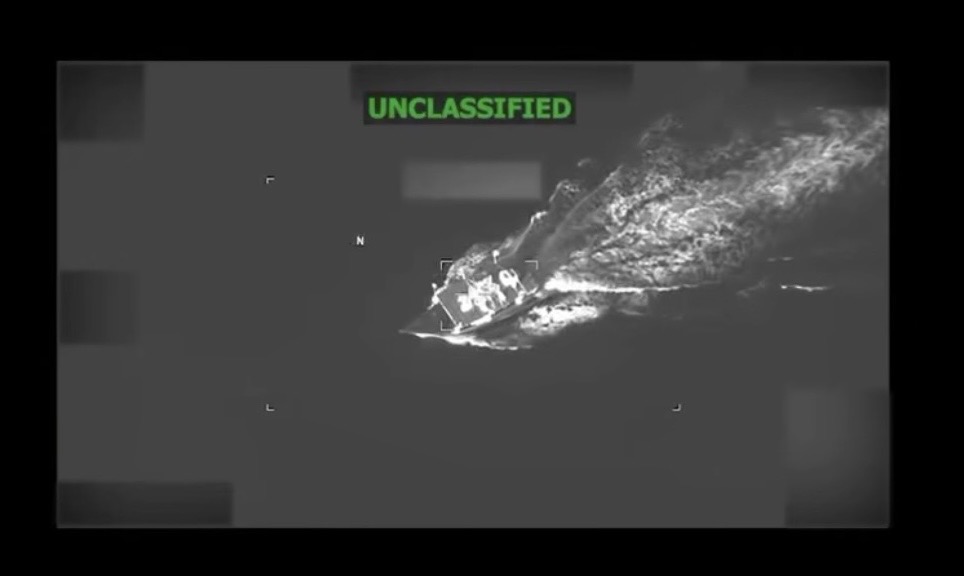
    Weeks after a temporary two-week ceasefire between the United States and Iran that kept the critical Strait of Hormuz partially open, a cargo vessel waits off the coast of Oman to traverse the chokepoint. But this image of uncertainty is far from an isolated incident: geopolitical power struggles are rapidly unraveling the decades-old rules-based order that has kept global maritime trade secure and predictable, analysts warn. The warning comes after a sudden policy proposal from Indonesia that sent shockwaves through global shipping and insurance markets last week. Indoneisan Finance Minister Purbaya Yudhi Sadewa suggested imposing transit tolls on commercial vessels passing through the Strait of Malacca, a key global trade chokepoint, explicitly drawing inspiration from recent Iranian actions in the Strait of Hormuz. While Jakarta quickly walked back the controversial suggestion, industry analysts say it exposed a growing, dangerous shift: the once-stable system of open maritime navigation is becoming increasingly risky, costly and overtly politicized. “We have not seen the oceans this unsettled and dangerous since nations first came together to agree on shared rules for maritime navigation,” said Elisabeth Braw, a senior fellow at the Atlantic Council. For centuries, maritime shipping carried inherent risks, from piracy to rogue attacks. But in the decades following World War II, the international community built a comprehensive framework of treaties and agreements designed to guarantee open, safe passage for commercial vessels across global waterways. The results have been transformative: the World Trade Organization reports that global trade grew from roughly $60 billion in the 1950s to more than $25 trillion last year, with 80 percent of all global trade by volume moving across the world’s oceans. Today, however, experts agree that actions from major global powers including the United States, Iran, Russia and China are systematically undermining the rules that made this growth possible. The most high-profile flashpoint right now is the Strait of Hormuz, the narrow chokepoint through which roughly a fifth of global oil supplies pass. Starting in March, Iran restricted passage for dozens of vessels after joint strikes by the U.S. and Israel on Iranian targets. On April 13, the U.S. imposed a full maritime blockade on Iranian vessels and ports, and has since seized Iranian tankers near the strait and detained other vessels across the Indo-Pacific that it accuses of carrying sanctioned Iranian crude. In response, Iran has seized unauthorized vessels attempting to transit the strait and opened fire on multiple commercial ships passing through the waterway. These escalating tit-for-tat actions have worsened the ongoing global energy crisis, pushing oil and natural gas prices to multi-year highs. “Even without a full closure of the strait, requirements for transit approval and constant political pressure create massive cost increases and widespread uncertainty,” said Jack Kennedy, senior analyst at S&P Global. Kennedy pointed to a recent incident off the coast of Oman, where a container ship was fired on by an Iranian military patrol boat, leaving the vessel’s bridge damaged. He described the attack as “calculated use of force to demonstrate control without shutting down all traffic entirely,” a tactic that creates uncertainty across the entire shipping industry. Tensions are now spreading to other critical maritime infrastructure, including the Panama Canal. Earlier this week, the U.S. and multiple South American and Caribbean nations accused China of using “targeted economic coercion” against Panamanian-flagged vessels, claiming Beijing is detaining Panamanian ships in its ports as part of a broader effort to politicize maritime trade and undermine regional sovereignty. China has forcefully rejected the accusations, calling the U.S. claims hypocritical. A spokesperson for China’s Ministry of Foreign Affairs noted that the U.S. occupied the Panama Canal for decades and repeatedly violated Panama’s sovereignty, pointing to a long history of American interference in the region. The latest dispute comes after Panama’s Supreme Court canceled a concession held by a Hong Kong-based firm to operate two major ports along the canal, a move widely viewed as the result of U.S. pressure to roll back Chinese influence around the strategic waterway. Experts note that the vast majority of global maritime trade still operates within the existing legal framework, but the number of high-profile political exceptions is growing at an alarming rate. In recent years, maritime disruptions have become increasingly strategic and organized. Russian control of large swathes of the Black Sea during its full-scale invasion of Ukraine triggered global food shortages by blocking grain exports. In the South China Sea, China has been repeatedly accused of intimidating commercial vessels to enforce its disputed territorial claims, allegations Beijing has repeatedly denied. “Maritime action has always been a tool to exert pressure on an adversary’s economy and military. What has changed is the scale: the volume of container trade and the size of the global fleet mean disruptions ripple across the entire global economy far faster than ever before,” explained Jean-Paul Rodrigue, a maritime trade expert at Texas A&M University. Non-state actors have also amplified risk in global waterways. Houthi attacks on commercial shipping in the Red Sea have forced major shipping lines to reroute vessels around the Cape of Good Hope, adding thousands of miles of extra travel and billions in extra costs. The biggest long-term risk, analysts agree, is the precedent being set by increasingly frequent violations of the existing rules. The cumulative effect of these developments is a clear shift away from predictable, rules-based navigation toward a system where access, costs and safety are increasingly determined by power, influence and political interests. Non-state groups have also exploited gaps in international enforcement: the International Maritime Bureau’s latest report shows global piracy incidents have already reached their highest level in five years this year. These geopolitical tensions translate directly to tangible costs for global consumers. Vessel rerouting increases fuel consumption and transit times, pushing up operating costs for shipping lines. Insurance premiums and risk surcharges have skyrocketed in high-tension areas, and even short detentions or inspections can create cascading delays across global supply chains. As a result, shipping lines are increasingly reconsidering their routes, flag registrations and port calls to minimize political exposure. “The biggest risk is the precedent that emerges when multiple nations test boundaries through selective enforcement, new permitting requirements or tolls in international straits. When that becomes normalized, outcomes depend entirely on power dynamics and bilateral negotiations, not shared rules,” Kennedy said.

  • Two in custody after 3 trucks owned by Chinese contractors were allegedly set ablaze

    Two in custody after 3 trucks owned by Chinese contractors were allegedly set ablaze

    A criminal arson attack targeting three vehicles owned by Chinese construction contractors at Dominica’s new international airport building site in Wesley has sparked an official investigation, with two people currently in custody assisting law enforcement with inquiries, the country’s Minister for National Security Rayburn Blackmoore has confirmed. The revelation came during a live public interview on DBS Radio on Thursday morning, where the minister offered new details on the incident that unfolded earlier this week.

    When asked about the potential motive behind the attack, Blackmoore declined to speculate, noting that all lines of inquiry remain in the hands of investigating police officers. “I cannot speak as to the motive of whoever did that. That is for the police to investigate. But what I have been advised is that there are two people in custody assisting the police with this investigation,” he stated. Blackmoore emphasized that the top priority is holding all responsible parties accountable through the full, fair legal process, saying that those behind the attack should face the consequences of their actions behind bars at the Stockfarm prison.

    The minister was careful to draw a clear line between the criminal attackers and the broader communities of Wesley and Woodford Hill, stressing that the arson does not align with the long-standing cultural values and social norms of Dominica or the behavior of local residents in the affected areas. He went on to highlight that local residents from both communities have repeatedly shown openness and support for the airport project and the workers employed on it. Instead of generic condemnation, Blackmoore called for clear, honest labeling of the incident for what it is: a criminal act with no broader popular backing.

    Far from being an isolated issue targeting only the Chinese contracting firms working on the project — identified as CR5 and MMC — Blackmoore framed the attack as an offence against every citizen of Dominica. “This is certainly not an act against the Chinese contracting team, CR5 or MMC, this is a criminal act against you Curtis, against me, against Dominica, against us, perpetrated by criminal vagabond elements who must be pursued in the highest degree of intensity by the police,” he said.

    Blackmoore also reflected on the transformative significance of the international airport project, which he noted is a long-awaited infrastructure development that Dominicans have anticipated for decades. He reiterated the long-standing friendly ties between Dominica and the People’s Republic of China, pointing out that China has stood alongside the Caribbean nation during its most challenging moments. Chinese nationals residing in Dominica are full, valued members of the country’s social fabric, he added.

    To advance the investigation, Blackmoore called on all local residents to collaborate actively with law enforcement. “Let us make them feel welcome and let us together make sure that we do everything possible to assist the police to identify these vagabonds, these criminals,” he urged.

  • US Southern Command praises St Vincent and the Grenadines after 435kg cocaine seizure

    US Southern Command praises St Vincent and the Grenadines after 435kg cocaine seizure

    A recent coordinated maritime security operation targeting illicit drug trafficking in the Caribbean has yielded one of the region’s significant recent drug seizures, with authorities from Saint Vincent and the Grenadines taking more than 435 kilograms of cocaine into custody and arresting two people allegedly connected to the shipment, the U.S. Southern Command (SOUTHCOM) has confirmed. In an official briefing on the operation, SOUTHCOM outlined that the two suspects were detained after their private yacht was intercepted when it entered the territorial waters of Saint Vincent and the Grenadines while carrying the large haul of illegal narcotics. Both detainees have already been formally charged with criminal offenses linked to the smuggling attempt, according to the command’s statement. This high-impact seizure is not an isolated action, but rather part of a years-long coordinated regional security framework centered on the Caribbean Basin Security Initiative (CBSI), a cooperative program launched to deepen security ties between the United States and Caribbean island nations to dismantle transnational organized criminal networks operating in the region. Since 2010, SOUTHCOM has partnered with law enforcement and security agencies across the Caribbean to build local capacity to disrupt all forms of illicit trafficking, from narcotics to weapons and human smuggling, by sharing intelligence, providing training, and supporting operational coordination. The successful interception also underscores the ongoing collective work of the Americas Counter Cartel Coalition, a broader Western Hemisphere partnership that unites nations to address shared security threats including large-scale narcotics trafficking, organized cartel activity, and cross-border criminal activity that undermines stability across the Americas. At this stage, senior officials have not disclosed additional details about the identities of the two suspects, nor have they released information about the origin of the cocaine or its intended final destination, to protect ongoing investigative work related to the case.

  • War with Iran enters third month as UN chief warns of deepening global impact

    War with Iran enters third month as UN chief warns of deepening global impact

    As the conflict between the United States and Iran enters its third month, United Nations Secretary-General António Guterres has issued a stark warning about the accelerating, far-reaching global economic fallout from the fighting, even as a fragile, currently holding ceasefire hangs over the region. The conflict, which first erupted in February 2026, has severely disrupted shipping activity through the Strait of Hormuz and damaged critical regional energy infrastructure, triggering dramatic spikes in global energy prices and crippling oil production across the Middle East. In press remarks to reporters outside UN Headquarters in New York, Guterres emphasized that despite the temporary pause in active combat, the overall situation remains dangerously unstable.

    “I am deeply concerned about the curtailment of navigational rights and freedoms in the area of the Strait of Hormuz,” Guterres stated during the press briefing. The strategic waterway, a critical global trade chokepoint, carries approximately 20 percent of the world’s daily oil shipments, alongside large volumes of fertilizers and other essential commodities that underpin global food and manufacturing systems. Tensions between Washington and Tehran over control of and access to the strait have turned shipping disruptions into a systemic crisis, with ripple effects spreading through global energy, transportation, manufacturing, and food supply chains, Guterres explained.

    The UN chief stressed that the economic pain from the conflict is already being felt in every corner of the globe. “As with every conflict, the whole of humanity is paying the price — even if a few are reaping huge profits. The pain will be felt for a long time to come,” he added. Small island developing states in the Caribbean, including Saint Kitts and Nevis and The Bahamas, are already grappling with the fallout, as skyrocketing gasoline prices have placed unprecedented financial strain on working households and small businesses alike.

    To underscore the scope of the risk, Guterres outlined three distinct projected scenarios for the global economy based on how long the strait disruptions persist, noting that the negative impacts grow exponentially rather than gradually with time. In the most optimistic scenario, where the conflict ends immediately and the strait reopens to full traffic, global supply chains will still require months to fully recover. This would push global economic growth down from the projected 3.4 percent to 3.1 percent, while inflation would climb from 3.4 percent to 4.4 percent. Global merchandise trade growth would shrink from 4.7 percent recorded last year to just 2 percent, he projected, adding that the global economy, still recovering from the aftershocks of the COVID-19 pandemic and the ongoing war in Ukraine, would face further prolonged economic distress.

    In the second scenario, where shipping disruptions continue through the middle of 2026, global growth would drop to 2.5 percent and inflation would rise to 5.4 percent. This outcome would push an estimated 32 million additional people into extreme poverty worldwide. Worsening fertilizer shortages would cut global crop yields, leaving another 45 million people facing acute food insecurity, and erase decades of progress in international development almost overnight, Guterres warned.

    The most severe scenario forecasts that disruptions continuing through the end of 2026 would push global inflation above 6 percent and slow global growth to just 2 percent. “Immense suffering takes hold, especially among the world’s most vulnerable populations,” Guterres said. “And we confront the spectre of a global recession — with dramatic impacts on people, on the economy, and on political and social stability.”

    Guterres stressed that the cumulative harm is not linear: “These consequences are not cumulative. They are exponential. The longer this vital artery is choked, the harder it will be to reverse the damage — and the higher the cost to humanity.” He added that developing nations will bear the overwhelming brunt of the crisis, as pre-existing heavy debt burdens leave them with limited fiscal space to respond to rising prices, resulting in widespread job losses, deepening poverty, and worsening hunger.

    In closing, Guterres issued a clear call to all involved parties to immediately restore safe unimpeded passage through the Strait of Hormuz in full compliance with UN Security Council Resolution 2817. He also urged the full reopening of the waterway as a critical step to stabilize global commodity markets and prevent further irreversible economic damage from the ongoing conflict.

  • Monitoring Washington’s commitments on IDPs and the repatriation of migrants in Haiti

    Monitoring Washington’s commitments on IDPs and the repatriation of migrants in Haiti

    In a high-stakes working meeting held on April 30, 2029, Haiti’s Minister of Planning and External Cooperation Sandra Paulemon sat down with Grégoire Goodstein, the head of the International Organization for Migration (IOM) Mission in Haiti, to push forward with follow-up actions on commitments forged during earlier high-level talks between Paulemon and IOM Director General Amy E. Pope in Washington D.C.

    The central focus of this latest gathering was advancing existing and emerging programs tied to two of Haiti’s most pressing humanitarian challenges: managing the country’s growing population of internally displaced persons (IDPs) and addressing the steady flow of forcibly repatriated Haitian migrants who have been in irregular migration situations abroad. Participants zeroed in on a suite of priority initiatives, from reinforcing national IDP and migrant registration frameworks and boosting systematic monitoring of vulnerable affected populations to unlocking long-term sustainable solutions that cover safe return, local resettlement, and community integration for displaced groups.

    The talks delivered tangible progress on concrete strategic frameworks designed to upgrade Haiti’s capacity to receive returning migrants, formalize a coordinated institutional presence across affected regions, and deliver targeted support to host local communities that bear the brunt of increased population inflows. Stakeholders are currently finalizing detailed actions to advance the socio-economic reintegration of returnees and displaced people, with a particular focus on developing tailored programming for at-risk youth, a group disproportionately impacted by Haiti’s ongoing mobility and instability crises.

    Minister Paulemon used the meeting to reaffirm the Haitian government’s core vision: transforming migration from a source of strain into a catalyst for national development. To deliver on this goal, she outlined plans to activate targeted mechanisms to mobilize Haiti’s large global diaspora, including through expanded support for local entrepreneurship, targeted growth for small and medium-sized enterprises (SMEs), and the formalization of new economic initiatives across key strategic sectors of the national economy.

    Paulemon also drew renewed attention to a longstanding systemic challenge: the fragmented nature of many international interventions in Haiti, which have undermined impact and misaligned with national priorities. She called for far stronger coordination and clearer harmonization of interventions across all international partner organizations, anchored explicitly to Haiti’s own national development and humanitarian goals. To operationalize this improved alignment, she stressed the urgent need for a 6 to 12-month collective action or partnership framework, with clearly mapped priority intervention areas and specific, measurable performance indicators to track progress.

    In response, Goodstein commended the significant progress already advanced under Minister Paulemon’s leadership, as well as her unwavering commitment to improving coordination of international humanitarian and development aid across Haiti. He explicitly reaffirmed that the Haitian government’s national priorities are the core guiding imperatives for all IOM programming and action in the country.

    Goodstein further confirmed IOM’s ongoing commitment to aligning all its interventions in Haiti with the government’s strategic priorities, and reiterated the organization’s intent to maintain close collaborative partnership with Haitian authorities. The shared end goal, he emphasized, is to deliver concrete, sustainable, and measurable outcomes that directly improve the lives of the Haitian population.