分类: world

  • Suriname en Pakistan praten over rijst, innovatie en Caricom-markt

    Suriname en Pakistan praten over rijst, innovatie en Caricom-markt

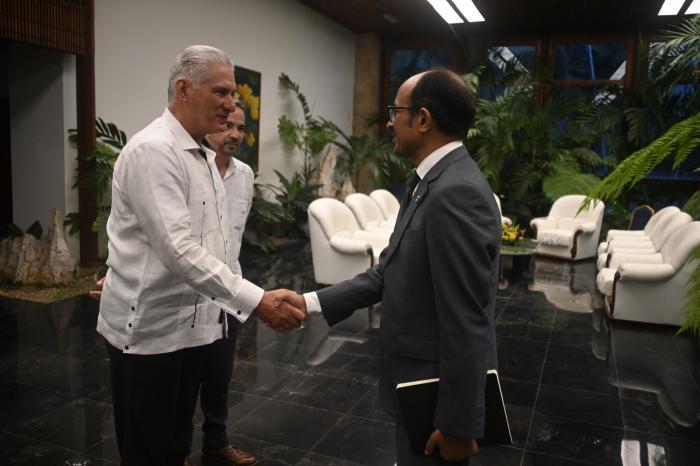
    On 30 April, Suriname’s Minister of Agriculture, Livestock and Fisheries (LVV) Mike Noersalim held a high-level meeting with Pakistani Ambassador to Suriname Murad Ashraf Janjua, where the two sides agreed to build a bilateral agricultural partnership centered on knowledge sharing and joint research to address common challenges facing their farming sectors.

    Both South American Suriname and South Asian Pakistan confront overlapping pressing issues in agriculture: the growing negative impacts of climate change on crop yields and farming stability, paired with a sharp decline in young people’s interest in pursuing careers in the agricultural sector. Recognizing these shared obstacles, the two governments have committed to collaborating on targeted, practical solutions, rather than working in isolation.

    A core focus of the new partnership will be basmati rice, a long-grain aromatic variety globally renowned for its quality and flavor. Pakistan has decades of advanced experience cultivating basmati rice, and holds globally recognized elite varieties of the crop. Currently, Suriname meets all domestic demand for basmati rice through imports, with no local commercial production of the grain. Under the new cooperation framework, the two sides will explore opportunities to launch local basmati cultivation in Suriname, drawing on Pakistani expertise.

    Knowledge sharing will also extend to high-quality seed development, a critical foundation for stable, high-yield agriculture. Pakistan’s agricultural research institutions will partner with Suriname’s Anne van Dijk Rice Research Center Nickerie (Adron) to transfer technical know-how for improved basmati seed production, helping Suriname build local capacity to develop its own high-quality basmati seed stock.

    Organic agriculture is another key area for mutual learning. Pakistan has placed significant strategic priority on expanding organic food production, which is grown without synthetic pesticides or chemical fertilizers, and is widely seen as a healthier, more environmentally sustainable alternative to conventional farming. For its part, Suriname already produces 100% organic upland rice, a disease-resistant variety that has been cultivated locally for decades. The Surinamese government recently launched an initiative to scale up production of this organic rice to meet growing global demand for organic agricultural goods, and the two sides exchanged insights on organic sector development during the meeting.

    Beyond technical agricultural cooperation, the talks also explored broader economic opportunities within the framework of the Caribbean Community (Caricom), Suriname’s regional trade bloc. The two sides discussed the potential for Pakistani private companies to enter the Caricom market through public-private partnership (PPP) models with local Surinamese businesses, opening new trade and investment pathways for both sides.

    Following the meeting, Minister Noersalim highlighted that the discussion laid a clear foundation for future collaboration, noting that both sides exchanged open insights on their respective sector experiences and priorities. While market access opportunities within Caricom were explored, Noersalim emphasized that knowledge transfer and joint agricultural research remain the central pillars of the new bilateral partnership.

    This cooperation marks a new chapter in agricultural diplomacy between the two nations, bringing together complementary strengths to address shared global challenges in food security and sustainable farming.

  • Princess Sarah Zeid of Jordan makes a humanitarian visit to Haiti

    Princess Sarah Zeid of Jordan makes a humanitarian visit to Haiti

    In a high-stakes visit focused on addressing Haiti’s deepening humanitarian crisis, Princess Sarah Zeid of Jordan — Senior Special Advisor to the United Nations World Food Programme (WFP) — traveled to the Caribbean nation for an official mission in late April 2026, holding a series of strategic meetings with top Haitian government officials and global development stakeholders.

    On April 29, the first full day of her trip, Haitian Prime Minister Alix Didier Fils-Aimé formally welcomed Princess Sarah Zeid, opening talks centered on the country’s pressing humanitarian needs. Fils-Aimé used the meeting to reaffirm his administration’s unwavering dedication to lifting living standards for millions of Haitian residents, even amid the extraordinary security, economic and social instability that has defined the nation’s recent landscape. During their conversation, the prime minister also outlined the emergency and long-term measures his government has rolled out to bolster protections for Haiti’s most marginalized groups, with a specific focus on women and children, who bear the brunt of the ongoing crisis.

    The visit also included a cordial, outcome-focused discussion between Princess Sarah Zeid and Haitian Foreign Minister Raina Forbin. The pair centered their dialogue on expanding and deepening institutional cooperation between the Haitian government and the WFP, with particular attention to improving maternal and child health outcomes in the country’s challenging humanitarian context. Joining the meeting were Nicole Boni Kouassi, United Nations Resident Coordinator in Haiti, and Wanja Kaaria, WFP’s Country Director for the nation. Forbin publicly praised Princess Sarah Zeid’s decades-long dedicated leadership in global humanitarian action, specifically calling out her work advancing maternal and neonatal health equity around the world. She also reaffirmed the Haitian government’s commitment to growing this strategic partnership to deliver tangible support to the country’s most vulnerable communities.

    Beyond government bilateral talks, Princess Sarah Zeid led a high-level strategic gathering at Port-au-Prince’s Karibe Hotel, which convened a cross-section of Haitian national leaders and international representatives united around three core goals: building lasting peace in Haiti, advancing inclusive development, strengthening protections for women and girls, and expanding support for survivors of gender-based violence. Attendees framed discussions around two central priorities: providing targeted resourcing and policy support to grassroots Haitian feminist organizations, and advancing the sustainable restoration of security and peace across the country.

    The Karibe Hotel meeting included a diverse roster of attendees, among them Marie Goretti Nduwayo, UN Women Representative to Haiti; Nicole Kouassi, who serves dual roles as UN Resident and Humanitarian Coordinator with the UN Integrated Office in Haiti (BINUH); Wanja Kaaria, WFP’s Haiti representative; Yuki Takemoto, UNAIDS Country Representative for Haiti; Stéphanie Smith, Haiti’s Minister of Tourism; and Pédrica Saint-Jean, Haiti’s Minister for the Status of Women and Women’s Rights. The gathering also included delegations from roughly 10 grassroots Haitian women’s and feminist organizations, ensuring local voices shaped the strategic conversations around the future of gender equity and peacebuilding in the country.

  • The Raid That Pulled a Guatemalan Teen from Captivity in Belize

    The Raid That Pulled a Guatemalan Teen from Captivity in Belize

    In a landmark cross-border law enforcement success, security forces in Belize have rescued a 14-year-old Guatemalan girl who was held captive for months after disappearing from her home region. The minor went missing from Guatemala’s northern Petén department in January 2026, before being located in southern Belize as part of the coordinated mission dubbed “Operation Safe Return”.

    On April 21, tactical teams from the Belize Police Department and the elite Belize Special Assignment Group (BSAG) launched a pre-dawn raid on a rural farm located just outside San Roman Village in Stann Creek District. It was there that officers located and safely extracted the kidnapped teen from captivity. Elton Bennett, Chief Executive Officer of Belize’s Ministry of Home Affairs, characterized the operation as a major victory for disciplined, intelligence-led policing, emphasizing that the successful outcome depended on avoiding hasty action.

    “Outstanding work was done at every step of this mission,” Bennett stated in a press briefing following the rescue. “Information was managed carefully, intelligence was verified thoroughly, and we refused to act prematurely. The BSAG team carried out deliberate, meticulous planning, built a full picture of the site through sustained surveillance, and mapped out every possible course of action before moving in. The fact that they were able to bring this child out safely speaks to their extraordinary training and professionalism.”

    Despite the successful rescue, the operation leaves one key objective unmet: the prime suspect, identified by police as Jose Gilberto Duarte, managed to evade capture during the raid, fleeing the property before officers secured the area. Law enforcement officers did recover a loaded firearm left behind by the fleeing suspect, but the manhunt remains ongoing.

    Bennett confirmed that Belizean security agencies are prioritizing the recapture of Duarte, deploying extra resources to track him down across the country and coordinating with Guatemalan border authorities to prevent him from fleeing across the shared border. Even with the suspect still at large, Bennett noted that the operation’s core goal — returning the teenage victim to safety — has been achieved, a outcome that offers a significant win for cross-border anti-kidnapping cooperation.

    “Our priority will always be the safety of the victim,” Bennett added. “We are very happy that this child is now free, and that is what matters most. We will not stop searching for the suspect, and we will do everything in our power to take him into custody and hold him accountable for his crimes.”

    This rescue highlights growing collaboration between Belize and Guatemala to combat cross-border human trafficking and kidnapping, criminal activities that disproportionately affect vulnerable communities in the Petén region, which shares a long, porous border with Belize.

  • Dominican Republic secures EU support for drug prevention initiatives

    Dominican Republic secures EU support for drug prevention initiatives

    PUNTA CANA — The Dominican Republic’s National Drug Council (CND) has solidified a landmark inter-institutional cooperation agreement with the European Union through the COPOLAD III program, opening a new chapter of coordinated action to advance evidence-based drug policy across the Caribbean and Latin America. Backed by targeted European technical expertise and dedicated financial investment, the partnership is designed to strengthen regional and national capacity to address evolving drug-related challenges.

    The formal signing ceremony took place alongside the fourth annual gathering of the COPOLAD III initiative, a high-profile international forum that brought together more than 170 drug policy specialists and official delegates from over 60 nations spanning Latin America, the Caribbean and the European continent. The agreement was signed by two key leaders: Alejandro de Jesús Abreu, who serves both as president of the CND and co-president of the EU-CELAC Mechanism, and Olivier Luyckx, head of country programs for Latin America and the Caribbean at the European Commission’s Directorate-General for International Partnerships. A broad delegation of senior Dominican diplomatic and institutional officials also participated in the event, emphasizing that the collaboration marks a critical milestone for collective regional action on drug policy.

    Under the new framework, the partnership will roll out three high-priority initiatives tailored to meet the Dominican Republic’s specific needs while creating a replicable model for other regional nations. First, the alliance will conduct a nationwide, nationally representative survey of drug use among university students, generating actionable data to inform future policy design and ensure all regulatory and intervention efforts are rooted in real-world evidence. Second, the partnership will invest in expanding and strengthening the Dominican Republic’s Drug Policy Training School, which equips national and local decision-makers with the specialized skills and knowledge needed to implement effective drug policy. Third, the initiative will roll out an innovative social support program called the “Wings of Transformation” strategy, which focuses on providing critical resources and support to children whose parents are incarcerated on drug-related offenses. The program will launch as a pilot project at the Baní Women’s Penitentiary Center, with plans to scale the model across the entire country if the initial trial proves successful. Dominican officials noted that the partnership not only advances the country’s domestic drug policy goals but also reinforces its position as a regional leader in collaborative, holistic approaches to addressing drug challenges.

  • VS en Latijns-Amerika hekelen Chinese druk op Panama

    VS en Latijns-Amerika hekelen Chinese druk op Panama

    A growing geopolitical standoff over control of key Panama Canal ports has drawn in six nations, with Bolivia, Costa Rica, Guyana, Paraguay, Trinidad and Tobago, and the United States issuing a joint statement backing Panama and criticizing what they call unfair Chinese economic retaliation. The conflict traces back to a late January ruling from Panama’s Supreme Court, which voided decades-old contracts granting Hong Kong-based conglomerate CK Hutchison rights to manage the strategic Balboa and Cristobal port terminals along the canal, ruling the agreements unconstitutional.

    In the joint statement released Tuesday, the six countries allege that in response to the court’s independent ruling, China has imposed targeted economic pressure on vessels flying the Panamanian flag. Data from the U.S. Federal Maritime Commission (FMC) confirms that China detained nearly 70 Panamanian-flagged ships in March alone, a volume far exceeding typical inspection levels.

    “These actions, coming after the independent Panamanian Supreme Court’s decision on the Balboa and Cristobal terminals, represent a clear effort to politicize global maritime trade and violate the national sovereignty of countries in our region,” the joint statement reads. U.S. Secretary of State Marco Rubio separately emphasized Washington’s position in a post on platform X, noting that the U.S. is “deeply concerned” by Chinese pressure on Panama. “We stand in solidarity with Panama. Any attempt to undermine Panama’s sovereignty is a threat to all of us,” Rubio stated.

    China has already pushed back against the criticism, accusing the U.S. of bullying and attempting to tarnish its reputation across Latin America. The Chinese government has also publicly labeled the Panamanian Supreme Court’s ruling as “absurd” and “disgraceful”.

    FMC Chair Laura DiBella warned last month that China’s detention of Panamanian-flagged vessels carries significant consequences for both Panama and the United States. “These heightened inspections appear specifically designed to punish Panama following the termination of Hutchison’s port operations,” DiBella explained. She added that because a large share of U.S. container trade moves on vessels registered under the Panamanian flag, the Chinese actions could carry major commercial and strategic ripple effects for the U.S. shipping sector.

    The voiding of CK Hutchison’s contracts came amid heightened global attention to the Panama Canal, driven by former U.S. President Donald Trump’s repeated threats to take control of the strategic waterway during his 2025 presidential campaign. Trump made the 80-kilometer canal a core policy priority for his second term, claiming in his January 2025 inaugural address that China controlled the canal and promising the U.S. would “take back” control.

    Beyond pressure on Panamanian-flagged shipping, U.S. officials confirm China has also retaliated against global shipping giants Maersk and Mediterranean Shipping Company (MSC), the two firms awarded temporary operating contracts for the Balboa and Cristobal terminals after CK Hutchison was removed from the project. The FMC reported in March that both companies were summoned for “high-level talks” by China’s Ministry of Transport, and Chinese state-owned shipping giant COSCO has already suspended all operations at the Balboa terminal in response to the change.

    CK Hutchison, through its local subsidiary Panama Ports Company, has launched an international arbitration case against the Panamanian government, seeking more than $2 billion in damages for the canceled contracts.

    Analysts frame the dispute as part of a broader global trend of nations weaponizing maritime shipping for geopolitical gain. David Smith, an associate professor at the University of Sydney’s United States Studies Centre, calls the Panama Canal conflict the latest example of this shift, which has already played out in hotspots from the Strait of Hormuz to the Red Sea.

    “We have always assumed the global economy runs on freely moving container ships,” Smith told Al Jazeera. “Now, we are seeing that states recognize how vulnerable maritime supply chains are. They understand they can disrupt shipping routes when it serves their political goals. It should come as no surprise if ships and global shipping more broadly become pawns in international great power politics going forward.”

  • High Commissioner Croney represents Grenada at  Singapore Maritime Week 2026

    High Commissioner Croney represents Grenada at  Singapore Maritime Week 2026

    The 20th iteration of Singapore Maritime Week (SMW) 2026 closed its doors at the Suntec Singapore Convention and Exhibition Centre after a five-day run from April 20 to 24, drawing more than 20,000 stakeholders from nearly 80 countries and regions to confront the most critical issues facing the global maritime sector. Representing the Caribbean island nation of Grenada at the landmark gathering was Her Excellency Rachér Croney, Grenada’s High Commissioner to the United Kingdom.

    Organized under the central theme “Actions Meet Ambition”, this year’s anniversary edition of SMW brought together cabinet ministers, senior government officials, diplomatic representatives, C-suite industry leaders and veteran maritime professionals to unpack pressing challenges and untapped opportunities spanning decarbonization, digital transformation, geopolitical supply chain resilience and workforce talent development.

    The official opening ceremony featured keynote addresses from two senior Singaporean leaders: Hon. Jeffrey Siow, Singapore’s Acting Minister for Transport and Senior Minister of State for Finance, and Gan Kim Yong, Deputy Prime Minister and Minister for Trade and Industry. In his remarks, Siow highlighted the urgent need to bolster cross-border digital connectivity across the maritime ecosystem, outlined the game-changing potential of artificial intelligence to reshape industry operations, and outlined core global priorities including accelerating decarbonization, fostering disruptive innovation, and deepening cross-stakeholder collaboration. To advance digital integration, Siow formally announced the launch of OCEANS-X, a groundbreaking new digital platform built to unify fragmented maritime systems and data pools across public and private stakeholders worldwide. For his part, Deputy Prime Minister Gan emphasized the growing need to rebuild trust and strengthen systemic resilience in an increasingly fragmented geopolitical landscape, calling on all nations to deepen collaborative action and uphold the principles of the United Nations Convention on the Law of the Sea (UNCLOS) to ensure no country or seafarer is left behind in the global maritime transition.

    Beyond official plenary sessions, High Commissioner Croney held a series of high-level bilateral engagements on the sidelines of the summit. In a one-on-one meeting with Acting Minister Siow, the two representatives explored a wide range of mutually beneficial priorities, including maritime policy development frameworks, bilateral technical cooperation agreements, targeted capacity-building initiatives, and the potential to expand commercial shipping routes connecting to Grenada. The Grenadian High Commission noted it is eager to build on these early discussions, leveraging Singapore’s global reputation as a leading maritime hub and home to one of the world’s busiest container ports to turn ambitious goals into tangible progress for Grenada.

    Croney also held productive talks with Karen Tan, Singapore’s Ambassador and Plenipotentiary Representative to the Caribbean Community (Caricom), focused on expanding the bilateral relationship between Grenada and Singapore as fellow member states of the Commonwealth. Dialogue centered on advancing capacity building, cross-border technology transfer, and technical cooperation across four core sectors: transportation, marine science and management, public administration, and foreign affairs. Both sides expressed enthusiasm for expanding training opportunities through the Singapore Cooperation Programme, as well as structured technical exchanges for mid- and senior-level Grenadian government officials, as the two governments work to deepen long-term collaborative ties.

    As a core part of her program, High Commissioner Croney took part in a dedicated expert session focused on advancing global maritime decarbonization, which brought together top industry leaders to navigate the complex challenges of the global energy transition amid ongoing geopolitical uncertainty and shifting international regulatory frameworks. The session emphasized the so-called “energy trilemma” of balancing three core priorities: energy affordability, widespread accessibility, and long-term environmental sustainability, while also drawing attention to growing concerns around energy resilience and national energy security. Participants highlighted that ongoing innovation in alternative fuels — including the adoption of methanol, ammonia and liquefied natural gas (LNG) as lower-carbon replacements for traditional heavy fuel oil — marks meaningful progress toward meeting the International Maritime Organization’s (IMO) global greenhouse gas strategy, which targets net-zero maritime emissions by 2050.

    For climate-vulnerable Small Island Developing States (SIDS) like Grenada, progress on maritime decarbonization is far more than an industry goal — it is an existential priority. Croney emphasized that Grenada remains fully committed to partnering with pioneering nations and organizations leading the energy transition, and welcomes the opportunity to collaborate with global leaders to advance shared climate goals.

    During the accompanying EXPO@SMW industry exhibition, Croney explored the latest cutting-edge technologies, sustainable infrastructure solutions and transformative innovations shaping the future of global trade and maritime connectivity. The exhibition serves as a global showcase for progress across four key pillars of maritime transformation: innovation, digitalization, decarbonization and talent development. Croney specifically highlighted strong interest in the newly launched OCEANS-X digital platform, noting that advanced cross-border maritime digital connectivity offered by the system could deliver outsized benefits to small island developing states like Grenada. The High Commission added that it looks forward to exploring opportunities for technology transfer and knowledge sharing of global best practices in partnership with the Maritime and Port Authority of Singapore going forward.

    As both a Small Island Developing State and a self-identified “Big Ocean State,” Grenada’s high-level participation in SMW 2026 underscores the nation’s recognition that the future of its blue economy is deeply interconnected with global maritime trends and collective action. It also demonstrates Grenada’s commitment to active diplomatic engagement in multilateral maritime forums, and to building the strategic partnerships needed to deliver a resilient, sustainable and digitally connected maritime future for the island nation.

    In closing remarks following the event, High Commissioner Croney noted: “SMW 2026 was an extraordinary platform for Grenada to engage at the highest levels on the issues that matter most to our maritime future, from decarbonisation to digital connectivity and bilateral cooperation with Singapore. We leave with strengthened relationships and a clear pathway to turning ambition into action for Grenada, Carriacou and Petite Martinique.”

    Organized annually by the Maritime and Port Authority of Singapore, Singapore Maritime Week brings the global maritime community together for a full week of flagship conferences, policy dialogues, industry exhibitions and networking events. The 2026 anniversary edition marks two decades of pioneering innovation and cross-border partnership in the global maritime space.

  • Río Hondo Bridge to Close for Four Months

    Río Hondo Bridge to Close for Four Months

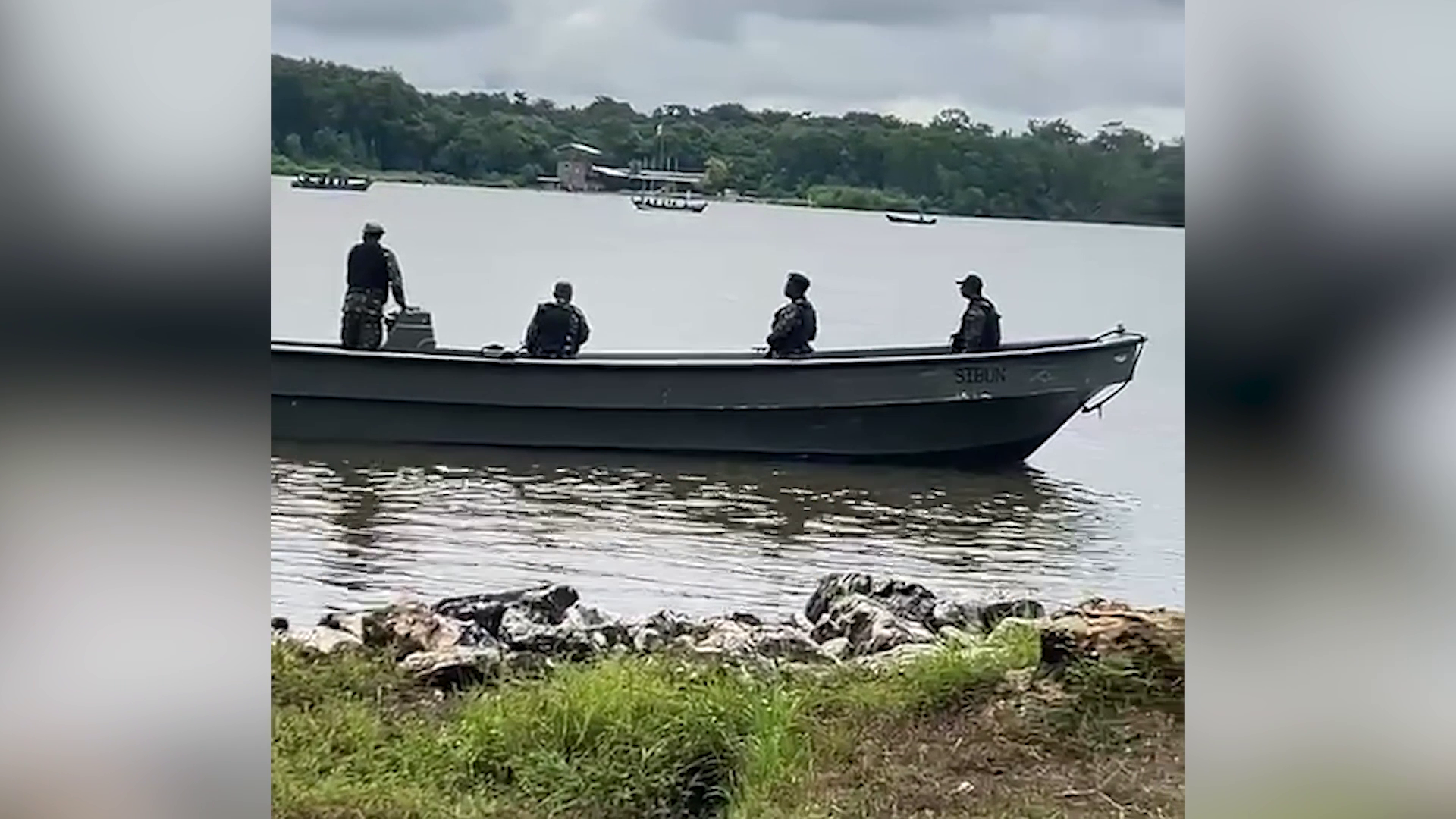
    Cross-border travel and commerce between Belize and Mexico are set to face temporary disruption starting next week, as one of the key connecting border bridges closes for a comprehensive four-month reconstruction project. The Río Hondo International Bridge, which links Mexico’s Subteniente López community to the Corozal Free Zone on Belize’s side of the border, will be completely shut down to all traffic from May 1 through August 31, according to official announcements.

    José Kelly, consul for Belize in Chetumal, has issued a public advisory urging all Belizean residents and travelers who regularly rely on the Río Hondo crossing to revise their travel itineraries and make alternative arrangements well in advance. The early planning step, Kelly emphasized, is critical to avoiding unnecessary travel delays and unexpected disruption to personal or business trips across the border.

    In a statement confirming the project timeline, Kelly noted that pre-construction preparations for the reconstruction work have advanced on schedule, with all contractors and logistics aligned to meet the four-month completion deadline. To minimize the impact of the closure on cross-border activity, all immigration and customs services that previously operated at Río Hondo have already been relocated to the nearby Chac-Temal International Bridge, the alternate border crossing. At the new location, officials will continue to deliver all standard services, including processing applications for Regional Visitor Cards, conducting vehicle inspections, and carrying out mandatory border surveillance to maintain security.

    To support the shift in operations, Mexico’s National Guard has been deployed to the alternate crossing site to manage increased traffic volumes, keep traffic moving smoothly, and uphold the stability of border operations throughout the reconstruction period. The upcoming construction work will deliver much-needed upgrades to key infrastructure on the aging bridge, including improvements to the bridge’s steel superstructure, replacement of the existing deck slab, refurbishment of pedestrian walkways and retaining walls, and updates to outdated traffic signage. Once completed, the renovated bridge will be able to support safer, more efficient cross-border travel and trade for years to come.

  • Extreme Heat Is Rewriting Food Security

    Extreme Heat Is Rewriting Food Security

    As climate change accelerates global temperature rises and a new El Niño event approaches to strain underprepared food systems, international experts are sounding the alarm: extreme heat has already pushed global food production past critical thermal thresholds, and urgent action to build long-term heat readiness is required to avoid widespread shortages and harm.

    Every component of the global food system – from staple grain crops to livestock to wild fisheries – has a specific thermal limit: a temperature point where heat stops being benign weather and becomes destructive. For most key agricultural species, this critical threshold arrives far earlier than public awareness suggests, with most growth and reproductive processes failing between 25°C and 35°C during sensitive growth stages such as flowering. Today, increasingly frequent heatwaves pushing temperatures into the mid-40s°C across the world’s major breadbasket regions have already pushed these systems past their safe limits. The consequences stretch across every link of the food supply chain: shrunken crop yields, weakened and dying livestock, stressed collapsing fisheries, elevated wildfire risk, and dangerous working conditions that threaten the farmworkers who form the foundation of global food production.

    A joint report from the Food and Agriculture Organization (FAO) and the World Meteorological Organization (WMO), published April 22, quantifies the already tangible damage of rising heat to food systems. Documented extreme heat events have pushed beef cattle mortality as high as 24% in affected regions. Marine heatwaves have caused an estimated $6.6 billion in lost fisheries output. Projections show the situation will worsen as warming continues: for every 1°C of global temperature increase, average maize and wheat yields are expected to decline by 4 to 10%.

    Adapting global food production to a hotter future requires sustained long-term investment in agricultural science, innovation, and infrastructure to match growing global food demand. This includes developing and deploying more heat-tolerant crop varieties and livestock breeds, updating conventional farming practices to account for rising temperatures, and making deliberate strategic choices about what crops and livestock can be sustainably raised in changing climates. But experts emphasize preparation cannot wait for mid-century or end-of-century targets – action is needed immediately to protect coming growing seasons.

    With more intense heat forecast for the next several years and a new El Niño event on track to test systems that have not been updated to handle extreme heat, the top priority is shifting the global approach from reactive crisis response to proactive heat readiness. This transformation begins with accessible, actionable early warning systems and targeted practical interventions to help farmers protect their harvests, maintain stable supply chains, and safeguard their own health.

    The United Nations’ Early Warnings for All initiative, coordinated by WMO with support from FAO and other partners, is built on the core idea that advance warning gives farmers time to protect their crops before heat causes irreversible loss. But early warnings only deliver value when they translate raw climate and weather data into specific, usable guidance for local producers, which requires robust observational infrastructure and localized modeling.

    In Cambodia, the FAO-supported PEARL project, funded by the Green Climate Fund, has upgraded existing weather stations and installed new monitoring equipment to feed data to a mobile application that delivers crop-specific, region-tailored heat forecasts and guidance. When forecasts predict temperatures exceeding 38°C, the app sends targeted alerts recommending practical interventions: maintaining soil moisture through mulching, adding shade for sensitive vegetable crops, delaying rice sowing, and shifting irrigation to the cooler early morning and evening hours.

    This guidance is part of a growing toolkit of low-cost, evidence-based interventions that cut producer losses before extreme heat escalates into a full-blown crisis. Other proven measures include shading crops with protective cloth or dual-purpose solar panels, expanding on-farm water storage capacity, installing low-cost cooling misters for livestock and high-value crops, and adjusting planting windows to avoid the hottest peak growth periods. For cattle, which generate excess metabolic heat during digestion, shifting feeding to cooler overnight hours reduces heat stress. Poultry, which lack the ability to sweat, require consistent shade to avoid mortality; in regions where extreme heat has become the new normal, many producers are shifting from heat-sensitive cattle to more tolerant goats and sheep as a viable adaptation.

    Field trials in Pakistan demonstrate that these small adjustments deliver strong returns on investment. A FAO-GCF project tested a combined package of heat- and drought-tolerant cotton and wheat varieties paired with mulching and adjusted planting schedules over six growing seasons. The result: producers saw returns as high as $8 for every $1 invested in the adaptation package.

    Extreme heat does not only damage food while it is still growing – it also accelerates post-harvest spoilage, turning crop stress into direct income loss for smallholders and reduced nutritional access for consumers. An estimated 526 million tonnes of global food production – roughly 12% of total annual output – is lost or wasted each year due to lack of adequate cold storage. In Jamaica, a GCF-funded, FAO-supported adaptation project has positioned cold chain infrastructure as a core climate adaptation measure, rolling out solar-powered cold storage units that let smallholders keep produce fresh and marketable during extreme heat events.

    Even with cold chains and crop protection tools in place, the people who grow the world’s food remain at severe risk. Extreme heat is one of the deadliest workplace hazards for agricultural workers, causing acute dehydration, permanent kidney damage, chronic illness, and increased strain on already overburdened public health systems. More than one-third of the global workforce – around 1.2 billion people – face dangerous workplace heat exposure every year, and agriculture ranks among the hardest-hit economic sectors.

    Proven basic protections for workers are already being implemented alongside crop guidance in Cambodia, where heat advisories also include recommendations for producers to shift heavy labor to cooler hours of the day and guarantee access to clean drinking water, shade, and regular rest breaks. The World Health Organization (WHO) and WMO are calling for this scaled-up integrated approach across all agricultural regions: adjusted work-rest schedules, guaranteed access to shade and safe water, training for workers and supervisors to recognize early signs of heat illness, and integration of climate forecasts into routine workplace heat risk management.

    The tools and knowledge to prepare for increasing extreme heat already exist globally. The key gap holding back action is inadequate funding – far too little investment is allocated to agrifood system adaptation, and rural communities are often overlooked in climate planning that incorrectly frames extreme heat as primarily an urban problem. In 2023, just 4% of total global climate-related development finance went to agrifood system adaptation. Without a rapid increase in investment, early warnings will not reach the smallholder producers who need them most, agricultural extension services will remain underfunded, and basic protections for crops, livestock, and workers will remain out of reach for most vulnerable communities.

    Experts emphasize that advance preparation is far more cost-effective than absorbing repeated annual losses from extreme heat events. Proactive planning stabilizes food production and consumer prices in the near term, while also creating space for the larger scientific and structural transformations that global agriculture will need to adapt to long-term warming.

    This op-ed was contributed by Kaveh Zahedi, Assistant Director-General of the UN Food and Agriculture Organization and Director of FAO’s Office of Climate Change, Biodiversity and Environment, and Ko Barrett, Deputy Secretary-General of the World Meteorological Organization. “We don’t need a new playbook,” they write. “We need to use the one we already have. The FAO-WMO report lays out the risks of extreme heat. Now is the time to use that evidence to protect food systems and the people who sustain them.”

  • Dominica strengthens ties with France and Guadeloupe

    Dominica strengthens ties with France and Guadeloupe

    A landmark high-level diplomatic gathering bringing together senior officials from the Commonwealth of Dominica, the French Republic, and the French overseas region of Guadeloupe was recently held in Pointe-à-Pitre, Guadeloupe, with the core goal of advancing practical collaboration across multiple priority sectors of shared interest.

    The meeting gathered key regional leadership, including Thierry Devimeux, the Prefect of Guadeloupe, Marie Noelle Duris, France’s Ambassador to the Eastern Caribbean, alongside a senior delegation of government representatives from Dominica. The in-person discussions centered on deepening institutional cooperation across five critical domains: cross-border judicial coordination, customs clearance and enforcement operations, shared fire and emergency rescue response frameworks, maritime domain security, and collaborative immigration management.

    In a public statement shared to his official Facebook page following the talks, Dominican Prime Minister Roosevelt Skerrit reaffirmed his country’s longstanding commitment to building tangible, people-centered partnerships with both France and neighboring Guadeloupe. “Dominica deeply values its existing relationship with France and Guadeloupe as a close neighboring territory, and we remain fully committed to building practical partnerships that deliver direct benefits to our people,” Skerrit wrote. The Prime Minister also emphasized that targeted cross-regional cooperation is an essential tool for addressing transboundary challenges and unlocking shared development opportunities across the Eastern Caribbean.

    Dominican officials participating in the talks also made clear that the country prioritizes partnerships that generate measurable, on-the-ground outcomes for ordinary citizens on both sides of the border, laying the groundwork for formal agreements to be finalized in the coming months.

  • 287 nominations for Nobel Peace Prize — institute

    287 nominations for Nobel Peace Prize — institute

    OSLO, Norway — The Norwegian Nobel Institute made a key announcement Thursday, confirming that a total of 287 candidates have been put forward for the 2025 Nobel Peace Prize. Of these nominees, 208 are individual activists, leaders, and advocates, while 79 are formal organizations working across the globe to advance peace. Per longstanding institutional rules, the full list of nominees remains unpublished, with names sealed for 50 years to protect candidates and preserve the integrity of the selection process.

    While this year’s total nomination count falls short of the all-time record of 376 set in 2016, institute officials framed the figure as consistently high, a reflection of the widespread global movement to recognize peacebuilding work. “In an increasingly conflictual world, there is no lack of candidates whose principled commitment and innovative action points towards a brighter future,” the institute shared in its official statement announcing the final nomination count.

    Under Nobel Foundation statutes, nominator eligibility is restricted to specific groups: sitting national lawmakers and cabinet ministers, former Nobel Peace Prize laureates, sitting members of the Norwegian Nobel Committee, university professors of social sciences and history, and leaders of independent peace research institutes. While nominee identities are formally confidential, eligible nominators are permitted to publicly disclose the candidates they have put forward, leading to a steady trickle of confirmed names ahead of the October 9 winner announcement.

    Already, publicly disclosed nominees include Ukrainian President Volodymyr Zelensky, Swedish youth climate activist Greta Thunberg, and the International Criminal Court, one of multiple global institutions that have been put forward for the honor. Multiple eligible nominators have also confirmed they have put forward former U.S. President Donald Trump, who mounted a high-profile campaign for the 2024 prize, claiming his administration had made unprecedented efforts to end eight ongoing global conflicts.

    Trump was overlooked for the 2024 award, which went to Venezuelan opposition leader Maria Corina Machado, and he publicly expressed his frustration over the snub. In a surprising turn, Machado dedicated her award to Trump and formally presented him with her physical prize medal in January 2025. The Norwegian Nobel Peace Prize committee later clarified that the physical medal is a symbolic artifact, and the honor of the prize itself remains tied exclusively to the official selected laureate.

    Annual Nobel Peace Prize rules require all initial nominations to be submitted by the January 31 deadline. However, the institute confirmed that sitting committee members retain the right to add new candidates to the shortlist during their first post-deadline working meeting, which was held this year on February 26.