分类: world

  • Fire destroys historic buildings, businesses in Dominica’s capital

    Fire destroys historic buildings, businesses in Dominica’s capital

    The Caribbean island nation of Dominica faced a severe crisis as a ferocious pre-dawn fire engulfed sections of its capital city, Roseau, on Monday morning. The conflagration, which erupted along the historic King George IV Street, inflicted substantial damage on multiple commercial establishments and architectural landmarks.

    Initial reports indicate the blaze caused catastrophic structural damage to several businesses, including the complete destruction of Jolly’s Pharmacy, one of the country’s leading pharmaceutical providers. The intense flames threatened numerous other enterprises and reportedly impacted a local church, creating widespread disruption throughout the commercial district.

    Prime Minister Roosevelt Skerrit promptly addressed the nation, expressing profound sympathy for affected business proprietors and property owners while acknowledging the community’s collective anxiety. Remarkably, despite the magnitude of the destruction, authorities confirmed no fatalities resulted from the incident—a fact the Prime Minister highlighted as particularly fortunate given the circumstances.

    Emergency response teams confronted exceptionally challenging conditions while combating the inferno, with strong morning winds significantly hampering firefighting operations. Prime Minister Skerrit publicly praised the courage and dedication of fire crews who worked in what he described as a ‘heroic manner’ against the rapidly spreading flames.

    Government officials have initiated a comprehensive investigation to determine the fire’s origin and contributing factors. The Prime Minister assured citizens that findings would be transparently communicated once the investigation concludes. As recovery efforts commence, the focus has shifted toward supporting affected businesses and property owners through the rebuilding process, with many characterizing this as one of Dominica’s most significant fire incidents in recent history.

  • Magnitude 3.5 Earthquake Recorded North of Antigua

    Magnitude 3.5 Earthquake Recorded North of Antigua

    A moderate seismic event measuring 3.5 on the Richter scale was detected in the Caribbean Sea on Monday afternoon, as reported by the University of the West Indies Seismic Research Centre (UWI-SRC). The tremor occurred precisely at 2:07 p.m. local time (18:07 UTC), with its epicenter positioned approximately 146 kilometers northwest of St. John’s, Antigua and Barbuda.

    The earthquake’s hypocentral depth was recorded at 55 kilometers beneath the Earth’s surface, with precise coordinates placing it at latitude 17.92° north and longitude 62.89° west. According to seismic mapping data, the epicenter was additionally located 71 kilometers north-northwest of Basseterre, St. Kitts and Nevis, and 146 kilometers northwest of Brades, Montserrat.

    UWI-SRC officials emphasized that the preliminary location data was automatically generated through advanced computer algorithms and remains subject to potential revision following comprehensive expert analysis. The research center maintains standard protocols for verifying all automatically processed seismic information through manual review processes.

    Initial assessments from regional authorities indicate no immediate reports of structural damage, injuries, or significant impact on infrastructure across affected areas. The earthquake’s considerable depth likely contributed to minimized surface effects throughout the northeastern Caribbean region. Seismologists continue to monitor aftershock potential while confirming this event represents routine seismic activity within the geologically active Caribbean plate boundary system.

  • Grenada hosts first regional headquarters for UNCCD-aligned sustainable land management organization

    Grenada hosts first regional headquarters for UNCCD-aligned sustainable land management organization

    In a landmark event for regional environmental cooperation, the Caribbean has established its first intergovernmental organization dedicated exclusively to implementing the United Nations Convention to Combat Desertification (UNCCD). The Partnership Initiative for Sustainable Land Management (PISLM) officially inaugurated its permanent headquarters in Grenada on January 25, 2026, marking a transformative moment in the region’s approach to sustainable development.

    The ribbon-cutting ceremony, attended by Grenadian officials and regional representatives, symbolized a strengthened commitment to addressing environmental challenges through collaborative action. Dr. Ronen C.A. Francis, PISLM’s Executive Director, characterized the establishment as a historic achievement that transitions the organization from policy development to concrete implementation.

    Strategic positioning of the headquarters adjacent to the Inter-Caribbean Institute for Cooperation on Agriculture (IICA) delegation office represents a conscious shift toward integrated development approaches. As noted by Hon. Kerryne James, Minister for Climate Resilience, the Environment, and Renewable Energy, this co-location exemplifies the necessary convergence of agriculture, land management, and climate resilience efforts.

    The Grenadian government, through its Ministry of Agriculture, Lands, and Forestry and Ministry of Foreign Affairs, solidified its support by signing the Headquarters Agreement in June 2025, establishing the nation as the permanent administrative center for regional land management initiatives.

    PISLM’s operational framework encompasses ambitious programs including the SOILCARE initiative and a forthcoming Caribbean Drought Initiative designed to address pressing environmental threats. These efforts align with both the 2030 Agenda for Sustainable Development—particularly SDG 15 (Life on Land) and SDG 13 (Climate Action)—and the principles established in the Barbados Programme of Action for Small Island Developing States.

    Minister James urged remaining member states to finalize their Host Country Agreements and Letters of Accession to accelerate national-level project implementation, emphasizing that ground presence of organizations like PISLM significantly enhances accessibility, collaboration, and effectiveness of regional environmental initiatives.

  • UNDP head to visit Jamaica this week

    UNDP head to visit Jamaica this week

    KINGSTON, Jamaica — The United Nations Development Programme (UNDP) Administrator Alexander De Croo is scheduled to undertake his inaugural official visit to Jamaica this week, marking his first diplomatic engagement since assuming his current role in December 2025. The high-level mission, scheduled for March 5-6, will focus on post-hurricane recovery assessments and strengthening disaster resilience frameworks.

    The UNDP administrator, who previously served as Belgium’s Prime Minister and Finance Minister, will conduct field visits to communities affected by Hurricane Melissa. His itinerary includes high-level consultations with Jamaican government officials, including Prime Minister Dr. Andrew Holness and multiple cabinet ministers overseeing foreign affairs, justice, environmental policy, and economic development.

    De Croo’s agenda features two significant events: a Thought Leaders Dialogue convening private sector executives and financial leaders to discuss sustainable financing mechanisms for resilient recovery, and a panel discussion with academic institutions, civil society representatives, and youth advocates addressing development challenges specific to small island nations.

    The UNDP characterized this visit as a demonstration of institutional solidarity with Jamaica’s recovery agenda through its Resilient Recovery Initiative. The mission aims to gather firsthand impact assessments through community engagement while strengthening partnerships between international organizations, government entities, and private sector stakeholders committed to sustainable redevelopment.

  • US embassy warns of imminent attack in eastern Saudi Arabia

    US embassy warns of imminent attack in eastern Saudi Arabia

    The United States Embassy in Riyadh has issued an urgent security alert, warning of an imminent missile and unmanned aerial vehicle (UAV) attack threat targeting the eastern Saudi city of Dhahran. The diplomatic mission utilized its official X account to disseminate the warning, explicitly advising individuals to avoid the U.S. Consulate in the area.

    This heightened alert follows a direct attack on the U.S. mission in Riyadh itself, where two drones struck the embassy grounds, resulting in a small fire. This incident is part of a broader escalation of retaliatory strikes emanating from Iran across the Gulf region.

    The strategic significance of Dhahran cannot be overstated, as it serves as the operational hub for much of Saudi Arabia’s critical energy infrastructure. The warning comes on the heels of a disruptive attack on Monday that targeted the massive Ras Tanura refinery, a key facility on Saudi Arabia’s Gulf coast. The assault forced the complex into a partial shutdown.

    Operated by the state-owned oil titan Aramco, the Ras Tanura facility is not only one of the largest refineries in the Middle East but also a fundamental pillar of the kingdom’s energy sector and, by extension, the global oil market. Saudi Arabia’s position as the world’s premier oil exporter means that its eastern coast, where most oil fields and petroleum infrastructure are located directly across the Gulf from Iran, is of paramount geopolitical and economic importance. The ongoing attacks represent a significant threat to regional stability and global energy security.

  • New Israel, Iran attacks across region: Latest developments in Middle East war

    New Israel, Iran attacks across region: Latest developments in Middle East war

    TEHRAN, Iran — The Middle East plunged deeper into conflict on Tuesday as explosions reverberated through Tehran following Israel’s targeted strike against a high-ranking Iranian commander. This development marks the fourth consecutive day of escalating hostilities that began with US-Israeli operations over the weekend resulting in the death of Iran’s supreme leader.

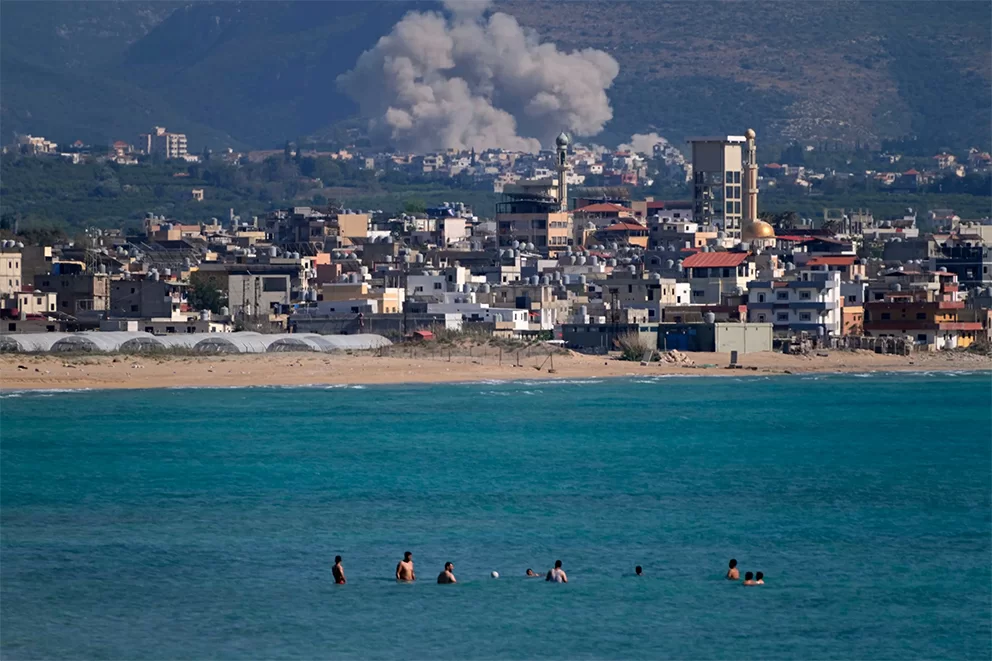
    Military engagements spread across multiple fronts with Israeli air strikes hitting Beirut’s southern suburbs, causing significant structural damage in Hezbollah-controlled areas. The Lebanese militant group retaliated by targeting Israeli military installations at Maayan Baruch. Meanwhile, Israel announced the creation of a buffer zone in southern Lebanon, prompting the Lebanese army to reposition its forces.

    Economic repercussions intensified as Brent crude oil surged past $85 per barrel—reaching July 2024 levels—due to disrupted shipments through the effectively closed Strait of Hormuz. Precious metals witnessed sharp declines, with gold dropping over 4% to $5,075/ounce and silver plunging 12% to $78/ounce as investors shifted to energy markets.

    Iran’s Revolutionary Guards issued grave threats through state television, warning that “the gates of hell will open more and more, moment by moment, upon the United States and Israel.” The Islamic Republic simultaneously appealed to the UN Security Council for intervention while reporting 787 fatalities nationwide according to its Red Crescent organization.

    Technological infrastructure became collateral damage as Amazon confirmed drone strikes on two UAE data centers, disrupting cloud services regionally. Additional explosions were reported in Manama, Doha, and Riyadh, where drones struck the US embassy compound.

    International responses multiplied as France deployed Rafale jets to protect UAE bases, China called for Strait of Hormuz security, and Israel urged global nations to sever diplomatic ties with Iran. The conflict has already displaced approximately 30,000 people in Lebanon according to UN estimates.

    The International Atomic Energy Agency confirmed damage to entrance buildings at Iran’s underground Natanz nuclear facility, though noting no radiological consequences. Transatlantic tensions simultaneously emerged as former President Trump criticized UK Prime Minister Starmer for restricting US access to British military bases.

  • Jamaican arrested after 60 pounds of marijuana seized at Antiguan airport

    Jamaican arrested after 60 pounds of marijuana seized at Antiguan airport

    In a significant counter-narcotics operation at VC Bird International Airport in Antigua, authorities have intercepted a substantial drug shipment and taken a Jamaican national into custody. The coordinated effort, executed last Sunday, resulted in the confiscation of 60 pounds of marijuana with an estimated street value of EC$360,000.

    The multi-agency operation involved specialized units including the Narcotics Department, the K-9 Unit, and the Customs Enforcement Division. During their surveillance activities, officials identified and seized two suspicious suitcases—one black and one green—containing 19 vacuum-sealed packages of cannabis.

    The suspect, identified as a 38-year-old Jamaican male, was subsequently arrested and remains in police custody awaiting formal charges. Law enforcement officials have indicated that judicial proceedings will commence shortly.

    In an official communiqué, the Royal Police Force of Antigua and Barbuda reaffirmed its unwavering dedication to combating transnational drug trafficking operations. ‘This seizure demonstrates our continued vigilance and commitment to protecting our national borders from illicit activities,’ the statement read, emphasizing the strategic importance of interdepartmental cooperation in border security operations.

  • War spreads

    War spreads

    BEIRUT, Lebanon — The Middle East plunged deeper into a widening military conflict on Monday as joint U.S.-Israeli operations against Iran triggered retaliatory actions across the region, creating severe disruptions to global energy markets and threatening international economic stability.

    The conflict escalated dramatically with new Israeli airstrikes targeting Tehran, where residents reported multiple explosions throughout the day. In a significant development, Iranian authorities formally accused the United States and Israel of attacking their nuclear facility at Natanz, marking the first such acknowledgment since hostilities began. This site had previously been a focal point during the June 2025 confrontation between the nations.

    Energy infrastructure across the Gulf region sustained substantial damage, with Saudi and Emirati oil facilities struck, Qatar suspending liquefied natural gas production, and multiple tankers attacked near Oman. The critical maritime passage through the Strait of Hormuz was temporarily closed, causing European benchmark gas prices to surge over 50% and raising concerns about global energy security.

    U.S. President Donald Trump issued provocative statements warning that ‘the big wave hasn’t even happened yet’ and promising more significant attacks were ‘coming soon.’ The President notably declined to rule out deploying American ground forces to Iran during an interview with the New York Post, stating he would consider it ‘if necessary.’

    The conflict has already claimed the lives of four U.S. military personnel, with three fighter jets accidentally downed by Kuwaiti air defenses. Iranian media reports indicate hundreds of casualties, though these figures remain unverified by independent sources.

    Tehran presented a scene of devastation and exodus, with many residents fleeing the city and those remaining scrambling for essential supplies. The atmosphere combined palpable fear with cautious optimism among some citizens hoping the conflict might bring governmental change.

    The conflict spread beyond Iran’s borders, with an Iranian drone striking a UK air force base in Cyprus, prompting evacuations and raising concerns about broader international involvement. UK Prime Minister Keir Starmer clarified that British military bases in Cyprus would not be made available to U.S. forces for operations against Iran, marking a shift from previous agreements.

    Lebanon became increasingly embroiled in the conflict as violence escalated between Israel and Hezbollah. Israeli military leadership vowed to deliver ‘a devastating blow’ to the Iran-backed group, while Lebanon’s government announced an immediate ban on all Hezbollah military activities—a move that sparked condemnation from the organization.

    The human toll continued to mount with Israeli strikes in Lebanon killing at least 31 people, according to local authorities. Meanwhile, families across southern Lebanon fled their homes, creating scenes of displacement reminiscent of previous regional conflicts.

    The strategic Strait of Hormuz became a battleground with three commercial vessels attacked on Sunday, following Iranian warnings against maritime traffic through the crucial waterway. These developments raised alarms about the security of global shipping lanes and energy transportation routes.

    President Trump and Israeli Prime Minister Benjamin Netanyahu jointly called for Iranians to overthrow their government, escalating the rhetorical warfare alongside the physical conflict. The current violence represents the most significant regional confrontation since the 1979 Islamic Revolution fundamentally altered Middle East geopolitics.

  • UN urges all sides in Middle East war to ‘come to their senses’

    UN urges all sides in Middle East war to ‘come to their senses’

    GENEVA, Switzerland — The United Nations has issued a grave appeal for immediate de-escalation in the rapidly expanding Middle East conflict, warning that the situation is deteriorating by the hour. UN Human Rights Chief Volker Turk expressed profound alarm at the devastating impact on civilian populations and infrastructure since hostilities erupted last Saturday.

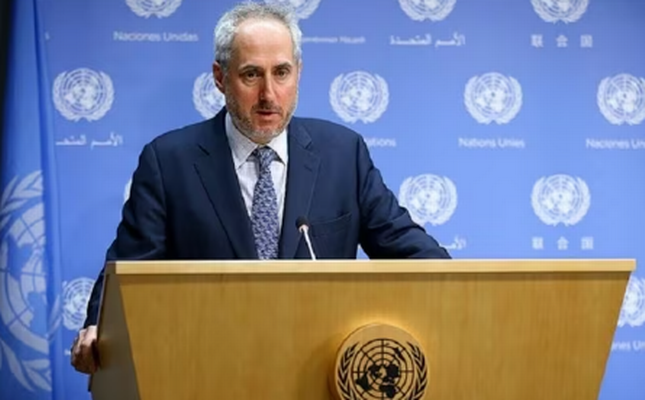
    Speaking through spokeswoman Ravina Shamdasani at a Geneva press briefing, Turk described the pervasive fear and anxiety spreading across the region and beyond as “entirely avoidable.” The conflict escalation began with Israeli and American strikes against Iran, prompting Iranian retaliation across multiple regional states and subsequent involvement by Hezbollah forces.

    The UN rights office emphasized that international humanitarian law clearly protects civilians and civilian infrastructure, requiring compliance from all states and armed groups involved. Turk urgently called for maximum restraint from all parties to prevent further escalation and implement all feasible measures to safeguard civilian lives.

    In a particularly distressing development, Iran has reported 168 fatalities from a strike on a girls’ school in Minab, southern Iran. The UN has demanded a prompt, impartial investigation into the attack, insisting that the responsible forces must publicly disclose their findings and ensure accountability and redress for victims.

    The organization also voiced serious concerns about the welfare of Iranian citizens amid ongoing telecommunications disruptions that limit access to essential information. Additional worries were raised regarding hundreds of political prisoners arbitrarily detained in Iran, with calls for their protection and immediate release.

    Shamdasani reiterated that diplomatic engagement remains “the one and only way” to end the cycle of violence, destruction, and human suffering currently gripping the region.

  • Two near-misses ‘almost catastrophic’

    Two near-misses ‘almost catastrophic’

    The Bahamas’ Aircraft Accident Investigation Authority (AAIA) has formally alerted the Civil Aviation Authority of The Bahamas (CAAB) regarding critical safety hazards following two alarming near-miss incidents involving American Airlines aircraft at Family Island airports. These events, occurring just two weeks apart in February, prompted the issuance of a Serious Safety Concern advisory, highlighting potentially catastrophic failures in communication protocols.

    The first incident unfolded on February 12 at Exuma International Airport. According to reports referenced by U.S. federal regulators, an American Airlines flight approaching Exuma was compelled to execute abrupt evasive maneuvers to avoid a collision with a departing aircraft. This sudden action resulted in injuries to two flight attendants, who subsequently received medical evaluation at a local clinic and were placed on leave.

    A second serious event occurred on February 24 at North Eleuthera International Airport. An American Airlines jet was positioned for takeoff when another aircraft passed directly overhead while the first plane remained on the active runway. The report did not identify the inbound or overhead aircraft involved in either incident.

    The AAIA’s investigation suggests that proper communication protocols at these uncontrolled aerodromes may have been violated. American Airlines reported that neither aircraft involved in the incidents made the required self-announcement of their position on the correct frequency—a fundamental international aviation standard for airports without control towers.

    AAIA Chief Investigator Kendall Dorsett Jr. confirmed both incidents remain under active investigation. He emphasized that the agency has an obligation to identify and report potential hazards within the local aviation system. While declining to specify whether near-miss reports have increased, Dorsett noted that such occurrences are reported when they happen.

    Aviation professionals speaking anonymously revealed that such incidents occur with concerning frequency at Family Island airports, most of which lack functional control towers or air traffic controllers. The AAIA acknowledged that operations at busy uncontrolled aerodromes demand heightened responsibility from pilots and called for immediate safety measures while longer-term operational and infrastructural improvements are considered.

    This safety alert echoes longstanding concerns about aviation operations in the region. A 2016 report from the U.S. Federal Aviation Administration’s Eastern Regional Task Group previously highlighted safety hazards in Caribbean operations, specifically noting the lack of live flight tracking in Bahamian airspace and insufficient advanced meteorological services for air traffic controllers monitoring the region.

    Officials from the CAAB had not responded to requests for comment by press time.