分类: world

  • Federation voices deep concern as Middle East violence intensifies

    Federation voices deep concern as Middle East violence intensifies

    The Federation of St. Kitts and Nevis has expressed profound alarm regarding the rapidly deteriorating security situation in the Middle East, joining a chorus of international voices calling for immediate de-escalation. This development follows a significant escalation in regional hostilities over the weekend, involving coordinated U.S.-Israeli military operations within Iranian territory and subsequent retaliatory measures by Tehran.

    According to official reports, American and Israeli forces executed extensive aerial strikes targeting what they identified as critical Iranian military installations. These operations allegedly resulted in substantial infrastructure damage and numerous casualties. In response, Iranian forces launched counterstrikes against multiple U.S. military bases throughout the Middle East and facilities in several Gulf Cooperation Council member states, including Kuwait, the United Arab Emirates, and Qatar.

    The St. Kitts and Nevis Ministry of Foreign Affairs released an official communiqué on March 2, 2026, articulating the Federation’s deep concern regarding the violent developments and reaffirming its commitment to fundamental principles of international relations. “We maintain unwavering dedication to global peace, respect for territorial sovereignty, and the inviolability of human life,” the statement read.

    Current casualty estimates indicate rising human costs, with international media reporting over 200 fatalities within Iran alone. Meanwhile, Israeli military operations have expanded to include strikes in Lebanon, further extending the conflict’s geographical scope. Iranian forces continue their offensive operations across portions of the Gulf region despite mounting losses.

    The Federation’s statement expressed solidarity with affected governments and populations throughout the Gulf region while emphasizing the necessity of diplomatic solutions. Officials urged all involved parties to engage in constructive dialogue aimed at conflict resolution and sustainable peace, asserting that “diplomacy, mutual respect, and compliance with international law represent the only viable pathway toward stability and security.”

    Notably, Caribbean nations have demonstrated divergent perspectives on the crisis. The Government of Trinidad and Tobago issued a separate declaration supporting United States military actions, characterizing them as necessary measures to prevent “oppressive regimes” from developing nuclear capabilities that could threaten global security.

    Conversely, the Government of Guyana condemned Iran’s retaliatory strikes against Gulf states as “unprovoked violations of international law” and declared solidarity with affected nations including the UAE, Saudi Arabia, Bahrain, and Qatar. As military operations continue, diplomatic efforts intensify to contain the expanding conflict.

  • Midden-Oosten in vuur en vlam na moord op Khamenei

    Midden-Oosten in vuur en vlam na moord op Khamenei

    The Middle East faces unprecedented escalation following coordinated U.S.-Israeli airstrikes that resulted in the death of Iran’s Supreme Leader Ayatollah Ali Khamenei and numerous high-ranking officials. In retaliation, Iran and its ally Hezbollah launched extensive rocket and drone attacks, with several Iranian projectiles penetrating Israeli air defenses and striking West Jerusalem—a rare occurrence that triggered emergency shelter alerts among the civilian population.

    The conflict expanded dramatically as Iran targeted multiple Gulf states including Bahrain, UAE, Qatar, Kuwait, and Jordan with dozens of missiles. While most were intercepted, significant damage occurred: the U.S. Fifth Fleet service center in Bahrain was hit, Abu Dhabi reported one fatality, and infrastructure across the region sustained substantial damage. The escalating violence prompted temporary airspace closures across the Gulf, disrupting international flight operations and logistics networks.

    Israel responded with heavy bombardments on Hezbollah-controlled southern suburbs of Beirut, marking the most intense attacks on the area since the 2024 war. Israeli Chief of Staff Eyal Zamir declared Hezbollah fully responsible for hostilities and pledged to prevent the organization from maintaining threatening capabilities.

    The economic repercussions immediately manifested through soaring global oil prices, driven by both regional instability and transportation disruptions. This price surge threatens to increase fuel and energy costs worldwide, particularly affecting import-dependent nations in the Caribbean and Latin America while potentially exacerbating inflationary pressures.

    Humanitarian consequences continue to mount, with reports indicating approximately 180 schoolgirls killed in an Israeli strike on Minab, Iran, and medical facilities damaged in Tehran. Violent protests have erupted in Pakistan and Iraq, resulting in dozens of fatalities and destruction at Western diplomatic posts.

    Despite U.S. assurances to Israel regarding contained escalation provided Hezbollah shows restraint, the opening of a new front in Lebanon confirms the conflict’s expanding nature. International observers warn of potential humanitarian catastrophe and prolonged regional destabilization as global leaders urge immediate de-escalation and diplomatic intervention.

  • Installation of 5,000 photovoltaic systems donated by China underway

    Installation of 5,000 photovoltaic systems donated by China underway

    In a significant move to address its ongoing energy crisis, Cuba is implementing a major renewable energy initiative utilizing 5,000 photovoltaic systems donated by the People’s Republic of China. The National Electric Union (UNE) is overseeing the strategic deployment of these 2 kW solar units across the island nation.

    According to project director Elena Maidelín Ortiz Fernández, the distribution strategy prioritized essential services, with 2,671 systems allocated to vital municipal centers including healthcare facilities, emergency polyclinics, nursing homes, banking institutions, communication centers, and funeral services. The remaining 2,329 units are designated for isolated households, including those experiencing chronic power shortages and previously unelectrified ‘zero-volt’ homes.

    The implementation represents a pragmatic approach to energy resilience rather than complete self-sufficiency. ‘These systems serve as perfect tools to protect what is essential during critical times,’ Ortiz Fernández emphasized. The off-grid solar installations will maintain operations at critical facilities during widespread blackouts, enabling continued medical services, vaccine preservation, elderly care, and financial operations.

    Logistical challenges, particularly transportation and fuel shortages, were overcome through coordinated efforts between provincial electric companies and local governments. Specialized technical teams are ensuring proper installation and compliance with all technical requirements.

    The initiative extends beyond the Chinese donation program. UNE is concurrently executing multiple renewable energy projects, including 126 charging stations for electricity-dependent children and a Canadian-funded project installing 502 additional solar systems in Holguín province.

    Ortiz Fernández highlighted the transformative social impact, particularly for remote communities: ‘When we install a 2 kW system allowing refrigeration, ventilation, and communication, we completely change lives and prevent migration from these communities.’ The projects collectively represent both immediate energy relief and long-term strategic investment in Cuba’s diversified energy future.

  • Column: Golfconflict treft Caribisch gebied en Latijns-Amerika

    Column: Golfconflict treft Caribisch gebied en Latijns-Amerika

    The geopolitical conflict in the Gulf region, though thousands of miles distant, is sending profound economic tremors across Caribbean and Latin American nations. According to recent data from Kpler and J.P. Morgan Commodities Research, approximately one-fifth of global oil consumption transits daily through the Strait of Hormuz—a critical chokepoint that has become increasingly vulnerable due to regional hostilities.

    This strategic vulnerability has triggered worldwide oil price surges, creating particularly severe consequences for fuel-import-dependent Caribbean economies. Nations including Jamaica, Haiti, and Trinidad and Tobago are experiencing tangible manifestations of this energy crisis: prolonged queues at gasoline stations, panic buying, and growing concerns about supply shortages. In Trinidad and Tobago, weeks-long lines at fuel stations have become commonplace, while Jamaican and Haitian motorists report waiting hours to secure diminishing fuel supplies.

    The economic ramifications extend far beyond transportation costs. Higher diesel and gasoline prices are driving increased expenses for electricity generation, construction materials, and essential goods—creating cascading effects on household budgets and small businesses already grappling with limited purchasing power. Suriname, though not directly involved in Middle Eastern conflicts, finds itself similarly vulnerable to these global market disruptions, mirroring patterns observed during previous geopolitical crises like the Russia-Ukraine conflict.

    Latin American economies face a complex dual reality: while oil-exporting nations benefit from elevated global prices, they simultaneously confront rising costs for imported energy products and components. This paradoxical situation intensifies inflationary pressures across the region and potentially hinders foreign investment and trade flows due to heightened geopolitical uncertainty.

    The current crisis underscores the profound interconnectedness of global energy systems and the vulnerability of energy-dependent economies. It highlights the urgent need for Caribbean and Latin American nations to develop greater energy resilience through regional cooperation and investment in sustainable, locally-sourced alternatives. As distant conflicts continue to reverberate through global markets, the imperative for strategic energy independence becomes increasingly apparent for nations seeking to buffer themselves against geopolitical shocks beyond their control.

  • Iran launches retaliation on neighboring states housing US assets following US-Israeli strikes on Tehran

    Iran launches retaliation on neighboring states housing US assets following US-Israeli strikes on Tehran

    The Middle East has plunged into a dangerous escalation of hostilities following Iran’s coordinated military strikes against American installations throughout Gulf Arab nations. This aggressive action represents Tehran’s direct retaliation for a large-scale joint offensive conducted by the United States and Israel against Iranian targets.

    Iran’s Islamic Revolutionary Guard Corps (IRGC) claimed responsibility for targeting multiple locations across Bahrain, Kuwait, Qatar, and the United Arab Emirates on Saturday. Particularly significant were the strikes on UAE airbases housing U.S. forces. The Fars news agency reported the IRGC’s declaration that all Israeli and American military sites throughout the Middle East were struck by “powerful blows of Iranian missiles.”

    The IRGC issued an uncompromising warning that operations would continue “relentlessly until the enemy is decisively defeated,” explicitly designating all U.S. regional assets as legitimate targets. Iranian officials presented their actions as justified self-defense, with Deputy Foreign Minister Hamid Ghanbari expressing regret over potential civilian casualties while asserting Iran’s right to protect itself.

    Diplomatic channels saw activity as Foreign Minister Abbas Araghchi communicated Iran’s position to the United Nations, affirming Tehran’s determination to exercise self-defense “decisively and without hesitation until the aggression ceases fully and unequivocally.”

    The attacks produced varied outcomes across the region. Abu Dhabi reported one fatality from missile strikes, though details remained scarce. Bahrain experienced targeting of the U.S. Navy’s 5th Fleet headquarters in Manama. Kuwait successfully intercepted ballistic missiles aimed at Ali al-Salem Air Base, though the attack resulted in minor injuries and facility damage. Saudi Arabia repelled strikes targeting Riyadh and eastern regions, while Qatar prevented all missiles from reaching their territory.

    In Iraq’s Kurdish region, Erbil Airport faced two separate drone attacks, both neutralized by air defenses. Southwest of Baghdad, a strike on Kataeb Hezbollah headquarters killed two individuals, prompting the armed group to threaten retaliatory attacks on American bases.

    The regional consequences extended beyond immediate military impacts. Multiple Gulf nations temporarily closed their airspace, while shipping operations received notices about potential closure of the strategically vital Strait of Hormuz—a critical passage for global oil exports.

    U.S. President Donald Trump confirmed to Fox News that three American service members died during operations, while claiming significant losses among Iranian leadership. The conflict’s ripple effects reached Israel, where nine fatalities were reported in Beit Shemesh from missile strikes, with civilians remaining on high alert amid ongoing sirens.

    BBC News reported Israeli military actions within Tehran itself, with Iranian officials claiming at least 153 casualties, including children, from a strike on a school facility—further intensifying the humanitarian dimensions of the escalating conflict.

  • Barbados concerned over Middle East conflict

    Barbados concerned over Middle East conflict

    The Barbadian government has issued a formal statement expressing profound alarm regarding the recent intensification of military hostilities in the Middle East. This diplomatic communication comes in direct response to coordinated offensive operations conducted by the United States and Israel against Iranian targets on Saturday, which subsequently triggered immediate retaliatory measures from Iran across the region.

    According to emerging battlefield reports, the conflict has resulted in significant casualties, including the tragic demise of high-ranking Iranian military leadership. The Barbados administration emphasized that such military engagements possess severe implications for regional stability, potentially jeopardizing international peace and security frameworks established through decades of diplomatic effort.

    In alignment with United Nations Secretary-General António Guterres’ position, Barbados has categorically condemned the dangerous escalation of violence. The Caribbean nation has appealed to all United Nations member states to honor their obligations under established international law and humanitarian conventions. Furthermore, Barbados has coordinated with Gulf Cooperation Council members and other impacted nations in advocating for immediate de-escalation, restraint, and a renewed commitment to peaceful dialogue.

    The official statement contained poignant remarks: ‘We profoundly regret the unnecessary loss of innocent civilian lives in this rapidly evolving conflict. Both the government and citizens of Barbados extend their deepest condolences to affected families and maintain hope for the swift restoration of peace and stability throughout the region.’

    Concurrently, Barbados’ Ministry of Foreign Affairs and Foreign Trade has issued updated travel advisories, recommending that citizens postpone all non-essential travel to affected zones until security conditions normalize. Barbadian nationals currently residing in the region are advised to exercise extreme vigilance, seek secure shelter, and maintain constant situational awareness.

    The government has implemented emergency protocols requiring all Barbadian citizens in affected areas to immediately register their presence with official authorities. Those requiring consular assistance or emergency evacuation coordination are directed to contact the Barbadian Embassy in Abu Dhabi, United Arab Emirates, located at Villa #1, At Tarish Street, Al Mamoura. Contact channels include email: abudhabi@foreign.gov.bb and telephone: +97125572799.

  • Latest on Iran Conflict: Leadership Change, Deadly Strikes, and UN Calls for Halt

    Latest on Iran Conflict: Leadership Change, Deadly Strikes, and UN Calls for Halt

    In the wake of Supreme Leader Ali Khamenei’s death during U.S.-Israeli military operations, Iran has established a transitional governing council to steer the nation through this turbulent period. U.S. President Donald Trump indicated that these new leadership figures appear open to diplomatic engagement, though specific identities remain undisclosed.

    Regional violence continues to intensify with fresh Israeli strikes targeting central Tehran and Iranian retaliatory measures. Tragic incidents include civilian casualties among those seeking refuge near a Jerusalem synagogue and emerging reports of a deadly attack on an Iranian elementary school.

    The conflict has created widespread disruption across Middle Eastern transportation networks, impacted heavily populated urban centers, and constrained oil shipments through critical maritime corridors—fueling concerns about broader regional destabilization.

    During an emergency United Nations Security Council session convened Saturday, Secretary-General António Guterres issued urgent appeals for all parties to cease hostilities and resume diplomatic negotiations. He emphasized that failure to de-escalate could precipitate a expanded conflict with severe humanitarian and regional security implications.

    Guterres condemned aerial operations by both sides for violating international legal standards and national sovereignty, specifically mentioning Bahrain, Iraq, Jordan, Kuwait, Qatar, Saudi Arabia, and the United Arab Emirates.

    U.S. Ambassador Mike Waltz defended American actions as legally justified measures to prevent nuclear proliferation, stating: “Iran cannot possess nuclear weapons—this isn’t political but fundamental to global security.” Israeli Ambassador Danny Danon similarly characterized operations as necessary preventive measures against regional threats.

    Iran’s Ambassador Amir Saeid Iravani accused Western powers of committing war crimes resulting in hundreds of civilian deaths and criticized the Security Council for previously ignoring Tehran’s warnings. The session witnessed unusually direct confrontations between American and Iranian diplomats, featuring mutual accusations of historical atrocities.

    Other Security Council members expressed deepening concerns. Russia condemned U.S.-Israeli strikes while advocating diplomatic solutions, China voiced alarm over escalating tensions and supported renewed negotiations, and European representatives from Britain, France, and Germany urged revived talks regarding Iran’s nuclear program while emphasizing the Iranian people’s right to self-determination.

  • UN chief calls for Israel to re-open Gaza crossings

    UN chief calls for Israel to re-open Gaza crossings

    UNITED NATIONS—UN Secretary-General Antonio Guterres issued an urgent appeal on Monday demanding Israel immediately reopen critical border crossings into Gaza that were sealed following military operations against Iran conducted jointly with the United States.

    The closure, implemented Saturday as a security precaution, includes the strategically vital Rafah crossing—Gazans’ sole access point to the external world that bypasses Israeli territory. This passage had only resumed operations for civilian movement on February 2, ending a nearly two-year suspension after Israeli forces assumed control during conflicts with Hamas.

    UN spokesperson Stephane Dujarric detailed the severity of the situation, stating: ‘Israeli authorities have sealed all transit points, including Rafah, and halted all humanitarian operations in zones where Israeli military personnel remain stationed within Gaza.’

    Dujarric emphasized the critical nature of resumed access: ‘The immediate reopening of all crossings is imperative. Our humanitarian partners have already begun rationing fuel supplies and prioritizing only the most critical life-saving operations due to rapidly diminishing local reserves.’

    The spokesperson further explained the compounding challenges, noting that while some supplies remain within Gaza, the complete blockade forces aid organizations to meticulously stretch existing resources. This development significantly hampers the delivery of essential humanitarian assistance to Gaza’s civilian population, creating potentially severe consequences for those dependent on international aid.

  • Jamaicans on edge in Qatar

    Jamaicans on edge in Qatar

    The skies over Doha have transformed into a theater of conflict, shattering the region’s longstanding reputation as a Middle Eastern oasis. For the Jamaican diaspora residing in Qatar, daily life now unfolds against a disquieting backdrop of air raid sirens, emergency phone alerts, and the spectacle of missile intercepts painting the atmosphere with thick black smoke.

    This new reality stems from an unprecedented escalation as Iran launched coordinated drone and missile strikes across multiple Gulf States. The Islamic Republic’s offensive, characterized as retaliation for U.S. and Israeli actions that resulted in the death of Supreme Leader Ayatollah Ali Khamenei, specifically targeted American military assets including the Fifth Fleet in Bahrain.

    Abigail, a Jamaican resident who provided only her first name, described the psychological burden this crisis has imposed. “I have seen too many [missiles] at this point. It feels too natural,” she remarked, comparing the aerial explosions to firework displays in Kingston. The constant alerts have prompted her community to enter “survival mode,” maintaining emergency supplies and developing evacuation strategies while relying on characteristically Jamaican humor to lighten the mood.

    Qatari authorities have implemented stringent safety measures, including homeschooling mandates for children and restrictions permitting only essential workers outdoors. Despite the palpable tension, perspectives vary among Jamaicans. While Abigail acknowledges the mental toll, another anonymous resident with her family expressed more concern about leaving their daughter home alone during the first alert than personal fear.

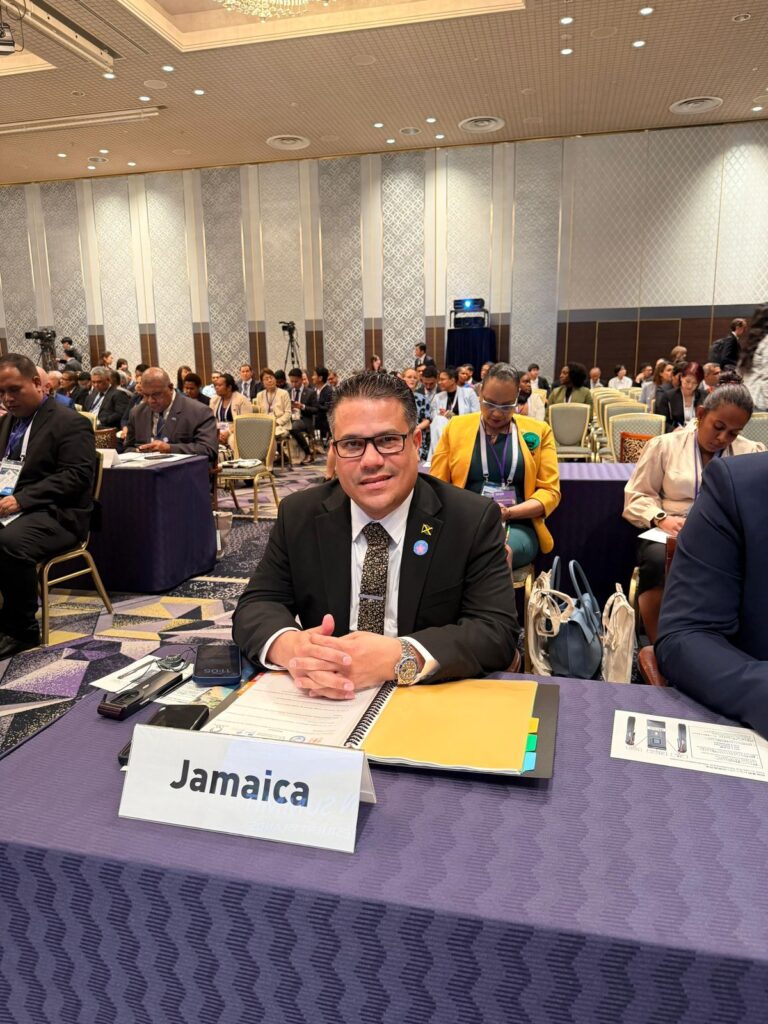
    The Jamaican government has activated consular support channels, with Ambassador to India Jason Hall collecting citizen details for potential evacuation planning. The Ministry of Foreign Affairs has issued advisories urging vigilance and shelter-seeking while discouraging all travel to the conflict zone.

    Meanwhile, Gulf Cooperation Council members convened urgently, vowing to defend their territories and residents through “all necessary measures” while emphasizing that regional stability constitutes “a fundamental pillar of global economic stability.” This collective stance signals potential for further escalation as the crisis continues unfolding.

  • Iran war spreads with strikes across Middle East and beyond

    Iran war spreads with strikes across Middle East and beyond

    BEIRUT—The Middle East plunged deeper into crisis Monday as military actions initiated by the United States and Israel against Iran triggered widespread regional escalation, drawing Lebanon’s Hezbollah into active combat and threatening global energy markets.

    The conflict entered its third day with renewed Israeli strikes on Tehran, where residents reported audible explosions, while simultaneous blasts rocked Beirut. The situation deteriorated rapidly as Gulf monarchies threatened retaliation following attacks on critical infrastructure, including a burning Saudi oil refinery and halted LNG production in Qatar.

    General Dan Caine, Chairman of the Joint Chiefs of Staff, announced that US forces had established air superiority over Iran to enable continued operations. Meanwhile, black smoke billowed from the US embassy complex in Kuwait as Iranian forces continued counterattacks in response to the strike that killed Supreme Leader Ayatollah Ali Khamenei and several senior commanders.

    The conflict’s human toll mounted as Iranian media reported the death of Khamenei’s 79-year-old wife, Mansoureh Khojasteh Bagherzadeh, from wounds sustained in the initial attack. Tehran resembled a ghost town with many residents fleeing, while those remaining faced scarce supplies and persistent aerial attacks.

    The war expanded beyond the Middle East when an Iranian drone struck a UK air force base in Cyprus, prompting evacuations around Akrotiri and Paphos airport. Greece responded by deploying frigates and jets to protect its EU partner nation.

    In Lebanon, the violence ignited fresh hostilities between Israel and Hezbollah, with rocket exchanges and Israeli airstrikes killing at least 31 people according to Lebanese authorities. Israel’s army chief Eyal Zamir vowed to deliver a “devastating blow” to Hezbollah, while Lebanon’s Prime Minister Nawaf Salam announced an immediate ban on all Hezbollah military activities.

    The strategic Strait of Hormuz became a battleground as three commercial ships were attacked following Iranian warnings, threatening global oil transit routes. International travel faced massive disruptions as regional flight cancellations continued, though Dubai announced partial airport reopenings.

    US Defense Secretary Pete Hegseth affirmed commitment to the campaign, stating forces would “go as far as we need to go,” while Iran’s security chief Ali Larijani vowed to defend the nation “regardless of the costs.”