分类: world

  • Fake news, false hope

    Fake news, false hope

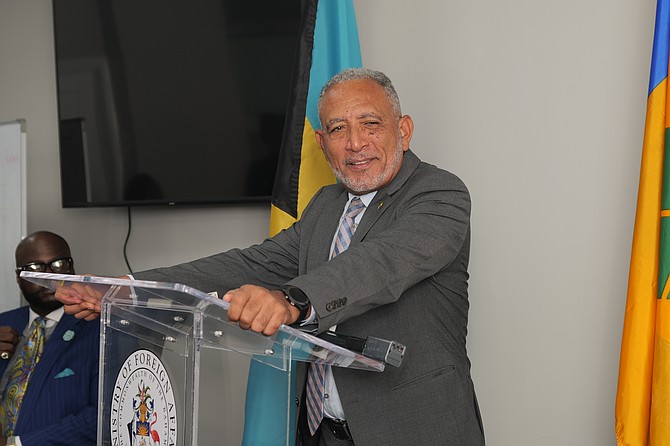
    Jamaican authorities are urgently advising their citizens residing in conflict-affected Middle Eastern territories to depend exclusively on verified information sources after widespread misinformation generated false expectations of government-sponsored evacuations. The situation escalated during a virtual town hall meeting convened Wednesday with Foreign Affairs Minister Kamina Johnson Smith, where numerous Jamaicans across several Gulf states expressed frustration over what they mistakenly believed was a reversed evacuation decision.

    Jamaica’s High Commissioner to India, Jason Hall, who holds additional accreditation for Qatar and the United Arab Emirates, revealed to the Jamaica Observer that the digital meeting encountered significant tensions. Participants joined anticipating announcements about chartered flights that never existed, creating disruptive dynamics exacerbated by technical difficulties that prevented muting of microphones.

    The assembly, originally intended to provide practical guidance on safety protocols and emergency procedures, instead became dominated by concerns stemming from fabricated reports. Commissioner Hall emphasized that Jamaica lacks the logistical capacity to execute mass evacuations, aligning with most nations’ recommendations that citizens utilize commercial transportation options where available.

    A disturbing secondary issue emerged during discussions: scammers allegedly posing as consular officials have been targeting Jamaican nationals. Hall specifically warned against sharing personal information or funds with unauthorized individuals claiming to represent Jamaican authorities.

    Despite the chaotic commencement, the dialogue gradually evolved into productive exchanges about viable exit strategies. Jamaican officials have identified approximately 200 citizens across Middle Eastern nations through registration efforts and established dedicated WhatsApp groups for reliable one-way communication.

    Diplomatic channels are exploring alternative routes for departure, including potential transit through India—which offers visa-free entry to Jamaicans—and overland travel from UAE cities to Muscat, Oman, where commercial flights remain operational. The mission is additionally arranging counseling services for emotionally distressed nationals.

    Hall concluded with broader recommendations, urging all Jamaican travelers to formally register with foreign missions when visiting other countries, citing lessons learned from both the COVID-19 pandemic and current regional conflicts about the critical importance of established communication protocols during crises.

  • Mexico unveils 100,000-strong security deployment for World Cup

    Mexico unveils 100,000-strong security deployment for World Cup

    In a decisive move to ensure safety for the FIFA World Cup, Mexican authorities announced a massive security deployment of nearly 100,000 personnel across three host cities. The comprehensive security plan comes amid heightened concerns following recent cartel violence that erupted in Guadalajara after the death of notorious drug lord Nemesio “El Mencho” Oseguera, leader of the Jalisco New Generation Cartel (CJNG).

    President Claudia Sheinbaum unveiled “Plan Kukulkan” – named after the Mayan serpent deity – at a military base in Zapopan, near Guadalajara, which witnessed significant violence following the February 22nd military operation that killed Mexico’s most-wanted criminal. The security blueprint covers not only the host cities of Guadalajara, Mexico City, and Monterrey but also nearby tourist destinations.

    General Román Villalvazo Barrios, head of Mexico’s World Cup coordination center, detailed the security architecture comprising 20,000 military personnel, 55,000 police officers, and additional private security contractors. The operation will deploy sophisticated resources including 2,500 vehicles, 24 aircraft, anti-drone systems, and explosive-detection canines.

    Despite the recent violence that saw cartel members block roads across 20 states and torch vehicles following Oseguera’s death, both FIFA and Mexican officials maintain the tournament will proceed securely. The violence resulted in over 70 casualties during operations against CJNG, but Mexico City and Monterrey remained unaffected.

    FIFA President Gianni Infantino expressed confidence in Mexico’s security preparations, stating he felt “very reassured” about the hosting arrangements. The tournament, co-hosted with the United States and Canada from June 11 to July 19, will feature 13 matches across the three Mexican cities, beginning with the opening game at Mexico City’s Azteca Stadium.

  • Sri Lanka beschermt Iraans schip te midden van VS-Iran conflict

    Sri Lanka beschermt Iraans schip te midden van VS-Iran conflict

    Sri Lanka finds itself in a delicate diplomatic position as it attempts to mediate humanitarian concerns surrounding a second Iranian warship operating near its territorial waters. This development comes just one day after a U.S. submarine torpedoed and sank the Iranian frigate Iris Dena in international waters off the Sri Lankan coast, resulting in more than 80 casualties with dozens still missing.

    Cabinet spokesman Nalinda Jayatissa confirmed Thursday that Colombo is “making every effort to preserve lives” regarding the second vessel, which currently remains within Sri Lanka’s exclusive economic zone. The warship carries over 100 crew members and appears to be heading toward the same area where its companion vessel was destroyed, raising concerns about another potential attack.

    According to Al Jazeera correspondent Minelle Fernandez reporting from Colombo, the second ship likely belongs to a group of three Iranian naval vessels returning from an international maritime conference in India. The vessel has reportedly experienced mechanical difficulties and has formally requested permission to dock in Sri Lankan ports—a request that remains under consideration as communications continue.

    The situation places Sri Lanka in a precarious position as the expanding conflict between the United States, Israel and Iran creates ripple effects across the region and beyond. What began five days ago with American and Israeli airstrikes on Iran—which resulted in the death of Supreme Leader Ayatollah Ali Khamenei—has escalated into retaliatory attacks by Iranian-backed groups on U.S. and Israeli targets across Bahrain, Saudi Arabia, Qatar, UAE, Iraq and Cyprus.

    The geopolitical turmoil has already triggered significant disruptions to global energy markets, with oil and gas prices soaring worldwide. Shipping routes, particularly around the critical Strait of Hormuz, have experienced substantial interruptions. Qatar has temporarily suspended liquefied natural gas production following attacks on energy infrastructure.

    International observers warn that prolonged conflict could have severe consequences for regional stability and the global economy, while nations including China and Russia join growing worldwide calls for peaceful resolution through diplomatic channels.

  • WMO Hurricane Committee retires name of Melissa, replaces it with Molly

    WMO Hurricane Committee retires name of Melissa, replaces it with Molly

    In a significant move reflecting the catastrophic impact of recent extreme weather, the World Meteorological Organization’s (WMO) Hurricane Committee has officially retired the name ‘Melissa’ from its cyclical list of Atlantic tropical cyclone names. This decisive action, taken during the committee’s annual meeting, comes in direct response to the immense devastation and tragic loss of life caused by the hurricane during its October 2025 rampage across the Caribbean basin.

    The meteorological phenomenon, designated Hurricane Melissa at its peak intensity, achieved the most severe classification on the Saffir-Simpson Hurricane Wind Scale as a Category 5 storm. It generated sustained wind velocities approaching an astonishing 300 kilometers per hour, constituting a direct threat to human life. The hurricane’s fury manifested through multiple destructive mechanisms, including a catastrophic storm surge and profoundly damaging winds that ravaged the coastlines and interiors of Jamaica and Cuba. Furthermore, the system unleashed torrential rainfall, triggering severe and widespread flooding across the Dominican Republic, Haiti, Jamaica, and Cuba.

    The human toll was profound, with preliminary reports attributing over 90 fatalities to the storm across several island nations. The event etched its name in the historical records as the most potent hurricane ever documented to make landfall on Jamaica. In terms of sheer wind force, Hurricane Melissa achieved a fearsome meteorological distinction, tying the record sustained wind speeds of two other legendary storms: Hurricane Dorian, which struck the Bahamas in 2019, and the historic 1935 Labor Day Hurricane that impacted the United States.

    Following established protocol for names associated with particularly deadly or costly storms, the committee has selected ‘Molly’ as the permanent replacement name. This ensures the name ‘Melissa’ will never be used again for a future Atlantic hurricane, serving as a permanent marker of the event’s severity and a tool for historical and scientific reference.

  • Department of the Blue Economy Represented at 13th World Ocean Summit & Expo in Montreal

    Department of the Blue Economy Represented at 13th World Ocean Summit & Expo in Montreal

    Montreal, Canada – The 13th World Ocean Summit & Expo, convened by Economist Impact on March 4-5, 2026, served as a critical platform for global ocean dialogue, with Antigua and Barbuda ensuring the perspectives of small island nations were prominently heard. The high-level assembly gathered world leaders, policy architects, scientific experts, investors, and private sector delegates to forge actionable strategies for sustainable ocean governance and blue economy expansion.

    Representing the Antiguan and Barbudan government, Ms. Marver Woodley, Senior Operations and Policy Manager from the Department of the Blue Economy, delivered the nation’s strategic contributions. Her involvement was pivotal in integrating the unique challenges and priorities of Small Island Developing States (SIDS) into central debates on marine ecosystem preservation, innovative ocean finance mechanisms, climate adaptation frameworks, and global biodiversity conservation efforts.

    This premier international forum is widely recognized for catalyzing meaningful progress in marine policy and ecological stewardship. The participation of SIDS representatives like Woodley underscores a growing recognition that effective ocean solutions must incorporate the vulnerabilities and insights of nations most directly impacted by oceanic changes and climate phenomena.

  • Canadian family seeks consular help after deadly accident in La Romana

    Canadian family seeks consular help after deadly accident in La Romana

    A tragic traffic accident in the Dominican Republic has claimed the life of 67-year-old Canadian baker Colleen Fullerton and left her husband John with severe spinal injuries. The incident occurred Sunday at the notorious Cumayasa 10 curve along the Autovía del Este highway near Villa Hermosa in La Romana province.

    The couple’s daughter, Amanda Fullerton of Lockport, learned of her mother’s death through media reports after receiving a distressing call from her uncle, who was also aboard the vehicle during the collision. In a heartbreaking development, the family has been unable to obtain official information about John Fullerton’s medical condition, prompting Amanda to urgently appeal to Canadian consular officials for intervention and hospital representation.

    The Fullertons, who operate a mechanic’s workshop, now face additional uncertainty as John’s injuries may prevent him from returning to work. Their original travel plans to Cuba were altered following a Global Affairs Canada advisory warning citizens against non-essential travel to the island, leading them to choose the Dominican Republic instead.

    Tour operator Sunwing Vacations, which organized both the trip and bus transportation, has committed to covering all costs associated with repatriating Colleen’s remains to Canada and John’s extensive medical expenses. The family has retained legal counsel as they seek comprehensive answers regarding the accident’s cause and circumstances.

  • Domninica’s geothermal plant on track to be commissioned by end of month, says PM Skerrit

    Domninica’s geothermal plant on track to be commissioned by end of month, says PM Skerrit

    The Commonwealth of Dominica is poised to achieve a significant renewable energy milestone with the imminent commissioning of its state-of-the-art geothermal power plant in Laudat. Prime Minister Roosevelt Skerrit confirmed during a recent press conference that the facility has successfully completed testing phases and is expected to become operational by the end of March.

    The 10-megawatt facility, representing a substantial investment of US$34.8 million, will establish Dominica as the first Caribbean Community (CARICOM) nation to harness geothermal energy at this scale. Situated in the volcanic-rich Roseau Valley, the plant utilizes the island’s natural geothermal resources to provide clean, reliable electricity to approximately 23,000 households.

    This groundbreaking project, developed through a public-private partnership under the Dominica Geothermal Development Company (DGDC), marks a strategic shift from fossil fuel dependency toward sustainable energy solutions. The plant’s commissioning aligns with the broader OECS Decade of Action for Sustainable Energy Development initiative, which aims to source at least 30% of the region’s electricity from renewables by 2035.

    As part of the OECS GEOBUILD Programme supported by the Caribbean Development Bank, Dominica joins four other member states in pioneering geothermal exploration and development across the Eastern Caribbean. This project not only enhances Dominica’s energy security but also establishes a replicable model for neighboring islands seeking to utilize their volcanic potential for sustainable development.

  • FLASH : The FAA extends the flight ban for Port-au-Prince and expands the no-fly zones

    FLASH : The FAA extends the flight ban for Port-au-Prince and expands the no-fly zones

    The United States Federal Aviation Administration (FAA) has prolonged its prohibition on commercial flights to Haiti through September 30, 2026, citing severe and persistent security threats. This extension solidifies Haiti’s status of aerial isolation, which has been in effect since November 2024.

    In a significant escalation of precautions, the FAA has broadened the restricted airspace beyond Port-au-Prince to include regions within the Central and Artibonite departments. This decision is driven by intelligence indicating gang factions are advancing northward from the capital, substantially elevating the risk of small arms fire targeting aircraft operating below 10,000 feet. The official advisory underscores the critical inability of Haitian security forces to safeguard airport approach paths and the perimeter of Toussaint Louverture International Airport.

    The aviation blockade is not an isolated U.S. policy. Key international allies, including France, the United Kingdom, and Canada, have issued stringent advisories urging avoidance of the capital’s airport and low-altitude flight operations. Compounding the isolation, the Dominican Republic has sustained the closure of its aerial border with Haiti, suspending all passenger and cargo flights until at least March 28, 2026.

    The genesis of this extensive ban traces back to a dramatic surge in violence commencing in late 2024, when three commercial aircraft—operated by Spirit Airlines, JetBlue, and American Airlines—were struck by gunfire on approach to Port-au-Prince. The crisis intensified in January 2026 when two ZED Airlines planes were similarly attacked, prompting the carrier to immediately cease all operations. This suspension marked the termination of the final scheduled international service to the Haitian capital.

    Despite efforts to mitigate risks, including the demolition of structures near the airport to eliminate cover for shooters, the threat landscape has deteriorated. Intelligence confirms that armed coalitions, such as ‘Viv Ansanm,’ now deploy advanced Barrett M-50 precision rifles, capable of accurately engaging targets at distances up to 4,000 meters. The FAA explicitly states that prevailing security conditions remain fundamentally ‘incompatible with the normal continuation of operations.’

    The protracted flight embargo is triggering severe economic and humanitarian repercussions. Logistical expenses have skyrocketed, air freight capacity has plummeted, and the ensuing economic strangulation is acutely suffocating Port-au-Prince, with dire consequences rippling across the entire nation.

  • Appreciation and Acknowledgment for Support of the 2026 Dominican Republic Independence Celebration in Antigua and Barbuda.

    Appreciation and Acknowledgment for Support of the 2026 Dominican Republic Independence Celebration in Antigua and Barbuda.

    The government of Antigua and Barbuda has formally expressed its profound appreciation to nations and organizations supporting the upcoming 2026 Dominican Republic Independence Celebration, marking a significant moment of Caribbean diplomatic camaraderie. This acknowledgment highlights the growing regional cooperation as Antigua and Barbuda prepares to host this prestigious event commemorating the Dominican Republic’s 1821 independence from Spanish rule.

    The celebration, scheduled for 2026, represents more than historical remembrance—it symbolizes strengthening ties between Caribbean nations through cultural exchange and mutual support. The Antiguan government’s recognition of international backing underscores the importance of collaborative efforts in preserving regional heritage and fostering diplomatic relations.

    This cross-island cooperation demonstrates how Caribbean nations are increasingly working in concert to celebrate shared histories while building stronger partnerships for future development. The 2026 observance is expected to feature traditional music, culinary exhibitions, and historical reenactments showcasing the rich cultural tapestry of the Dominican Republic, with Antigua and Barbuda serving as gracious hosts to this pan-Caribbean gathering.

    The acknowledgment of support comes at a time when Caribbean nations are strengthening multilateral ties through cultural diplomacy, recognizing that such celebrations serve as platforms for discussing broader regional initiatives including trade, climate resilience, and tourism development. This event continues the tradition of Caribbean nations hosting each other’s independence observances, reinforcing the concept of a unified Caribbean community despite diverse colonial histories and linguistic differences.

  • Caribbean Pushes for Stronger Voice in Global Fossil Fuel Phase-Out Talks

    Caribbean Pushes for Stronger Voice in Global Fossil Fuel Phase-Out Talks

    Caribbean leaders and climate experts convened in Saint Lucia this week to consolidate the region’s position ahead of pivotal international negotiations on fossil fuel phase-out. The strategic gathering brought together senior government officials and civil society representatives amid stalled global climate discussions regarding financing and management of a equitable transition from oil, gas, and coal.

    Regional participants emphasized the urgency of immediate action, citing recent data showing fossil fuel production continues to exceed levels compatible with the Paris Agreement’s 1.5°C warming limit—a threshold Caribbean nations vigorously advocated for. Dr. James Fletcher, Executive Director of the Caribbean Community Climate Change Centre, stressed that the region’s diplomatic credibility hinges not only on its climate vulnerability but on presenting concrete proposals. “Our calls for justice must be matched with clear frameworks for concessional finance, debt reform, renewable energy scaling, and social protections for vulnerable communities,” Fletcher asserted.

    The meeting served as a preparatory session for the First International Conference on Transitioning Away from Fossil Fuels, scheduled for late April in Santa Marta, Colombia, co-hosted by Colombia and the Netherlands. Caribbean advocates highlighted their frontline experience with climate impacts, with Theresa Rodriguez-Moodie of the Jamaica Environment Trust detailing the devastating aftermath of Hurricane Melissa—including destroyed infrastructure, massive displacements, and agricultural devastation.

    Financing mechanisms emerged as a critical concern, with Charlin Bodlee of the Caribbean Centre for Renewable Energy noting significant funding gaps in implementing climate commitments. Bodlee emphasized that current climate finance represents only a fraction of needs, with loan-based approaches exacerbating fiscal strain rather than building long-term resilience.

    Alex Rafalowicz of the Fossil Fuel Treaty Initiative warned that continued fossil fuel expansion not only accelerates climate change but exacerbates public health crises, biodiversity loss, and plastic pollution, presenting profound risks to planetary life systems.