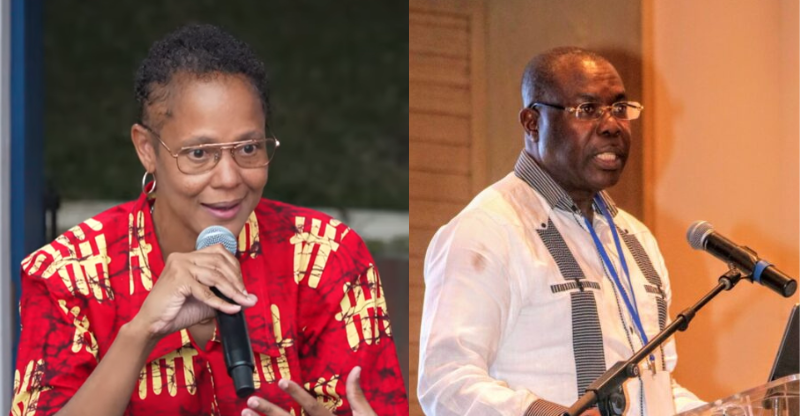
This week, high-ranking officials from across the Caribbean gathered in Barbados for the Santiago Network Regional Workshop, hosted at the Caribbean Development Bank’s Wildey campus, to sound an urgent alarm over the accelerating climate crisis facing small island developing states (SIDS) and push for immediate, actionable measures to shield at-risk local communities. Against a backdrop of global climate projections showing the planet is on track to warm by close to 3 degrees Celsius this century – far exceeding the 1.5-degree target agreed in the Paris Climate Accords – leaders emphasized that climate breakdown is no longer a distant risk for the region: it is an ongoing, daily crisis reshaping life for Caribbean populations. The workshop centered on scaling demand-driven technical assistance for SIDS and other climate-vulnerable regions, connecting global climate pledges to tangible on-the-ground implementation. Opening the event, Barbados Deputy Prime Minister Santia Bradshaw, who also holds cabinet portfolios for Environment, National Beautification and Fisheries, called out a troubling retreat from global climate ambition, noting that critical resources for adaptation and mitigation are being redirected even as scientific reports confirm the world is drifting toward a catastrophic 3-degree warming threshold. “The world is not on track to limit global temperature rise to 1.5°C,” Bradshaw told attendees. “Instead, we are heading closer to a three-degree increase, an outcome with potentially devastating consequences, particularly for vulnerable regions. For the Caribbean, this is not an abstract threat. It is a lived reality.” Outlining Barbados’ ambitious 2035 national climate strategy, Bradshaw stressed that the region can no longer rely on passive advocacy alone to drive change. Echoing the consistent stance of Prime Minister Mia Mottley, she noted that Caribbean nations are prepared to lead by example, innovate on climate solutions, and prioritize the protection of their citizens. “As our Prime Minister Mottley has said repeatedly, we will not be passive in the face of climate change. We will not wait for others to act. We will lead, we will innovate, and we will protect our people. Our region must not only build resilience, we must become a model of resilience,” Bradshaw said. She also laid out specific, measurable national targets to demonstrate the region’s commitment to proactive climate action: by 2030, 85% of all residential housing in Barbados will be engineered to withstand the force of a Category 3 hurricane, and the country will continue expanding what is already the largest electric bus fleet in the Caribbean, cutting transportation emissions while building cleaner, more resilient infrastructure. Following Bradshaw’s address, Caribbean Development Bank Vice President Dr. Isaac Solomon reinforced the critical mission of the Santiago Network, which was created to coordinate global support for addressing climate loss and damage in vulnerable nations. Dr. Solomon emphasized that the network fills a long-unmet gap between non-binding global climate commitments negotiated at UN Climate Change Conferences (COPs) and the concrete, country-led implementation needed to protect communities. Like Bradshaw, he noted that climate loss and damage is not a future scenario – it is an escalating current crisis. “Extreme weather events, sea level rise, flooding, droughts, and heat stress impose recurrent human, social, and economic costs that strain public finances and erode decades of development gains,” Dr. Solomon explained. He argued that while climate finance is an essential component of climate action, funding alone cannot deliver lasting impact without robust, functional institutional frameworks to support it. The Santiago Network’s core role, he said, is to deliver demand-aligned technical assistance that makes ambitious climate action “bankable” for SIDS. “Addressing loss and damage is not only about post disaster response. It is about institutional readiness, strengthening data systems, legal frameworks, inter-agency coordination, and decision-making processes before disasters occur. Finance alone is insufficient without strong systems, data, and institutions,” Dr. Solomon said. The three-day workshop focused on advancing three core priority outcomes to deliver tangible progress: first, supporting country-led identification of specific climate action needs, rather than imposing external priorities; second, improving cross-institutional coordination to cut down on redundant efforts and maximize the impact of limited resources; and third, directly linking targeted technical assistance to accessible concessional climate finance. Both Bradshaw and Solomon closed their remarks by urging all workshop participants to ensure the event translates into real, tangible benefits for Caribbean communities, shifting from years of high-level policy discussions at global COP summits to concrete, on-the-ground action that will protect current and future generations of Caribbean residents from the worst impacts of climate change.