分类: world

  • Explosies bij al-Quds-dag in Teheran, één dode

    Explosies bij al-Quds-dag in Teheran, één dode

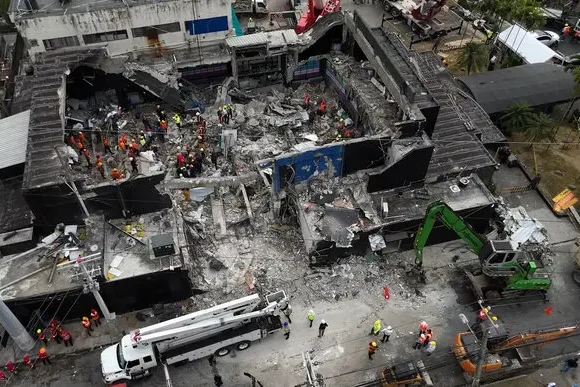
    A series of explosions struck central Tehran during the annual Quds Day demonstrations, resulting in one confirmed fatality and escalating tensions in the ongoing military confrontation between Iran and the US-Israel alliance now entering its fourteenth day.

    The blast occurred Friday afternoon at Ferdowsi Square where thousands had gathered for the international day of solidarity with Palestine. While the exact cause remains undetermined, the explosion came shortly after Israeli officials had warned of potential airstrikes in the area.

    Iran’s state-run Press TV reported one woman killed by shrapnel from what they described as a US-Israeli aerial attack, though no further casualty details were provided. According to Iranian health authorities, the cumulative toll since February 28 stands at 1,444 fatalities and 18,551 injured from American and Israeli military operations.

    Despite security concerns, state media reported continued large turnout for Quds Day commemorations across multiple Iranian cities. Participants carried Iranian flags and images of Palestinian fighters while chanting “Death to Israel” and “Death to America” during the marches.

    The demonstrations were attended by senior Iranian officials including President Masoud Pezeshkian and National Security Council Secretary Ali Larijani, who asserted that Israel’s bombing campaign reflected “fear” and criticized US President Donald Trump for underestimating Iranian resolve.

    The global implications of the conflict continued to intensify with Iran’s newly appointed Supreme Leader announcing the permanent closure of the Strait of Hormuz to international shipping. This strategic waterway, which typically handles approximately 20% of global oil exports, has become the focal point of escalating regional tensions.

    The maritime blockade has created massive congestion with dozens of oil tankers stranded in lengthy queues, severely disrupting global energy supplies and driving crude prices to approximately $105 per barrel—a significant increase over recent months. This price surge has triggered fuel rationing measures in neighboring Gulf states including Oman, UAE, and Kuwait as governments attempt to manage limited supplies and prevent social unrest.

    The economic impact extends throughout Asia and beyond, affecting all nations dependent on Hormuz transit routes. Supply chain disruptions are now affecting both transportation networks and industrial operations, increasing economic pressure across the region.

  • Israel presses strikes as Lebanon says 26 paramedics killed since war began

    Israel presses strikes as Lebanon says 26 paramedics killed since war began

    BEIRUT, Lebanon—The border conflict between Israel and Hezbollah militants intensified over the weekend, with Lebanese authorities reporting devastating casualties among medical personnel. According to official statements, 26 paramedics have been killed since hostilities erupted earlier this month following US-Israeli strikes that killed Iranian supreme leader Ayatollah Ali Khamenei.

    The violence escalated dramatically when Israeli strikes targeted a healthcare facility in the southern town of Burj Qalawiya overnight, killing 12 medical professionals including doctors, nurses, and paramedics. The attack has sparked international concern about the protection of medical personnel in conflict zones.

    Israeli military officials defended their actions, claiming they had struck approximately 110 Hezbollah command centers since the conflict began. Military spokesman Avichay Adraee stated that Israel would act “in accordance with international law against any military activity” involving Hezbollah’s use of medical facilities or ambulances for military purposes.

    The conflict has expanded beyond traditional border areas, with strikes reported in northern Beirut suburbs including the densely populated Nabaa-Burj Hammoud area, which houses a significant Armenian-Lebanese community. Residential buildings in these areas suffered direct hits, causing civilian casualties and widespread fear among residents who reported sleeping in cars for safety.

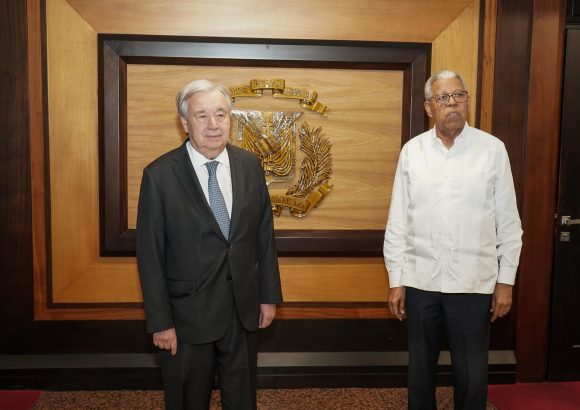
    Diplomatic efforts are underway to de-escalate the situation. French President Emmanuel Macron revealed that the Lebanese government has expressed willingness to engage in “direct talks” with Israel, with Paris offering to host negotiations. Meanwhile, UN Secretary-General Antonio Guterres, during his visit to Lebanon, launched a $325 million humanitarian appeal and called for an immediate cessation of hostilities.

    The situation remains volatile with Hezbollah leader Naim Qassem declaring readiness for a prolonged confrontation, while international peacekeeping forces face increased danger—a UN position near Mais al-Jabal was recently hit by gunfire, lightly wounding a Nepali peacekeeper.

  • Protesters ransack a Cuban communist party office—state media

    Protesters ransack a Cuban communist party office—state media

    HAVANA, Cuba—In a significant escalation of civil discontent, a provincial office of the Cuban Communist Party was vandalized overnight Friday into Saturday in the eastern town of Moron. State-run media confirmed the incident, attributing it to public fury over persistent nationwide blackouts and critical food shortages. This outburst highlights the deepening humanitarian crisis in Cuba, exacerbated by a stringent U.S. oil blockade and intensified pressure from the Trump administration, which has openly advocated for regime change in Havana.

    Social media footage circulated online depicted a small group of protesters forcibly entering the party headquarters, seizing documents, computers, and furniture, and setting them ablaze in the streets. The state-run newspaper Invasor reported that five individuals were arrested following what it described as an act of vandalism. The publication stated that the gathering initially began peacefully but devolved into violence after exchanges with local authorities.

    This event is part of a broader pattern of civil demonstrations emerging across the island, where residents increasingly resort to nightly cacerolazos—the banging of pots and pans—from their homes or in public spaces to protest severe shortages of food, medicine, and other essentials, as well as rolling power outages that sometimes extend up to 15 hours per day. Although protests are uncommon in Cuba due to fears of government repression—evidenced by harsh prison sentences for participants of the 2021 rallies—the current wave of dissent has spread from Havana, the epicenter of the blackouts, to other regions including Moron, located 500 kilometers east of the capital.

    Amid the turmoil, Cuban authorities announced on Friday the initiation of a prisoner release program negotiated through the Vatican and confirmed ongoing dialogues with the United States, though the specifics of these discussions remain undisclosed. The nation’s economy, already strained by a six-decade-old U.S. trade embargo, now teeters on the brink of collapse due to the recent oil blockade. President Donald Trump, who has asserted that Cuba poses an “extraordinary threat” to U.S. interests, effectively halted the country’s oil supply from Venezuela—a critical ally under Nicolás Maduro—further crippling Cuba’s energy infrastructure and amplifying public suffering.

  • US embassy attacked in Baghdad, strikes hit Iran-backed fighters

    US embassy attacked in Baghdad, strikes hit Iran-backed fighters

    BAGHDAD, Iraq — Security sources confirmed a drone attack struck the US embassy compound in Baghdad on Saturday, marking a significant escalation in regional hostilities. The assault occurred shortly after precision strikes killed three members of Kataeb Hezbollah, a powerful Iran-backed militia designated as a terrorist organization by Washington.

    The diplomatic mission issued an urgent security alert following the incident, advising American citizens to evacuate immediately due to persistent threats from missiles, drones, and rockets in Iraqi airspace. The embassy specifically warned against approaching either the Baghdad facility or the consulate general in Erbil, noting continued attacks around both security zones.

    Black smoke billowed above the embassy complex following morning explosions, according to eyewitness accounts. This represents the second direct attack on the diplomatic facility since the outbreak of regional conflict triggered by US and Israeli operations against Iran on February 28.

    The Islamic Resistance in Iraq, an umbrella organization for several Tehran-aligned armed groups, has claimed responsibility for daily assaults against US installations throughout the region. Meanwhile, Kataeb Hezbollah conducted funeral processions for three fighters killed in the earlier strikes, including commander Abou Ali al-Amiri. Unverified local reports suggest the group’s top leader, Ahmad al-Hamidawi, may have been wounded in what a pro-Iranian source described as a ‘targeted assassination attempt.’

    Residents of Baghdad’s Arasat neighborhood expressed surprise upon learning that a modest residence struck in the operations housed Kataeb Hezbollah members. No party has officially claimed responsibility for the counter-strikes against the Iran-backed faction.

  • US boosts Guyana Police Force capacity

    US boosts Guyana Police Force capacity

    In a significant move to bolster regional security capabilities, the United States has completed an intensive executive leadership program for senior officers of the Guyana Police Force (GPF). The specialized training, conducted from March 9-12, 2026, at the Miami-Dade Sheriff’s Office (MDSO) in Florida, represents the latest development in ongoing security cooperation between the two nations.

    The program specifically targeted enhancement of crisis response protocols and command structure effectiveness within the Guyanese law enforcement agency. Eight high-ranking GPF officials engaged in hands-on training alongside MDSO experts, focusing on interagency communication strategies, risk assessment methodologies, and leadership techniques tailored for complex policing scenarios.

    Participants gained practical exposure to advanced law enforcement technology during site visits to MDSO’s Real Time Crime and Communications Center and the Midwest District Station. This immersive experience provided firsthand knowledge of cutting-edge crisis management protocols and technological integration in modern policing.

    This exchange builds upon previous collaborative efforts, including the inaugural GPF-MDSO crisis management training conducted in Georgetown during August 2025. The program received funding through the U.S. Department of State’s Bureau of International Narcotics and Law Enforcement Affairs under the Caribbean Basin Security Initiative (CBSI) framework.

    The CBSI represents a comprehensive U.S. security cooperation program involving Guyana and twelve other Caribbean nations, with strategic objectives including dismantling transnational criminal networks, combating narcotics trafficking, and strengthening regional security partnerships. The United States has reaffirmed its commitment to supporting the development of Guyana’s law enforcement institutions to enhance both national public safety and regional security stability.

  • Barbados seeks deeper Japan partnership to boost climate resilience

    Barbados seeks deeper Japan partnership to boost climate resilience

    Barbados is intensifying its collaborative efforts with Japan to reinforce national defenses against climate change through enhanced disaster resilience frameworks and expanded public-private partnerships. Speaking at the inaugural Japan-Barbados Business Mission held at Sandals Royal Conference Centre, Minister of Home Affairs Gregory Nicholls emphasized that true resilience requires proactive adaptation rather than mere recovery systems.

    Minister Nicholls highlighted the longstanding bilateral cooperation that has substantially improved the island’s disaster management capabilities. He specifically referenced the Caribbean Disaster Management Project—a joint initiative between the Caribbean Disaster Emergency Management Agency and the Japan International Cooperation Agency (JICA)—which executed critical flood mitigation infrastructure in Speightstown while simultaneously strengthening technical capacities within governmental agencies and community disaster response teams.

    The minister articulated how Barbados’ direct experiences with climate-induced hazards including hurricanes, floods, and droughts have underscored the necessity for forward-thinking disaster preparedness strategies. “We must leverage all available expertise and resources to ensure comprehensive safety for all Barbadians,” Nicholls stated, while acknowledging Japan’s global leadership in disaster risk management and water-related resilience solutions.

    Japanese Ambassador Yusuke Miyasaka reinforced Tokyo’s commitment to supporting resilience initiatives throughout Barbados and the wider Caribbean region. He revealed Japan’s $2 million pledge toward constructing the Caribbean Emergency Operations Centre—dubbed a “centre of excellence”—which will be situated adjacent to the Caribbean Logistics Hub. This facility is projected to significantly enhance regional disaster response capabilities.

    Ambassador Miyasaka further announced Japan’s strategy to increase private sector participation in Caribbean resilience projects, noting that geographical distance has historically limited Japanese corporate engagement in the region. The business mission, featuring fifteen Japanese companies specializing in disaster prevention infrastructure, digital technologies, and water management systems, aims to bridge this gap by showcasing cutting-edge technologies and facilitating knowledge exchange. The ambassador expressed optimism that this forum would catalyze stronger bilateral partnerships in climate resilience innovation.

  • Sri Lanka repatrieert stoffelijke resten 84 Iraanse matrozen van Amerikaanse aanval

    Sri Lanka repatrieert stoffelijke resten 84 Iraanse matrozen van Amerikaanse aanval

    Sri Lanka has initiated the repatriation process for the remains of 84 Iranian naval personnel who perished when their frigate was torpedoed by a US submarine in international waters. The incident occurred on March 4th near Sri Lanka’s coastline, approximately nine days prior to the announcement.

    Foreign Ministry spokesperson Thushara Rodrigo confirmed to AFP that the transfer would be conducted via a chartered aircraft dispatched by Iran. The Iranian embassy subsequently verified these arrangements, according to Reuters.

    The sinking of IRIS Dena represents a significant geographical expansion of Middle Eastern conflict into the Indian Ocean, drawing widespread condemnation as a blatant violation of international maritime law.

    Meanwhile, 32 surviving sailors rescued by the Sri Lankan navy remain on the island nation. Rodrigo noted that while the International Committee of the Red Cross (ICRC) has been consulted regarding wounded personnel, the organization is not involved in the repatriation process.

    In a related development, a second Iranian warship, IRIS Bushehr, entered Sri Lankan territorial waters one day after the sinking. Colombo is currently providing safe harbor for the vessel and its 219 crew members.

    Sri Lankan officials confirm no discussions have yet occurred regarding the repatriation of either the Bushehr’s crew or the surviving Dena sailors, though all personnel will be treated according to Colombo’s treaty obligations.

    Of the 32 hospitalized survivors, 22 have been discharged and are currently housed at a southern air force base, separated from the Bushehr crew. Sri Lanka now hosts 251 Iranian sailors total.

    The Bushehr remains under Sri Lankan naval custody while engineers attempt repairs on one of its reportedly disabled engines.

    A third Iranian vessel has found safe harbor at Kochi port in southern India, with its 183 crew members receiving humanitarian protection from New Delhi. Both South Asian nations cite humanitarian concerns as their primary motivation, fearing additional American attacks against Iranian naval assets.

  • Caribbean Tourism Leaders call for realistic climate action at ITB Berlin

    Caribbean Tourism Leaders call for realistic climate action at ITB Berlin

    Caribbean tourism authorities delivered a powerful message at ITB Berlin 2026, warning that inadequate climate adaptation strategies threaten the very foundation of tourism-dependent regions. The urgent call to action came during multiple sessions at the global tourism convention, where leaders emphasized the critical gap between climate awareness and practical implementation.

    Dona Regis-Prosper, Secretary-General and CEO of the Caribbean Tourism Organization (CTO), drew from personal experience with devastating hurricanes to underscore the immediacy of climate threats. “There is no teacher as great as practical experience,” she stated during the session ‘The Climate Adaptation Gap in Tourism: From Risk to Resilience.’ Regis-Prosper advocated for moving beyond theoretical frameworks to implement concrete, actionable measures that build genuine resilience.

    CTO Deputy Director of Sustainable Tourism Narendra Ramgulam reinforced this perspective, noting that Caribbean nations already confront visible climate impacts including reef degradation and beach erosion that directly affect visitor experiences and local livelihoods. “When you talk about climate risk, we see it and we feel it more than others,” Ramgulam observed during the session ‘These Ideas Will Transform Tourism.’ He highlighted the particular challenge smaller island states face in securing funding for climate projects despite having abundant risk assessments and project concepts.

    A significant development at the convention was the strengthened partnership between CTO and The Travel Foundation, marked by a renewed Memorandum of Understanding. The agreement, signed by Regis-Prosper and Travel Foundation CEO Jeremy Sampson, establishes a collaborative framework for advancing sustainable, climate-resilient tourism across the Caribbean.

    Sampson characterized the Caribbean as simultaneously on the frontlines of climate change and at the forefront of innovation. He emphasized that the partnership aims to align climate action with destination stewardship and resource allocation, ensuring tourism continues benefiting local communities amid growing climate risks.

    The CTO maintained a prominent presence throughout the three-day event, conducting bilateral meetings under a unified Caribbean banner to build partnerships focused on resilience and regenerative tourism approaches.

  • EC$810,000 in expanded IDB support through Compete Caribbean+

    EC$810,000 in expanded IDB support through Compete Caribbean+

    Grenada has obtained significant international backing for its ambitious marine conservation agenda, securing $300,000 in funding from the Compete Caribbean+ program. This financial support will power a comprehensive Technical Cooperation initiative focused on implementing the nation’s Framework for Sustainable Ocean Governance.

    The groundbreaking project merges two critical marine priorities: finalizing Grenada’s National Ocean Policy and Strategic Action Plan (NOP/SAP), and launching an enhanced offshore fisheries monitoring system. The initiative emerged from diplomatic discussions spearheaded by Kerryne James, Minister for Climate Resilience, the Environment and Renewable Energy. Ambassador Jerry Enoe, Grenada’s Special Envoy for Oceans, developed the proposal in coordination with the Ministry of Blue Economy and Marine Affairs.

    Notably, the project’s funding increased by 50% from its original $200,000 proposal following sustained advocacy efforts by Ambassador Enoe, including presentations at the IDB Regional Dialogue Meeting in Bridgetown, Barbados in October 2025.

    Ambassador Enoe emphasized the significance of this partnership: “This expanded collaboration with Compete Caribbean+ represents a substantial advancement for Grenada’s Blue Economy. It empowers us to strengthen domestic governance while simultaneously fulfilling international obligations, including NOAA marine mammal protection standards and climate targets specified in our Nationally Determined Contributions.”

    Kayla Grant, Executive Director at Compete Caribbean+, highlighted the human dimension of the initiative: “Sustainable ocean governance fundamentally concerns people—fisherfolk, entrepreneurs, families, and future generations who depend on healthy marine ecosystems. With our donors’ support, Compete Caribbean+ is enabling Grenada to enhance climate resilience, foster private sector innovation, and implement inclusive, data-driven solutions that safeguard marine environments while promoting sustainable economic development.”

    The Technical Cooperation initiative is structured around three core components:

    1. Formalizing Governance Frameworks ($405,000 EC): Finalizing and submitting the NOP/SAP to Cabinet, integrating climate commitments, and establishing a National Ocean Governance Committee.

    2. Institutionalization and Public Engagement ($135,000 EC): Developing comprehensive public communication strategies, including outreach materials and engagement activities to build awareness and support for Grenada’s ocean policy.

    3. Technology Adoption for Monitoring and Compliance ($270,000 EC): Installing Electronic and Vessel Monitoring Systems on longline fishing vessels, creating marine mammal interaction protocols, and providing training to enhance data reporting and regulatory compliance.

    Minister James noted the broader implications: “This initiative demonstrates Grenada’s leadership in merging climate resilience with ocean sustainability. It establishes a paradigm for aligning national and global priorities through innovative, inclusive partnerships.”

    The Ministry of Blue Economy and Marine Affairs will oversee project implementation with technical support from the Inter-American Development Bank. The initiative is projected to yield long-term institutional, ecological, and economic benefits for Grenada’s marine sector.

    Compete Caribbean+ is a private sector development program jointly funded by the Inter-American Development Bank, the United Kingdom Foreign Commonwealth & Development Office, the Caribbean Development Bank, and the Government of Canada.

  • UN warns Middle East conflict fueling humanitarian crisis as displacement, food and fuel prices rise

    UN warns Middle East conflict fueling humanitarian crisis as displacement, food and fuel prices rise

    The United Nations has issued a grave warning regarding the escalating humanitarian catastrophe stemming from intensified Middle Eastern hostilities, highlighting severe population displacement and alarming surges in global food and fuel prices. UN spokesperson Stéphane Dujarric revealed that official figures document over 822,000 displaced individuals, including approximately 300,000 children, with about 128,000 people currently sheltering across 600 collective sites throughout the region.

    Substantial humanitarian operations are underway with UN agencies and partners distributing approximately 632,000 hot meals and 18,000 ready-to-eat meals to affected populations. Critical water and fuel supplies include more than 382,000 liters of bottled water, over 1,700 cubic meters of clean water delivered via water trucking, and 211,000 liters of fuel to sustain water services for an estimated 700,000 people.

    The crisis intensifies as military operations expand, with the United States and Israel conducting airstrikes on Iranian targets while Iran executes retaliatory strikes against sites in neighboring Gulf states. This dangerous escalation occurs alongside deteriorating conditions in southern Lebanon, where hostilities between Israel and armed groups have resulted in growing civilian casualties, widespread destruction, and restricted peacekeeper movements.

    UN officials are urgently calling for adherence to UN Security Council Resolution 1701 to stabilize the Israel-Lebanon border while warning of potential disruptions to critical shipping routes through the Strait of Hormuz. UN Under-Secretary-General for Humanitarian Affairs Tom Fletcher emphasized the strategic waterway’s vital importance, noting that any disruption could delay humanitarian shipments by up to six months and dramatically increase costs for essential supplies.

    The conflict’s ripple effects are already evident with flour prices in Gaza surging by 270 percent and global shipping costs rising 16 percent compared to the previous year. UNCTAD reports indicate growing disruptions to commercial traffic that threaten humanitarian operations in East Africa and sub-Saharan regions, particularly in famine-threatened nations like Somalia. The UN continues high-level discussions to ensure safe passage of humanitarian cargo through the strategic waterway to prevent millions from losing access to life-saving assistance.