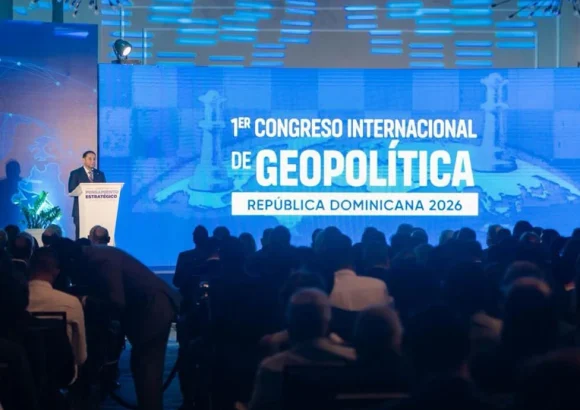
SANTO DOMINGO – Speaking at the closing ceremony of the inaugural 1st International Geopolitics Congress Dominican Republic 2026, former Dominican Republic president Leonel Fernández has delivered a stark analysis of how ongoing global conflicts are rippling through Latin American economies. Fernández highlighted that the twin conflicts in Ukraine and the Middle East have upended long-stable global supply chains for critical commodities including oil, natural gas, aluminum, and grains, creating a deeply divided economic landscape across the Latin American and Caribbean region.
According to Fernández, the economic fallout of these disruptions has been anything but uniform across the region. Fuel-exporting economies, including major players such as Brazil, Colombia, and Mexico, have seen unexpected gains from elevated commodity prices, while net energy importing nations – the Dominican Republic, Chile, and Peru among them – have been forced to grapple with skyrocketing energy costs, persistent broad-based inflation, and a marked slowdown in economic growth.
In his address, Fernández also addressed the policy responses from regional monetary authorities, noting that central banks across Latin America have moved aggressively to curb rising prices by hiking interest rates. He stressed that protecting the institutional autonomy of these central banks is non-negotiable for maintaining long-term economic stability, calling on regional leaders to safeguard this independence from political interference.
Closing his remarks, Fernández laid out a vision for a reimagined 21st-century global order rooted in four core pillars: lasting peace, broad inclusion, global equity, and long-term environmental sustainability. He argued that such a framework is the only way to insulate developing economies from the volatile spillover effects of distant geopolitical conflicts.
The landmark congress, organized by the Dominican Center for Strategic Thought (CEPED), gathered a diverse cross-section of global stakeholders, including sitting political leaders, leading academic researchers, senior diplomats, and top business representatives. The overarching goal of the gathering was to unpack the shifting dynamics of the global order and unpack what these changes mean for Latin America’s future.
Other prominent speakers at the event included noted Spanish geopolitical analyst Pedro Baños, who drew a clear connection between a nation’s economic resilience and its standing in global power dynamics. Additional expert contributions came from leading scholars Ana Esther Ceceña, Alfredo Jalife, and Iván Gatón. José Ignacio Paliza, the Dominican Minister of the Presidency, used his address to emphasize that energy security has emerged as a make-or-break factor for national economic competitiveness in the new geopolitical landscape.