分类: society

  • Infotep to transform former Legislators’ Club into hospitality and tourism training center

    Infotep to transform former Legislators’ Club into hospitality and tourism training center

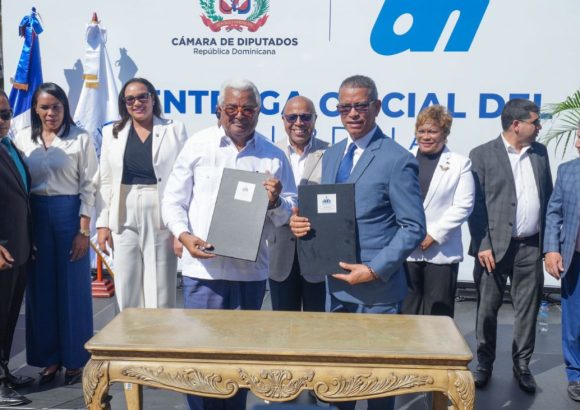
    In a formal ceremony held in Santo Domingo, Dominican Republic, a landmark transition for public education and tourism development has been completed: the National Institute of Technical and Professional Training (Infotep) has formally taken ownership of the former Legislators’ Club, a property that will be redeveloped into a cutting-edge vocational training center focused exclusively on the hospitality and tourism sectors.

    The handover ceremony was co-led by two key Dominican government bodies: the General Directorate of National Assets and the Chamber of Deputies. Rafael Burgos Gómez, head of the National Assets Directorate, officially handed over the property deed to Luis Manuel Rodríguez, Infotep’s Deputy Director General, who attended the event on behalf of Infotep Director General Maira Morla Pineda.

    This property transfer is not an ad-hoc arrangement; it is rooted in formal legal authorization. The move was greenlit by Resolution No. 670, which was passed by relevant authorities in July 2024, alongside two existing executive orders: Decrees 235-01 and 664-23. All three legal documents explicitly approve the repurposing of the site for public use and specialized technical-professional training.

    Alfredo Pacheco, president of the Chamber of Deputies, emphasized the strategic significance of the project during the ceremony. He noted that the initiative reimagines an underused recreational space as an educational institution that will upskill thousands of young Dominican workers, while also reinforcing the competitiveness of one of the country’s most vital economic pillars: tourism.

    Government officials outlined that the new training center will address a gap in accessible technical education in the Santo Domingo Este region, expanding local learning opportunities for residents seeking careers in hospitality and tourism. By cultivating a skilled local workforce, the center is expected to support the sustained long-term growth of the Dominican Republic’s tourism industry, which is a major driver of employment and national GDP.

    Several other senior stakeholders were in attendance at the handover, including Rafael Santos Badía, multiple sitting legislators, and senior representatives from both Infotep and the General Directorate of National Assets.

  • Authorities in St Elizabeth seeking alternative emergency shelters as hurricane season approaches

    Authorities in St Elizabeth seeking alternative emergency shelters as hurricane season approaches

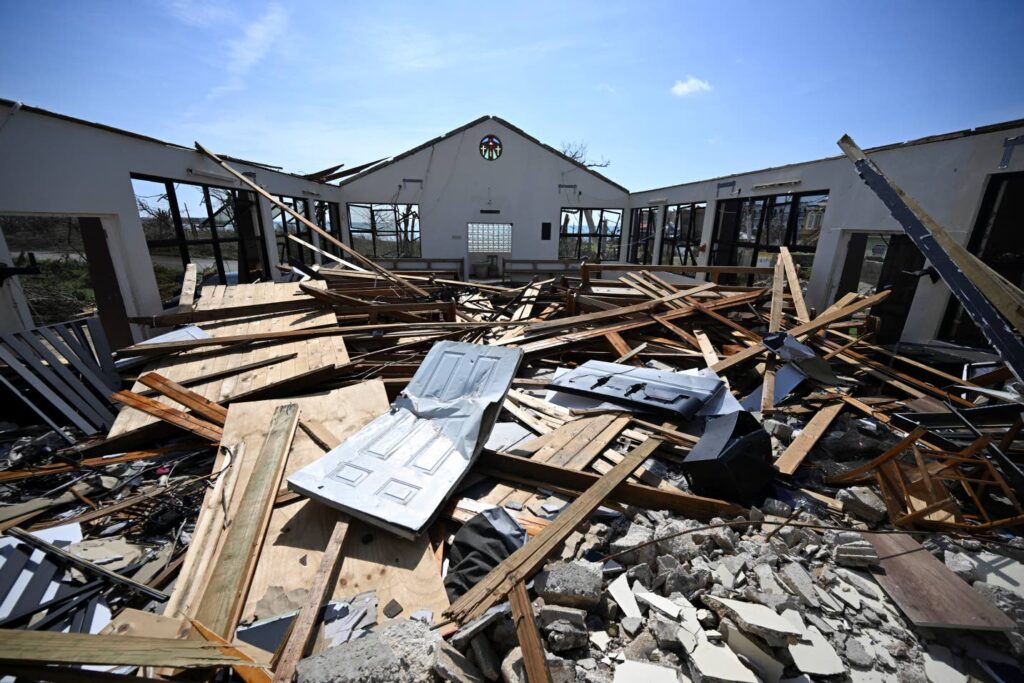
    In southwestern Jamaica, local authorities in the parish of St Elizabeth have launched an urgent push to map out alternative emergency shelters and a new disaster response hub ahead of the 2026 Atlantic Hurricane Season, which officially opens on June 1. The urgent review comes after widespread damage from Hurricane Melissa left most of the parish’s traditional safe haven facilities unusable, leaving officials racing to fill critical gaps in disaster preparedness.

    During the monthly general meeting of the St Elizabeth Municipal Corporation held this Thursday, Richard Solomon, the body’s chairman and mayor of Black River, St Elizabeth’s capital, outlined the new direction for preparedness efforts. A high-level gathering convened last week in the national capital Kingston with Desmond McKenzie, Jamaica’s Minister of Local Government and Community Development, pushed local leaders to expand their search beyond the facilities that have historically served as emergency shelters to protect the parish’s residents.

    To date, Solomon reported, municipal teams have completed more than 80 percent of assessments for existing potential shelter sites. The results paint a stark picture of the challenges ahead: more than half of all school buildings—long the backbone of the parish’s hurricane shelter network—are no longer structurally sound enough to accommodate displaced residents, after sustaining severe damage from Hurricane Melissa. The situation is even grimmer for community centres, with more than 60 percent of assessed facilities failing to meet basic safety standards for hosting people fleeing storms.

    Facing this critical shortfall, the St Elizabeth Municipal Corporation has turned to cross-sector partnerships to address the gap, Solomon explained. The central Jamaican government recently allocated targeted funding to churches across St Elizabeth to support cleanup and structural restoration work on their properties. Officials now plan to leverage these renovated church spaces as alternative emergency shelters for the coming storm season.

    “The Ministry of Local Government is fully aware of our critical shelter shortage, which is why we have maintained ongoing dialogue to align on next steps,” Solomon noted. “The Social Development Commission (SDC) has also been fully engaged from the start, as they have supported our assessment work across the parish. We are grateful for the partnership with local churches, the SDC, and community leaders, because transparency around the challenges we face right now is key to building an effective response.”

    Beyond securing new shelters, the parish is also actively searching for a new location for its emergency response command centre. The existing Emergency Operation Centre is based in Black River, but widespread damage to the town from Hurricane Melissa has left it unable to function as a coordinated disaster hub, and the town has not yet fully recovered from the 2022 storm.

    “I encourage all stakeholders to collaborate with us as we vet potential locations for this critical hub,” Solomon emphasized. “The last scenario we want to face this season is being unable to mount a coordinated response because our command centre is compromised. We need a central base from which we can issue clear directives, coordinate rescue and relief efforts, and respond rapidly if a storm impacts the parish.”

  • Survivor Greece contestant seriously injured in boat accident in the Dominican Republic

    Survivor Greece contestant seriously injured in boat accident in the Dominican Republic

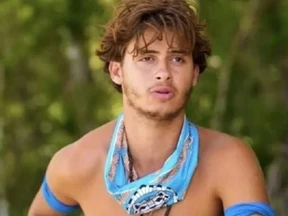
    A devastating boating accident off the coast of the Dominican Republic has left a young Greek reality TV contestant with life-altering injuries, prompting local authorities to move forward with formal criminal charges against the vessel’s captain. The incident unfolded earlier this month near Saona Island, when 22-year-old Stavros Floros, a current competitor on the popular series *Survivor Greece*, was struck by the tourist boat’s propellers during an off-filming spearfishing excursion.

    Local judicial officials confirmed that the case has been formally opened under Article 309 of the Dominican Penal Code, which covers offenses resulting in grievous bodily harm. As of this report, the captain remains in official custody, with a closed-door evidentiary hearing scheduled Friday in the capital city of Santo Domingo. At the hearing, judges will rule on whether the operator will continue to be held in pre-trial detention, or be released under bail or house arrest for the duration of the ongoing investigation.

    Medical reports confirm Floros suffered a partial amputation of his lower left leg and severe soft-tissue and bone trauma to his right leg after the collision. AcunMedya, the Istanbul-based production company behind *Survivor Greece*, released a statement shortly after the accident confirming that the incident occurred outside of scheduled competition filming during a scheduled break. As of the latest update, Floros remains hospitalized in the Dominican Republic, where his condition is listed as serious but stable, and he is no longer considered in immediate critical danger.

    In interviews with Greek media outlets, Floros’ family shared new details about the chaotic aftermath of the crash, and offered an update on the young contestant’s remarkable mindset. His mother told reporters that despite the severity of his injuries, Floros remains unwaveringly optimistic, saying he told her, “Mom, why should I be sad? I’m alive.” She also confirmed that a team of divers accompanying the group had placed standard surface marker buoys in the water to mark the location of the spearfishing group before the collision. Floros’ father added that the trip to the nearest hospital took approximately 40 minutes, during which his son suffered extensive life-threatening blood loss.

    In the wake of the accident, both AcunMedya and Greek national broadcaster SKAI TV announced an immediate temporary suspension of *Survivor Greece* production and on-air broadcasts to honor Floros and allow for the investigation to proceed. SKAI TV has also committed to covering all costs associated with Floros’ ongoing medical treatment and future rehabilitation, as Dominican investigators work to piece together the full sequence of events that led to the crash.

    Original reporting for this story was provided by Greek newspaper Tovima.

  • 149 foreign nationals officially become Dominican citizens

    149 foreign nationals officially become Dominican citizens

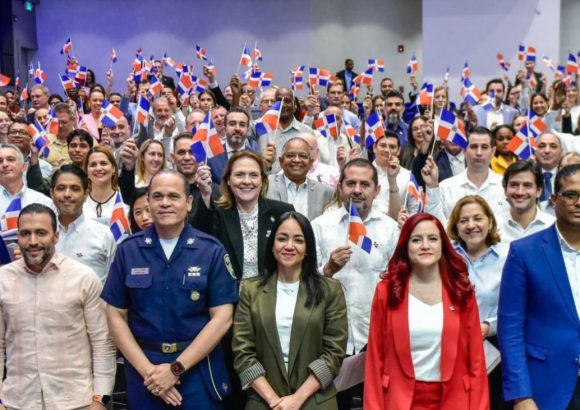
    SANTO DOMINGO – A landmark citizenship naturalization ceremony held at the Higher Institute for Police Studies (IPES) here this week welcomed 149 people from more than 30 nations as official Dominican citizens, in an event led by Dominican Interior and Police Minister Faride Raful.

    The group of new citizens brings together a broad cross-section of global backgrounds, with the largest cohorts hailing from regional and international partners. Venezuela accounts for 39 of the newly naturalized Dominicans, followed by Cuba with 18, Colombia with 14, Italy with 12, and both Spain and Russia contributing 10 new citizens each. Beyond these largest groups, the ceremony also included applicants from Belarus, Pakistan, China, South Africa, Belgium, Germany, Lebanon and a range of other countries, highlighting the growing global draw of the Dominican Republic as a place to build a permanent life.

    Addressing the assembled new citizens and event attendees, Minister Raful emphasized the core responsibilities that come with Dominican nationality. She urged all recipients of citizenship to respect the country’s Constitution, abide by its legal framework, and uphold the democratic values that anchor Dominican national identity. Beyond rights and protections, Raful framed naturalization as a mutual commitment: gaining Dominican citizenship means joining the nation’s ongoing development project, and committing to full, active participation across the country’s social, economic and cultural spheres.

    The ceremony marks one of the country’s larger recent collective naturalization events, reflecting consistent migration flows into the Dominican Republic from across the Caribbean, Latin America, Europe and other world regions. For the new citizens, the swearing-in ceremony formalizes their transition to permanent membership in Dominican society, opening full access to civic rights and opportunities across the island nation.

  • 68-y-o bearer killed during robbery attempt in Half-Way Tree

    68-y-o bearer killed during robbery attempt in Half-Way Tree

    KINGSTON, Jamaica — A senseless act of violent crime has shaken St Andrew’s bustling commercial district, after a 68-year-old courier working for a local financial firm was gunned down in broad daylight during an attempted robbery on Half-Way Tree Road Friday afternoon.

    The victim has been identified as Lawrence Kessna, a resident of Phase 2 in Seaview Gardens, St Andrew. The fatal shooting followed a physical struggle between Kessna and the would-be robber, who targeted him shortly after he completed a banking transaction, law enforcement officials confirmed.

    According to initial police reports, the incident unfolded at approximately 1:22 p.m., when Kessna had visited a local bank branch to cash a J$10 million cheque on behalf of his employer. The funds were earmarked for customer disbursements across multiple distribution sites, and Kessna carried the cash in a plain grey knapsack when he left the bank building.

    As Kessna exited, the suspect immediately moved to seize the knapsack. A struggle broke out when the victim resisted the theft attempt, and the attacker — failing to wrest the bag away — drew a weapon and fired multiple shots, striking Kessna in the upper body. Immediately after the shooting, the perpetrator fled the scene on a motorcycle that had been waiting nearby for a getaway. Bystanders alerted emergency services quickly, and police transported the wounded 68-year-old to Kingston Public Hospital, where medical staff pronounced him dead upon arrival. The grey knapsack holding the cash remained with Kessna and was turned over to law enforcement at the hospital.

    In the wake of the brazen midday attack, Jamaica’s top law enforcement officials have issued a firm condemnation of the violence, while extending condolences to Kessna’s family, friends, colleagues and the local business community mourning the loss.

    “We will not allow criminals to turn our commercial centres into hunting grounds,” said Assistant Commissioner Michael Phipps, head of the Jamaica Constabulary Force’s (JCF) Area Four division. Phipps noted that he has issued direct orders for expanded, sustained high-visibility patrols across St Andrew’s commercial districts, a measure designed to disrupt criminal planning, deter potential attacks, and apprehend perpetrators before they can strike.

    Phipps confirmed that investigations into the attack are already underway, with forensic evidence collection ongoing and law enforcement partnering closely with the local business community and other key stakeholders to identify and locate the attacker. Financial hubs across the region have been designated a top priority for both investigative work and increased proactive patrols going forward.

    In a public safety advisory released alongside the condemnation, Phipps reiterated a longstanding JCF offer for free police assistance to businesses transporting large sums of cash, urging operators to take advantage of the service to reduce risk.

    “We continue to urge business operators to ensure strong security measures when transporting especially large amounts of cash. The JCF continues to alert and advise persons doing large financial transactions and transporting large sums of cash to contact the police who are more than willing to assist, free of charge and I repeat free of charge,” Phipps said.

    The assistant commissioner added that public safety remains the JCF’s top priority, with stepped-up operations set to continue in high-risk areas around banks, commercial offices, and ATMs. He urged the public to remain calm but maintain a heightened state of vigilance in these zones.

    “The JCF remains committed to restoring order and public confidence. We will not relent until those responsible are held,” Phipps said.

  • J’can sentenced to three years in US prison for US$600,000 lottery scam

    J’can sentenced to three years in US prison for US$600,000 lottery scam

    In a landmark cross-border fraud case concluded this week, a 34-year-old Jamaican national convicted of orchestrating a years-long lottery scam that stripped a 73-year-old southwest Washington retiree of more than $600,000 — including her home — has been sentenced to three years in federal prison.

    Roshard Andrew Carty, extradited to the United States earlier this year to face charges, received his sentence Thursday during a hearing at the U.S. District Court in Tacoma, following his guilty plea entered in February 2026. The U.S. Attorney’s Office for the Western District of Washington publicly released details of the ruling Friday, laying bare the calculated, relentless tactics Carty used to exploit his vulnerable victim over nearly four years.

    Court documents trace the origins of the scheme back to 2020, when Carty first initiated contact with the elderly victim. Posing as a representative of the well-known sweepstakes organization Publisher’s Clearinghouse, he falsely claimed the victim had been selected to receive a $22 million cash grand prize and a new luxury vehicle. To access the supposed windfall, Carty insisted, the victim first needed to pay a series of upfront taxes and processing fees. To prevent her from discovering the fraud, he added a chilling layer of coercion: he claimed the FBI was recording all their conversations and ordered her not to disclose the win or the required payments to any third party.

    What began as small, incremental requests for cash quickly ballooned into a systematic looting of the victim’s life savings. Between August 2020 and February 2024, Carty convinced the victim to transfer more than $600,000 to a network of money couriers operating across the United States, who then forwarded the entire sum to Carty in Jamaica. When the victim ran out of liquid savings, Carty manipulated her into borrowing against her home equity, ultimately pressuring her to sell the property entirely to cover the bogus fees. He repeatedly lied that previous transfers had been lost or stolen, demanding additional payments to keep the fake prize claim alive.

    Prosecutors emphasized that Carty’s efforts to maintain control of the victim were unprecedented in their persistence. Over the course of the fraud, he contacted her thousands of times using a rotating array of phone numbers and encrypted messaging apps to avoid detection. When the victim tried to cut off contact, he resorted to increasingly invasive tactics: he sent unsolicited tow trucks to her address, ordered repeated pizza deliveries to her home, and even contacted her landlord to request a welfare check, all as a ruse to re-establish communication and continue his manipulation.

    Carty was taken into custody by Jamaican law enforcement on August 21, 2025, and extradited to the U.S. to face arraignment in the Western District of Washington two months later, on October 23. Following his guilty plea in February, prosecutors and law enforcement officials called the sentence a just outcome for a crime that targeted a defenseless older adult.

    “Even as [the victim] hesitated and tried to resist,” U.S. District Judge Tiffany Cartwright noted during the sentencing hearing, “Carty persisted in contacting her through a variety of means.”

    First Assistant U.S. Attorney Neil Floyd echoed that condemnation in remarks after the ruling. “This defendant was relentless in defrauding a vulnerable victim,” Floyd said. “At every turn when she tried to end the contact, he persisted in playing on her isolation and her fear of losing the money she had already lost. He stole the money she was counting on to survive in retirement, so that he could buy luxuries and live large in Jamaica. It is despicable conduct deserving of this punishment.”

    FBI Seattle Special Agent in Charge Mike Herrington added that Carty went so far as to abuse public trust in law enforcement to advance his scheme. “His lies in pursuit of her money even went so far as to abuse the trust and credibility of law enforcement by claiming the FBI was recording a call,” Herrington said. “Ultimately, the victim lost her home without receiving any of the fictitious prize money Mr Carty had promised.”

    Investigators confirmed during the case that the southwest Washington victim was not Carty’s only target; court records indicate at least one other confirmed victim, with evidence suggesting additional unknown victims may have been targeted across the country. Prosecutors also raised ongoing concerns about public safety once Carty completes his prison term, noting that once he is deported back to Jamaica, U.S. probation authorities will have no ability to supervise his activities or monitor for repeat offending.

    In its sentencing memorandum, the government noted that Carty has shown no remorse for the harm he caused. “Carty’s conduct here shows he is relentless, callous, and has an aptitude for deception—he is unlikely to be deterred by the reality that his conduct left people like Victim 1 destitute,” the memorandum read. “Carty knew Victim 1, Victim 2, and likely others were insolvent because of him, and yet he persisted in his scam. And unlike with US-based defendants, the US Probation Office cannot effectively monitor Carty when he returns home.”

    Despite the ongoing risks, law enforcement officials said the case sends a clear message to transnational fraudsters targeting U.S. citizens: cross-border operations do not grant immunity from prosecution. “We hope this case sends a message to would-be lottery scammers that the FBI will work just as relentlessly with our partners to hold fraudsters accountable, even when they reside beyond the borders of the United States,” Herrington said.
  • Sophia Brown distributes care packages to hurricane-impacted St Elizabeth residents

    Sophia Brown distributes care packages to hurricane-impacted St Elizabeth residents

    Four months after Category 5 Hurricane Melissa left a trail of death and widespread destruction across western Jamaica, a Jamaican singer with deep roots in the hardest-hit region has returned to her childhood community to deliver much-needed aid to struggling families still picking up the pieces.

    Sophia Brown, who grew up in the farming district of Carisbrook in St Elizabeth — the parish that bore the brunt of the storm’s devastation — had watched the disaster unfold from her home overseas in the months after the storm hit. It was not until her recent trip back to the island that she got to see the full scale of the carnage that had upended hundreds of lives across the region.

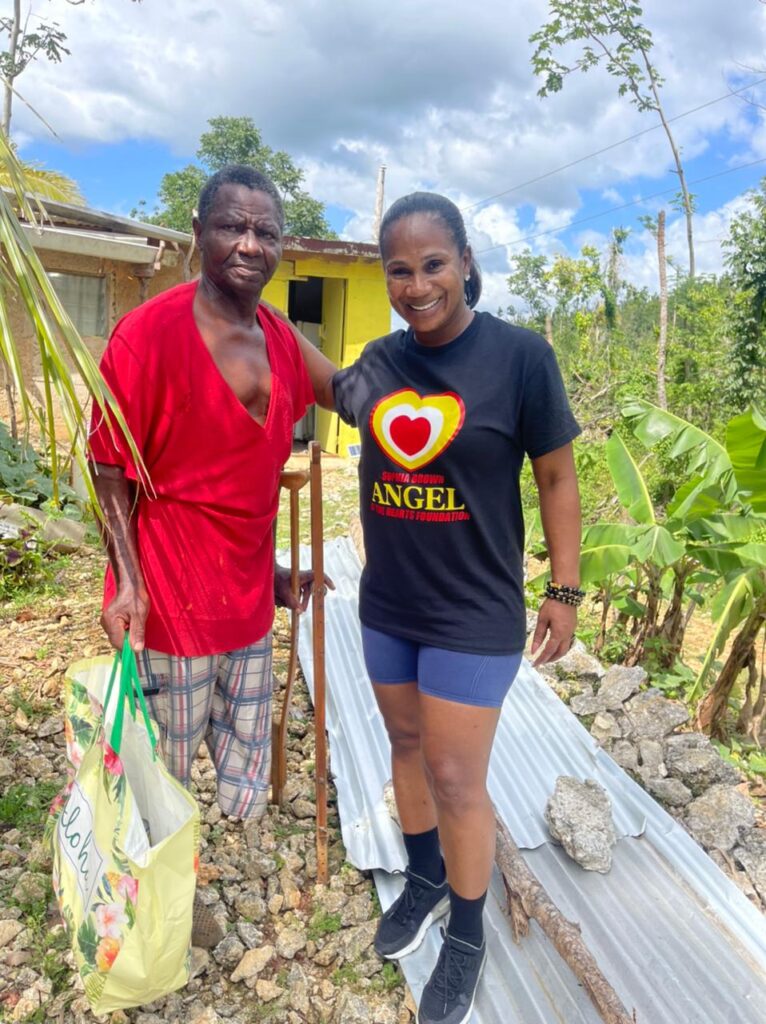
    Making the trip in early March, Brown and a volunteer team from her non-profit, the Angel Of The Hearts Foundation, distributed 85 care packages stocked with non-perishable food and critical daily essentials to local residents. The foundation extended its support further by dropping off additional relief packages at the Marie Atkins Shelter located in Kingston, Jamaica’s capital.

    Recalling the months she spent following the storm’s aftermath from abroad, Brown shared her experience with Jamaica’s *Observer Online*. “It was very heart-wrenching looking from abroad and seeing what was going on in the island. It made me realise that we all have to give back to our community,” she said. Though Brown was born in Kingston, her childhood in Carisbrook gave her a personal connection to the community hard hit by the storm. She also emphasized that the relief effort was not a solo project: the initiative received critical donations from Food For The Poor, fellow Jamaican singer Johnny Osbourne, and Barbara Ellison, all of which made the distribution possible.

    When Melissa made landfall on Jamaica on October 28, it left a devastating mark across the country’s western parishes. In addition to catastrophic damage to St Elizabeth, the storm also ravaged neighboring Westmoreland, Hanover, St James and Trelawny. Infrastructure, residential homes, and local schools were leveled, and the storm ultimately claimed 45 lives across the affected regions.

    In the wake of the disaster, members of the Jamaican diaspora overseas were moved to action, rallying together to raise millions of dollars in relief funding. All donated funds are currently monitored by the Jamaican government to ensure they reach affected communities.

    This is not the first charitable work carried out by Brown’s foundation: the Angel Of The Hearts Foundation runs annual programs supporting people living with Down syndrome. But in the wake of Hurricane Melissa, Brown stressed that long-term, sustained assistance is critical for communities still recovering months after the disaster.

    “It was necessary to go into my community and give back. It was really something to witness four months after the hurricane,” she noted, underscoring that recovery from a disaster of this scale is a slow process that requires ongoing support from both local and global contributors.

  • Cummings pledges ‘every effort’ amidst ‘super critical’ Grenadine water crisis

    Cummings pledges ‘every effort’ amidst ‘super critical’ Grenadine water crisis

    A devastating combination of historic low rainfall, lingering storm damage, and growing demand has pushed the Grenadine Islands of St. Vincent and the Grenadines into what health authorities are calling a “super critical” water shortage, prompting emergency relief measures while the government moves forward with long-overdue infrastructure projects to end chronic water insecurity in the region.

    In a radio interview with NBC Radio on May 14, 2026, Health Minister Daniel Cummings — a former general manager of the country’s Central Water and Sewerage Authority (CWSA) — explained that while the entire nation is grappling with drought conditions amplified by the 2021 eruption of La Soufriere volcano, the most severe crisis is concentrated in the smaller Grenadine islands. Unlike mainland St. Vincent, which draws water from natural rivers and mountain springs, the Grenadines have no permanent surface streams and limited groundwater reserves, leaving the chain almost entirely dependent on harvested rainwater stored in private household tanks and public catchment systems.

    Cummings outlined three overlapping factors that pushed the region into its current emergency. First, the 2025 wet season brought just 687.1 millimeters of rainfall across the country — less than half the average recorded over the previous four years, which saw between 1,455 mm and 1,552 mm of rain annually. Second, Hurricane Beryl, which made landfall in July 2024, caused widespread damage to the region’s rain-harvesting infrastructure: many rooftops and their water-channeling guttering systems were destroyed, hundreds of private storage tanks were shattered or contaminated after being breached, and public hillside catchment systems that feed large communal storage tanks were also severely damaged. Third, growing domestic and commercial demand for water has stretched already depleted reserves even thinner.

    The lingering impacts of the 2021 La Soufriere eruption have also worsened national water stress, Cummings added. The volcanic blast destroyed vast swathes of mountain vegetation on mainland St. Vincent, reducing the natural retention of rainfall and lowering output from the rivers and springs that supply the mainland. Combined with the ongoing rainfall deficit, this has left the country with far less available water to meet population needs.

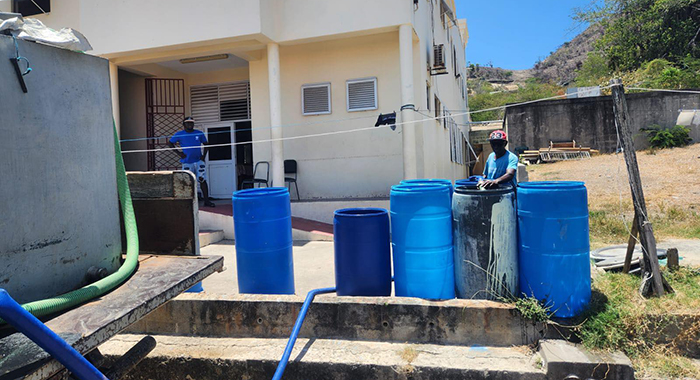
    Since mid-January 2026, the CWSA has been urging all residents to activate their personal household water storage plans as drought conditions worsened. Now, facing an acute crisis in the Grenadines, the authority is relying on what Cummings calls an expensive and stopgap but unavoidable emergency measure: shipping bulk water by sea to the southernmost islands of the chain, including Union Island, before distributing it to communities via trucks. The CWSA has rented multiple private vessels to accommodate the emergency deliveries, and service frequency is being adjusted in real time based on need — for example, officials added a second delivery to the southern Grenadines within three days after the first shipment proved insufficient to meet demand.

    “The transportation of water by boats and subsequently by trucks to the various parts of the Grenadine islands is the most expensive and improper way of doing it, but it has got to be done, because the situation is now super critical,” Cummings said, adding that the agency will continue emergency deliveries for as long as they are required. He praised CWSA staff for their rapid response, noting that the agency is performing beautifully within its current operational constraints.

    To address gaps in equitable distribution, the CWSA has implemented a new oversight system: a dedicated CWSA staff member is now posted on each Grenadine island to supervise water distribution, ensuring that no resident is left without access to water for extended periods. The agency is also continuously monitoring storage levels, community demand, and delivery intervals to make proactive adjustments to supply, to maintain a minimum baseline of water access for all residents. As the official June 1 start of the 2026 rainy season approaches, CWSA teams are also working to clean and sanitize damaged public storage tanks to capture as much rainfall as possible when wet weather arrives.

    Looking beyond emergency relief, Cummings confirmed the country is on track to secure roughly US$53 million in investment for long-term water infrastructure in the Grenadines, including desalination plants, expanded storage facilities, and a full transmission and distribution network. The minister, who first developed these plans when he led the CWSA in the early 2000s, said the projects will finally bring the Grenadines a reliable year-round piped water supply matching the system that has served neighboring Grenada’s Grenadine islands — Carriacou and Petite Martinique — for decades. Emergency water shipments and other short-term measures are only a stopgap, he noted, and the long-awaited infrastructure projects will address the root of the Grenadines’ chronic water insecurity.

  • Man Injured After Vehicle Crashes Into Tree on Airport Road

    Man Injured After Vehicle Crashes Into Tree on Airport Road

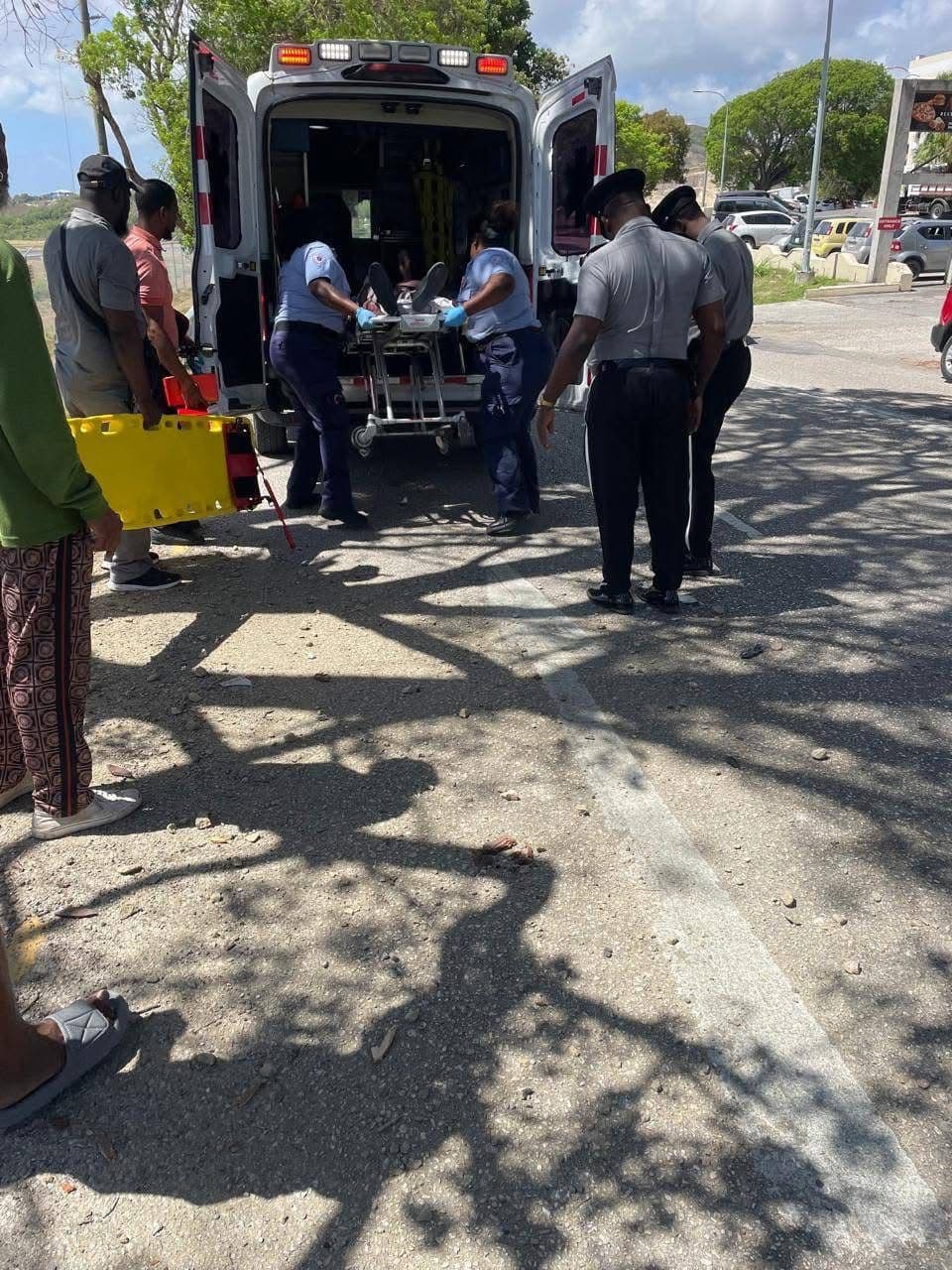
    On Thursday, local emergency response teams were dispatched to the scene of a road traffic incident along Airport Road, following reports that a passenger vehicle had veered off the roadway and collided with a stationary tree.

    Early official updates confirm that one male occupant of the vehicle sustained unspecified injuries in the crash. He was quickly evacuated by emergency medical services to the Sir Lester Bird Medical Centre, where he has been admitted for ongoing medical care. As of the latest update, medical authorities have not released any further details regarding the severity or nature of the man’s injuries to protect patient privacy.

    At this stage, the root causes and specific sequence of events that led to the collision remain unconfirmed, with multiple potential factors still under review. While first responders and crash investigation teams secured and processed the accident site, passing motorists faced significant traffic disruptions and extended travel delays along the route.

    Local law enforcement agencies have announced that a full formal investigation into the incident is now underway to clarify the circumstances of the crash and determine any contributing factors.

  • Universities must teach graduates to create jobs – historian

    Universities must teach graduates to create jobs – historian

    A leading historian from one of the Caribbean’s most prominent academic institutions has laid out a bold blueprint for Barbados’ long-term prosperity, calling for sweeping shifts in higher education training, urgent action to reverse democratic decline, and a renewed commitment to teaching national history across the country’s school system.

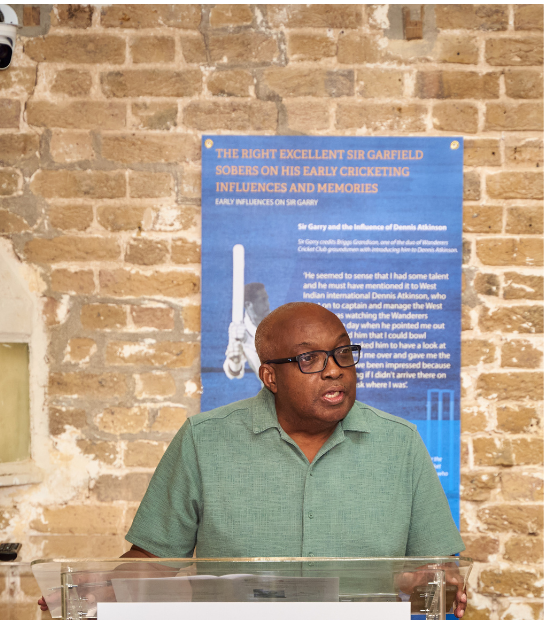
    Dr. Henderson Carter, who leads both the History Department and the Faculty of Humanities and Education at the University of the West Indies Cave Hill Campus, delivered his vision during the annual Dean’s Lecture, hosted by the St Michael Centre for Faith and Action. Titled *Movers and Shakers: Activism for Democracy Building*, his address centered on the urgent need to build a more resilient, inclusive nation for current and future generations of Barbadians.

    Carter’s first key proposal targets a fundamental gap in Caribbean higher education: a lack of training focused on entrepreneurship and self-employment. Instead of directing graduates solely toward traditional job hunting, he argues universities must reframe curricula to teach students how to turn their academic skills and degrees into sustainable self-employment and new business ventures. He points to diverse examples across disciplines to illustrate this potential: a biology or chemistry graduate could launch a biotech startup, an agricultural consulting service, or a sustainable food production enterprise, while a history graduate can monetize their expertise by developing well-researched scripts for feature films, streaming docuseries, and historical documentaries, which command growing global demand. Carter also notes that graduates need clearer pathways to access startup financing to turn these ideas into viable operations, a critical support system currently missing from many higher education outcomes strategies.

    Beyond education reform, Carter identified three pressing systemic challenges Barbados must confront to secure its democratic future. The first is widespread voter apathy, which he describes as a critical threat to the country’s democratic foundations. From growing numbers of eligible voters choosing to stay home on election day to the emergence of paid vote-buying, Carter emphasizes these trends cannot be ignored and require intentional, collective action to reverse. The second challenge is weak institutional responsiveness across both public and private sector entities. Carter stressed that delayed, unresponsive service from institutions undermines public trust and weakens national stability at every level. “Institution-building starts with individual accountability,” he explained, noting that even frontline staff and senior leaders have a role to play in prioritizing timely responses to public, student and stakeholder needs. “If your institutions are unresponsive and weak, your nation will be weak as a result,” he said.

    The third critical gap Carter highlighted is the erosion of historical education across Barbados’ primary and secondary school system. Walking audiences through centuries of the island’s history, from the mass resistance of enslaved people to the decades-long work of national heroes that shaped modern Barbados, Carter argued that widespread gaps in historical knowledge pose a direct danger to national identity. He emphasized that history must be restored as a core subject in schools, warning that it is unacceptable for children to complete the national education system without ever engaging deeply with their country’s past.

    Pointing to the rusted shackles featured on the monument at Barbados’ Heroes Square, Carter noted this public memorial is a vital, tangible reminder of the island’s history of chattel slavery, a past that was long erased from public landscapes across the country. “For generations, you could travel across the entire island and find no public marker acknowledging that slavery ever existed here. That is an inherently dangerous omission,” he argued. “Children grow up never seeing tangible evidence of this history, and without that reminder, we risk repeating the injustices of the past. We have to remember the slave society that once shaped Barbados to ensure it can never happen again.”