分类: society

  • Government reports continued recovery efforts in Salybia and Kalinago Territory after April 26 weather event

    Government reports continued recovery efforts in Salybia and Kalinago Territory after April 26 weather event

    In the wake of a destructive severe weather event that struck Dominica on April 26, 2026, the island nation’s government is ramping up coordinated recovery and relief operations across the hard-hit Salybia Constituency and Kalinago Territory, led by the Ministry of Environment, Rural Modernisation, Kalinago Upliftment and Constituency Empowerment.

    A recent official press release from the ministry outlined that it has partnered closely with national government agencies, humanitarian organizations, local governing bodies, and community leaders to deliver support to affected residents and speed the return of daily life to impacted areas. Current response efforts are centered on four key priorities: reopening blocked access routes, completing comprehensive damage assessments, supporting at-risk vulnerable households, and boosting community preparedness ahead of the upcoming Atlantic hurricane season.

    Hon. Cozier Frederick, the minister heading the ministry and parliamentary representative for Salybia, has been embedded with response teams on the ground throughout the operation, and Dominica’s Prime Minister has also traveled to the Kalinago Territory to meet directly with impacted residents and inspect storm damage firsthand. Minister Frederick reported that substantial progress has already been achieved across the constituency.

    “We have made significant progress in the Salybia Constituency,” Frederick explained in the release. “We have cleared multiple landslides to reopen access between Hatton Garden and Castle Bruce. We have also begun evaluating damage to residential properties impacted by the weather system, completed full assessments of small farms and agricultural holdings whose owners lost critical livelihoods, and we are already addressing the psychosocial trauma that storm exposure has caused for local residents.”

    A diverse coalition of response teams has been deployed to support recovery work across the region, including crews from the Ministry of Public Works, contracted private heavy equipment operators, staff from the Forestry, Wildlife and Parks Division, and teams from the National Employment Programme (NEP). Together, these groups have worked to clear storm debris, reopen closed roads, inspect damaged culverts, and resolve urgent public safety hazards across affected zones. Joint assessments have identified 18 culverts that require immediate repair, with input from four key stakeholders: the Ministry of Environment, Ministry of Public Works, NEP, and local equipment operators.

    The Forestry Division has dispatched specialized chainsaw crews to remove fallen trees, clear blocked access routes, and support slope and environmental damage assessments alongside the Office of Disaster Management (ODM). NEP teams drawn from seven communities across the island — Salybia, Delices, La Plaine, Marigot, Riviere Cyrique, Grand Fond, and Belles — have also joined ongoing community clean-up operations to speed recovery.

    On the humanitarian assistance front, support for affected households has expanded steadily over the course of the response. To date, approximately 1,041 households have received emergency food hampers through the government’s national Rapid Response Programme, with priority distribution allocated to elderly residents, households with young children, people living with disabilities, and other high-vulnerability groups.

    Mental health and psychosocial support services have also been launched to address the emotional toll of the storm. The Ministry of Health and UNICEF are providing trauma counseling for residents impacted by the disaster, and UNICEF has rolled out its specialized “Return to Happiness Programme” at three primary schools in Atkinson, Salybia, and Sineku. The program uses play-centered therapeutic activities including art and music to help children process their storm-related experiences and recover emotionally.

    Agricultural recovery efforts are also moving forward according to the official update. Assessments led by the Ministry of Agriculture have currently evaluated 100 separate agricultural holdings: 70 located within the Kalinago Territory and 30 in the neighboring community of Atkinson. Emanuel Joseph, Animal Health and Production Officer and Acting Team Leader of the East Agricultural Region, confirmed that local farmers have identified four core unmet needs: support to restore damaged farmland, livelihood assistance to offset income losses, improved access to farm areas, and investment to strengthen long-term resilience against future climate-driven extreme weather.

    Housing damage assessments are also ongoing, conducted jointly by the Ministry of Housing and Urban Development and the Kalinago Affairs Department. Oswald James, Quality Assurance Officer at the Ministry of Housing and Urban Development, shared that early assessments have already uncovered urgent housing needs across multiple affected communities. “To date, initial assessments have been completed for 26 impacted households, with 14 of these households identified as requiring urgent relocation support,” James stated. “Immediate needs we have documented include emergency construction repair materials, roof rehabilitation assistance, temporary shelter provision, and slope mitigation work around homes located at high risk of further landslides.”

    The Dominica government has emphasized that it is continuing to coordinate closely with a broad network of partner organizations and international donors to scale up relief and recovery, including UNICEF, UNDP, IsraAID, Tropical Shipping, local private sector groups, and international overseas donors. Support received so far has covered a range of critical needs: psychosocial support services, clean-up tools and heavy equipment, emergency supplies, potable water provision, and logistics support for response operations.

    For long-term recovery planning, the ministry has requested specialized technical assistance from the Economic Commission for Latin America and the Caribbean (ECLAC) to conduct a comprehensive national post-disaster damage and economic loss assessment. Per the official release, a team of six ECLAC experts is scheduled to arrive in Dominica in early June to conduct environmental and geospatial assessments that will inform evidence-based recovery planning and long-term resilience building.

    In addition to these efforts, the government has launched a local community work crew recruitment program that serves two goals: it supports ongoing clean-up, agricultural restoration, and road rehabilitation work, while also creating short-term income opportunities for residents whose livelihoods were disrupted by the storm. To date, six local residents have already been recommended for immediate hiring, with additional applications still under review.

    The Government of Dominica reaffirmed its ongoing commitment to supporting residents through every stage of the recovery process, with a core focus on rebuilding communities that are stronger, safer, and more resilient to future extreme weather events.

  • Minister Usher Reviews Hurricane Preparedness with NEMO

    Minister Usher Reviews Hurricane Preparedness with NEMO

    With less than two months remaining before the 2026 Atlantic Hurricane Season officially kicks off on June 1, Belize is moving full steam ahead to shore up its disaster readiness capabilities, led by top government officials and the nation’s emergency management authority. On a recent inspection tour, Henry Charles Usher, the country’s Minister of Public Service and Disaster Risk Management, traveled to the National Emergency Management Organization (NEMO) headquarters in the capital city of Belmopan to conduct a first-hand review of the nation’s preparedness standing.

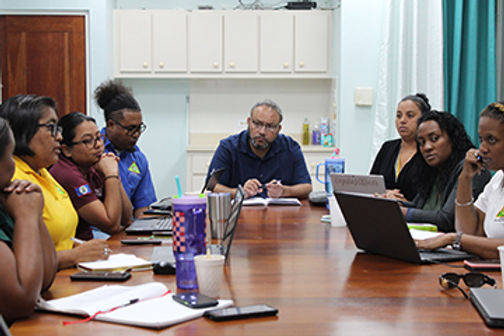
    During his visit, Minister Usher held in-depth working sessions with Daniel Mendez, NEMO’s National Emergency Coordinator, alongside the entire NEMO technical team. The closed-door talks centered on two core priorities: refining existing national readiness plans for the six-month storm season, and mapping out optimized response protocols that would enable rapid, coordinated action in the event a tropical cyclone or hurricane makes landfall in Belize.

    NEMO officials presented the latest progress updates on a slate of ongoing preparedness initiatives, which range from updating inter-agency emergency response blueprints to strengthening cross-stakeholder coordination frameworks. Participants also used the meeting to address gaps in current operations, with a particular focus on improving public communication channels and streamlining emergency protocols across every regional and local jurisdiction in the country.

    One key initiative highlighted during the briefing is the ongoing update to the national hurricane shelter registry. Working hand-in-hand with local municipal authorities and non-government partners, NEMO has been verifying shelter locations and capacity to build an accurate, up-to-date list for public distribution. In the coming weeks, the inter-agency Shelter Repair Committee will convene for its pre-season inspection tour, where teams will assess every registered shelter facility to flag structures requiring urgent repairs or structural upgrades ahead of the season’s mid-August to October peak, when the majority of Atlantic storms typically develop.

    Beyond shelter preparations, cross-cutting needs assessments are currently underway at both the national and district levels to ensure all emergency stockpiles, heavy response equipment, and critical resources are accounted for, properly maintained, and positioned for rapid deployment when needed. Any gaps identified through these assessments will be addressed in the coming weeks to avoid shortfalls during a crisis.

    Following the briefing, Minister Usher emphasized that proactive preparedness, seamless inter-agency coordination, and widespread public awareness are the three most critical pillars for reducing the loss of life and damage caused by hurricanes and other extreme weather events. He extended formal commendation to the NEMO team for their consistent, rigorous work ahead of the season, and reaffirmed the Belizean government’s full financial and policy commitment to supporting disaster risk reduction and preparedness initiatives across the country.

    As final preparations continue, both NEMO and the Ministry of Public Service and Disaster Risk Management are issuing a public call to action for all Belizean residents. Officials are urging households to review and update their personal family emergency plans, monitor official weather and emergency updates from trusted sources, and complete all personal preparedness steps well in advance of the season’s June 1 start, rather than waiting for a storm to approach the country’s coast.

  • Costume Island Antigua Thanks Police and Public After Recovery of Stolen Items

    Costume Island Antigua Thanks Police and Public After Recovery of Stolen Items

    Following the successful recovery of the vast majority of property stolen in a recent theft incident on its premises, the management team of Costume Island Antigua has issued a public statement of gratitude to both the Royal Police Force of Antigua and Barbuda and local community members.

    In an official update distributed across social media and local online platforms, resort leaders emphasized that the breakthrough in the case would not have been possible without coordinated cross-group collaboration. They framed the entire recovery operation as a striking example of what can be achieved when law enforcement and ordinary residents work toward a shared goal, calling the process “truly a joint effort”.

    Three officers in particular received special public recognition for their tireless work on the investigation: Senior Sergeant Benjamin, Sergeant Brown, and Corporal Massiah. Management highlighted their attention to detail, persistent investigative work, and commitment to resolving the case quickly.

    Beyond law enforcement, the management also extended sincere thanks to ordinary members of the public who came forward to share what officials described as “credible information”. That critical tip, the team confirmed, directly enabled investigators to take the alleged perpetrator into custody. Following the arrest, the suspect has been remanded to prison pending further legal proceedings. The successful resolution of the incident has been widely celebrated as a win for community cooperation in Antigua.

  • FIU Warns Public About Fraudulent Emails Impersonating Staff

    FIU Warns Public About Fraudulent Emails Impersonating Staff

    On May 14, 2026, the Financial Intelligence Unit (FIU) has issued an urgent public warning about a growing email scam that targets ordinary residents through sophisticated impersonation of the agency’s official staff.

    According to the FIU’s official announcement, scammers behind the fraudulent scheme have mastered techniques to forge convincing fake emails that closely mimic official communications from the unit. The malicious messages replicate real FIU staff names, job titles, official logos, personalized signatures, and are even designed to use email addresses that look almost identical to the organization’s legitimate domain. To trick recipients into falling for the trap, scammers frame their messages around familiar financial topics, including pre-approved loan offers, government-backed financial assistance programs, pending payment processing, requests to update banking details, and other seemingly routine financial transactions that make the fraudulent outreach appear authentic.

    The FIU has clarified a critical core policy to help the public distinguish legitimate communications from scams: the agency never approves or issues personal loans, never processes direct private financial transactions, and will never reach out via unsolicited, unexpected emails to request sensitive personal data or private banking information.

    Agency officials are calling on all residents to exercise extreme vigilance whenever receiving unprompted electronic messages that ask for personal identifiers, account passwords, banking credentials, upfront payment fees, or confidential personal documents.

    For anyone who encounters a suspicious email claiming affiliation with the FIU, the agency has outlined clear safety steps: do not reply to the message, do not click any embedded hyperlinks, do not download any attached files, and under no circumstances share personal or financial details or move forward with any loan application or payment transaction initiated through the suspicious message.

  • 68-y-o bearer killed during robbery attempt in Half-Way Tree

    68-y-o bearer killed during robbery attempt in Half-Way Tree

    KINGSTON, Jamaica — A senseless act of violent crime has shaken St Andrew’s bustling commercial district, after a 68-year-old courier working for a local financial firm was gunned down in broad daylight during an attempted robbery on Half-Way Tree Road Friday afternoon.

    The victim has been identified as Lawrence Kessna, a resident of Phase 2 in Seaview Gardens, St Andrew. The fatal shooting followed a physical struggle between Kessna and the would-be robber, who targeted him shortly after he completed a banking transaction, law enforcement officials confirmed.

    According to initial police reports, the incident unfolded at approximately 1:22 p.m., when Kessna had visited a local bank branch to cash a J$10 million cheque on behalf of his employer. The funds were earmarked for customer disbursements across multiple distribution sites, and Kessna carried the cash in a plain grey knapsack when he left the bank building.

    As Kessna exited, the suspect immediately moved to seize the knapsack. A struggle broke out when the victim resisted the theft attempt, and the attacker — failing to wrest the bag away — drew a weapon and fired multiple shots, striking Kessna in the upper body. Immediately after the shooting, the perpetrator fled the scene on a motorcycle that had been waiting nearby for a getaway. Bystanders alerted emergency services quickly, and police transported the wounded 68-year-old to Kingston Public Hospital, where medical staff pronounced him dead upon arrival. The grey knapsack holding the cash remained with Kessna and was turned over to law enforcement at the hospital.

    In the wake of the brazen midday attack, Jamaica’s top law enforcement officials have issued a firm condemnation of the violence, while extending condolences to Kessna’s family, friends, colleagues and the local business community mourning the loss.

    “We will not allow criminals to turn our commercial centres into hunting grounds,” said Assistant Commissioner Michael Phipps, head of the Jamaica Constabulary Force’s (JCF) Area Four division. Phipps noted that he has issued direct orders for expanded, sustained high-visibility patrols across St Andrew’s commercial districts, a measure designed to disrupt criminal planning, deter potential attacks, and apprehend perpetrators before they can strike.

    Phipps confirmed that investigations into the attack are already underway, with forensic evidence collection ongoing and law enforcement partnering closely with the local business community and other key stakeholders to identify and locate the attacker. Financial hubs across the region have been designated a top priority for both investigative work and increased proactive patrols going forward.

    In a public safety advisory released alongside the condemnation, Phipps reiterated a longstanding JCF offer for free police assistance to businesses transporting large sums of cash, urging operators to take advantage of the service to reduce risk.

    “We continue to urge business operators to ensure strong security measures when transporting especially large amounts of cash. The JCF continues to alert and advise persons doing large financial transactions and transporting large sums of cash to contact the police who are more than willing to assist, free of charge and I repeat free of charge,” Phipps said.

    The assistant commissioner added that public safety remains the JCF’s top priority, with stepped-up operations set to continue in high-risk areas around banks, commercial offices, and ATMs. He urged the public to remain calm but maintain a heightened state of vigilance in these zones.

    “The JCF remains committed to restoring order and public confidence. We will not relent until those responsible are held,” Phipps said.

  • J’can sentenced to three years in US prison for US$600,000 lottery scam

    J’can sentenced to three years in US prison for US$600,000 lottery scam

    In a landmark cross-border fraud case concluded this week, a 34-year-old Jamaican national convicted of orchestrating a years-long lottery scam that stripped a 73-year-old southwest Washington retiree of more than $600,000 — including her home — has been sentenced to three years in federal prison.

    Roshard Andrew Carty, extradited to the United States earlier this year to face charges, received his sentence Thursday during a hearing at the U.S. District Court in Tacoma, following his guilty plea entered in February 2026. The U.S. Attorney’s Office for the Western District of Washington publicly released details of the ruling Friday, laying bare the calculated, relentless tactics Carty used to exploit his vulnerable victim over nearly four years.

    Court documents trace the origins of the scheme back to 2020, when Carty first initiated contact with the elderly victim. Posing as a representative of the well-known sweepstakes organization Publisher’s Clearinghouse, he falsely claimed the victim had been selected to receive a $22 million cash grand prize and a new luxury vehicle. To access the supposed windfall, Carty insisted, the victim first needed to pay a series of upfront taxes and processing fees. To prevent her from discovering the fraud, he added a chilling layer of coercion: he claimed the FBI was recording all their conversations and ordered her not to disclose the win or the required payments to any third party.

    What began as small, incremental requests for cash quickly ballooned into a systematic looting of the victim’s life savings. Between August 2020 and February 2024, Carty convinced the victim to transfer more than $600,000 to a network of money couriers operating across the United States, who then forwarded the entire sum to Carty in Jamaica. When the victim ran out of liquid savings, Carty manipulated her into borrowing against her home equity, ultimately pressuring her to sell the property entirely to cover the bogus fees. He repeatedly lied that previous transfers had been lost or stolen, demanding additional payments to keep the fake prize claim alive.

    Prosecutors emphasized that Carty’s efforts to maintain control of the victim were unprecedented in their persistence. Over the course of the fraud, he contacted her thousands of times using a rotating array of phone numbers and encrypted messaging apps to avoid detection. When the victim tried to cut off contact, he resorted to increasingly invasive tactics: he sent unsolicited tow trucks to her address, ordered repeated pizza deliveries to her home, and even contacted her landlord to request a welfare check, all as a ruse to re-establish communication and continue his manipulation.

    Carty was taken into custody by Jamaican law enforcement on August 21, 2025, and extradited to the U.S. to face arraignment in the Western District of Washington two months later, on October 23. Following his guilty plea in February, prosecutors and law enforcement officials called the sentence a just outcome for a crime that targeted a defenseless older adult.

    “Even as [the victim] hesitated and tried to resist,” U.S. District Judge Tiffany Cartwright noted during the sentencing hearing, “Carty persisted in contacting her through a variety of means.”

    First Assistant U.S. Attorney Neil Floyd echoed that condemnation in remarks after the ruling. “This defendant was relentless in defrauding a vulnerable victim,” Floyd said. “At every turn when she tried to end the contact, he persisted in playing on her isolation and her fear of losing the money she had already lost. He stole the money she was counting on to survive in retirement, so that he could buy luxuries and live large in Jamaica. It is despicable conduct deserving of this punishment.”

    FBI Seattle Special Agent in Charge Mike Herrington added that Carty went so far as to abuse public trust in law enforcement to advance his scheme. “His lies in pursuit of her money even went so far as to abuse the trust and credibility of law enforcement by claiming the FBI was recording a call,” Herrington said. “Ultimately, the victim lost her home without receiving any of the fictitious prize money Mr Carty had promised.”

    Investigators confirmed during the case that the southwest Washington victim was not Carty’s only target; court records indicate at least one other confirmed victim, with evidence suggesting additional unknown victims may have been targeted across the country. Prosecutors also raised ongoing concerns about public safety once Carty completes his prison term, noting that once he is deported back to Jamaica, U.S. probation authorities will have no ability to supervise his activities or monitor for repeat offending.

    In its sentencing memorandum, the government noted that Carty has shown no remorse for the harm he caused. “Carty’s conduct here shows he is relentless, callous, and has an aptitude for deception—he is unlikely to be deterred by the reality that his conduct left people like Victim 1 destitute,” the memorandum read. “Carty knew Victim 1, Victim 2, and likely others were insolvent because of him, and yet he persisted in his scam. And unlike with US-based defendants, the US Probation Office cannot effectively monitor Carty when he returns home.”

    Despite the ongoing risks, law enforcement officials said the case sends a clear message to transnational fraudsters targeting U.S. citizens: cross-border operations do not grant immunity from prosecution. “We hope this case sends a message to would-be lottery scammers that the FBI will work just as relentlessly with our partners to hold fraudsters accountable, even when they reside beyond the borders of the United States,” Herrington said.

  • Sophia Brown distributes care packages to hurricane-impacted St Elizabeth residents

    Sophia Brown distributes care packages to hurricane-impacted St Elizabeth residents

    Four months after Category 5 Hurricane Melissa left a trail of death and widespread destruction across western Jamaica, a Jamaican singer with deep roots in the hardest-hit region has returned to her childhood community to deliver much-needed aid to struggling families still picking up the pieces.

    Sophia Brown, who grew up in the farming district of Carisbrook in St Elizabeth — the parish that bore the brunt of the storm’s devastation — had watched the disaster unfold from her home overseas in the months after the storm hit. It was not until her recent trip back to the island that she got to see the full scale of the carnage that had upended hundreds of lives across the region.

    Making the trip in early March, Brown and a volunteer team from her non-profit, the Angel Of The Hearts Foundation, distributed 85 care packages stocked with non-perishable food and critical daily essentials to local residents. The foundation extended its support further by dropping off additional relief packages at the Marie Atkins Shelter located in Kingston, Jamaica’s capital.

    Recalling the months she spent following the storm’s aftermath from abroad, Brown shared her experience with Jamaica’s *Observer Online*. “It was very heart-wrenching looking from abroad and seeing what was going on in the island. It made me realise that we all have to give back to our community,” she said. Though Brown was born in Kingston, her childhood in Carisbrook gave her a personal connection to the community hard hit by the storm. She also emphasized that the relief effort was not a solo project: the initiative received critical donations from Food For The Poor, fellow Jamaican singer Johnny Osbourne, and Barbara Ellison, all of which made the distribution possible.

    When Melissa made landfall on Jamaica on October 28, it left a devastating mark across the country’s western parishes. In addition to catastrophic damage to St Elizabeth, the storm also ravaged neighboring Westmoreland, Hanover, St James and Trelawny. Infrastructure, residential homes, and local schools were leveled, and the storm ultimately claimed 45 lives across the affected regions.

    In the wake of the disaster, members of the Jamaican diaspora overseas were moved to action, rallying together to raise millions of dollars in relief funding. All donated funds are currently monitored by the Jamaican government to ensure they reach affected communities.

    This is not the first charitable work carried out by Brown’s foundation: the Angel Of The Hearts Foundation runs annual programs supporting people living with Down syndrome. But in the wake of Hurricane Melissa, Brown stressed that long-term, sustained assistance is critical for communities still recovering months after the disaster.

    “It was necessary to go into my community and give back. It was really something to witness four months after the hurricane,” she noted, underscoring that recovery from a disaster of this scale is a slow process that requires ongoing support from both local and global contributors.

  • Drones to fight school shooters? One US company says yes

    Drones to fight school shooters? One US company says yes

    AUSTIN, Texas – As the United States grapples with an ongoing, devastating public health crisis of school shootings that has left hundreds dead and traumatized communities nationwide, one Texas-based company has proposed an unconventional new first-line defense: unarmed, human-piloted drones designed to intercept active attackers before first responders arrive on scene.

    Founded by former Navy SEAL Bill King, Campus Guardian Angel developed the system, drawing inspiration from the effective use of small unmanned aerial vehicles on battlefields in Ukraine. The firm is currently running pilot programs of the drone defense technology at K-12 campuses in Georgia and Florida, with growing interest from school districts and parent groups in Texas, including in Houston, following the high-profile 2022 Uvalde school shooting that killed 19 children and two adults.

    Unlike armed defensive systems, the 2-pound, roughly square drones are not outfitted with bullets or lethal projectiles. Instead, the system is activated immediately after a teacher triggers an alert via a mobile phone when an active shooter is spotted. The drone launches from a pre-positioned indoor location, navigating the school’s halls using custom 3D maps created by the company, while being remotely operated by trained staff based in Austin.

    Operators have multiple tools to neutralize or delay an attacker. Two-way audio allows them to communicate directly with the assailant, attempting to de-escalate the situation and persuade them to surrender, while also sharing real-time location data with responding law enforcement to speed up their response. If the attacker continues to harm civilians, the drone can either deliver disabling kinetic impacts by colliding with the assailant or spray them with less-lethal JPX pepper gel to incapacitate them, buying critical time for police to arrive.

    Notably, the system is fully human-operated, with no artificial intelligence involved in decision-making, a feature that company leadership says has reassured parents and school administrators concerned about autonomous errors. Alex Campbell, a 30-year-old professional drone racing competitor who works as one of the system’s operators, says the role allows him to contribute to school safety without being on the front lines directly. “To be the nerd behind the scenes, to help the heroes on this Earth saving us from the bad things happening, it’s really fulfilling to be able to have a hand in that,” Campbell explained.

    The company offers the system through annual service contracts, with pricing scaled to a school’s size and number of buildings. King emphasizes that the system’s greatest value lies in its potential deterrent effect: “The best-case scenario is we put this in every single school in America and then never have to use it, right? Because it’s got a deterrent quality to it.”

    To date, the technology has not been tested in a real active shooter scenario, and it aligns with a long-running strain of thought in U.S. gun violence policy debates that argues for adding defensive technology rather than pursuing stricter gun control legislation to curb mass shootings. Data from tracking platform IntelliSee recorded 233 separate gun-related incidents on U.S. school grounds in 2023 alone, underscoring the urgent demand for new solutions to the ongoing crisis.

  • 200 children to benefit from NCB Foundation vision kit donation

    200 children to benefit from NCB Foundation vision kit donation

    KINGSTON, Jamaica — As Jamaica observes its annual Child’s Month, a major philanthropic initiative led by the NCB Foundation is opening new doors for hundreds of children struggling with undiagnosed vision impairments across the island. The organization has contributed $525,000 worth of comprehensive vision care kits to the Jamaica Society for the Blind (JSB), rolling out much-needed eye health services to young people in underserved communities.

    For sixth-grade student Ashayna Williams of John Austin Primary School, the donation has already reshaped her daily classroom experience. Before receiving her new prescription glasses through the program, she struggled to make out text written on the front board, and frequent eye strain made concentrating on lessons nearly impossible. “At first, I worried I would dislike wearing glasses, but now I love them — they even look just like regular sunglasses,” Williams shared. “I can see so much clearer already.”

    The cross-sector partnership between NCB Foundation and JSB was built to expand JSB’s existing pediatric vision care program, which delivers free vision screenings, comprehensive eye health assessments, custom prescription glasses, adaptive assistive devices, and ongoing care to children from low-income households who cannot otherwise access these services. As part of this Child’s Month activation, JSB’s clinical teams conducted on-site screenings at five primary schools across Jamaica. After initial evaluations, roughly 200 students were flagged for follow-up assessments and targeted interventions to address their vision needs.

    John Austin Primary School was one of the first campuses to host the screening program, after school leaders noticed persistent literacy gaps among multiple grade levels that could not be explained by other factors. When the vision screenings were completed, school principal Ainsworth Williams noted that the initiative uncovered a critical barrier to learning that would likely have remained undiagnosed without the program. “Our literacy coordinator Keisha Taylor flagged that students across multiple grades were consistently struggling during reading activities, so we knew we had to dig deeper,” Principal Williams explained. “What we found was that these kids weren’t struggling to learn — they were struggling to see. We are thrilled our students now have the support they need, and we’re confident this will make a huge difference for both their academic progress and self-confidence.”

    Ashayna Williams is among the first group of children to benefit from the vision kit donation, which brings critical eye care support directly to young people living with unaddressed visual challenges. Sandra Harris, coordinator of JSB’s vision center, emphasized that undiagnosed childhood vision impairment remains a widespread, underaddressed issue across Jamaica that directly undermines educational outcomes and young people’s confidence. “Far too many children go months or even years without a vision diagnosis, and the impacts almost always show up first in the classroom: reading difficulties, persistent eye strain, reduced class participation, and fading self-esteem,” Harris said. “The NCB Foundation’s generous support lets us reach more children much earlier, deliver life-changing assessments and interventions, and remove barriers that can hold back a child’s learning and long-term development.”

    Beyond the monetary donation and vision kit contribution, the NCB Foundation also organized a special community engagement day for students from John Austin Primary at JSB’s headquarters. The event included interactive, hands-on STEM activities designed and led by local education non-profit STEM Builders Jamaica, giving students the chance to explore new skills in an accessible, supportive environment.

    Kadeen Finn Miller, program administrator at the NCB Foundation, explained that the initiative is rooted in the foundation’s core mission: removing preventable barriers to help children fully engage in learning and daily life. “Far too many young people are falling behind in school because of vision challenges that are completely treatable,” Finn Miller said. “At NCB Foundation, we hold firm that something as basic as access to quality vision care should never stand between a child and their right to learn, participate confidently, and reach their full potential. Through this partnership with the Jamaica Society for the Blind, we are grateful to have the opportunity to remove this barrier for the children who need this support most.”

  • Crash pilot had US licence revoked over conviction

    Crash pilot had US licence revoked over conviction

    A recent ocean plane crash that ended in a miraculous full survival of all on board has now sparked intense public scrutiny over the pilot’s decades-long legal and regulatory battles rooted in a prior drug conviction.

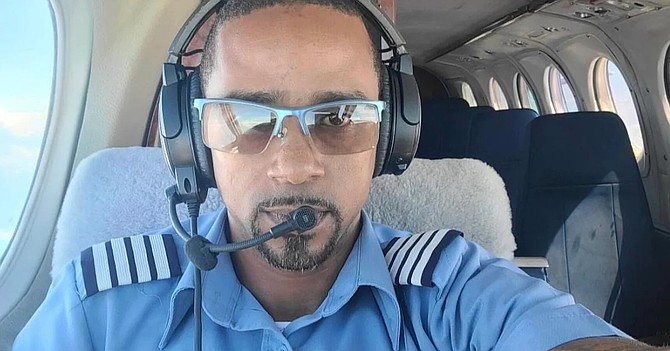
    Ian Nixon, the pilot at the controls of a Beechcraft King Air 300 that went down roughly 80 miles off Florida’s coast this Tuesday, has been widely praised for his emergency handling that let all 11 passengers and crew endure five hours adrift in open water before rescue. But newly uncovered 2022 Supreme Court documents lay bare a tangled 15-year history of regulatory action against Nixon, dating back to his 2007 U.S. federal conviction.

    Court records show Nixon was first issued a commercial pilot license by the U.S. Federal Aviation Administration in 2002. That changed in May 2007, when he was found guilty of conspiracy to supply illegal substances into the United States in a Florida federal court and served a prison term for the offense. In 2009, the FAA permanently revoked his American pilot license as a result of the conviction.

    Following his release from custody, Nixon returned to his home country The Bahamas in 2011. There, he successfully converted his revoked U.S. commercial license to a valid Bahamian pilot license, and secured a flying position with local regional carrier Pineapple Air. He also obtained a security pass granting him access to restricted airside areas at Lynden Pindling International Airport (LPIA), Nassau’s main international hub.

    The first sign of regulatory pushback came in March 2013, when the Bahamas Department of Civil Aviation (DCA) sent an email to Nixon’s employer notifying the airline that his U.S.-origin permit had been revoked and demanding the document’s return. Nixon later told officials he was informed his 2007 U.S. drug conviction was the sole reason for the revocation.

    Over the following years, two key regulatory actions prompted Nixon to launch a judicial review challenge with the Bahamas Supreme Court. The first was a February 2018 decision by the DCA director to suspend Nixon’s Bahamian commercial pilot license and airman medical certificate, pending investigation into a separate aircraft accident involving the pilot. The second was the 2013 permanent revocation of his LPIA restricted-area security pass and official identification badge.

    In the 2022 ruling on the challenge, Justice Loren Klein laid out the full details of the case. Government respondents defending the regulatory actions argued Nixon had intentionally hidden critical information on his 2013 application for a new security badge: he failed to disclose his prior felony conviction in the U.S. After conducting a cross-check with U.S. Customs and Border Protection, airport officials confirmed the conviction and prison term, leading to the pass revocation.

    Respondents also presented allegations of ongoing violations: they claimed that even after his aviation credentials were restricted, Nixon continued to fly commercial operations in breach of Bahamian aviation rules. He allegedly accessed restricted LPIA airside areas with help from his wife, who worked for local aviation services firm Executive Flight Support, and used repeated deceptive tactics to obtain identification badges at airports in Rock Sound and Grand Bahama. These violations continued, they said, until a 2018 crash involving Nixon.

    Justice Klein ruled that while the two regulatory actions were connected, they were legally distinct. He granted Nixon an extension of time and leave to challenge the 2018 license suspension, noting that a suspension is inherently temporary and constitutes a continuing impact on the pilot’s ability to work, and that Nixon had presented an arguable case with reasonable prospects of success. Klein stressed, however, that judicial review only examines the procedural legality of decisions, not whether the outcome was substantively correct.

    The judge dismissed Nixon’s challenge to the 2013 revocation of his security pass, closing that portion of the case. As of the time of this week’s crash, no final ruling on the license suspension challenge had been publicly released, and it remains unclear whether the suspension was ever lifted, allowing Nixon to return to commercial flying.

    The revelation of Nixon’s ongoing regulatory battle has raised urgent questions about aviation safety oversight in The Bahamas: how a pilot with a permanently revoked U.S. license and a felony drug conviction was able to regain commercial flying privileges, and how he continued to operate in the years after his credentials were suspended. At the same time, aviation safety experts note that Nixon’s emergency skills during Tuesday’s ditching remain undisputed, with all 11 on board surviving a five-hour wait for rescue in open ocean, an outcome widely described as extraordinary.