分类: society

  • APUA Says Aging Infrastructure Behind Delays in Repairing Water Leaks

    APUA Says Aging Infrastructure Behind Delays in Repairing Water Leaks

    Antigua’s public water network is grappling with unprecedented strain as aging core infrastructure drives a sharp spike in reported water faults and repair backlogs, according to the Antigua Public Utilities Authority (APUA). In a recent transparent briefing on operational challenges, the utility revealed that its maintenance teams now respond to more than 800 leak and fault reports every month – a volume that far outpaces the response capacity the agency built for older, lower-demand network conditions.

    APUA officials explain that two overlapping factors have created the current pressure cooker: growing water distribution volumes to meet rising residential and commercial demand across the country, and decades of wear on an outdated core infrastructure system that was never designed to handle today’s usage levels. On a daily basis, maintenance crews are forced to juggle competing priorities across multiple communities, ranging from urgent emergency leak repairs and unplanned service interruptions to scheduled system upgrades and long-term infrastructure improvement projects. This split focus has inevitably led to longer wait times for many leak repairs, frustrating residents and businesses across the island.

    In releasing the breakdown of current challenges, APUA emphasized that the disclosure is not an attempt to justify existing service gaps or operational inefficiencies. Instead, leaders say the goal is to give the public clear context for the realities that frontline crews navigate every day as they work to keep water service running.

    Recognizing that changes are needed to address rising customer frustrations, the authority has already begun internal restructuring to boost emergency response capacity. The core of these adjustments is expanding the number of dedicated response crews, a change designed to cut wait times and ensure faults are resolved faster and more effectively for affected customers.

    In closing, APUA extended its gratitude to the Antiguan public for their ongoing patience and understanding as the agency works through systemic infrastructure challenges. The utility also reminded residents that collective water conservation remains a critical tool to reduce overall strain on the network while long-term upgrades are carried out.

  • DOWASCO announces progress for Water Sector Strategic Development Project

    DOWASCO announces progress for Water Sector Strategic Development Project

    A critical initiative to upgrade drinking water and sewerage infrastructure across multiple communities in Dominica has logged major construction progress across all four of its project zones, though unforeseen obstacles have forced a timeline extension, the island’s state-owned water utility announced this week.

    The Dominica Water and Sewerage Company Limited (DOWASCO) shared the project update in an official post on its public Facebook page, detailing the status of the Water Sector Strategic Development Project (WSSDP), an upgrade scheme targeting improved water access and service reliability in Grand Fond/Morne Jaune, Calibishie, Castle Bruce, and the Coulibistrie/Morne Rachette/Salisbury corridor.

    As of the latest update, construction in the Grand Fond and Morne Jaune zone is already well advanced. DOWASCO confirmed that all distribution piping within Grand Fond has been fully laid, and more than 60 percent of the cross-country main supply pipeline connecting Grand Fond to Morne Jaune has been installed. Two new reinforced concrete storage tanks have also been completed and put in place: a 115,000-gallon tank serving Grand Fond, and a 70,000-gallon tank for Morne Jaune. Work is now ongoing to replace aging sections of the local distribution network in the area, with pre-delivered project piping staged at multiple points across local communities to speed up on-site work.

    Despite this measurable progress, DOWASCO acknowledged that a series of unexpected challenges have slowed construction across all project sites, pushing back the original completion deadline. The initiative was initially scheduled to wrap up all construction by the end of March 2026, but the utility has formally requested an extension to a new completion date of September 30, 2026. According to the statement, approval for the timeline adjustment is expected shortly from the Caribbean Development Bank (CDB), the primary funding body backing the WSSDP.

    Common barriers that have disrupted work schedules include recurring weather-related disruptions, difficult hilly terrain that complicates excavation and pipeline installation, unexpected equipment breakdowns, and administrative processing delays that have paused construction at multiple points. DOWASCO’s update reaffirms the project’s core goal of modernizing Dominica’s aging rural water infrastructure to reduce service outages, improve water quality, and meet growing community demand across the island’s northern and eastern rural districts.

  • Throwing sprat to catch whale

    Throwing sprat to catch whale

    The old adage of “casting a sprat to catch a whale” has taken on a bitter new meaning in the context of St. Vincent and the Grenadines’ education sector, where the “whale” pulled to the surface is not a prize, but a decades-long, systemic crisis of underperformance and inequity.

    Recent public debate surrounding the all-girls Girls’ High School (GHS) has exposed a deeper community dysfunction than any issue tied to the institution alone: a widespread reluctance to engage with constructive criticism, with many critics choosing to attack the messenger rather than grapple with the core message of the assessment.

    While some readers grasped the central call for urgent, system-wide school oversight, and others aired personal grievances specific to GHS, a large share of observers rejected the entire critique out of hand. The core claim at the heart of the analysis, however, is impossible to dismiss: St. Vincent and the Grenadines’ public education system is failing its students and its national development goals. Oversight frameworks are chronically weak, core policies remain outdated after decades without revision, and the Ministry of Education has failed to uphold its mandatory review, monitoring, and evaluation duties outlined in the 2002 Education for All national policy.

    The author of the critique, writing under the pseudonym Critical Observer, poses two searing questions that have gone unanswered by education officials: When was the last full review of national education policy conducted? And more importantly, are current policies actually structured to help students develop into critical thinkers prepared to thrive in adult life and the modern workforce?

    Former GHS students describe the elite institution as largely unchanged from the rigid grammar school model of 40 years ago. While preserving tradition can hold cultural value, when tradition hardens into inflexible class hierarchies, narrow definitions of achievement, and exclusionary practices, it becomes a direct barrier to individual student growth and broader national progress.

    Multiple longstanding problematic practices have been documented at GHS: student and, in some cases, teacher perpetrated bullying; consistent favouritism toward children from wealthy households; prefect eligibility tied to a student’s ability to pay for extracurricular activities; exclusive overseas learning opportunities priced far out of reach for low-income students; and graduation events that cost upwards of $120,000, pushing already cash-strapped families into unsustainable debt.

    These systemic inequities do more than erode individual student self-esteem: they entrench cross-generational class inequality, weaken core civic values, and exacerbate widespread societal strains, including the island nation’s growing youth mental health crisis.

    Critics of the assessment often point to GHS’s track record of producing high-achieving, prominent alumni, but the author challenges this claim, asking whether that success stems from the school’s institutional structure, or from the outsized parental support and raw individual ambition of the students the school attracts. Even as GHS consistently enrolls the top-performing female students in the national CPEA examinations, the fundamental question remains: does its current curriculum actually prepare young women for life beyond secondary school?

    National economic and social data underscore the urgency of reform. In 2015, national youth unemployment hit 22.5%. For a small island nation of just 110,000 people grappling with more than $3 billion in national debt and a persistently high homicide rate, St. Vincent and the Grenadines cannot afford a system that produces graduates with formal qualifications but none of the practical skills needed to contribute to the workforce. Local employers regularly report that new school-leavers lack both the hard technical skills and soft professional attitude required for entry-level work; a shocking number struggle to complete basic, essential tasks like filling out a passport application form.

    Education officials often point to rising graduation rates and higher exam pass rates as proof of progress, but the author argues that a system that prioritizes formal credentials over actual merit fuels systemic corruption and long-term economic stagnation. What the nation needs is not just more graduates with certificates, but engaged, skilled citizens capable of contributing meaning to inclusive national growth.

    The takeaway from this assessment is unavoidable: St. Vincent and the Grenadines’ education system requires consistent independent oversight, evidence-based analysis, and urgent structural reform. Before dismissing calls for change, the author urges the public and education leaders to confront the hard truths laid out in the critique. The future of the nation’s children, and the future of the country itself, depends on meaningful action.


  • Antigua and Barbuda Celebrates Newest Centenarian Ruth Henry

    Antigua and Barbuda Celebrates Newest Centenarian Ruth Henry

    On a warm Wednesday morning, a celebration filled with joyous laughter, soul-stirring hymns, and heartfelt tributes from across generations gathered to honor a remarkable pillar of the Antigua and Barbuda community: Ruth Henrietta Georgiana Henry, who marked her 100th birthday surrounded by loved ones, government leaders, and neighbors whose lives she transformed over decades of selfless service.

    Hosted jointly by Governor General Sir Rodney Williams and the national Community Development and Citizens Engagement Division, the event shone a spotlight on Henry’s decades-long legacy as an esteemed educator, dedicated church leader, and beloved community advocate. Renowned across the nation for her sharp discipline, creative vision, and unwavering Christian faith, Henry has left an indelible mark on public life in the country.

    As a centerpiece of the occasion, the Antigua and Barbuda government presented Henry with a EC$10,000 grant through a newly launched national initiative created to recognize citizens who reach the 100-year milestone. Minister of Urban and Social Transformation Rawdon Turner delivered the cheque on behalf of Prime Minister Gaston Browne, confirming that the financial award fulfills a key campaign promise from the current administration to honor the nation’s longest-living citizens in a tangible, meaningful way. The grant forms one part of a broader government program that offers both financial support and formal national recognition to Antiguans and Barbudans who achieve the rare centenarian milestone.

    Throughout the celebratory ceremony, speakers took turns reflecting on Henry’s far-reaching influence, which extends far beyond the walls of the James Memorial School, where she spent years shaping young minds. Recollections ranged from her decades of church ministry to her work organizing youth summer camps and leading local community initiatives that brought neighbors together for generations.

    Governor General Sir Rodney Williams praised Henry as a woman whose entire life has been defined by service and intentional purpose, noting that even at 100 years old, she retains sharp mental acuity and continues to pursue her favorite pastimes: reading, solving puzzles, and creating handcrafted works of art. He also shared a beloved, lighthearted anecdote from the morning, recalling that Henry earned the affectionate nickname “useful junk” for her legendary ability to transform discarded everyday items into beautiful, functional creations.

    Minister of State Kiz Johnson echoed Williams’ praise, framing the nation’s centenarians as irreplaceable “national treasures” whose life experience and wisdom form the foundation of modern Antigua and Barbuda. Senator Shenella Govia, who grew up in the same community as Henry, shared personal memories of the centenarian’s leadership, recalling her warm but firm approach to guiding generations of local children.

    The memorable morning closed with thunderous applause, warm embraces, and intimate tributes from Henry’s own family, capping a celebration that honored not just her extraordinary longevity, but a life of service that has touched every generation of the community she calls home.

  • Nieuw trainingsprogramma helpt werkende ouders bij ontwikkeling jonge kinderen

    Nieuw trainingsprogramma helpt werkende ouders bij ontwikkeling jonge kinderen

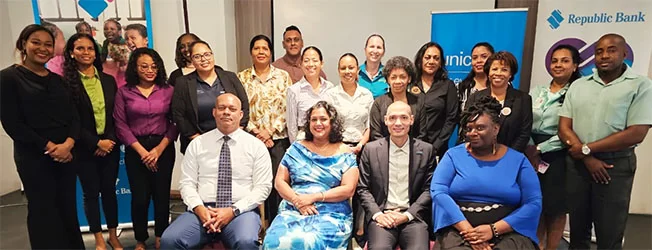
    On May 14, UNICEF and Republic Bank announced the official launch of a groundbreaking Workplace Parenting Programme in Suriname, an initiative tailored to strengthen caregiver skills and support the critical early developmental stages of young children across the country. Targeted specifically at working parents raising children between the ages of 2 and 4, a window widely recognized as the most formative period for long-term cognitive and social growth, the program fills a key gap in accessible, convenient parenting support for employed caregivers.

    The core mission of the partnership is to equip working parents with practical tools and evidence-based knowledge to actively nurture their children’s learning and growth during these critical early years. Unlike many parenting support programs that require parents to travel outside work hours, this initiative brings training directly to the workplace, making participation accessible for employed caregivers who often struggle to balance work and family responsibilities.

    In the first rollout of the program, employees from a diverse mix of public and private entities will participate in an 8-week on-site training course. Participating organizations span multiple sectors of Suriname’s economy and public services, including the Fernandes Group, Assuria, Rudisa Group, the Ministry of Social Affairs and Housing, and the Academic Hospital Paramaribo.

    To reinforce learning and extend support beyond in-person sessions, all participating parents will gain access to a curated library of 15 instructional videos that can be accessed from home. This hybrid model allows caregivers to review key concepts and practice new parenting techniques on their own time, ensuring the skills learned during training translate to real-world family life.

    Representatives from the Fernandes Group, one of the first participating organizations, noted that the program aligns perfectly with the company’s corporate social responsibility goals. “By giving our employees the opportunity to join this initiative, we are not only supporting our workforce but investing in stronger families and better developmental outcomes for the next generation of Suriname,” the representative said.

    The new Workplace Parenting Programme is part of a broader strategic partnership between UNICEF and Republic Bank, focused on advancing child-friendly workplaces and expanding robust support systems for families across Suriname. Program organizers emphasize that cross-sector collaboration between public institutions and private enterprises is essential to driving sustainable development that centers the needs of children and families, creating long-term benefits for communities across the nation.

  • TDC endorses 30th Annual Green Valley Festival: Preserving Cultural Traditions

    TDC endorses 30th Annual Green Valley Festival: Preserving Cultural Traditions

    As one of the Caribbean’s leading regional trade and development entities, The St. Kitts Nevis Anguilla Trading and Development Company Limited (TDC) has thrown its official support behind the 30th annual Green Valley Community Festival, cementing its longstanding commitment to advancing the federation’s social and cultural growth.

    The official endorsement and sponsorship handover took place during a small, formal ceremony held on May 7, 2026 at Maynards Park in Cayon. During the event, Jhanelle Brown, TDC’s Client Relations and Marketing Manager, formally presented the combined in-kind and cash sponsorship package to Petra McSheene-Morton, chair of the 30th Green Valley Festival organizing committee.

    Speaking on behalf of the entire TDC organization, Brown emphasized the company’s pride in partnering with the festival committee to mark this major cultural milestone. “For three decades, the Green Valley Festival has dedicated itself to preserving and celebrating the unique cultural traditions that define our nation,” Brown said. “Community festivals do far more than offer entertainment: they strengthen our shared national identity, lift up emerging local creative talent, and bind neighbors and communities together in ways that build lasting social cohesion. We have no doubt this year’s milestone event will continue that legacy, and we wish the entire committee tremendous success as they welcome attendees from Cayon and all surrounding villages.”

    McSheene-Morton offered heartfelt gratitude for TDC’s ongoing support, noting that corporate partnerships like this one are critical to the festival’s ability to serve the local area. “On behalf of the entire Green Valley Festival Committee, we want to express our sincere thanks for TDC’s support over many years, and particularly for their generous contribution this milestone year,” McSheene-Morton said. “This sponsorship will allow us to deliver an event that delivers real, positive impact to our community, advancing local development through accessible entertainment, creative arts, and community connection.”

    This sponsorship is just one part of TDC’s broader cultural outreach across the federation of St. Kitts and Nevis. Aligned with the company’s core mission to advance the nation’s social and cultural progress, TC provides consistent support to multiple community festivals across the islands, including Guy Fest, the East Basseterre Festival, and Festival De Capisterre. For the 2026 Green Valley Festival, TDC’s backing will help ensure the 30th anniversary celebration can honor decades of cultural tradition while creating new, memorable experiences for attendees of all ages.

  • Dad who killed son has only 4 more years to serve

    Dad who killed son has only 4 more years to serve

    Nearly 36 years after he brutally killed his three-year-old toddler and hid the child’s body, a convicted murderer has received a revised prison sentence that will see him walk free in less than four years. The outcome comes after a landmark judicial shift that has opened the door to resentencing for dozens of death row inmates whose sentences were previously converted to life imprisonment.

    The case in question centers on 73-year-old Phinis Warren, who was originally handed a death sentence for the 1988 murder of his young son, Ronald Koylass. The grim details of the crime, laid out in original court proceedings, paint a disturbing picture: after taking custody of Ronald in mid-1988, neighbors repeatedly documented clear signs of abuse on the toddler, including burst lips and a missing tooth. Witnesses also recalled Warren making explicit comments justifying violent discipline against children.

    By October 1988, Ronald had vanished entirely. When police first questioned Warren, he spun a false story that he had handed the child over to an unknown man he claimed was Ronald’s biological father, a lead that investigators were never able to verify or trace. Under further interrogation, Warren eventually confessed: the boy had died while in his care in late September 1988, and he had stuffed the toddler’s body into a maroon bag before dumping it at Mora Dam using a hand-built bamboo raft. To this day, despite extensive search efforts, Ronald’s remains have never been recovered.

    Warren was formally charged with murder and went to trial at the San Fernando High Court, where a jury found him guilty in May 1991. He was sentenced to death, and his appeal against the conviction was rejected by the country’s Appeal Court in 1994. Four years later, a landmark ruling by the Privy Council – the highest appellate body for many former British Caribbean territories – in the Jamaican case Pratt and Morgan v Attorney General of Jamaica changed the trajectory of his sentence. The ruling held that executing prisoners who had waited more than five years on death row constituted cruel and inhumane treatment, leading to Warren’s death sentence being commuted to 75 years of hard labor.

    In 2023, another landmark Privy Council ruling in the case of Naresh Boodram upended sentencing rules once again, establishing that inmates serving converted life sentences were eligible to apply for resentencing. The High Court identified 23 convicted murderers who qualified to have their sentences reviewed under the new ruling, and Warren was counted among that group.

    During his resentencing hearing held this week, High Court Judge Hayden St Clair-Douglas reviewed the details of the case, the time Warren had already served, and the progress he had made in custody. Defense attorney Davina Inalsingh argued that a 45-year determinate sentence was the appropriate outcome for the case, a submission the judge ultimately accepted.

    At the time of the resentencing, Warren had already spent 37 years and seven months behind bars. Judge St Clair-Douglas also deducted an additional four years from the sentence in recognition of documented rehabilitative progress Warren has made during his incarceration. When the math is finalized, Warren is left with just three years and five months remaining on his sentence before he is eligible for release.

    In issuing the revised sentence, Judge St Clair-Douglas emphasized that the court did not minimize the gravity of Warren’s crime or the irreversible harm done by the killing of a defenceless child. He noted that the revised sentence was crafted to strike a careful balance between three core goals of criminal justice: punishing the offender for his crime, deterring others from committing similar acts of violence, and acknowledging the potential for rehabilitation even in the most serious of cases.

  • Cops, soldiers look on land for Angelo

    Cops, soldiers look on land for Angelo

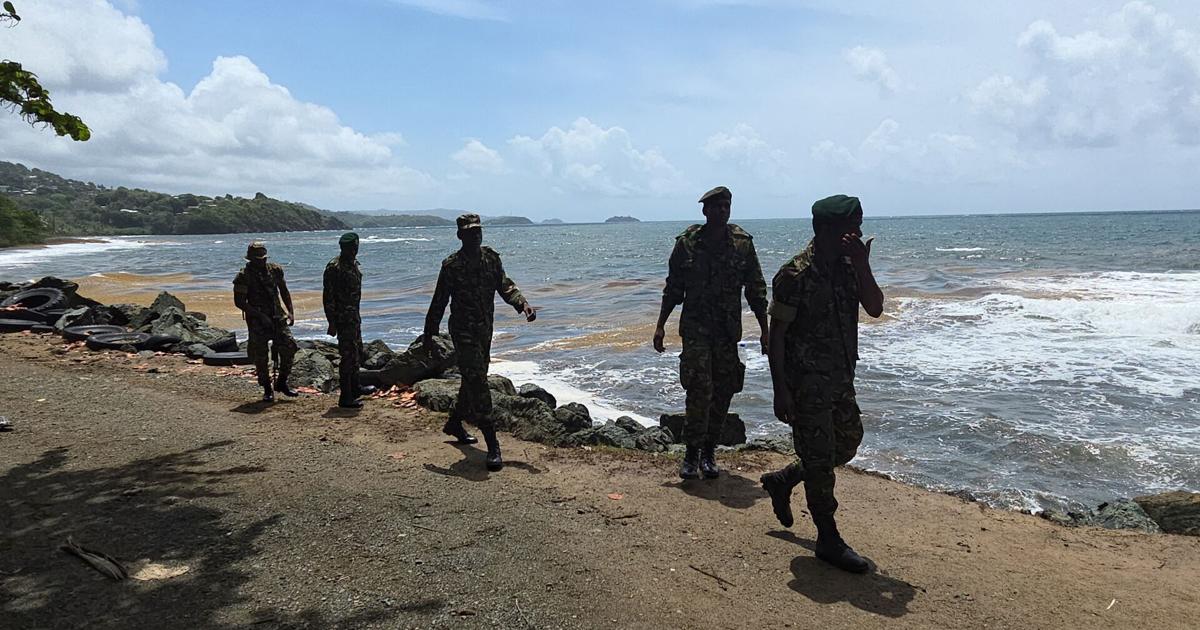
    A large-scale coordinated search operation for two-year-old Angelo Tobias Plaza, who went missing from his Tobago home earlier this week, was forced to suspend water-based activities on Wednesday after rough ocean conditions and thick sargassum seaweed derailed diving efforts, with law enforcement vowing to continue exhaustive land searches to bring closure to the distraught family.

    The disappearance unfolded on Monday evening, around 7:30 p.m., at the family’s residence on Goodwood Main Road, Goodwood. Twenty-two-year-old Kalifah Tobias, Angelo’s mother, and her husband Shannon Miller suddenly realized the toddler was nowhere to be found inside their home. The couple immediately conducted an immediate search of the surrounding neighborhood and checked in with local residents, but their frantic efforts to locate the young child turned up empty, prompting them to file a missing person report with police.

    On Tuesday, during the first full day of searching, officers spotted what they believed to be the toddler’s body in the waters just off Goodwood Bay, but the shape slipped back beneath the surface before recovery teams could reach it. The discovery pushed law enforcement to expand the operation, bringing in support from the Trinidad and Tobago Defence Force and the Coast Guard to comb both the coastal waters and the inland community where the family lives.

    Acting Assistant Superintendent of Police Mahalia Bacchus told reporters Wednesday that authorities remain committed to exhausting every possible lead to resolve the case. “We understand the profound pain the parents are enduring, not knowing where their child is after he was reported missing, and after Tuesday’s sighting of what appeared to be a body in the water,” Bacchus said. “After discussions with partner state agencies, we made the decision to extend our search efforts, particularly focusing more thoroughly on land areas.”

    She noted that the property’s surrounding dense bushes and overgrown foliage have not yet been fully combed, adding that teams are working to rule out the possibility that the child’s body washed ashore and became trapped in inland vegetation. “Our goal is to find answers and bring some measure of closure to this devastating situation for the family,” she added.

    Though dive teams were on standby Wednesday to recover the potential remains, choppy seas and heavy accumulations of sargassum seaweed created unsafe, unworkable conditions for underwater searchers. The thick seaweed severely limits underwater visibility, while rough wave action made diving too dangerous to continue, forcing authorities to call off the water search shortly before 3 p.m. All available trained personnel are already on site, and teams are doing everything within their power to move the investigation forward, Bacchus confirmed.

    As part of the ongoing investigation, authorities have already questioned the toddler’s mother and stepfather, and the probe remains active. Bacchus also issued a public appeal for any information that could help advance the case, asking community members and anyone who saw the child in the hours before his disappearance to contact authorities. Tips can be submitted anonymously through Crime Stoppers at 211, or directly to police by calling 999, she said.

    A local water activity organization has already stepped forward to offer additional support to the search effort. Ricardo Alfred, owner of a local jet ski rental business and president of the Tobago Water and Trails Association, announced Wednesday that his group is prepared to deploy their members and equipment to assist in the search. “Jet skis are far more maneuverable than larger search vessels, they can navigate shallow waters that standard boats can’t access, and they handle rough sea conditions much better too,” Alfred explained, noting the association has supported recovery operations in similar cases in the past.

  • PTSC bus catches fire

    PTSC bus catches fire

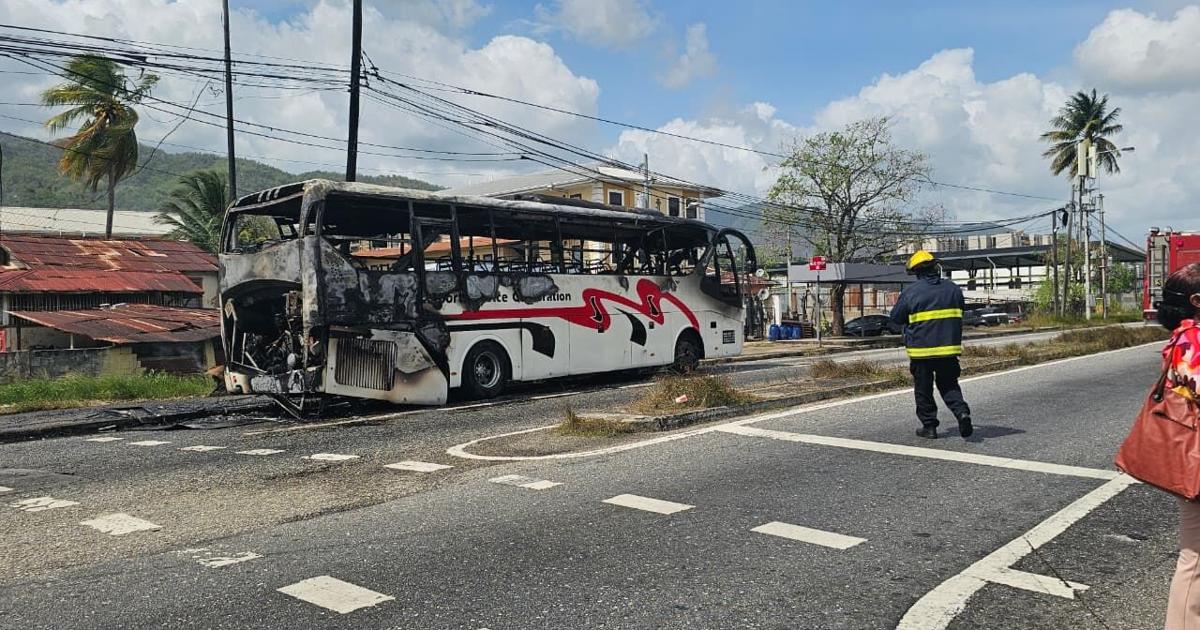
    A 57-year-old Public Transport Service Corporation (PTSC) bus driver escaped without injury after an out-of-service bus he was operating burst into flames along Trinidad’s Priority Bus Route near the Mt Lambert traffic lights on Wednesday afternoon, leaving only a gutted vehicle and disrupted local traffic in its wake.

    Speaking after the incident, driver Ricky Estrada, a six-year veteran of the PTSC based in Arima, expressed overwhelming gratitude for his safety. “GOD is good. I am happy to be alive,” he told reporters, noting that the empty bus was en route to the Chaguanas depot when the fire ignited at the rear of the vehicle around 1:15 p.m.

    Estrada immediately grabbed the bus’s on-board fire extinguisher in an attempt to put out the blaze before the equipment ran out of agent. With the fire spreading rapidly, he evacuated the vehicle safely, then stood by a nearby lamppost to await emergency responders. Local police were first on scene to redirect traffic and dispatch a call to the Trinidad and Tobago Fire Service, which arrived shortly after to bring the fire under control.

    When reporters from the Express arrived on scene at approximately 1:30 p.m., the bus was still actively burning. Photographs from the scene show extensive damage: the upper half and entire rear section of the bus were destroyed, leaving behind a pile of smoldering debris, charred metal and shattered glass. A nearby lamppost was blackened by fire damage, and overhead utility wires were singed, with several hanging loosely after the heat damaged their insulation.

    The unexpected blaze sparked confusion among local residents, many of whom rushed out of their homes in the nearby Mt Hope and Mt Lambert communities after seeing smoke. Some mistakenly believed the neighboring Bermudez biscuit factory was on fire, while others assumed the smoke came from neighbors burning yard waste. Passing motorists also slowed to investigate the incident, adding to localized traffic disruption.

    To ease congestion while emergency crews worked, traffic along the Priority Bus Route was rerouted through the Carib Brewery vicinity in Champs Fleurs onto the Eastern Main Road before rejoining the PBR further along the route. Maxi-taxi drivers and waiting passengers gathered nearby, speculating on whether anyone had been trapped on the burning bus.

    A three-person fire crew led by Fire Sub Officer Crayson Balkaran, with officers Nesbitt and Forde, responded to the call from the Fire Service’s Port of Spain headquarters on Wrightson Road, receiving the alert around 1:41 p.m. The team confirmed no passengers were on board, a outcome that responding personnel called a major relief.

    Following the incident, Estrada went to Mt Hope Hospital for a routine check-up after experiencing mild trauma from the event. He credits mandatory occupational health and safety training for helping him stay calm during the emergency. “We are given health and safety training. So I had the presence of mind to reach for the extinguisher. I am glad it was diesel fuel because it could have gotten far worse,” he explained. “Sometimes when we move buses to the depot, we have a mechanic or another employee on board. I’m so thankful no one else was here that day. It could have been detrimental.”

    Estrada’s family shared his relief after learning he had escaped unhurt. “My wife said, ‘Thank God, nothing serious happened to you.’ My two children are happy nothing bad happened to their daddy,” he said. A man of faith, he noted that his religious community had supported him through the scare: “I am a member of Arima ‘Oracle of Praise’ or Arima Open Bible Church. I am covered under the blood. Jesus Christ is my protector.”

    Estrada did note one point of concern, saying that the Fire Service “took a little long to respond” and could have arrived sooner to limit damage to the bus.

    In an official statement released Wednesday, PTSC confirmed the details of the incident, noting that the bus was out of service at the time with no passengers on board. PTSC General Manager Patrick Gomez told reporters Wednesday that the corporation was “happy no one was on the bus. No one was injured. The driver was not injured.” The gutted bus has been moved to the PTSC’s Port of Spain depot, and the company’s engineering team is leading an investigation into the cause of the fire, working alongside relevant local authorities to identify what sparked the blaze.

    “PTSC remains committed to the safety of its employees, passengers and the general public,” the corporation’s release added.

  • BEATEN BY ‘DEVILS’

    BEATEN BY ‘DEVILS’

    A violent home invasion in Penal has left three family members physically injured and psychologically traumatized, after four armed criminals broke into their residence, held the group hostage for 90 minutes, and stole thousands of dollars in valuables before fleeing.

    In a first-hand interview with local media *Express* the day after the attack, one of the surviving victims described the perpetrators as pure evil, saying she fully expected to lose her life during the prolonged ordeal.

    The attack unfolded in the early hours of Monday. Before gaining entry to the property, the intruders first poisoned the family’s pet Husky, Max, who was left dead outside the home after the incident. The group then forced open a back door to get inside, where they encountered two adult sisters and their teenage nephew. The criminals immediately bound the three hostages and began a violent search for $450,000 in cash they claimed was stored on the property.

    Over the course of an hour and a half, the attackers, who were armed with a loaded gun and cutlasses, remained in constant cell phone contact with an off-site accomplice as they ransacked every room, tore through cupboards and drawers, and repeatedly beat and threatened the bound hostages. Recounting the terror, one sister said the criminals pressed a gun to her sibling’s head and gave her just five seconds to reveal the location of the rumored cash. They broke a heavy picture frame over the woman’s head, then dragged the teenage nephew into the room and beat him severely with both a cutlass and a broomstick. “I honestly thought that I was going to die,” the survivor told reporters. “When you see a gun in front of you and a man saying ‘Tonight you all will die,’ that terror doesn’t leave you. These men are devils walking on the earth. If you can beat women and a child that brutally, something is very wrong with you. You need God.

    Despite repeated beatings and threats, the family maintained they had no such large sum of cash on the property. Refusing to believe their claims, the intruders continued their assault and search until they were forced to accept the money was not there. Before fleeing, the group stole all of the family’s gold jewelry, an undisclosed amount of U.S. currency, and roughly $50,000 in local Trinidad and Tobago dollars. They also stole one sister’s Nissan B-15, valued at $25,000, which was parked on the property, and drove away in the stolen vehicle.

    After the attackers left, the victims managed to untie themselves and raise the alarm with nearby relatives, who immediately contacted local law enforcement. Police confirmed that response teams from the Penal Police Station, the Criminal Investigations Department, the South-Western Division Task Force, and the South-Western Division High Performance Patrol Unit arrived at the scene just after 1:20 a.m. on Tuesday to launch the investigation.

    Officers located the stolen Nissan abandoned on Haggard Trace in Penal not long after the attack. The vehicle was towed to the Special Evidence Recovery Unit to undergo full forensic testing for DNA and fingerprint evidence. Investigations are currently ongoing led by Police Constable Ramdhanie, with no arrests reported as of the latest update.