分类: society

  • A Legal Defense Fund for Garifuna Land Rights Fight

    A Legal Defense Fund for Garifuna Land Rights Fight

    Decades-long tensions over Garifuna ancestral land rights along Belize’s southern coast are on the verge of a major legal confrontation, prompting the National Garifuna Council (NGC) to take formal action: the launch of a dedicated Legal Defense Fund to resource their upcoming court battle.

    The conflict centers on traditional Garifuna territories in three coastal communities: Hopkins, Sittee River, and Seine Bight. For generations, the Garifuna people have faced gradual displacement and loss of their ancestral lands, a cumulative crisis that has built up over many years rather than emerging suddenly. Now, as the dispute moves toward the judicial system, the NGC has made the strategic decision to crowd-source financial support from both domestic community members and Garifuna diaspora communities spread across the globe.

    Ifasina Efunyemi, Assistant Treasurer of the NGC, framed the initiative as a proven model for Indigenous advocacy, drawing parallels to the successful land rights campaigns waged by Belize’s Maya community. “These issues have not risen overnight, and they will not be solved overnight either,” Efunyemi explained in remarks to local media. “Over time, we have faced tremendous loss and displacement of our traditional lands. This fund gives our people and our allies the chance to stand with us, as we work to protect what land we still hold and restore what rightfully belongs to our traditional communities.” She emphasized that effective legal defense is impossible without sufficient financial backing, making the fund a critical step toward leveling the playing field for the Garifuna claim.

    Alex Nolberto, NGC President, expressed confidence in the campaign’s success, pointing to the large global Garifuna community that can back the effort. “There are more than 300,000 Garinagu both in Belize and across the diaspora, and we are calling on every one of them to contribute and stand with us in this fight,” Nolberto said. “This is not a struggle for only Belize-based Garifuna; it is a fight for the future of our entire people.” Nolberto added that the NGC, as the legally recognized representative body for all Garifuna matters, is mandated to develop a robust formal legal response to competing land claims, a process that requires covering significant costs including legal representation fees. Beyond courtroom proceedings, the fund will also support public education initiatives to spread awareness of the Garifuna land claim, a dispute that traces its origins all the way back to the 1800s.

    Garifuna leaders stress that the battle is about far more than physical territory: it is a fight to safeguard centuries-old Garifuna cultural heritage and secure a sustainable future for coming generations of the Indigenous community. As the legal process moves forward, the NGC intends to continue coordinating closely with its legal team to map out a clear strategy for advancing their claim in the courts.
  • School Bus Overturns Near Pueblo Viejo with 32 Students

    School Bus Overturns Near Pueblo Viejo with 32 Students

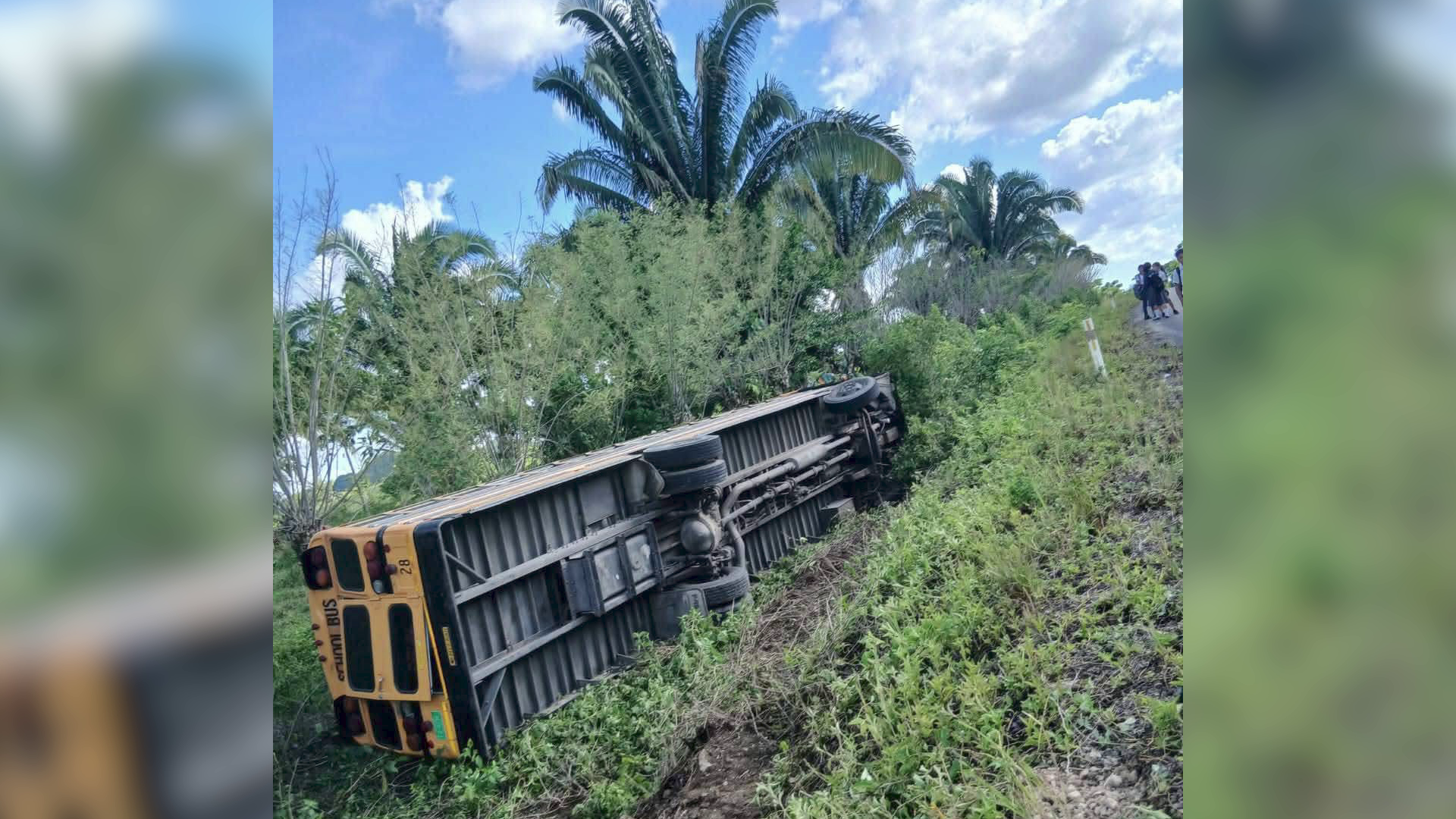
    On a Monday afternoon in June 2026, a standard daily commute for dozens of high school students in Belize became a sudden, frightening incident when their school bus overturned just outside the boundaries of Pueblo Viejo Village. The vehicle was carrying students from two local institutions: 32 teenagers total from Julian Cho Technical High School, with several additional students enrolled at Toledo ITVET also on board, Belize’s Ministry of Education has officially confirmed.

    According to initial reports from emergency responders, the bus veered off its designated route before tipping over. In the immediate aftermath of the crash, four students were found to have sustained only minor injuries, and they were promptly transported to the nearby San Antonio Polyclinic for immediate outpatient care. The remaining uninjured students were quickly evacuated and transferred to a second bus that was dispatched to the scene, allowing them to continue their trip without further incident.

    News of the crash spread rapidly across local communities, and concerned parents of the affected students quickly took to social media platforms to raise questions and push for stronger safety oversight of school transportation services across the country. Many parents highlighted the long-unaddressed need for stricter safety regulations for school buses operating in rural communities, while some publicly raised unconfirmed speculation that the driver of the crashed vehicle may have been operating the bus while under the influence of alcohol.

    In an official statement released by the Ministry of Education shortly after the incident, government officials confirmed that a full formal investigation has been launched to determine the root cause of the crash. “The Ministry is grateful that no serious injuries have been reported and extends its support to the students, families, and school community,” the statement read. “An investigation is underway to establish all the facts surrounding the incident, and the Ministry will continue to work closely with the school community to provide any additional support that may be needed.”

    As of the latest update, no further details on the investigation’s progress or preliminary findings have been released to the public.

  • Businesses Closed, School Halted by Floodwaters in Peini

    Businesses Closed, School Halted by Floodwaters in Peini

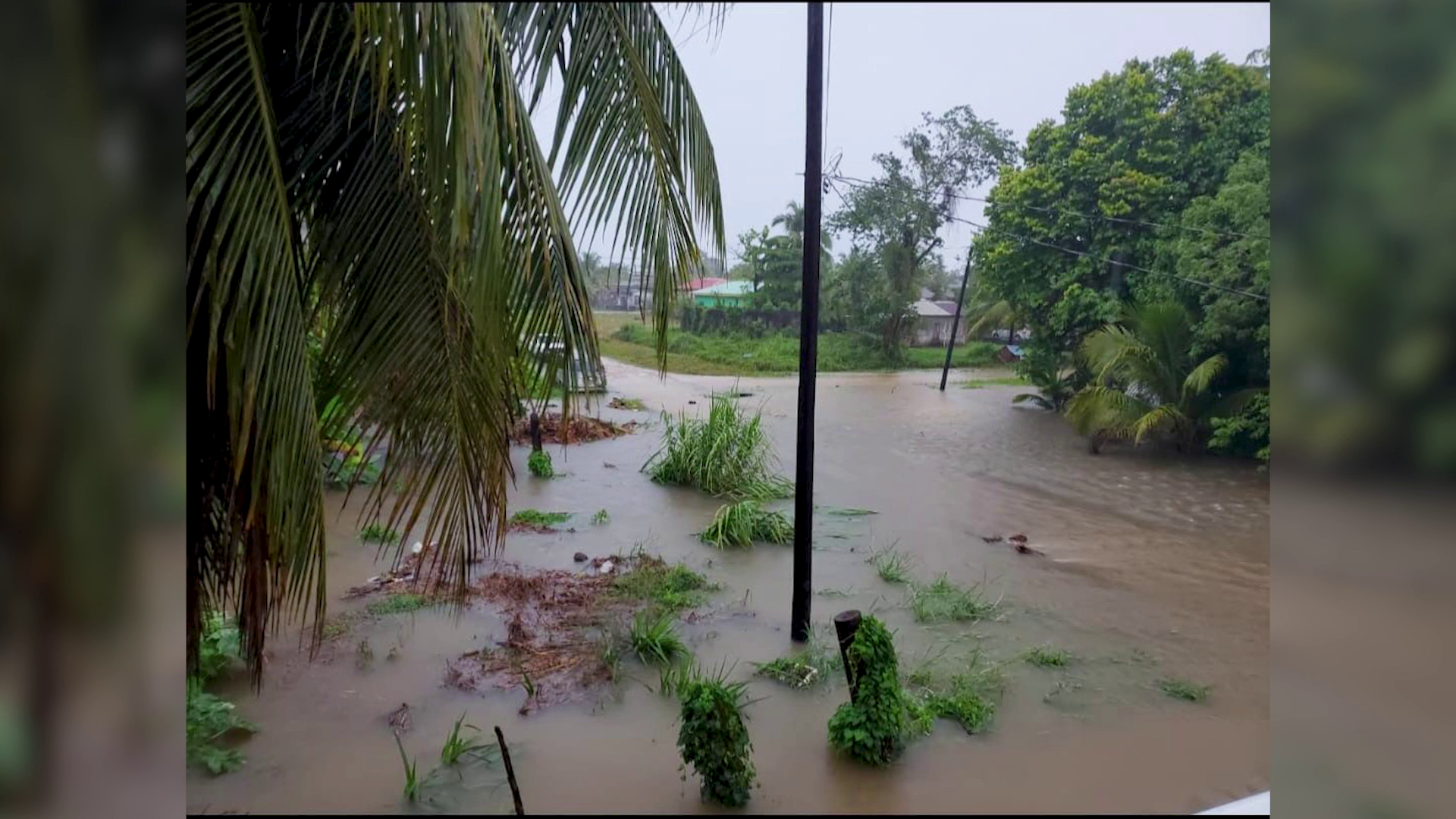
    On June 2, 2026, the first heavy seasonal rain of the year brought the coastal Belizean town of Punta Gorda (locally known as Peini) to a complete standstill. Rising floodwaters submerged neighborhood streets across the community, forcing local businesses to suspend operations and closing all public schools, leaving residents to navigate waist-deep or chest-deep water to travel between areas. Even low-lying districts that rarely experience flooding, including the busy Cayetano Street corridor, were completely underwater by the morning after the rainfall, according to local accounts. As floodwaters gradually begin to recede, the initial phase of cleanup is getting underway, but public scrutiny is already growing over the avoidable factors that turned a routine seasonal rain event into a full-blown public disruption. Longtime environmental advocate Wil Maheia, a Punta Gorda resident, is pushing back against the common narrative that frames the flood as an unavoidable consequence of climate change. Instead, he argues that systemic municipal negligence and lax community regulation are the primary causes that amplified the disaster. Maheia explained that for years, the town has faced predictable early-June rainfall, giving local leaders months of dry season to prepare. Yet in the half-year leading up to this 2026 rainy season, the town’s drainage infrastructure was completely neglected by the Punta Gorda Town Council. With no regular maintenance, residents began dumping general garbage into the empty drains, turning the critical water runoff systems into blocked debris traps. When heavy rain finally arrived, the accumulated garbage acted as natural dams, preventing water from draining and forcing floodwater to overflow onto public streets. Compounding the problem, Maheia noted that the town council already holds authority from Belize’s national Department of Environment to issue fines for illegal littering. To date, not a single penalty has been handed down to violators, creating a culture of tolerance for improper waste disposal that directly contributes to clogged drainage. “It is time for our country to stop hiding behind climate change as an excuse for poor governance,” Maheia stated. He called on the national Department of Environment to intervene, pushing the municipal government to enforce existing littering regulations and complete long-overdue drain maintenance ahead of future rainy seasons. The disruption has left many local residents questioning what more could have been done to prevent the widespread damage and disruption, with growing calls for greater accountability from local elected leaders ahead of the next rainy season. This report is adapted from a transcript of a televised evening newscast.

  • Beach Cleanups Gain Momentum Amid Sargassum Surge

    Beach Cleanups Gain Momentum Amid Sargassum Surge

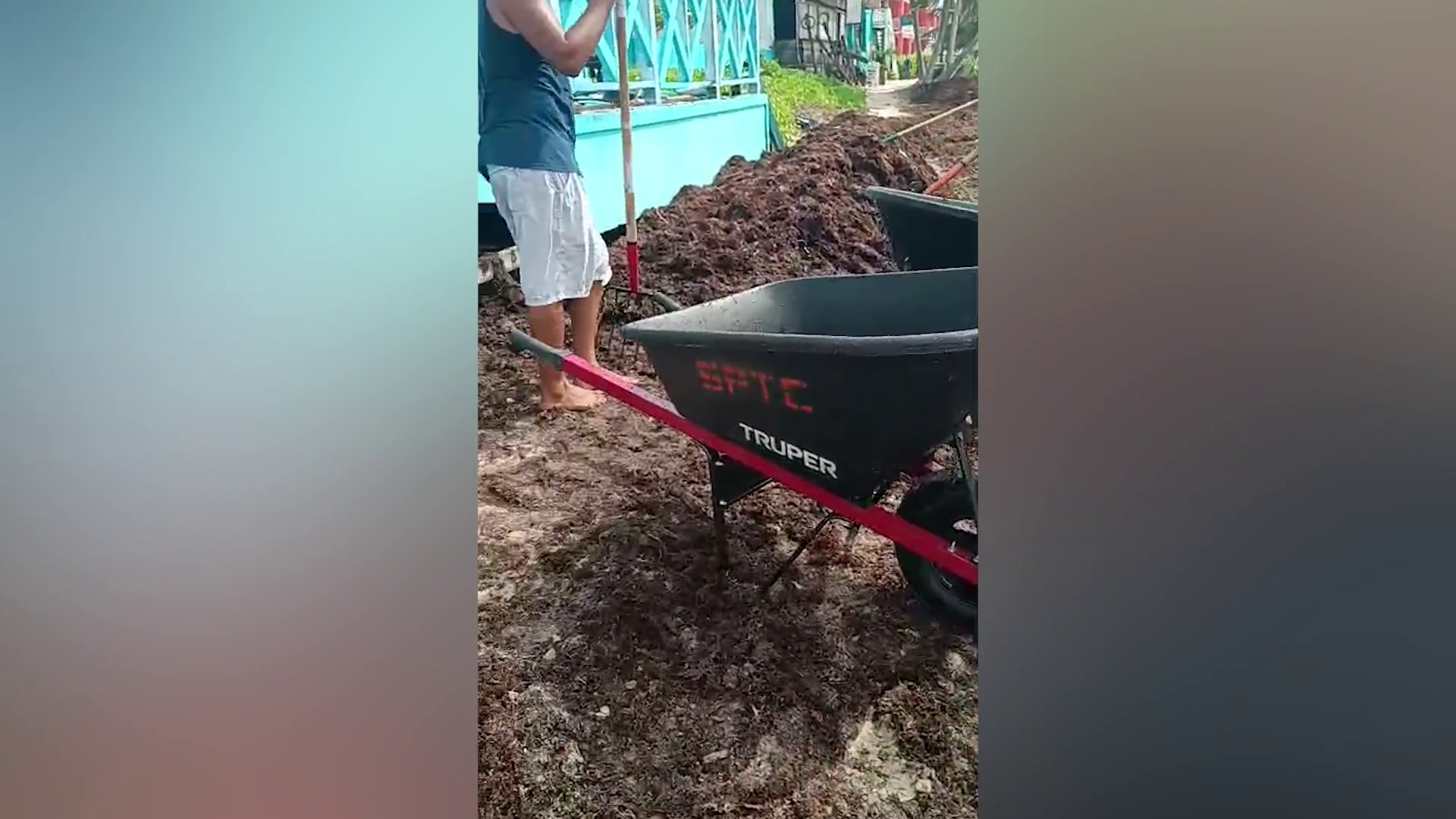
    As massive quantities of sargassum seaweed continue to accumulate along San Pedro’s scenic shorelines, overwhelming local ecosystems and threatening the island’s tourism-dependent economy, a local tour guide has launched a growing grassroots movement to reclaim the coast through regular community cleanup initiatives.

    Oscar Iboy, a long-time tour guide and active member of local advocacy group San Pedro Citizens for Change, launched the recurring effort after participating in a small one-off cleanup near the local high school in early 2026. Disappointed by the low initial turnout at that event, Iboy made the decision to expand the project into a sustained, organized campaign to encourage broader resident engagement.

    While participation in the cleanups started off modest, the movement has steadily gained momentum in recent months. The first organized event drew just 13 local volunteers, but the most recent cleanup attracted roughly 20 committed community members, marking a steady upward trend in public buy-in for the initiative.

    Iboy’s group currently plans to host cleanup events every other Sunday, and has ramped up outreach to encourage both local residents and small business owners across the island to join the effort. Beyond the immediate environmental benefits of removing rotting sargassum from public beaches, Iboy has also proposed a policy solution that addresses two pressing local issues at once:
    a cross-sector proposal that would have the San Pedro Town Council fund paid cleanup positions for unemployed local workers. With the sargassum surge driving a downturn in tourism, hundreds of tour guides and hospitality workers across the island are currently out of work. Iboy’s plan would not only put unemployed locals back to work earning a steady income, but also permanently improve the island’s coastal environment and its reputation as a top Caribbean travel destination, helping to revive the tourism sector long-term.

    This report was originally transcribed from a June 2, 2026 evening television broadcast, with Kriol-language commentary transcribed using a standardized regional spelling system.

  • Almost 400,000 Guyanese received cash grant – finance minister

    Almost 400,000 Guyanese received cash grant – finance minister

    On Tuesday, June 2, 2026, Guyana’s Minister of Finance Ashni Singh provided an updated progress report on the country’s landmark universal cash grant initiative, announcing that close to 400,000 Guyanese have already received their one-time GY$100,000 payment, most through direct deposits to registered bank accounts. The government has also put in place tailored alternative distribution mechanisms to ensure no eligible resident is left behind, including those without formal bank accounts, disabled people, homebound shut-ins, and communities in remote hinterland regions.

    Speaking to reporters on the sidelines of the national Local Content Summit, Singh emphasized that the program’s rollout has exceeded early expectations given the ambitious timeline and scale of the initiative. “I think we’ve done extremely well because we’ve been able to register and pay now close to 400,000 persons, which is quite a large number if you consider the speed with which this has been done,” Singh noted.

    Funded by a GY$60 billion allocation earmarked in the 2026 national budget, this universal cash grant program marks the first time the Guyanese government has distributed public benefit payments through direct bank deposits to recipients who registered via a national online portal. According to Singh, direct bank transfers have emerged as the most efficient delivery channel, with the overwhelming majority of processed payments going through this method.

    To address gaps in access, the government has launched targeted outreach campaigns for populations that cannot use direct bank deposits. Singh confirmed that inter-ministerial teams from the Ministry of Finance and Ministry of Human Services have already been deployed to hard-to-reach regions including Region 7 (Cuyuni-Mazaruni) and Region 9 (Upper Takatu-Upper Essequibo), where workers are conducting in-person registration and using alternative delivery methods to get grants to local residents. The two ministries are also collaborating closely to coordinate home delivery of payments for disabled people and people with severe illness who are unable to leave their homes.

    Singni stressed that lack of a bank account, or even unwillingness to use a bank account, will not disqualify any eligible resident from receiving the grant. “We continue to try to explain to people that this [direct deposit] is the easiest way to get your cash grant, but we also assure you that if you don’t have a bank account and you don’t want a bank account, you’re not going to be denied your cash grant,” he said, noting that the government prioritized processing bank account holders first to streamline the early rollout.

    The program did encounter some early technical challenges with the online registration portal, which Singh attributed to the unexpectedly high volume of users attempting to sign up in the first days of the registration window. However, he was quick to praise the work of local technology specialists at the National Data Management Authority, who built the registration portal endogenously and quickly resolved the early issues. After rolling out real-time adjustments to improve the system’s capacity to handle high traffic, Singh noted the portal has functioned smoothly, facilitating direct bank payments for more than 300,000 recipients to date.

  • Three San Marcos Men Charged After Machete Attack

    Three San Marcos Men Charged After Machete Attack

    A violent machete attack on a Belizean household has sparked public outrage and community division after three local men were finally taken into custody more than two weeks following the incident, with conflicting narratives emerging over what triggered the violence and whether local political influence delayed law enforcement action.

    The incident, which unfolded on May 14 in San Marcos Village, Toledo District, saw a group of armed men force entry into the home of Orlando and Marcia Makin. One member of the Makin family was struck in the neck with a machete during the attack, while his mother was threatened by the intruders. First responders from the Belize Police Department transported the wounded victim to a local medical facility for treatment immediately after being called to the scene, but no suspects were taken into custody in the immediate aftermath of the violence.

    It was not until May 29, nearly two full weeks after the attack was formally reported to law enforcement on May 17, that authorities arrested three San Marcos residents: Pablo Muku, Edward Muku, and Verhenio Pop. The delay in arrests came only after the Makin family went public with their complaints, accusing police of failing to act on their formal report despite identifying the suspects. Two weeks after the attack, Mario Makin, son of the property owners, told local outlet News 5 that the people his family accused of involvement were still living freely in the community, and that his mother had been left too afraid to stay in her own home following the threat against her life.

    All three men face joint charges of aggravated burglary connected to the attack. In early court proceedings, Edward Muku entered a guilty plea to the charges against him. The court handed down a fine of $800 plus an additional $5 in court costs for each count, with all penalties required to be paid by July 31. If Muku fails to meet the payment deadline, he will serve an eight-month prison sentence. The other two defendants, Pablo Muku and Verhenio Pop, have both maintained their not guilty pleas. They were granted bail ahead of their next hearing, which has been adjourned to July 14 to allow time for full prosecution disclosure of evidence.

    The case has quickly become controversial in the small rural village, as sharply conflicting accounts have emerged from the Makin family and local village leadership over the context of the attack and responsibility. Juan Caal, secretary to the village Alcalde, told News 5 that the relative of the village chairman who was involved in the confrontation acted in self-defense, and that village authorities themselves had referred the case to national police for formal processing.

    That narrative has been firmly rejected by the Makin family, who have raised serious allegations that influence from local village leaders slowed the official police response to the violent home invasion. Adding another layer of uncertainty to the case, a separate house fire broke out in San Marcos Village the night before the three suspects were arrested. That blaze remains under active investigation by police, who have not yet announced any connection between the fire and the machete attack case.

    As the legal process moves forward, the community remains divided over the incident, with the Makin family continuing to push for full accountability and local leadership defending the actions of those involved.

  • Boutique urges businesses give back after school water cooler gift

    Boutique urges businesses give back after school water cooler gift

    A Barbadian retail brand is pushing forward a long-held culture of corporate giving, hoping its latest contribution to a local educational institution will spark a wave of similar initiatives across the island nation. On Tuesday, Fusionz Boutique formally handed over a new water cooler to Cuthbert Moore Primary School, which is located in St Helen’s, St George, marking the latest entry in the company’s years-long record of community investment.

    Representatives from the boutique presented the donation to school leadership, emphasizing that this act of support is far from a one-off publicity stunt. For Fusionz Boutique, giving back to local communities is woven into the core identity of the business, according to floor manager Roger Agard. In an interview with Barbados TODAY, Agard explained that as the retail chain continues to expand its footprint across Barbados, it will only ramp up its commitments to local institutions, particularly schools.

    “This is not the first time that we’ve donated to a school. We’ve donated to schools before and this is something we’ve done before. We intend to be a part of the community,” Agard said. He added that the company’s outreach does not limit itself to educational facilities near Fusionz Boutique’s store locations, with past donations reaching campuses across multiple parishes including St Michael, as well as other institutions in St George and St Alban’s. The handover of the new water cooler was met with enthusiastic gratitude from Cuthbert Moore Primary principal Andrew Haynes and senior teacher Rhonda Mayers, Agard noted.

    Fusionz Boutique’s long-term vision extends beyond its own giving: the company hopes its example will encourage a broader culture of corporate social responsibility across Barbados. “Our endeavour is to keep the community at hand so that other businesses will follow through and become a part of our legacy where we tend to keep doing and improving on our community,” Agard said.

    That message was echoed by the boutique’s owner, Yusuf Hafejee, who explained that the decision to publicize the latest donation was not to celebrate the company’s own work, but to show other local businesses how even targeted contributions can deliver meaningful impact to surrounding communities. Hafejee, who oversaw the opening of Fusionz Boutique’s newest branch at Lower Estate on May 20, said he hopes the chain’s track record of giving will motivate more corporate citizens across the country to take an active role in driving national development.

    “It’s just highlighting what we’ve done so far as a business… and we encourage other businesses to do their part as well,” Hafejee said.

  • Man Thrown Out of Bar, Ends Up Stabbed

    Man Thrown Out of Bar, Ends Up Stabbed

    A violent incident in rural Belize has left a young construction worker recovering from a stab wound, following an altercation that began inside a local drinking establishment in Valley of Peace Village, Cayo District. Twenty-year-old Frank Batres is currently receiving care at Western Regional Hospital after the attack, which took place shortly after midnight on Saturday, May 30, 2026.

    Local law enforcement details show that the trouble started when Batres was socializing with a group of friends at the village bar. Witness accounts indicate Batres engaged in inappropriate behavior directed at a female patron, prompting the bar owner to forcibly remove him from the property. What happened next escalated a routine ejection into a life-threatening assault.

    As Batres made his way off the bar premises, a male suspect already known to Batres approached him unprovoked. The attacker first struck the 20-year-old, knocking him to the ground, before delivering a single stab wound to Batres’ back. The suspect fled the scene immediately after the attack.

    Notably, authorities were not notified of the incident until Monday morning, June 1. Batres independently made his way to Western Regional Hospital to seek formal medical care for his injury, and hospital staff alerted police to the crime once he arrived. As of the latest update, no information has been released regarding potential arrests, motives for the attack beyond the initial bar altercation, or Batres’ current prognosis beyond confirmation that he is recovering.

    The incident has drawn attention to unreported violence in small rural communities across Cayo District, where residents often avoid contacting police immediately after conflicts, leading to delays in investigations.

  • Motorists Advised of Overnight Detour as All Saints Road Works Continue

    Motorists Advised of Overnight Detour as All Saints Road Works Continue

    The Ministry of Works of Antigua and Barbuda has issued a public announcement detailing upcoming major infrastructure improvements along a key stretch of All Saints Road. The works will take place between the Buckley Line Roundabout and Herberts Junction, with a full overnight detour plan rolling out starting at 7:00 p.m. on Tuesday, June 2nd, 2026, concluding by 7:00 a.m. the next day.

    To accommodate the construction activities, designated detour routes have been mapped out for both outbound and inbound commuters heading to and from the urban center. Trained flag persons will be stationed at key points along the detour network to help regulate traffic flow and prevent gridlock. A portion of the detour route will operate as temporary one-way traffic zones, with clear markings and layout reflected on official project maps. Clearly visible directional signage will be placed along the entire alternate route to guide drivers traveling in both directions.

    Local residents living adjacent to the work zone will retain access to their properties throughout the construction period. Officials have urged all motorists to exercise extra caution when traveling near the work site, as heavy construction machinery will be operating in the area, and to allow for extra travel time to reach their destinations.

    Notably, all commercial operations located along the affected stretch of All Saints Road will remain open for business as usual during the overnight works. This infrastructure upgrade forms a core component of the broader government-led All Saints Road Project, a long-term initiative to improve the territory’s transportation network.

    Public officials have called on all stakeholders, including daily commuters, local businesses, and residents, to plan their travel schedules in advance to account for potential delays. Any questions or concerns regarding the works or detour plan can be directed to the Project Implementation Management Unit via phone at 562-9173 during regular operating hours.

  • Man Caught With Loaded 9mm in PG

    Man Caught With Loaded 9mm in PG

    In the early hours of a June morning in Punta Gorda Town, a routine mobile patrol by local law enforcement unfolded into a high-speed chase that ended with the seizure of a loaded unlicensed pistol and the arrest of a 22-year-old local security guard.

    According to official police accounts, the incident unfolded just after 1:00 a.m. on Front Street, when patrolling officers spotted two men traveling on motorcycles. For reasons still under investigation, the two men immediately accelerated and attempted to evade contact with police as soon as they spotted the patrol vehicle.

    A short pursuit followed the fleeing motorcyclists. During the chase, one of the two men lost control of his motorcycle and fell to the road. He immediately abandoned the bike and tried to run away from officers on foot, but law enforcement quickly closed in and took him into custody. The apprehended suspect was identified as Rushan Virez, a 22-year-old security guard who resides in the Indianville neighborhood of Punta Gorda Town.

    Once in custody, officers conducted a legal search of Virez’s possessions, including his backpack. Inside the bag, investigators discovered a BRG9 9mm semi-automatic pistol, which was loaded with an ammunition magazine holding 18 live rounds. When questioned by authorities, Virez was unable to produce any valid gun license for either the firearm or the ammunition he was carrying.

    He was formally arrested and processed by police, and on Tuesday he was officially charged with two criminal offenses: keeping a firearm without a valid gun license, and keeping ammunition without a valid gun license. He is currently awaiting his next court appearance as the case moves through the local justice system.