
A labor dispute unfolding in Antigua and Barbuda has drawn sharp public attention over workplace due process and employer treatment of staff facing unexpected medical crises, after a former loan officer brought her former employer, Community First Co-Operative Credit Union, before the Industrial Court over what she calls a wrongful and unjust dismissal.
分类: society
-

WATCH: Urban Renewal Minister Clears Sidewalk Obstruction on Popeshead Street
A long-standing pedestrian hazard on Popeshead Street has been eliminated after an unpermitted set of steps that encroached on public walkway space was torn down, clearing the path for foot traffic and eliminating the dangerous need for pedestrians to step into active vehicle lanes. Local official Turner, who has long pushed for a fix to the issue, noted that anyone familiar with the busy corridor is well aware of the persistent problem the obstruction created. For years, the jutting steps narrowed the usable sidewalk dramatically, forcing all types of travelers – from commuters heading into the nearby St. John’s neighborhood to customers visiting local commercial establishments – to divert their path off the walkway and into moving traffic. This put walkers, including people with mobility devices, parents with strollers, and children, at constant risk of collisions with passing vehicles. Now, following the completion of the demolition work, that risk is gone. “Not anymore,” Turner confirmed in a statement shortly after the steps were fully removed. The project was launched specifically to upgrade pedestrian accessibility and overall street safety along the busy Popeshead Street corridor. Turner emphasized that this demolition work is far more than a minor construction job; it serves as a clear example of how small, targeted public space improvements can deliver tangible, meaningful benefits to the community that improve daily life for everyone who uses the street.
-

Apostle Stephen Andrews Urges Mourners to Find Hope in Christ After Mary-Clare Hurst’s Passing
On Tuesday, hundreds of mourners spanning family, political leaders, loyal friends and community supporters filled the SJPC House of Restoration Ministries to lay to rest Mary-Clare Hurst, a pioneering Antiguan and Barbudan public servant who passed away on May 5 at 63. It was here that Apostle Dr. Stephen Andrews delivered a keynote sermon that balanced tribute to Hurst’s trailblazing career with a deeply theological reflection on mortality, grief, and Christian hope.
Andrews opened his remarks by honoring Hurst’s historic contributions to the nation’s political and labor landscape. As the first woman to hold the role of general secretary of the Antigua and Barbuda Labour Party, Hurst shattered gender barriers throughout her decades of public life, going on to serve multiple terms in the country’s Senate. During her tenure, she also held prominent leadership positions including Leader of Government Business and Minister of State for Tourism, leaving a lasting mark on the nation’s governance and public service.
Rather than dwelling exclusively on Hurst’s professional accomplishments, Andrews steered his sermon toward the universal human experience of death, drawing heavily on Christian scripture to frame its meaning and the hope that faith offers. Citing 1 Corinthians 15:26, he described death as “the last enemy to be destroyed” — an uninvited force that makes no exceptions for status or achievement, acting as “the great separator” that cuts short relationships, interrupts lifelong work, and leaves indelible pain in its wake. Andrews acknowledged that death strips people of their sense of control and certainty, and that humanity’s instinctive resistance to this loss drives centuries of progress in medicine, caregiving, and life preservation.
Yet he also noted that the inevitability of death carries a vital lesson: it compels people to prioritize the relationships that give life meaning, and to express love and appreciation to loved ones while they still have the chance. “It is death that forces us to cherish our time on the earth and to have a deep appreciation for relationship,” Andrews told the gathered crowd, urging attendees to live intentionally and not take time with loved ones for granted.
Returning repeatedly to biblical teaching, Andrews explained that Christian doctrine frames death as an intruder that entered the world through sin, but that its ultimate power was broken by the resurrection of Jesus Christ. Describing the resurrection as a verifiable historical event witnessed by hundreds of early followers, he argued that Christ’s victory over death transformed it from a final end to a transitional passage into eternal life for believers. “The Scripture emphasises the fact that through Christ, this enemy has been defeated, stripped of its power, and will one day be utterly destroyed,” he said.
Quoting the Apostle Paul’s famous challenge to death — “Where, O death, is your victory? Where, O death, is your sting?” — Andrews added that Christ’s sacrifice and resurrection frees believers from the lifelong fear of death. For followers of Christ, he explained, to leave one’s physical body is to enter immediately into the presence of God, a truth that offers profound comfort to grieving families. He pointed to the Book of Revelation’s promise of a future new creation where “God will wipe away every tear”, eliminating death, mourning, pain and suffering forever.
In closing, Andrews urged attendees not to view the funeral only as a moment of loss, but to reflect on their own lives and spiritual futures. “None of us knows our time,” he said. “But there is hope.” Following the sermon, he led a special prayer for Hurst’s surviving family, asking God to grant them strength, peace, and endurance through the difficult grieving process ahead, and that they would find comfort in their memories of Hurst and confidence in the Christian promise of eternal life.
Hurst’s funeral drew one of the largest public gatherings in recent Antiguan and Barbudan political memory, a testament to the respect and admiration the community held for a leader who dedicated her life to breaking barriers and serving the public good.
-

Education Minister Encourages Students Writing the Grade 6 National Assessment
This week, hundreds of elementary school students across the twin-island nation of Antigua and Barbuda are participating in one of the most significant standardized evaluations of their early academic careers: the Grade 6 National Assessment. Ahead of the high-stakes testing period, Education Minister Daryll Matthew has extended a message of support and perspective to the young test-takers, aiming to ease anxiety and reinforce a balanced view of educational success.
In his public address to the candidates, Matthew urged students to step into their examination rooms with self-assurance and steady resolve. “Believe in yourselves, stay focused, and do your best,” the minister advised, encouraging young people to draw on the months of preparation they have completed ahead of the assessment.
Beyond encouraging strong performance, Matthew emphasized a key reminder that often gets lost in conversations around standardized testing: a single examination cannot measure the full potential or inherent value of any student. He stressed that regardless of the scores students receive when results are released, they have already accomplished much to be proud of throughout their time in primary school.
“No matter the outcome, know that your worth is not defined by a single exam. We are proud of you and all that you have achieved thus far,” Matthew wrote in his statement. To close his message of encouragement, the minister extended spiritual well-wishes to all participating students, saying, “May God grant you wisdom, confidence, and success.”
The annual Grade 6 National Assessment serves as a key milestone for students in Antigua and Barbuda, marking the end of primary education and informing secondary school placement decisions. For many families and educators across the country, the assessment week brings a mix of anticipation and excitement for the young people moving forward in their educational journeys.
-

TTPS gets more buses to help stranded passengers
On the second day of a voluntary work stoppage labeled a ‘rest and reflection’ action by maxi-taxi operators across Trinidad and Tobago, multiple state security and transport agencies mobilized expanded emergency services Tuesday to mitigate widespread morning commute disruptions for the traveling public. Led by the Trinidad and Tobago Police Service (TTPS), the coordinated response added new participating partners to the effort launched the previous day, growing available vehicle capacity by nearly 200% to meet unmet passenger demand.
When the work stoppage left thousands of regular commuters without access to their usual transit, TTPS reached out to cross-sector state agencies to assemble an emergency fleet. In total, 15 operational vehicles were made available Tuesday, 10 more than the five deployed during the first day of disruptions Monday. Breaking down the fleet composition, Assistant Commissioner of Police Brian Soodeen confirmed TTPS contributed five 25-seater buses, the Trinidad and Tobago Fire Service added two 15-seater buses, the Office of Disaster Preparedness and Management (ODPM) provided one 25-seater vehicle, and the Trinidad and Tobago Defence Force (TTDF) supported the effort with four 25-seater vehicles and three 15-seater maxi-taxis. The Public Transport Service Corporation (PTSC) also joined the coordination hub based at Port of Spain’s City Gate transportation terminal.
TTPS Commissioner Allister Guevarro emphasized that the entire cross-agency initiative was rooted in a core commitment to public safety, pushing back against claims from maxi-taxi association representatives that the operation amounted to strike-breaking. Rejecting assertions that the emergency response counted as substitute scab labor, Guevarro framed the effort as a standard public service intervention to address a critical community need. ‘This is the TTPS and other law enforcement agencies reaching out in its capacity to treat with a problem that has arisen,’ he said, noting that the expanded partnership between agencies had delivered a nearly 200% jump in available passenger capacity from Monday’s initial deployment.
Addressing longstanding security concerns raised by the maxi-taxi association, Guevarro acknowledged that law enforcement cannot be omnipresent, and appealed to the public to proactively share information on criminal activity to support policing efforts, as placing an officer in every maxi-taxi is not logistically feasible. He added that commuters displayed orderly, cooperative behavior during the first day of the emergency service, with no instances of disruption or misconduct reported. As of Tuesday, Guevarro also confirmed that a number of maxi-taxi operators had already resumed their regular routes.
PTSC General Manager (Retired Lieutenant Colonel) Patrick Gomez dismissed suggestions that the emergency deployment was a publicity stunt, explaining that vehicles were dynamically dispatched to high-demand routes, with trips merged where capacity allowed to maximize efficiency. Gomez confirmed the initiative was launched after Guevarro formally requested PTSC support, adding that public feedback on the expanded Tuesday service was overwhelmingly positive.
Transport and Civil Aviation Minister Eli Zakour, who was on-site to observe the coordinated response, confirmed that state agencies were aligned in their priority of getting commuters to their destinations safely. Zakour declined to share detailed remarks on a Monday closed-door meeting between government representatives and the maxi-taxi association, but described the discussion as cordial. He echoed Guevarro’s observation that some operators had chosen to return to work Tuesday, noting that the choice to resume service remained a personal decision for individual drivers and that it was too early to link the return to Monday’s talks. Government will continue monitoring operator turnout before deciding on next steps, Zakour added, and reaffirmed that a previously announced checkered-band regulation framework for maxi-taxis, already outlined to Parliament, remains in development.
-
Maxi-taxi strike ends on day two
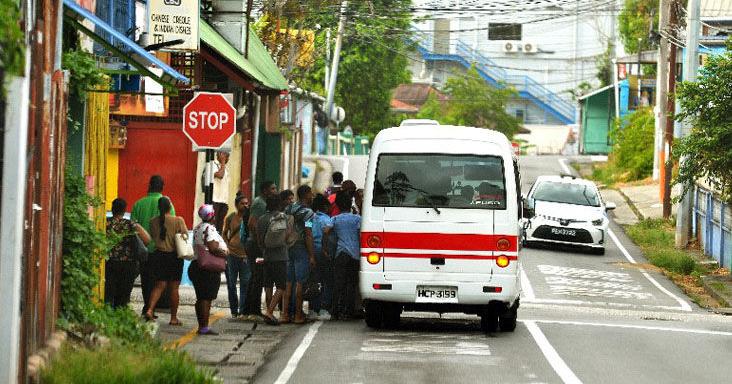
What was supposed to be a 48-hour work stoppage by Trinidad’s maxi-taxi operators ended much earlier than planned for most drivers, with the majority of operators returning to public roads by the second day, after widespread disruption left hundreds of commuters stranded just one day prior.
Local newspaper the Express documented a clear uptick in operating maxi-taxis across multiple population centers on Tuesday, including the busy hubs of Curepe and Chaguanas. In South Trinidad, brown and black band maxi-taxis were back on their routes in full force by the morning.
The industrial action launched on Monday, when operators from all six of the country’s maxi-taxi routes held a first day of what they called “rest and reflection” to push for action on a slate of long-simmering grievances. Their top complaints included unregulated competition from unlicensed “PH” private vehicles and unauthorised white buses, which have siphoned off customers and cut into drivers’ livelihoods for months. Monday’s stoppage brought widespread transport chaos, with hundreds of daily commuters unable to find reliable rides to work, school, and essential appointments.
Late Monday, leaders of all maxi-taxi associations held a marathon, nearly five-hour negotiating session with Minister of Transport and Civil Aviation Eli Zakour. While many participating operators left the talks saying they had not secured the concessions they needed, only the Route Two Taxi Association initially announced it would extend the strike into a second day. Even that extension was cut short, however: by 6 p.m. on Tuesday, Route Two operators had also resumed normal service.
Route Two president Brenton Knights explained that consideration for stranded commuters and fatigue among drivers was the primary factor behind the decision to end the strike early, even though the association never received a formal written commitment from the transport ministry to address their core demands.
“We made the call to stand down because we saw commuters going through hardship we never intended to inflict, and we could see our own drivers and supporters were growing weary,” Knights told the Express. He added that the association recognized the need to step back, reassess its strategy, and pivot to a new approach rather than repeating tactics that had not delivered results.
“If you do the same thing over and over expecting different outcomes, that’s the definition of insanity. We know we need to regroup, reset, and come at this from a new angle,” Knights said. He noted that the association is keeping all options on the table moving forward, including continuing good-faith negotiations, pursuing legal action to force policy changes, and keeping what he called an “element of surprise” for future action if needed.
Knights pushed back on the position Zakour outlined during Monday’s talks, in which the minister claimed the ministry was already doing substantial work to address the industry’s concerns and that operators had little justification for their complaints. He also refuted Zakour’s claim that the Route Two association failed to raise these issues a decade ago, calling the assertion entirely false. “They are politicians, after all – it’s in their nature,” Knights added.
When the Express visited the red band maxi-taxi stand on St Joseph Road in Arima Tuesday morning, passenger volumes were far lower than on a typical weekday, with barely any commuters gathered at the stand in the early hours. Unlike normal operations where dozens of taxis queue for passengers, only occasional vehicles pulled in to pick up waiting riders before departing immediately.
One passenger waiting at the stand around 7 a.m. expressed relief that service had resumed, explaining she had waited for more than three hours on Monday to secure a ride to work. Roughly five minutes after she arrived, a maxi-taxi pulled into the stand, and the 15 waiting commuters quickly boarded to continue their journeys. Passing by the Arima Bus Terminus just after 6:50 a.m., the Express observed long lines of stranded passengers, but those lines had cleared significantly by 7:30 a.m. as more drivers returned to service.
In a public statement released to members and industry stakeholders Tuesday, the Route Two association thanked its supporters for their solidarity during the industrial action. The union noted that the strike came after months of patient diplomacy that had only produced empty verbal promises from government officials. “We remain unwavering on the issues that impact the daily livelihoods, personal safety, and long-term financial survival of every single red band maxi-taxi operator,” the statement read.
The association reaffirmed its commitment to securing its full set of just demands, noting that while other route associations chose to return to work early to give the ministry time to deliberate on their concerns, Route Two had made clear it would only soften its position after receiving binding, official written commitments.
Along with cracking down on unlicensed competition, the association’s list of demands includes raising the maximum highway speed limit for maxi-taxis from 65 km/h to 80 km/h – a change operators say will improve road safety and boost route productivity. Other asks include long-overdue upgrades to overcrowded transport hubs and bus terminals, the introduction of clear formal rules governing the transfer of vehicle licenses in cases of driver illness or death, the payment of outstanding arrears for school transport services provided by operators, and the creation of a structured, accessible contribution system for maxi-taxi drivers to pay into the country’s National Insurance System, as most are self-employed.
-

…Strike loses steam in Central
What was meant to be a three-day national shutdown by Trinidad and Tobago’s Association of Maxi-Taxis ground to an early halt on its second day Thursday, after nearly 40 percent of Route 3 operators defied the industrial action and returned to their routes, easing transport chaos that had disrupted thousands of commuters across Central Trinidad the previous day.
Unlike Monday, when the strike launched to demand government action on the maxi-taxi sector’s long-running grievances, Central communities including Chaguanas saw no large crowds of stranded, anxious commuters. Route 3, the region’s largest maxi-taxi network, connects the major population hubs of Chaguanas to Curepe, San Fernando, Port of Spain, and Arima/Talparo, making its service critical to daily travel for work, school, and medical care.
By Thursday afternoon, association leadership announced the remaining scheduled protest days would be scrapped entirely, a decision widely embraced by the Route 3 drivers already back on the road. Many drivers explained they could not in good conscience extend the disruption that disproportionately hurt vulnerable commuters, including pregnant people, schoolchildren, senior citizens, and patients traveling to public health appointments.
Financial pressure also played a central role in the mass break from the strike. While most drivers supported the association’s demands and backed a one-day work stoppage to draw attention to their issues, many said three consecutive days of lost income would be unsustainable, especially at month-end, one of the busiest periods for public transport. “It’s month-end and busy time, a lot of drivers can’t afford three days off the road,” Route 3 driver Clint Adams told local media.
Route 3 Maxi-Taxi Association President Vickash Kissoondath confirmed that after only 5 percent of green-band maxi operators reported for work on the first strike day, roughly 40 percent resumed service Thursday, amounting to around 300 buses moving thousands of commuters across the route network. He added that even higher participation was expected Friday, noting that the brunt of the strike had fallen entirely on the traveling public. “At the end of the day, our commuters are the ones who are suffering,” he said.
Kissoondath confirmed that calling off the strike was a pragmatic choice, as the government and Transport Minister Eli Zakour had refused to revise their stance on the sector’s core demands, leaving the protest “not worth it”. The association has long pushed for government intervention to address rising operating costs, rampant crime targeting drivers and passengers, and dangerously deteriorated road infrastructure. The association leader laid out the steep financial burden facing operators today: a new 25-seater maxi-taxi now costs roughly $900,000 Trinidad and Tobago dollars, while a 12-seater model runs around $500,000, not including additional costs for required security equipment and vehicle amenities. Persistently poor road conditions also force frequent, costly repairs that eat into driver profits, pushing overall operating costs steadily higher.
While no new formal meeting has been scheduled with Transport Minister Zakour, Kissoondath confirmed an advisory meeting with the ministry’s permanent secretary is set to take place at the end of the month to revisit the sector’s demands. Many drivers said they still stand behind future protest action if the government fails to address their concerns, but argued it was unfair to force commuters to bear the cost of state inaction on the association’s grievances.
For commuters across Central Trinidad, the early end to the strike brought widespread relief. Many told reporters they had endured significant stress over the prospect of another full day of transport chaos, with some scrambling to arrange private transport for Thursday after being stranded on Monday, particularly those commuting to work in Port of Spain, southern, and eastern Trinidad. Local communities in Central Trinidad reported far less disruption on Thursday than on the strike’s opening day.
-

Belmopan Unites to Honor Dr. Nuan Bonilla and Demands Change
Four days after a beloved local physician was gunned down in broad daylight while dropping his 5-year-old daughter at school, thousands of Belmopan residents have turned collective grief into a determined public call for justice and sweeping action against rising violent crime in Belize.
On Monday, family members, former patients, colleagues, and friends filled the city’s streets, clad in custom commemorative T-shirts and holding high signs printed with Dr. Nuan Bonilla’s portrait. What began as a vigil to honor his life quickly transformed into a unified demand for change, with chants of “Justice for Bonilla” echoing across the city center.
For Maria Bonilla, the doctor’s widow, the loss is still unimaginable. Nuan dedicated 14 years of his life to training as a medical professional, and had only just begun to build the career he worked so hard for, practicing medicine for just seven years before his death. “I have met so many people who have told me, ‘I am alive because of Dr. Bonilla,’” Maria shared in an emotional interview. “I cannot believe someone took his life this way.”
To those who knew him personally, Nuan was far more than a skilled physician—he was a quiet, caring presence who prioritized the people around him. “We are adamant about this rally because we know Dr. Bonilla would have done the exact same for any of us if our roles were reversed,” said Gianni Alamilla, a close friend of the deceased. “He didn’t speak much in crowds, but he paid attention. He noticed when you were off, he’d follow up with you one-on-one later. That’s just who he was.”
Alamilla also shared that Nuan’s whole world revolved around his young daughter. His daily lunch break from 12 p.m. to 1 p.m. was non-negotiable—he spent every minute of that time with her, and the 8 a.m. to 9 a.m. school drop-off window was equally sacred. “His biggest fear was that his daughter would have to grow up without him,” Alamilla said. “That nightmare came true, and none of us can accept it.”
The entire Belizean medical community has rallied around Nuan’s family, mourning the loss of a physician whose dedication to patient care set an example for the entire field. Dr. Jorge Hildago, an internist and critical care specialist, noted that Monday’s gathering was as much an act of solidarity as it was a call for reform. “We all came together to stand with the family, but we also want a safe Belize,” Hildago said. “We want to be able to go about our lives without fear, and it’s shocking to lose such a brilliant, young life to senseless violence.”
Staff from the Belmopan Medical Imaging Center, where Nuan worked for nearly eight years, also joined the rally. Dr. Virginia Smith, the center’s director, said Nuan’s death has forced the entire community to confront a crisis that has claimed too many lives across Belize. “We are not the only family that has lost someone we love to violent crime,” Smith emphasized. “This cannot keep happening. We need a new approach to keep our people safe.”
Smith added that while a government minister promised a resolution to attendees, the community is not waiting for top-down change. “Belize has so many brilliant, caring people who can come together to build solutions,” she said. “We need to act now, not let this conversation fade away.”
The killing itself unfolded in front of Nuan’s young daughter, who was seated in the back of the family vehicle when the shooting occurred. The family is still processing the traumatic event, even as they push forward in their fight for accountability.
Law enforcement officials have confirmed that investigators are closing in on a key lead in the case, and have not released further details as the investigation remains active. Despite the ongoing uncertainty, Nuan’s family says they are heartened by the overwhelming outpouring of support from Belizeans across the country, and they will not back down from their demand for justice and long-overdue change to address violent crime.
Reporting by Britney Gordon for News Five.
-

Urgent Plea for Blood After Deadly Gardenia Shooting
A quiet family gathering in Gardenia Village descended into chaos on a Sunday night in early June 2026, when an unidentified lone gunman opened fire without warning, killing 15-year-old Rackeem Armstrong and leaving his 18-year-old cousin clinging to life. The shooting unfolded shortly after 8 p.m. as the extended family gathered for a community barbecue, sending panicked relatives scrambling for cover as bullets flew, according to initial witness accounts.
-
One Claims Victim, One Charged with Attempted Murder
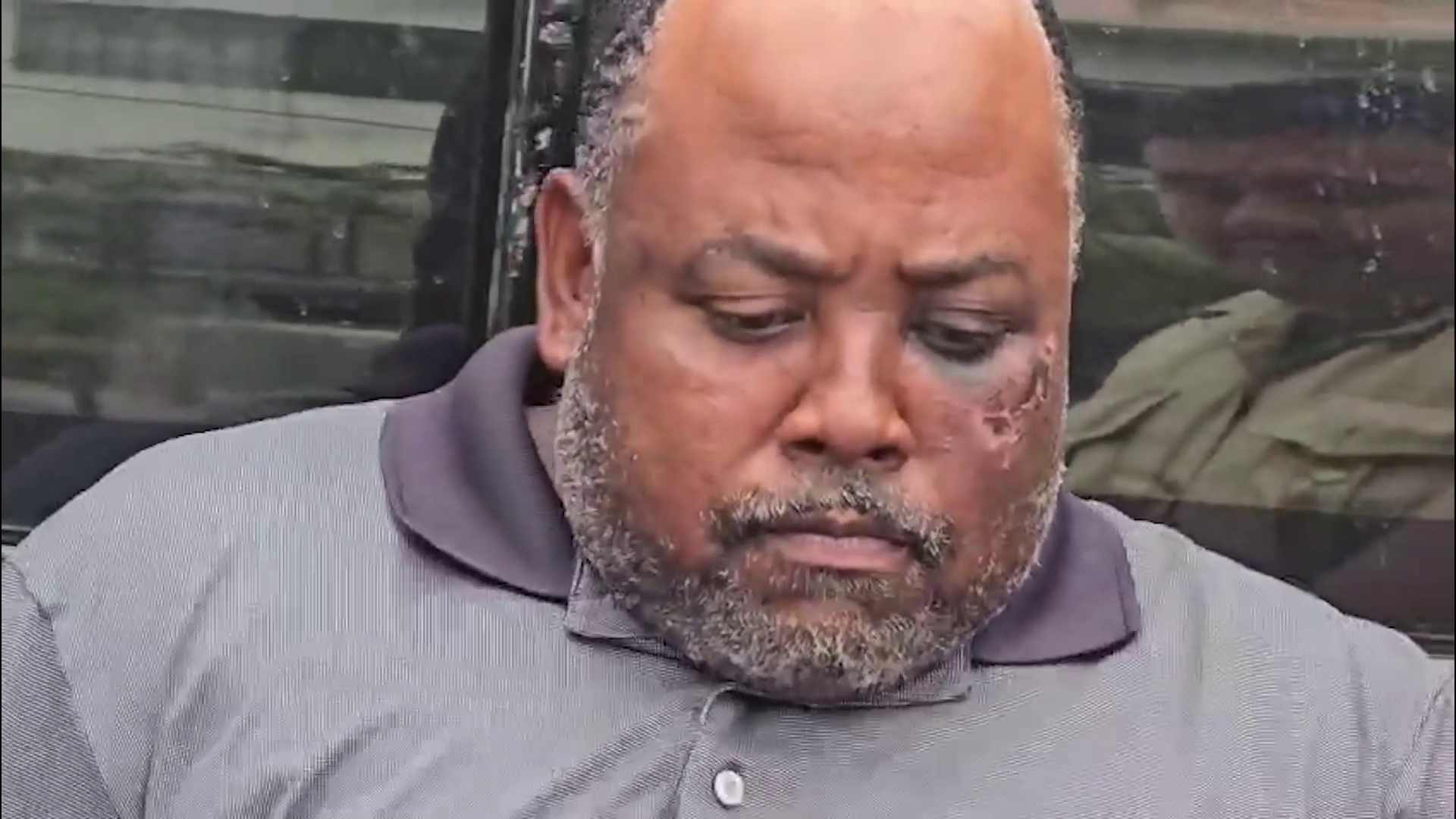
A routine disagreement over vehicle audio repair payments has erupted into a brutal street confrontation in central Belize City, leaving one man hospitalized with life-altering injuries and a local electronics technician behind bars facing attempted murder charges, authorities confirmed this week. The violent clash unfolded at a commercial corner located at the intersection of Baymen Avenue and Saint Joseph Street, where the two men crossed paths by chance after nearly a year of simmering tension over the unfinished repair work.
According to official police statements, the conflict traces back to a 2025 repair job for a car amplifier and sound deck. Thirty-five-year-old Nelson Nolberto told investigators he had already fulfilled his payment obligation for the work, but disputes over the quality and completion of the job lingered between the two men. When they encountered one another at the downtown Belize City location on the day of the incident, verbal disagreements quickly escalated into physical violence.
Nolberto’s account alleges that 45-year-old Phillip Goff, the technician who completed the original repair work, retrieved a machete from his personal vehicle and launched an unprovoked attack. The assault left Nolberto with severe chop wounds across his body, including a critical injury to his neck that has placed him in serious medical condition as he receives treatment.
Following the confrontation, Goff was taken into police custody and arraigned at a local court on June 2, 2026 on three separate charges: attempted murder, use of deadly means of harm, and dangerous harm. During the initial court hearing, Goff did not enter a formal plea. Magistrates denied his application for pre-trial bail, and he has been remanded to the Belize Central Prison, where he will remain in custody until his next scheduled court appearance on July 28, 2026.
Notably, Goff presented a conflicting narrative of the event during his court appearance. The technician told the court he was actually the initial target of the attack, and that he only wielded the machete in self-defense to protect himself from imminent harm. Law enforcement officials have confirmed that the investigation into the full sequence of events remains ongoing, as investigators work to reconcile the two conflicting accounts and collect physical and witness evidence to clarify what transpired during the confrontation.