分类: society

  • CDPF launches professional development series with lecture on criminal offences

    CDPF launches professional development series with lecture on criminal offences

    In a move to reinforce its long-standing dedication to elevating police professional standards, the Commonwealth of Dominica Police Force (CDPF) has kicked off a new series of capacity-building training with a specialized lecture focused on identifying criminal offenses. Held on May 28, 2026, the opening session was led by two of the force’s most seasoned law enforcement professionals: Deputy Chief of Police Jeoffrey James and Acting Superintendent Chaucer James, both of whom bring decades of hands-on expertise in criminal investigation protocol and police operational procedure.

    Unlike traditional passive training formats, the event adopted a practical, experience-centered teaching framework that fostered open engagement between instructors and attending officers. Per an official statement released via CDPF’s social media channels, this interactive approach turned the lecture into a dynamic discussion where participating personnel could share real-world case experiences, ask targeted questions, and deepen their foundational comprehension of how to correctly categorize and recognize different types of criminal activity.

    The training session counted the Chief of Police among its attendees, and was formally chaired by Assistant Commissioner of Police (ACP) Antonia Moses. Following the conclusion of the lecture, participating officers widely praised the initiative, noting that the content was both highly relevant to their daily on-the-job challenges and packed with actionable insights that will directly improve their ability to fulfill their law enforcement duties.

    This opening lecture is not an isolated event, but rather the first step in a sustained organizational push for continuous improvement. The CDPF confirmed in its statement that the series will continue rolling out additional professional development opportunities designed to upgrade the expertise, technical skills, and overall operational effectiveness of officers at all levels of the force. Staying true to its core public mission, the CDPF reiterated its unwavering commitment to a culture of lifelong learning and policing excellence, as it works tirelessly to deliver better protection and service to all communities across Dominica.


  • Road closure: Scott Street, St George’s

    Road closure: Scott Street, St George’s

    Grenada’s traffic enforcement division, operating under the Royal Grenada Police Force (RGPF), has issued an official public advisory alerting all drivers and local residents to an upcoming long-term nightly closure of Scott Street. The shutdown is being implemented to make way for critical asphalt paving projects overseen by the National Water and Sewerage Authority (NAWASA), infrastructure work aimed at improving local road conditions.

    The traffic restriction is scheduled to launch on Tuesday, June 2, 2026, running nightly between the hours of 9 p.m. and 3 a.m. The closure will remain active indefinitely, with no set end date announced as of the advisory’s release. Authorities have confirmed the measure will stay in place until project leaders confirm the paving work is fully completed.

    To accommodate the Scott Street closure and prevent widespread traffic disruption across the downtown area, the RGPF Traffic Department has rolled out a series of adjusted traffic regulations and detour routes for motorists traveling through the affected neighborhood.

    For drivers heading along Halifax Street who need to reach HA Blaize Street, the official detour requires a left turn onto Church Street, followed by a right turn onto Lucas Street to connect to the destination. This re-routing is designed to distribute traffic flow evenly across adjacent side streets and avoid bottlenecks around the construction zone.

    Along with the detour, Church Street will shift to one-way traffic operations for the duration of the paving project. The single direction of travel runs from the street’s intersection with Halifax Street toward Cemetery Hill, a change that aligns with the detour layout to prevent two-way traffic conflicts.

    Three additional access restrictions have been put in place to support the adjusted traffic plan. No vehicles will be permitted to enter Church Street from its intersection with Market Hill, Young Street from its intersection with the Carenage public road, or Monckton Street from its intersection with Matthew Street. These no-entry rules are intended to keep the modified traffic network flowing smoothly.

    Parking restrictions have also been enacted for the project’s duration: all on-street parking on Scott Street will be prohibited for the entire length of the paving works, to create clear space for construction vehicles and equipment.

    In closing the advisory, the Royal Grenada Police Force extended a formal apology for any travel delays or inconvenience the road closure and adjusted regulations may cause for local residents, commuters, and businesses. Officials also noted they are expecting full cooperation and compliance from all road users throughout the project to help ensure work is completed as quickly and safely as possible.

    The advisory was officially released by the Office of the Commissioner of Police, the governing body of the RGPF.

  • “It’s Upsetting to See The Beach Like This When We Can Help”

    “It’s Upsetting to See The Beach Like This When We Can Help”

    On the sun-drenched coastlines of San Pedro, Belize’s top tourist hub, a growing problem of rotting sargassum accumulation has spurred a local tour guide to launch a grassroots movement to restore the island’s iconic beaches.

    Oscar Iboy, a dedicated member of the local advocacy group San Pedro Citizens for Change, launched the regular community cleanup initiative after participating in a small cleanup event near the town’s high school. Frustrated by consistently low volunteer turnout at scattered one-off events, Iboy made the decision to formalize a recurring program to tackle the sargassum crisis that is choking stretches of the island’s shoreline.

    For Iboy, protecting the beaches is not just an environmental issue—it is an economic priority for every member of the San Pedro community. “San Pedro is the number one tourist destination in the country, and every local industry from restaurants to hotels to tour operations benefits from that reputation,” he explained. “We all gain from tourism, so we all have a stake in keeping the island’s image pristine.”

    So far, the initiative has seen slow but steady growth in community participation. The first organized cleanup drew just 13 volunteers, while the most recent event attracted around 20 local residents committed to the cause. That upward momentum has encouraged Iboy to continue expanding the program, which currently holds cleanup events every other Sunday.

    Beyond damaging the island’s appeal to visitors, Iboy warns that prolonged sargassum buildup poses a tangible threat to local marine life. Though he is not a marine scientist, he has firsthand evidence of the harm: as sargassum decomposes on the shore, it releases harmful acids that have already killed scores of small fish and sardines that wash up onto the beach. “You can see dead fish floating all along the shoreline,” he said. “It doesn’t take a scientist to see how dangerous this buildup is.”

    The crisis comes at a particularly difficult time for San Pedro’s tourism sector, which has struggled in recent years and left many tour guides like Iboy out of consistent work. To address both the sargassum problem and the economic hardship facing local workers, Iboy has proposed that the San Pedro Town Council create paid cleanup positions for unemployed residents. The model would kill two birds with one stone: it would give struggling locals a chance to earn extra income while tackling the ongoing sargassum problem and protecting the island’s tourism brand.

    The initiative has sparked some local debate: some San Pedro residents argue that addressing coastal sargassum is a government responsibility, not a job for volunteer community groups. But Iboy remains firm that collective community action is the only way to deliver real, lasting change. “We all reap the benefits of living and working on this beautiful island,” he said. “It’s upsetting to see our beach ruined like this when we have the power to step in and help.”

    As the cleanup effort continues, Iboy and San Pedro Citizens for Change are urging both local residents and business owners to join the movement, lend a hand at upcoming events, and help protect the natural resource that forms the foundation of San Pedro’s livelihood.

  • Are You and Your Family Ready? Here’s Your Hurricane Prep Checklist

    Are You and Your Family Ready? Here’s Your Hurricane Prep Checklist

    As the 2026 Atlantic hurricane season enters its second day, no active storm systems are currently developing across regional waters, but disaster response officials in Belize are already sounding the call for proactive preparation, warning residents against waiting until a storm is imminent to get ready.

    In a public appeal on the local morning current affairs program *Open Your Eyes*, Red Cross volunteer Feliciana Vernon and Fred Hunter, head of Disaster Risk Reduction at the Belize Red Cross, emphasized that advance planning is the most critical step to avoiding chaos and danger when a hurricane strikes.

    “Sometimes we might wait too long, too late to actually go to the shelter. We hope that at least there is a set plan so that when you do decide, you’re moving quickly,” Vernon explained during the appearance.

    The pair outlined a comprehensive preparedness checklist for Belizean households, starting with a formal family emergency plan that accounts for every member of the household, including those with special medical or access needs. The plan should map out all available evacuation routes, cover whether residents will head to an official community shelter, stay with nearby family, or shelter with a neighbor, and detail how the household will travel to their safe location, whether by private vehicle, bus, boat, or on foot. It should also include a pre-designated meeting point for any family members who become separated during evacuation, and a clear list of contacts who will be notified of the household’s evacuation plans before the storm hits.

    Vernon noted that communication infrastructure is often knocked offline in the aftermath of a major hurricane, making advance coordination all the more important. “After a hurricane passes, there probably won’t be internet for a couple of days. So let your family know where you would go,” she said.

    In addition to a written emergency plan, the Belize Red Cross advises every household to pack a dedicated grab-and-go emergency bag that can be grabbed at a moment’s notice when an evacuation order is issued. The bag should be stocked with three days of non-perishable food and clean drinking water, with recommended options including canned fruits and vegetables, canned meats, peanut butter, tortillas, johnny cake, and high-energy trail snacks or bars.

    Essential tools and supplies to include are a flashlight with extra batteries, a kerosene lamp, manual can opener, basic hand tools including a hammer, nails, pliers, a wrench and scissors. All critical identifying and legal documents should also be stored in a waterproof compartment of the bag, including photo IDs, birth and marriage certificates, medical records, insurance policies, passports, property deeds for land and homes, bank account records, and household keys. Finally, the bag should hold basic hygiene supplies, a change of clothes for each family member, and small items to keep children occupied during an extended shelter stay.

    Beyond packing and planning, the Red Cross team emphasized the importance of running full practice evacuation drills with the entire household long before a storm approaches the coast. These dry runs help every family member understand their role, how quickly the household can mobilize, and what steps they need to take, eliminating panic when an actual evacuation is required.

    “It’s practice, practice, practice. Have your plan and work it out,” Hunter said. Vernon echoed that sentiment, noting that even young children can have a small assigned role in the evacuation process: “Just grab and go. Everybody has a role, even the little kids.”

    To support households in building their emergency plans, the Belize Red Cross currently makes free printed emergency plan booklets available at their main Belize City office, with electronic versions also accessible for download. The organization is currently accepting public donations of any amount to fund the printing of additional copies to distribute to communities across the country.

  • TTPS-issued ammo found at double murder scene

    TTPS-issued ammo found at double murder scene

    A shocking double murder has rattled the quiet community of Penal in south Trinidad, prompting an urgent manhunt and a major internal probe after investigators made an unexpected discovery: police-issued ammunition at the scene of a gang-style shooting. The violence unfolded shortly after 8 p.m. on Sunday, when local residents reported hearing a rapid barrage of gunfire erupt from a residential property along Rock Road.

    Initial witness accounts paint a chilling picture of the attack. One man who was at the home watching football with the two victims told investigators that 23-year-old Jahrael Akeel Tafari Hunte, a local resident of Penal’s Syne Village, had stepped outside to answer a call from his wife just moments before the gunmen struck. Minutes after Hunte left the room, the witness looked outside and spotted three unidentified masked men armed with firearms loitering near the property’s front gate. Before he could raise an alarm, a hail of gunshots rang out, forcing the witness to flee the home for his own safety.

    Once the gunfire stopped and the attackers had fled, the witness returned to the property to find Hunte and 45-year-old Randolph Felix, a Rock Road resident, lying unresponsive on the ground, both having sustained multiple gunshot wounds. A third man at the scene survived the attack but suffered a gunshot wound to his left lower leg, along with cuts and abrasions to his chest and wrist. He was rushed to a nearby medical facility for treatment and remains in stable care under observation as of the latest updates.

    Responding officers from the Trinidad and Tobago Police Service (TTPS) immediately cordoned off the area and called in specialist crime scene investigators from the Region Three Homicide Bureau to process the site. Over the course of their examination, investigators recovered a large cache of ballistic evidence: 21 spent shell casings, four broken metal fragments, and three live, unfired rounds of ammunition. What made this discovery unusual, however, was that one 9mm spent casing and one 9mm live round recovered at the scene bore official TTPS markings, confirming they had been issued to police service personnel. All other ammunition recovered carried commercial manufacturing markings from third-party arms producers.

    This brazen double killing is not an isolated incident in the region. The attack capped off a staggering 13-hour wave of violence that left six people dead across south Trinidad. Earlier the same morning, three men were shot dead in a separate shooting incident in Corinth, Ste Madeleine, adding to the growing tally of violent deaths in the area.

    Investigators now face two parallel lines of inquiry: first, to identify and apprehend the three armed attackers responsible for the shooting, and second, to determine how police-issued ammunition ended up in the hands of the gunmen. Authorities have not yet ruled out any potential connections between serving or former police officers and the attack, and the TTPS has confirmed it will conduct a full review of all issued ammunition stockpiles as part of the ongoing probe.

  • Epicurean Worker Fired Over Loyalty Card Scheme Loses Industrial Court Battle

    Epicurean Worker Fired Over Loyalty Card Scheme Loses Industrial Court Battle

    A former frontline worker at Caribbean supermarket chain Epicurean has failed in her legal claim for unfair dismissal, after the Industrial Court issued a ruling confirming the retailer was fully within its legal rights to terminate her employment for violating company policy around the staff loyalty program.

    Handed down on May 22, the court’s judgment centered on Narshebar Richards, who worked as a bag packer and carryout attendant for the supermarket. The court found that Richards had explicitly breached internal company rules by accumulating customer loyalty points onto her personal staff loyalty card. Prior to the incident, Richards had signed formal documentation acknowledging that this exact practice was considered fraudulent conduct by the company, and that any violation would carry disciplinary consequences up to and including immediate termination.

    The case traces back to an internal human resources investigation launched by Epicurean in January 2015. The probe uncovered that a total of 47.38 Eastern Caribbean dollars in loyalty points had been added to Richards’ card from customer purchases. During questioning, Richards admitted that on at least one occasion, a customer had opted to give her the loyalty points from their transaction in place of a cash tip.

    Richards’ legal team argued that the customer’s voluntary consent to transfer the points should make the practice acceptable under employment terms. But the court rejected this reasoning outright, noting that no third-party customer has the authority to alter or override the binding terms of an employee’s contract with their employer. The judgment also dismissed arguments that the small monetary value of the points made termination an excessively harsh penalty. The court emphasized that the core issue in the case was not the amount of money involved, but the breach of workplace trust and integrity that the conduct represented.

    While the Industrial Court did acknowledge several procedural gaps in Epicurean’s internal investigation—most notably the retailer’s failure to retain and present security video footage linked to some of the transactions in question—it ultimately ruled that Richards’ own admission of the improper conduct was alone enough to legally justify her dismissal.

    In its final conclusion, the court stated that Epicurean held clear, reasonable grounds to conclude that Richards had committed workplace misconduct, carried out an investigation that met basic procedural standards, and acted reasonably when making the decision to terminate her employment.

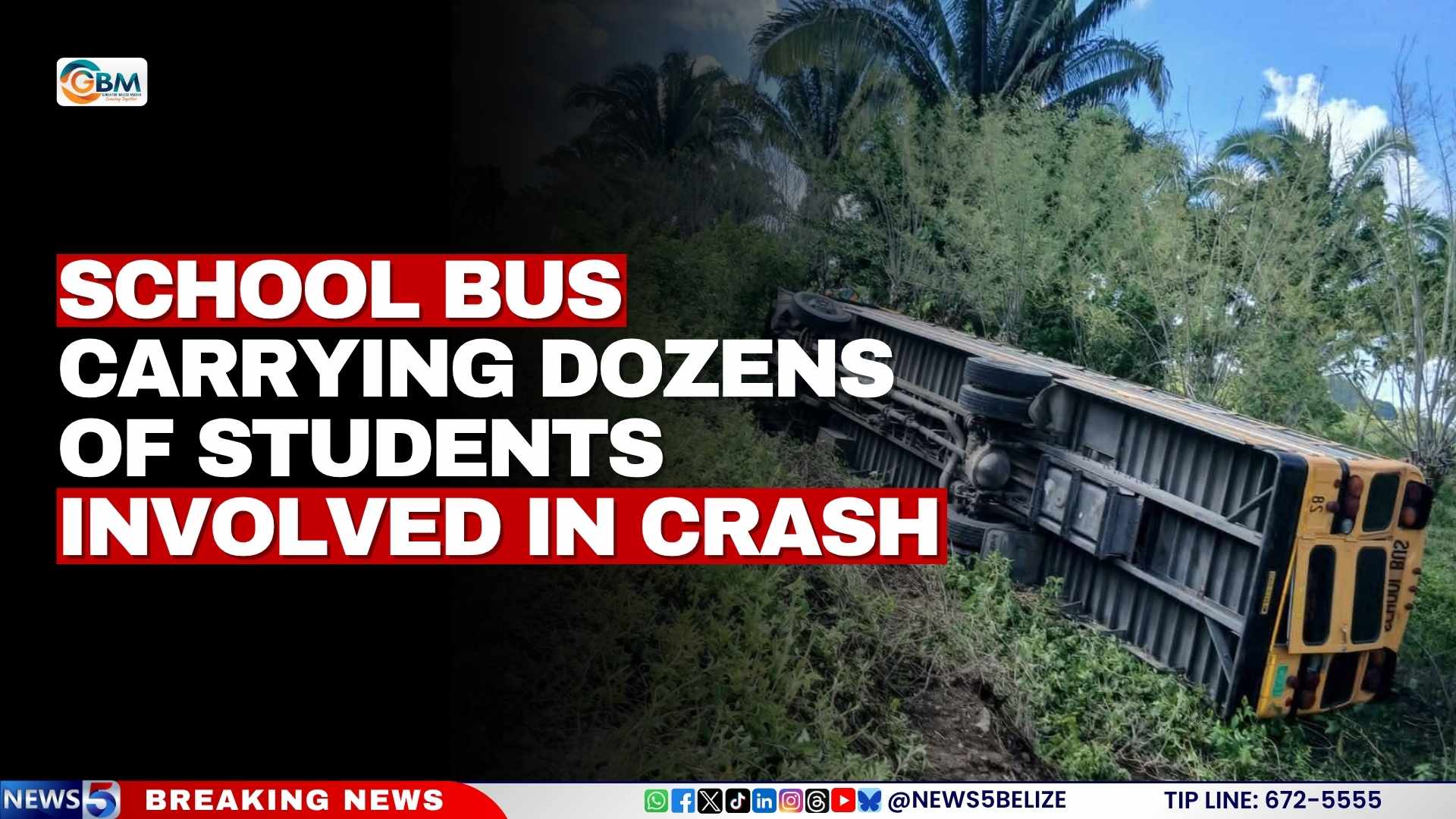
  • School Bus Carrying Dozens of Students Involved in Crash

    School Bus Carrying Dozens of Students Involved in Crash

    On June 1, 2026, one day ahead of the official public announcement, a collision involving a school bus carrying dozens of high school and technical students shook the small community of Pueblo Viejo Village in southern Belize’s Toledo District. The bus was transporting learners from Julian Cho Technical High School, with additional students from the Toledo Institute of Development and Extension’s Technical and Vocational Education Training (ITVET) program also on board at the time of the crash.

    Belize’s Ministry of Education, Culture, Science and Technology (MoECST) later issued an official confirmation verifying that 32 students were present on the vehicle when the accident occurred. In the immediate aftermath of the collision, emergency response teams arrived at the scene to triage affected passengers and coordinate next steps. Four students were diagnosed with only minor injuries and quickly transported to the nearby San Antonio Polyclinic to receive urgent medical care. All other students on the bus were unharmed and relocated to an alternate vehicle to continue their journey or be reunited with their families.

    In a public statement released following the incident, MoECST shared that officials were relieved to confirm that no life-threatening or severe injuries had been recorded across all passengers. The ministry also emphasized its ongoing commitment to providing support—including academic accommodations, counseling resources, and logistical assistance—to the affected students, their family members, and the broader Julian Cho Technical High School community as they process the event.

    As of the latest update, local traffic law enforcement and education sector officials have launched a formal investigation to pinpoint the exact cause of the crash. Investigators are reviewing evidence from the scene, interviewing witnesses, and examining the condition of the bus and surrounding roadway to determine whether factors such as weather, mechanical failure, driver error, or road conditions contributed to the collision. No preliminary findings have been released to the public as the inquiry remains ongoing.

  • Honderden kinderen bidden voor vrede, onderwijs en de toekomst van Suriname

    Honderden kinderen bidden voor vrede, onderwijs en de toekomst van Suriname

    On Saturday, more than 300 people — including children, parents, youth leaders and volunteers — came together in Suriname for the annual National Children’s Prayer Day, hosted at the Gods Rainville municipality venue. The gathering centered on intercessory prayer for the nation of Suriname, local families, educational institutions, national and global leaders, and children across the world navigating challenging living conditions.

    This year’s event was jointly organized by three faith-focused groups: the Weid Mijn Lammeren Foundation, the Suriname Bible Society, and the Children’s Evangelization Society. Young participants came from a wide range of Christian denominational backgrounds, including Roman Catholic, Pentecostal, Baptist, and Wesleyan congregations. The day’s program blended a variety of activities, including group singing, dance performances, collective worship, and open prayer sessions.

    Gloria Lie Kwie Sjoe, one of the event’s co-organizers, expressed deep gratitude for the large turnout and the enthusiastic engagement from the young participants. “The sincerity that children bring to their prayers is extraordinary,” she shared in remarks during the gathering. “Their prayers come straight from the heart. It is so important for children to learn that prayer is not difficult or boring — anyone can pray, no matter how old or young you are. God listens to the prayers of children just as he listens to adults. Prayer gives people hope, comfort, and strength when they need it most.”

    One of the most memorable segments of the day was a personal prayer writing activity, where each child jotted down their own private prayers on small notes. These handwritten messages offered an intimate window into what young people across Suriname care about most, and produced many deeply moving moments for everyone in attendance.

    The prayers reflected a wide range of hopes and concerns for both local and global communities: one child prayed that Suriname’s national football team would qualify for the FIFA World Cup, while another wrote that they hoped all conflict and war would end around the world. Many children asked for greater peace within Suriname, improved living conditions for unhoused residents, healing for sick loved ones, and safer public environments for all children.

    Education was also a key focus of the children’s prayers. Many young participants prayed for teachers and fellow students, as well as for improved educational infrastructure and resources across the country. Additional prayers called for safer, cleaner public streets and healthy, prosperous futures for all people living in Suriname.

    In closing remarks, event organizers emphasized that the gathering made clear an important truth: children are not only the future of the nation, they already hold a meaningful and powerful voice in the present. Their simple, unfiltered, sincere prayers came together to form a strong, unified message of hope, faith, and shared connection across all of Suriname.

  • Upgrades to traffic signals at Beckles Road, St Michael start June 3

    Upgrades to traffic signals at Beckles Road, St Michael start June 3

    A critical infrastructure improvement project is set to get underway this week at one of St. Michael’s busiest urban intersections, with government transportation officials announcing a month-long series of upgrades to the traffic signaling system at the junction of Highway 7 and Beckles Road.

    Located directly adjacent to the Government Headquarters Building along Bay Street, this high-traffic crossing will see teams from the Ministry of Transport and Works (MTW) carry out comprehensive upgrades to existing traffic signals over a 28-day timeline. In addition to modernizing the current signal infrastructure, the project will also add a new street light to improve visibility and safety for all users of the intersection.

    Work on the site is scheduled to begin this Wednesday, June 3. Throughout the duration of construction, motorists, cyclists and pedestrians should anticipate intermittent changes to traffic signal operations. At various points during the work, signals may be switched to flashing amber mode or shut off entirely to allow crews to work safely.

    MTW has issued a public advisory urging all people traveling through the work zone to exercise extra caution during this period. Road users are reminded to pay close attention to temporary traffic management signage posted around the site and follow any instructions given by on-site traffic control personnel to avoid accidents or delays.

    In a public statement released by the ministry, MTW pre-emptively thanked local residents and daily commuters for their patience and cooperation while the upgrades are carried out. Officials also offered an apology in advance for any temporary disruption, congestion or inconvenience that the construction work may cause to people’s regular travel routines in the area.

  • Dr Naun Bonilla Remembered as “A Servant of Humanity”

    Dr Naun Bonilla Remembered as “A Servant of Humanity”

    The Belmopan medical community and broader public are grappling with shock and grief this week after the targeted execution of 35-year-old beloved physician Dr. Naun Bonilla, who was killed last Friday while en route to drop his daughter at school. Tributes poured in across the community Monday, as hundreds of colleagues, patients, and loved ones took to Belmopan’s streets to honor a doctor widely remembered as a selfless servant to both his patients and his family.

    During a segment on the local morning program *Open Your Eyes*, close friend and colleague Gianni Alamilla opened up about Bonilla’s legacy of commitment to lifting up others. “He genuinely was a servant of humanity,” Alamilla shared. “He invested his entire life into people, and he always inspired everyone around him to do more. That’s why we all rallied together to honor him — if the roles were reversed, Dr. Bonilla would have done the exact same for any of us.”

    Dr. Jorge Hidalgo, an internist and fellow member of Belize’s medical community, framed the public gathering as an act of collective solidarity, celebrating the life of a physician who embodied the core mission of medicine. “We came together as a medical community to honor the life of a very young, brilliant physician who perfectly exemplifies why we chose this profession: to serve people, support our communities, and cherish our families,” Hidalgo explained.

    Dr. Virginia Smith, director of the Belmopan Medical Imaging Center and Bonilla’s colleague of eight years, described the quiet, persistent impact he left on their workplace. “It feels surreal to walk the clinic corridors this morning and not see him pass by in his signature green scrubs. His office was directly across from mine, and it always felt warm seeing his patients lined up outside — he would spend hours with each one, making sure every person got the time and care they deserved,” Smith said.

    Beyond his dedication to patient care, those who knew Bonilla emphasized his equal devotion to his young daughter, a role cut tragically short by his killing. Alamilla recalled that Bonilla protected a strict, non-negotiable window of time every single workday to prioritize his child: “12 to 1 o’clock was always reserved, no exceptions — that was when he went to have lunch with his daughter. He once shared that his biggest fear was his daughter growing up without her dad, and that’s what makes this so impossible for his family and all of us to accept.”

    As the community mourns, Belizean law enforcement continues to advance their investigation into the killing. Authorities have confirmed they have identified a vehicle of interest and a person of interest connected to the crime, and are currently pursuing two potential motives. Investigators have declined to release further public details, citing a need to protect the integrity of the ongoing case. No arrests have been made as of this update, and no motive has been officially confirmed.