分类: society

  • ‘Be more aware’

    ‘Be more aware’

    Against a rising tide of allegations of sexual abuse of students by educators across Jamaica, senior child protection officials have called for urgent systemic changes to close gaps that allow predatory educators to move between schools and reoffend. At a public discussion series hosted by the University of Technology, Jamaica, focused on strengthening national frameworks to protect children from sexual abuse, Keisha Rodriguez-Mills, director of investigations, inspections and compliance at the Office of the Children’s Advocate (OCA), outlined key gaps in the current system that put minors at continued risk.

    Rodriguez-Mills pointed to a dangerous, widespread misconception among school administrators that an abusive educator’s resignation resolves the issue. Many school leaders adopt a false sense of security after an accused educator steps down, only for that individual to secure a position at a new institution and repeat their harmful behavior, she explained.

    While Rodriguez-Mills noted that overall reporting of child sexual abuse has climbed in recent years, including more reports from children themselves, significant barriers to full accountability remain. A disproportionate share of new reports now center on educator misconduct against students, she confirmed, and a troubling pattern of underreporting has emerged around grooming of adolescent male victims. Many adolescent boys choose not to come forward with reports of abuse, in part due to harmful societal stereotypes that dismiss such reports as unmanly or “girly”. In most cases of male grooming abuse, it is a peer who becomes aware of the harm and files a report on the victim’s behalf. Rodriguez-Mills framed this trend as a small positive sign, indicating that public education campaigns are teaching children to recognize and report inappropriate behavior.

    To stem the cycle of abuse, Rodriguez-Mills argued that public awareness and training efforts must extend beyond working current school staff to include reforming pre-service training at Jamaican teachers’ colleges. Currently, most teacher training programs focus almost exclusively on curriculum delivery, lesson planning and practical teaching requirements, leaving new educators unprepared to navigate appropriate boundaries with students, she said. Training must emphasize that teachers hold adult authority and are never permitted to engage in inappropriate interactions, even when a student expresses romantic attention toward an educator.

    Rodriguez-Mills also called on all school principals to implement mandatory, regular orientation sessions that outline appropriate professional boundaries for all new hires and existing staff, warning that the OCA has repeatedly documented the tragic outcomes when this basic step is skipped.

    She detailed a common harmful pattern that enables cross-school reoffending: when an allegation of abuse arises against a teacher, the educator often resigns mid-investigation. Facing staffing shortages, many schools treat the departure as a resolution to the problem, failing to document the allegations or report them to national education authorities. The abusive educator then relocates – sometimes across the island, from Kingston to far-flung parishes like Westmoreland – and is hired by a new school that has no warning of prior allegations. It is only when the educator reoffends at the new campus that the new principal contacts the previous employer, where leaders often admit they never documented or reported the original claims.

    To fix this gap, Rodriguez-Mills urged all schools to report all credible allegations of abuse to Jamaica’s Ministry of Education, to maintain permanent records of claims regardless of whether the educator resigns, and to avoid rushing to hire staff simply to fill vacancies even when stretched thin by understaffing. She also called on educators to be more attuned to student behavior: when students withdraw from a class or avoid a specific staff member, leaders should not automatically assume the student is misbehaving. In many cases, this withdrawal is a sign the student feels uncomfortable or unsafe around the educator, requiring closer examination.

    Joining Rodriguez-Mills at the forum, Florene Clarke, an inspector of police and sub-officer in charge of the Centre for the Investigation of Sexual Offences and Child Abuse (CISOCA), praised the work of the Jamaica Teachers’ Association (JTA) to address the issue. The JTA has partnered with CISOCA to deliver training on appropriate boundaries, grooming prevention and the legal and ethical consequences of inappropriate relationships with students to educators and trainee teachers across all Jamaican teachers’ colleges. While Clarke noted that law enforcement has made progress, including arresting abusive educators and school staff, she acknowledged that systemic change will take sustained effort. CISOCA will continue to proactively partner with educational institutions to deliver training and build capacity to protect children, she confirmed.

    Dr Warren Thompson, director of intake investigation, court and adoption services at the Child Protection and Family Services Agency, added context on the scope of the crisis, noting that the majority of reported child sexual abuse cases involve sexual activity with a minor under 16 years old. Thompson said that 90 percent of all reported abuse cases target girls, but significant challenges remain in prosecuting perpetrators even when reports are filed, often due to a lack of sufficient evidence to move cases forward to police investigation.

    While girls make up the majority of victims, Thompson confirmed that abuse of boys is also widespread and drastically underreported. Most reports of male victimization involve only severe cases of buggery, while claims of grooming, sexual touching and other lesser forms of abuse rarely make it to authorities, despite the fact that grooming affects both boys and girls across Jamaica.

  • Manchester 80% ready for hurricane season, says mayor

    Manchester 80% ready for hurricane season, says mayor

    MANDEVILLE, Manchester — Seven months after Category 5 Hurricane Melissa left significant damage across the northern portion of the Jamaican parish of Manchester, local municipal leaders have confirmed that pre-season mitigation work is well underway to ready the region for the 2026 Atlantic hurricane season, which officially kicked off this Monday.

    Donovan Mitchell, chairman of the Manchester Municipal Corporation and mayor of Mandeville, shared updates on preparedness efforts in an interview with the Jamaica Observer, emphasizing that the local government has taken a proactive approach to risk reduction ahead of the season’s historically most active late period.

    “We know the first two to three months of hurricane season are typically not very active, but activity picks up sharply as we move into the later months. Our goal is to have every measure in place long before a storm threat arrives, so we are fully ready for any outcome,” Mitchell explained. “Right now, Manchester is roughly 80 percent prepared. We are confident we can respond effectively if any storm impacts our parish this year.”

    Mitchell recalled that while the municipality had preparation measures in place ahead of last year’s storm, Melissa, which made landfall on October 28, brought unprecedented, unexpected damage that tested local response capacity.

    In this year’s preparedness push, the municipal government has prioritized inspecting and repairing emergency public shelters across the parish. Of the original 86 shelters the parish once maintained, 55 are now certified ready for use, while the remaining 31 sustained irreversible or complex damage during Melissa and have not yet been restored. All active shelters now feature accessible ramps to accommodate people with physical disabilities, and a specialized shelter for vulnerable people with mental health conditions will be hosted at Mandeville Primary School, which has been fully retrofitted for this purpose. Administrators are also updating the roster of shelter managers, noting that while some long-serving managers have retired, replacement staff have already been lined up to fill any gaps ahead of a storm event.

    The parish’s central warehouse for pre-positioned hurricane relief supplies has also been fully repaired following damage from last year’s storm. Mitchell noted that this storage facility is critical to the local response, as municipal teams act as first responders in the immediate aftermath of a storm. Having emergency supplies on site ensures the parish can support residents even if national government agencies are delayed in reaching Manchester due to widespread damage across other regions of the country.

    Later this week, on Thursday, the municipality will host a meeting of its Disaster Preparedness and Mitigation Committee, with all key local disaster response stakeholders invited to attend to align coordination plans ahead of the season. Specialized response equipment is already on standby for rapid deployment if needed.

    Funding from the Ministry of Local Government has allowed the parish to ramp up drain cleaning work across Manchester, with a major push scheduled to begin across the parish in June. The municipality has also prioritized repairs to parochial roads, which fall under its jurisdiction (main national roads are managed by the National Works Agency and national government lawmakers).

    Currently, repair work is ongoing on Mollison Road near Christiana, which collapsed during last year’s hurricane. Restoring this road is a top priority, as it would cut off access to roughly 1,000 local residents if left unrepaired ahead of the new season. Mitchell added that most other parochial roads are already in good condition, following recently completed repairs on high-traffic routes including McKinley Road, Brumalia Road, Wint Road, and Ward Avenue, all of which are heavily used by motorists traveling to and from Mandeville. Local city councilors are conducting individual assessments of roads in their districts to address any remaining hazards.

    The municipality is currently in discussions with Desmond McKenzie, Minister of Local Government and Community Development, to secure additional funding for remaining repair and preparedness projects, and is awaiting a response on further support.

    Beyond municipal-led work, Mitchell is calling on local residents to take personal responsibility for maintaining clear drains near their homes after municipal crews complete cleaning. The municipal government enforces a zero-tolerance policy for blocked drains, which are a major cause of preventable flooding during hurricane events. Crews are already conducting inspections of drains that cross private property to address illegal encroachment or blockages, and Mitchell urged residents to avoid dumping plastic, garbage, or other debris in drainage infrastructure.

    Mitchell also highlighted specific ongoing risks from roadside garages and active construction sites, where operators frequently dump building materials including sand and marl along road shoulders. Heavy rain can wash these materials into drains, causing widespread blockages. Under the Parochial Roads Act, the municipal council has the authority to set time limits for temporary placement of construction materials on public roads. If operators fail to remove materials after receiving official notice, the council will remove the materials at the operator’s expense. The mayor also issued a warning for residents to remove derelict vehicles that block drainage pathways, particularly along roads used for informal garages, noting that unclaimed vehicles will be removed by the council ahead of the storm season.

  • Taxi operators give staggered fare hike a bumpy ride

    Taxi operators give staggered fare hike a bumpy ride

    On Tuesday, Jamaica’s government formally announced a long-awaited staggered 16% taxi fare increase, splitting the adjustment into two 8% increments set to roll out in June and July this year. The policy announcement immediately drew a spectrum of reactions across public passenger vehicle (PPV) operator circles, ranging from reluctant acceptance to open frustration, with many drivers pointing out that runaway operating costs have already pushed them to charge rates well above the government’s approved caps for months.

    A hackney carriage driver operating the busy Half-Way Tree to Spanish Town route, who goes by the name Shortman, summed up a common contradiction among drivers. Many operators have already bumped up fares twice on their own without waiting for official authorization, he explained, questioning why his peers are still publicly agitating for a formal hike. “Most of them aren’t collecting the recommended [fare]; everybody [collecting more] so what are you bawling for an increase for?” Shortman said. Fellow route operator Junior echoed that observation, noting that when the 16% increase was paused earlier this year, drivers simply implemented the full hike on their own regardless of official approval.

    The government’s new timeline places the first 8% increase into effect starting June 2, with the second 8% adjustment kicking in on July 1, according to Transport Minister Daryl Vaz, who made the announcement at a press briefing. The 16% increase itself was not a new request: back in October 2023, the cabinet approved a total 35% fare hike for PPVs, of which only 19% was immediately implemented. The remaining 16% was scheduled to go live in April 2024, but unforeseen adverse economic shifts forced the government to delay the adjustment. After that delay, Minister Vaz brought the proposal to Cabinet to decide between a full immediate increase and a phased rollout, a plan that was originally rejected by operators who pushed for a one-time adjustment.

    Vaz defended the phased approach, framing it as a deliberate compromise between two competing priorities: addressing the rising operational costs that have squeezed PPV drivers, and shielding commuters from the immediate shock of a full double-digit fare hike. He also outlined concrete adjusted fares for popular routes across the country. After the first June adjustment, for example, the St Ann to Ocho Rios route taxi fare will rise from JMD $200 to $220, the Eltham Park to Spanish Town fare will climb from $160 to $170, the rural Ocho Rios to Kingston stage carriage fare will go from $560 to $610, and the Mandeville to May Pen fare will increase from $290 to $310. After the second July adjustment, those same fares will shift again: the St Ann’s Bay to Ocho Rios route will rise from $220 to $240, Eltham Park to Spanish Town will hit $190, Ocho Rios to Kingston will reach $660, and Mandeville to May Pen will settle at $330.

    Still, major PPV industry associations have made clear that while they will accept the government’s decision, they remain deeply unsatisfied with the staggered timeline. Egerton Newman, president of the Transport Operators Development Sustainable Services (TODSS), told the Jamaica Observer that the association still prefers a one-time 16% implementation, but recognized that government constraints forced the phased rollout. Even with the full 16% increase, Newman argued, the adjustment is far too little after years of waiting. “After waiting three years and now just getting $10 it doesn’t cut it,” he said, predicting that many drivers will already add extra unapproved charges to fares immediately regardless of the government’s timeline.

    Leon Patterson, head of the Independent Taxi Association, echoed that frustration, noting that the 16% increase was originally approved two years ago as part of a scheduled fare review cycle. By the time it is fully implemented, he argued, inflation will have already eroded the entire value of the adjustment. “Inflation has already taken away that 16 per cent. What we have to do now is accept the 16 per cent and we move forward to prepare a submission for another fare increase because what the 16 per cent is, is just an adjustment to the fare structure that was granted two years ago, so we are just getting what was granted two years ago,” Patterson explained.

    Charles Powell, president of the Southern Taxi Association based in St Elizabeth, shared a similar prediction to Newman: that most independent drivers will not wait for July to implement the full 16% increase, and will bump fares to the full final rate immediately. “From my standpoint, knowing the operators out there they are not going to take it in two parts, they are going to take it in one… It is not like a company, it is a one-to-one, and so you will find them operate like that,” Powell said, adding that he opposes the two-phase structure but has no choice but to accept the government’s final decision.

    For his part, Minister Vaz issued a sharp warning to operators considering unapproved arbitrary fare increases above the government’s new phased rates. “I don’t want those persons who have raised their fares arbitrarily and illegally already to now do another fare increase on this Government’s announced increase. If you do so, you are going to feel the brunt of the law and the regulations from Transport Authority and from the Jamaica Constabulary Force,” Vaz said. He also urged commuters to report overcharging directly to regulators via WhatsApp or the official transport hotline, noting that enforcement efforts cannot succeed without public support. “I’m making an appeal today: Anybody that sees this happening, you have enough ways and means to communicate… because we are not going to be able to enforce it without the help of the citizens of this country. So I say that as a warning and hope that it will be listened to and adhered to,” he added.

  • Dominican government delivers equipment to combat sargassum on Boca Chica beaches

    Dominican government delivers equipment to combat sargassum on Boca Chica beaches

    BOCA CHICA — As seasonal sargassum blooms continue to threaten one of the Dominican Republic’s most beloved coastal destinations, the national Ministry of Tourism has handed over a fleet of 42 heavy-duty machinery units to local authorities to scale up cleanup operations against the persistent invasive algae. The new resource package, tailored to boost the region’s long-standing battle against annual sargassum surges, includes 30 cargo trucks, six heavy tractors, and six specialized beach sweepers, all designed to streamline maintenance and debris removal across Boca Chica’s popular shoreline.

    At the official handover event held this week, Tourism Minister David Collado underscored a key guiding principle behind the resource allocation: the distribution was conducted entirely outside of partisan political lines. Collado confirmed that mayors representing a range of political affiliations, including members of opposition parties, were included as beneficiaries of the new equipment. He went on to emphasize that public support for local municipal governments must center on community-wide needs rather than narrow partisan advantage, framing the sargassum response as a shared public interest that transcends political divides.

    For years, massive seasonal influxes of sargassum have stood as one of the most pressing environmental and economic threats to Boca Chica. The brown algae piles up along the territory’s beaches, ruining the scenic coastal environment that draws millions of visitors each year, crippling tourism activity, and eroding the livelihoods of hundreds of local families whose incomes are directly tied to the area’s visitor economy. With the arrival of the new heavy equipment, national authorities project that local municipal teams will see a marked improvement in their ability to respond to sargassum surges, keeping shorelines clean, accessible, and attractive for both local residents and the international tourists that power the local economy.

  • Abinader swears in new committee to strengthen mental health care in prisons

    Abinader swears in new committee to strengthen mental health care in prisons

    In a formal ceremony held at Santo Domingo’s National Palace, Dominican Republic President Luis Abinader has officially inaugurated the Dominican Committee for Penitentiary Mental Health, a groundbreaking intersectoral body designed to elevate mental health care for three key groups impacted by the country’s correctional system: incarcerated people, prison staff, and the families of both groups. This launch marks the latest milestone in the Dominican Republic’s multi-year effort to overhaul and reform its national prison system.

    Speaking to attendees at the inauguration, President Abinader framed the new committee as a critical step forward in the country’s work to humanize correctional facilities and upgrade the rehabilitation services at the core of incarceration. He went on to outline the significant progress the nation has already made under its overarching National Mental Health Policy, pointing to tangible developments that include adding 105 specialized psychiatric hospital beds across the country, completing construction on new regional psychosocial care centers, and advancing plans for a dedicated national neuroscience research institute in the coming years.

    In addition to launching the new oversight committee, Abinader announced that three purpose-built, specialized mental health correctional facilities located in Azua, La Vega, and San Pedro de Macorís will welcome their first patients this very week. This rollout cements the Dominican Republic’s position as one of the first nations across Latin America and the Caribbean to build a fully integrated, comprehensive system for addressing severe mental health disorders within a correctional setting.

    The newly seated committee draws expertise and collaboration from a wide range of stakeholders, pulling together representatives from multiple government agencies, leading national universities, established healthcare institutions, and leading professional mental health associations. Its core mandates include upgrading the quality of clinical mental health care across all correctional facilities, expanding academic and clinical research on penitentiary mental health needs, increasing specialized training for correctional and medical staff working in prisons, and modernizing outdated service delivery models across the entire prison system.

    Officials involved in the initiative emphasize that its overarching priorities center on upholding the human dignity of all people connected to the correctional system, boosting long-term rehabilitation outcomes for incarcerated individuals, strengthening broader community public safety, and guaranteeing consistent access to specialized mental health support for both inmates and the correctional staff who supervise and care for them. Moving forward, the committee also plans to launch two additional long-term projects: a dedicated Penitentiary Health Teaching Center to train the next generation of care providers, and a national centralized research repository that will collect data to guide future evidence-based policy changes for the prison system.

  • Current, ex-JP granted bail in Manchester forgery case

    Current, ex-JP granted bail in Manchester forgery case

    MANCHESTER, Jamaica — Two men facing a raft of criminal charges tied to an alleged driver’s license fraud scheme have been released on bail following a Wednesday hearing at the Manchester Parish Court.

    The accused are 46-year-old Marvin Dean, a retired justice of the peace (JP) who resides in Manchester’s Cross Keys and Newport communities, and 64-year-old Dudley Powell, a sitting JP and active businessman based in Glenco, Spalding, along the shared border of Clarendon and Manchester parishes. Both men were charged last week following a coordinated police operation that took place at the Island Traffic Authority’s Mandeville Service Hub on May 18, where authorities took them into custody.

    Presiding judge Monique Harrison set bail at $600,000 for Dean and $400,000 for Powell, with strict pretrial conditions attached to their release. As part of the bail agreement, Dean is required to check in with officers at the Newport Police Station every Monday, Wednesday, and Friday, while Powell must complete the same check-in protocol at the Spalding Police Station on the same scheduled days. Both men have been ordered to surrender all valid travel documents, and Jamaican authorities have issued a formal stop order across all national ports of entry and exit to block any attempt to leave the country ahead of trial.

    Legal representation for the hearing was split between local attorneys: Odane Marston appeared on behalf of Powell, while Rodain Richardson and Amy Dunkley represented Dean.

    The charges against the pair stem from allegations that they posed as licensed medical doctors to illegally sign off on mandatory health checks required for new driver’s license applications. Investigators filed 12 separate criminal charges against Dean last Thursday, including impersonating a medical professional, forgery of government and notary public seals, uttering forged documents, possession of falsified official paperwork, cheating public revenue, obtaining funds through false pretenses, conspiracy, attempted bribery, and possession of forged official stamps.

    Powell was arraigned on four distinct charges the following day: cheating public revenue, conspiracy to commit fraud, misuse of an official seal for unlawful activity, and misconduct in public office, a charge tied to his ongoing role as a sitting justice of the peace.

    The case is scheduled to return to Manchester Parish Court for a next hearing on July 1, as the investigation into the alleged fraud ring continues.

  • Rival labour day marches spark worker division fears

    Rival labour day marches spark worker division fears

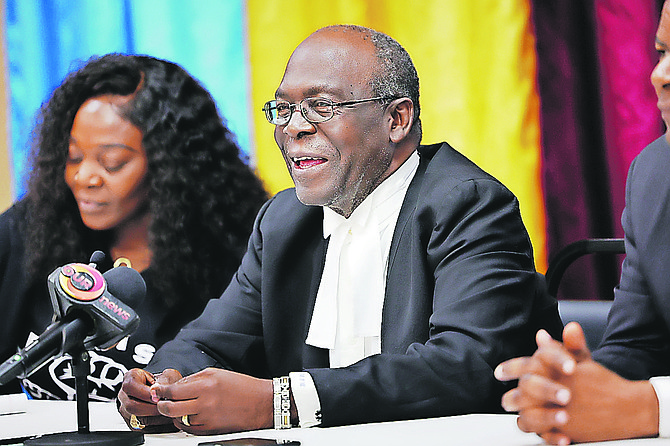
    As The Bahamas prepares to mark its annual Labour Day tribute to the nation’s modern labour movement founder, a deep rift within the country’s organized labour community has resulted in plans for two separate worker parades, stirring fears of lasting division among ranks.

    Obie Ferguson KC, president of the Trades Union Congress (TUC), the umbrella body representing a coalition of Bahamian trade unions, has confirmed the organisation will stage its own independent march this Friday, June 5, tracing a historic route long associated with Sir Randol Fawkes – the man widely hailed as the father of the country’s contemporary labour movement. The march will kick off at 9 a.m. from the House of Labour on Wulff Road, with participants instructed to arrive for assembly by 8 a.m. Attendees will travel west along Wulff Road before turning north on Baillou Hill Road, concluding the procession at Southern Recreation Ground, the site where Fawkes delivered many of his most iconic speeches advocating for Bahamian workers’ rights. To keep the event focused on its core labour mission, the TUC has required all participants to wear black pants paired with a white Labour Day shirt, and banned all clothing displaying political party affiliations. Just one official banner will lead the procession.

    This separate event marks the second consecutive year the TUC has broken away from the nation’s traditional Labour Day parade. The longstanding main event typically gathers participants further east on Wulff Road at Windsor Park, before marching north along East Street through downtown Nassau and Bay Street, ending near Clifford Park and Arawak Cay. Last year, Ferguson announced the TUC and its affiliate unions would not participate in the traditional parade, but public records only confirm the organisation hosted an independent celebration, not a full separate march.

    For Ferguson and TUC leadership, the breakaway is not an act of division, but a deliberate effort to restore Labour Day to its original, worker-centred roots as envisioned by Fawkes. “What we are doing is the beginning of returning to what it used to be, which delivered real benefits for all working people, not just trade union leaders,” Ferguson explained in an interview. “Sir Randol’s message was always focused on advancing the interests of every working Bahamian. We want to keep that legacy pure, open to all working people and their families, with no exclusion.”

    Ferguson added that all necessary legal approvals have been secured, with the Royal Bahamas Police Force fully notified of the march route and timeline. One of the core grievances driving the split, he noted, is growing concern that the traditional parade has become increasingly politicized in recent years, particularly during election cycles, when large contingents of marchers display party branding and colours – a shift that dilutes the day’s focus on workers’ rights. “It’s almost like Independence Day: it is a special, sacred day for our nation’s workers, and we don’t want unnecessary political confusion overshadowing what Sir Randol Fawkes fought for,” he said. “We are carrying out exactly what he intended for working Bahamians. We have a clear worker’s agenda, and we will remain the unapologetic mouthpiece for all workers facing discrimination and unfair treatment.”

    Multiple TUC affiliate unions have publicly backed the organisation’s decision, echoing concerns about political overreach in the traditional event. Deron Brooks, president of the Bahamas Customs, Immigration and Allied Workers Union, noted the TUC’s route is an exact recreation of the path Fawkes himself took for historic Labour Day marches. “This isn’t about division – we’re just following the path Sir Randol laid out,” Brooks said. “Individual unions retain the right to mark the day as they choose, but we as an umbrella body are calling for collective observance of the original tradition. Our union stood with the TUC last year, and we are standing with them again this year.”

    Tyrone Butler, president of the Bahamas Taxicab Union, whose organisation will also march with the TUC, praised the ban on political clothing as a critical step to reclaim the day’s purpose. “This has always been the position of responsible unions: Labour Day is for workers, not political parties,” Butler said. “Political parties took advantage of the event, starting in an election year, and it became an annual tradition that has nothing to do with the rights of working people. It’s a disservice to every hard-working Bahamian to let politicians hijack a day that was created to honor workers.”

    Even small vendor groups are backing the initiative. Karen Brown, president of the RM Bailey Park and Allied Vendors Association, said her members will join the TUC march to honor the movement’s roots. “This is a day for workers, and we are returning to the fight Sir Randol started,” Brown said. “We’re proud to wear our black and white and march to honor what this day is really about.”

    But not all figures in the Bahamian labour movement support the split. Veteran trade unionist Dave Beckford, a former candidate for the presidency of the Bahamas Hotel, Catering and Allied Workers Union who will participate in Friday’s traditional parade, argues the separate procession will only cement public perceptions of a fractured labour movement, contradicting Fawkes’ own legacy as a unifying force for workers.

    “To me, a separate route undermines everything we talk about when we say we need a united front for workers,” Beckford said. “It deepens division at a time when we need to stand together. Sir Randol Fawkes was a uniter, not a divider. This isn’t necessary. It also places an unnecessary extra strain on the Royal Bahamas Police Force, which now has to police two separate marches. It’s disappointing to see TUC leadership take this path, when it sends a clear message of disunity to the public.”

    Bahamas’ Minister of Labour Pia Glover-Rolle noted the split is not unprecedented, confirming the TUC took the same step last year, when many of its affiliate unions still chose to participate in the main parade despite the organisation’s breakaway. “This isn’t the first time the TUC has broken away to host their own march,” Glover-Rolle said. “Last year’s independent event saw low turnout, and many of their own affiliates still joined the main workers’ march. At the end of the day, Labour Day is the workers’ march, and any group is free to mark it as they choose.”

    Ferguson pushed back against claims of division, noting public response to the TUC’s plans has been overwhelmingly positive, and framing the breakaway as the first step in a broader return to the labour movement’s core mission of advocating for working people. He also referenced longstanding unaddressed concerns about the planned upgrade of the House of Labour, the historic starting point for the TUC’s march, as part of the organisation’s push for renewed focus on core labour priorities.

  • ‘Please! Please! Please!’ Woman runs to cops after kidnapping

    ‘Please! Please! Please!’ Woman runs to cops after kidnapping

    A dramatic late-night rescue operation carried out by Trinidadian law enforcement has resulted in the safe recovery of a 21-year-old Diego Martin resident, who was allegedly abducted by a former romantic partner earlier this week. The 22-year-old suspect, a construction labourer based in El Dorado’s Caura Road area, was taken into custody immediately following the successful interception, according to official police reports.

    The chain of events unfolded shortly after 7 p.m. on Monday, when the suspect arrived at the victim’s Diego Martin home. The woman, who works as a food vendor, became embroiled in a verbal altercation with the man before he used force to drag her into his blue Toyota Axio sedan and fled the scene, police accounts confirm.

    A tip that set the rescue operation in motion came roughly an hour after the abduction, when a Diego Martin-based Traffic Warden contacted the Maracas Bay Police Station to report the kidnapping. Critically, the informant was able to provide real-time location data from a GPS tracking system linked to the suspect’s vehicle, which confirmed the car was moving north along the popular North Coast Road corridor near Maracas Bay.

    Law enforcement teams from both the Maracas Bay and Blanchisseuse police detachments were quickly dispatched to launch a search along the route. It did not take long for officers to locate the suspect’s parked vehicle, which was pulled off the road approximately one mile north of St Michael’s Village in the Las Cuevas area. When responding officers arrived on scene, the suspect was standing outside the vehicle’s driver-side door, while the victim remained in the front passenger seat.

    Preliminary investigative notes indicate the victim had sustained visible injuries to both of her knees, with clear signs of blood at the scene. As soon as the victim spotted the approaching officers, she fled the vehicle toward the team, screaming repeated pleas for help. Officers quickly secured the victim and placed the suspect under arrest without incident.

    Both the victim and the accused were first transported to the Maracas Bay Police Station for processing, before the case was formally handed over to detectives from the West End Criminal Investigations Department for further investigation into the incident.

  • Antiguan Joella Charles Graduates From Harvard With Second Master’s Degree

    Antiguan Joella Charles Graduates From Harvard With Second Master’s Degree

    In a milestone achievement that spotlights academic grit and Caribbean ambition, Antiguan professional Joella Charles has capped years of rigorous graduate study by collecting her second master’s degree from one of the world’s most prestigious higher education institutions, Harvard University. Her new graduate credential specializes in the high-demand fields of legal compliance, strategic leadership, and corporate finance.

    Charles crossed the Harvard commencement stage this past Thursday, joining thousands of graduating students hailing from every corner of the globe to mark the end of her program. The latest degree adds another world-renowned academic honor to her portfolio, which already includes a graduate degree from another Ivy League institution, Columbia University.

    During her time at Harvard, Charles designed her course of study to center on two high-impact areas: cross-border financial legal strategy and global executive leadership. The specialized training has positioned her to launch a full-time career in business consulting based in Manhattan, New York, where she will collaborate with some of the world’s largest asset management organizations.

    To celebrate her years of hard work, Charles was joined in Cambridge, Boston, by loved ones who traveled from near and far to cheer her on during the commencement ceremony. Back in her home country of Antigua, her accomplishment is already being held up as a powerful example of what targeted perseverance and clear ambition can achieve. For her part, Charles says she hopes her journey will encourage young Antiguans from the next generation to chase ambitious goals and pursue excellence in their own academic and professional pursuits.

  • Onderwijsbonden en regering bereiken akkoord; morgen school

    Onderwijsbonden en regering bereiken akkoord; morgen school

    A weeks-long standoff between Suriname’s national government and combined education unions has come to a peaceful resolution, after intensive multi-party negotiations produced a comprehensive agreement to improve working conditions for educators and clear the way for an immediate resumption of regular classes across the country. The national work stoppage, which launched earlier that week, will formally end with the imminent signing of the agreement, which currently only awaits final technical edits before being formalized by all stakeholders.

    Negotiations brought together representatives from the cabinet, the unified education unions, and a specially convened presidential commission to hash out concessions on core demands that triggered the industrial action. The final principle agreement addresses pressing grievances including unpaid back wages, long-overdue benefit adjustments, unpaid overtime, and the establishment of a permanent framework for future dialogue between the two sides.

    Under the terms of the deal, education union leadership will immediately advise all their members to return to full regular teaching duties. Both sides have also committed to protecting the continuity of education going forward, and agreed to resolve future disputes through structured negotiation rather than industrial action wherever possible.

    Among the most concrete commitments is a pledge to clear the backlog of administrative and legal status updates within the Ministry of Education, Science and Culture by a set timeline. The agreement also mandates that all unpaid overtime owed to part-time educators must be paid in full no later than the end of June. Additional concrete terms include new provisions for 20-year service gratifications, guaranteed standard payroll processing for union representatives, and the formal launch of a permanent consultation platform between union leadership and the education ministry.

    A series of substantial benefit increases for active and retired educators make up the centerpiece of the agreement. The annual eyeglass allowance for educators will jump from SRD 2,000 to SRD 7,000 starting June 1, 2026, with a further increase to SRD 9,000 scheduled to take effect on January 1, 2027. Retired educators will also be eligible for this adjusted benefit. The monthly distance education allowance will rise from SRD 350 to SRD 850, while a new 14% of base salary allowance for continuing professional development has been introduced. Starting this August, educators will also receive an annual clothing allowance of SRD 5,000. For instructors teaching in the bachelor’s programs at the Teacher Training Institute (IOL), all future overtime will be compensated in line with the standardized MO-B salary scheme.

    Both sides have acknowledged that this round of negotiations did not resolve every single demand raised by the unions. Remaining outstanding issues will be added to the agenda for future negotiation sessions to prevent renewed disruption to classes. The agreement marks a clear breakthrough in a conflict that had sparked widespread industrial action across the country in the days before the deal. Union leaders had previously stated they would only end the national strike once binding, concrete commitments were put in writing, a condition met by the finalized agreement.