分类: society

  • Head of St James police warns of Long Hill road danger

    Head of St James police warns of Long Hill road danger

    In Montego Bay, St James, a top local law enforcement official is sounding the alarm over a critically damaged stretch of roadway, warning that incoming seasonal rains could trigger major traffic chaos and safety risks for thousands of commuters.

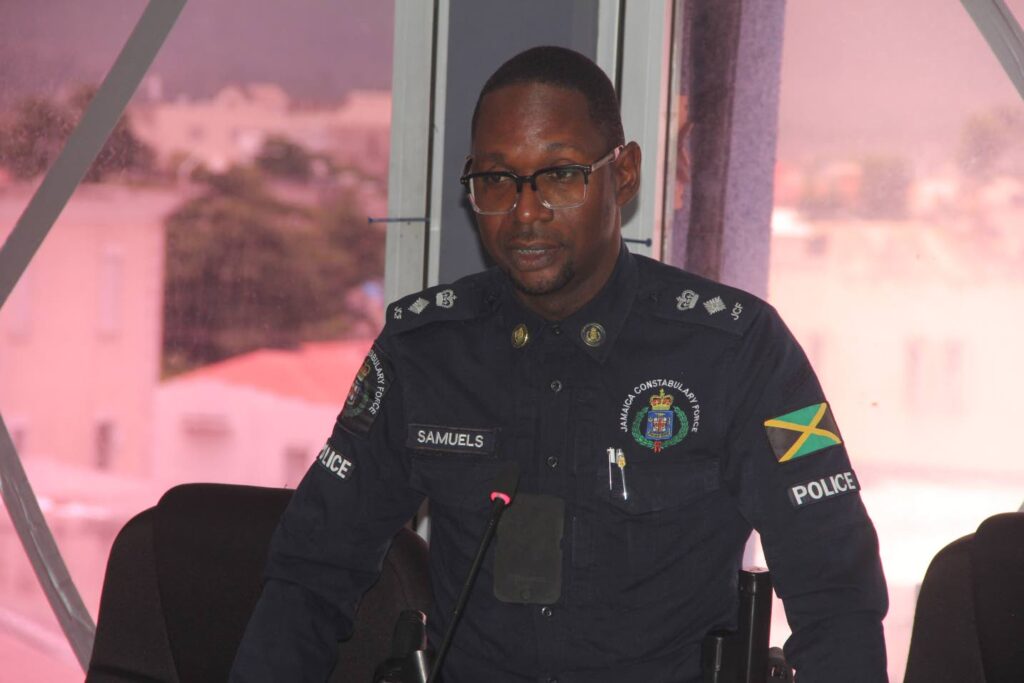
    Divisional Senior Superintendent Eron Samuels laid out his urgent concerns during the regular monthly meeting of the St James Municipal Corporation on Thursday, pointing to lingering damage from Category 5 Hurricane Melissa, which swept through the region last October. The at-risk segment of the heavily traveled Long Hill road has already shown dangerous signs of deterioration: the underlying land has shifted, and recent rainfall has caused a partial breakaway along the slope.

    Samuels emphasized that the situation could deteriorate rapidly with sustained rainy weather. If further erosion occurs, he warned, the roadway would be reduced to a single lane, forcing one-way traffic flow through the corridor. For years, the narrow route, which borders a steep drop-off on one side, has been plagued by severe, long-running traffic congestion. A further restriction on usable road space would disproportionately impact residents and travelers moving to and from the southern parts of the parish, creating gridlock that disrupts daily life.

    Beyond the Long Hill road damage, Samuels also used the meeting to highlight a growing safety crisis for workers and motorists near active construction projects along busy roadways. His appeal for improved safety protocols comes on the heels of two deadly recent accidents along the Rose Hall main road, part of the island’s high-traffic Elegant Corridor.

    The most recent fatal incident, which occurred on June 1, claimed the life of 22-year-old Bianca Wallace, a worker employed on a local infrastructure project. Wallace was struck by a passing motor vehicle, and the crash also left several schoolchildren with injuries. As ongoing infrastructure upgrades continue to alter traffic patterns along the corridor, Samuels called on both construction teams and road users to prioritize caution.

    He urged project managers to implement rigorous safety measures to protect workers in active work zones, and reminded motorists to pay close attention to warning signs and direction from on-site traffic controllers, advising drivers to slow down and allow extra time for their journeys through construction areas.

    Responding to Samuels’ multiple concerns, Montego Bay Mayor Richard Vernon gave a formal assurance that the municipal corporation would move quickly to coordinate with relevant agencies to address both issues. Vernon confirmed that he would direct the corporation’s chief executive officer to formally contact the National Works Agency regarding the Long Hill road deterioration, with similar outreach planned for the roadwork safety issues on the Rose Hall corridor to push for urgent corrective action.


  • Is this your route? Santo Domingo cable car suspends service on key section: Which users should know?

    Is this your route? Santo Domingo cable car suspends service on key section: Which users should know?

    In a public announcement released this Saturday, the Metropolitan Transportation Company has confirmed that a key segment of the Santo Domingo Cable Car network will be taken out of service temporarily for mandatory inspection work. Specifically, Section 2 of Line 1, which connects the Charles de Gaulle and Sabana Perdida stations, will be closed to passengers as part of the transit system’s routine planned upkeep program.

    The transportation authority stressed that the temporary closure only impacts this specific 2-station stretch, and all other segments of Line 1 will continue running according to their regular schedules with no service adjustments. To minimize disruption to daily commuters who rely on the affected section, the company has arranged for complementary transit support from OMSA, which will deploy additional buses to pick up and drop off passengers along the closed route.

    In an official statement shared with the public, the Metropolitan Transportation Company extended its gratitude to riders for their patience during the maintenance period, and offered a formal apology for any disruption to travel plans that the temporary closure may cause. Routine maintenance work like this is standard practice for public transit systems worldwide, carried out to identify potential safety hazards, address minor wear and tear, and ensure long-term reliable operation for all passengers.

  • 6 bloody months June is stained with blood, nearly 10 dead including teenagers

    6 bloody months June is stained with blood, nearly 10 dead including teenagers

    Just 13 days into June 2026, the Dominican Republic has been rocked by an alarming wave of violence that has left an average of one person dead by violent means every day so far this month, with preliminary official counts and local press reports tallying nearly a dozen homicides across multiple provinces. This surge in fatal violence has sown widespread fear and unease across the Caribbean nation, as communities grapple with the frequency and brutality of the latest killings.

    Among the most distressing cases that have captured national attention is the death of a 14-year-old girl held in custody at a youth shelter operated by the National Council for Children and Adolescents (Conani) in San Antonio de Guerra. The circumstances surrounding the teen’s killing remain unclear, with the Public Prosecutor’s Office and the National Police currently leading a joint investigation into the incident. In response to the tragedy, the victim’s family has publicly demanded full accountability and justice for their daughter’s death.

    Another high-profile incident that has deepened public consternation occurred in the Valiente sector of Boca Chica, where two teenage boys were murdered in a targeted attack. The killing has sparked renewed outcry over the persistent lack of safety for minors growing up in the country’s most socioeconomically vulnerable neighborhoods. Beyond these cases of underage fatalities, the mid-June violence includes a string of other deadly incidents: the femicide of young mother Sugeldy Arias in San Cristóbal, the fatal shooting of a man in Bahoruco at the hands of his own father-in-law, and multiple additional violent deaths across working-class neighborhoods in Greater Santo Domingo and Santiago. These killings have been tied to a range of root causes, from personal disputes and street fights to widespread organized criminal activity.

    A consistent and troubling pattern linking nearly all these recent violent deaths is the widespread use of illegal firearms and bladed weapons, a trend that experts say highlights the systemic failure of authorities to regulate arms circulation and restrict access to deadly weapons across the country. Clinical psychologist Marcel Santos, a specialist on community violence, has warned that the Dominican Republic is currently navigating a period of extreme public vulnerability, where three interconnected crises—domestic abuse, transnational organized crime, and unresolved intercommunal conflict—have combined to drive the spike in fatal violence.

    Santos added that seasonal factors and ongoing economic strain have exacerbated the already tense security landscape, noting that rising temperatures and widespread financial precarity tend to increase the frequency of violent confrontations. The specialist emphasized that no single policy fix will address the crisis, calling on national and local governments to implement holistic, cross-sector policies that tackle both public safety gaps and the unaddressed mental health needs of at-risk communities. With more than half of June still remaining, the early surge in violence has made clear that urgent action to strengthen violence prevention and citizen protection measures is needed to reverse the dangerous trend gripping the nation.

  • Young man killed during alleged shootout in Tábara Arriba, Azua

    Young man killed during alleged shootout in Tábara Arriba, Azua

    A fatal confrontation between a wanted suspect and law enforcement unfolded in the Dominican Republic’s southwestern province of Azua Friday afternoon, ending in the death of 31-year-old Junior Alexander Peña following an alleged gun battle with operatives from the Central Directorate of Criminal Investigation (Dicrim).

    The incident took place on the main thoroughfare of the La Palmita neighborhood, located within Tábara Arriba municipality, according to initial official statements. Peña was already the target of five active arrest warrants at the time of the planned operation, law enforcement officials confirmed.

    Preliminary accounts from authorities, backed by a forensic certificate from the Dominican National Institute of Forensic Science (INACIF), outline that the suspect spotted the Dicrim agents approaching before drawing a loaded firearm and opening fire multiple times. After exchanging gunfire, Peña barricaded himself inside a local residence with a zinc roof. In response to the attack, Dicrim agents returned fire, inflicting life-threatening injuries on the suspect that ultimately proved fatal.

    Following the conclusion of the operation, law enforcement personnel secured two illicit firearms from the scene: a semi-automatic pistol manufactured by Browning, and a second unbranded black pistol. Investigators also recovered a collection of spent 9mm caliber shell casings as evidence for ongoing procedural review.

  • Witness sinks Munga murder trial

    Witness sinks Munga murder trial

    After nearly a decade of legal uncertainty that upended the lives of two accused individuals, the high-profile murder trial against Jamaican dancehall performer Munga Honorable — born Damian Rhoden — and his co-defendant Sheridan “Mad Rhymes” Gordon ended abruptly this Friday in the Gun Court Division of the Supreme Court in downtown Kingston. The prosecution’s case fell apart entirely after Crown prosecutors ultimately aligned with the defense’s core argument: the prosecution’s only eyewitness was too unreliable to sustain a conviction.

    The case dates back to 2017, when Cleveland Campbell was fatally shot in Ackee Walk, St Andrew. The sole prosecution witness claimed she had witnessed Rhoden and Gordon open fire on Campbell, but extensive cross-examination by the defense exposed crippling inconsistencies across every key detail of her account. These pervasive contradictions ultimately led the prosecution to decline to present any further evidence against the two men, resulting in their immediate release from legal jeopardy.

    The case had already been delayed multiple times over the nine years it moved through the justice system, often due to witness unavailability. Rhoden was represented by attorneys Christopher Townsend and Chadwick Berry, while Gordon was defended by King’s Counsel Peter Champagnie and Sayeed Bernard. Both defendants expressed profound relief at the ruling, after spending nine years fighting the murder charges that hung over their heads.

    In an interview with the Jamaica Observer following the decision, Champagnie shared that Gordon told his legal team, “I can finally continue my life, and I am eternally grateful to you and Mr Bernard. Thank you very much.” Echoing that sentiment, Rhoden told his attorney Townsend that he felt an overwhelming sense of “free” after the ruling was handed down.

    Townsend emphasized the scope of the defense’s work in dismantling the prosecution’s case, telling reporters: “I am glad to announce that we were successful in the defence of Munga and Mad Rhymes. It has been nine long years but Mr Champagnie and myself were able to cross-examine the only witness for the Crown to the point where her credibility fell down significantly and the prosecution threw in the towel because of the evidence in the state it was in. We were able to demonstrate that the evidence concerning identification was extremely poor.”

    Champagnie detailed the critical contradictions that arose during cross-examination, noting that the witness’s account did not hold up to scrutiny when tested against official court records. For example, the witness initially denied that she had previously testified she hid behind two barrels to watch the shooting. When confronted with the official transcript of her earlier testimony, she claimed she had been tricked into giving that statement and did not understand the question when she originally answered. She also admitted under questioning that key portions of her original statement to police were untrue.

    The witness’s original account to law enforcement claimed she had been attending a local party, drank multiple Heineken beers, and stepped away to urinate when she witnessed the shooting. When questioned, however, she could not give a consistent answer about how many beers she had consumed: her court testimony claimed she only had one, conflicting with her original statement that she had “a lot” of Heinekens that night.

    Additional inconsistencies emerged around the timeline of her statement to police: she admitted she never mentioned the shooting to any of the friends she was with that night, and waited a full 14 days after the killing to give law enforcement a formal statement. She only came forward after encountering a grieving relative of Gordon a week after the shooting, she told the court.

    Her account of the shooting itself was also riddled with contradictions that differed from her original police statement. She told the court that while relieving herself, she saw Campbell ride by on a bicycle, before Gordon grabbed him by the back of the neck. She claimed Rhoden then approached Campbell holding an object she later identified as a handgun, struck Campbell in the head with it, and fired the first shots. She alleged Rhoden then passed the weapon to Gordon, who fired additional shots that killed Campbell.

    When questioned about how she could see the attack, which took place in a dark passage, she claimed street light from nearby Molynes Road reflected into the walkway, giving her enough visibility to identify both men. She said she saw Rhoden’s back, which she was able to identify because she already knew him, and that he was wearing all black. She claimed she saw the right side of Gordon’s body, which was wearing a blue merino shirt and light blue jeans. After the shooting, she told the court she panicked, pulled up her clothing, ran to her car and drove straight home, staying inside her house out of shock before coming forward weeks later.

    The dramatic collapse of the case after nine years of legal process brings an end to a high-profile prosecution that highlighted persistent issues with witness reliability in Jamaican criminal courts, and the heavy toll that prolonged legal proceedings take on accused individuals who have not been convicted.

  • The weather is getting worse: storms and heavy downpours put the Dominican Republic on alert

    The weather is getting worse: storms and heavy downpours put the Dominican Republic on alert

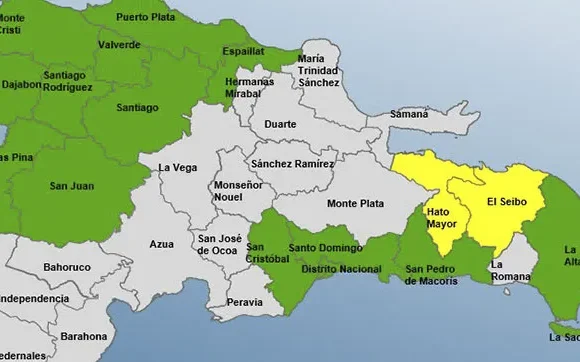
    SANTO DOMINGO — Officials in the Dominican Republic have expanded emergency weather warnings to cover 16 of the country’s provinces this Friday, as a dual weather system of a trough and an incoming tropical wave continues to bring unstable atmospheric conditions across large swathes of the national territory.

    Two distinct alert levels are currently in effect across the affected regions. Fourteen provinces and the capital’s National District have been placed under green alert, the lower of the two activated warning levels. These areas include Santiago, Puerto Plata, Santo Domingo, Elías Piña, Espaillat, Valverde, San Juan, Dajabón, San Cristóbal, Monte Cristi, La Altagracia, San Pedro de Macorís, and Santiago Rodríguez. By contrast, two eastern provinces — Hato Mayor and El Seibo — face a higher-risk yellow alert, requiring stricter preparedness measures for incoming severe weather.

    In its latest official meteorological bulletin, the country’s Emergency Operations Center (COE) warned that the coming hours are expected to bring moderate to intense rainfall across multiple regions, alongside sudden thunderstorm activity and a risk of isolated hailstorm events.

    Meteorologists with the COE clarified that the current period of heightened rain risk stems from the interaction of two separate weather systems. A low-pressure trough sitting in the upper levels of the troposphere combines with the slow movement of a tropical wave positioned just south of the Dominican Republic’s coastline. Together, these two phenomena create ideal conditions for the formation of sustained, heavy rainfall across the country.

    In response to the developing hazardous conditions, COE has issued a public call for precaution. The agency specifically urged residents living in high-risk zones — particularly low-lying areas near rivers, seasonal streams, and steep ravines that are prone to flash flooding — to remain vigilant, check for updated official weather warnings regularly, and prepare all necessary emergency steps to protect their lives and property ahead of any potential weather-related disaster.

  • Gov’t moving swiftly to relocate 9 Trelawny residents still in shelter

    Gov’t moving swiftly to relocate 9 Trelawny residents still in shelter

    FALMOUTH, Trelawny — Almost a year after Hurricane Melissa swept across Trelawny, leaving a trail of destroyed property in its wake, nine local residents still remain trapped in emergency accommodation at the Bunkers Hill Community Centre — and Jamaican government agencies are in a urgent race against the clock to deliver permanent, safe housing for them before the Atlantic hurricane season peaks.

    The urgent timeline and ongoing efforts were laid out by C Junior Gager, Mayor of Falmouth and chairman of the Trelawny Municipal Corporation (TMC), during the body’s regular monthly public sitting on Thursday.

    Gager told attendees that all nine displaced people lost their homes to catastrophic damage when Melissa made landfall last October, leaving them with no alternative but to seek refuge in the community-run emergency shelter. “Their houses were badly damaged and they had nowhere else to go,” he explained to the corporation.

    To move the project forward, two national government ministries — the Ministry of Local Government and Community Development, and the Ministry of Economic Growth and Job Creation — have partnered with local municipal authorities to develop a coordinated housing solution for the group. Under the current plan, the nine residents will move into eight newly constructed units, with two brothers who currently live together in the shelter set to share one home.

    With the 2024 Atlantic hurricane season already underway, Gager confirmed that the TMC has already completed all required pre-construction groundwork to avoid costly delays once funding is secured. That work includes scouting, vetting, and securing appropriately zoned, safe plots of land that meet all building requirements for the new housing units.

    “Our team from the local authority went through and checked to ensure that the land was available and everything was in place so that the houses could be built,” Gager said. Detailed cost estimates for the construction project have already been finalized and submitted to the Ministry of Local Government for review, and municipal leaders are now awaiting final approval of the budget allocation to break ground.

    The project is currently in the public procurement phase, Gager confirmed, with relocation efforts progressing steadily even as formal funding approval is pending. “The estimate was done and we are now awaiting funding so that we can kick off the action of building their homes,” he added. Once funding is greenlit, the construction contract will be put out to competitive public tender to award the build to a qualified contractor.

    Seeking to reassure both the displaced residents and the broader community that their plight remains a top government priority, Gager stressed that the nine people stuck in the emergency shelter have not been forgotten by authorities. “It is not that they are there and no attention is being placed. The attention is on track. The work is being carried out. The land has been identified and soon they will be able to have their own private homes,” he promised.

  • Merchants support restricting daytime traffic of heavy vehicles

    Merchants support restricting daytime traffic of heavy vehicles

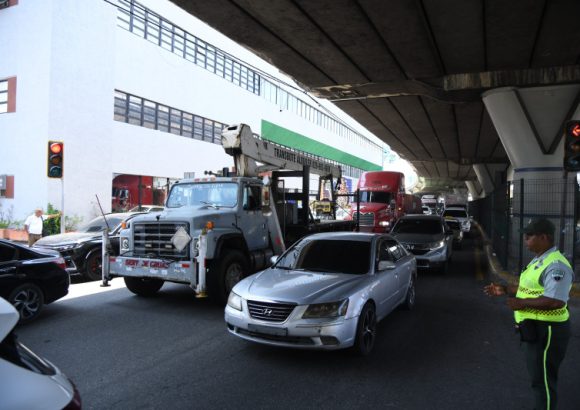
    A top business leader in the Dominican Republic has thrown his organization’s full weight behind a public advocacy campaign from leading national newspaper Listin Diario, which calls for strict restrictions on heavy truck and trailer movement during peak daytime working hours to cut down on crippling traffic congestion in the country’s two largest urban areas, Greater Santo Domingo and Santiago. The proposal, outlined in the outlet’s recent editorial titled “Heavy Vehicles in Peak Hours,” has earned clear backing from Iván García, president of the Dominican Federation of Merchants (FDC).

    García highlighted that national transit agencies Intrant and RD Vial, the governing bodies responsible for managing the country’s highway network, have long had the authority to regulate movement of large heavy-duty vehicles including flatbed trucks, double-axle trucks and double-van trucks. He pointed to recurring public safety and traffic problems linked to unregulated heavy truck passage through urban and town centers across the country, specifically naming the central towns of Mao and Esperanza as locations that have seen repeated collisions involving large freight trucks hauling construction materials and food supplies toward the capital.

    After the town of Esperanza banned through traffic for heavy trucks, most vehicles were rerouted through the Guayacanes intersection – a shift that did little to resolve underlying safety and gridlock issues that plague communities across the nation, according to García. He emphasized that large freight vehicles create persistent, unnecessary congestion in urban cores, particularly in Santo Domingo, the country’s capital and most populous urban center.

    García argued that the geographic constraints of the Dominican Republic make off-peak overnight travel entirely feasible for long-haul heavy freight operators. The longest intercity route for trucks heading to the capital stretches just 130 kilometers, a trip that can easily be completed if drivers depart by 10:00 p.m., arriving at their destination between 3:00 a.m. and 4:00 a.m. This shift would keep both highway and urban street traffic flowing freely for passenger vehicles and smaller commercial vehicles during daylight working hours, he explained.

    The FDC president also drew a key distinction between large long-haul freight trucks and smaller local delivery vehicles. He noted that long-haul flatbed trucks typically measure 40 feet in length, and double-axle configurations can stretch up to 80 feet total. By contrast, smaller delivery trucks used for last-mile distribution to local businesses are only around 15 feet long, and do not create the same major traffic disruptions as their larger long-haul counterparts.

    García said the Dominican Federation of Merchants has long been aware of this public safety and traffic crisis, having first discussed the issue with the National Federation of Transport Workers (Fenatrado) two decades ago. He expressed hope that the high-profile campaign from Listin Diario, the country’s most enduring and well-established media outlet, would draw meaningful attention from both national regulatory authorities and private business and transport sectors. The FDC stands fully behind the outlet’s proposal, he confirmed.

    While García acknowledged that implementing the new restrictions would require domestic merchants to adjust their own operational schedules to coordinate overnight dispatches and goodsreceipts, he stressed that the commercial sector is fully willing to make this adjustment for the public good. “This will even require us to get up earlier to receive the goods, but I understand that we all have to pay the price, the cost of this sacrifice, for the benefit of the majority of the country,” García stated. He added that the commercial sector is already prepared to open warehouse facilities as early as 5:00 a.m. to accept incoming freight shipments from overnight long-haul runs.

    Listin Diario’s editorial clarifies that the current crisis is not the result of a lack of existing regulation. The National Institute of Transit and Land Transportation (INTRANT) has already put formal restricted hours in place for heavy vehicle traffic in urban areas, but the existing rules are not being enforced by authorities, leaving congestion and safety risks unaddressed.

  • Rooting for resilience

    Rooting for resilience

    To mark World Environment Day 2024 on June 5, a cross-sector community gathering converged on Whitehouse, a coastal town in Jamaica’s Westmoreland parish, to advance local reforestation and food security goals. Bringing together nearly 30 elementary school students from New Hope Primary School and Kings Primary School, local smallholder farmers, Forestry Department officials, trained environmental wardens, and team members from the Sandals Foundation, the event centered on planting native fruit trees as part of a larger national environmental initiative.

    This on-the-ground planting activity is a core component of the Sandals Foundation’s ongoing support for Jamaica’s national Reforestation, Ecological Enhancement and Landscape Framework, widely known by its acronym RE-LEAF. As a leading Caribbean philanthropic organization focused on community resilience, the Sandals Foundation has followed through on its RE-LEAF commitment by distributing 360 fruit tree seedlings across six local educational institutions and one regional farming association.

    The institutions that received seedlings include Culloden Early Childhood Institution, Whitehouse Basic School, New Hope Primary School, Kings Primary School, Petersville Primary School, and Petersville Early Childhood Institution. Members of the Westmoreland Organic Farmers Association also took delivery of trees. The selection of species prioritized nutrient-dense, locally adapted food crops: breadfruit, ackee, jackfruit, mango, avocado, soursop, and Otaheite apple. The distribution and planting aim to expand access to affordable, fresh, locally grown produce for Westmoreland communities, while restoring degraded green landscapes.

    During the World Environment Day event, participating students worked side-by-side with conservation and agricultural leaders to plant 20 new fruit trees. This hands-on collaboration was designed to foster early environmental literacy and a culture of stewardship among young people, connecting classroom learning to tangible on-the-ground action. For example, Jada Myers of New Hope Primary School partnered with Sanctuary Warden Diego Salmon to plant a tree, while Elijah Bowman of Kings Primary School prepped a seedling for planting, gaining first-hand experience in ecological restoration.

    Heidi Clarke, executive director of the Sandals Foundation, explained that the organization’s choice to focus on fruit trees was a deliberate, community-centered decision. “We chose fruit trees because in addition to helping to restore green spaces and biodiversity — they sustain a community’s food security,” Clarke noted. The strategic selection ties environmental restoration directly to local livelihoods and food system resilience, a critical priority for Caribbean small island developing states grappling with the impacts of climate change.

    Georgia Scarlett, environmental manager at the Sandals Foundation, expanded on the broader mission of the project beyond tree planting itself. “Reforestation is about much more than planting trees,” Scarlett said. “It is also about ensuring future generations understand their role in protecting the natural resources that sustain our communities. By placing fruit trees in schools and farming communities we are creating opportunities for learning, nourishment, and long-term environmental stewardship.”

    For Caribbean communities already facing mounting pressure from climate change, which strains local food systems, erodes green spaces, and depletes natural resources, the RE-LEAF collaborative model offers a replicable, practical framework for local climate action. By embedding fruit trees in schools and farming hubs, the initiative does more than distribute seedlings: it empowers local residents to take ownership of their food production, cool overheated landscapes through restored tree cover, and protect the natural environment that future generations will inherit.

  • McKenzie mourns passing of former Island Supervisor Wycliffe Matthews

    McKenzie mourns passing of former Island Supervisor Wycliffe Matthews

    KINGSTON, Jamaica — Jamaica’s political and labor communities are in mourning following the death of Wycliffe Matthews, a towering figure in the nation’s trade union movement and former local government leader, who passed away at 90 on Friday after a prolonged battle with illness. As a former Island Supervisor of the Bustamante Industrial Trade Union (BITU) and a decorated public servant, Matthews leaves behind a decades-long legacy of advocacy for workers and rural communities across the country. Local Government and Community Development Minister Desmond McKenzie has led tributes to Matthews, releasing an official statement honoring his lifetime of service to the Jamaican people. In the statement, McKenzie expressed deep sorrow at the news of Matthews’ passing, extending heartfelt condolences on behalf of the entire local government sector to Matthews’ family, close friends, and former union and political colleagues. “Wycliffe lived a life dedicated to service and strong advocacy on behalf of workers in Jamaica,” McKenzie noted, highlighting that Matthews consistently centered his work on delivering the best possible outcomes for the people he represented. Beyond his work supporting Jamaican laborers, Matthews earned a reputation as a skilled, results-driven chief negotiator whose work transformed outcomes for the nation’s farming community. McKenzie emphasized that Matthews’ approach to advocacy was rooted in unshakable belief in the value of grassroots representation, carrying out his work with unwavering passion, relentless energy, and deep commitment to public good. “At the heart of his work was seeking to improve the lives of those he committed to serve,” McKenzie added. “The entire local government fraternity is no doubt better for the contribution of Wycliffe Matthews. We give thanks for his life and quality service to our country.” Before concluding his career in trade union leadership, Matthews built a long record of public service in local government. He served as a councillor for both the May Pen and Sandy Bay divisions in central Jamaica’s Clarendon Parish, and later went on to hold the position of Mayor for the region. His career bridged local governance and national labor advocacy, allowing him to shape policy and community well-being at multiple levels over his decades-long career.