分类: society

  • Merchants support restricting daytime traffic of heavy vehicles

    Merchants support restricting daytime traffic of heavy vehicles

    A top business leader in the Dominican Republic has thrown his organization’s full weight behind a public advocacy campaign from leading national newspaper Listin Diario, which calls for strict restrictions on heavy truck and trailer movement during peak daytime working hours to cut down on crippling traffic congestion in the country’s two largest urban areas, Greater Santo Domingo and Santiago. The proposal, outlined in the outlet’s recent editorial titled “Heavy Vehicles in Peak Hours,” has earned clear backing from Iván García, president of the Dominican Federation of Merchants (FDC).

    García highlighted that national transit agencies Intrant and RD Vial, the governing bodies responsible for managing the country’s highway network, have long had the authority to regulate movement of large heavy-duty vehicles including flatbed trucks, double-axle trucks and double-van trucks. He pointed to recurring public safety and traffic problems linked to unregulated heavy truck passage through urban and town centers across the country, specifically naming the central towns of Mao and Esperanza as locations that have seen repeated collisions involving large freight trucks hauling construction materials and food supplies toward the capital.

    After the town of Esperanza banned through traffic for heavy trucks, most vehicles were rerouted through the Guayacanes intersection – a shift that did little to resolve underlying safety and gridlock issues that plague communities across the nation, according to García. He emphasized that large freight vehicles create persistent, unnecessary congestion in urban cores, particularly in Santo Domingo, the country’s capital and most populous urban center.

    García argued that the geographic constraints of the Dominican Republic make off-peak overnight travel entirely feasible for long-haul heavy freight operators. The longest intercity route for trucks heading to the capital stretches just 130 kilometers, a trip that can easily be completed if drivers depart by 10:00 p.m., arriving at their destination between 3:00 a.m. and 4:00 a.m. This shift would keep both highway and urban street traffic flowing freely for passenger vehicles and smaller commercial vehicles during daylight working hours, he explained.

    The FDC president also drew a key distinction between large long-haul freight trucks and smaller local delivery vehicles. He noted that long-haul flatbed trucks typically measure 40 feet in length, and double-axle configurations can stretch up to 80 feet total. By contrast, smaller delivery trucks used for last-mile distribution to local businesses are only around 15 feet long, and do not create the same major traffic disruptions as their larger long-haul counterparts.

    García said the Dominican Federation of Merchants has long been aware of this public safety and traffic crisis, having first discussed the issue with the National Federation of Transport Workers (Fenatrado) two decades ago. He expressed hope that the high-profile campaign from Listin Diario, the country’s most enduring and well-established media outlet, would draw meaningful attention from both national regulatory authorities and private business and transport sectors. The FDC stands fully behind the outlet’s proposal, he confirmed.

    While García acknowledged that implementing the new restrictions would require domestic merchants to adjust their own operational schedules to coordinate overnight dispatches and goodsreceipts, he stressed that the commercial sector is fully willing to make this adjustment for the public good. “This will even require us to get up earlier to receive the goods, but I understand that we all have to pay the price, the cost of this sacrifice, for the benefit of the majority of the country,” García stated. He added that the commercial sector is already prepared to open warehouse facilities as early as 5:00 a.m. to accept incoming freight shipments from overnight long-haul runs.

    Listin Diario’s editorial clarifies that the current crisis is not the result of a lack of existing regulation. The National Institute of Transit and Land Transportation (INTRANT) has already put formal restricted hours in place for heavy vehicle traffic in urban areas, but the existing rules are not being enforced by authorities, leaving congestion and safety risks unaddressed.


  • Rooting for resilience

    Rooting for resilience

    To mark World Environment Day 2024 on June 5, a cross-sector community gathering converged on Whitehouse, a coastal town in Jamaica’s Westmoreland parish, to advance local reforestation and food security goals. Bringing together nearly 30 elementary school students from New Hope Primary School and Kings Primary School, local smallholder farmers, Forestry Department officials, trained environmental wardens, and team members from the Sandals Foundation, the event centered on planting native fruit trees as part of a larger national environmental initiative.

    This on-the-ground planting activity is a core component of the Sandals Foundation’s ongoing support for Jamaica’s national Reforestation, Ecological Enhancement and Landscape Framework, widely known by its acronym RE-LEAF. As a leading Caribbean philanthropic organization focused on community resilience, the Sandals Foundation has followed through on its RE-LEAF commitment by distributing 360 fruit tree seedlings across six local educational institutions and one regional farming association.

    The institutions that received seedlings include Culloden Early Childhood Institution, Whitehouse Basic School, New Hope Primary School, Kings Primary School, Petersville Primary School, and Petersville Early Childhood Institution. Members of the Westmoreland Organic Farmers Association also took delivery of trees. The selection of species prioritized nutrient-dense, locally adapted food crops: breadfruit, ackee, jackfruit, mango, avocado, soursop, and Otaheite apple. The distribution and planting aim to expand access to affordable, fresh, locally grown produce for Westmoreland communities, while restoring degraded green landscapes.

    During the World Environment Day event, participating students worked side-by-side with conservation and agricultural leaders to plant 20 new fruit trees. This hands-on collaboration was designed to foster early environmental literacy and a culture of stewardship among young people, connecting classroom learning to tangible on-the-ground action. For example, Jada Myers of New Hope Primary School partnered with Sanctuary Warden Diego Salmon to plant a tree, while Elijah Bowman of Kings Primary School prepped a seedling for planting, gaining first-hand experience in ecological restoration.

    Heidi Clarke, executive director of the Sandals Foundation, explained that the organization’s choice to focus on fruit trees was a deliberate, community-centered decision. “We chose fruit trees because in addition to helping to restore green spaces and biodiversity — they sustain a community’s food security,” Clarke noted. The strategic selection ties environmental restoration directly to local livelihoods and food system resilience, a critical priority for Caribbean small island developing states grappling with the impacts of climate change.

    Georgia Scarlett, environmental manager at the Sandals Foundation, expanded on the broader mission of the project beyond tree planting itself. “Reforestation is about much more than planting trees,” Scarlett said. “It is also about ensuring future generations understand their role in protecting the natural resources that sustain our communities. By placing fruit trees in schools and farming communities we are creating opportunities for learning, nourishment, and long-term environmental stewardship.”

    For Caribbean communities already facing mounting pressure from climate change, which strains local food systems, erodes green spaces, and depletes natural resources, the RE-LEAF collaborative model offers a replicable, practical framework for local climate action. By embedding fruit trees in schools and farming hubs, the initiative does more than distribute seedlings: it empowers local residents to take ownership of their food production, cool overheated landscapes through restored tree cover, and protect the natural environment that future generations will inherit.

  • McKenzie mourns passing of former Island Supervisor Wycliffe Matthews

    McKenzie mourns passing of former Island Supervisor Wycliffe Matthews

    KINGSTON, Jamaica — Jamaica’s political and labor communities are in mourning following the death of Wycliffe Matthews, a towering figure in the nation’s trade union movement and former local government leader, who passed away at 90 on Friday after a prolonged battle with illness. As a former Island Supervisor of the Bustamante Industrial Trade Union (BITU) and a decorated public servant, Matthews leaves behind a decades-long legacy of advocacy for workers and rural communities across the country. Local Government and Community Development Minister Desmond McKenzie has led tributes to Matthews, releasing an official statement honoring his lifetime of service to the Jamaican people. In the statement, McKenzie expressed deep sorrow at the news of Matthews’ passing, extending heartfelt condolences on behalf of the entire local government sector to Matthews’ family, close friends, and former union and political colleagues. “Wycliffe lived a life dedicated to service and strong advocacy on behalf of workers in Jamaica,” McKenzie noted, highlighting that Matthews consistently centered his work on delivering the best possible outcomes for the people he represented. Beyond his work supporting Jamaican laborers, Matthews earned a reputation as a skilled, results-driven chief negotiator whose work transformed outcomes for the nation’s farming community. McKenzie emphasized that Matthews’ approach to advocacy was rooted in unshakable belief in the value of grassroots representation, carrying out his work with unwavering passion, relentless energy, and deep commitment to public good. “At the heart of his work was seeking to improve the lives of those he committed to serve,” McKenzie added. “The entire local government fraternity is no doubt better for the contribution of Wycliffe Matthews. We give thanks for his life and quality service to our country.” Before concluding his career in trade union leadership, Matthews built a long record of public service in local government. He served as a councillor for both the May Pen and Sandy Bay divisions in central Jamaica’s Clarendon Parish, and later went on to hold the position of Mayor for the region. His career bridged local governance and national labor advocacy, allowing him to shape policy and community well-being at multiple levels over his decades-long career.

  • Ministry of Transportation updates on public transport support initiatives

    Ministry of Transportation updates on public transport support initiatives

    As a backbone of daily life for nearly all residents of the Caribbean island nation, Grenada’s public transportation sector is receiving a major multi-pronged boost from the country’s government, which is moving forward with targeted investments, regulatory reforms, and innovative modernization efforts to keep services reliable, affordable, and sustainable for both commuters and operators. For Grenadians, public transit is far more than a convenience: it delivers schoolchildren to classes, gets workers to their workplaces, and connects families to essential services across the island chain. Recognizing this central role, the administration has prioritized sector-wide support, and is now detailing completed actions and upcoming plans to increase transparency for the public. At the core of the government’s new commitments is more than EC$1.7 million in direct investment allocated for 2025–2026, administered through the Grenada Transport Commission to benefit bus operators across the country. This funding pursues two equally critical goals: easing the burden of soaring fuel, maintenance, and operational costs for service providers, and preventing those cost increases from being passed on to commuters in the form of higher fares. The investment is being distributed through two established programs. The first, the Fuel Tax Rebate Programme, has already disbursed roughly EC$1.45 million directly to operators to offset volatile global fuel prices. The second, the Western Bus Passenger Relief Initiative, has received an allocation of more than EC$250,000 to keep fares accessible for daily riders in that region. Additional support is already in the pipeline following formal approval from Grenada’s Cabinet. Officials have greenlit a 50% concession on all approved tyres, bus parts, and routine consumables, a measure designed to cut long-term maintenance costs and ensure all public buses remain safe and roadworthy. Working in close partnership with the National Bus Association (NBA), the government has already finalized the official list of eligible items for the concession program. To guarantee inclusive access to all new support measures, the government is prioritizing outreach to Grenada’s roughly 1,500 registered bus operators across the entire country, including the smaller islands of Carriacou and Petite Martinique. To ensure no eligible operator is left out, the Grenada Transport Commission has launched a national registration drive running from June 6 to July 6. This initiative serves four key purposes: expanding access to government subsidies and concessions, building the first complete, accurate national database of public transport operators, strengthening lines of communication between regulators and service providers, and laying data-driven groundwork for smarter, more equitable future policy development. One of the most transformative innovations on the sector’s modernization agenda is the SpiceBus programme, Grenada’s first technology-integrated student transportation system, rolled out in partnership with the Ministry of Education. While the pilot program encountered some initial implementation challenges, it delivered promising early results across test sites in St David and St George. During the trial, 437 students registered for the service, the system logged more than 4,000 individual transport sessions, completed over 2,600 routes, and covered nearly 26,000 kilometres of travel across the test regions. Every participating student received a personalized SpiceBus ID card, and all participating buses were fitted with on-board digital validation systems that enable real-time tracking and confirmation of student pickups and drop-offs. This technology brings tangible improvements to student safety, increases accountability for service delivery, and generates granular operational data to improve long-term route planning. Building on the pilot’s successful outcomes, the government plans to address remaining implementation gaps and roll out the SpiceBus system in phases across the entire country, including Carriacou and Petite Martinique, while taking steps to keep the service affordable for working families. The government is also currently engaged in ongoing negotiations with the National Bus Association regarding the association’s proposed fare increase of between EC$0.50 and EC$1.00. Officials emphasize that existing support programs are specifically designed to absorb financial pressures on both operators and commuters, reducing the immediate need for fare hikes. The government’s negotiation framework is anchored to two core principles: fares must remain as affordable as possible for daily commuters, and operators must receive fair compensation that fully covers their current operational costs. To support a fair, transparent outcome, the government has commissioned independent research to analyze fare structures across all transport zones in the country. All research findings will be shared with the NBA and other relevant stakeholders by June 30, 2026, marking a commitment to an evidence-based process that delivers balanced, sustainable outcomes for all parties. Looking ahead to the coming months, the government will continue expanding existing initiatives while rolling out new measures to transform the sector. Key upcoming actions include extending the Fuel Tax Rebate Programme, expanding existing passenger relief initiatives to additional transport corridors, fully rolling out the 50% concession on bus parts and consumables, implementing policy improvements informed by data collected through the national operator registration drive, and maintaining ongoing open dialogue with all stakeholders. Under the leadership of Grenada’s Prime Minister, the government, through the Ministry of Transportation and the Grenada Transport Commission, reaffirms its commitment to open, consistent engagement with operators, stakeholders, and the general public. The administration’s overarching goal remains the development of a high-functioning public transportation sector that delivers tangible benefits to every operator and every Grenadian.

  • Followed to his home, and murdered

    Followed to his home, and murdered

    A violent fatal shooting has shaken the quiet community of South Oropouche, after a local man was gunned down in his own residence mere minutes after arriving home on Thursday night.

    The victim has been identified as 32-year-old Dillon Bunsee, who sustained multiple gunshot wounds to the head and neck, and was pronounced dead shortly after arriving at a local medical facility for emergency care.

    Law enforcement officials confirmed that the incident unfolded shortly after 11 p.m., when Bunsee was waiting in the garage of his Warden Street home when an unidentified gunman approached and opened fire. Immediately after the attack, the shooter fled the scene on foot and remains at large as of the latest updates.

    Pictures from the crime scene confirm the location of the attack at Bunsee’s residential property, captured by photojournalist Dexter Philip. First responding law enforcement officers placed the bleeding victim in the rear tray of a police pickup truck to rush him for care. Disturbing on-scene accounts detail the moments that followed: as Bunsee lay bleeding out, his heartbroken mother was able to reach her son, touching his bloodied and swollen head as she cried out, ‘Dillon, mammy talking to you.’ Another bystander can be heard desperately pleading with officers to hurry the victim to care, begging ‘carry him to the hospital now nah, please.’

    Bunsee was ultimately transported to San Fernando General Hospital, where he passed away while medical teams worked to treat his life-threatening injuries. Local law enforcement has not yet released additional details on potential motives for the shooting or updates on the manhunt for the perpetrator as the investigation continues.

  • Wanted: Tonio Thelstone Garnes, also known as ‘Blacka’ or ‘Darkman’

    Wanted: Tonio Thelstone Garnes, also known as ‘Blacka’ or ‘Darkman’

    Law enforcement authorities in Barbados are calling on members of the public to lend their support to an ongoing manhunt for a suspect identified as Tonio Thelstone Garnes, who goes by the aliases ‘Blacka’ and ‘Darkman’. Garnes is currently wanted by police for questioning in relation to a series of serious criminal investigations, prompting the official appeal for community assistance.

    According to public statements released by the Barbados Police Service, the suspect’s last confirmed residential address was on King William Street in the parish of St Michael. Investigators have released a detailed physical description to help members of the public identify him: Garnes stands roughly five feet 10 inches tall, has a slim physique, and a dark complexion. Two distinct tattoos mark his body: an image of a firearm inked onto his right bicep, and the name ‘Nickolett’ tattooed on the right side of his neck.

    Police officials have issued a direct request for Garnes to turn himself in voluntarily at the Criminal Investigations Department (CID) headquarters located within the Oistins Police Station. They have confirmed that he is permitted to be accompanied by a legal representative of his own choosing when he surrenders.

    For members of the public who may have information related to Garnes’ current location, law enforcement has provided multiple confidential and public contact channels. Tipsters can reach the Oistins CID directly at either 418-2609 or 418-2612, call the national police emergency hotline at 211, contact the independent Crime Stoppers anonymous tip line at 1-800-8477, or visit any local police station in person to share information.

    In a critical reminder for the public, authorities have emphasized that intentionally hiding or providing aid to a person wanted by police constitutes a serious criminal offense under Barbados law. Individuals found guilty of harbouring a wanted suspect can face formal prosecution and corresponding legal penalties.

  • Stolen sacred vessels returned with $100 and note

    Stolen sacred vessels returned with $100 and note

    In an unexpected turn of events that has left a local Catholic community both relieved and puzzled, two sacred ceremonial monstrances stolen from St Mary’s RC Church have been quietly returned to a neighboring parish. The precious liturgical items, valued at a total of $15,000, were discovered early Friday morning inside a black tote bag resting on the entrance steps of St James Church, found by parishioners arriving for the 6:15 a.m. daily mass. Along with the returned vessels, finders also discovered an unexplained $100 cash and an unsigned note, the contents of which have not been publicly disclosed.

    The incident of theft itself unfolded just over a week prior, on the morning of June 2. Father Emmanuel Pierre, widely known to his congregation as Father Mannie, had arrived at St Mary’s around 5 a.m. to prepare for the day’s services when he encountered an unexpected intruder inside the church building. The intruder was masked and fully clad in a white protective overall, and the priest immediately challenged the trespasser, shouting “I caught you! I caught you!” Startled by the confrontation, the intruder fled the building on foot, jumped into a waiting getaway car, and sped away from the scene before any bystanders could intervene. Remarkably, Father Pierre was left unharmed during the encounter, though the theft was a significant blow to the parish.

    The stolen items are not ordinary religious artifacts: monstrances are sacred vessels used in Roman Catholic liturgy to hold the consecrated Eucharist, most prominently during public Corpus Christi processions and times of Eucharistic adoration. The theft occurred just a few days before the annual Corpus Christi feast, one of the few occasions each year when the items are required for major public services, leaving the parish scrambling to arrange alternatives ahead of the celebration. Following the discovery of the returned monstrances Friday morning, Father Pierre immediately contacted local law enforcement to update them on the development, as the investigation into the original theft remains ongoing. Members of the St Mary’s parish have expressed profound gratitude that the sacred items have been returned, bringing an unexpected close to an incident that shook their small community.

  • BIMAP to launch hands-on workplace safety training

    BIMAP to launch hands-on workplace safety training

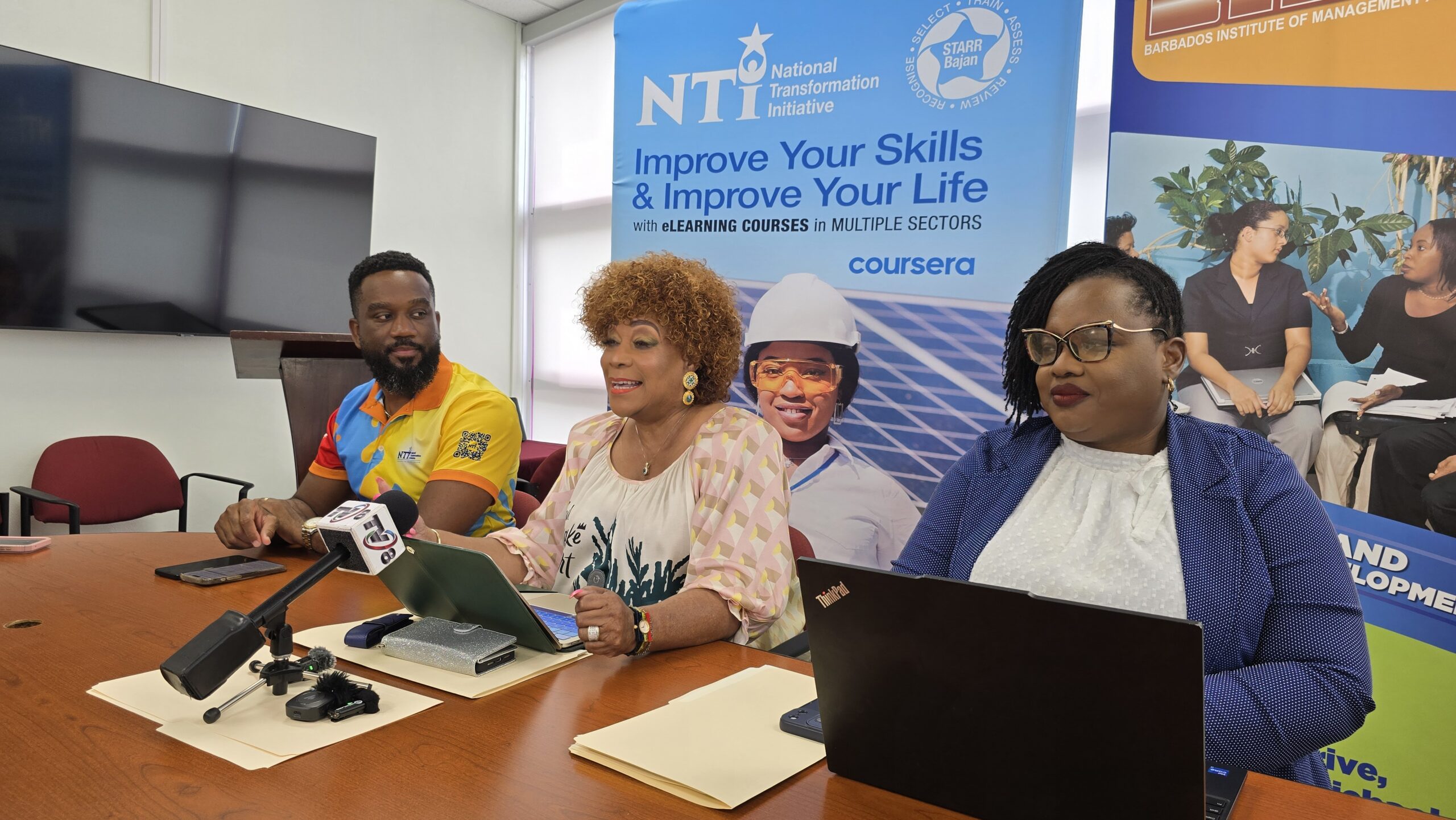
    Starting this September, Barbadian workers across multiple industries will gain access to new specialized hands-on training focused on hazardous waste management and industrial workplace safety, launched through a multi-party partnership between the island nation’s National Transformation Initiative (NTI), the Barbados Institute of Management and Productivity (BIMAP), and global U.S.-based online learning platform Coursera. The collaboration was formalized Thursday during an official agreement signing that marked a key step forward for the country’s efforts to upgrade workplace safety standards.

    BIMAP Executive Trustee Andrea Burgess outlined the unique structure of the upcoming programme in comments following the signing, noting that certified expert facilitators and purpose-built safety equipment will be brought in from Canada to support in-person instruction. Unlike generic safety training, this curriculum is designed to build proactive, preventive skills to help workers respond to on-site emergencies involving hazardous materials, with the end goal of creating safer work environments that reduce preventable accidents and harm.

    Burgess explained that the new initiative builds on a 2021 online-only safety training pilot BIMAP previously ran. This updated iteration combines flexible online foundational learning from aligned Coursera courses with intensive, in-person practical skill-building that was missing from the earlier remote programme. The hands-on component, led by BIMAP’s trained team, will allow workers to practice using safety and hazardous waste treatment equipment directly, rather than only learning through theoretical online modules.

    Addressing ongoing public concerns about elevated workplace fatality risks and weak safety protocols in Barbados’ construction sector, NTI Director Dr. Allyson Leacock emphasized that the partnership was built to align with the real-world needs of the island’s workforce. The training is designed to equip all levels of staff, from front-line on-site workers to senior executives and frontline supervisors, with contextually relevant knowledge that lets all employees complete their daily tasks safely and effectively.

    Leacock added that this September safety training is just one component of a broader, industry-focused workforce development agenda BIMAP is rolling out across Barbados later this year. Burgess noted that BIMAP has identified a growing national demand for practical, skills-first workforce training across a range of critical industrial areas, not limited to workplace safety – extending to advanced equipment operation, cutting-edge industrial technology, and ongoing upskilling to match evolving workplace needs.

  • Anika Chadee from Piparo among 11 detained

    Anika Chadee from Piparo among 11 detained

    In a move timed alongside parliamentary debate over a three-month extension of the country’s state of emergency, Trinidad and Tobago’s state authorities have issued 11 new preventive detention orders (PDOs) targeting alleged members and leaders of transnational and local organized criminal networks. The orders, covering legal notices 410 through 420, were published shortly before 8 p.m. on Wednesday, and bear the signature of Homeland Security Minister Roger Alexander, in full compliance with Paragraph 2 of the Schedule to the 2026 Emergency Powers Regulations.

    Under Regulation 14 of the same legislation, PDOs are authorized to hold individuals preventively when intelligence indicates their actions would threaten public safety. The signatures on the 11 new orders were finalized between May 19 and June 5 of this year. All 11 detainees have been publicly identified by authorities: Akeem Cole, Akino Warner, Akeema Ferguson, Eric Goring, Wayne Havelock, Curtis Isaac, Jasiniho Boneo, Nicholas Sumner, Mark Williams, Shane Dindial, and Anika Chadee. Two of the 11 detainees are women, while three are accused of holding top leadership positions in their respective criminal operations.

    According to official legal notices, all detainees are tied to organized criminal groups active across multiple Trinidadian districts, including Port of Spain, Morvant, Tunapuna, Central Trinidad, Claxton Bay, Couva, Chaguanas, Gasparillo, Marabella, and Piparo. The two women detained face specific, serious allegations tied to enabling violent criminal activity. Akeema Ferguson, also known by the alias “Kima” and a resident of Longdenville and Edinburgh 500, is accused of providing real-time surveillance intelligence to a criminal syndicate during armed home invasion operations across Central Trinidad. The second woman, Anika Chadee of Piparo, is alleged to have participated in a criminal group’s plots to acquire additional firearms and carry out a public attack, after authorities previously seized a weapon and ammunition from her home.

    Three detainees are flagged as senior gang leaders. Akino Warner, widely known as “Boogsie”, is named as the head of the notorious Bayshore 3 Gang. Wayne Havelock, who uses multiple aliases including “Joey” and “Haveblock”, is identified as the leader of a large-scale organized criminal group and narcotics trafficking network active across Claxton Bay, St Margaret’s, Couva, and Chaguanas. Shane Dindial, also of Piparo, is the third accused leadership associate, with a prior history of murder investigation and a recent offense of illegal firearm possession; intelligence indicates he was seeking to acquire a second weapon to carry out a public attack.

    Multiple other detainees are described as armed enforcers or shooters for their respective gangs. Eric Goring of St Joseph is an alleged enforcer for the Bangladesh Gang, a group linked to shootings, assaults, home invasions, and drug and firearms trafficking. Goring is also accused of participating in targeted attacks against rival gang factions. Curtis Isaac, also known as “Donkey” and “Road” from North Malick, Morvant, serves as an armed shooter and enforcer for the Seven Gang, and is accused of patrolling rival territory, protecting gang turf, and targeting opposing members amid ongoing violent conflict in the Morvant area. Jasiniho Boneo, alias “Elmo” of Tunapuna, is named as a core operative and armed enforcer for the ABG Resistance group, and is tied to a March 22 armed crime spree across Tunapuna and El Dorado, as well as a plot to target a commercial establishment near the Tunapuna Market.

    Lower-ranking gang members facing detention include Akeem Cole, a member of the 6 Gang based in Clifton Towers, Mt Hope, and East Dry River. The 6 Gang is accused of running extortion rackets, trafficking narcotics and illegal firearms, carrying out armed robberies, and plotting retaliatory attacks against its bitter rival, the Seven Gang, following the killing of a 6 Gang member known as “Dappa Six”. Nicholas Sumner (alias “Izy” and “Mr Spin It”) and Mark Williams are both listed as members of the SIXX Gang operating out of East Dry River, a syndicate linked to armed robbery, motor vehicle theft, and firearms offenses. The two men are accused of planning new armed robberies to raise funds for ongoing gang operations and support for members already incarcerated.

    Havelock, the Claxton Bay-based network leader, faces particularly severe allegations: authorities claim he oversees a smuggling operation that uses maritime routes, mangrove channels, and unregistered vessels to move narcotics and firearms across borders. He is also accused of authorizing contract killings and retaliatory attacks against both rival gang members and law enforcement officers. His counterpart Warner, leader of Bayshore 3 Gang, is tied to both local and international trafficking of narcotics and firearms, with intelligence linking his network to a recent large-scale narcotics seizure intended for both domestic and international distribution.

  • Beyond Sustainability: OECS launches communications campaign

    Beyond Sustainability: OECS launches communications campaign

    With the official implementation phase of the Organization of Eastern Caribbean States (OECS) Programme for Educational Advancement and Relevant Learning (PEARL) scheduled to conclude on 30 June 2026, the OECS Commission has announced the launch of a new Communication for Development (C4D) initiative named *The OECS PEARL Legacy*.

    Over the course of its implementation, the PEARL initiative has delivered transformative progress across the region’s education sector: it has upgraded critical educational infrastructure, updated outdated curricula to meet modern learning standards, overhauled frameworks for Special Education Needs (SEN) and Early Childhood Education (ECE), and built robust digital learning ecosystems accessible across all participating member states. Now, the new C4D campaign marks a strategic shift from centralized regional project management to a grassroots, community-driven social movement, formally handing ownership of the initiative’s gains to residents of the eight OECS member states that have participated in PEARL. The core goal of this transition is to mobilize key education stakeholders to lead continued, organic evolution of the regional education system.

    Targeting a broad cross-section of education actors—including national policymakers, administrative and technical education leaders, school principals, classroom teachers, parents, and primary caregivers—the campaign does not only aim to secure the long-term sustainability of PEARL’s existing achievements. It also seeks to catalyze a broader regeneration of Eastern Caribbean education, enabling the system to grow and thrive from the ground up, led by the communities it serves.

    The C4D strategy centers on six high-priority interventions designed to embed and expand PEARL’s impact. First, it works to empower national education leaders to translate regional education frameworks into local policy and everyday classroom practice. Second, it prioritizes protecting frontline educators from professional burnout by actively promoting the “de-implementation” of low-impact, non-essential administrative tasks that drain educator time and energy. Third, it positions the OECS Learning Hub—home to the OECS Harmonised Primary Curriculum—as a culturally attuned, high-quality educational resource for regional classrooms, encouraging students and teachers to use learning tools designed specifically for the Eastern Caribbean context rather than relying on generic, one-size-fits-all artificial intelligence alternatives. Fourth, it advocates for long-term sustained fiscal prioritization of ECE, SEN, and curriculum and assessment reform, to ensure every child across the region has an equitable opportunity to succeed. Fifth, it reframes high-stakes national and regional diagnostic assessments as routine “educational health checks”—tools for growth that are non-punitive and essential to improving learning outcomes—to reduce widespread anxiety around these evaluations. Sixth, it works to secure the long-term future of the MyPD teacher professional development platform by highlighting its direct, measurable impact on broader social progress across the region.

    To reshape how member state institutions and local communities perceive and support the future of regional education, the campaign deploys a diverse suite of targeted communication resources. These range from visual tools such as branded posters and data-driven infographics to multimedia content including educational videos and live online interactive broadcasts. It will also roll out strategic stakeholder surveys, regular stakeholder newsletters, and official press releases to keep communities and partners updated.

    Running across June, July, and August 2026, the campaign’s messaging will be distributed through a mixed network of traditional and digital channels to maximize accessibility for all stakeholders. Distribution channels include in-person community and stakeholder meetings, email outreach, major social media platforms, regional radio and television broadcasts, and local print newspapers.

    Preparations are currently underway for the official PEARL project closeout conference, scheduled to take place in St. Lucia from 24 to 26 June 2026, alongside additional upcoming engagement and information events. The OECS Commission has encouraged all education stakeholders across the region to follow official OECS social media platforms, as well as the social and official channels of local Ministries of Education, for the latest updates on upcoming opportunities. The commission also extends an open invitation to media organizations, independent journalists, and members of the public to participate in this historic transition of regional education leadership.