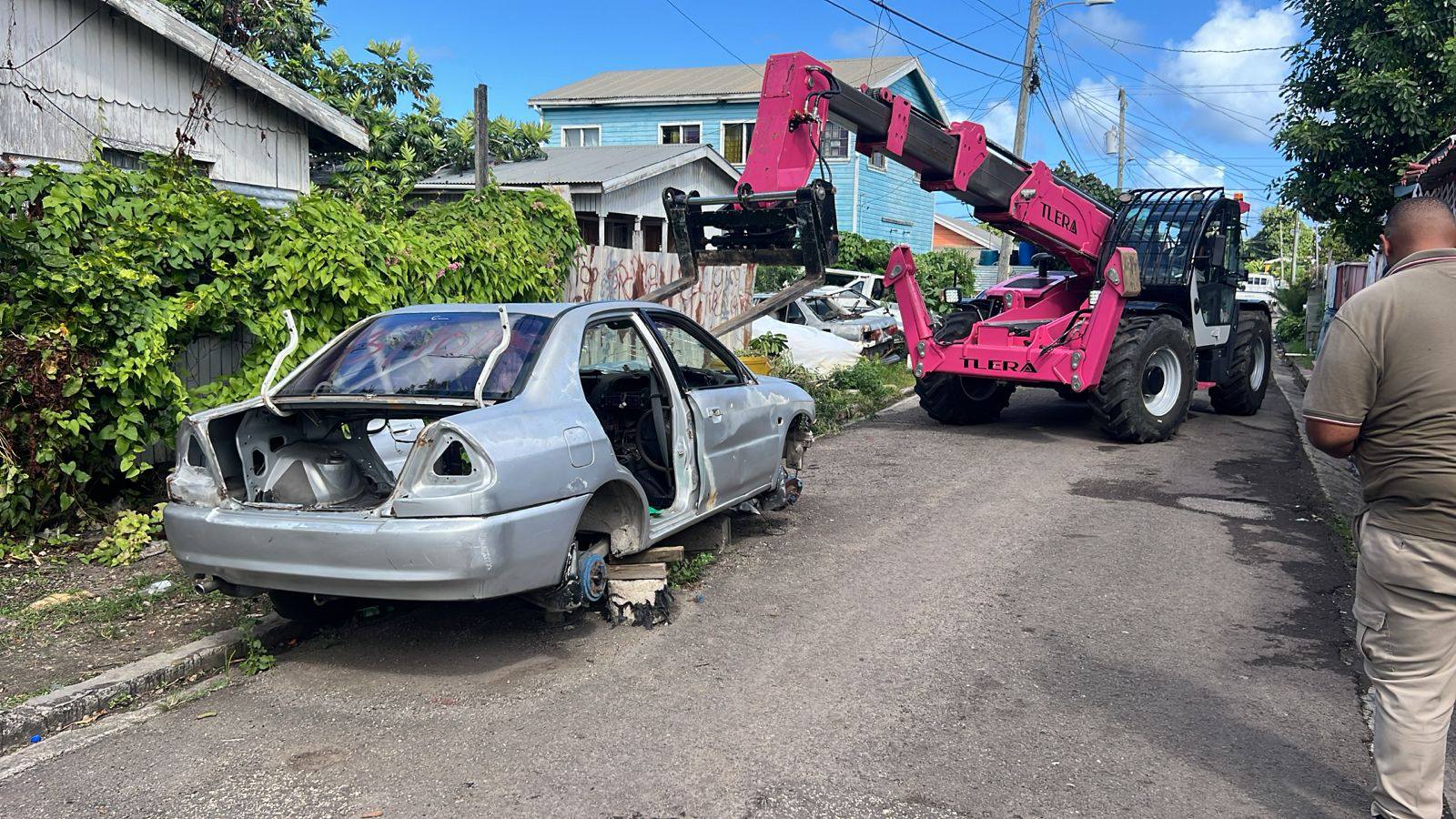
The government of Antigua and Barbuda has greenlit a sweeping enforcement campaign aimed at ridding public spaces of two persistent blights: abandoned, derelict vehicles and unlawful occupation of public lands, kicking off a coordinated cross-agency push to clean up communities and protect shared resources.
Under the new mandate, the Ministry of Social Transformation will lead the operation, partnering with four key government bodies: the Royal Police Force of Antigua and Barbuda, the National Solid Waste Management Authority, and the Development Control Authority. This collaborative structure is designed to streamline enforcement efforts and ensure consistent action across all regions of the twin-island nation.
Local regulators have outlined clear justifications for the crackdown, noting that long-abandoned vehicles pose a range of overlapping risks to communities. Beyond dragging down curb appeal and ruining the visual character of residential neighborhoods, these unused cars and trucks create hidden safety hazards for pedestrians, especially children, and can leak toxic fluids like motor oil and coolant that contaminate local soil and groundwater. Ahead of formal enforcement actions, authorities are issuing a public appeal to vehicle owners: voluntarily remove any derelict cars from public rights-of-way and community spaces to avoid legal penalties. All participating agencies have been directed to strictly enforce existing public nuisance and land use regulations.
The campaign extends beyond abandoned vehicles to target unapproved structures and illegal encroachments along three high-priority public corridors: the nation’s popular shorelines, public roadsides, and other open public lands. People found occupying these areas without official authorization will be required to relocate all personal belongings and remove any temporary or permanent structures. The Ministry of Social Transformation will step in to mediate and assist where displacement creates social welfare needs.
In an official statement following Cabinet’s approval of the campaign, officials emphasized that Antigua and Barbuda’s beaches are a critical shared resource, and must remain fully open and accessible to both local residents and the international tourists that drive the nation’s economy. The cabinet warned that any activity that blocks public roadways, creates preventable safety hazards, or degrades local environmental conditions will not be tolerated going forward.
These coordinated enforcement actions form just one component of a broader, long-running national initiative to crack down on littering, illegal waste dumping, and the misuse of public spaces across the country, with the government aiming to improve quality of life for locals and preserve the nation’s natural beauty for years to come.