分类: society

  • Father, stepson electrocuted while fleeing Balandra home

    Father, stepson electrocuted while fleeing Balandra home

    A devastating early-morning electrical accident in Rampanalgas Village, Balandra has left two family members hospitalized with electrocution injuries, local law enforcement confirmed this week.

    The emergency unfolded shortly before 5 a.m. Thursday at the residential property of 45-year-old Stephanie Charles, located at Lot 1 in the community. Charles told investigating officers she and her household were at rest when a sudden sharp bang echoed through the home, followed by an intense flash of light. Alarmed that the property was catching fire, Charles and four of her relatives immediately began an emergency evacuation.

    Her 20-year-old son, Jesus Maharaj, brought up the rear of the exiting group as the family moved toward safety. When Maharaj stepped into the home’s yard, he caught his foot on an unexpected fallen high-tension electrical cable that had dropped to the ground, sending a fatal-strength current through his body that knocked him unconscious.

    Adrian Lewis, Charles’ 37-year-old common-law husband, did not hesitate when he saw Maharaj collapse. He rushed back into the yard to pull the younger man to safety, only to make contact with the live line himself, suffering a second electrocution.

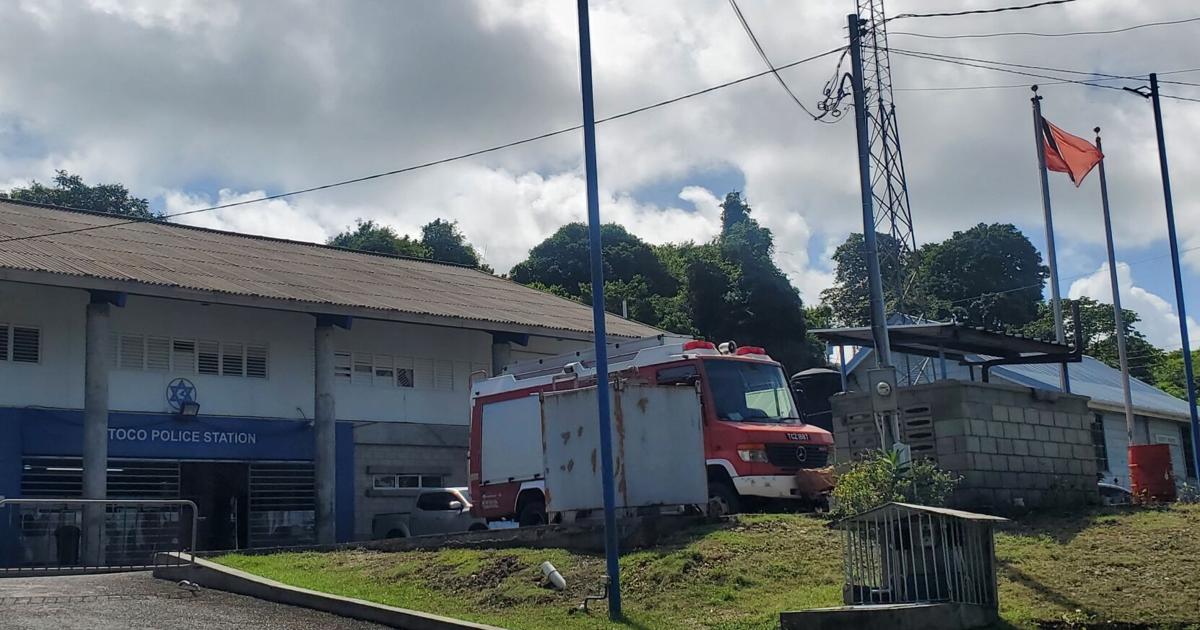
    First responders quickly transported both injured men to the local Toco Health Centre for urgent stabilizing care. Once their conditions were deemed stable enough for further treatment, they were transferred to the larger Sangre Grande Hospital for continued care. Charles has corroborated early reports, confirming her son’s account of tripping over the fallen cable during the evacuation. As of Thursday’s initial investigation, officers have not been able to question Maharaj or Lewis directly, as both remain under active medical care for their injuries.

  • Rotary Club of Dominica to hand over drinking fountains at two primary schools

    Rotary Club of Dominica to hand over drinking fountains at two primary schools

    A community-focused service organization on the Caribbean island of Dominica is taking tangible action to steer young generations away from sugary drinks and toward healthier hydration habits. The Rotary Club of Dominica has launched a new public welfare project that will place new public water fountains at two local primary education institutions.

    According to an official statement released by the club, the two schools selected to benefit from the initiative are Roseau Primary School and Trafalgar Primary School. Formal handover ceremonies for each fountain are scheduled to take place on-site at the schools on Monday, June 15, 2026, with the Roseau Primary event kicking off at 9:00 a.m. and the Trafalgar Primary ceremony following at 10:30 a.m.

    The Rotary Club confirmed that a range of stakeholders will participate in both events, including senior representatives from the organization, school faculty, enrolled students, family members of pupils, and pre-invited special guests.

    As a global volunteer service network, the Rotary Club of Dominica anchors its work in the core mission of elevating quality of life for local community members through targeted volunteer projects and programs that advance long-term, sustainable development. This latest school water fountain initiative fits directly into the organization’s broader strategic goals, specifically its work to foster healthier daily lifestyles for the island’s youth population. By making clean, free drinking water easily accessible to students on school campuses, the club hopes to normalize water as the go-to beverage choice for children, reducing their reliance on high-sugar drinks that are linked to negative long-term health outcomes including childhood obesity and dental decay.

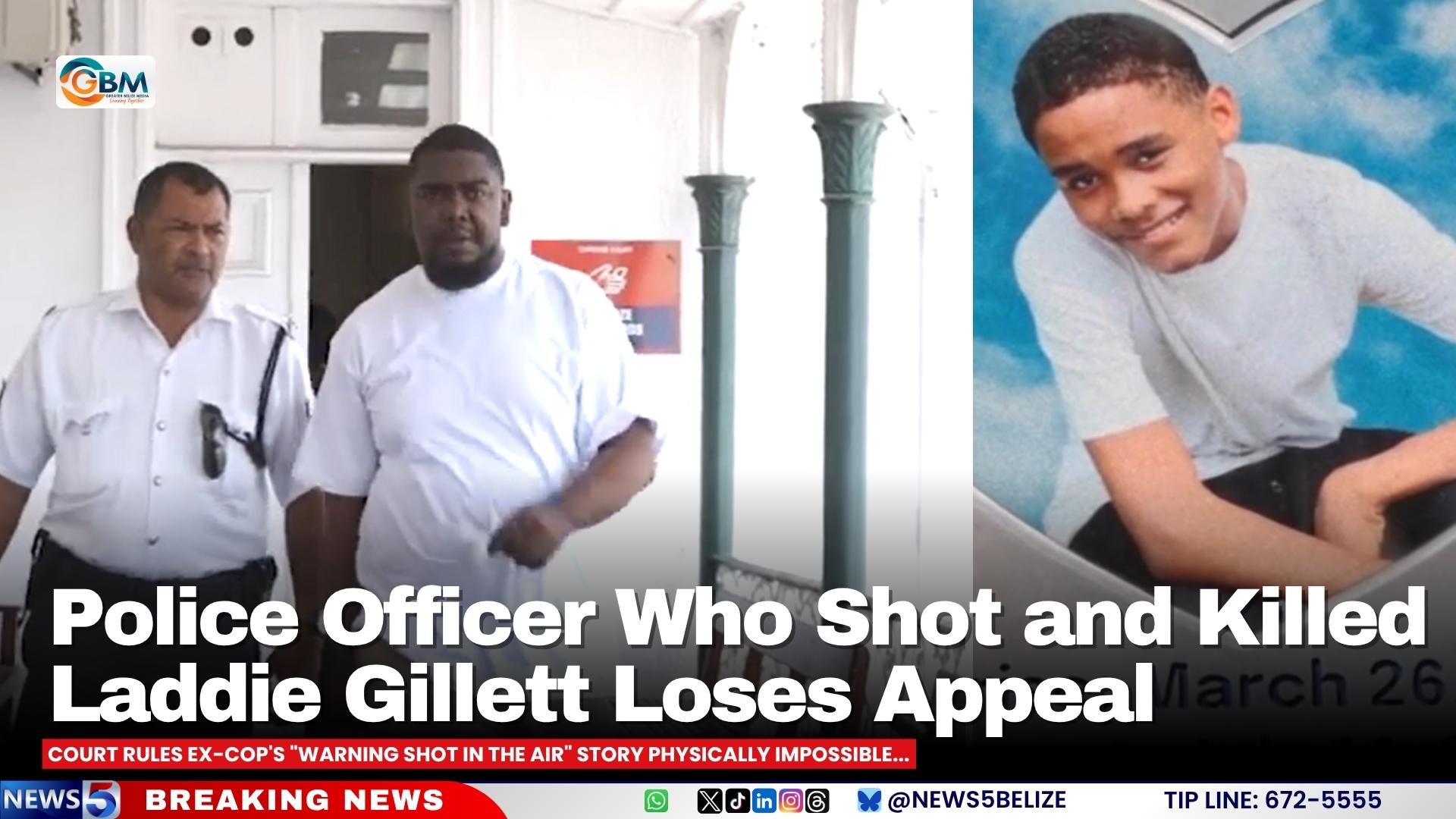
  • Police Officer Who Shot and Killed Laddie Gillett Loses Appeal

    Police Officer Who Shot and Killed Laddie Gillett Loses Appeal

    In a landmark ruling delivered this week, Belize’s Court of Appeal has unanimously upheld the manslaughter conviction and 18-year prison sentence of former police corporal Kareem Martinez, ending his legal challenge over the 2021 fatal shooting of 14-year-old Laddie Gillett on a Placencia beach.

    The fatal incident unfolded on the night of July 14, 2021, at the height of COVID-19 pandemic restrictions when a national 10:00 p.m. curfew was in effect. Gillett and his best friend had spent the evening celebrating a birthday with cake on the beach, and were hurrying along the beachfront back to the Chabil Mar resort to meet the curfew deadline. As they rounded a corner near the Placencia Beach Club Resort, the pair unexpectedly encountered a team of four police officers responding to a security guard’s report of suspicious persons in the area.

    Startled by the sight of uniformed officers in dark clothing, both teenagers turned and fled. Moments later, a single gunshot rang out, and Gillett was struck in the back. The bullet passed through his chest, and he was pronounced dead just 21 minutes after the incident at 10:21 p.m. His friend was taken into custody for curfew violation and held at the local police station.

    During Martinez’s original trial, prosecution evidence overwhelmingly tied him to the fatal shot. Investigators recovered a single 9mm shell casing near the spot where Gillett fell, and forensic analysis from Belize’s National Forensic Sciences Services confirmed the round had been fired from Martinez’s issued Bersa Thunder 9 pistol, which was seized from him the same night. The three other officers on scene all testified they had not fired their weapons, despite the trial judge noting all three appeared evasive in their accounts, clearly attempting to distance themselves from the shooting. Gillett’s friend, whom the judge deemed a thoroughly credible witness, also confirmed neither teen was armed, nor was there any physical altercation before the shot was fired.

    Martinez chose not to give sworn testimony during his trial, instead offering an unsworn statement claiming he fired a single warning shot 10 feet into the air after spotting a shiny object he believed to be a gun. He further claimed the fatal shot had actually been fired by fellow officer PC Augustine at the exact same time, explaining why witnesses only heard one bang. The trial judge rejected this account as physically incredible, pointing out that for Martinez’s story to hold, a bullet fired 10 feet into the air would have had to travel 75 to 90 feet backward and downward to strike Gillett in the back in the span of just six seconds. The Court of Appeal fully endorsed this finding, confirming the scenario was physically impossible.

    On the alternative claim that Augustine was the actual shooter, the appellate panel also dismissed the theory out of hand. Augustine was positioned closer to witnesses than Martinez, the court noted, and if he had drawn and fired his weapon, at least one of the five other people present would have seen the action. No witness testified to seeing Augustine fire, and the court ruled accepting the alternative shooter claim would require pure, unfounded speculation. While the trial judge did find Augustine had lied about carrying a personal licensed firearm that night, she also concluded he did not fire the weapon that killed Gillett, a finding the appeal court saw no reason to overturn.

    In its written ruling, the appellate court joined the trial judge in harshly criticizing the conduct of officers involved in the incident. The three officers who testified for the prosecution were found to have deliberately downplayed their own roles in the events of the night, with the court describing their overall conduct as “less than exemplary.” Even the security guard who placed the original call about suspicious persons was found to have lied about his presence at the scene, with the judge confirming he was present during the chase despite his claims to the contrary. The court emphasized, however, that these shortcomings in police conduct were not enough to undermine the overwhelming core of the prosecution’s case against Martinez.

    Martinez’s legal team had submitted eight separate grounds of appeal, arguing the investigation was biased toward prosecuting Martinez, that investigators failed to test other officers’ hands and weapons for gunfire residue, that the trial judge had improperly overstepped by asking too many questions during proceedings, and that she had incorrectly shifted the burden of proof onto the defendant. The three-judge appellate panel rejected every single ground, concluding the trial judge’s management of the case was “detailed, sound and flawless,” and that she had consistently and correctly upheld the principle that the prosecution, not the defense, bears the burden of proving guilt beyond a reasonable doubt.

    With the appeal dismissed, Martinez will now serve out his full 18-year prison sentence for manslaughter. The case remains a high-profile example of police accountability in Belize, four and a half years after the 14-year-old’s death during a public health curfew.

  • Nearly 6 Years Later, Businessman Convicted of Human Trafficking

    Nearly 6 Years Later, Businessman Convicted of Human Trafficking

    On June 12, 2026, a major human trafficking case that stretched across nearly six years reached a landmark guilty verdict in Belize’s Dangriga High Court. Businessman Jin Zhou Wu was found guilty on all four counts of human trafficking brought against him, splitting into two charges of trafficking for forced labor and two additional charges of trafficking for sexual exploitation.

    The origins of the case date back to mid-2018, when the Belize Police Department first received anonymous tips alleging that Wu was exploiting vulnerable women at his commercial property in southern Belize. Formal arrests would not come until 2020, when three Honduran women filed official complaints against the businessman that corroborated the earlier intelligence.

    According to official case documents, the three young victims—aged 20 and 21 at the time of their exploitation—were lured across the border from Honduras in June 2019 with false promises of legitimate waitressing jobs. Once they crossed into Belize illegally with the help of a local female recruiter working for Wu, their situation quickly turned exploitative. Wu immediately seized their passports and other travel documents, confiscated their personal cell phones to cut off contact with the outside world, and forced them into sex work at his Sky Blue Bar located in Bella Vista Village, Toledo District.

    Wu was first arraigned on the charges in October 2020 and was remanded to Belize Central Prison to await trial. He was later released on bail set at $15,000, a decision that drew quiet criticism from anti-trafficking advocates who argued he posed a flight risk. Following the guilty verdict delivered this week, Justice ordered Wu to be taken back into custody immediately. A sentencing hearing is scheduled for June 26, where the court will determine the length of his prison term and any additional penalties.

    The prosecution was led by Director of Public Prosecutions Cheryl Lynn Vidal on behalf of the Crown, while Wu was represented by defense attorney Emerita Anderson throughout the trial. Anti-trafficking organizations in Belize have welcomed the conviction as a critical win for holding traffickers accountable, noting that long-running cases like this highlight the systemic challenges of prosecuting human trafficking crimes in small Central American nations.

  • Barbuda Successfully Completes Tsunami Ready Exercise and Public Awareness Activity

    Barbuda Successfully Completes Tsunami Ready Exercise and Public Awareness Activity

    The small Caribbean island of Barbuda has wrapped up a three-day, comprehensive tsunami preparedness drill that marks a critical milestone in its quest to earn the globally recognized Tsunami Ready designation from UNESCO. Held between May 26 and 28, the exercise was spearheaded by Antigua and Barbuda’s National Office of Disaster Services (NODS), and drew cross-sector collaboration from local educational institutions, government disaster response teams, international disaster risk experts, and community groups all aligned to advance the island’s long-term goal of securing and retaining official Tsunami Ready status.

    The Tsunami Ready Recognition Programme, operated by UNESCO’s Intergovernmental Oceanographic Commission (IOC), is a widely accepted global framework designed to boost community resilience against tsunami hazards. To qualify for the designation, communities must meet clear standards: sustained public education on tsunami risks, functional standardized early warning systems, formally documented and tested evacuation plans, and regular preparedness drills. This recent exercise in Barbuda is the first formal requirement the island has completed to move forward in the evaluation process for the recognition, which is only granted to communities that have fully implemented risk reduction measures tailored to their local tsunami threat.

    The initiative kicked off on May 26 with educational outreach activities at two of Barbuda’s main schools: Holy Trinity Primary School and Sir McChesney George Secondary School. During the school visits, participating students and faculty took part in interactive workshops covering key topics including the nature of local tsunami hazards, basic individual and community preparedness actions, and step-by-step evacuation protocols. The outreach effort was designed to embed safety knowledge among young residents, who can in turn share that information with their families and broader community networks.

    The full-scale exercise concluded on May 28 with an island-wide community evacuation drill, with a primary focus on the two participating secondary and primary schools to test the evacuation procedures that had been discussed just days prior. The drill successfully tested response times, route clarity, and communication between school administrators, disaster management officials, and community volunteers.

    In comments following the completion of the exercise, NODS Director Sherrod James emphasized the foundational role of broad community engagement in effective disaster preparedness. “This exercise demonstrates the importance of community involvement in disaster preparedness,” James stated. “By engaging young people and conducting practical evacuation exercises, we are helping to ensure that Barbuda remains prepared to respond effectively to tsunami threats.”

    The drill received technical and operational support from a multi-national team of local and international disaster risk specialists. Leading the international contingent was Christa von Hillebrandt-Andrade, Manager of the National Oceanic and Atmospheric Administration (NOAA) International Tsunami Information Center Caribbean Office (ITIC-CAR). They were joined by Emiliano Rodriguez Nuesch, Director at Risk Communications Agency Pacifico and a leading expert in risk communication and behavioural science, as well as Diego Voloschin, a videographer documenting the exercise for future training and outreach use.

    Local technical support was provided by members of the NODS team including Alvah Guishard, NODS’ GIS mapping specialist, and Daryl George, Project Officer in the NODS Project Management Unit. Additional support came from John Mussington, Chairman of the Barbuda Council and a dedicated consultant for the Barbuda Tsunami Ready initiative, alongside a number of other local technical specialists.

    Following the successful completion of the exercise, NODS issued formal statements thanking the leadership, teaching staff, and student bodies of both participating schools for their energetic participation and commitment to building a local culture of safety and disaster resilience. The agency also extended gratitude to Antigua and Barbuda’s Ministry of Education for its ongoing backing of the Tsunami Ready initiative.

  • Motorcycle Passenger Killed in San Pedro RTA

    Motorcycle Passenger Killed in San Pedro RTA

    A fatal road traffic accident in San Pedro Town, Belize has claimed the life of a local resident just before midnight on Thursday, June 11, 2026, leaving another person injured and triggering an official police investigation into the crash.

    The victim, identified as 33-year-old Gilberto Noble, was riding as a rear passenger on a red Lifan motorcycle operated by 23-year-old Vincent Donaji Canul when the collision unfolded. According to initial details from law enforcement investigators, the motorcycle was traveling south along Pescador Drive when Canul initiated a maneuver to overtake a yellow golf cart traveling in the same direction. The impact between the two vehicles occurred shortly before 11 p.m.

    Noble suffered severe, fatal head trauma in the crash. First responders rushed both he and Canul to the local San Pedro Polyclinic for emergency care, where medical staff pronounced Noble dead upon arrival. Canul, meanwhile, walked away with non-life-threatening injuries to his right foot and remains receiving treatment at the same medical facility.

    Footage captured at the crash site documents the immediate aftermath of the incident: emergency medical workers loaded an injured Canul onto a stretcher for transfer to care, while Noble’s body remained at the scene as uniformed officers carried out forensic evidence collection and processed the crash site to document key details.

    In a procedural update, law enforcement officials confirmed they have issued notices of intended prosecution to both the motorcyclist Canul and the golf cart driver involved in the incident. As part of standard investigation protocol for fatal road crashes, investigators obtained a blood sample from Canul to test for potential alcohol or drug impairment, with full results of that analysis still pending as the inquiry moves forward.

  • WPC reports $57,000 in Gucci jewels stolen from police station

    WPC reports $57,000 in Gucci jewels stolen from police station

    A brazen theft has shaken one of Hong Kong’s core law enforcement facilities, after an on-duty police officer reported that luxury gold jewellery valued at more than HK$57,800 was stolen from her personal handbag while she was carrying out official duties at Central Police Station earlier this week.

    Per official police documentation of the incident, the officer detailed that she left her handbag unattended on a desk inside the station’s Charge Office at approximately 8:15 a.m. on Monday, before departing the room to fulfill her scheduled work responsibilities. She did not return to the Charge Office until roughly eight hours later, at around 4:00 p.m., when she first noticed that multiple high-value jewellery pieces had been taken from her bag and launched an official inquiry.

    The stolen items all carry significant luxury and monetary value, according to the officer’s official theft report. The most valuable piece is a gold Bubble Gucci chain appraised at HK$45,000, followed by a matching Bubble Gucci gold bracelet engraved with the initials “KK”, which is valued at HK$9,000. The third stolen item is a gold ring set with a white gemstone, worth an estimated HK$3,800. When combined, the total estimated worth of all stolen jewellery reaches HK$57,800.

    In the wake of the reported theft, specialist Crime Scene Investigators have already attended the location to process the officer’s handbag for potential forensic evidence, including DNA traces and latent fingerprints that could lead investigators to the responsible party. As the investigation continues, probe leads have also requested all relevant closed-circuit television (CCTV) footage from within the Central Police Station compound to review movements of all people who entered and exited the Charge Office on the day of the incident, to identify potential persons of interest.

  • PDJSS, Sir Ira Simmons host career fair in Castries

    PDJSS, Sir Ira Simmons host career fair in Castries

    On Thursday, June 11, Castries’ Vide Bouteille neighborhood played host to a community-focused career development event, organized jointly by Patricia D. James Secondary School (PDJSS) and Sir Ira Simmons Secondary School. Held on the PDJSS campus, the fair marked the latest activity under a joint Career Preparation and Awareness campaign spearheaded by the two District 2 educational institutions.

    This year’s gathering centered on the core theme “Empowering Skill Development and Adaptability for Lifelong Careers”, a framework designed to align with the evolving demands of modern workplaces. While the event was primarily curated for Forms Two to Four secondary students gearing up to select subject tracks for their Caribbean Secondary Education Certificate (CSEC) examinations, organizers intentionally opened participation to local primary school students, turning the one-day fair into a cross-age learning opportunity for attendees of all grade levels.

    More than 20 local organizations and industry partners set up interactive exhibition booths across the campus grounds, one of which was operated by regional media outlet St. Lucia Times. Each booth was tailored to introduce students to a wide range of professional pathways, with presenters sharing detailed information on the personal attributes, technical competencies, and academic qualifications required for different careers. To keep young attendees engaged, displays incorporated a mix of visual aids, hands-on samples, explanatory diagrams, interactive digital media, branded signage, and free informational giveaways.

    PDJSS school counselor Lianda Aimable, who served as lead organizer for the event, emphasized the long-term value of the annual initiative for Saint Lucia’s youth. “This is a tradition we uphold every year to help our students make informed choices when it comes to selecting their CSEC subjects,” Aimable explained. “By connecting students directly with a diverse range of local institutions and organizations, we give them the context they need to align their academic decisions with their long-term career goals.”

    The annual career fair is just one component of a broader ongoing commitment by the two collaborating secondary schools to systematically prepare young people for a smooth transition from the classroom to the global workforce. By bridging the gap between academic learning and real-world professional expectations, the institutions aim to equip the next generation with the clarity and adaptability they need to build sustainable, fulfilling careers.

  • AFJ hits US$10-m mark in Hurricane Melissa relief and rebuilding support

    AFJ hits US$10-m mark in Hurricane Melissa relief and rebuilding support

    Eight months after Hurricane Melissa tore through large swathes of western Jamaica in October last year, the American Friends of Jamaica (AFJ), a decades-old transnational charitable organization focused on supporting Jamaican communities, has announced that donations from its global network of supporters have pushed total recovery and reconstruction funding past the $10 million mark. The milestone was revealed Saturday, June 6, during AFJ’s flagship annual event, the 2026 Jamaica Charity Gala, held in Miami, one of the most high-profile Jamaican-focused charitable gatherings in the United States each year. The event not only raised additional funds for ongoing relief efforts but also gave attending stakeholders a detailed progress update on reconstruction work across the five parishes hardest hit by the storm.

    AFJ’s recovery work is currently concentrated in five western Jamaican parishes: St Elizabeth, Westmoreland, Hanover, Trelawny, and St James. To date, the organization has allocated nearly $2 million toward immediate emergency response efforts. Beyond initial relief, it has funded critical post-storm recovery projects including home re-roofing, school and outdoor learning space repairs, and a targeted farming gift card program designed to help small agricultural producers restore lost income and shore up local food security. Even amid ongoing emergency response operations in April, AFJ awarded 65 new grants totaling nearly $952,000 to support long-term programming across education, healthcare, and economic development sectors across the island.

    Along with announcing the funding milestone, the 2026 gala included an awards segment honoring individuals and organizations that stepped up immediately in the wake of the hurricane. Three business and humanitarian leaders were recognized for their rapid and impactful disaster response. The International Achievement Award was presented to Norman Horne, executive chairman of ARC Manufacturing and a native of St Elizabeth. Within two weeks of Hurricane Melissa making landfall, Horne’s firm sourced and shipped critical alloy coils for roofing materials to Kingston, enabling widespread re-roofing work to begin quickly across storm-damaged communities. Two International Humanitarian Awards were also granted: one to Michael Capponi, founder and president of Global Empowerment Mission, whose response team was on the first plane into the affected region after the storm, while mobilizing 3,000 volunteers in Miami and pushing roughly $16 million in emergency aid to Jamaican communities in the first two months post-disaster. The second International Humanitarian Award went to Edward Raine, president and CEO of Food for the Poor. During the event, Raine accepted the award from former U.S. Ambassador to Jamaica Nick Perry, with AFJ executive director Caron Chung and Jamaica’s Minister of Tourism Edmund Bartlett in attendance. Food for the Poor moved 250 containers of relief supplies into Jamaica through local channels, partnered with 70 regional organizations to deliver aid, and completed critical work to repair and return 22 damaged fishing vessels at Galleon Beach to active service.

    Minister Bartlett used the occasion to thank AFJ for more than 40 years of partnership with Jamaica, framing the ongoing hurricane recovery work within the island’s broader national development goals. He outlined the government’s new governance structure for long-term reconstruction, the National Reconstruction and Resilience Authority (NaRRA), which will lead planning for the revitalization of four major hard-hit coastal towns: Black River, Lucea, Montego Bay, and Falmouth. Bartlett emphasized that Jamaica’s national goal is to transition rapidly from post-disaster recovery to achieving full developed nation status within the next 10 years. Addressing gala attendees, he reflected on the storm’s impact: “It bent us as a people, but it didn’t break us.”

    AFJ President Wendy Hart attributed the organization’s ability to deliver a rapid, coordinated response to the 43 years of on-the-ground relationship-building it has completed across Jamaica. “That is not a miracle. It is 43 years of relationship building coming due,” Hart told attendees, highlighting the value of longstanding local ties that enable rapid action when disaster strikes. Beyond the program and awards, the event featured a curated silent auction with a broad roster of exclusive items and experiences donated by AFJ’s supporters, including luxury travel packages, fine dining reservations, sports and entertainment access, original artwork, and one-of-a-kind curated experiences. The diverse selection of auction lots reflected the widespread generosity of AFJ’s corporate partners, individual donors, and global network of supporters, with all proceeds going toward the organization’s charitable mission in Jamaica.

    Founded more than four decades ago, AFJ operates as a bridge between international donors seeking to support Jamaican communities and local nonprofits, community groups, and policymakers that have on-the-ground knowledge of local needs and effective implementation strategies. In addition to coordinating rapid disaster response when extreme weather events strike, the organization funds ongoing programming across education, healthcare, and economic development, reviewing roughly 100 grant applications from Jamaican nongovernmental organizations each year to fund impactful local projects.

  • Westmoreland not ready for hurricane season, says Sav mayor

    Westmoreland not ready for hurricane season, says Sav mayor

    As the 2026 Atlantic hurricane season gets underway, a coastal Jamaican parish is facing a stark reality: it remains woefully unprepared to face new extreme weather events, more than eight months after being devastated by Category 5 Hurricane Melissa. Danree Delancy, Mayor of Savanna-la-Mar, the parish capital of Westmoreland, has sounded the alarm over a cascade of unaddressed vulnerabilities ranging from underapproved emergency shelters to unfunded flood mitigation and incomplete post-storm damage assessments.

    Of the 76 sites formally designated as emergency shelters across Westmoreland, only 22 have received final approval to accept vulnerable residents during a storm. The gap is most acute in eastern parts of the parish, which bore the brunt of Melissa’s damage last October and now has the lowest share of operational shelters. The parish’s disaster coordination team is still scrambling to identify additional suitable buildings to expand shelter capacity, even as the season has already begun. A more pressing personnel crisis has also emerged: many experienced shelter managers who stepped up during Melissa have declined to serve again, prompting local officials to launch an urgent search for new volunteer managers. Interested community members are being invited to visit Westmoreland Municipal Corporation (WMC) offices to learn more about the role and how they can support local disaster preparedness efforts.

    To resolve longstanding shelter infrastructure challenges, Delancy has put forward a bold proposal for the construction of purpose-built multi-purpose emergency facilities. Designed to withstand Category 5 hurricanes and major earthquakes, these structures would be sited in areas outside flood and tsunami zones to ensure they remain operational during disasters. When not activated for emergency use, the buildings would double as permanent storage for critical relief supplies including bedding, non-perishable food, and medical equipment, eliminating the need to move stock between sites ahead of each storm. They could also be rented out for community events and private functions, generating a consistent revenue stream for local authorities to offset operational costs.

    Nearly a year after Melissa made landfall, many of the storm’s impacts still linger across the parish. Hundreds of residents who lost their homes have yet to receive government assistance, as many displaced households moved in with relatives outside their original communities and missed the initial damage assessment window. Assessors had already completed their work and left the area before many residents returned to register their losses. Delancy is calling on Jamaica’s central government to reopen the damage assessment period to ensure no affected resident is left without support, and he has recommended that all future post-disaster assessment campaigns be preceded by widespread public outreach via radio, town criers, and other local communication channels to make sure residents are aware and available to meet with assessors.

    The unmet needs extend beyond residential damage. While small-scale farmers have received some support through the Rural Agricultural Development Authority, local Members of Parliament, feed suppliers, and private donors, Delancy notes that no dedicated federal assistance program has been launched for small businesses destroyed or damaged by the storm.

    Flood mitigation efforts are also hamstrung by insufficient funding. Central government has allocated just J$300,000 to each local administrative division across the parish for drain cleaning ahead of the 2026 season, but WMC estimates put the total cost of comprehensive drain cleaning needed to reduce flood risk at roughly J$40 million. Delancy acknowledged that the national government operates under tight budget constraints, labeling the requested sum as the bare minimum needed to protect communities, and said local leaders are awaiting an update on additional funding. He has urged local councillors to make the most of the limited resources currently available while pushing for more support.

    Despite the widespread gaps in preparedness, Delancy is urging Westmoreland residents to take personal responsibility for their own safety ahead of the season. He advised all households to stockpile at least three days of essential supplies including non-perishable food, drinking water, and necessary medication, noting that it is too dangerous for emergency volunteers to deploy supplies into active storm conditions. He also encouraged residents to clear local drains of debris including fallen tree limbs, garbage, and discarded materials that could block water flow and worsen flooding, and to check on vulnerable neighbors and community members once it is safe to do so after a storm.

    In closing, Delancy emphasized that hurricane preparedness is a shared responsibility between national government agencies, local municipal authorities, and individual community members. “The more prepared we are as individuals and communities, the better we will be able to withstand whatever challenges this hurricane season may bring,” he told meeting attendees. He also extended public gratitude to existing shelter managers and all those who have donated time, money, and supplies to Melissa survivors, many of whom continue to give to affected families to this day.