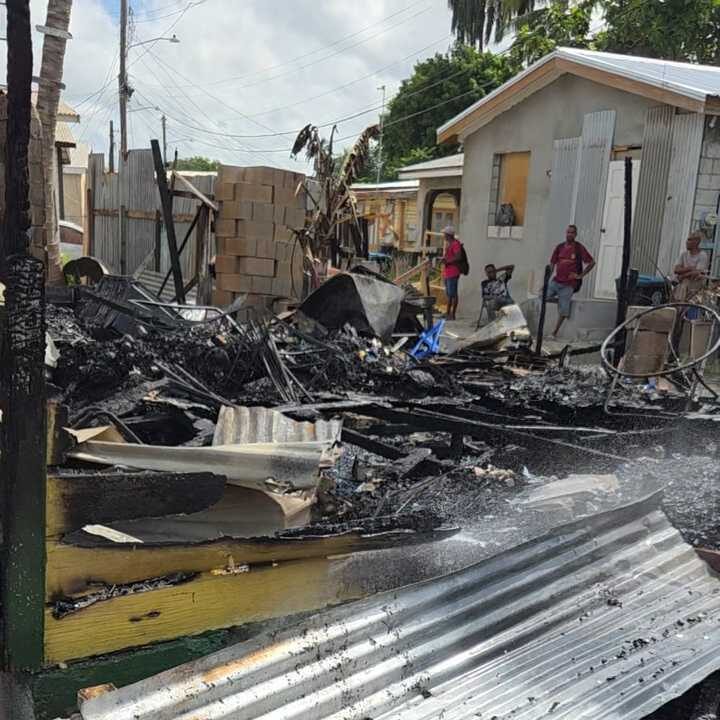
A devastating recent blaze at Bridgetown’s Chapman Lane has left dozens of families displaced and homeless, reigniting urgent calls for long-overdue upgrades to the Barbadian capital’s aging, hazard-prone historic neighborhoods. Troy Williams, a former president of the Barbados Contractors and Artisans Association, is leading demands for local officials to move past planning stages and immediately implement stalled urban redevelopment initiatives, warning that the city’s outdated building stock and cramped layout put thousands of residents at constant risk of catastrophic fire events.
Speaking exclusively to Barbados TODAY in the aftermath of the blaze, Williams first extended his sincere condolences to the families who lost their homes and personal property in the fire, before turning to the systemic vulnerabilities that allowed the fire to escalate. As a long-time industry professional with decades of experience in construction and urban planning, Williams emphasized that this latest disaster was not an unforeseeable accident, but a predictable outcome of the capital’s century-old development patterns.
“This is yet another unfortunate incident that stems directly from the aged, overcrowded build-up of the historic city,” Williams explained. “Bridgetown’s status as a heritage site does not negate the fact that its oldest residential neighborhoods no longer meet modern safety standards. Officials have already been examining redevelopment proposals for these dense, high-risk areas, and this fire makes clear that there is no more time for delay.”
Williams pointed to the unique structural risks that define Bridgetown’s oldest residential corridors: decades ago, planners permitted tightly packed wooden and stone structures, which allow fires to spread rapidly from one property to the next with little time for residents to escape or for emergency crews to contain the blaze. As a contractor, he noted that intentional spacing between buildings is a core modern fire safety principle—one that was not prioritized when the city was first built centuries ago. With repeated fire events already impacting these communities, Williams argued that incremental tweaks are no longer enough.
Turning to the existing Bridgetown Redevelopment Master Plan, a framework that includes proposals for modern, higher-density residential buildings and new public funding for infrastructure upgrades, Williams stressed that the moment has come to shift from discussion to on-the-ground action. “This blaze is a clear warning sign,” he said. “Another incident like this just underscores how urgent it is to get these redevelopment projects off the drawing board and into construction.”
Critics of the master plan have raised concerns that adding taller modern residential buildings to central Bridgetown would exacerbate existing parking shortages and traffic congestion. But Williams pushed back against these objections, pointing to proven design solutions deployed in dense, successful global cities including New York and Panama City. He outlined that modern high-rise residential developments can incorporate integrated multi-level parking—either above-ground or underground—to accommodate residents’ vehicles without cluttering city streets. Additional features such as universal elevator access paired with traditional staircases, clear marked emergency muster points, and dedicated emergency access routes can address both accessibility and safety concerns, Williams explained. All of these elements, he noted, must be woven into the core of any new redevelopment work to protect residents for generations to come.
Williams concluded by saying he remains optimistic that local leaders and urban planners will treat this disaster as a critical catalyst for action, speeding up approval and implementation of long-planned modernization projects that will make the capital safer for all residents. “I have no doubt this fire will refocus attention on the urgent need to improve Bridgetown’s overall development, and we are ready to move forward to deliver safer, better housing for the community,” he said.