分类: politics

  • Saint Lucia weighs future of Cuban medical aid as US pressure mounts

    Saint Lucia weighs future of Cuban medical aid as US pressure mounts

    A delicate healthcare partnership that has sustained Saint Lucia’s medical infrastructure for decades now faces unprecedented pressure amid escalating diplomatic tensions between Washington and Havana. For years, Cuban medical professionals have served as a critical workforce solution, staffing rural clinics and emergency departments that would otherwise remain vacant due to the Caribbean nation’s persistent brain drain of local nursing and specialist talent.

    The longstanding arrangement faces potential disruption as the United States intensifies its opposition to Cuba’s medical brigade programs throughout the Caribbean region. Health Minister Moses Jn Baptiste confirmed the government is developing contingency plans to address possible geopolitical shifts that might jeopardize this vital healthcare collaboration.

    While expressing gratitude for Cuba’s humanitarian assistance, Minister Jn Baptiste highlighted the broader regional challenge of medical personnel migration that has left Caribbean governments struggling to maintain adequate healthcare coverage. The administration is actively pursuing alternative training and recruitment partnerships, including potential agreements with African nations following Barbados’ successful recruitment of Ghanaian nurses.

    Concurrently, the government is boosting domestic training capabilities through enhanced support for nursing programs at Sir Arthur Lewis Community College to encourage more Saint Lucians to enter the healthcare profession.

    The diplomatic friction escalated recently when the US Embassy in the Eastern Caribbean alleged Cuban medical workers face withheld wages, passport confiscation, forced family separation, and intimidation tactics—claims vigorously denied by Saint Lucia and neighboring Caribbean governments.

    External Affairs Minister Alva Baptiste maintained that Cuban doctors in Saint Lucia are legally employed and not subjected to forced labor conditions. Regional leaders from Jamaica to Trinidad have expressed strong opposition to Washington’s position, with some, like former St. Vincent Prime Minister Ralph Gonsalves, declaring they would sacrifice US visas before expelling Cuban medical professionals.

    Prime Minister Philip J. Pierre acknowledged the reality of US diplomatic pressure while emphasizing Saint Lucia’s commitment to navigating these geopolitical challenges without compromising national interests or healthcare accessibility. The government is proactively developing alternative arrangements to insulate the country’s health system from external political shocks, though no definitive decisions have been finalized.

  • Iran-US talks expected Thursday despite fears of strikes

    Iran-US talks expected Thursday despite fears of strikes

    GENEVA—Diplomatic efforts to de-escalate tensions between Iran and the United States are set to resume Thursday amid a precarious backdrop of military posturing and cautious optimism. Iranian officials expressed confidence in reaching a diplomatic solution regarding Tehran’s nuclear program, even as the U.S. reinforced its military presence in the Middle East with additional aircraft carriers and enhanced air defenses.

    Iranian Foreign Minister Abbas Araghchi revealed to CBS News that technical details for a potential agreement were being drafted ahead of the Geneva negotiations. “There is a good chance to have a diplomatic solution,” Araghchi stated, while simultaneously warning that Iran reserves “every right to defend ourselves” if attacked, suggesting American interests in the region could become targets.

    The talks, mediated by Omani diplomat Badr Albusaidi, aim to build on what Iranian President Masoud Pezeshkian characterized as “encouraging signals” from previous discussions. Albusaidi confirmed negotiations would resume “with a positive push to go the extra mile towards finalising the deal.”

    This diplomatic push occurs alongside heightened military preparedness. The U.S. has substantially increased its military assets in the region, prompting concerns among Iranian citizens. “I don’t sleep well at night even while taking pills,” shared Hamid, a Tehran resident, reflecting growing anxiety about potential conflict. IT technician Mina Ahmadvand, 46, expressed resignation: “At this stage, war between Iran and the US as well as Israel is inevitable.”

    The negotiations unfold against a complex domestic backdrop in Iran. Recent protests over economic conditions have evolved into broader anti-government demonstrations, met with severe crackdowns that human rights groups say have killed thousands. On Sunday, competing student protests—both supporting and opposing the government—highlighted the nation’s political divisions.

    U.S. envoy Steve Witkoff revealed President Trump’s puzzlement at Iran’s resistance to American pressure, questioning why Tehran hadn’t “capitulated” given the military and economic sanctions imposed. Western nations continue to suspect Iran’s nuclear program aims to develop weapons, despite Tehran’s consistent denials and insistence on its right to civilian uranium enrichment.

    The renewed diplomacy follows a failed round of talks last year that culminated in Israeli airstrikes and a brief U.S. engagement against Iranian nuclear facilities. The current situation has prompted several countries, including Sweden, Serbia, Poland, and Australia, to advise their citizens to leave Iran.

  • WATCH: Fitz-Henley commends amendment to Income Tax Act, lauds employers for compassionate payments

    WATCH: Fitz-Henley commends amendment to Income Tax Act, lauds employers for compassionate payments

    The Jamaican Senate has passed significant amendments to the Income Tax Act, creating tax exemptions for compassionate payments made by employers to employees affected by Category 5 Hurricane Melissa. During Friday’s parliamentary debate, State Minister Abka Fitz-Henley commended both businesses for their generosity and workers for their resilience throughout the catastrophic weather event.

    The legislative changes accomplish two primary objectives: establishing tax-free status for hurricane-related compassionate payments to employees, and extending the corporate income tax filing deadline from March 15 to April 15 of this year. Minister Fitz-Henley emphasized that the amendments balance fiscal responsibility with compassionate policy-making, providing certainty for employers, employees, and tax authorities alike.

    Fitz-Henley framed the legislation as evidence of Jamaica’s elected ‘caring administration’ in action, specifically highlighting Sandals Resort International and its chairman Adam Stewart for their exemplary response. The tourism group not only provided financial assistance and care packages to employees but publicly committed to avoiding any hurricane-related layoffs.

    “Many businesses moved to assist their employees financially both prior to and after Hurricane Melissa’s passage,” Fitz-Henley noted during his address. “Sandals Group, under Stewart’s leadership, was early down the wicket in declaring they would not terminate a single employee despite the hurricane’s impact—a decision deserving of high commendation.”

    The amended legislation received unanimous approval in the Senate with two technical amendments, signaling cross-party support for measures addressing hurricane recovery challenges through both economic policy and recognition of private sector solidarity.

  • US Secret Service kills man trying to access Trump Florida estate

    US Secret Service kills man trying to access Trump Florida estate

    A coordinated security response at former President Donald Trump’s Mar-a-Lago resort in Florida resulted in the fatal shooting of an armed intruder in the early hours of Sunday morning. The incident occurred approximately at 1:30 AM local time (0630 GMT) while Trump was confirmed to be in Washington, D.C., ensuring no protectees were present on the premises.

    According to official statements from the U.S. Secret Service, the male suspect, believed to be in his early twenties, breached the security perimeter near the north gate while carrying a tactical shotgun and a fuel container. Security personnel immediately engaged the individual, issuing clear commands to disarm. Palm Beach County Sheriff Ric Bradshaw detailed that the suspect complied partially by placing the fuel canister on the ground but subsequently raised the shotgun into a firing position.

    This threatening gesture prompted immediate defensive action from two Secret Service agents and a sheriff’s deputy, who discharged their service weapons. The suspect sustained fatal injuries and was pronounced deceased at the scene. No law enforcement personnel were harmed during the confrontation.

    This event marks the latest in a series of security threats against the former president. The context of rising political violence in the United States was underscored by recent cases, including the life sentencing of Ryan Routh just this month for an assassination plot targeting Trump at a Florida golf course. Furthermore, the attempted assassination during a Pennsylvania rally in 2024, which resulted in a bystander’s death and minor injury to Trump, continues to influence the nation’s political landscape.

    The broader pattern of political violence extends beyond Trump, with incidents such as the fatal shooting of right-wing influencer Charlie Kirk in Utah, the murder of Minnesota Democrat Melissa Hortman and her spouse, and an arson attack on Pennsylvania Governor Josh Shapiro’s residence. The identity of the Mar-a-Lago intruder remains withheld pending family notification, as investigations continue under the jurisdiction of the Secret Service, the agency tasked with protecting current and former national leaders and visiting dignitaries.

  • Iranian students rally for second day as fears of war with US mount

    Iranian students rally for second day as fears of war with US mount

    PARIS, France (AFP)—Iranian universities became the epicenter of renewed social unrest on Sunday as students staged competing pro- and anti-government demonstrations. The gatherings, held to commemorate those killed in recent protests, unfolded against a backdrop of escalating geopolitical tensions concerning Iran’s nuclear ambitions.

    The initial wave of demonstrations, triggered in December by severe economic hardship exacerbated by international sanctions, rapidly evolved into one of the most significant challenges to the Islamic republic’s clerical leadership in recent history. While President Donald Trump initially voiced support for the protesters and threatened intervention during the government’s lethal crackdown, the US administration’s focus has since pivoted to Iran’s nuclear program, which Western powers suspect is aimed at developing atomic weapons.

    Recent developments indicate a complex diplomatic dance between Washington and Tehran. Representatives from both nations recently concluded a second round of Oman-mediated nuclear talks in Geneva, with Iran expected to submit a draft proposal to avert military action within days. According to an Axios report citing an unnamed senior US official, Washington stands ready to return to Geneva on Friday for detailed negotiations if Iran presents its proposal within the next 48 hours.

    Simultaneously, the United States has significantly bolstered its military presence in the Middle East, deploying two aircraft carriers along with additional jets and ships while strengthening regional air defenses. This military buildup represents Trump’s dual-track approach of pursuing diplomacy while maintaining maximum pressure on Tehran.

    On the domestic front, Sunday’s campus rallies revealed the deep divisions within Iranian society. State-run Fars news agency published videos showing dozens of participants waving Iranian flags and carrying memorial photographs at universities across Tehran. At Sharif University of Technology, tensions flared as pro-government demonstrators shouting ‘death to the shah’—referencing the monarchy overthrown in the 1979 Islamic Revolution—confronted anti-establishment protesters, with uniformed personnel positioned between the groups.

    Iran International, an overseas-based media outlet designated as a ‘terrorist’ organization by Tehran, shared footage showing students at Sharif University displaying the pre-revolution flag. An AFP-geolocated video captured a substantial crowd chanting anti-government slogans while surrounding students waving the flag of the deposed monarchy.

    The human cost of the unrest remains contested. Iranian authorities acknowledge approximately 3,000 deaths, including security personnel and bystanders, attributing the violence to ‘terrorist acts’ instigated by the nation’s enemies. In contrast, the US-based Human Rights Activists News Agency (HRANA) has documented over 7,000 fatalities, predominantly protesters, suggesting the actual toll may be considerably higher.

    Amid these developments, growing apprehensions about potential military conflict have emerged among Iranian civilians. Tehran resident Hamid revealed experiencing sleepless nights despite medication, expressing profound concern for his family’s safety. Meanwhile, 46-year-old IT technician Mina Ahmadvand described war with the US and Israel as ‘inevitable,’ stating she has prepared for that eventuality despite her aversion to conflict.

    The escalating tensions have prompted several nations—including Sweden, Serbia, Poland, and Australia—to advise their citizens to depart Iran immediately. Australia’s warning highlighted that while commercial flights remain available currently, this situation ‘could change quickly.’

  • Cubaanse veiligheidstroepen verlaten Venezuela nu Amerikaanse druk toeneemt

    Cubaanse veiligheidstroepen verlaten Venezuela nu Amerikaanse druk toeneemt

    Venezuela’s interim leadership under Delcy Rodríguez is significantly reducing its longstanding security dependence on Cuba amid intense pressure from the United States, according to eleven sources familiar with the matter. This strategic shift marks a departure from the policies of deposed president Nicolás Maduro and his predecessor Hugo Chávez, both of whom relied heavily on Cuban elite troops for personal protection.

    The unraveling of the Caracas-Havana security alliance follows the January 3rd U.S. military operation that resulted in Maduro’s capture and the deaths of 32 Cuban personnel who were embedded within Venezuela’s military and powerful counterintelligence unit DGCIM. This deep security cooperation, established in the late 2000s, proved essential for neutralizing domestic opposition and maintaining Chavista rule.

    Multiple sources confirm that Cuban security advisors and medical personnel have been gradually departing Venezuela via air travel in recent weeks. Some Cuban intelligence officers within DGCIM have been removed from their positions, though the exact circumstances surrounding their departure remain unclear—whether by Rodríguez’s order, voluntary decision, or recall by Havana.

    The Biden administration has been actively pressuring Venezuela to sever its ties with Cuba as part of a broader strategy to undermine Havana’s communist government. Since mid-December, Washington has blocked Venezuela’s oil shipments to Cuba, creating economic strangulation on the island nation. A White House official stated that the U.S. maintains ‘a very good relationship with Venezuela’s leaders’ and believes Rodríguez’s ‘self-interest aligns with promoting our key objectives.’

    Despite these developments, both governments publicly maintain their continued alliance. Rodríguez recently participated in a floral memorial ceremony with Cuban Foreign Minister Bruno Rodríguez Padilla honoring victims of the U.S. operation, where Cuban solidarity was prominently reaffirmed. Subsequent phone conversations between Rodríguez and Cuban President Miguel Díaz-Canel further emphasized ongoing ‘unity’ between the nations.

    Analysts suggest Rodríguez is navigating a delicate balance—distancing herself from Cuban influence while avoiding complete abandonment of the relationship. ‘She wants to keep the Cubans at arm’s length until the situation stabilizes and her power position becomes clear, but she doesn’t want to completely cut them off either,’ noted Frank Mora, former U.S. ambassador to the Organization of American States.

    While the visible Cuban presence diminishes, some intelligence operatives likely remain to monitor Venezuela’s political evolution. The legacy of Cuban counterintelligence efforts persists through Maduro’s loyalists who retain power, suggesting that despite failing to protect Maduro, Cuba’s role in sustaining Chavista governance remains significant.

  • Dominica Parliament to convene on Monday, February 23, 2026

    Dominica Parliament to convene on Monday, February 23, 2026

    The Parliament of Dominica is set to commence its Third Session of the Eleventh Parliament on Monday, February 23, 2026, with a significant legislative agenda featuring five pivotal bills. This parliamentary sitting will address comprehensive reforms across financial regulation, healthcare standards, and regional economic integration.

    The legislative package includes the Payment System and Services Bill 2026, which establishes a robust licensing framework for payment service providers within the Eastern Caribbean Currency Union. This legislation aims to expand regulatory oversight and enhance consumer protection mechanisms in financial transactions.

    In parallel, the Food Safety Bill 2026 introduces strengthened food safety protocols, improved quality standards, and more effective inspection and enforcement procedures to safeguard consumer health in Dominica.

    Regional integration advances through the Caribbean Community (Movement of Factors) Bill 2026, which implements critical provisions of the Revised Treaty of Chaguaramas. This legislation facilitates the right of establishment, service provision, and capital movement across CARICOM member states, promoting greater economic cohesion within the Caribbean Single Market and Economy.

    The healthcare sector undergoes substantial regulatory modernization through two complementary bills. The Medical Profession Bill 2026 proposes establishing the Dominica Medical Council to oversee professional registration, licensing, conduct discipline, and continuing education standards for medical practitioners. Similarly, the Nurses and Midwives Bill 2026 creates a parallel council to regulate nursing and midwifery professions, establishing formal requirements for registration, professional conduct, and ongoing training.

    The parliamentary proceedings will be publicly accessible through live broadcasts on the Government Information Service (GIS) and Dominica Broadcasting Station (DBS) commencing at 10:00 a.m., ensuring transparency and public engagement with these significant legislative developments.

  • Trump Slaps All Countries with New 10% Tariffs

    Trump Slaps All Countries with New 10% Tariffs

    In a dramatic escalation of trade policy, former President Donald Trump has instituted a comprehensive 10% tariff on all imports following a landmark Supreme Court decision that invalidated his previous tariff authority. The high court’s 6-3 ruling determined that Trump had overstepped his presidential powers under the International Emergency Economic Powers Act of 1977, with Chief Justice John Roberts writing that the administration claimed “extraordinary power to unilaterally impose tariffs of unlimited amount, duration, and scope” without proper congressional authorization.

    Within hours of the judicial setback, Trump invoked alternative authority under the Trade Act of 1974 to implement a temporary 10% universal tariff scheduled to take effect February 24 and remain active for 150 days. During an impassioned press conference, the president characterized the court’s decision as “deeply disappointing” and questioned the patriotism of certain justices whom he described as “very unpatriotic and disloyal to our Constitution.”

    The sweeping tariff measure contains exemptions for specific categories including agricultural commodities, essential minerals and metals, pharmaceutical products, electronic devices, and passenger vehicles. Administration officials indicate the policy aims to reduce dollar outflow and stimulate domestic manufacturing capacity.

    Notably, products already subject to existing tariffs—such as steel, aluminum, lumber, and automotive goods—will see the new 10% levy applied additionally, creating compounded duty rates. Trump subsequently declared on his social media platform that the adjustment process “begins, and we will do everything possible to take in even more money than we were taking in before,” suggesting the administration views the tariffs primarily as revenue-generating measures rather than purely trade corrective actions.

  • Buitenlands beleid moet meer opleveren voor Suriname

    Buitenlands beleid moet meer opleveren voor Suriname

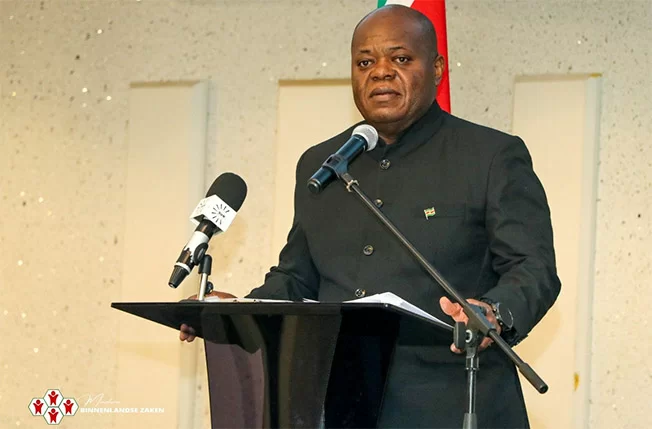
    Suriname’s Ministry of Foreign Affairs, International Trade and Cooperation (BIS) has initiated a strategic pivot in diplomatic approach, emphasizing concrete developmental outcomes over traditional diplomatic engagements. The shift was announced during the MOFA Networking Reception held Friday at Ballroom Prince, attended by President Jennifer Simons, diplomatic corps members, government officials, business representatives, and civil society organizations.

    Foreign Minister Melvin Bouva articulated the new direction, stating that diplomacy must explicitly contribute to economic growth and sustainable development. The event, themed ‘Engaging partners and building relationships: Architecture for sustainable development through International Cooperation,’ served as a platform to deepen international relations and stimulate new collaborations.

    “We have gathered all key actors to discuss the direction of our foreign policy and particularly the concrete results that must emerge from it,” Minister Bouva emphasized. He described the reception as a strategic moment to transform diplomatic conversations into measurable outcomes, adding that discussions must evolve into commitments, and commitments into actions and results.

    The gathering featured addresses by French Ambassador Nicolas de Lacoste, who discussed existing cooperation between France and Suriname, and Gail Meyer, representative of the Corps of Honorary Consuls in Suriname, who highlighted the crucial role of honorary consuls in strengthening international economic and diplomatic ties.

    While the reception itself produced no immediate policy decisions, the ministry views it as a catalyst for future collaborative projects. The contacts established during this first 2026 edition are expected to evolve into investments, projects, and new partnerships throughout the year.

    The ministry clarified that the networking reception is not an isolated event but part of a broader strategy to position Suriname more effectively within regional and international cooperation frameworks. The ultimate objective remains clear: international cooperation must deliver tangible benefits for Surinamese society.

    Minister Bouva concluded with a mission statement: “Our mission is simple: to make Suriname shine. A better Suriname begins with each of us.”

  • Randy Baltimore Reports Strong Reception During St. Philip’s North Canvass

    Randy Baltimore Reports Strong Reception During St. Philip’s North Canvass

    Randy Baltimore, the Antigua and Barbuda Labour Party (ABLP) candidate for the upcoming St. Philip’s North by-election, is reporting an overwhelmingly positive reception from constituents during his intensive door-to-door canvassing efforts. The political figure, who is contesting against former Senator Alex Browne in the March 16th vote, expressed strong confidence in his community connections.

    Having served as a longtime campaign manager for Sir Robin Yearwood, Baltimore emphasized that his transition from political operative to candidate has been remarkably seamless. He attributes this smooth shift to his deep roots within the community, stating, “My established relationships and understanding of local concerns have made this progression natural and effortless. I am fundamentally grounded in this community.”

    Baltimore’s campaign platform centers on three fundamental pillars designed to address key constituent needs. His agenda promises to establish scholarship programs for local students, implement significant enhancements at the Glanvilles Polyclinic including the addition of a much-needed pharmacy facility, and foster economic empowerment through job creation initiatives and comprehensive business support systems.

    The ABLP candidate’s message appears to be resonating particularly with younger voters. Jawan Jackson, a youthful supporter, characterized Baltimore as “a new and fresh individual” in the political landscape and passionately encouraged fellow voters to support his candidacy. This endorsement highlights Baltimore’s potential to energize a demographic crucial to electoral success.

    The by-election contest is shaping up to be a significant political battleground, with Baltimore’s grassroots approach and community-focused agenda positioning him as a formidable contender against his experienced opponent.