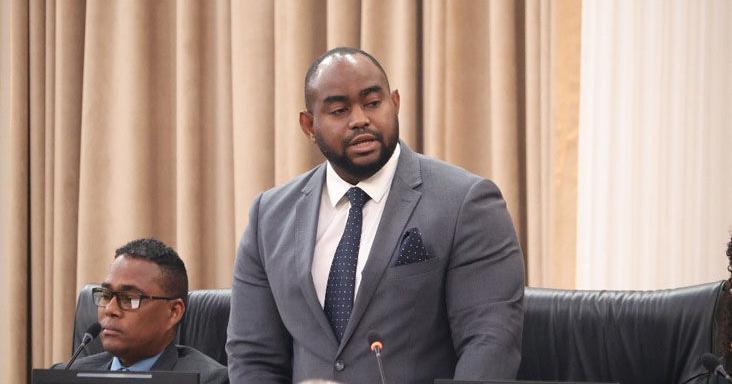
A major rift has emerged within the Caribbean Community (CARICOM) after Trinidad and Tobago announced a full suspension of its participation in all bloc meetings until leadership fulfills its demand for full documentation related to the controversial early reappointment of Secretary-General Dr. Carla Barnett. The twin-island nation has also formally stated it will not recognize Barnett’s second five-year term once her current 2021-2026 tenure expires this August.
The standoff, which has cast a spotlight on long-simmering concerns about transparency and procedural integrity within the regional bloc, was laid out in an April 9, 2026 letter from Trinidad and Tobago’s Foreign and CARICOM Affairs Minister Sean Sobers to CARICOM Chairman Dr. Terrance Drew. The country followed through on its threat this week, skipping the 25th Special Emergency Meeting of the CARICOM Conference of Heads of Government to underscore the seriousness of its grievances.
At the heart of the dispute is the way Barnett’s reappointment was handled during a closed retreat hosted in Nevis in February 2026, months before her term expires and ahead of a regularly scheduled full heads of government meeting set for July. Sobers has forcefully pushed back against Drew’s public claim that his absence from the retreat was due to reported seasickness, calling the assertion categorically false. Instead, Sobers confirms Trinidad and Tobago was deliberately excluded from the closed session, and has official correspondence to back this claim.
Sobers clarified the facts of the retreat to correct repeated misrepresentation from CARICOM leadership: While Prime Minister Kamla Persad-Bissessar attended prior events in St Kitts and Nevis and departed before the retreat, the full Trinidad and Tobago delegation remained through the conclusion of broader conference proceedings on February 27. When the retreat convened, Sobers — who was formally designated as Trinidad and Tobago’s head of delegation for the session — received a last-minute WhatsApp message from the CARICOM Secretariat restricting attendance exclusively to sitting heads of government, a restriction later confirmed by CARICOM’s Chef de Cabinet. This exclusion, Sobers argues, directly violates Article 11 of the Revised Treaty of Chaguaramas, which explicitly permits heads of government to appoint authorized representatives to attend meetings on their behalf.
Compounding these procedural violations is the complete lack of transparency around the reappointment itself. Sobers notes that the official retreat agenda, grouped under the general heading of “Financing and Governance,” made no mention of the Secretary-General’s reappointment — a major leadership decision that, per longstanding CARICOM precedent, is always listed as a standalone agenda item for full discussion by all member states. Trinidad and Tobago, along with other absent member nations, was not given advance notice that the vote would take place at the retreat, leaving the decision to a small select group of leaders in attendance.
Sobers also raised pointed questions about the rushed timeline for the reappointment: With Barnett’s term not expiring until August 2026 and a full heads of government meeting already scheduled for July, there was no logical reason to rush the vote five months early. He further pointed to additional red flags, including the omission of the reappointment decision from the official Summary of Confirmed Decisions circulated to all member states on March 2, 2026, and a month-long delay in formally notifying Trinidad and Tobago’s government of the outcome. In response to claims from Guyanese President Irfaan Ali that the 2026 process mirrored the 2021 appointment, Sobers has requested full documentation from the 2021 process to verify this claim.
Trinidad and Tobago has tabled a detailed 13-point list of specific documentation and clarifications it requires from CARICOM leadership before it will resume participation in bloc meetings. These demands include the full unredacted agenda of the February retreat, a complete list of attendees and invitees, all meeting minutes from the retreat, full performance appraisals of Dr. Barnett, all nomination communications for the Secretary-General role, identification of the officials who authorized advancing the reappointment at the retreat, a formal explanation for the rushed timeline, proof of whether all member states and their authorized representatives were invited, confirmation of whether Chairman Drew ordered the head-of-government-only restriction, justification for deviating from established reappointment precedent, explanation for omitting the decision from the March 2 summary, proof that pre-vote communications were sent to all members as claimed, explanation for the month-long delay in notifying Trinidad and Tobago, and full documentation from the 2021 appointment process for comparison.
Addressing reporters at a Thursday press conference, Sobers stressed that Trinidad and Tobago remains fully committed to the CARICOM integration project and has no plans to withdraw from the regional bloc. He framed the dispute not as a break with the organization, but as a fight for better governance: The country’s core demand is for full transparency and adherence to the bloc’s own governing rules, rather than allowing critical decisions to be made through opaque, exclusionary processes by a small group of leaders.