分类: politics

  • Lula: Brazilië wil geen ‘nieuwe Koude Oorlog’

    Lula: Brazilië wil geen ‘nieuwe Koude Oorlog’

    Brazilian President Luiz Inacio Lula da Silva has articulated a firm stance against global polarization ahead of his scheduled meeting with U.S. President Donald Trump in early March. Speaking at a New Delhi press conference concluding his three-day India visit, Lula emphasized Brazil’s commitment to equitable international relations.

    “My message to President Trump is clear: Brazil rejects any movement toward a new Cold War,” Lula stated. “We maintain no intention to interfere in other nations’ affairs, but we insist that all countries must be treated equally in global diplomacy.”

    The upcoming Washington summit agenda will reportedly focus on four key areas: bilateral trade relations, immigration policies, investment opportunities, and inter-university cooperation initiatives. This meeting occurs against a backdrop of significant policy divergences between the two leaders on multiple fronts.

    Substantial disagreements exist regarding Republican-imposed tariffs, Israel’s military operations in Gaza, the U.S. detention of Venezuelan President Maduro, and the functioning of Trump’s Peace Council. Notably, Lula declined to comment on Friday’s Supreme Court decision that invalidated numerous Trump-era tariffs on imported goods, which the former president immediately vowed to replace with 15% levies using alternative legislative mechanisms.

    Despite these substantial policy differences, the Brazilian leader expressed cautious optimism about bilateral relations: “I believe U.S.-Brazil relations will emerge stronger from our discussions,” Lula concluded, suggesting diplomatic dialogue might bridge existing divides.

  • Humphrey ready for challenges in Ministry of Transport and Works

    Humphrey ready for challenges in Ministry of Transport and Works

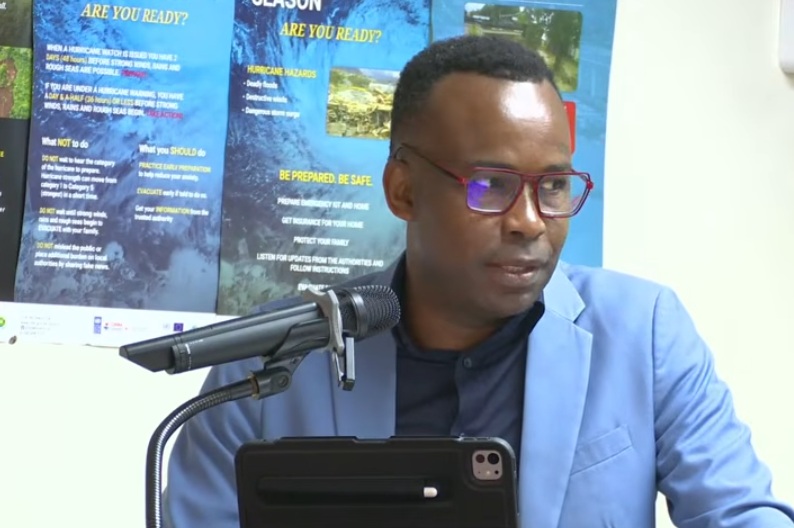
    Barbados’ newly appointed Minister of Transport and Works, Kirk Humphrey, commenced his official duties last week with a comprehensive introductory session at the ministry’s Goddard Building headquarters in Haggatt Hall, St Michael. The meeting served as an operational briefing on current work programs and pressing concerns within the transport sector.

    Drawing upon his seven and a half years of cabinet experience where transport issues were frequently addressed, Minister Humphrey expressed readiness to confront the ministry’s challenges directly. “Having reviewed budgetary estimates and departmental briefs extensively since my appointment,” Humphrey stated, “I’ve developed preliminary perspectives on necessary actions. While this marks my inaugural day preventing grandiose promises, I assure the public of our dedicated energy toward resolving systemic issues.”

    The minister specifically referenced road conditions, traffic management, pothole remediation, and drainage improvements as priority areas. His approach emphasizes public consultation, noting that citizens will have substantive opportunities to contribute solutions. Humphrey articulated an integrated philosophy toward transportation infrastructure: “Roads, transport, and drainage constitute interconnected systems requiring holistic evaluation. We must examine physical infrastructure, management systems, and personnel collectively rather than as isolated components.”

    Accompanied by Minister of State Dr. Romel Springer, who brings four and a half years of institutional knowledge from previous administration service, Humphrey’s team identified ongoing initiatives requiring continuity. These include the Scotland District Rehabilitation Programme, Cart Road programme, and Focused Road Programme.

    Dr. Springer emphasized climate resilience as a critical consideration, noting: “Current road infrastructure must accommodate both changing climate patterns and increased vehicular loading from heavier trucks and buses. We’re reviewing building code standards to enhance durability and ensure our roads meet contemporary demands effectively.”

  • Parmessar: Ontbrekende documenten blokkeren start begrotingsdebat

    Parmessar: Ontbrekende documenten blokkeren start begrotingsdebat

    Suriname’s parliamentary proceedings for the 2026 national budget have encountered significant delays due to incomplete documentation requirements. Rabin Parmessar, opposition leader of the NDP party and chairman of the parliamentary rapporteurs committee, revealed that essential financial documents either remain missing or require substantial revisions before budget deliberations can commence.

    According to Parmessar, the Comptability Law 2024 mandates the submission of several critical documents that have not been presented to the National Assembly in their updated forms. The original 2026 budget was initially submitted on October 1st and underwent thorough examination by the rapporteurs committee. However, recent debt restructuring arrangements have necessitated comprehensive revisions across all budgetary documentation.

    “The rapporteurs committee has meticulously analyzed the originally submitted budget,” Parmessar stated. “But now we await updated figures that must be incorporated throughout all financial documents. These revisions must undergo renewed committee scrutiny before formal budget treatment can begin.”

    The legal framework requires submission of multiple key documents including an updated budget strategy, revised annual financial plan, adjusted five-year financial plan, and modified national debt management strategy. The absence of these properly formatted documents has created both procedural and substantive challenges for parliamentary operations.

    Opposition voices, including VHP party leader Asis Gajadien, have previously criticized the government’s compliance with fiscal regulations, emphasizing that “the Comptability Law 2024 must function substantively rather than merely existing as a formal requirement.” This development highlights ongoing concerns regarding medium-term budgetary discipline and adherence to legislative financial governance standards.

    The situation presents a dual challenge: Parliament awaits technically updated documents while simultaneously addressing fundamental questions about whether the proposed budget meets statutory requirements for medium-term fiscal responsibility and transparency.

  • Guyana, St. Kitts and Nevis hold “fruitful” discussions ahead of 50th CARICOM heads meeting

    Guyana, St. Kitts and Nevis hold “fruitful” discussions ahead of 50th CARICOM heads meeting

    In a significant diplomatic engagement ahead of the 50th CARICOM Heads of Government Meeting, Guyanese President Irfaan Ali hosted St. Kitts and Nevis Prime Minister Dr. Terrance Drew at State House this past Saturday. The high-level consultation, described by both leaders as profoundly productive, focused on strengthening bilateral relations and advancing regional integration initiatives within the Caribbean Community.

    Prime Minister Drew, who currently holds the rotating CARICOM chairmanship, emphasized the critical importance of regional unity during the closed-door discussions. “Our dialogue was exceptionally fruitful,” Drew stated following the meeting. “We remain committed to championing regional integration and collective advancement as fundamental pillars of CARICOM’s mission.”

    The strategic dialogue covered multiple dimensions of Caribbean cooperation, with particular attention to enhancing collaborative frameworks between Guyana and St. Kitts and Nevis. Both leaders reaffirmed their dedication to addressing shared regional challenges through coordinated policy approaches and strengthened diplomatic ties.

    The Guyanese delegation included Foreign Affairs Minister Hugh Todd, Public Service Minister Zulfikar Ally, Chief of Defence Staff Brigadier Omar Khan, along with senior officials from the Ministry of Foreign Affairs and national security agencies. This substantial representation underscored the strategic importance both nations attach to the upcoming landmark summit.

    The 50th Meeting of the Conference of Heads of Government, scheduled to convene in St. Kitts and Nevis next week, marks a historic milestone for CARICOM. The pre-summit discussions between President Ali and Prime Minister Drew are expected to set a constructive tone for the broader multilateral negotiations, potentially influencing the regional agenda for the coming year.

  • US visa restrictions on CBI nations raise economic concerns; IMF watching closely

    US visa restrictions on CBI nations raise economic concerns; IMF watching closely

    WASHINGTON, DC — The International Monetary Fund has initiated close surveillance of potential economic repercussions following the Trump administration’s imposition of visa restrictions on Citizenship by Investment (CBI) passport holders from Dominica and Antigua and Barbuda. This diplomatic development emerges despite recent regional commitments to enhance program integrity through stricter transparency protocols.

    The White House justified its provisional measures citing specific security concerns, including the absence of mandatory residency requirements and insufficient biometric data collection within both nations’ investment migration programs. Official statements emphasized that these limitations are essential to address national security vulnerabilities and immigration enforcement objectives.

    Antigua and Barbuda’s Prime Minister Gaston Browne contested the allegations, highlighting his government’s year-long collaborative efforts with multiple US agencies to implement substantive safeguards within their CBI framework. “We have accepted practical suggestions and taken concrete steps to ensure our Programme presents no risk whatsoever to US security,” Browne asserted.

    Although characterized as temporary pending review, these restrictions have raised alarms among economic observers who caution that even short-term measures could undermine investor confidence and program credibility. For Organization of Eastern Caribbean States members that depend significantly on CBI revenue streams, the implications extend beyond diplomatic friction to tangible economic vulnerability.

    The IMF’s measured response indicates that while direct economic impact remains contained, the institution recognizes elevated downside risks affecting revenue stability, travel freedom, and business mobility across the region.

  • Girdhari (VES): Wetten geldelijke voorzieningen moet met spoed worden gecorrigeerd

    Girdhari (VES): Wetten geldelijke voorzieningen moet met spoed worden gecorrigeerd

    Suriname faces mounting public outrage over excessive government salaries as Swami Girdhari, Secretary of the Association of Economists in Suriname (VES), has launched scathing criticism against the nation’s compensation laws for top officials. The economist revealed that judicial and parliamentary authorities receive annual payments ranging from $35,000 to $300,000—dramatically disproportionate to the country’s $6,800 GDP per capita.

    Girdhari exposed how the National Assembly passed controversial legislation in November 2024, just six months before elections, under the guise of ‘synchronization’ reforms. While promoted as eliminating double salaries and increasing transparency, the measures instead created what he termed ‘exorbitant’ compensation packages that disregarded national budget implications.

    The economic expert warned that these astronomical raises are creating ripple effects throughout Suriname’s economy. Private sector businesses, particularly small and medium enterprises, cannot match the pace of public sector increases. Meanwhile, government unions are now using the new top-tier salaries as benchmarks for their negotiations—threatening to destabilize the entire national wage structure.

    Girdhari proposed establishing a ‘Commission of Wise Surinamers’ comprising representatives from parliament, government, judiciary, planning bureau, state council, legal experts, and economists. This independent body would develop a new compensation framework aligned with Suriname’s economic reality, incorporating a ‘Presidential Norm’ where no public official earns more than the president—similar to the Netherlands’ ‘Balkenendenorm’ implemented after similar controversies.

    The economist emphasized that while salary differences based on responsibility, education, and experience are justified, they must operate within a framework of justice and economic sustainability. Eight months after a new government took office, no corrections have been implemented despite previous criticisms from current ruling parties.

  • The NIS appointment and the people’s mandate

    The NIS appointment and the people’s mandate

    The recent electoral triumph in St. Vincent and the Grenadines marked a decisive shift in political leadership, with voters delivering a powerful repudiation of the previous administration’s perceived elitism and centralized power structures. Prime Minister Honourable Dr. Godwin Friday, who concurrently serves as Finance Minister, has been methodically constructing his governance framework with generally well-received appointments that demonstrate strategic alignment of skills and positions.

    This promising beginning, however, now faces significant challenges following the controversial designation of Mr. Stephen Joachim as chairman of the National Insurance Services (NIS). The announcement has triggered substantial discontent among core supporters of the ruling New Democratic Party (NDP), particularly those ordinary citizens who maintained party loyalty during its most difficult opposition years. Many describe the selection as a profound betrayal that contradicts campaign promises.

    While Mr. Joachim’s academic qualifications in accounting and law remain undisputed, his documented public history reveals a pattern of dismissive rhetoric toward NDP supporters across various media platforms over the past decade. This appointment has revived concerns about the party’s tendency to concentrate high-level positions among individuals from specific geographic areas—notably Kingstown, Cane Garden, Villa, Ratho Mill, and Bequia—while overlooking accomplished professionals from North Leeward, Central Leeward, North Windward, South Windward Constituencies, and Marriaqua.

    The nation possesses abundant qualified alternatives with expertise in financial investment, management, and pension administration who operate with more people-centric approaches suitable for leading national institutions. This decision risks perpetuating the damaging perception that the NDP leverages ordinary citizens for electoral support but excludes them from substantive leadership opportunities once in power.

    The current administration deserves opportunity to demonstrate governance competence, but this early personnel decision suggests a potential return to problematic patterns of elitism and tribal power concentration. The government’s commitment to genuine inclusive governance and the integrity of the electoral mandate now face crucial testing, requiring immediate corrective demonstration that the promised era of change remains on course.

  • BIS brengt diplomaten en bedrijfsleven samen voor versterking internationale samenwerking

    BIS brengt diplomaten en bedrijfsleven samen voor versterking internationale samenwerking

    The Ministry of Foreign Affairs, International Business, and International Cooperation (BIS) hosted its inaugural networking reception on Friday, marking a significant step toward enhancing collaboration between government entities, international partners, and the private sector. The high-profile event was attended by President Jennifer Simons, members of the diplomatic corps, international organizations, and business representatives.

    Foreign Minister Melvin Bouva emphasized the critical importance of strategic partnerships for achieving sustainable development goals. He revealed that economic diplomacy has become the cornerstone of Suriname’s foreign policy since his appointment in July 2025, resulting in the signing of more than fifteen agreements and memoranda of understanding.

    The minister detailed ongoing efforts to explore new economic opportunities through bilateral business councils with neighboring Guyana, the Netherlands, and several other nations including Morocco, Saudi Arabia, the United Arab Emirates, Brazil, Ghana, and Barbados.

    Looking ahead, Minister Bouva highlighted the upcoming celebration in 2026 of fifty years of diplomatic relations with over twenty partner countries. He stressed that both government and private sector actors play pivotal roles in strengthening Suriname’s international standing.

    French Ambassador Nicolas de Bouillane de Lacoste, who serves as dean of the Diplomatic Corps, expressed appreciation for Suriname’s commitment to international law and the rule of law.

    President Simons articulated the administration’s vision, noting that economic reconstruction and social cohesion can only be achieved through collective efforts. She announced forthcoming measures to structure the gold sector, stimulate investments in agriculture, tourism, and infrastructure, and provide youth with improved access to entrepreneurial financing.

    The president also emphasized the strategic significance of the oil and gas sector while underscoring the necessity of international partnerships. She reaffirmed Suriname’s continued focus on climate policy, regional leadership roles within CARICOM, and strengthening diplomatic capacity to position the nation more prominently on the global stage.

  • PM Says Water Now Flowing in St. Philip’s North After Town Hall Concerns

    PM Says Water Now Flowing in St. Philip’s North After Town Hall Concerns

    In a rapid response to constituent concerns, the Antiguan government has successfully addressed water supply issues in St. Philip’s North following direct community engagement. Prime Minister Gaston Browne confirmed the improvements during his appearance on Pointe FM’s Browne and Browne show, highlighting how water pressure inconsistencies were resolved within days of being raised at a recent town hall meeting.

    The Prime Minister recounted how constituents openly voiced their concerns during the well-attended public forum, with one resident particularly emphasizing the water challenges facing the community. Browne revealed that he subsequently received confirmation from previously frustrated residents that water pressure had been restored to satisfactory levels, with one complainant enthusiastically reporting ‘powerful’ water flow.

    This swift resolution came after the responsible minister committed to restoring water services by Saturday and ensuring more consistent supply moving forward. Browne emphasized that such direct engagement forums form a crucial component of the government’s accountability measures, allowing officials to directly address service delivery issues affecting local communities.

    The improvements coincide with ongoing campaigning in St. Philip’s North ahead of the March 16 by-election, triggered by the retirement of longtime MP Sir Robin Yearwood. Browne noted that these town hall meetings not only allow residents to show support for the governing Antigua and Barbuda Labour Party but also create opportunities to hold ministers accountable for addressing critical community needs.

  • PM Browne Predicts ABLP Could Win All Seats Including Barbuda In The Next General Election

    PM Browne Predicts ABLP Could Win All Seats Including Barbuda In The Next General Election

    Prime Minister Gaston Browne has projected an unprecedented electoral victory for his ruling Antigua and Barbuda Labour Party (ABLP), forecasting a complete parliamentary takeover in upcoming elections—including the traditionally opposition-held Barbuda constituency. During his weekly radio address on Pointe FM’s Browne and Browne show, the leader articulated unwavering confidence in his party’s organizational strength while characterizing opposition forces as institutionally fractured.

    The political commentary emerged alongside strategic preparations for the March 16 by-election in St. Philip’s North, necessitated by the retirement of veteran parliamentarian Sir Robin Yearwood after half-century of service. Browne confirmed formal procedures are underway with nomination day established for February 25 and polling scheduled for mid-March. Voters were urged to update their electoral identification cards promptly.

    Browne dismissed the narrow 93-vote margin that preserved ABLP’s hold on St. Philip’s North in 2023 as anomalous, attributing the slender win to extraordinary circumstances including pandemic aftermath, Ukraine conflict-induced inflation, LIAT airline’s collapse, and aggressive opposition campaigning. ‘Presently, the government is settled and the country stable,’ Browne asserted, suggesting voters would reject exchanging stability for uncertainty.

    The Prime Minister introduced customs official Randy Baltimore as ABLP’s candidate, framing his selection as part of deliberate succession planning developed through decades of collaboration with Yearwood. Browne further intensified political rhetoric by labeling Barbuda’s incumbent representative Trevor Walker as ‘non-performing’ and suggesting his constituency could fall to Labour Party advancement.

    Describing the main opposition United Progressive Party as an ‘imploding institution’ grappling with leadership crises, Browne contended they stand ‘in no position to win anything.’ The St. Philip’s North by-election represents the first electoral measurement since Yearwood’s departure and serves as a crucial barometer for national political sentiment ahead of general elections.