分类: politics

  • Premier Trinidad en Tobago noemt Caricom onbetrouwbare partner

    Premier Trinidad en Tobago noemt Caricom onbetrouwbare partner

    Prime Minister Kamla Persad-Bissessar of Trinidad and Tobago has launched a remarkable diplomatic offensive against the Caribbean Community (CARICOM), publicly disassociating her nation from the regional body’s collective statement regarding recent U.S. travel restrictions. In a striking declaration, she characterized CARICOM as “currently not a reliable partner.

    The controversy stems from the United States’ December 16 implementation of partial travel restrictions targeting citizens of Antigua and Barbuda and Dominica. These measures primarily address security concerns surrounding Citizenship by Investment programs operated by these nations. In her Saturday media address, Persad-Bissessar explicitly stated that Trinidad and Tobago declined endorsement of CARICOM’s official expression of concern regarding American policy.

    The Prime Minister offered a robust defense of Washington’s position, asserting that sovereign nations must accept consequences for their policy decisions. She maintained that the U.S. response represents a measured reaction to risk management deficiencies within the investment citizenship programs of affected countries.

    Persad-Bissessar escalated her criticism to include fundamental structural issues within CARICOM, citing poor governance mechanisms, inadequate accountability protocols, internal divisions, and inappropriate interference in member states’ domestic affairs. She further identified CARICOM’s support for Venezuela’s Maduro regime—accused of human rights violations and regional aggression—as significantly undermining the organization’s credibility.

    Emphasizing national sovereignty, the Prime Minister declared that Trinidad and Tobago would prioritize its independent interests above regional consensus. “CARICOM does not determine our nation’s future. That choice belongs to our citizens,” she stated, framing the debate as a fundamental matter of self-determination.

    The statements have ignited intense domestic debate. Former Prime Minister Stuart Young accused Persad-Bissessar of damaging CARICOM relations and undermining ties with the United States, characterizing her approach as “alarming” and “reckless.” Former Foreign Minister Amery Browne similarly criticized the Prime Minister’s rhetoric as evading political responsibility through confrontational public statements.

    Despite mounting criticism, Persad-Bissessar maintained her position, affirming Trinidad and Tobago’s commitment to an independent foreign policy distinct from CARICOM’s political, security, and economic directives. She reiterated that American measures resulted from individual national choices and called for comprehensive reassessment of CARICOM’s effectiveness as a regional institution.

  • Lovell links U.S. travel restrictions to Alfa Nero yacht dispute, warns of diplomatic fallout

    Lovell links U.S. travel restrictions to Alfa Nero yacht dispute, warns of diplomatic fallout

    Antiguan opposition figure Harold Lovell has drawn direct connections between recently imposed U.S. travel restrictions and his government’s controversial handling of the Russian-affiliated superyacht Alfa Nero, warning of significant diplomatic consequences. During a recent appearance on Observer Radio, Lovell presented a comprehensive critique of the Browne administration’s foreign policy approach, characterizing the U.S. sanctions as the predictable outcome of diplomatic missteps rather than unrelated developments.

    Lovell systematically dismantled the official narrative that the travel restrictions resulted from Antigua and Barbuda’s refusal to host U.S. military radar equipment. He revealed that discussions about potential sanctions had commenced months before any such request materialized, indicating deeper underlying issues. The opposition politician instead identified the seizure and attempted sale of the Alfa Nero yacht as the central catalyst, describing it as a severe geopolitical dispute that entangled the small nation in complex international power dynamics.

    The Alfa Nero, a luxury vessel with established Russian connections, became the subject of extended legal proceedings after its seizure. Lovell emphasized that government officials had received explicit warnings about the risks involved in engaging with such a sensitive international matter but proceeded without exercising necessary diplomatic caution. This action allegedly placed the Caribbean nation at the center of competing global interests involving wealthy international actors with significant cross-border influence.

    Lovell directed particular criticism toward Prime Minister Gaston Browne’s leadership, accusing his administration of demonstrating deficient tactical awareness and strategic judgment in diplomatic affairs. He stressed that small island states must employ heightened precision and restraint when navigating relationships with major global powers, noting that careless statements and decisions can jeopardize national interests. The politician referenced previous parliamentary concerns regarding the yacht’s ownership claims and associated financial interests, noting these warnings were disregarded before manifesting in international legal challenges.

    With partial U.S. travel restrictions now implemented, Lovell urged enhanced diplomatic discipline and greater awareness in international engagements to prevent further repercussions. He concluded that ordinary citizens ultimately bear the consequences of these foreign policy decisions, emphasizing the critical need for more sophisticated statecraft in an increasingly complex global landscape.

  • What the return of US hemispheric primacy means for Saint Lucia and CARICOM

    What the return of US hemispheric primacy means for Saint Lucia and CARICOM

    The Trump Administration has initiated a profound transformation in US-Caribbean relations, placing Saint Lucia and the CARICOM bloc under unprecedented strategic scrutiny. This geopolitical shift represents the most significant reorientation of American foreign policy toward the region in decades, marked by a more assertive posture that prioritizes bilateral engagement over multilateral frameworks.

    The cornerstone of this transformation is the 2025 National Security Strategy (NSS), which dramatically elevates Latin America and the Caribbean to the status of ‘Very High’ strategic importance—the top global priority for Washington. This represents a stark departure from previous administrations that consistently ranked the region as having low to moderate significance throughout the post-Cold War era.

    This strategic recalibration manifests through concrete policy changes. The administration has imposed visa restrictions on citizens of Antigua and Barbuda and Dominica, signaling a willingness to leverage travel access as a diplomatic tool. Simultaneously, Washington has abandoned the non-reciprocal trade preferences established under the Caribbean Basin Economic Recovery Act, implementing instead a bilateral tariff regime that treats CARICOM states individually rather than collectively.

    The NSS explicitly frames the Caribbean as a privileged sphere of US interest, aiming to prevent strategic competitors—particularly China, Russia, Iran, Cuba, and Venezuela—from establishing dominant positions in the region. This modern interpretation of the Monroe Doctrine, termed the ‘Trump Corollary,’ asserts America’s right to maintain hemispheric primacy through unilateral action when necessary.

    For Saint Lucia, the implications are multifaceted and profound. The nation’s Citizenship by Investment Program faces heightened scrutiny over potential homeland security concerns. Foreign policy alignment, especially regarding relationships with Venezuela and China, will attract increased Washington attention. Additionally, the region faces potential economic consequences through possible travel advisories, expanded visa restrictions, and maritime enforcement actions that could impact tourism and investment flows.

    The fundamental challenge for CARICOM lies in Washington’s deliberate shift toward bilateralism, which undermines the bloc’s collective bargaining power and ability to advance regional interests cohesively. With the United States reengaging the Caribbean on its own terms, Saint Lucia and its neighbors must develop strategic responses that preserve sovereignty while navigating renewed great power attention.

  • Peruvian diplomat suggests debate on proposed alliance with the US

    Peruvian diplomat suggests debate on proposed alliance with the US

    In a comprehensive analytical piece, retired career diplomat Jorge Castaneda has called for a crucial national dialogue regarding Peru’s potential designation as a Major Non-NATO Ally (MNNA) of the United States. The seasoned ambassador’s assessment, published on Efectividat Consultores’ digital platform, presents a balanced examination of the strategic partnership recently proposed by the Trump administration.

    Castaneda emphasizes that any definitive decision must be predicated on a fundamental national discourse that clarifies Peru’s aspirations as an international actor. He insists this deliberation must objectively weigh the tangible benefits against the established principles of autonomy and alliance diversification that have traditionally guided Peruvian foreign policy.

    The diplomatic expert issues a significant cautionary note, stating that only through a coherent, long-term state strategy can Peru determine whether MNNA status would serve as a valuable instrument for national objectives or instead represent an unnecessary and potentially counterproductive commitment. He underscores that the effectiveness of such designation critically depends on the recipient nation’s strength, cohesion, and strategic clarity.

    Central to Castaneda’s argument is the assertion that Peruvian foreign policy—not the partnering nation—must unequivocally define the utilization parameters and limitations of any diplomatic or security arrangement. This positioning reaffirms the necessity of maintaining sovereign control over international engagements while considering enhanced cooperation frameworks.

  • Trinidad Prime Minister Says CARICOM “Dysfunctional”

    Trinidad Prime Minister Says CARICOM “Dysfunctional”

    In an unprecedented diplomatic rupture within the Caribbean Community, Trinidad and Tobago’s Prime Minister Kamla Persad-Bissessar has publicly denounced CARICOM as “dysfunctional” and declared her nation’s separation from the regional bloc’s stance on recent U.S. visa restrictions.

    The dramatic break occurred following the December 16, 2025, U.S. decision to implement visa category restrictions for foreign nationals. While CARICOM leadership collectively criticized the American move, Prime Minister Persad-Bissessar issued a scathing statement asserting that “the Republic of Trinidad and Tobago is not a party to the statement issued by the Bureau of the Conference of Heads of Government.”

    The Prime Minister defended Washington’s sovereign right to implement policies serving its national interests, characterizing the U.S. action as “a measured response.” Her statement delivered a blistering assessment of CARICOM’s current state, describing the organization as “not a reliable partner at this time” and warning of “widening fissures that if left unaddressed will lead to its implosion.”

    Persad-Bissessar attributed the regional body’s deterioration to “poor management, lax accountability, factional divisions, destabilising policies, private conflicts, and the inappropriate meddling in the domestic politics of member states.” She called for confronting “the rot within the organisation with transparency and honesty.”

    In perhaps her most controversial charge, the Prime Minister accused CARICOM of “disparaging our greatest ally the United States” while allegedly supporting “the Maduro narco-government headed by a dictator who has imprisoned and killed thousands.”

    Concluding with a stark warning about repercussions for CARICOM’s stance, Persad-Bissessar unequivocally prioritized national sovereignty: “CARICOM will not determine our future, only the citizens of our country will choose our path.”

  • PM slams ‘zone of peace fakery’ but Opposition Leader says:Kamla must respect Caricom

    PM slams ‘zone of peace fakery’ but Opposition Leader says:Kamla must respect Caricom

    A significant diplomatic rift has emerged within Trinidad and Tobago’s political leadership over the nation’s relationship with the Caribbean Community (CARICOM). Opposition Leader Pennelope Beckles has launched a stern critique against Prime Minister Kamla Persad-Bissessar, characterizing her recent comments about CARICOM as ‘reckless’ and potentially isolating for the nation.

    The controversy originated from Prime Minister Persad-Bissessar’s December 20th statement labeling CARICOM an ‘unreliable partner’ and ‘dysfunctional organization.’ These remarks came in response to CARICOM’s call for engagement with the United States following President Donald Trump’s implementation of restrictive entry policies affecting citizens from Haiti, Dominica, and Antigua and Barbuda.

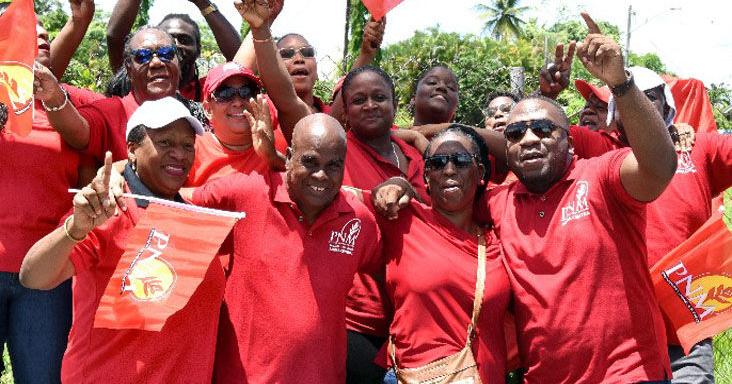
    During a Christmas event at Balisier House in Port of Spain, Beckles emphasized Trinidad and Tobago’s historical tradition of maintaining an independent foreign policy while simultaneously valuing regional cooperation. ‘CARICOM has always supported us,’ Beckles stated, surrounded by children at the PNM’s holiday gathering. ‘At the end of the day, it is not just about narco trafficking. It is about everything – tourism, natural disasters, every single thing you think about.’

    Opposition Senator Dr. Amery Browne, former minister of foreign affairs, supported Beckles’ position with a striking allegation: ‘This is the first time this country has had a PM who is overtly against the Caribbean Community.’ He referenced Persad-Bissessar’s absence from recent CARICOM leadership meetings and her consistent criticism of the organization’s ‘zone of peace’ framework.

    The Prime Minister’s office defended its position through WhatsApp communications with Newsday, vehemently distancing Trinidad and Tobago from Venezuelan leadership. ‘CARICOM has aligned itself with the Maduro narco government headed by a dictator who has imprisoned or killed thousands of Venezuelans who oppose him,’ Persad-Bissessar stated. ‘TT wants no part of that alignment.’

    Beckles countered that Trinidad and Tobago’s sovereignty within international organizations like the United Nations remains crucial despite its size. ‘Yes, we are a small country but the sovereignty issue is very important. TT, Guyana, Antigua and Jamaica, at the end of the day at the UN, we all have a vote.’

    The Opposition Leader also addressed concerns about Trinidad and Tobago’s relationship with the United States, acknowledging the nation’s significant trade partnership while maintaining that differing viewpoints at international forums don’t diminish mutual respect between the two democracies.

    This developing situation represents one of the most significant public disagreements over foreign policy in recent Trinidad and Tobago history, with implications for both regional Caribbean unity and the nation’s international relationships.

  • Brilliantproposalby Irfaan

    Brilliantproposalby Irfaan

    A compelling endorsement has emerged from New York-based commentator Jay Rakhar, praising Guyanese President Dr. Irfaan Ali’s strategic decision to pursue enhanced cooperation with the United States amid escalating tensions with Venezuela. This development occurs against the backdrop of Venezuela’s renewed claims over the oil-rich Essequibo region, despite the 1899 Paris Arbitral Award that established Guyana’s legitimate sovereignty.

    The correspondence highlights Venezuela’s alleged role as a regional destabilizer, accusing the nation of being a primary exporter of illicit drugs and firearms not only to Trinidad and Tobago but also to the United States and neighboring Suriname. The author characterizes Venezuela under President Nicolás Maduro as ‘the bully of the Caribbean,’ referencing recent assertions that Trinidad and Tobago historically belonged to Venezuela—claims dismissed as baseless.

    A particularly provocative suggestion proposes the establishment of a US military base within the disputed Essequibo territory as a permanent solution to deter Venezuelan expansionism. The author argues that American military presence would serve as a protective frontier, ensuring Guyana’s security while providing psychological comfort to its citizens.

    The analysis further references Trinidad and Tobago’s existing security cooperation with the US, notably the installation of a radar system at Tobago airport that recently contributed to a significant drug bust worth $171 million in the Caroni Swamp. The author condemns any potential objections to such security measures as ‘outrageous and ludicrous,’ emphasizing their demonstrated effectiveness in combating narcotics trafficking.

    The overarching argument posits that strategic alignment with the United States represents a prudent geopolitical choice compared to enduring Venezuelan aggression, framing the proposed partnership as a necessary safeguard for regional stability.

  • Illegal ganja trade more profitable?

    Illegal ganja trade more profitable?

    The longstanding controversy surrounding cannabis legislation in Trinidad and Tobago has resurfaced with renewed intensity, highlighting decades of regulatory ambiguity and its profound societal consequences. Historical records indicate that marijuana was legally sold throughout the Caribbean nation until the early 1940s, primarily within rural communities, before prohibition measures took effect—a move some analysts attribute to pressure from the rum industry.

    Despite widespread global liberalization trends—including 39 U.S. states legalizing medicinal or recreational cannabis—Trinidad and Tobago maintains strict prohibitions. This sustained illegality has fostered a substantial underground market, with significant quantities smuggled from Venezuela. The persistent black market trade has been linked to escalating violent crimes and substantial capital flight, draining valuable U.S. dollar reserves from the national economy.

    In a partial response to these challenges, the Keith Rowley administration enacted legislation permitting citizens to cultivate up to four cannabis plants. However, the policy lacked critical implementation details regarding sourcing approved seeds or designated cultivation areas, rendering the reform largely ineffective.

    The political landscape further complicated when Prime Minister Rowley transitioned power to Stuart Young, whose subsequent election call resulted in defeat. Opposition leader Kamla Persad-Bissessar’s United National Congress capitalized on the issue, promising full legalization through prominent newspaper advertisements during their campaign.

    Current discourse centers on whether maintaining prohibition inadvertently benefits criminal enterprises through sustained profitability of illegal trade, while society bears the costs of associated violence and economic damage.

  • Gaston Browne: Caricom major trade partner with Trinidad and Tobago

    Gaston Browne: Caricom major trade partner with Trinidad and Tobago

    A significant diplomatic dispute has emerged within the Caribbean Community (CARICOM) following contentious remarks by Trinidad and Tobago’s Prime Minister Kamla Persad-Bissessar, who characterized the regional bloc as “unreliable,” “dysfunctional,” and “self-destructive.” The statements have prompted a robust rebuttal from Antigua and Barbuda Prime Minister Gaston Browne, who presented compelling economic data challenging these assertions.

    Prime Minister Browne revealed that Trinidad and Tobago generated over US$1.1 billion in foreign exchange from trade with CARICOM nations during 2024 alone. This substantial revenue stream comprised approximately US$784.7 million in domestic exports and US$501.3 million in re-exports to fellow member states. The figures position CARICOM as Trinidad’s second-largest export market, surpassed only by the United States.

    The economic relationship has proven remarkably advantageous for Trinidad, which has consistently maintained the largest merchandise trade surplus within CARICOM since the organization’s establishment in 1973. This unique position makes Trinidad the only member state to sustain a net positive trade balance with the community throughout its five-decade history.

    Browne emphasized that this favorable economic outcome has been facilitated by the Common External Tariff (CET) framework, under which CARICOM states apply protective tariffs on extra-regional imports to support Trinidad’s manufacturing sector. In 2024, member nations collectively sacrificed approximately US$142.7 million in potential customs revenue by sourcing goods from Trinidad under CET protection—an economic concession borne by Caribbean consumers in the spirit of regional solidarity.

    The 2024 Review of the Economy for Trinidad confirmed these patterns, reporting a trade surplus of $4,915 million with CARICOM countries during the nine-month period ending June 2024, with exports totaling $5,947.5 million from October 2023 through June 2024.

    Beyond economic cooperation, Browne highlighted CARICOM’s crucial role in addressing regional security challenges. He noted that Trinidad faces some of the Caribbean’s highest levels of organized crime, and regional cooperation through CARICOM security mechanisms, intelligence sharing, and coordinated law-enforcement initiatives has been essential to the response. Antigua and Barbuda, like other member states, has consistently supported these collective security efforts.

    The Antiguan leader framed CARICOM as a partnership rooted in shared history, bloodlines, struggle for independence, and a collective determination that small states are stronger when they act together. While acknowledging each nation’s sovereign right to conduct bilateral relations, Browne asserted that no member should question another’s legitimate engagement with international partners on matters affecting its citizens.

    Browne categorically rejected Persad-Bissessar’s claim that Antiguan leaders had “bad-mouthed” the United States, stating that no evidence exists to support this assertion. He highlighted Antigua and Barbuda’s record of close collaboration with the US, including constructive engagement on security matters, immigration, and consistent cooperation in multilateral forums such as the UN and Organization of American States.

    The Prime Minister concluded that respectful dialogue with international partners does not constitute subservience, nor does regional consultation represent disloyalty. This balanced approach, he argued, has served the region well for decades and should not be undermined by divisive rhetoric when facts clearly demonstrate the value of interdependence.

  • OECS defends CBI programmes in Eastern Caribbean

    OECS defends CBI programmes in Eastern Caribbean

    CASTRIES, St. Lucia – The Organisation of Eastern Caribbean States (OECS) Commission has confirmed its member nations are engaged in substantive technical discussions with United States authorities regarding their Citizenship by Investment (CBI) programs. These dialogues follow recent tensions sparked by US immigration policy announcements affecting two Caribbean nations.

    The OECS Commission emphasized that negotiations have been characterized by frankness and solution-oriented approaches. Member states with active CBI programs – Antigua and Barbuda, Dominica, Grenada, St. Lucia, and St. Kitts and Nevis – have demonstrated significant progress in enhancing due diligence protocols, improving information sharing mechanisms, and establishing a regional independent regulatory authority to ensure compliance with international standards.

    This development comes after the Trump administration initially announced partial travel restrictions targeting Antigua and Barbuda and Dominica effective January 2026, citing security concerns related to their citizenship programs. The policy has since been suspended following diplomatic engagement.

    The Commission highlighted the critical importance of CBI programs for small island developing states, describing them as essential, non-debt-creating instruments that finance resilience-building, disaster adaptation, and sustainable development initiatives. These programs have funded vital public investments in infrastructure, healthcare, education, and renewable energy projects.

    While acknowledging the sovereign right of nations to determine immigration policies, the OECS urged consideration of the unique vulnerabilities and limited economic options available to Caribbean states. The organization emphasized the deep economic interdependence between the Eastern Caribbean and the United States, noting longstanding trade, investment, and tourism relationships.

    The Commission expressed full solidarity with affected member states while highlighting the constructive role Caribbean diaspora communities have played in American society, particularly in healthcare, education, entrepreneurship, and public service sectors.