分类: politics

  • UN Security Council demands Iran halt attacks on Gulf states

    UN Security Council demands Iran halt attacks on Gulf states

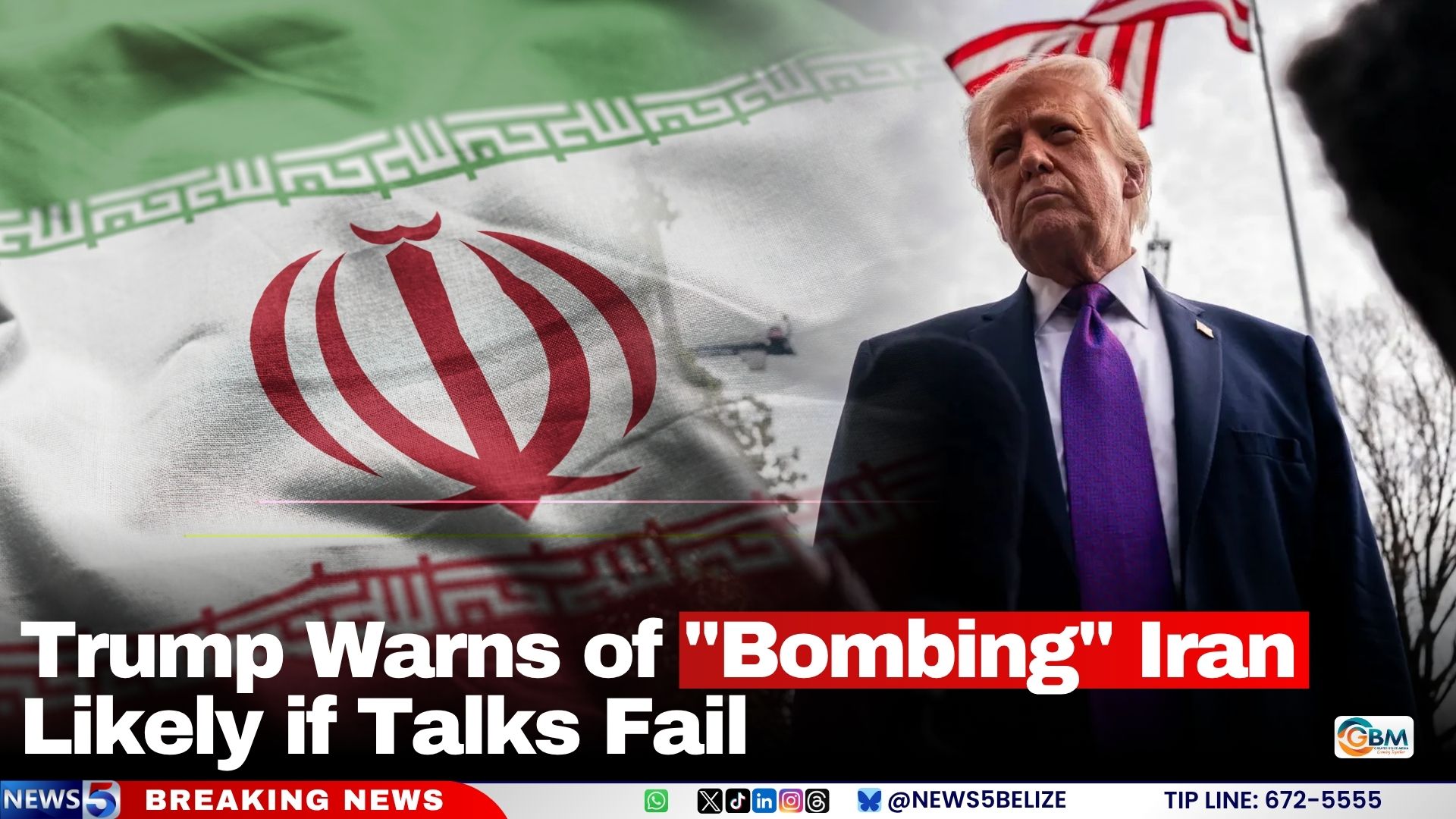
    The United Nations Security Council has issued a formal resolution demanding Iran cease all military operations against Gulf Cooperation Council states, citing violations of international law and threats to global stability. During Wednesday’s session at UN headquarters in New York, the measure received overwhelming support with 13 member nations voting in favor and two abstaining.

    The resolution explicitly calls for the immediate termination of Iranian attacks targeting Bahrain, Kuwait, Oman, Qatar, Saudi Arabia, the United Arab Emirates, and Jordan. Additionally, the Council condemned Tehran’s actions and threats toward international maritime navigation, particularly through the strategic Strait of Hormuz—a vital corridor for global energy transportation.

    According to diplomatic sources, Iran’s aggressive maneuvers represent retaliatory measures for recent joint American-Israeli operations that resulted in the death of Ayatollah Ali Khamenei, Iran’s supreme leader. In response to these developments, Iranian forces have targeted commercial vessels transiting the Hormuz Strait, attempting to disrupt international energy markets and inflict economic pressure on Western nations.

    The resolution emphasizes that such activities constitute a severe threat to international peace and security, urging all parties to exercise restraint and pursue diplomatic solutions. Security Council members expressed particular concern about potential escalation patterns that could destabilize regional security architectures and impact global economic stability through disrupted energy supplies.

  • Former PM calls for probe into politicians’ sharp rise in wealth

    Former PM calls for probe into politicians’ sharp rise in wealth

    In a striking address to the House of Assembly, former Prime Minister Dr. Hubert Minnis has issued a forceful challenge regarding the substantial and unexplained accumulation of wealth among elected officials during their terms. Speaking shortly after the annual financial disclosure deadline, Dr. Minnis highlighted a concerning pattern where individuals enter political life with modest assets, only to amass millions within a few years, describing such cases as deeply strange.

    Using his own financial declaration as a benchmark for transparency, Dr. Minnis revealed his reported assets increased to over $14 million. He argued that in a nation governed by the rule of law, such a significant jump should automatically trigger an official inquiry into the sources of that wealth—a standard he insists must be applied universally, regardless of political stature. His self-referential example was presented to preempt accusations of partisan targeting and to underscore a systemic failure in enforcement.

    The core of his critique centers on the nation’s notoriously lax financial disclosure system. While public officials are legally mandated to submit annual declarations of assets and liabilities, there exists no robust mechanism to verify the accuracy of these claims, creating an environment ripe for potential abuse.

    In related developments, several government ministers, including National Security Minister Wayne Munroe and Environment Minister Zane Lightbourne, confirmed they had requested deadline extensions for their filings. Conversely, a number of high-profile figures, such as Deputy Prime Minister Chester Cooper and multiple cabinet ministers, asserted they met the original deadline. A Free National Movement official claimed full compliance from all party members, though numerous elected officials remained unresponsive to inquiries about their disclosure status nearly four days after being contacted.

  • White House area shut down after van breaches security barricade

    White House area shut down after van breaches security barricade

    WASHINGTON — A heightened security alert gripped the nation’s capital early Wednesday morning after a vehicle breached a protective barricade near the White House complex. The incident, occurring in the pre-dawn hours at Lafayette Square, prompted an immediate and large-scale response from federal and local law enforcement agencies.

    According to the United States Secret Service, the agency responsible for presidential security, personnel responded to a report of a suspicious vehicle. The driver was swiftly apprehended at the scene and taken into custody for interrogation. Official statements confirmed that no injuries were reported from the encounter.

    The security breach triggered extensive road closures throughout the downtown corridor during the morning rush hour, severely disrupting traffic and preventing government employees from accessing their offices. The area was flooded with dozens of emergency vehicles, their lights illuminating the cordoned-off streets as tourists and confused residents sought information on their mobile devices.

    This event unfolds against a backdrop of elevated security protocols in Washington D.C., measures that have been intensified due to ongoing international tensions involving the United States, Israel, and Iran. The swift containment of the situation demonstrated the reinforced security apparatus designed to protect the capital’s core institutions.

  • Trinidad says US providing names linked to illegal drug trade

    Trinidad says US providing names linked to illegal drug trade

    TRINIDAD AND TOBAGO – In a significant development for regional security cooperation, Trinidad’s Homeland Security Minister Roger Alexander has confirmed that the United States has furnished the Caribbean nation with a comprehensive list of individuals linked to narcotics trafficking, illegal firearms, and organized violence. The intelligence sharing occurs under the framework of the Americas Counter Cartel Coalition, a multilateral initiative spearheaded by former US President Donald Trump.

    Minister Alexander, while maintaining discretion regarding specific operational details for national security reasons, emphasized the profound strategic importance of this collaboration in an interview with the Express newspaper. He articulated that public commentary often overlooks the critical significance of Trinidad and Tobago’s status as a signatory to this coalition, which facilitates coordinated intelligence exchange, joint law enforcement actions, and combined military operations among member states.

    This coalition currently comprises 19 nations, with Trinidad and Tobago and Guyana standing as the sole Caribbean representatives amidst 17 Latin American members. Alexander expressed profound personal conviction regarding this partnership, stating the initiative’s unique character and its alignment with the current government’s strategic direction under Prime Minister Kamla Persad-Bissessar.

    The Minister highlighted the United States’ extensive global intelligence capabilities, noting that American authorities meticulously assess potential international partners based on reliability and trustworthiness in joint security endeavors. This foundation has led to a clear expression of US confidence in collaborating with the Trinidad and Tobago government.

    This enhanced cooperation unfolds against a backdrop of intensified US counter-narcotics operations in the region, including kinetic military strikes against suspected drug trafficking vessels since September 2025. These operations have reportedly resulted in over 100 casualties, including citizens from Trinidad and Tobago and St. Lucia.

    Minister Alexander defended the principled use of force within legal boundaries as essential for confronting severe criminality. He voiced strong support for aggressive measures against traffickers whose activities perpetuate violence and societal decay, particularly impacting youth development. With Trinidad and Tobago currently operating under a state of emergency, Alexander positioned the US alliance as a pivotal mechanism for confronting national security threats, predicting this partnership will forge a new chapter in the nation’s history.

  • Davis: Fake voter cards pose no systemic threat

    Davis: Fake voter cards pose no systemic threat

    Prime Minister Philip ‘Brave’ Davis has asserted that recent fraud cases involving Bahamian passports and voter identification documents do not represent a systemic threat to the nation’s credential integrity, despite multiple criminal proceedings involving forged official documents. This declaration comes during the ongoing rollout of new biometric voter cards designed to enhance election security.

    Recent court cases have highlighted several instances of document fraud, including an 18-year-old Haitian national remanded to prison for allegedly obtaining Bahamian passports and voter cards fraudulently. In separate cases, a woman of Haitian descent received bail for possessing a counterfeit passport, while another Haitian man was sentenced to two years imprisonment for fraudulently acquiring multiple Bahamian documents.

    While acknowledging the troubling nature of these incidents, Prime Minister Davis emphasized that the relatively limited number of cases doesn’t jeopardize the international credibility of Bahamian documents. ‘I don’t consider it an existential threat per se,’ Davis stated, ‘though any fraudulent government document potentially undermines system integrity. We’re addressing how our official instruments are being misused, and police are actively developing countermeasures.’

    The opposition Free National Movement, through Deputy Leader Shanendon Cartwright, has raised concerns about election technology and identification systems as the nation approaches voting periods. Cartwright emphasized that electoral integrity remains paramount for national development and democratic identity, calling for government attention to public concerns regarding voting safeguards.

    The Parliamentary Registration Department maintains that robust security measures protect the electoral process, despite opposition concerns that repeated fraud instances could erode public trust. Notably, Cartwright revealed he hasn’t yet applied for the new biometric card, preferring traditional paper documentation while clarifying his personal choice doesn’t indicate opposition to the biometric system.

    Government officials have consistently argued that laminated voter cards are obsolete and vulnerable to forgery, citing international observers who have identified weaknesses in registration and identity verification processes. Recent reforms aim to modernize voter registration while preserving manual voting and counting procedures to maintain electoral transparency.

  • Alex Browne Urges St. Philip’s North Residents to Prepare for March 16 By-Election

    Alex Browne Urges St. Philip’s North Residents to Prepare for March 16 By-Election

    With the critical St. Philip’s North by-election approaching on March 16, United Progressive Party (UPP) candidate Alex Browne is intensifying efforts to mobilize the electorate, emphasizing the necessity of voter readiness. In a recent appearance on Observer Radio’s ‘Connecting with Dave Lester Payne,’ Browne issued a clarion call to constituents, urging them to verify their voter identification documents well ahead of polling day to ensure seamless participation.

    Browne underscored that meticulous preparation is the cornerstone of effective civic engagement. ‘It is imperative that residents confirm the availability of their voter ID cards and come fully prepared to exercise their democratic right on March 16,’ he stated during the broadcast. He positioned robust voter turnout as a pivotal factor that will directly influence the future trajectory and representation of the constituency.

    The by-election, necessitated by the vacancy of the parliamentary seat, has catalyzed a direct contest between Browne, representing the ruling United Progressive Party, and his chief rival, Randy Baltimore of the Antigua and Barbuda Labour Party (ABLP). This electoral face-off is capturing significant public and political interest, with both major parties amplifying their campaign activities across the district in a final push to sway undecided voters.

    Browne concluded his remarks by reinforcing the profound significance of the ballot, encouraging every eligible voter to seize this opportunity to shape governance and ensure their voice is decisively heard in the halls of power.

  • US military kills six in strike on alleged drug boat

    US military kills six in strike on alleged drug boat

    In a significant escalation of its counter-narcotics operations, the United States military has confirmed conducting a lethal strike against an alleged drug-smuggling vessel in the Eastern Pacific Ocean, resulting in six fatalities. This latest operation, executed on Sunday, contributes to a mounting death toll that has reached at least 157 individuals since early September. The Trump administration has characterized this offensive as a targeted campaign against entities it labels ‘narcoterrorists’ operating on maritime routes.

    General Francis Donovan, commander of US Southern Command, publicly justified the action on social media platform X, accompanying his statement with a video depicting the destruction of a small boat. ‘Intelligence corroboration confirmed the vessel was transiting established narco-trafficking corridors in the Eastern Pacific and was actively engaged in illicit trafficking operations,’ Donovan stated. However, consistent with most of the over forty known strikes in the Eastern Pacific and Caribbean Sea, the military did not present concrete evidence that the vessel was transporting narcotics at the time of engagement.

    President Donald Trump has framed these actions within a broader context of an ‘armed conflict’ with Latin American cartels, asserting that such military escalation is imperative to curtail the influx of drugs into the United States. During a recent gathering with Latin American leaders on Saturday, Trump advocated for a unified military front against drug-trafficking cartels and transnational gangs, which he described as an ‘unacceptable threat’ to regional security. This diplomatic push was complemented by joint military operations between the US and Ecuador targeting organized crime factions.

    Despite the administration’s assertions, the campaign faces mounting scrutiny from critics who challenge both its legal foundations and operational efficacy. A primary point of contention is that fentanyl, responsible for a significant number of fatal overdoses in the US, is predominantly smuggled overland via Mexico, not by sea. Furthermore, the strategy ignited intense controversy following revelations that a secondary strike was conducted against survivors from the initial boat attack. While the administration and Republican lawmakers defend the legality and necessity of these actions, Democratic legislators and legal experts have condemned them, with some suggesting they could constitute murder or war crimes.

    In a surprising testament to the campaign’s perceived success, US Defense Secretary Pete Hegseth remarked on Thursday that the aggressive pursuit of alleged drug-running vessels has made finding viable targets increasingly difficult.

  • Lawyer Denies Reports of Arrest of Former Antigua and Barbuda Diplomat Alex Saab in Caracas

    Lawyer Denies Reports of Arrest of Former Antigua and Barbuda Diplomat Alex Saab in Caracas

    Conflicting reports emerged Wednesday regarding the alleged detention of Alex Saab, former Venezuelan diplomat and industry minister, along with prominent businessman Raúl Gorrín. Saab’s legal representative, Luigi Giuliano, explicitly denied arrest claims to Reuters, stating his client anticipated meeting with Acting President Delcy Rodríguez for clarification.

    Colombian media outlet Caracol initially reported that Venezuela’s intelligence agency (SEBIN) had detained both individuals. These claims gained partial credibility when an anonymous U.S. official confirmed the arrest to Reuters, suggesting the detentions related to money laundering charges and reflected growing law enforcement collaboration between Washington and Caracas.

    The developments occur against the backdrop of accelerated diplomatic normalization between the two nations following the Biden administration’s December 2023 prisoner exchange that secured Saab’s release after three years of U.S. imprisonment. This reconciliation continued despite recent tensions including the January 3rd bombings and kidnapping attempts targeting President Nicolás Maduro.

    Venezuelan authorities maintained official silence regarding the situation. National Assembly President Jorge Rodríguez claimed no knowledge of the matter, while Attorney General Tarek William Saab first denied reports before stating he lacked information about potential arrests.

    The absence of public statements from both Saab and Gorrín since Wednesday intensified speculation. Saab’s wife, Camilla Fabbri, who directs the government’s repatriation program, posted a social media message stating ‘the truth will prevail’ without directly addressing detention allegations.

    Saab, a Colombian-born businessman, rose to prominence as a key Maduro ally by orchestrating import channels despite U.S. sanctions. His 2020 arrest in Cape Verde and subsequent extradition to the U.S. sparked diplomatic confrontations, with Caracas arguing violation of his diplomatic immunity. Gorrín remains under U.S. sanctions for alleged corruption and money laundering through his ownership of La Vitalicia insurance and Globovisión television network.

  • Antigua and Barbuda PM Says Commonwealth Could Anchor Alliance of Middle Powers in Changing Global Order

    Antigua and Barbuda PM Says Commonwealth Could Anchor Alliance of Middle Powers in Changing Global Order

    Antigua and Barbuda’s Prime Minister Gaston Browne has positioned the Commonwealth as the potential cornerstone for a new coalition of ‘middle powers’ amid global geopolitical transformations. In a comprehensive editorial published by The Telegraph, Browne emphasized that recent international developments have highlighted the critical need for cooperation among nations that, while not superpowers, still possess significant influence in maintaining global stability.

    Browne referenced Canadian Prime Minister Mark Carney’s recent remarks about the evolving role of middle powers, suggesting that countries outside dominant geopolitical blocs must collaborate to safeguard their interests. ‘With the unfolding events in the Middle East, Canadian prime minister Mark Carney’s recent speech on middle powers takes on a new relevance,’ Browne asserted in his commentary.

    The Prime Minister warned against assuming the international system would revert to its previous structure, describing such thinking as ‘dangerously naïve.’ He stressed that the geopolitical order is undergoing permanent transformation, requiring nations to ensure they remain relevant in global decision-making processes rather than becoming marginalized.

    Browne identified the Commonwealth of Nations—a 56-member organization with shared historical ties and political traditions—as an existing framework ideally suited for enhanced cooperation among medium-sized economies. He highlighted the organization’s unique advantages stemming from longstanding cultural, institutional and political connections that could be leveraged into stronger economic and diplomatic partnerships.

    ‘What makes our Commonwealth relationships so valuable is that they are not caused by geography but made through choice and underpinned by the values we share,’ Browne wrote, emphasizing the voluntary nature of these associations.

    The Prime Minister cited the documented ‘Commonwealth Advantage’—a phenomenon where trade costs between member states are approximately 21% lower on average compared to trade with non-members, attributable to common histories and political systems. Browne proposed deepening cooperation through reduction of non-tariff trade barriers, alignment of regulatory standards, and modernization of customs systems to facilitate enhanced trade across the Commonwealth network.

    Beyond economic cooperation, Browne noted member states’ shared positions on contemporary global challenges including climate change adaptation, democratic enhancement, and upholding rules-based international systems. He particularly emphasized how small island states have benefited immensely from rules-based global systems that protect nations lacking the military or economic weight of larger powers.

    With Antigua and Barbuda preparing to assume the Commonwealth’s rotating Chair-in-Office following the upcoming Commonwealth Heads of Government Meeting (CHOGM) in St. John’s, Browne framed the gathering as a strategic opportunity to reconceptualize the organization’s role in international cooperation. He concluded that while such an alliance of compatible middle and small nations might otherwise need to be created anew, the Commonwealth already provides a ready-made platform for collective influence amplification in a changing world order.

  • FM Greene Engages Cyprus on Blue Economy Cooperation and Multilateral Priorities

    FM Greene Engages Cyprus on Blue Economy Cooperation and Multilateral Priorities

    In a significant diplomatic engagement on March 10th, Antigua and Barbuda’s Foreign Minister E.P. Chet Greene convened high-level talks with Cypriot Special Envoy Andreas Kakouris, marking a substantial step in strengthening bilateral relations between the two Commonwealth nations. The meeting underscored their shared dedication to multilateralism and global governance principles.

    Minister Greene emphasized the historical ties between the Mediterranean island nation and the Caribbean state, highlighting their mutual commitment to international legal frameworks and sustainable development goals. The dialogue focused on enhancing cooperation within international organizations, particularly the Commonwealth and United Nations systems.

    A central point of discussion involved Minister Greene’s formal endorsement of Ambassador Kakouris’s candidacy for the Presidency of the 81st Session of the United Nations General Assembly (2026-2027 term). Minister Greene stressed the critical importance of effective UN leadership during current global challenges, noting that strong multilateral stewardship is essential for addressing the specific concerns of small island and vulnerable states, particularly regarding climate action and sustainable economic development.

    The talks also explored potential collaboration in maritime affairs and blue economy initiatives, with Minister Greene acknowledging Cyprus’s considerable expertise in maritime operations and expressing interest in knowledge exchange programs involving Cypriot institutions and technical specialists.

    Both diplomatic representatives expressed strong optimism about future cooperation, reaffirming their commitment to deepening bilateral ties and enhancing collaborative efforts in international forums. The Antiguan delegation included High Commissioner to London Karen-Mae Hill and Minister Counsellor Chantal Phillip, demonstrating the importance placed on this diplomatic engagement.