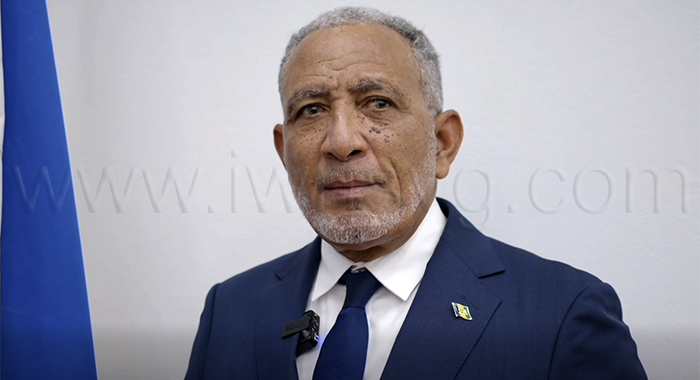
Prime Minister Godwin Friday of Saint Vincent and the Grenadines has confirmed that controversial proposed amendments to the national constitution and electoral law will not face debate during Tuesday’s scheduled sitting of the House of Assembly, marking his first public response to opposition warnings about the proposed changes.
The amendments, formally tabled as the Constitution of Saint Vincent and the Grenadines (Amendment) Bill 2026 and the Representation of the People (Amendment) Bill 2026, were placed on the Order Paper one week prior as required by parliamentary procedure. In an interview with the state-run Agency for Public Information (API), Friday, who also serves as Minister of Legal Affairs, explained that while all legislation listed for the sitting holds importance, not all require immediate action.
Opposition Leader Ralph Gonsalves, head of the Unity Labour Party (ULP), had previously raised public alarm over the bills, claiming the ruling New Democratic Party (NDP) intended to rush all three readings of the amendments through during Tuesday’s session. Opposition figures have further alleged the changes are being pursued as a political safeguard amid two ongoing election petitions set to be heard by the High Court this July. Those petitions were filed by ULP members Carlos Williams and Luke Browne, who are challenging the eligibility of Friday and Foreign Affairs Minister Dwight Fitzgerald Bramble to contest the November 2025 general election. The challengers argue that both lawmakers qualify as dual citizens of Canada, acquired through voluntary action, which violates existing electoral eligibility rules. Friday has held the Northern Grenadines parliamentary seat since 2001, while Bramble has represented East Kingstown since 2020; both held Canadian citizenship before their first elections, and the pair have defeated their ULP challengers in multiple previous contests.
Friday acknowledged that the amendments, which are designed to clarify the legal definition of a “foreign power or state”, have sparked widespread public attention. While the bills will be formally introduced during Tuesday’s sitting, they will instead be referred to a parliamentary select committee to allow for extended public input, a process Friday says will ensure inclusive, informed decision-making. “These are matters that affect people’s rights and impact broad swathes of the population,” he noted. “We will not rush this. We will bring in broad public involvement to make a decision at the appropriate time. The public interest demands a thorough, collaborative process, and we are committed to delivering that.” Unnamed government sources have also confirmed to iWitness News that no vote on the amendments will be held until the ongoing election petitions are resolved by the courts.
Instead of advancing the controversial amendments, Tuesday’s sitting will prioritize legislation directly impacting the daily lives of ordinary Vincentians, particularly low-paid public sector workers. Two key bills on the agenda address gaps in the national pension system: the Daily Paid and Minor Salaried Officers (Compassionate Gratuity) Bill 2026, which Friday will table, and the Pensions (Amendment) Bill 2026, set to be introduced by Deputy Prime Minister and Public Service Minister St. Clair Leacock. Currently, public sector workers who retire at age 60 are forced to wait until age 65 to access their pensions, with support previously handled only on an ad-hoc basis by the Cabinet. Friday explained the new legislation will formalize a permanent legal framework to remedy this gap, providing critical relief to some of the lowest earners in public service.
Two smaller pieces of legislation are also scheduled for full passage during Tuesday’s sitting. The Illiterates Protection (Amendment) Bill 2026 expands the pool of people eligible to witness signatures for voters who cannot read or write, a change designed to improve access to electoral processes for marginalized communities. The second bill, the Advance Passenger Information and Passenger Name Record Bill 2026, fulfills Saint Vincent and the Grenadines’ obligations under CARICOM regional policy.
In addition to legislative business, Tuesday’s agenda includes a motion sponsored by government senator Chelsea Alexander to advance the establishment of a national development bank, a key campaign promise from the NDP ahead of its landslide 14-1 victory over the ULP in the November 2025 general election. Friday, who also holds the finance portfolio, expressed strong enthusiasm for the project, noting it will fill a critical gap in access to capital for underserved groups across the country. “Regular commercial banks often turn away small borrowers with modest projects,” he explained. “This development bank will serve ordinary people: small business owners looking to expand their shops, fishers needing to buy new engines, food processors looking to scale up their labeling and bottling operations. We will debate this motion today, and we plan to introduce formal founding legislation later this year to get this institution up and running.”