分类: politics

  • Schorsing SBB-directeur leidt tot juridische strijd; Ravenberg gaat dinsdag toch aan het werk

    Schorsing SBB-directeur leidt tot juridische strijd; Ravenberg gaat dinsdag toch aan het werk

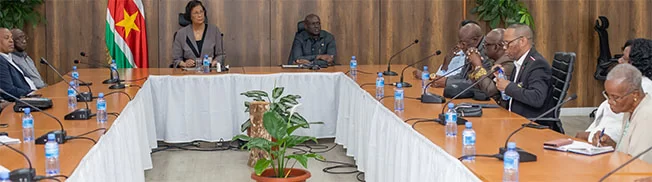
    A significant institutional conflict has emerged between Suriname’s Foundation for Forest Management and Supervision (SBB) and the Ministry of Land Policy and Forest Management (GBB) following the suspension of Director General Ruben Ravenberg. Official documents confirm the suspension takes effect Tuesday, March 10th, prompting Ravenberg to announce both his legal challenge and intention to report to work regardless.

    The ministry, through correspondence to attorney Murwin Dubois, maintains Minister Stanley Soeropawiro’s decision stands firm. Officials assert the suspension was implemented in full compliance with SBB’s statutory provisions and existing legal regulations. The ministry further stated that arguments presented by Ravenberg’s legal counsel provided insufficient grounds for reconsideration, leaving the suspension unequivocally in force.

    Legal representatives for Ravenberg have formally contested the suspension’s validity. Dubois & Partners argue the action fails to meet legal requirements under civil service legislation. According to their legal analysis, suspension of a government official only becomes permissible during criminal investigations or when dismissal for dereliction of duty or unreliability is under consideration. The firm emphasizes that the ministry’s own communication explicitly states no substantive judgment was made regarding Ravenberg’s performance, thereby eliminating legal justification for suspension.

    The SBB Staff Union has intervened to call for calm among personnel. In internal communications, the union clarified it had no official knowledge of circulating letters from the timber sector expressing concerns about the director’s position. The organization reported observing no exceptional unrest or consternation among staff despite external suggestions otherwise. Union leadership urged members to maintain composure and refrain from premature conclusions while monitoring developments closely.

    With the suspension deadline approaching, tensions threaten to escalate into physical confrontation at forestry institution facilities. Ravenberg’s declared intention to physically resist the suspension while the ministry maintains its legal validity sets the stage for potential institutional disruption. This developing situation now appears destined for judicial resolution, with potential implications for internal organizational dynamics and Suriname’s forest management governance.

  • Politic : PM in Chile for the inauguration of President José Antonio Kast

    Politic : PM in Chile for the inauguration of President José Antonio Kast

    In a significant diplomatic move, Haitian Prime Minister Alix Didier Fils-Aimé is leading a high-level delegation to Santiago, Chile, to attend the March 11, 2026 inauguration ceremony of President José Antonio Kast, who was elected on December 4, 2025. The Haitian contingent includes Raina Forbin, the newly appointed Minister of Foreign Affairs, along with her Special Advisor Guerly Leriche.

    This strategic participation underscores Haiti’s deliberate efforts to reinforce diplomatic relationships throughout Latin America. The Prime Minister’s presence at this ceremonial event signals Haiti’s commitment to nurturing international partnerships grounded in mutual respect and shared developmental objectives. The engagement represents more than mere protocol—it constitutes a deliberate foreign policy initiative aimed at expanding Haiti’s diplomatic footprint within the region.

    The delegation’s agenda focuses on strengthening the historical bonds between the Haitian and Chilean populations while exploring avenues for enhanced bilateral cooperation across multiple strategic sectors. This diplomatic mission aligns with the Haitian government’s broader foreign policy vision of establishing constructive partnerships that deliver tangible benefits for national development and regional stability.

    The Prime Minister’s office confirmed that the delegation will conclude its diplomatic visit and return to Haiti on March 13, following substantive discussions with Chilean counterparts aimed at fostering closer intergovernmental collaboration.

  • Nieuwe directeur MI-GLIS, Belfor-Amoida legt nadruk op betrouwbare grondinformatie

    Nieuwe directeur MI-GLIS, Belfor-Amoida legt nadruk op betrouwbare grondinformatie

    In a formal ceremony at the Presidential Palace on Monday, Nita Belfor-Amoida was sworn in as the new Director of Suriname’s Management Institute for Land Registration and Land Information System (MI-GLIS). The inauguration was conducted by President Jennifer Simons and witnessed by Vice President Gregory Rusland, signaling the government’s heightened attention to land management reforms.

    President Simons emphasized the institution’s critical role in Suriname’s development framework, stating that MI-GLIS serves as the foundational pillar for recording and administering all real estate data nationwide. The institute bears legal responsibility for documenting and verifying information concerning the legal status of land and properties throughout the country.

    The head of state articulated that transparent and reliable land information constitutes an essential requirement for both government operations and citizen rights. ‘Clarity regarding property ownership between citizens and the state forms an indispensable component of national development,’ Simons asserted. She noted that authenticated land data proves vital for housing initiatives, agricultural programs, and resolving complex inheritance and property rights disputes.

    Simons further highlighted that land ownership conflicts have historically generated significant consequences for Surinamese families, making MI-GLIS’s accurate, efficient, and integrity-driven performance a governmental priority. She characterized land as both a fundamental factor of production and a prerequisite for national stability and development.

    The newly appointed director acknowledged her appointment represents a career milestone accompanied by substantial challenges. Belfor-Amoida expressed confidence that existing institutional obstacles could be systematically addressed through collaborative effort. ‘We must function as a unified team regardless of position—together we are strong,’ she declared in her inaugural address.

    Belfor-Amoida referenced her prior experience as a parliamentary faction expert, which she stated provided extensive training in legislative analysis. She committed to upholding legal compliance and regulatory adherence as guiding principles throughout her leadership tenure.

  • PM: No plans to end CIP

    PM: No plans to end CIP

    Saint Lucia’s Prime Minister Philip J. Pierre has firmly declared that his administration will not terminate the nation’s Citizenship by Investment Program (CIP) despite the United Kingdom’s recent revocation of visa-free access for Saint Lucian passport holders. The announcement came during a Monday address responding to Britain’s immigration policy change.

    The UK Home Office’s Explanatory Memorandum to the Statement of Changes in Immigration Rules (HC 1691) categorizes Citizenship by Investment programs as ‘inherently high-risk’ in section 5.24. While acknowledging Saint Lucia’s efforts to mitigate risks over the past year, the document maintains that the UK ‘continues to experience unsustainable risks’ associated with these programs.

    According to the memorandum, the expansion of CIP applications has coincided with increased instances of individuals using Saint Lucian passports to enter Britain illegally, either to seek asylum or work without authorization. However, UK authorities have not provided specific statistical evidence to substantiate these claims.

    Prime Pierre articulated a stance of national sovereignty, emphasizing that just as Britain maintains the right to determine its immigration policies, Saint Lucia equally retains the authority to implement economic development strategies that benefit its citizens. ‘I will tell you that Saint Lucia has no intention of stopping the CIP programme. We will do all we can. I want to be clear. We will do all we can to strengthen the programme,’ the Prime Minister asserted.

    Official correspondence from the British High Commission identified rising asylum claims by Saint Lucian nationals as the primary concern behind the visa policy alteration. Pierre utilized this platform to reiterate his appeal to citizens traveling internationally to strictly adhere to visa conditions and immigration regulations of host countries.

    ‘Do not overstay your time when you get to the U.K. or the U.S. That is the main reason, as written in the letter,’ Pierre cautioned, highlighting that compliance with visa durations represents an area within citizens’ control. This policy shift occurs against the backdrop of Britain’s broader initiative to tighten immigration controls and reduce net migration figures.

  • The ethical imperative of health in Cuba in the face of the energy siege

    The ethical imperative of health in Cuba in the face of the energy siege

    In a stark condemnation of United States foreign policy, Cuba’s Minister of Public Health Dr. José Angel Portal Miranda has detailed how escalating economic sanctions have evolved into what he characterizes as a systematic ‘energy suffocation’ campaign against the island nation. The minister asserts that what began as a six-decade economic blockade has now transformed into a qualitatively more aggressive phase designed to cripple basic human security.

    The policy manifestations include Cuba’s controversial designation as a state sponsor of terrorism, combined with targeted interference in fuel procurement through ship interceptions, contract persecutions, and sanction threats against shipping companies. These measures, according to Minister Miranda, have created a multi-layered siege surgically engineered to provoke shortages that reverse social development and degrade quality of life for Cuban citizens.

    Nowhere are these consequences more evident than in Cuba’s healthcare system, where energy instability directly threatens medical outcomes. Current statistics reveal 96,387 patients awaiting surgery—including 11,193 children—with numbers climbing as non-urgent procedures are deferred to prioritize life-saving operations. The maternal and child care program struggles to provide essential ultrasounds for 32,000 pregnant women, while fuel shortages have delayed vaccinations for over 30,000 children despite vaccine availability.

    Critical treatments face similar challenges: 16,000 radiotherapy patients and 2,888 hemodialysis recipients require energy stability that remains increasingly difficult to guarantee. Rather than collapsing under these pressures, however, Cuba’s healthcare system has responded with strategic reorganization emphasizing resilience and optimization. Primary care capabilities have been strengthened through enhanced telemedicine services and reinforced community health programs.

    Minister Miranda credits this adaptability to the extraordinary commitment of medical professionals who persevere despite sharing the same electricity shortages and supply constraints as the population they serve. He particularly highlighted the ingenuity of neonatology specialists in provinces where 85% live outside their work municipalities, yet still ensure newborn care continues despite transportation crises.

    The minister expressed gratitude for international solidarity, specifically acknowledging Mexico’s support, while emphasizing that his appeal to the global community is fundamentally humanitarian rather than ideological. He maintains that public health constitutes a fundamental human right that should remain immune from political coercion and energy weaponization.

    As Cuba continues implementing protective measures for its vulnerable populations, the government urges international recognition of what it describes as a ‘criminal siege’ that ultimately threatens human lives rather than political structures.

  • China: Diplomatieke samenwerking en vrede als antwoord op wereldwijde uitdagingen

    China: Diplomatieke samenwerking en vrede als antwoord op wereldwijde uitdagingen

    Chinese Foreign Minister Wang Yi articulated China’s foreign policy vision during a press conference on March 8, 2026, emphasizing the strengthening strategic partnership with Russia as a stabilizing force in global affairs. Speaking on the sidelines of the Fourth Session of the 14th National People’s Congress, Wang Yi, who also serves as a member of the Political Bureau of the CPC Central Committee, provided comprehensive insights into China’s diplomatic achievements and future directions.

    Against the backdrop of a rapidly evolving international landscape, Wang Yi highlighted the fundamental principles guiding China-Russia relations: mutual respect, equality, and multilateral cooperation. He characterized the bilateral relationship as a model for a new type of international relations, founded on non-confrontation and shared commitment to upholding international law and order.

    The Foreign Minister addressed multiple global hotspots, particularly calling for immediate ceasefire and political dialogue in the Middle East. He reiterated China’s stance on respecting national sovereignty and preventing further escalation of conflicts, while advocating for multilateral approaches to foster sustainable peace and stability in the region.

    Looking ahead to 2026, Wang Yi identified the upcoming APEC summit in Shenzhen as a priority platform for advancing China’s vision of an integrated Asia-Pacific community. The summit aims to develop concrete action plans emphasizing openness, innovation, and sustainable development.

    Regarding China-U.S. relations, Wang Yi emphasized the necessity of mutual respect and cooperation to reduce tensions and achieve sustainable progress. He also discussed China’s commitment to maintaining positive relations with neighboring countries, protecting Chinese citizens and businesses abroad, and supporting the Global South’s growing role in reshaping global governance.

    The Foreign Minister addressed relations with Europe, Japan, ASEAN nations, and India, while reaffirming China’s unwavering position on Taiwan. Wang Yi concluded by emphasizing China’s vision of building a community with a shared future for humanity, focused on peace, justice, and cooperation—a concept he noted is gaining increasing global recognition and will guide China’s diplomatic efforts throughout 2026 and beyond.

  • ABLP Announces Town Hall Meeting for St. Philip’s North By-Election

    ABLP Announces Town Hall Meeting for St. Philip’s North By-Election

    With the March 16 by-election drawing near, the political landscape in Antigua and Barbuda is heating up as the Antigua and Barbuda Labour Party (ABLP) escalates its campaign efforts. The party has organized a pivotal town hall meeting in the St. Philip’s North constituency, a strategic move designed to foster direct voter engagement.

    The event will be headlined by ABLP candidate Randy Baltimore, who will be joined by key members of the party’s campaign team. This forum is structured as an open dialogue, providing a platform for constituents to voice their concerns and inquire about local development agendas. The discussion is anticipated to cover a spectrum of issues, from community-specific challenges to broader developmental priorities for the constituency.

    Party organizers emphasize that this initiative is a core component of their democratic outreach, aiming to bridge the gap between the electorate and their representatives. The town hall is positioned not merely as a campaign rally but as a genuine opportunity for residents to shape the political conversation and hold the candidate accountable.

    This gathering is part of a wider surge in political activities, with various parties ramping up their presence through public meetings, community outreach, and targeted events. The by-election campaign is characterized by a concerted effort from all sides to connect with voters on a personal level, underscoring the high stakes of the upcoming poll.

  • Iranian assembly selects son of slain cleric as new supreme leader as oil prices spike in US

    Iranian assembly selects son of slain cleric as new supreme leader as oil prices spike in US

    Iran’s Assembly of Experts has formally appointed Mojtaba Khamenei as the nation’s new Supreme Leader, following the death of his father, Ayatollah Ali Khamenei, during combined U.S.-Israeli military strikes on Tehran on February 28. The decisive appointment solidifies hardline control over Iran’s political and security apparatus during escalating Middle Eastern tensions.

    The 88-member clerical body convened under extraordinary security measures to elect Mojtaba Khamenei, who had long been considered the foremost candidate. State television announced his designation as the “third Leader of the sacred system of the Islamic Republic” shortly after midnight local time. Security chief Ali Larijani confirmed the transition of power.

    Mojtaba Khamenei assumes ultimate authority over all state matters, with Iran’s armed forces and the Islamic Revolutionary Guard Corps promptly pledging allegiance to the new leader. The IRGC issued statements affirming absolute readiness to execute his directives.

    The succession occurs amid intensified hostilities between Iran and Western powers. U.S. President Donald Trump previously asserted that Washington should influence the selection process, warning that any leader lacking American approval “won’t last long.” Israel had similarly threatened preemptive actions against whoever assumed leadership.

    The conflict has exacted significant human costs, with the U.S. military reporting a seventh service member fatality from Iranian retaliatory strikes. Meanwhile, Tehran residents describe environmental catastrophes including thick black smoke and acidic rainfall following attacks on oil infrastructure, creating potentially hazardous air quality.

    Global energy markets have responded dramatically to the instability. Oil prices surged approximately 8% in a single trading session, reaching $119.50 per barrel—the largest dollar-value increase recorded. This approaches historical peaks last witnessed in 2008, when prices exceeded $147 per barrel.

    President Trump declined to directly address the leadership appointment when questioned, stating only that conflict resolution would require mutual agreement with Israeli Prime Minister Benjamin Netanyahu.

  • Liquor Sales Banned in St. Philip’s North on By-Election Day

    Liquor Sales Banned in St. Philip’s North on By-Election Day

    Authorities in St. Philip’s North have implemented a comprehensive ban on alcohol sales during the upcoming by-election, invoking legal statutes to ensure electoral integrity. The electoral commission has activated Section 27 of the Representation of the People Act (Cap. 379), prohibiting all commercial distribution of intoxicating liquors within the constituency while polling stations remain operational.

    The regulatory measure extends to all establishments holding valid licenses under the Licensing (Intoxicating Liquor) Act, effectively suspending alcohol-related commerce during voting hours. This temporary prohibition aims to maintain public order and prevent potential influences that might compromise the democratic process.

    Non-compliance carries severe penalties, with offenders facing summary convictions including fines reaching $3,000 or incarceration for up to twelve months. The strict enforcement mechanism underscores the government’s commitment to upholding electoral laws without exception.

    This alcohol sales restriction forms part of broader preparations for the March 16 by-election, where constituents will determine their new parliamentary representative. The commission emphasizes that such measures are standard procedure for ensuring free and fair elections, though specific implementation timing varies by jurisdiction and electoral circumstances.

  • UPP Candidate Alex Browne Steps Up Campaign in St. Philip’s North Ahead of March 16 By-Election

    UPP Candidate Alex Browne Steps Up Campaign in St. Philip’s North Ahead of March 16 By-Election

    With the March 16 by-election rapidly approaching, United Progressive Party candidate Alex Browne has significantly amplified his campaign operations throughout the St. Philip’s North constituency. The opposition candidate has embarked on an intensive grassroots strategy involving direct community engagement, organized political gatherings, and public demonstrations of support.

    Browne’s campaign trail featured systematic door-to-door canvassing across key residential areas including Glanvilles, Seatons, and Willikies. The political mobilization reached its peak with a Thursday evening assembly at Glanvilles Playing Field, where supporters convened to strategize voter outreach initiatives. The week’s activities concluded with a prominent motorcade on Sunday, traversing from Sir Vivian Richards Stadium through various communities before culminating in Willikies.

    The UPP candidate has anchored his campaign platform on a comprehensive development strategy termed ‘blueprint for a stronger St. Philip’s North,’ addressing pressing social and community concerns. In conjunction with International Women’s Day observances, Browne emphasized his commitment to addressing gender-specific challenges, stating: ‘We celebrate the strength of the mothers, entrepreneurs, caregivers, and community builders who hold St. Philip’s North together every day. We also confront the challenges women face in our community with a commitment to access, action, and progress.’

    Meanwhile, the Antigua and Barbuda Labour Party has deployed its own campaign machinery, with candidate Randy Baltimore conducting parallel outreach efforts across the constituency. The by-election, triggered by the seat’s vacancy, will determine parliamentary representation for St. Philip’s North, with both major parties intensifying their ground operations to secure voter allegiance in this eastern Antigua constituency.