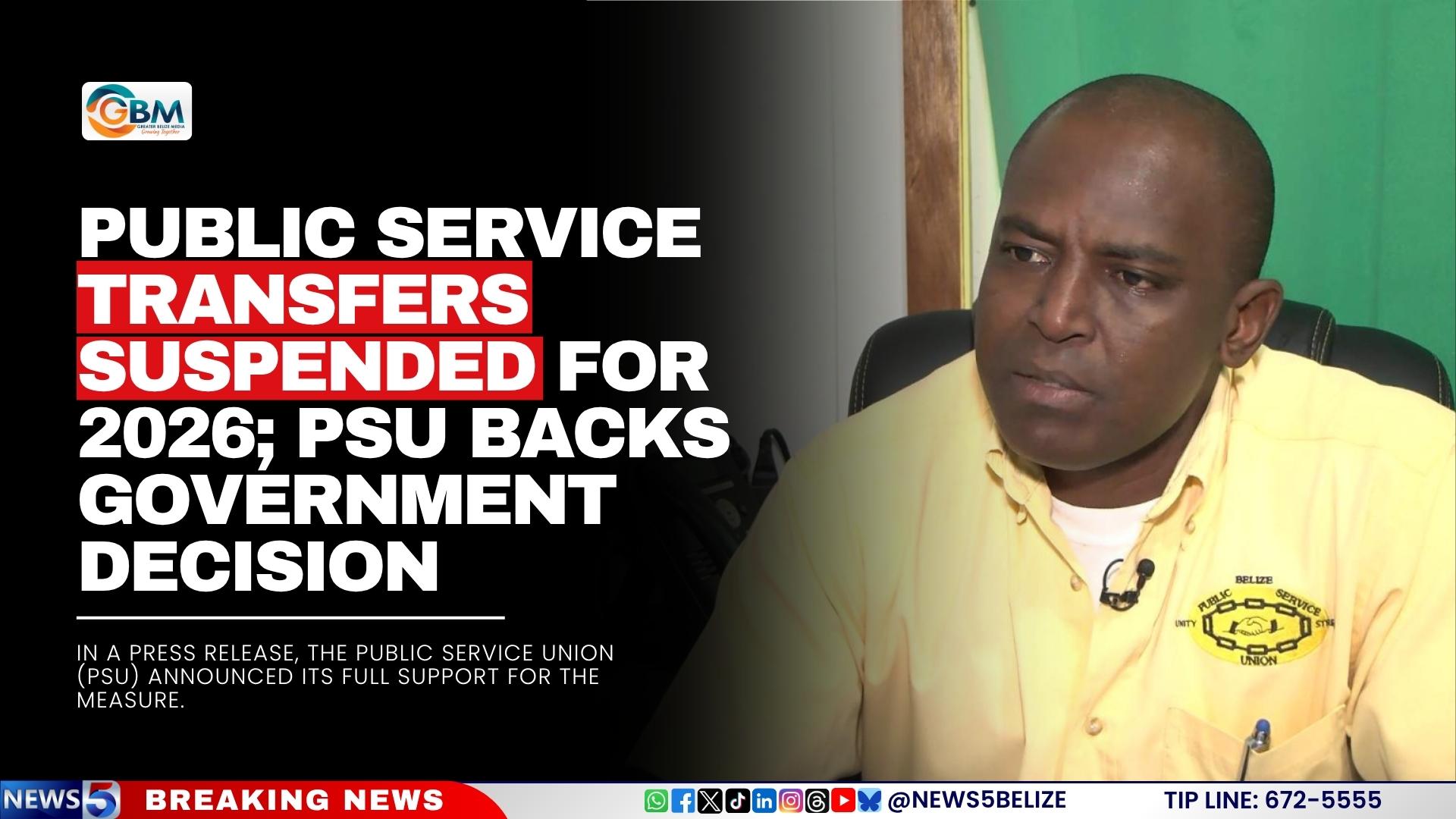
In a policy shift announced in late April 2026, the Government of Belize has enacted a full suspension of all public service transfers that involve a change of jurisdiction for the entire calendar year, extending the current postings of all affected public officers by 12 months.
The official order is formalized in Circular Memorandum No. 26 of 2026, dated April 20 and issued by Rolando Zetina, Chief Executive Officer of the Ministry of the Public Service and Disaster Risk Management. Per the document, while Regulation 101(1) of the 2014 Belize Constitution (Public Service) Regulations requires standard tours of duty to run between two and three years, the ministry has determined that the 2026 cycle of postings requires an extra year at current duty stations, citing the “exigencies of the service” as the core justification for the change. Under the new policy, no applications for cross-jurisdiction transfers will be reviewed or approved this year, and department chief executives have been instructed to submit formal requests for the one-year extensions where operationally required.
In an official statement responding to the announcement, the Public Service Union (PSU), the country’s leading body representing public sector employees, confirmed it fully endorses the government’s decision, framing the suspension as both “timely and necessary”.
The union outlined longstanding concerns that have driven its support for the policy: in recent years, many transfers have been carried out as punitive measures rather than for operational efficiency, placing unnecessary financial strain on national public finances. According to PSU estimates, annual costs associated with public service transfers—including transfer grants, rental subsidies, commuting allowances, and hardship stipends—add up to millions of Belize dollars each year, draining resources that could be allocated to core public services.
Beyond budget concerns, the union also referenced Regulation 96 of the Public Service Regulations, which mandates that all transfers must be conducted strictly to advance public service interests, and cannot be used as a replacement for formal disciplinary procedures. The PSU stated that it has documented multiple cases in which transfers were allegedly deployed to victimize, intimidate, or marginalize public officers who have fallen out of favor with administrative leadership.
As the policy moves forward, the PSU has laid out two key demands to ensure equitable implementation. First, the organization stressed that all eligible public officers must continue to receive all applicable allowances without interruption during their extended tours of duty, and has called on finance officials across all government ministries to put in place the necessary administrative and budgetary provisions to avoid any stoppages in pay and benefits. Second, the union is calling on the Ministry of the Public Service and Disaster Risk Management to maintain close oversight of how the suspension is implemented across departments, and to proactively put safeguards in place to prevent the continued misuse of transfers as a tool for retaliation against public servants once the moratorium is lifted.