分类: politics

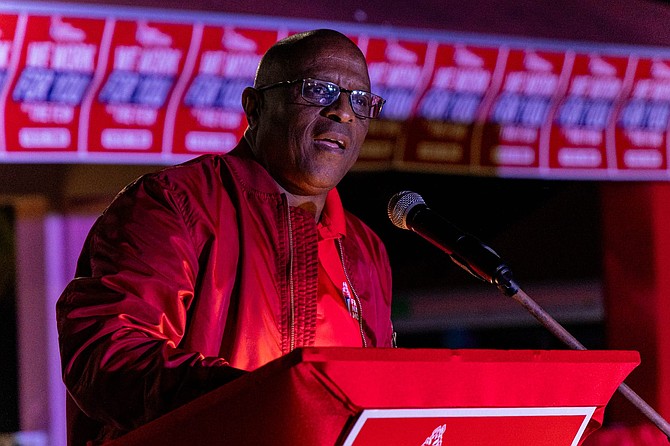
  • Prime Minister Roosevelt Skerrit clarifies Dominica’s position on allegations of regional Venezuelan trafficking network

    Prime Minister Roosevelt Skerrit clarifies Dominica’s position on allegations of regional Venezuelan trafficking network

    Prime Minister Roosevelt Skerrit has issued a forceful denial of Dominica’s involvement in any illegal activities following explosive reports linking Caribbean politicians to international drug cartels. The allegations surfaced in connection with a massive 700-page indictment filed in New York that details a sophisticated cocaine trafficking network operating across the region.

    The controversy emerged after the dramatic detention of Venezuelan President Nicolás Maduro and First Lady Cilia Flores during a U.S. military operation in Caracas on January 3. The indictment alleges that drug traffickers systematically bribed officials along the ‘Caribbean route’ to ensure protection and political support, enabling seamless transportation of cocaine from Venezuela to the United States.

    According to court documents, this corruption network extended from Colombian producers through Venezuelan transit points to Caribbean intermediaries and ultimately to distributors in Central America and Mexico. The scheme allegedly allowed traffickers to amass enormous profits while securing political backing that compromised institutional integrity and fostered political instability throughout the hemisphere.

    During a Monday press conference, Skerrit addressed what he called ‘baseless allegations’ while defending Dominica’s energy agreements with Venezuela. ‘We entered into an agreement with Venezuela under the Petro Caribe initiative that helped sustain the economies of participating countries,’ Skerrit stated. ‘This agreement was completely transparent and brought vital foreign exchange while stabilizing petroleum prices.’

    The Prime Minister emphatically declared: ‘We never engaged in any illegal activities that contravene international law, domestic law, or any regional or international treaties. This government has never involved itself in drug dealing or any illegal activities whatsoever. We can stand and say this anywhere with clear conscience.’

    Skerrit highlighted his administration’s commitment to regional security, noting: ‘No government in our history has invested more resources in police and national security to ensure our country and region remain peaceful. I have engaged in highly sensitive security initiatives with international partners that I don’t even share with my cabinet due to their confidential nature.’

    Meanwhile, President Maduro and First Lady Flores pleaded not guilty to drug trafficking charges in a New York court on January 5, setting the stage for a landmark legal proceeding that could have profound implications for regional politics and international relations.

  • Armed Patrols, Rising Fear as Venezuela Adjusts to New Leadership

    Armed Patrols, Rising Fear as Venezuela Adjusts to New Leadership

    Caracas has transformed into a landscape of heightened military vigilance following the extraordinary removal of President Nicolás Maduro by U.S. forces. The capital now witnesses a conspicuous deployment of armed security personnel patrolling public areas, establishing checkpoints, and maintaining a visible presence that has significantly altered the city’s atmosphere.

    In a pivotal political transition, Delcy Rodríguez was formally inaugurated as Venezuela’s interim president on Monday. Addressing the nation, Rodríguez expressed profound distress, characterizing the detention of Maduro and First Lady Cilia Flores in United States custody as an outright ‘kidnapping.’ Her appointment marks a dramatic shift in the country’s leadership dynamics.

    Notably, Rodríguez—who previously served as Maduro’s vice president and staunch governmental ally—has undergone a significant rhetorical transformation. Despite her previous vehement condemnations of American interventions, she now advocates for diplomatic cooperation with the United States. This recalibration suggests a strategic pivot toward collaborative engagement with the former adversary.

    The emerging partnership framework anticipates Rodríguez collaborating with U.S. representatives to rehabilitate Venezuela’s crippled oil industry. Former President Trump articulated that the primary objectives include restoring damaged petroleum infrastructure and expanding international oil exports to bolster the nation’s economic foundation.

    Meanwhile, daily life for Caracas residents has grown increasingly tense under the intensified security measures. Masked armed individuals are conducting neighborhood patrols, while military checkpoints scrutinize civilian movement. Disturbingly, armed civilian factions are reportedly intercepting citizens to examine mobile devices for situation-related content, with several detainments occurring over shared social media posts.

    The government has simultaneously implemented stringent media controls, prohibiting foreign journalists from entering the country. Multiple reports confirm that local journalists faced temporary detentions earlier this week, underscoring the administration’s tightened grip on information flow during this volatile transitional period.

  • Roberts beats Watson in ‘opinion poll’ as concerns raised over its relevance

    Roberts beats Watson in ‘opinion poll’ as concerns raised over its relevance

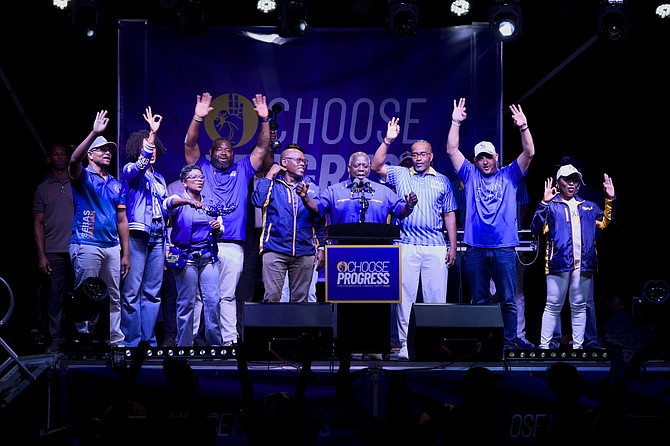
    A contentious internal meeting within the Progressive Liberal Party’s Southern Shores branch has ignited significant debate regarding procedural legitimacy and factional influence. Deputy Chairman Obie Roberts secured a decisive 40-0 victory over contender Clint Watson, the ZNS General Manager, in what was termed an ‘opinion poll’ conducted on Monday evening. Despite the numerical outcome, party insiders emphasize this vote holds no formal authority, as the ultimate selection of constituency candidates rests solely with the party’s candidate committee.

    The meeting, held at PLP headquarters, grew increasingly tense, with reports indicating that the situation nearly escalated into physical confrontations following its conclusion. Serious allegations have emerged regarding the conduct of the branch, including claims of ‘ineligible’ or ‘fake’ members being present and accusations that the branch election was organized outside its proper constituency. Numerous attendees were reportedly turned away for not appearing on the official registry, leading critics to denounce the group as an unrepresentative ‘kangaroo branch.’

    Further compounding the controversy, many participants stated they had been informed the gathering was a routine branch meeting intended for discussion, not a predetermined vote. The surprise nature of the poll and the stipulation that only ‘financial’ members could participate were cited as particularly unfair, especially given historical branch disputes and a recent exodus of members. Supporters of Mr. Watson largely abstained or walked out, protesting what they perceived as a rigged and fundamentally flawed process designed to disenfranchise legitimate constituency voters. The incident has exposed deeper competing factions within the PLP leadership, highlighting a struggle between those backing Mr. Roberts and allies of Mr. Watson.

  • US military seizes third oil tanker

    US military seizes third oil tanker

    The United States military has escalated its maritime enforcement operations with the capture of a third sanctioned oil tanker in the Caribbean Sea. US Southern Command (USSouthCom) officially confirmed the seizure of the M/T Sophia on January 7th, describing the vessel as a “stateless, sanctioned dark fleet motor tanker.

    The operation was conducted collaboratively between the Department of War and Department of Homeland Security forces, resulting in the apprehension without incident. According to military authorities, the Sophia was intercepted in international waters while engaging in prohibited activities. The US Coast Guard is currently escorting the captured tanker to American territory for final disposition.

    This strategic action forms part of Operation Southern Spear, which the Department of War characterizes as an unwavering mission to eliminate illicit activities throughout the Western Hemisphere. The operation reinforces the US commitment to homeland security and regional stability across the Americas.

    US Secretary of War Pete Hegseth emphasized the continuing enforcement of blockade measures against dark fleet vessels attempting to illegally transport Venezuelan oil. “Only legitimate and lawful energy commerce – as determined by the US – will be permitted,” Hegseth stated, highlighting that prohibited shipments effectively steal resources from the Venezuelan people to finance illegal operations.

    This development marks the third tanker interception within a month, following previous seizures of the M/T Skipper and M/T Centuries suspected of carrying oil subject to US sanctions. The intensified maritime operations coincide with extraordinary political developments in Venezuela, where deposed President Nicolas Maduro and his wife Cilia Flores recently pleaded not guilty to drug trafficking charges in a New York court. Their extraction from the Fuerte Tiuna military complex in Caracas by Delta Force operators on January 3rd preceded the installation of former vice president Delcy Rodriguez as interim president.

  • When morality trumps international law

    When morality trumps international law

    The controversial extraction of Venezuelan President Nicolás Maduro from Caracas by US forces has ignited intense global discourse, balancing accusations of sovereignty violation against humanitarian justification. While international observers report widespread jubilation among Venezuelan diaspora communities, critics of the Trump administration challenge the characterization of Maduro as a narco-terterrorist and question the evidence supporting claims of electoral theft.

    The central philosophical conflict emerges from competing principles: national sovereignty versus moral obligation to intervene in humanitarian crises. Proponents of the intervention point to the unprecedented exodus of over eight million Venezuelans (21% of the population) during Maduro’s tenure as evidence of systemic failure and authoritarian oppression. They argue that when domestic institutions fail to protect citizens, external intervention becomes morally justified despite international legal conventions.

    International law recognizes Venezuela’s continued sovereignty through its defined territory, population, governing institutions, and control over domestic affairs—regardless of electoral integrity. However, the practical application of sovereignty depends on diplomatic recognition, creating the current situation where Maduro maintains some international support while facing rejection from major powers including the United States.

    The Trump administration frames its actions as responding to humanitarian catastrophe while simultaneously advancing strategic interests. The commitment to rebuild Venezuela’s oil infrastructure promises mutual economic benefit, though skeptics suspect resource acquisition motivated the intervention more than human rights concerns.

    With Vice President Delcy Rodriguez assuming acting presidency while maintaining allegiance to Maduro, the political situation remains volatile. The administration has threatened further military action if loyalists resist transition efforts. As the United States temporarily manages Venezuelan affairs, global observers await November’s US election outcomes, hoping temporary measures don’t create irreversible consequences requiring reversal by subsequent administrations.

  • From ‘Texaco must go’ to silence on Venezuela

    From ‘Texaco must go’ to silence on Venezuela

    A pointed editorial critique has emerged questioning the Oilfields Workers’ Trade Union (OWTU)’s current stance regarding Venezuela’s oil sovereignty amid US foreign policy pressures. The analysis draws stark comparisons between the union’s historically principled position on Trinidad and Tobago’s energy independence and its present-day silence.

    The piece recalls the OWTU’s legacy under George Weekes, whose iconic “Texaco must go” mobilization represented a defiant stand against foreign corporate domination of national resources. This historical context is directly contrasted with the union’s current position as the Trump administration pursues aggressive measures—including sanctions and threats of force—aimed at overturning Venezuela’s control of its nationalized oil industry.

    Criticism centers on the perceived contradiction between the OWTU’s past principles and its present political alignment with Trinidad’s government, which publicly supports the US hardline approach toward Venezuela. The editorial argues this alignment has compromised the union’s independence and muted its voice on matters of economic sovereignty that once defined its mission.

    The analysis frames Trump’s strategy as “economic strangulation masked as diplomacy,” characterizing it as a modern iteration of the same corporate domination the OWTU historically resisted. The fundamental principle articulated is that sovereignty cannot be selective—if foreign control of Trinidad’s oil was wrong, then foreign coercion of Venezuela’s resources cannot be right.

    The editorial concludes with a powerful invocation of George Weekes’ legacy, suggesting that remaining silent on Venezuela’s sovereignty crisis while celebrating historical resistance empties that legacy of meaning. The piece serves as both criticism and call to action, emphasizing that history judges not only those who act but those who choose silence when principle demands resistance.

  • Dennis: Who’s benefiting from No Man’s Land project?

    Dennis: Who’s benefiting from No Man’s Land project?

    Tobago’s political landscape is embroiled in a heated dispute over development plans for No Man’s Land beachfront property, with PNM Tobago Council leader Ancil Dennis accusing the current THA administration of concealing a private development agreement until after the January 12 Tobago House of Assembly elections.

    Dennis, the PNM candidate for Buccoo/Mt Pleasant, raised serious concerns during a January 6 campaign meeting in Bon Accord about what he describes as a clandestine arrangement between the THA and an unidentified private developer. The controversy centers on allegations that vendors at the government-owned No Man’s Land were visited by police-accompanied developers who demanded they vacate the premises by January 20.

    THA Chief Secretary Farley Augustine has vigorously denied these accusations, maintaining that the Assembly was simply approached by a developer offering to enhance the area for vendors at no cost to the government. Augustine stated he instructed the developer to first consult with vendors before submitting any formal proposal.

    Dennis expressed profound skepticism about these claims, stating, ‘No businessman will undertake significant development on prime beachfront property free of charge. There must be some arrangement—whether private or public—for somebody to benefit.’ He criticized the administration’s approach, emphasizing that proper procedures involving public tender processes and community consultation were completely bypassed.

    The PNM leader outlined what he characterized as proper protocol: issuing a request for proposals, conducting transparent selection processes, and engaging in meaningful community consultation before any development decisions. He promised that a PNM-led THA would prioritize vendor livelihoods while preserving the natural beauty of the area, ensuring all current vendors could continue their trade in improved conditions.

    Dennis urged voters to support the PNM to protect their interests, positioning the election as a choice between transparent governance and what he called ‘backdoor deals’ that threaten local livelihoods and public property rights.

  • Farley: PNM spreading fear, falsehoods

    Farley: PNM spreading fear, falsehoods

    In a fiery campaign address delivered on January 6 in Mt St George, Tobago People’s Party (TPP) leader Farley Augustine launched a scathing critique against his political rivals, accusing them of waging an election campaign rooted in fearmongering and deception rather than substantive governance issues.

    With the Tobago House of Assembly (THA) elections scheduled for January 12, Augustine drew stark contrasts between competing campaign philosophies. “They are running a campaign based on fear, we are running a campaign based on hope,” he declared before a gathered audience. “They are running a campaign based on allegations, we are running a campaign based on aspiration. They are running a campaign based on fiction, we are running a campaign on facts.”

    The political leader promised to publicly expose what he characterized as systematic disinformation before the campaign concludes, vowing to present documented evidence of fake social media pages and malicious slander allegedly propagated by opponents.

    Augustine positioned his party as fundamentally different in both substance and style—a institution dedicated to policy ideas, youth education, and vulnerable population support rather than personal attacks. “This party is not about bacchanal and commess, that is for the PNM,” he asserted, using local terms for scandal and chaos. “This party is about Tobago people’s business.”

    Addressing youth voters directly, Augustine acknowledged the challenges facing younger generations but cautioned against short-term thinking. He urged logical assessment of campaign promises rather than emotional reactions to last-minute offerings, questioning why benefits were suddenly available after years of unmet needs under previous administrations.

    The TPP leader concluded with a stark warning to voters: “Don’t throw caution to the wind and don’t be deceived in this election,” framing the upcoming vote as a choice between substance and empty promises.

  • Trump says Venezuela to hand over oil stocks worth billions

    Trump says Venezuela to hand over oil stocks worth billions

    In a dramatic development following a U.S. military operation that ousted Venezuelan President Nicolas Maduro, President Donald Trump announced plans to redirect tens of millions of barrels of Venezuelan oil to American ports. The controversial declaration came just days after U.S. special forces extracted Maduro and his wife from Caracas to face drug trafficking charges in New York.

    Trump specified that approximately 30-50 million barrels of premium Venezuelan crude, previously under international sanctions, would be shipped to the United States. The estimated $2 billion in anticipated revenue would be placed directly under presidential oversight, though the legal framework for such an arrangement remains unclear.

    The political vacuum left by Maduro’s removal has been filled by interim President Delcy Rodriguez, a former vice president and energy minister from Maduro’s inner circle. While Rodriguez has pledged cooperation with Washington, she simultaneously asserts Venezuelan sovereignty, stating unequivocally that “no foreign agent governs Venezuela.”

    This contradiction highlights the precarious position of the new administration, which must balance Trump’s demands for control over Venezuela’s oil industry and severed ties with Cuba, China, Iran, and Russia against domestic pressure from hardliners who still control the military and security apparatus.

    The transition has been marred by violence, with Venezuelan authorities reporting 23 military personnel killed during the U.S. operation and Cuba acknowledging 32 casualties among its military advisors. Attorney General Tarek William Saab mentioned “dozens” of additional civilian and military deaths without providing specific figures, prompting Rodriguez to declare seven days of national mourning.

    International observers have expressed concern over Trump’s assertion of American dominance, with former Venezuelan diplomat Alfredo Toro Hardy describing the situation as “something not seen in Latin America for over a century.” Meanwhile, the White House has dismissed involvement from Venezuela’s democratic opposition, further complicating the path toward legitimate governance.

    The situation remains volatile as Rodriguez attempts to consolidate power while navigating competing demands from Washington and powerful domestic factions, including Interior Minister Diosdado Cabello and Defense Minister Vladimir Padrino Lopez, who continue to demonstrate influence through street mobilizations and control of security forces.

  • Berry Islanders call for standalone seat as boundaries report expected to be tabled today

    Berry Islanders call for standalone seat as boundaries report expected to be tabled today

    Residents of the Berry Islands are mounting a vigorous campaign for autonomous parliamentary representation as the Boundaries Commission prepares to present its electoral reform report to Parliament. The archipelago, currently paired with North Andros, faces potential reunification with Bimini under proposed constituency revisions—a move locals fear would perpetuate their political marginalization.

    Multiple residents expressed profound frustration to The Tribune regarding historical neglect under combined constituencies. Erica Knowles revealed her astonishment at learning about proposed boundary changes through media channels rather than official consultation. ‘They consistently implement changes without engaging constituents,’ she noted, emphasizing that past administrative partnerships have yielded minimal benefits for island development.

    Infrastructure deficiencies form a central pillar of resident grievances. Telecommunications services remain virtually nonexistent since BTC’s closure over two years ago due to mold infestation, with unreliable connections disrupting daily communications. Banking services are restricted to a single credit union facing operational challenges due to low transaction volume.

    Road construction projects have languished for three years with intermittent progress, while educational institutions suffer teacher shortages and inadequate facilities. Alexandria Moss highlighted disproportionate revenue contribution from Great Harbour Cay compared to infrastructure investment, stating: ‘We require entirely new educational facilities rather than temporary patches.’

    Despite these challenges, economic development continues through cruise industry investments. Great Stirrup Cay is nearing completion of its ‘Pleasure Island’ project, which will establish dual cruise ports alongside Little Stirrup Cay’s existing Coco Cay facility.

    Emergency services present additional concerns. VJ Reckley described telecommunications as ‘deplorable’ and noted the absence of public ambulance services, forcing medical transports via private vehicles. Social services are similarly constrained, with a shared social worker visiting quarterly from North Andros.

    Residents unanimously contend that independent parliamentary representation would ensure dedicated advocacy for their unique needs. As boundary decisions undergo parliamentary review, Berry Islanders emphasize that geographic isolation and distinct developmental requirements justify autonomous political representation.