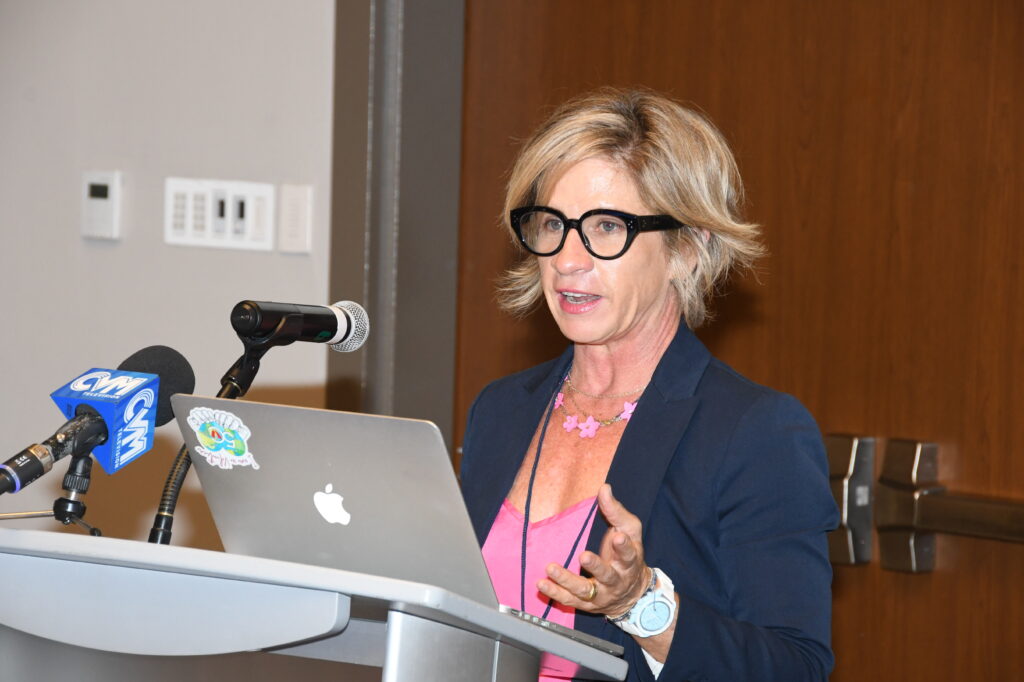
KINGSTON, Jamaica — As the Caribbean nation prepares to roll out a landmark new Non-Profit Organisations (NPO) Act by October 2026, civil society leaders across Jamaica are pushing for widespread, inclusive engagement to shape a regulatory framework that supports rather than hinders the sector’s critical national work.
Sector representatives caution that skipping structured, cross-sector consultation during the drafting process could leave the new law creating unintended barriers for the thousands of non-profits it is meant to govern. “Nonprofits are embedded in the communities that will feel the impact of this legislation most acutely. Consultation is not an afterthought — it is a non-negotiable requirement,” explained Nancy Pinchas, executive director of the Council of Voluntary Social Services (CVSS). “Meaningful legislation can only be built if it reflects the day-to-day operational realities of groups delivering frontline services across the country.”
The proposed NPO Act, framed as a long-overdue update to Jamaica’s outdated nonprofit governance rules, will directly impact thousands of organizations that deliver core public services spanning disaster response, public education, social protection for vulnerable populations, youth development, and community climate resilience. Joy Crawford, executive director of HIV advocacy and service organization EVE for Life, echoed Pinchas’ call for inclusive policymaking, emphasizing that on-the-ground community perspectives are indispensable to crafting effective regulation. “When those affected by policy get a seat at the table, outcomes are more equitable, accountability is strengthened, and trust between civil society and government is built,” Crawford noted.
Data compiled by the CVSS from Jamaica’s Department of Co-operatives and Friendly Societies underscores the sector’s massive scale and economic footprint: donations to registered Jamaican charities surpassed $40 billion in 2021 alone, with these resources advancing core national priorities including poverty reduction, public health access, education expansion, and environmental sustainability action.
While Jamaica made incremental updates to nonprofit regulation via the 2013 Charities Act and 2022 implementing regulations, stakeholders agree the current system remains overly burdensome for most groups. Tania Chambers, legal consultant to the CVSS, explained that the existing regulatory structure imposes systemic barriers that limit civil society organizations’ ability to operate effectively.
A key pain point is the country’s dual registration requirement, which forces nonprofit groups to register twice — once as a legal entity and again as a charity — creating redundant paperwork, long processing delays, and persistent operational inefficiency. “Extended timelines for registration and annual renewal are not just minor administrative annoyances,” Chambers emphasized. “They directly block organizations from accessing critical funding, securing required tax exemptions, and rolling out time-sensitive community programs when they are needed most.”
Chambers also highlighted the lack of publicly available, clear service standards for regulatory processes, leaving organizations to navigate an unpredictable, inconsistent system that drives up compliance costs and administrative workload. This burden falls disproportionately on small, community-based groups that already operate on tight budgets and limited staffing. Compounding these challenges are the strict international anti-money laundering and counter-terrorism financing rules that Jamaica is required to implement. Without a proportionate, risk-based approach tailored to the nonprofit sector, these rules can lead to overregulation of legitimate community groups, pulling scarce resources away from direct service delivery to cover compliance costs.
“Jamaica’s goal must be to strike a careful balance: protecting the integrity of the sector while avoiding excessive administrative red tape that stifles legitimate community work,” Chambers said.
While early government indications suggest the new NPO Act will replace the broken dual registration system with a unified regulatory framework, civil society leaders note this single improvement is not enough to fix the sector’s longstanding problems. They are also calling for the new law to enshrine clear, enforceable service standards for regulatory processes, fully digitize registration and compliance workflows to cut red tape, and adopt a risk-based regulatory approach that accounts for the varying size and operational capacity of different organizations.
Leaders are also pushing for formal, permanent mechanisms to facilitate ongoing collaboration and engagement between government regulators and civil society stakeholders. Chambers warned that a one-size-fits-all regulatory model would harm small community groups, which rarely have the administrative capacity or funding to meet complex compliance requirements designed for large, well-resourced national or international nonprofits.
For stakeholders across the sector, the upcoming NPO Act represents a once-in-a-generation opportunity to modernize nonprofit governance and strengthen the sector’s central role in advancing Jamaica’s national development. “This regulatory reform cannot be only about enforcing compliance,” Chambers said. “It needs to create an environment where the sector can grow, innovate, and contribute fully to building a better Jamaica for all.”
Civil society leaders are urging the Jamaican government to prioritize early cross-sector consultation, widespread public outreach, and collaborative policy design to ensure the final legislation is both effective at upholding sector integrity and enabling for nonprofits to carry out their critical work. Without these steps, they warn, the new law could unintentionally shrink civic space across the country, cut off nonprofits from critical funding, and weaken access to core community services for vulnerable Jamaicans.