A brewing political storm has erupted in the Bahamas over the government’s flagship agricultural food security initiative, with the opposition Free National Movement (FNM) leader Michael Pintard launching a fierce attack on the Davis administration over the ballooning cost, alleged mismanagement, and transparency failures of the Golden Yolk egg production programme.
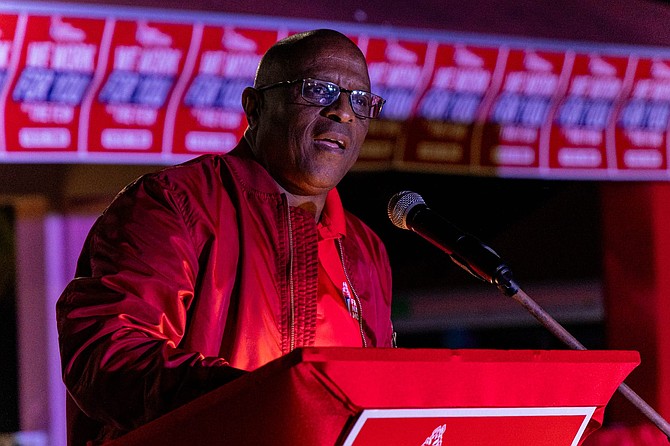
Speaking at a political rally on the evening of the report, Pintard pushed back against official government claims that programme-produced eggs would hit retail shelves by the end of the month, questioning exactly what tangible progress the country has received for a public investment that has grown from an initial projected $15 million to a total of $50 to $60 million today. “Where the Hell them eggs are today?” Pintard challenged, highlighting that cost estimates have risen steadily from the original $15 million launch budget to $23 million, and now to approximately $60 million.
Pintard’s criticism is rooted in leaked confidential internal government documents, originating from the Ministry of Agriculture, that outline a series of serious allegations ranging from mismanagement and conflict of interest to public health risks tied to the programme and related government agricultural import policies. The 5 August 2025 report, which was obtained by The Tribune, raises alarms over multiple troubling findings: imported breeding pigs for related agricultural projects carried a reproductive disease, and the infected animals were culled and sold to the public without any disclosure of their health status. No public advisory or internal health warning was ever issued, and the report notes multiple local farmers have confirmed the sales, with full records expected to exist within the Ministry’s Department of Agriculture.
Additional claims center on the Golden Yolk programme itself: the report alleges that government-owned layer chickens brought into the project in February 2025 began producing eggs shortly after arrival, but the Ministry never publicly announced production. Instead, the report suggests, Golden Yolk eggs have been intermingled with private stock and sold under a private company’s brand, with no public disclosure of the arrangement, raising questions about the misuse of public funds for private gain and unreported conflicts of interest. The report also confirms that government-owned Golden Yolk chickens are housed on a private farm controlled by a programme-affiliated consultant, a hidden arrangement that has never been disclosed to the public.
A second leaked document, dated 19 February 2026, details requests for additional funding that have driven the programme’s total cost far above the original launch budget. The original construction contract for the BAIC Golden Yolk Egg Production Plant was awarded to Trade Winds Builders Co Ltd for $23.37 million, including VAT, with a 10% contingency bringing the initial total allocation to more than $25.7 million. However, core civil works including excavation, grading, drainage, paving, and site signage were excluded from the original budget, requiring an additional $14.6 million in funding that pushes the total confirmed project cost to more than $40.3 million, with approval currently pending before national tender and procurement boards. Pintard argued that the steady stream of cost overruns and hidden expenditures fits a pattern of opaque governance by the Davis administration, stating: “That’s the kind of government we’re dealing with, and this same Prime Minister want to talk about slush fund. The truth of the matter is, most of what they do is about hiding funds.”
Launched in 2023 with an initial $15 million budget, the Golden Yolk initiative was framed as a critical step to strengthen the Bahamas’ national food security. Its core goals were to ramp up domestic egg production from just 700,000 eggs per year to 28 million eggs annually when fully operational, cutting the country’s heavy reliance on imported eggs and stabilizing consumer prices during market volatility. Senior government officials have pushed back against the opposition’s claims, defending the programme’s track record and disputing Pintard’s cost estimates.
Shortly after Pintard’s rally comments, the Bahamas Agricultural and Industrial Corporation (BAIC) confirmed that it has begun harvesting eggs from the programme’s layer chicks, with executive chairman Darron Pickstock reiterating that Golden Yolk eggs will be available in retail stores by the end of the month. In earlier statements from June 2025, Agriculture and Marine Resources Minister Jomo Campbell noted that the Bahamas became the first country in the Caribbean region to offer locally produced eggs for less than $10 per dozen during a regional egg price crisis, and that participating farmers have sold dozens of locally-produced eggs for as little as $7 to $8 per box. Minister of Works and Family Island Affairs Clay Sweeting also refuted opposition cost claims, saying that opposition deputy leader Shanendon Cartwright was “misled” on total expenditure, and confirming that while $15 million was allocated for the full project, the full amount has not yet been drawn down.
Despite government pushback, Pintard and the FNM remain firm in their calls for full transparency, questioning how many small local producers have actually benefited from the public investment, and demanding clear answers about the misuse of public resources and unaddressed public health risks outlined in the internal government documents. The controversy has turned the once-promising food security initiative into a major flashpoint ahead of upcoming political discourse, with the opposition leveraging the leaked documents to attack the administration’s record on governance and public spending.