分类: politics

  • Spain says Venezuela freed five Spanish prisoners

    Spain says Venezuela freed five Spanish prisoners

    In a significant diplomatic development, Venezuela has granted freedom to five Spanish citizens, including prominent activist Rocio San Miguel who holds dual Venezuelan-Spanish citizenship. The release marks the first major prisoner amnesty since the recent political transition in Caracas.

    Spain’s Foreign Ministry confirmed the liberation, stating the individuals are now preparing to return to Spanish territory. Prime Minister Pedro Sánchez revealed through social media platform X that these citizens had endured over twelve months of detention in the South American nation before their release.

    The prisoner release initiative was characterized by Venezuelan parliamentary leader Jorge Rodríguez as an effort to promote ‘peaceful coexistence,’ though specific details regarding the total number or identities of those freed remain undisclosed. This development occurs amidst substantial political reshuffling following last weekend’s dramatic capture of former Venezuelan leader Nicolás Maduro by U.S. military forces.

    Maduro’s apprehension and subsequent transfer to New York to confront narcotics trafficking charges precipitated the elevation of his former deputy, Delcy Rodríguez, to interim leadership. The new administration has received explicit endorsement from U.S. President Donald Trump, contingent upon Venezuela ensuring American access to its substantial petroleum reserves.

    Spanish officials have welcomed the prisoner release as a constructive measure toward facilitating dialogue and national reconciliation among Venezuelan factions. The development signals potential warming in Venezuela’s international relations following recent geopolitical upheavals.

  • Venezuela releasing ‘large number’ of prisoners — top lawmaker

    Venezuela releasing ‘large number’ of prisoners — top lawmaker

    CARACAS, Venezuela — In a significant development following the ouster of authoritarian leader Nicolas Maduro, Venezuelan authorities have commenced a substantial prisoner release initiative. Parliament Speaker Jorge Rodriguez announced on Thursday that the government is executing the immediate liberation of a “large number” of detainees, comprising both Venezuelan citizens and foreign nationals.

    This action, described by Rodriguez as a “unilateral gesture,” marks the first observable concession from Venezuela’s interim government since U.S. forces removed Maduro from power five days prior. The former leader was apprehended by American forces and transported to New York to stand trial, prompting the Trump administration to declare itself “in charge” of Venezuelan affairs.

    While Rodriguez declined to specify the exact number of prisoners being freed, independent monitoring provides context to the scale of detention. The non-governmental organization Foro Penal documents 806 individuals currently held as political prisoners in Venezuela, including 175 military personnel affected by the nation’s political turmoil.

    The prisoner release coincides with claims from U.S. President Donald Trump, who stated on Tuesday that Venezuelan authorities were dismantling a “torture chamber located in central Caracas.” The President provided no additional details regarding this alleged facility, leaving international observers to speculate about its nature and operations.

    This coordinated prisoner release represents a tangible policy shift following the dramatic change in Venezuela’s leadership, suggesting potential moves toward reconciliation and judicial reform in the post-Maduro era.

  • Tough love not enough

    Tough love not enough

    Prime Minister Kamla Persad-Bissessar’s announcement of a temporary grace period for traffic violators has failed to alleviate the widespread disorder surrounding the implementation of stringent new road traffic penalties. While expressing compassion for motorists, the Prime Minister’s January 7th declaration highlights the administration’s inadequate preparation for the logistical challenges that accompanied the enforcement of heightened fines.

    The editorial analysis reveals fundamental systemic failures within the licensing division, Ministry of Works, and law enforcement agencies. Despite supporting enhanced road safety measures and stricter penalties for traffic offenses, critics question the government’s prioritization of traffic infringements over more severe crimes including murders and kidnappings.

    Eli Zakour’s assertion that lawlessness exceeded governmental expectations appears contradictory given the United National Congress’s (UNC) earlier dismantling of the demerit points system designed to penalize repeat offenders. This action, executed without consultation and against warnings from road safety advocates, raises questions about whether transport officials and cabinet members had reviewed comprehensive data before making this decision.

    The government’s claim of sufficient public notice through parliamentary debates on December 5th and 9th has been widely criticized as inadequate. The publication of the enforcement notice on December 25th—mere days before Christmas—directly contradicted transparency principles, creating unnecessary public confusion.

    The resulting administrative chaos included incorrect fine applications due to ministerial errors, overwhelmed licensing offices in Port of Spain and Caroni, and documented inefficiencies in traffic enforcement presented to parliamentary committees. This problematic implementation has effectively penalized law-abiding citizens attempting to comply with new regulations, suggesting that governmental inefficiency itself contributes to perceived lawlessness despite the administration’s tough-love approach to governance.

  • Haitian-American legislator condemns ICE shooting of woman as ‘horrific’

    Haitian-American legislator condemns ICE shooting of woman as ‘horrific’

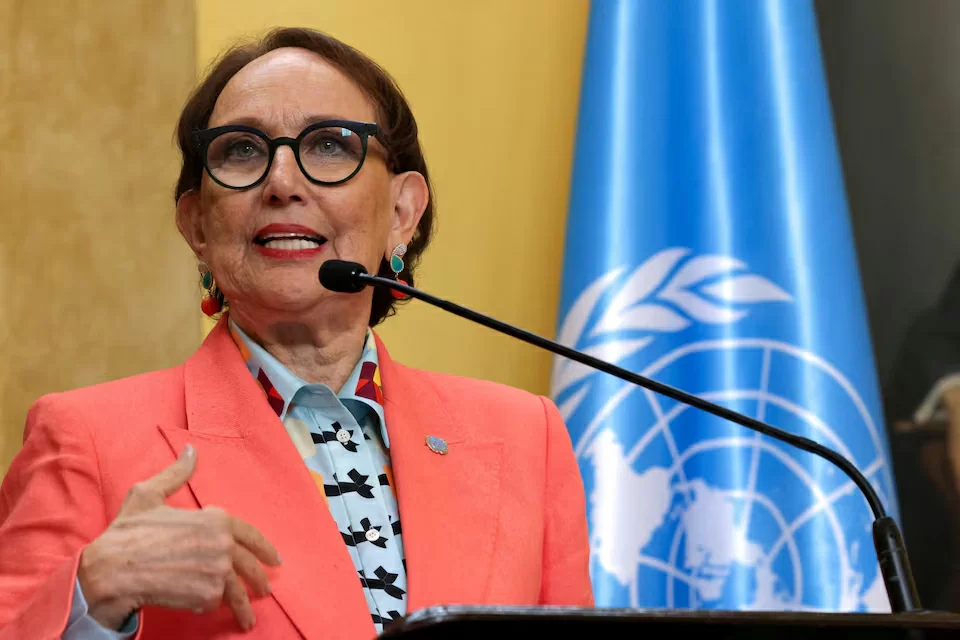
    NEW YORK – Haitian-American New York State Assemblywoman Rodneyse Bichotte Hermelyn has issued a forceful condemnation of Wednesday’s fatal shooting of Renee Nicole Good, a 37-year-old U.S. citizen and mother of three, by a U.S. Immigration and Customs Enforcement (ICE) agent in Minneapolis. The assemblywoman characterized the incident as a tragic example of federal overreach and excessive authority.

    Bichotte Hermelyn, who serves as chair of the Brooklyn Democratic Party and represents the 42nd Assembly District, described the shooting as “nothing short of horrific” in statements to Caribbean Media Corporation. “Due to a federal ICE agent’s negligence, a woman is unable to return to her family,” she stated, emphasizing the profound human cost of the incident.

    The assemblywoman directly linked the tragedy to Trump administration policies, asserting that justice must be served “by holding accountable both the ICE agent involved and the Trump administration, whose decision to deploy ICE in Minneapolis led to this tragedy.” She extended her condolences to Good’s family and the Minneapolis community as they grapple with the shooting.

    Bichotte Hermelyn expressed solidarity with Minneapolis Mayor Jacob Frey and Minnesota Governor Tim Walz in their efforts to resist federal involvement and push for reforms regarding ICE operations within their jurisdiction.

    The shooting occurred in a residential neighborhood approximately one mile from where George Floyd was killed by police in 2020. According to reports, Good was shot in the head while seated in her SUV in the presence of a family member. ICE agents were present in Minnesota as part of President Donald Trump’s intensified immigration enforcement initiatives.

    U.S. House of Representatives Democratic Leader Hakeem Jeffries separately addressed the incident, noting that the unidentified ICE agent “shot and killed an unarmed woman who was not the target of an immigration enforcement action.” Jeffries called for the American people to reject what he termed “cruelty and extremism” while offering prayers for the victim’s loved ones.

  • Protesters, US law enforcement clash after immigration officer kills woman

    Protesters, US law enforcement clash after immigration officer kills woman

    MINNEAPOLIS — The White House has declared U.S. law enforcement to be under “organized attack” following violent clashes between protesters and federal officers in Minneapolis, triggered by the fatal shooting of a 37-year-old woman by an Immigration and Customs Enforcement (ICE) agent.

    The incident occurred Wednesday when ICE agents approached a vehicle they claimed was blocking their path. Footage of the encounter shows a masked agent attempting to open the car door before another agent, positioned near the front bumper, fired three shots into the Honda SUV. The vehicle, driven by Renee Nicole Good, accelerated out of control and crashed into stationary cars. Good, shot in the head, was pronounced dead at the scene, leaving behind a wife and a six-year-old child.

    Vice President JD Vance swiftly characterized the shooting as an act of “self-defense,” alleging without evidence that Good was part of a “broader left-wing network” intent on disrupting ICE operations. White House spokeswoman Karoline Leavitt echoed this sentiment, labeling the event a result of a “sinister left-wing movement.”

    In contrast, Minneapolis Mayor Jacob Frey dismissed claims from President Donald Trump and senior officials that Good attempted to kill the agents. Minneapolis Police Chief Brian O’Hara clarified that Good was not the target of immigration enforcement and was merely suspected of obstructing traffic.

    The shooting has ignited widespread outrage, with protests escalating after Minnesota Governor Tim Walz called demonstrating for justice a “patriotic duty.” On Thursday, officers deployed pepperball guns and tear gas to disperse crowds near a government facility in Fort Snelling, detaining several protesters. The unrest prompted the closure of Minneapolis schools as a precautionary measure.

    Governor Walz has demanded that state investigators join the federal probe, warning that without their involvement, Department of Homeland Security Chief Kristi Noem would act as “judge, jury, and basically executioner.” Vice President Vance, however, expressed confidence that a federal investigation would exonerate the officer involved.

    The tragedy occurs against the backdrop of the Trump administration’s aggressive immigrant deportation drive, which has faced significant local opposition. A fundraiser for Good’s family has surpassed $600,000, while a growing memorial of flowers and candles at the scene of the shooting attests to the deep community impact.

  • US Senate vote to curb Trump’s military powers in Venezuela

    US Senate vote to curb Trump’s military powers in Venezuela

    In an extraordinary bipartisan move, the US Senate has advanced legislation challenging President Donald Trump’s military actions in Venezuela. The resolution, which cleared a critical procedural hurdle on Thursday, prohibits further US hostilities against Venezuela without explicit congressional authorization.

    The measure gained momentum following heightened concerns over the secretive capture of Venezuelan leader Nicolas Maduro, an operation that involved air and naval strikes in Caracas. Lawmakers from both parties characterized the mission as exceeding limited law-enforcement parameters and constituting an act of war.

    Five Republican senators joined Democrats in supporting the resolution, prompting fierce criticism from President Trump on his Truth Social platform. He denounced the dissenting Republicans for their ‘stupidity’ and suggested they ‘should never be elected to office again.’

    Despite the procedural success, the resolution faces significant obstacles. It must still pass the full Senate and House of Representatives, and would likely encounter a presidential veto. The administration defends its actions as legally justified under counter-narcotics operations against designated terrorist organizations.

    Senator Rand Paul (R-KY), who co-sponsored the measure, argued that ‘bombing another nation’s capital and removing their leader is an act of war, plain and simple,’ emphasizing that no constitutional provision grants such power to the presidency.

    The development represents one of Congress’s most substantial assertions of war-making authority in decades, echoing the historic War Powers Resolution of 1973 enacted over President Nixon’s veto.

  • Dominicans, Antiguans face visa bonds of up to US$15 000 for US travel

    Dominicans, Antiguans face visa bonds of up to US$15 000 for US travel

    The United States has significantly elevated financial barriers for visa applicants from Antigua and Barbuda and Dominica through the implementation of a new immigration bond mandate. Effective January 21, 2026, nationals from these Caribbean nations seeking B1 business or B2 tourist visas may be required to post bonds ranging from $5,000 to $15,000 as part of their application process.

    This development follows the Trump administration’s substantial expansion of the visa bond pilot program, which has grown from initially encompassing 13 nations to now including 38 countries. The dramatic tripling of participating countries within a single week represents a substantial shift in U.S. immigration policy approach.

    The bond amount determination occurs during visa interviews and applies exclusively to applicants who otherwise meet eligibility criteria. Crucially, bond submission does not guarantee visa approval, as the requirement is assessed individually for each case.

    According to the U.S. Department of State, these financial guarantees are designed to ensure compliance with immigration regulations, particularly preventing visa overstays. The bond amount is fully refundable provided travelers enter and exit the United States in accordance with their visa conditions.

    Additional travel restrictions accompany the bond requirement. Affected nationals must utilize only three designated ports of entry: Boston Logan International Airport, New York’s John F. Kennedy International Airport, and Washington Dulles International Airport. This limitation substantially reduces travel flexibility for citizens of these Caribbean nations seeking to visit the United States.

  • VS grijpt Venezolaanse olie, wereld reageert scherp

    VS grijpt Venezolaanse olie, wereld reageert scherp

    In a significant geopolitical shift, the Trump administration has secured an agreement to redirect Venezuela’s oil shipments originally destined for China, marking a dramatic turnaround in Washington’s approach to Caracas. The deal, which involves importing and refining up to $2 billion worth of previously sanctioned Venezuelan crude, represents President Trump’s strategic maneuver to gain control over the South American nation’s substantial oil reserves.

    While Nicolás Maduro’s socialist allies maintain power in Venezuela, interim President Delcy Rodriguez is navigating a delicate balance between condemning Maduro’s recent abduction and initiating cooperation with Washington under Trump’s pressure. Sources within state oil company PDVSA indicate negotiations have advanced significantly, though Caracas has yet to officially confirm the export agreement.

    The United States announced plans to process and sell approximately 50 million barrels of oil previously immobilized by American sanctions. President Trump declared via Twitter that proceeds would remain under his administration’s control, purportedly benefiting both the Venezuelan people and US interests. This anticipated supply increase triggered an immediate market response, driving crude prices down by approximately 1%.

    China has vehemently condemned Washington’s actions, with Foreign Ministry spokespersons labeling the US a ‘bully’ and accusing it of gross violations of international law and Venezuelan sovereignty. As last year’s importer of nearly 390,000 daily barrels of Venezuelan oil, China is now reportedly considering increased imports from Iran and Russia according to trading sources.

    The US military intervention in Venezuela, which targeted Maduro’s capture, has drawn international condemnation from Russia, China, and other Venezuelan allies. Washington’s partners express particular concern over the precedent of abducting a sitting head of state, especially amid Trump’s additional threats toward Mexico and Greenland.

    Recent operations in Caracas resulted in dozens of casualties, including 23 Venezuelan soldiers and 32 members of Cuban military and intelligence services. Maduro, who has ruled since 2013, denied drug trafficking charges in a US court Monday while maintaining his claim as Venezuela’s legitimate president.

    Despite ousting Maduro, the US appears temporarily prioritizing cooperation with his senior allies to ensure stability, focusing particularly on revitalizing the oil industry through American corporate involvement. Political reforms and prisoner releases seem secondary concerns for now.

    Venezuelan opposition leader María Corina Machado, currently in exile, seeks to return for what she believes would be a victorious free election. Meanwhile, Washington warns high-ranking Maduro-era officials including stubborn Interior Minister Diosdado Cabello and Defense Minister Vladimir Padrino, both under US sanctions and criminal prosecution.

    The US is additionally pressuring Venezuela to expel advisors from China, Russia, Cuba, and Iran, while Russia has deployed naval vessels to escort an aging oil tanker attempting to circumvent American blockade measures.

    Recent Atlantic Ocean confrontations saw the US Coast Guard attempting to seize a Venezuela-related oil tanker after extended pursuit, with Russian naval ships operating nearby—highlighting ongoing tensions surrounding sanction enforcement and control over Venezuelan oil exports.

  • US detains sanctioned tanker in Caribbean Sea

    US detains sanctioned tanker in Caribbean Sea

    In a coordinated pre-dawn maritime operation, United States authorities have successfully interdicted the sanctioned oil tanker M/T Sophia in the Caribbean Sea. The Wednesday morning seizure was executed without incident while the vessel navigated international waters, according to an official statement from the US Department of War.

    The operation, conducted in partnership with the Department of Homeland Security, targeted what officials describe as a ‘dark fleet’ vessel—a classification referring to ships allegedly operating outside international regulatory frameworks. Such vessels typically feature obscured ownership structures or utilize disabled tracking systems to evade detection.

    US Coast Guard personnel are currently escorting the apprehended tanker to American territory where it will undergo ‘final disposition’ procedures. Authorities have withheld specific details regarding the ship’s cargo composition or crew composition pending further investigation.

    This interdiction represents a tactical component of Operation Southern Spear, an ongoing US initiative designed to combat illicit maritime activities throughout the Western Hemisphere. The Department of War emphasized that the successful operation demonstrates Washington’s continued commitment to enhancing regional security measures and safeguarding US territorial integrity.

    No immediate response has been forthcoming from the vessel’s operators, and the specific nature of the sanctions allegedly violated by M/T Sophia remains undisclosed by investigating authorities.

  • U.S. plans takeover of Venezuelan tanker

    U.S. plans takeover of Venezuelan tanker

    The United States has initiated a high-stakes maritime operation to intercept and seize the oil tanker Marinera, currently navigating the Atlantic Ocean under pursuit by American forces. Official sources confirm the vessel is suspected of having direct ties to Venezuela’s government, prompting this aggressive enforcement action.

    This operation represents the culmination of a sustained campaign against the sanctioned vessel, which has been under U.S. Treasury Department restrictions. The pursuit, ongoing since last month, forms part of a comprehensive strategy concerning the potential detention of Venezuelan President Nicolas Maduro, though officials remain guarded about specific operational details.

    The geopolitical dimensions of the situation intensified significantly with revelations that Russia has deployed substantial naval assets to accompany the tanker. Multiple warships, including at least one submarine, have been tracking alongside the Marinera, creating a complex international standoff in international waters.

    Maritime security experts indicate this confrontation represents one of the most significant overt naval confrontations between nuclear powers in recent Atlantic history. The operation underscores the escalating tensions between global powers using Venezuela as a proxy arena, with energy resources serving as the immediate point of contention.

    The U.S. Navy’s involvement demonstrates Washington’s commitment to enforcing sanctions despite military countermeasures from rival nations. This development occurs amid deteriorating relations between the United States and both Venezuela and Russia, with energy transportation emerging as a new frontline in geopolitical conflicts.