分类: politics

  • Penny: Tell government you have had enough

    Penny: Tell government you have had enough

    In a vehement public address delivered at a PNM rally in Sangre Grande on January 7, Opposition Leader Pennelope Beckles launched a comprehensive critique against the current UNC administration’s performance since assuming office in April. The political gathering, attended by prominent PNM figures including Diego Martin North East MP Colm Imbert and Lopinot/Bon Air MP Marvin Gonzales, served as a platform for Beckles to articulate growing discontent with public service delivery.

    Beckles highlighted severe water supply disruptions affecting multiple constituencies including Arima, Malabar, D’Abadie/O’Meara, and St Ann’s East, particularly during the Christmas period. She emphasized the irony of these shortages occurring despite previous substantial investments in water infrastructure, characterizing the situation as “wicked and oppressive” governance.

    The Opposition Leader detailed widespread job losses resulting from the government’s termination of several youth employment and training initiatives. Beckles specifically referenced the closure of the Civilian Conservation Corps (CCC), Youth Agricultural Homestead Programme (YAHP), Military-led Academic Training Programme (MILAT), and the Military-led Youth Programme of Apprenticeship and Reorientation Training (MYPART). She further noted significant employment reductions in the Cepep, URP, and Reforestation Programme, particularly impacting the agriculturally significant Sangre Grande region.

    Beckles accused the UNC of making extravagant campaign promises including distribution of “ham, lamb and jam” that remained unfulfilled, while simultaneously distancing themselves from constituents who had supported their election. She encouraged citizens to directly contact government officials regarding service deficiencies rather than relying on opposition figures.

    The address concluded with Beckles urging supporters to maintain political awareness despite potential offers of material incentives from the governing party, emphasizing the need for the PNM to reclaim control of the Sangre Grande Regional Corporation. She framed the current administration’s policies as detrimental to both cultural preservation and small business sustainability across communities.

  • St James showdown

    St James showdown

    A significant political confrontation is emerging in the Bahamas as both major parties position themselves to contest the newly established St James constituency in western New Providence. The electoral battleground, formally recommended by the Constituency Boundaries Commission and presented to the House of Assembly, has already attracted attention from prominent political figures.

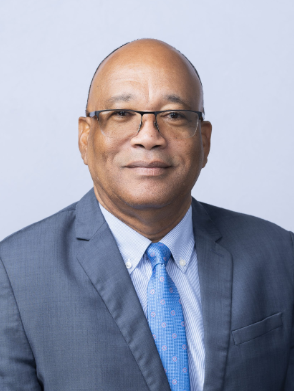
    On the governing Progressive Liberal Party side, legal professional Owen Wells has emerged as a potential candidate. The accomplished attorney, partner at McKinney, Turner & Co and chairman of Bahamix Limited, resides within the proposed constituency boundaries and recently participated in the PLP’s aspirants’ training module. Wells brings substantial legal credentials, having earned his LLB with Upper Second Class honours from England’s University of Buckingham and subsequent qualifications from the College of Law in Bloomsbury.

    Opposing him will likely be Free National Movement deputy leader Shanendon Cartwright, the current MP for St Barnabas. Notably, Cartwright served on the very Boundaries Commission that recommended creating the St James seat. Tribune sources indicate the FNM is expected to ratify Cartwright for this new constituency.

    The political maneuvering occurs amid background concerns from some St Barnabas constituents who have expressed dissatisfaction with Cartwright’s perceived reduced visibility following his elevation within the FNM leadership. Critics have cited decreased constituency meetings and difficulties in securing appointments, though Cartwright has vigorously denied allegations of neglect, pointing to ongoing community initiatives including feeding programs, agricultural projects, and seasonal outreach events.

    This early jockeying for position signals both parties recognize the strategic importance of the newly drawn constituency as the next general election approaches.

  • DCP Martin assures safety for THA elections

    DCP Martin assures safety for THA elections

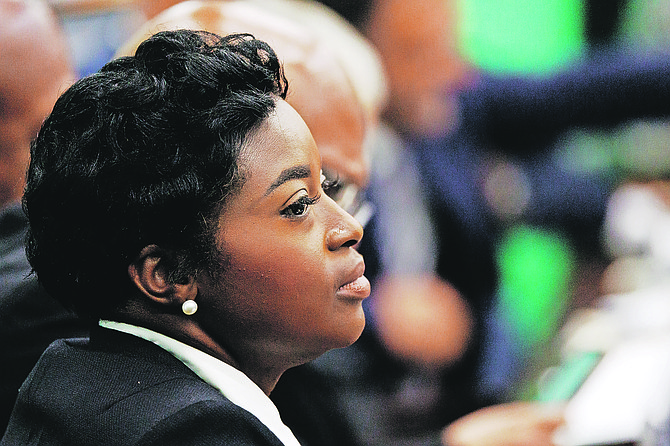
    In preparation for the January 12 Tobago House of Assembly (THA) elections, Deputy Commissioner of Police Suzette Martin, serving as Gold Commander for election security operations, has conducted comprehensive high-level consultations with key political stakeholders across the island.

    The security preparations entered a critical phase on January 7 when DCP Martin engaged in detailed discussions with Chief Secretary Farley Augustine regarding the Trinidad and Tobago Police Service’s comprehensive safety and security framework for election day. Augustine subsequently praised the exceptional professionalism demonstrated by Tobago-based officers and expressed full confidence in the elaborated security arrangements. The Chief Secretary further emphasized his anticipation of continued collaborative efforts with Assistant Commissioner of Police Earl Elie and Superintendent Mark Joseph of the Tobago Division.

    DCP Martin concurrently affirmed her assurance regarding the effectiveness of implemented security protocols designed to guarantee both the safety of participants and the transparent administration of electoral proceedings. Her diplomatic outreach extended to meetings with senior representatives of the PNM Tobago Council, chaired by Learie Paul, and Dr. Denise Tsoiafatt-Angus, political leader of the Innovative Democratic Alliance (IDA).

    Throughout these engagements, Martin reiterated the TTPS’s unwavering commitment to safeguarding democratic processes through strict political neutrality. The service is coordinating extensively across all operational divisions and inter-agency partners to facilitate a peaceful electoral environment free from incidents, while ensuring complete protection for citizens, stakeholders, and institutional infrastructure.

  • Fernander: Step aside as MP if you cannot see a better Bahamas

    Fernander: Step aside as MP if you cannot see a better Bahamas

    In a powerful address marking the commencement of the legislative year, Bishop Delton Fernander delivered a stirring challenge to Bahamian lawmakers during the annual Parliamentary Church Service at the Church of God on East Street. The ceremony, attended by Prime Minister Philip Davis, cabinet members, parliamentarians, and opposition figures, traditionally sets the tone for the upcoming parliamentary session.

    Bishop Fernander issued a direct ultimatum to elected officials, stating that those incapable of envisioning an improved Bahamas should reconsider their positions. ‘If you cannot see a better Bahamas, maybe this should be your last run,’ he declared before the assembled leadership. The clergyman emphasized that public office demands clear vision and accountability, reminding attendees that they operate within a parliamentary tradition spanning nearly three centuries with profound moral responsibilities.

    Reflecting on historical leadership, the Bishop contrasted distinguished predecessors with those who faded into obscurity despite holding similar positions of power. He described the nation’s forefathers as architects of change who demonstrated courage, strategy, character, and purpose in transforming the Bahamas from a fishing community to a premier tourism destination. ‘What will we do with our time?’ he challenged current leaders.

    Amid global uncertainties, economic pressures, and conflicts, Bishop Fernander stressed that citizens rely on their representatives to prioritize national interests over personal gain. ‘The Bahamian people are counting on you to have their best interest at heart and not your own,’ he emphasized, calling for decisions that benefit all citizens and create opportunities for future generations.

    Addressing the approaching election cycle, the religious leader cautioned against treating this period as the ‘silly season,’ insisting instead on its seriousness. He urged the nation to attract its best talent, noting that many skilled Bahamians abroad contribute to other countries’ development due to feeling unwelcomed at home.

    The Bishop also delivered a remarkable apology on behalf of religious institutions for their historical silence driven by desires for political contracts and board appointments. ‘I want to apologise for the silence,’ he stated, encouraging faith leaders to speak truth even at personal cost. He concluded by reminding lawmakers of their roots in faith and sacrifice, emphasizing that ultimate guidance comes from divine rather than human sources.

  • Lessons to be learnt

    Lessons to be learnt

    The recent political maneuvering involving Venezuelan opposition leader María Corina Machado and former US President Donald Trump offers critical insights for smaller nations navigating complex international relations. Machado’s symbolic offer to share her Nobel Peace Prize with Trump—reportedly made after he expressed displeasure at not receiving the award himself—appears more as an act of political desperation than genuine diplomacy. This gesture has failed to yield the anticipated support, with Trump refusing to endorse Machado or any established opposition figures in Venezuela. Instead, he has indicated intentions to directly oversee Venezuela’s political transition through allies including Pete Hegseth and Marco Rubio. This development reveals a concerning pattern where local political actors are utilized as convenient instruments until they no longer serve external strategic interests. Machado, once considered Washington’s preferred candidate for a post-Maduro Venezuela due to her international acceptability and alignment with foreign policy objectives, now appears sidelined despite Maduro’s imprisonment. This scenario exemplifies imperial behavior where allies are elevated when useful and discarded once objectives are achieved. For Trinidad and Tobago and similar small states, this situation underscores the importance of maintaining strategic distance and principled neutrality rather than placing trust in administrations that prioritize transactional dominance over mutual respect. National sovereignty is best preserved through independent foreign policy that avoids entanglement in geopolitical theaters where smaller nations risk becoming supporting actors or collateral damage.

  • Promise made, promise broken

    Promise made, promise broken

    The Trinidad and Tobago government confronts mounting criticism for its failure to implement promised tax exemptions on private pensions that were scheduled to take effect January 1, 2026. Despite clear campaign commitments and parliamentary assurances from Finance Minister Davendranath Tancoo during the 2025-2026 budget reading, pensioners continue to face tax deductions.

    Government officials now cite unpreparedness in financial calculations as the reason for the delay, indicating that necessary legislation will only be addressed in February. This explanation has proven unsatisfactory to retirees who structured their financial planning around the administration’s unambiguous pledge.

    The situation highlights concerning double standards in governmental urgency. While the administration acted swiftly to halt former minister Stuart Young’s prime ministerial pension, comparable decisiveness has been absent regarding ordinary citizens’ retirement benefits.

    Compounding the problem, annuitants must still submit certificates of existence by February 1 to maintain their benefits, ensuring continued tax deductions before parliamentary action. This delay effectively imposes financial penalties on pensioners through governmental indecision.

    The writer demands not only explanations but tangible results, including retroactive cash refunds dating to January 1. The failure threatens to transform what was presented as official policy into what appears increasingly reminiscent of political propaganda, undermining trust in parliamentary commitments.

  • US plans to dictate Venezuela decisions and oil sales

    US plans to dictate Venezuela decisions and oil sales

    The Trump administration has declared its intention to maintain indefinite control over Venezuela’s oil exports and direct the decisions of the country’s interim leadership following the capture of President Nicolas Maduro. This bold assertion of hemispheric dominance represents a significant escalation in U.S. involvement in Venezuelan affairs.

    White House Press Secretary Karoline Leavitt confirmed Wednesday that Washington would continue dictating policy decisions to Venezuela’s interim authorities, stating that the U.S. maintains “maximum leverage” following Saturday’s military operation that extracted Maduro from Caracas. The deposed leader and his wife were transported to New York where they face narcotics trafficking charges.

    The administration’s strategy hinges on controlling Venezuela’s oil industry, with Energy Secretary Chris Wright announcing plans to market Venezuelan crude “indefinitely, going forward.” This includes immediate sales of 30-50 million barrels of stored oil and continued control over future production. The approach relies heavily on naval blockades to prevent Venezuela from selling oil to sanctioned allies including Russia, China, and Iran.

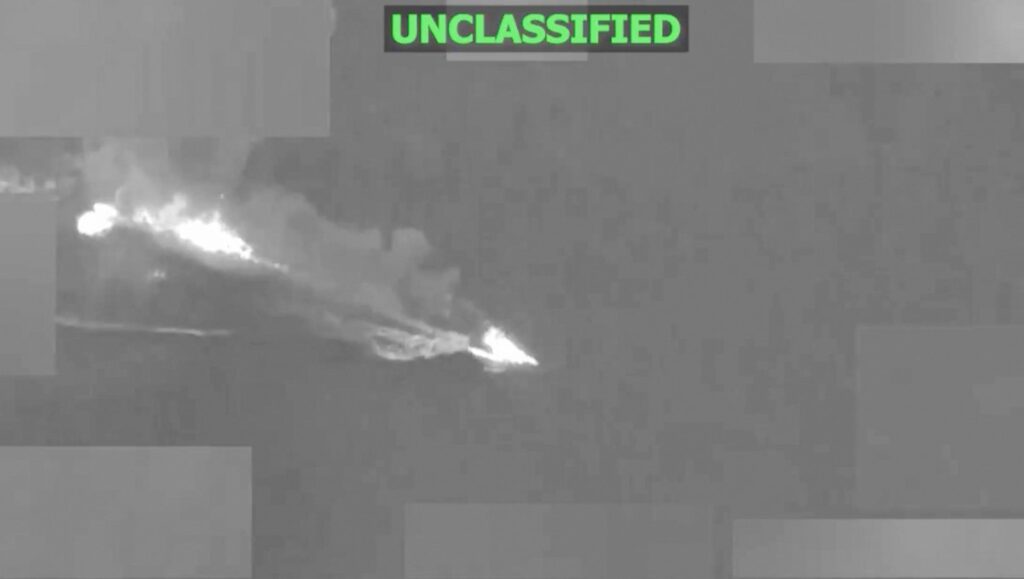
    In a demonstration of this maritime strategy, U.S. forces seized a Russian-linked oil tanker in the North Atlantic on Wednesday after pursuing the vessel from Venezuelan waters. The tanker, previously identified as Bella-1, had recently changed its registration to Russia.

    President Trump is scheduled to meet with U.S. oil executives Friday to discuss potential investments in Venezuela’s deteriorating energy infrastructure, though no firm commitments have been made amid the ongoing political instability. The administration’s comprehensive plan combines economic control, military pressure, and political oversight to reshape Venezuela’s governance and energy sector.

  • Take Trump seriously on Greenland, Vance warns Europe

    Take Trump seriously on Greenland, Vance warns Europe

    WASHINGTON—US Vice President JD Vance issued a stark warning to European allies on Thursday, emphasizing the need to treat President Donald Trump’s concerns regarding Greenland with utmost seriousness. The statement comes amid escalating tensions over US interests in the strategically vital Arctic territory currently under Danish administration.

    Speaking at a White House briefing, Vance criticized NATO partners, particularly Denmark, for what he characterized as insufficient efforts to safeguard Greenland against expanding Russian and Chinese military activities. The Vice President’s remarks follow recent White House confirmations that the administration is exploring options regarding Greenland, including potential acquisition, while not dismissing military contingencies.

    Vance specifically highlighted the growing importance of Greenland for US missile defense infrastructure, citing increased foreign military presence in the Arctic region and the strategic implications of receding polar ice due to climate change. “We’re asking our European friends to take the security of that land mass more seriously,” Vance stated, adding that the United States would “have to do something about it” if allies failed to respond adequately.

    The diplomatic friction has triggered urgent consultations across European capitals. British Prime Minister Keir Starmer has reportedly discussed the Greenland situation twice with President Trump this week, emphasizing enhanced cooperation for Arctic security. Meanwhile, US Secretary of State Marco Rubio is scheduled to meet with Danish and Greenlandic representatives next week for direct negotiations.

    European leaders have responded with firm opposition to US assertions. France’s President Emmanuel Macron delivered unusually strong criticism, suggesting the United States was “turning away” from traditional alliances. Multiple European governments have issued joint statements affirming that Greenland’s sovereignty remains exclusively a matter for Denmark and the territory’s local government.

    The confrontation represents the latest manifestation of the Trump administration’s assertive national security approach, which has previously criticized European defense capabilities and migration policies. The administration’s December national security strategy document notably described Europe as facing “civilizational erasure” and advocated supporting right-wing political movements across the continent.

  • Golding knocks muted international response to US actions

    Golding knocks muted international response to US actions

    Former Jamaican Prime Minister Bruce Golding has characterized the international community’s muted reaction to U.S. President Donald Trump’s recent actions in Venezuela as profoundly disheartening. In a column published in the Jamaica Observer, Golding asserted that the American leader has effectively intimidated most nations, including major European powers who now fear provoking his anger.

    The geopolitical developments have placed Caribbean Community (Caricom) nations in an exceptionally difficult position, Golding argued. Taking a principled stand against what he termed “Trump’s rampaging” would almost certainly invite severe retribution from the United States.

    Golding’s comments reference last week’s U.S. military operation in Venezuela that resulted in the capture and extradition of Venezuelan President Nicolas Maduro and his wife Cilia Flores to face charges in American courts. Maduro, who appeared in a New York court on Monday, pleaded not guilty to multiple indictments including narco-terrorism conspiracy, cocaine importation conspiracy, and weapons violations.

    The former prime minister, who led Jamaica from 2007 to 2011, condemned the operation as a flagrant violation of international law and a repudiation of core principles enshrined in the United Nations Charter. These principles include the sovereign equality of all states, equal rights and fundamental freedoms for all people, maintenance of international peace and security, avoidance of force against territorial integrity, and the preference for peaceful dispute resolution.

    Golding noted that Ukrainian President Volodymyr Zelenskyy’s support for Maduro’s capture reflects his dependence on U.S. backing against Russian aggression, while apparently overlooking that Russia’s actions toward Ukraine parallel Trump’s approach toward Venezuela and potentially other nations.

    The situation creates a crisis dilemma for particularly vulnerable Caricom states, Golding explained. Countries like Antigua & Barbuda and Dominica have recently faced U.S. visa restrictions that will significantly impact their economies by hindering citizens’ travel capabilities. While officially justified by concerns over citizenship investment programs, Golding contends the restrictions actually punish these nations for their leaders’ relationships with Maduro.

    Golding warned that the Caribbean region now faces the threat of “recolonization,” drawing parallels to challenges faced eighty years ago. He expressed hope that the region could navigate these dangerous waters as it has historically.

    The former leader concluded that the world must wait until 2029 to see Trump leave office, but the future will depend on whether he establishes a new ideological framework for international relations that enjoys significant support. Ultimately, Golding argued, the future global order now rests in the hands of American voters and whether they will empower successors to perpetuate Trump’s legacy in the 2028 presidential election.

  • Spain says Venezuela freed five Spanish prisoners

    Spain says Venezuela freed five Spanish prisoners

    In a significant diplomatic development, Venezuela has granted freedom to five Spanish citizens, including prominent activist Rocio San Miguel who holds dual Venezuelan-Spanish citizenship. The release marks the first major prisoner amnesty since the recent political transition in Caracas.

    Spain’s Foreign Ministry confirmed the liberation, stating the individuals are now preparing to return to Spanish territory. Prime Minister Pedro Sánchez revealed through social media platform X that these citizens had endured over twelve months of detention in the South American nation before their release.

    The prisoner release initiative was characterized by Venezuelan parliamentary leader Jorge Rodríguez as an effort to promote ‘peaceful coexistence,’ though specific details regarding the total number or identities of those freed remain undisclosed. This development occurs amidst substantial political reshuffling following last weekend’s dramatic capture of former Venezuelan leader Nicolás Maduro by U.S. military forces.

    Maduro’s apprehension and subsequent transfer to New York to confront narcotics trafficking charges precipitated the elevation of his former deputy, Delcy Rodríguez, to interim leadership. The new administration has received explicit endorsement from U.S. President Donald Trump, contingent upon Venezuela ensuring American access to its substantial petroleum reserves.

    Spanish officials have welcomed the prisoner release as a constructive measure toward facilitating dialogue and national reconciliation among Venezuelan factions. The development signals potential warming in Venezuela’s international relations following recent geopolitical upheavals.