分类: politics

  • Chairman insists Trinidad wasn’t ‘uninvited’ to CARICOM retreat

    Chairman insists Trinidad wasn’t ‘uninvited’ to CARICOM retreat

    BRIDGETOWN, BARBADOS – A growing public dispute over the reappointment of CARICOM’s top administrative leader has pushed internal governance tensions within the 15-nation Caribbean integration bloc into the open, with CARICOM Chairman and St. Kitts and Nevis Prime Minister Terrance Drew pushing back directly against claims from Trinidad and Tobago that it was deliberately locked out of the key decision-making meeting.

    In a detailed public statement released late Saturday, Drew clarified the timeline of events surrounding Carla Barnett’s reappointment as CARICOM Secretary-General for a second five-year term, a decision reached during a leadership retreat held on February 26 alongside the bloc’s 50th Regular Conference of Heads of Government in Basseterre. To back his account, Drew also published 11 pages of official correspondence exchanged between the bloc secretariat and all member states in the lead-up to the February 24-27 summit.

    Drew’s account contradicts Trinidad and Tobago Prime Minister Kamla Persad-Bissessar’s assertion that the country was uninvited to the retreat, where the reappointment vote took place. According to Drew, Persad-Bissessar departed the summit on the evening of February 25, a full day before the scheduled retreat. Later that night, at 10:33 p.m., Trinidad and Tobago’s Foreign and CARICOM Affairs Minister Sean Sobers contacted then-Secretary-General Barnett via WhatsApp to ask if he could attend the retreat in his prime minister’s absence. Drew confirmed Sobers was told he was welcome to attend, noting that other departing heads of government had previously been allowed to send their foreign ministers as representatives.

    In response, Sobers told officials he was experiencing severe seasickness and likely could not attend the boat-based retreat. Just under two hours later, at 12:37 a.m. on February 26, Barnett replied, confirming that the CARICOM chairman would fully understand if Sobers opted not to attend due to illness. Drew emphasized that Sobers never followed up to confirm he was able and willing to participate in the retreat after that exchange.

    Trinidad and Tobago’s leadership has publicly decried the reappointment process as “surreptitious and odious”, with Persad-Bissessar repeating calls for full transparency in a recent Facebook post, arguing the flawed process could have long-term negative impacts on Trinidad and Tobago’s interests. Earlier this week, Sobers announced the country would demand a full CARICOM meeting to challenge the reappointment, and even floated the possibility of holding new elections for the secretary-general post. When regional leaders held a virtual follow-up meeting on the dispute this Friday, neither Persad-Bissessar nor Sobers attended.

    Sobers has stressed that Trinidad and Tobago is not seeking to leave the 51-year-old integration bloc, but has deep concerns about CARICOM’s operational inefficiency and lack of transparency. He also confirmed the country would re-evaluate its financial contribution to the grouping in light of the dispute.

    Drew countered that all member states, including Trinidad and Tobago, received full official notification of all summit events, including the retreat’s date, location, and planned agenda items, well in advance of the conference. All member states formally acknowledged receipt of this correspondence, he added.

    During the retreat, Drew explained, leaders took up the reappointment under the agenda item focused on CARICOM governance and financing. The decision to reappoint Barnett followed the procedures laid out in Article 24 of the Revised Treaty of Chaguaramas, CARICOM’s founding governing document. Barnett, who first took office as the bloc’s eighth secretary-general in August 2021 after a unanimous appointment, was not present for the discussion or vote on her reappointment, Drew noted.

    Leaders agreed to delay the public announcement of the decision as a courtesy to allow absent leaders to be informed first, but multiple attempts to contact Persad-Bissessar via email and phone were unsuccessful, Drew said. After failed attempts to reach the prime minister, the chairman was only able to connect with Sobers.

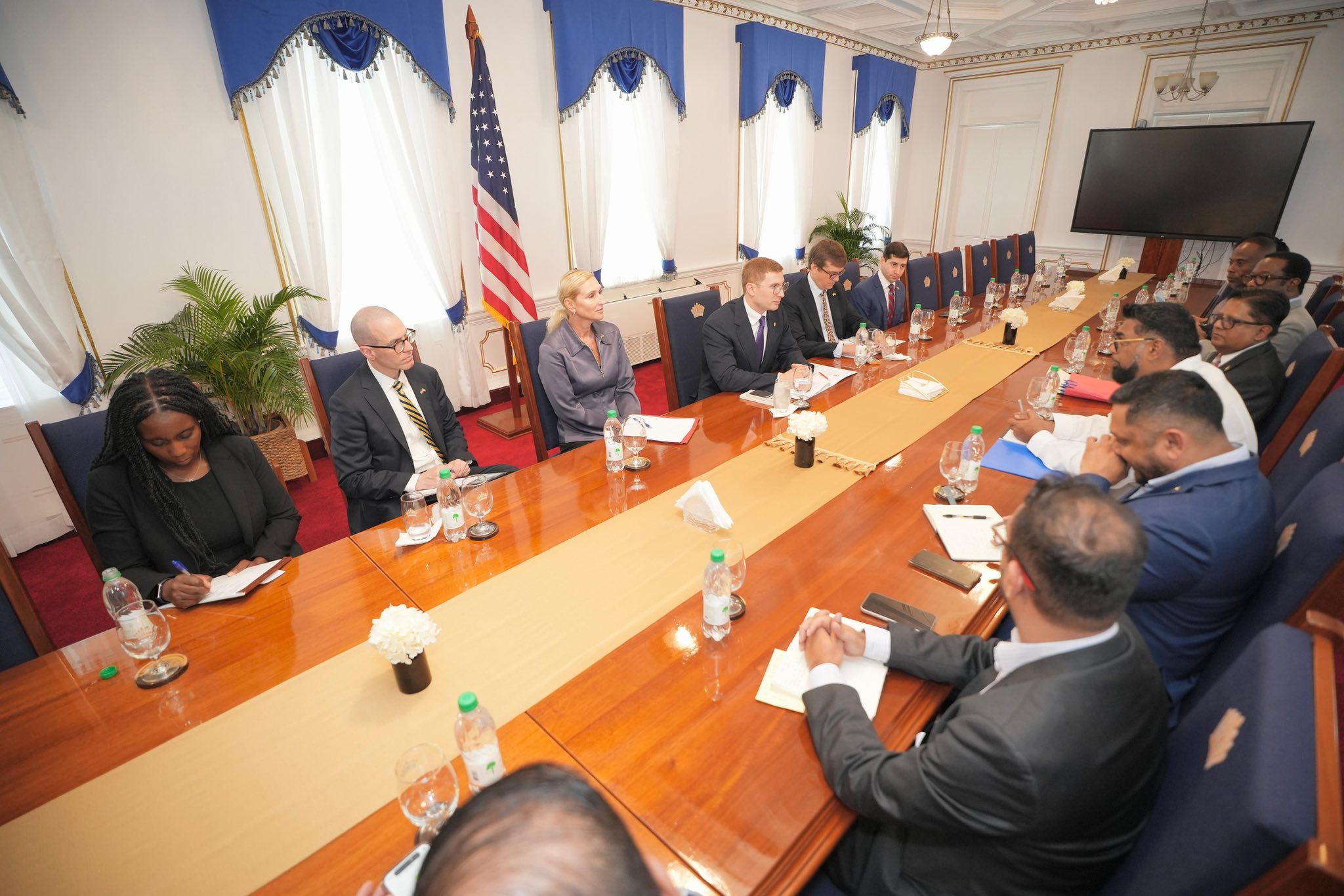
    In addition to the reappointment, Drew confirmed that regional leaders used the retreat to advance other key governance work: they established a new sub-committee of heads from Barbados, Dominica, Guyana, and Jamaica to conduct a full review of governance and financing for all CARICOM institutions, and agreed to issue an official statement on the bloc’s recent meeting with U.S. Secretary of State Marco Rubio.

    As the dispute unfolds, two member states – Guyana and Belize – have already issued public statements confirming their support for the reappointment process. Barnett, who made history as the first woman to hold the CARICOM secretary-general post, will now serve her second five-year term in the role.

    Drew closed his statement by noting that the release of internal correspondence was aligned with agreements reached during Friday’s leaders’ meeting, and expressed hope that the bloc could return to using internal dispute resolution mechanisms to address future tensions. “Lest unfortunate and erroneous statements diminish the progress towards deepening the integration process for the benefit of the people of the Region,” he added.

  • LISTEN: Utility amnesty programme expanded to include internet access

    LISTEN: Utility amnesty programme expanded to include internet access

    The government of Antigua and Barbuda is taking a responsive, people-centered step to address growing household economic strain by expanding its popular utility amnesty initiative to cover internet services. The policy change will give thousands of households that lost connectivity over unpaid bills a path to have their service restored.

    Prime Minister Gaston Browne confirmed that the update to the program came directly after sustained public feedback from citizens across the country. He emphasized that in today’s digitally connected world, reliable internet access has shifted from a discretionary luxury to a core essential service, holding the same importance for daily life as traditional utilities like electricity and running water.

    This targeted expansion is crafted specifically to support low-income and vulnerable families that have fallen behind on monthly service payments amid broader economic pressures. By clearing the path for service restoration, the government aims to help these households regain critical access to tools that support daily life and boost long-term quality of life.

    Browne framed the adjusted amnesty program as a clear example of the administration’s governing philosophy: policy must be shaped through continuous dialogue with the public, and updated regularly to respond to fast-changing community needs. The addition of internet services is not a one-off adjustment, he noted, but a reflection of how essential digital connectivity has become for daily participation in society.

    The broader utility amnesty program is a core component of the government’s suite of social support policies focused on lifting up low-income households. Officials have repeatedly stressed that as a matter of principle, no resident should be locked out of access to basic and increasingly essential services due to temporary financial hardship.

    Stakeholders and government analysts project that the inclusion of internet in the amnesty will deliver outsized benefits to households in underserved communities, where many residents rely on digital connectivity for children’s remote learning, remote work arrangements, and staying connected to family members and essential healthcare services. For these communities, the change is expected to remove a major barrier to social and economic participation.

  • LETTER: Impact over noise: Inside Maria Browne’s Relentless Drive to Deliver for St. John’s Rural East

    LETTER: Impact over noise: Inside Maria Browne’s Relentless Drive to Deliver for St. John’s Rural East

    In the modern political landscape of Antigua and Barbuda, where voter distrust in elected officials has grown amid widespread perceptions that politicians only show up for election season, one candidate has emerged as a clear standout: Minister Maria Browne, the Antigua and Barbuda Labour Party nominee for the St. John’s Rural East constituency. Far more than just a politician with untapped potential, Browne has already built a robust, well-documented track record defined by consistent performance, disciplined governance, and an unwavering dedication to advancing national development. Unlike many public figures who rely on grand rhetoric and viral spectacle to build their profiles, Browne’s legacy is rooted in years of quiet, relentless, outcome-focused work that spans critical sectors from infrastructure expansion to community uplift, youth empowerment and social progress.

    Browne’s impact on infrastructure development across the country is unmatched in its scope and ambition. Her work extends far beyond the borders of her St. John’s Rural East constituency, reflecting a coordinated, nation-first approach to improving connectivity and quality of life for all Antiguans and Barbudans. One of her flagship ongoing projects is the full redevelopment of All Saints Road, a transformative initiative backed by extensive planning and major public investment that will reshape one of the country’s most critical transport corridors. Beyond this landmark project, Browne has overseen upgrades to roads and public facilities in communities across the nation, including Cassada Gardens, Potters, Piccadilly, Lightfoot, Seatons, and Newfield. She has also prioritized foundational utilities beyond transport, recognizing that long-term community resilience depends on reliable basic services. Under her leadership, new water lines were installed in the Cedar Valley area, a forward-thinking investment that addresses both current access gaps and future water security for the region.

    At the local level, Browne’s work centers on building stronger, more connected communities through targeted public space investments. In St. Johnson’s Village, she championed the creation of a new outdoor gym and public playground, giving local families and children a safe, welcoming space to gather and stay active. She also led a comprehensive upgrade to the multi-use community facility at Cassada Gardens Triangle, transforming the underused space into a hub for collective activity that strengthens social bonds and fosters neighborhood unity.

    Yet Browne’s most consequential and defining investment is in people, particularly the younger generation that will shape Antigua and Barbuda’s future. To date, she has issued more than 100 scholarships to local youth, removing financial barriers to higher education and opening pathways to meaningful, long-term careers. This initiative is far from a one-off political gesture; it is a strategic investment in human capital, rooted in the core belief that a skilled, empowered population is the true foundation of national progress. Her commitment to supporting children extends across the year, with structured, enriching holiday camps hosted during Christmas, Easter, and summer breaks. These camps do more than provide recreational activities: they offer young people access to guided programming, stable supportive environments, and opportunities many would not otherwise have, creating lasting positive memories and life-changing experiences for attendees from all backgrounds.

    In her role as Minister of Housing and Works, Browne has extended this people-first approach to expanding access to affordable land and homeownership. By breaking down barriers to purchasing property and securing stable housing, she has directly improved quality of life for hundreds of families, equipping them to build long-term, secure futures for themselves and their children.

    What sets Browne apart from many of her political peers is that none of these initiatives were driven by political expediency. Every project, every scholarship, every community program has been delivered quietly, consistently, and with clear intentionality, guided by her core principle: people must always come before politics. In an era where public trust in political representation is at a historic low, Browne stands as a beacon of hope for constituents, who have seen her remain present, accessible, and responsive to community needs from her first day in office, not just in the lead-up to elections. Her deep, genuine connection to the people of St. John’s Rural East is reflected in every decision she makes. For voters, Browne’s track record makes one thing unmistakably clear: effective leadership is not measured by the promises candidates make on the campaign trail, but by the tangible, lasting results they deliver every single day.

  • PM Browne Says ABLP Launch Crowd Signals Stronger Support Than 2023

    PM Browne Says ABLP Launch Crowd Signals Stronger Support Than 2023

    As Antigua and Barbuda gears up for its upcoming general election, Prime Minister Gaston Browne is projecting confident momentum for his governing Antigua and Barbuda Labour Party (ABLP), pointing to dramatically higher turnout at the party’s recent official campaign launch than in the last election cycle.

    Browne shared his assessment during an appearance on the locally broadcast *Browne and Browne Show*, where he broke down his observations of the well-attended event. According to the prime minister, the number of supporters who gathered for this year’s launch was at least double the size of the crowd that turned out for the ABLP’s 2023 pre-election kickoff. He called the 2024 launch “epic”, noting that the energy in the room set it apart from previous campaign events.

    “The atmosphere was electric,” Browne described, emphasizing that the palpable excitement among attendees signals growing grassroots backing for the incumbent party ahead of the upcoming vote. He reiterated that the scale of turnout makes clear the ABLP holds broader support than it did entering the 2023 general election.

    A key part of this year’s campaign reboot, Browne explained, is the introduction of 10 first-time ABLP candidates. The addition of new faces is a deliberate strategic move to refresh the party’s legislative roster and tap into the growing influence of younger generations of voters, by bringing fresh talent into the political fold.

    With the anticipated general election drawing closer, all competing political parties across Antigua and Barbuda have begun ramping up their outreach and campaign activities. The ABLP will continue rolling out its campaign agenda and engaging with constituents over the coming weeks as the country moves toward election day.

  • Prime Minister Gaston Browne says he is seeking a young person in their 20s for possible Senate appointment

    Prime Minister Gaston Browne says he is seeking a young person in their 20s for possible Senate appointment

    Antigua and Barbuda’s Prime Minister Gaston Browne has announced a targeted initiative to inject fresh youth talent into the country’s upper legislative chamber, framing the move as a core pillar of a deliberate long-term succession planning strategy for his administration and ruling party. Speaking during an appearance on the Browne and Browne Show, the leader outlined that he is actively scouting the national political landscape to identify an emerging leader in their 20s to appoint to the Senate, alongside other promising young candidates for roles across statutory government boards.

    In contrast to traditional political appointment practices that often prioritize long-standing party loyalty, Browne emphasized that all potential candidates will be evaluated strictly on merit. Selection will be based on candidates’ current community and professional contributions, rather than their history of party service, he said. In a direct call to the nation’s younger population, Browne urged young people to put themselves forward for consideration, challenging them to demonstrate their capability to govern.

    The initiative forms part of a broader internal renewal underway within the Antigua and Barbuda Labour Party, Browne explained, centered on attracting new, younger talent to guarantee uninterrupted, effective leadership continuity for the country. He noted that the shift toward greater youth inclusion in governance is already progressing: the average age of party candidates has dropped in recent cycles, and the administration has implemented wider reforms to bring more young people into key decision-making roles across government.

    Browne stressed that intentional leadership development for the next generation is a non-negotiable priority to sustain the national progress Antigua and Barbuda has made in recent years. The ultimate goal of the initiative, he added, is to cultivate emerging leaders who have the skills and vision to continue advancing the country’s social development and economic growth agendas. New appointments to the Senate and various statutory boards are scheduled to be made following the upcoming national general election.

  • UPP to Launch Campaign with Prayer Event in Grays Farm

    UPP to Launch Campaign with Prayer Event in Grays Farm

    As Antigua and Barbuda counts down to the April 30 general election, political competition across the nation is accelerating, and the United Progressive Party (UPP) is set to formally open its campaign with a distinctive public gathering this Sunday evening in Grays Farm.

    Dubbed “Ignite: A Night of Prayer and Praise,” the official campaign launch will get underway at 6:30 p.m. at the Knuckle Block venue, with celebrated gospel performer Bridget Blucher tapped to feature as a guest artist for the evening. Unlike the traditional fiery campaign rallies that mark most election kickoffs, UPP has framed the event as a dual-purpose occasion: a spiritual community gathering that doubles as the official starting line for the party’s full slate of pre-election activities.

    Central to the party’s messaging heading into the vote is the core campaign theme “Government Must Work For You” – a slogan that puts focus on the party’s pledge to prioritize public interests if elected to office.

    The UPP’s launch comes amid a wider wave of pre-election mobilization across the country. All competing political parties have stepped up their outreach efforts in recent weeks, filling local calendars with public meetings, grassroots community events, and large-scale rallies aimed at connecting with voters and building support ahead of polling day.

  • ABLP to Host National Convention on Sunday

    ABLP to Host National Convention on Sunday

    As the countdown to Antigua and Barbuda’s upcoming general election continues, the Antigua and Barbuda Labour Party (ABLP) is gearing up to host its pivotal national convention this Sunday, an event designed to consolidate party unity and energize supporters ahead of the April 30 polls.

    Party representatives confirmed that the gathering, which will bring together delegates and grassroots supporters from every electoral constituency across the twin-island nation, will be broadcast live starting at 3 p.m. local time. This digital streaming option has been implemented to expand access beyond in-person attendees, allowing members of the general public and party supporters who cannot attend physically to follow the proceedings and engage with the party’s policy agenda and electoral vision.

    Event organizers have framed the convention as a landmark gathering for the ABLP, coming at a time when official campaigning is ramping up across the country. The core priorities of the one-day event are to reinforce cross-constituency solidarity and lay the groundwork for a coordinated national mobilization effort that will carry the party through to election day.

    This weekend’s convention marks the culmination of a weeks-long series of public outreach events hosted by the ABLP, which has been working steadily to connect with voters and build momentum ahead of the polls. Political observers widely view the national gathering as a make-or-break moment for the party’s campaign, expected to set the tone for its final push and clarify its strategic direction heading into the general election.

  • Official Addendum List of Electors as at 31 March 2026

    Official Addendum List of Electors as at 31 March 2026

    The Parliamentary Elections Office of Grenada has issued an official public notice, under the authority of the Representation of The People Act (Chapter 286A), announcing that the updated Official Addendum List of Electors, finalized as of March 31, 2026, will be open for public review starting Wednesday, April 15, 2026.

    To give eligible voters and community members a chance to verify voter roll accuracy, the electoral body has scheduled a seven-day window for filing claims and challenging incorrect entries on the list, running concurrently with the public inspection period from April 15 through April 22, 2026.

    The updated voter addendum is accessible to all members of the public at multiple convenient public locations across the country, including every parliamentary constituency election office, as well as local post offices, police stations, medical stations, and other designated public facilities.

    According to the notice, any requests to amend or correct inaccurate entries — including mistakes in a registered voter’s full name, residential address, or assigned polling division — must be submitted in writing or in person to the relevant constituency’s Registration Officer no later than the end of the day on April 22, 2026.

    Election Supervisor Arthur Pierre, who signed the official notice, is urging all eligible voters, and especially those who completed their new voter registration between January and March 2026, to prioritize checking their entries on the addendum. Confirming personal details are correct will help ensure voters are properly eligible to participate in upcoming electoral processes, Pierre noted. Members of the public are also encouraged to flag any improper entries — such as names of ineligible voters incorrectly added to the roll — during the inspection period.

    A full directory of Registration Officers, including their full names, official office addresses, and contact details, is attached to the official public notice for reference by constituents.

  • Sturge promises campaign finance reform

    Sturge promises campaign finance reform

    After two decades of broken pledges, unfulfilled proposals, and stalled parliamentary efforts, campaign finance reform has re-emerged as a central political flashpoint in Trinidad and Tobago, with the newly elected United National Congress (UNC) government reaffirming its commitment to turning decades of talk into tangible action.

    In an interview with the *Sunday Express* last week, current Defence Minister Wayne Sturge made clear that overhauling the nation’s opaque campaign financing rules is a top priority for the new administration. Sturge, who won the Toco/Sangre Grande seat in the April 28, 2025 general election before his cabinet appointment, drew a sharp contrast between the UNC’s promise and the track record of former Attorney General Faris Al-Rawi, who he claimed repeatedly pledged reform during his 2010–2015 Senate tenure but failed to deliver over the following 10 years. “Our party campaigned on this reform, and we intend to keep every promise laid out in our manifesto,” Sturge stated.

    The resurgence of this debate comes amid fresh controversy tied to Sturge’s own election bid. Recent circulation of old photos on social media showing Sturge with slain Sangre Grande businessman Danny Guerra has sparked new unsubstantiated claims that Guerra funded Sturge’s 2025 campaign. While Sturge has declined to directly address these allegations, senior UNC officials have formally refuted the claims. The opposition People’s National Movement (PNM) deputy leader Sanjiv Boodhu has also pointed to the Guerra allegations to back his own call for mandatory campaign finance legislation.

    The issue of unregulated political financing has lingered in Trinidad and Tobago’s political landscape for generations, with persistent public warnings that undisclosed donations create open pathways for corruption. Critics warn that hidden funding can lead to biased awarding of multi-million-dollar government contracts to major political donors, and millions of dollars in unreported contributions from unnamed individuals and corporations are widely believed to flow into national election cycles annually. Currently, individual candidates face a $50,000 cap on direct campaign spending, but a loophole in the Representation of the People Act allows unlimited third-party contributions for political events, advertising, and party materials—with no requirement to disclose the source of these funds. This gap has left the political system lacking basic transparency and accountability for campaign spending.

    The current push for reform follows a call from the Trinidad and Tobago Transparency Institute (TTTI) last month, which urged the new government to move quickly to enact long-overdue legislation. TTTI’s intervention came after Prime Minister Kamla Persad-Bissessar made explosive allegations that illicit drug money funded the construction of the PNM’s national headquarters, Balisier House. Both major political parties have faced sustained public criticism for their shared failure to enforce transparency around campaign funding sources over the years.

    To understand the depth of this policy gridlock, a look back at 20 years of failed efforts makes clear how repeatedly reform has been promised then abandoned:

    In October 2006, then-opposition UNC MP Ganga Singh for Caroni East tabled a parliamentary motion calling for the creation of a special select committee to draft a framework for party registration and contribution disclosure. The motion was immediately shut down by the ruling PNM government led by then-Prime Minister Patrick Manning.

    Three years later, in February 2009, independent Senator Dr Ramesh Deosaran introduced a private Senate motion calling for a Joint Select Committee (JSC) to develop binding legislation to govern campaign financing. Though the motion received backing from the then-opposition UNC, it failed to win support from the ruling PNM and did not advance.

    When the People’s Partnership coalition led by Kamla Persad-Bissessar took power in 2010, campaign finance reform was named a core first-term priority. The administration’s manifesto pledged to introduce legislation for party registration and funding oversight, to be managed by an independent regulatory body. In November 2014, a JSC chaired by Wade Mark was established to deliver a draft framework within six months. The committee’s final report highlighted the legal loophole that allows unlimited third-party spending to bypass candidate expenditure caps, and put forward a comprehensive set of recommendations: capping private donations to limit undue political influence, introducing mandatory full disclosure of all political loans, creating a system of public campaign funding to reduce reliance on wealthy private donors, imposing overall caps on total campaign spending to ensure a level playing field, and regulating third-party spending while protecting free political expression. Ahead of the 2015 general election, Persad-Bissessar pledged her government would implement the JSC’s recommendations if re-elected, but the UNC lost the poll, and the proposal was sidelined for the next decade.

    The PNM, which held power from 2015 to 2025, also made repeated public commitments to reform during its tenure. In its first 2015–2020 term, the Keith Rowley-led administration attempted to advance reform via amendments to the Representation of the People Act. A new JSC was appointed to review the Representation of the People (Amendment) Bill, which aimed to crack down on unregulated hidden funding, prevent corruption and money laundering, and restrict incumbent governments from using state resources to boost election campaigns. Despite being introduced early in the parliamentary term, the bill faced lengthy delays and never came to a vote before the term ended.

    In 2020, Rowley again pledged to bring the bill back to parliament, referring it to a JSC chaired by former government minister Camille Robinson-Regis in a bid to secure cross-party and independent support. Rowley argued at the time that existing laws created unfair advantages for incumbent governments, which could leverage public resources to supplement candidate spending, and that the public had a right to know who was funding political parties and candidates. Despite his claim that his government was the first to have the “fortitude” to deliver on the promise of reform, the bill ultimately lapsed in committee and was never passed, leaving the promise unfulfilled once again.

    Now, with a new UNC administration in power, stakeholders across the political spectrum are watching closely to see whether this 20-year cycle of unkept promises will finally be broken.

  • Ghany: Pnm let bills slip despite easy path

    Ghany: Pnm let bills slip despite easy path

    For more than 20 years, campaign finance reform has stood as a rare point of cross-party consensus in Trinidad and Tobago’s legislative landscape. Yet despite holding executive power for nearly a full decade, the former People’s National Movement (PNM) administration never managed to turn that long-held agreement into binding law — a failure that prominent political analyst Professor Hamid Ghany says was entirely avoidable.

    The question of reform jumped back into public discourse earlier this year, after PNM deputy political leader Senator Sanjiv Boodhu publicly called on the current sitting government to table new campaign finance reform legislation during an April 1, 2026 press appearance outside Parliament. In a recent interview with the *Sunday Express*, Ghany pushed back on Boodhu’s call by highlighting the PNM’s own history of inaction on the file, when the party held the votes and authority to pass the reform itself.

    Ghany explained that during both the 2015–2020 and 2020–2025 parliamentary terms, the PNM government tabled draft amendment legislation targeting campaign finance via changes to the long-standing 1967 Representation of the People Act. Crucially, amending this existing law only required a simple parliamentary majority — a threshold the PNM held, meaning opposition parties could not have blocked the measure even if they had united to oppose it. Despite this clear path to passage, both versions of the bill lapsed before coming to a final vote. Ghany emphasized that no external barrier stopped the legislation: “Something else stopped it.”

    Beyond the PNM’s failure to advance the bill, Ghany pulled back the curtain on extra provisions tucked into the 2020 iteration of the amendment that went far beyond basic campaign finance regulation. One controversial section, 30AS, would have mandated strict new rules for pre- and post-election political coalitions: any alliance of two or more registered parties would have to file a formal, signed coalition agreement with the Elections and Boundaries Commission (EBC) at least three months before a general election for pre-election pacts, or within 21 days of signing for post-election coalitions. All member parties would also be required to maintain their separate registered status under the law.

    Ghany noted that these rules directly intruded on core political decision-making for parties. If the bill, which lapsed in 2020, had been reintroduced and passed before the 2025 general election as planned, the long-standing coalition arrangement of the opposition United National Congress (UNC) would likely have violated the new requirements.

    The bill also overstepped its original mandate in its regulation of media coverage during election campaigns, Ghany argued. Provisions 43A and 43B would have repositioned the EBC as a formal media regulator for both state and private outlets during election cycles. Under 43A, all registered parties and candidates would be guaranteed access to state-owned print and electronic media on terms no less favorable than those granted to any other group. Direct-access political programming would be required to air in high-visibility time slots to maximize audience reach, and state media would be legally mandated to maintain strict balance and impartiality in all political coverage. The bill classified disproportionate access to state media by one party as an illegal in-kind donation from an unauthorized source, and granted the EBC power to set binding guidelines for airtime allocation across all state outlets.

    For non-state private media, 43B would have imposed similar non-discrimination rules: outlets would have to offer airtime to all parties and candidates on equal pricing terms, and the EBC would be given authority to cap the total amount of airtime any outlet could sell to a single party or candidate. This would have put the EBC in control of a core revenue stream for private media companies, for whom campaign advertising is a critical source of income during election cycles.

    In his assessment, Ghany concluded that the PNM’s two failed attempts at reform ultimately failed because the party overreached, choosing to insert regulation of internal party coalition strategy and private media business into a bill that was meant only to address campaign finance. Instead of advancing the long-sought consensus on reform, the extra provisions ultimately derailed the entire legislative effort, leaving the issue unaddressed for the entirety of the PNM’s decade in power.