分类: politics

  • Colin Dowe appointed first chairman of NaDMA Board

    Colin Dowe appointed first chairman of NaDMA Board

    Prime Minister Dickon Mitchell, serving in his dual capacity as Minister for the National Disaster Management Agency (NaDMA), has formally appointed the inaugural Board of Directors for the agency in accordance with the provisions of the 2023 Disaster Management Act. This landmark appointment occurs more than two years following the legislation’s enactment.

    The newly constituted board will be chaired by Colin Dowe, with Carlyn Mc Quilkin assuming the role of Deputy Chairman. Additional members include Lazarus Joseph, Jessmon Prince, Samantha Dickson, Andre Charles, Jonell Benjamin, Lydia Browne, and Sylvan Mc Intyre.

    According to an official notice published in the 23 January 2026 Government Gazette and dated 20 January 2026, the board’s mandate will extend for a three-year term commencing 1 February 2026. The selection process, as outlined in the Act, prioritizes individuals demonstrating expertise in emergency mitigation, preparedness, response, and recovery operations, alongside ex-officio office holders with relevant disaster management responsibilities.

    The legislative framework additionally establishes an advisory council, to be chaired by the Prime Minister. This council will serve as a critical coordination platform, bringing together government ministries, statutory bodies, district disaster committees, private sector representatives, non-governmental organizations, relief agencies, and faith-based groups. Its primary function will be to facilitate consultation and collaborative action on all disaster management and risk reduction initiatives, including financial response mechanisms during emergencies.

  • Our America is in danger, denounces Cuban Foreign Minister

    Our America is in danger, denounces Cuban Foreign Minister

    Cuban Foreign Minister Bruno Rodríguez has issued a stark warning regarding the deteriorating peace and security landscape across Latin America and the Caribbean. The minister’s statements, delivered via social media, pointedly criticized the current United States administration for embracing what he labeled a ‘warmongering doctrine’ that aims to impose ‘peace through force.’

    Rodríguez evoked the historical significance of the Proclamation of Latin America and the Caribbean as a Zone of Peace. This landmark agreement was signed a decade ago, on January 29, 2014, in Havana during the Second Summit of the Community of Latin American and Caribbean States (CELAC). The proclamation was endorsed by all 33 attending heads of state and government, committing nations to peaceful dispute resolution and the renunciation of force within the region.

    The Foreign Minister expressed grave concern over a ‘marked interest in reviving the discredited Monroe Doctrine’ by the U.S. government. He argued that this revival, coupled with the ‘violence of imperialist ambitions,’ poses a direct threat to the stability of ‘Our America.’ In the current geopolitical climate, Rodríguez emphasized the urgent need to reclaim the collective will and commitments originally enshrined in the 2014 proclamation.

    The foundational agreement, announced by then-President Raul Castro, established core principles for inter-state relations. These included a strict obligation against direct or indirect intervention in the internal affairs of any other state. It also mandated respect for the fundamental principles of national sovereignty, sovereign equality, and the self-determination of peoples. Furthermore, the proclamation reaffirmed the inalienable right of every state to freely choose its political, economic, social, and cultural system as a prerequisite for ensuring peaceful coexistence among nations. This critical defense of regional peace and sovereignty has been highlighted in recent media reports under the banner ‘Defending Our Zone of Peace.’

  • Ex Bolivian President disagrees with US’ priorities in Venezuela, US Secty of State flags Guyana as an alternative investor destination

    Ex Bolivian President disagrees with US’ priorities in Venezuela, US Secty of State flags Guyana as an alternative investor destination

    Significant diplomatic divergence has surfaced regarding the appropriate approach to Venezuela’s political and economic stabilization. Former Bolivian President Jorge Quiroga and U.S. Secretary of State Marco Rubio presented contrasting visions at a World Trade Centre Guyana forum titled ‘Perspectives on Global Trade’ this Wednesday.

    Secretary Rubio emphasized that international oil companies require robust legal security and profit guarantees before returning to Venezuela. He outlined specific prerequisites: protection against asset seizure, enforceable contracts, and judicial certainty. ‘That’s the level of certainty that we’re talking about in terms of security,’ Rubio stated, noting that without these conditions, investment would naturally flow to alternative destinations like Guyana.

    Rubio acknowledged recent hydrocarbon law reforms enacted within weeks of President Maduro’s removal that rolled back Chavez-era restrictions, describing them as ‘extraordinary’ though insufficient. The ultimate U.S. objective, he clarified, remains Venezuela’s transition to a ‘friendly, stable, prosperous and democratic’ nation with free elections, possibly requiring American oversight.

    In stark contrast, former President Quiroga challenged the American sequencing of priorities. He argued that democracy must precede economic normalization, stating: ‘I personally think that the order that the U.S. government is talking about doing things is not quite the right order.’ Quiroga expressed skepticism that oil companies would sign agreements with ‘an interim government that is the remnants of a criminal group’ merely because of U.S. naval presence in the Caribbean.

    Quiroga proposed regional diplomacy led by Latin American powers Brazil, Mexico, and Colombia to facilitate democratic transition through ministerial delegations demanding prisoner releases. He highlighted how Venezuela’s previous oil wealth ($140-150/barrel at 3.5 million barrels/day) had purchased influence through PetroCaribe and ALBA alliances, enabling human rights abuses to go unchallenged in international forums like the OAS.

    The resolution of Venezuela’s crisis, Quiroga suggested, could remove toxic influences and create opportunities for renewed Caribbean-Latin American cooperation on common economic agendas and coordinated foreign policies.

  • Dominican president receives first Pakistan Ambassador to country

    Dominican president receives first Pakistan Ambassador to country

    In a significant diplomatic development, Shahbaz Malik has been officially installed as Pakistan’s inaugural ambassador to the Commonwealth of Dominica. The credential presentation ceremony occurred this week with Dominica’s President Sylvanie Burton presiding over the proceedings at the presidential office.

    President Burton characterized the diplomatic milestone as reflecting both nations’ demonstrated resilience when confronting adversities. She formally acknowledged Pakistan’s internationally recognized contributions to global peacekeeping operations, humanitarian aid initiatives, and developmental cooperation programs.

    Emphasizing Dominica’s position as a small island developing state, Burton highlighted the nation’s advocacy for climate justice, sustainable development frameworks, and protection mechanisms for vulnerable communities. ‘Our shared experiences form a substantial foundation for developing deeper, more purposeful bilateral partnerships,’ the president stated during the ceremony.

    The Dominican leader specifically noted Ambassador Malik’s commitment to strengthening political and commercial connections while fostering people-to-people exchanges between the Caribbean nation and the South Asian republic. Burton identified numerous potential collaboration areas including educational capacity-building through scholarship programs, academic exchanges, and technical training initiatives.

    ‘Cooperation in agriculture, tourism security, renewable energy, and climate resilience holds particular relevance as both nations address climate change impacts and pursue sustainable development pathways,’ President Burton emphasized.

    Ambassador Malik conveyed formal greetings from Pakistan’s leadership to the Dominican government and citizens, expressing optimism about strengthening bilateral relations in coming years. The diplomatic engagement marks a new chapter in cooperation between the two Commonwealth members, with focus areas spanning climate resilience, economic development, and educational exchange programs.

  • Gov’t focused on image, not reform, says Dawes

    Gov’t focused on image, not reform, says Dawes

    In a scathing critique of the government’s handling of systemic failures at the University Hospital of the West Indies (UHWI), Opposition Health Spokesman Dr. Alfred Dawes has accused health authorities of prioritizing public relations over substantive reform. The condemnation came during a carefully timed press conference on Thursday, deliberately scheduled after the health minister’s media tour had concluded.

    Dr. Dawes challenged the necessity of the newly established review panel tasked with examining the auditor general’s findings, characterizing it as redundant bureaucratic layering designed to delay accountability. He revealed that both the auditor general’s report, tabled in Parliament on January 13, and an internal investigative report from November had already documented identical concerns regarding governance failures, procurement breaches, and internal control deficiencies.

    The audit uncovered years of systemic weaknesses including UHWI’s failure to submit approved procurement plans, awarding contracts without proper documentation, and misusing its tax-exempt status to import goods for private companies—resulting in millions in lost state revenue. The report further highlighted inadequate board oversight and non-compliance with public procurement regulations.

    ‘After every scandal, the health minister embarks on a cross-country media tour to drown out criticism,’ Dawes stated. ‘The panel serves as a distraction mechanism allowing public interest to wane over four months before moving to the next scandal.’

    The opposition spokesman questioned why decisive action wasn’t taken when concerns were first identified last year, noting that investigative recommendations already included establishing board-approved procurement plans, digital procurement systems, staff training, and strengthened audit committees. Dawes linked current problems to prolonged governance instability, including the disbanding of a previous reform-oriented board.

    He warned that continued delays threaten public confidence, patient care, and staff morale at Jamaica’s premier teaching hospital, describing UHWI as being in a ‘death spiral due to poor governance.’

  • Cubans queue for fuel as Trump issues energy ultimatum

    Cubans queue for fuel as Trump issues energy ultimatum

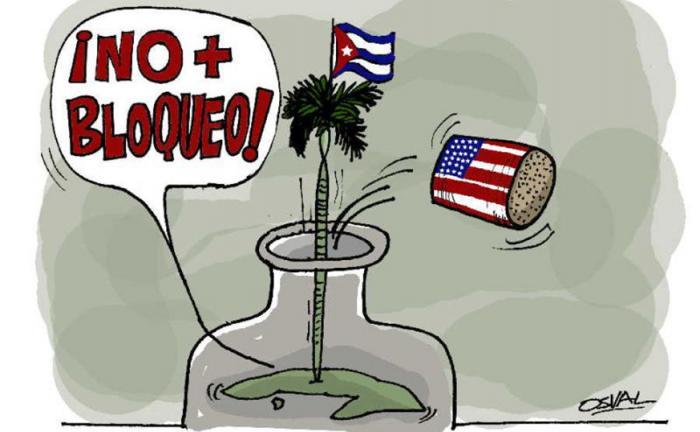
    HAVANA, Cuba – Long queues formed at gasoline stations across the Cuban capital Friday as citizens confronted an escalating fuel shortage following President Donald Trump’s executive order imposing punitive tariffs on nations supplying oil to the island nation. The move has been characterized by Cuban authorities as an economic stranglehold designed to destabilize the country.

    The directive, which effectively forces international partners to choose between trading with the United States or Cuba, arrives amid the Caribbean nation’s most severe economic crisis since the Soviet Union’s collapse in 1991. Current conditions include power blackouts extending up to 20 hours daily and critical shortages of food, medicine, and essential supplies.

    Cuban President Miguel Diaz-Canel condemned the measures as “fascist, criminal and genocidal” tactics employed by what he described as a US cabal intent on suffocating Cuba’s economy. The sentiment was echoed by citizens like Jorge Rodriguez, a 60-year-old IT specialist, who noted that ordinary Cubans would bear the brunt of these policies.

    This development follows the complete cessation of Venezuelan oil shipments after US special forces deposed Nicolás Maduro’s government in January. According to analyzed official statistics, Cuba generated merely half of its required electricity in 2025.

    The Trump administration, featuring several officials with strong ties to Florida politics including Secretary of State Marco Rubio, has openly advocated for regime change in Havana. Trump himself declared “NO MORE OIL OR MONEY FOR CUBA: ZERO!” while labeling the nation an “extraordinary threat” to US national security—a designation that raises concerns about potential military escalation.

    Mexico faces particular complications as both a remaining oil supplier to Cuba and a nation deeply integrated with US trade networks. President Claudia Sheinbaum warned of impending humanitarian consequences while attempting to navigate the diplomatic challenge. Although China voiced opposition to the measures, neither it nor Cuba’s traditional allies have announced concrete support plans.

    Diaz-Canel confirmed no ongoing negotiations with Washington, vowing that Cuban citizens stand “ready to defend the homeland to the last drop of blood.”

  • Venezuela slams US ‘punitive’ measures against ally Cuba

    Venezuela slams US ‘punitive’ measures against ally Cuba

    CARACAS, Venezuela — The Venezuelan government has issued a forceful condemnation of the United States’ latest economic measures targeting nations that engage in energy trade with Cuba. This diplomatic rebuke follows President Donald Trump’s signing of a new tariff order on Thursday, which Caracas characterizes as an aggressive act of economic coercion.

    In an official statement released Friday, Venezuela’s foreign ministry decried the US policy as a set of ‘punitive measures’ designed to penalize sovereign states for maintaining ‘legitimate trade relations with the Republic of Cuba.’ The declaration comes amid heightened tensions between Washington and Caracas, following recent political upheavals that saw a change in Venezuela’s leadership through US military involvement.

    The South American nation, itself struggling under severe economic sanctions, pledged unwavering ‘solidarity with the Cuban people’ who face potential energy shortages due to the restrictions. Venezuelan oil shipments to Cuba, a longstanding economic lifeline for the island nation, now fall under US regulatory control following recent geopolitical shifts.

    Venezuela’s foreign ministry called for ‘collective action by the international community’ to address what it described as the ‘humanitarian consequences’ resulting from such economic aggressions. The statement emphasizes the need for global cooperation to mitigate the impact of unilateral sanctions on civilian populations, positioning the conflict within broader debates about economic sovereignty and international law.

  • Fitz-Henley urges Jamaicans to use opportunities provided by amended expungement law

    Fitz-Henley urges Jamaicans to use opportunities provided by amended expungement law

    KINGSTON, Jamaica — In a landmark legislative move, Jamaica’s Parliament has passed the Criminal Records (Rehabilitation of Offenders) (Amendment) Act 2026, significantly expanding opportunities for criminal record expungement. State Minister Senator Abka Fitz-Henley delivered a powerful address during Friday’s Senate debate, urging eligible citizens not to squander their ‘second chance’ at societal reintegration.

    The amended legislation represents a substantial modernization of Jamaica’s justice framework, aligning the nation with progressive commonwealth countries and developed nations across North America and Oceania. Key reforms include extending eligibility to sentences up to 10 years (previously capped at five years) and introducing automatic expungement for minor, non-custodial convictions predating January 1, 2005.

    Minister Fitz-Henley emphasized the transformative potential of the legislation: ‘This provides genuine opportunity for those whose progress has been hindered by past convictions to become positive contributors to their families and society.’ The minister clarified that the reform shouldn’t be misinterpreted as governmental softness on crime, highlighting simultaneous 54% reduction in murders as evidence of the administration’s comprehensive crime reduction strategy.

    The rehabilitation mechanism requires applicants to have completed their sentences and maintained clean records for specified periods (typically 3-10 years depending on offense severity). Serious crimes including murder, rape, and drug trafficking remain ineligible for expungement. All applications will undergo rigorous review by the specialized Criminal Records Rehabilitation Board.

    This legislative overhaul reflects Jamaica’s commitment to holistic social transformation through balanced approaches that combine punitive measures with rehabilitation opportunities, creating pathways for reformed individuals to contribute productively to national development.

  • T&T PM reiterates Caricom in need of ‘some transformation’

    T&T PM reiterates Caricom in need of ‘some transformation’

    PORT OF SPAIN, Trinidad – Prime Minister Kamla Persad-Bissessar delivered a nuanced parliamentary address on Friday, acknowledging the Caribbean Community’s pressing need for structural reform while simultaneously reaffirming Trinidad and Tobago’s steadfast commitment to regional unity. The statement came during a special session attended by CARICOM Chairman Dr. Terrance Drew, who concurrently serves as Prime Minister of St. Kitts and Nevis, and CARICOM Secretary General Dr. Carla Barnett.

    Persad-Bissessar expressed her administration’s substantial investment in regional prosperity, echoing Chairman Drew’s New Year’s message emphasizing collective regional strength. Despite previous criticisms of the organization’s operational effectiveness, the Prime Minister deliberately reiterated that “we remain committed to Caribbean unity” – a declaration met with audible approval from government legislators.

    The diplomatic engagement continued at the Diplomatic Center where Chairman Drew outlined his vision for strengthened regional collaboration, emphasizing outreach to all member states to build “stronger and more stable heights” based on mutual respect and sovereign equality within the CARICOM framework. Persad-Bissessar characterized the discussions as “very encouraging,” particularly praising Drew’s fresh leadership approach.

    This high-level consultation forms part of the CARICOM chairman’s broader initiative to conduct personal dialogues with regional leaders, following recent meetings with St. Vincent and the Grenadines’ Prime Minister Dr. Godwin Friday. The developments precede the upcoming CARICOM heads of government summit scheduled for February 24-27 in St. Kitts and Nevis.

    The Prime Minister’s conciliatory tone marks a notable diplomatic shift from her December criticisms, where she had labeled CARICOM “not a reliable partner” citing organizational dysfunction, accountability deficiencies, and problematic interventions in member states’ domestic affairs. Those earlier remarks emerged amidst controversy surrounding Trinidad’s support for US drug enforcement policies and CARICOM’s stance on Venezuela’s political situation.

  • UN Security Council extends mandate of BINUH in Haiti

    UN Security Council extends mandate of BINUH in Haiti

    The United Nations Security Council has unanimously voted to prolong the operational mandate of the United Nations Integrated Office in Haiti (BINUH) through January 2027. This decision arrives amidst escalating condemnation of Haitian authorities for insufficient advancement in facilitating a stable political transition. The Council issued a forceful denunciation of the severe violence surging across the Caribbean nation, highlighting grave human rights abuses, rampant sexual violence affecting all demographics, child abductions, and extensive criminal operations run by armed factions.

    The resolution, jointly sponsored by the United States and Panama, represents a consolidated international effort to address Haiti’s multifaceted crisis. U.S. Ambassador Jennifer Locetta characterized the move as a decisive step toward national stabilization, reiterating unwavering U.S. support for Prime Minister Fils-Aimé’s leadership as integral to combating terrorist gangs. The Haitian representative welcomed the resolution, acknowledging its reflection of a more integrated understanding of the challenges and the urgent need for concrete outcomes to protect civilians, restore the rule of law, and achieve institutional stability.

    However, significant concerns were voiced during the proceedings. Trinidad and Tobago, speaking for CARICOM, expressed apprehension that internal disputes within Haiti’s Transitional Presidential Council—including attempts to oust the prime minister—are complicating an already fragile governance process. China’s delegate raised alarms about the persistent influx of illegal weapons into Haiti, urging source countries to enforce stricter border controls and weapon regulations.

    The enhanced BINUH mandate tasks the mission with six critical objectives, executed in an integrated manner with all UN entities on the ground. These include facilitating national dialogue, supporting the organization of elections by 2026, assisting in community violence reduction and disarmament programs, and strengthening judicial and penitentiary systems. The mission is also directed to monitor and report on gang violence and human rights violations, maintaining dedicated protection advisory capacity.

    This renewal aligns with the upcoming deployment of the new Gang Suppression Force (GSF), with initial contingents expected in April. Authorized last September, the GSF aims to supplant the previous Kenya-led mission, focusing on restoring state authority, securing critical infrastructure, and reducing gang territorial control. BINUH is instructed to work in close coordination with this force and international organizations to help Haitian institutions address prolonged pretrial detention and handle high-risk individuals appropriately.

    The UN’s deep engagement in Haiti traces back to 1986, following the departure of President Jean-Claude Duvalier, and has continued through various peacekeeping and political missions. Established in 2019, BINUH’s core function is to bolster political stability, good governance, the rule of law, and human rights, while coordinating international assistance.