分类: politics

  • Pundits split on CARICOM election observers

    Pundits split on CARICOM election observers

    Barbados Prime Minister Mia Mottley’s invitation of international election observers has ignited a scholarly debate about electoral integrity and political accountability ahead of the February 11 general election. The move comes amid opposition claims of irregularities within the voter registry managed by the Electoral and Boundaries Commission (EBC).

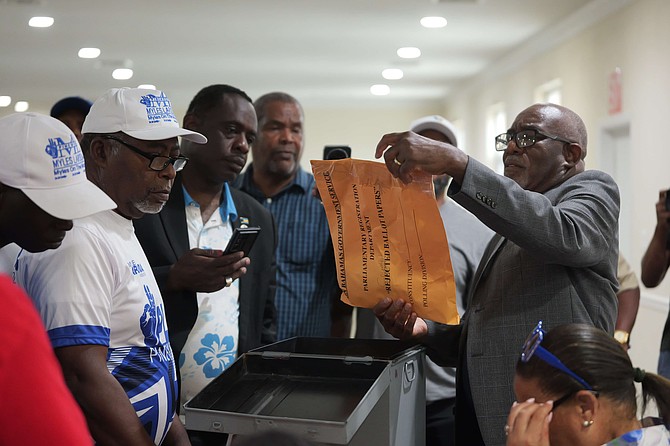
    Opposition parties have characterized the early election announcement as a ‘snap poll’ and raised substantive concerns about discrepancies in the official voters’ list. Democratic Labour Party leader Ralph Thorne formally requested a postponement on Monday, citing the need to address these electoral list issues.

    Prime Minister Mottley responded by invoking Section 18 of the Representation of the People Act, stating she lacks legal authority to alter the election date. In a strategic countermeasure, she announced the invitation of independent observers from both CARICOM and Commonwealth organizations to monitor electoral proceedings.

    “Independent electoral observers will enable the public to objectively assess our election conduct,” Mottley stated. “This necessary measure protects both the integrity and international reputation of our democratic processes.”

    Political scientist Dr. Kristina Hinds endorsed the decision as a long-overdue safeguard for Barbados’ electoral system. “Observer missions will help identify procedural strengths and weaknesses while ensuring election transparency,” Dr. Hinds noted. She cautioned, however, that while observers might recommend future improvements, they cannot immediately address current voter disenfranchisement issues.

    In contrast, political analyst Dr. George Belle challenged the fundamental premise of inviting observers without concrete evidence of irregularities. “The burden of proof rests exclusively on those alleging electoral misconduct,” Dr. Belle argued. “Without substantiated evidence demonstrating material impact on voters, we risk damaging Barbados’ reputation based on unverified claims.”

    The divergent expert perspectives highlight the tension between proactive electoral transparency and the requirement for evidence-based policy interventions in democratic processes.

  • PM Mottley: BLP has served Barbados well

    PM Mottley: BLP has served Barbados well

    Prime Minister Mia Mottley has formally initiated her Barbados Labour Party’s (BLP) general election campaign with a robust defense of her administration’s economic and social governance. Addressing a substantial rally in Oistins on Tuesday evening, the party leader presented what she characterized as an unprecedented track record of promise fulfillment amid global crises.

    The campaign launch, featuring all thirty BLP candidates, served as a platform for Mottley to showcase her government’s policy accomplishments. She unveiled a compact booklet titled ‘Red Record – A 2 Z Promises Kept’, specifically designed for portability and public distribution. “This document represents our accountability manifesto,” Mottley declared. “We want citizens to carry this evidence and make informed judgments based on documented performance rather than misinformation.”

    Economic revitalization formed the cornerstone of Mottley’s address, with emphasis on progressive fiscal measures benefiting low and middle-income earners. The administration has implemented expanded reverse tax credits reaching approximately $1,300 annually for qualified citizens and eliminated income tax for individuals earning between $2,100 and $3,000 monthly. These initiatives reflect what the Prime Minister described as a deliberate policy reorientation toward equitable economic participation.

    Mottley presented compelling macroeconomic indicators, revealing that foreign reserves have surged from three weeks of import coverage to thirty-two weeks, while the debt-to-GDP ratio has dramatically decreased from 176% to below 98%. “The fiscal stability that eluded us seven years ago now provides foundation for sustainable development,” she asserted.

    The Prime Minister acknowledged delayed implementation of integrity legislation, explaining that consultations revealed the necessity for tailored approaches rather than uniform solutions that might discourage public service participation. She emphasized that effective anti-corruption measures require “legislation with teeth” while ensuring fairness in application.

    Social protection mechanisms have been substantially enhanced under the BLP administration, including elevated minimum wage standards, increased non-contributory pensions, and expanded disability support systems. Welfare benefits saw a 40% augmentation during the COVID-19 pandemic, demonstrating the government’s responsive social policy framework.

    Infrastructure advancements include the deployment of a 121-vehicle electric bus fleet, establishment of an International Food Science Centre supporting small agro-processors, modernized fish markets, and reduced agricultural water rates. Institutional modernization efforts have encompassed the National Insurance and Social Security Service, alongside comprehensive judicial reforms including expanded prosecutorial capacity and criminal record expungement provisions.

    Addressing geopolitical concerns, Mottley highlighted the necessity of experienced leadership amid regional instability stemming from US-Venezuela tensions. She concurrently condemned alleged misogynistic remarks by opposition figure Dr. David Estwick, demanding formal apologies to both the BLP and Barbadian women collectively.

  • VIDS: erkenning in preambule Grondwet is slechts symbolisch en onvoldoende

    VIDS: erkenning in preambule Grondwet is slechts symbolisch en onvoldoende

    The Association of Indigenous Village Leaders in Suriname (VIDS) has issued a formal response to the proposed constitutional amendment that would recognize Indigenous peoples as the original inhabitants of Suriname in the preamble. While acknowledging this as a preliminary symbolic recognition of their historical presence and contributions, VIDS emphasizes that the amendment fails to establish concrete rights or address the structural legal challenges Indigenous communities have faced for decades.

    In its communication to the National Assembly, VIDS clarifies that constitutional preambles hold explanatory and symbolic significance but do not create enforceable rights. The proposed modification notably excludes recognition of collective rights to land, territory, and natural resources, alongside omitting the right to self-determination and the principle of Free, Prior, and Informed Consent (FPIC).

    The organization expresses profound concern that the initiative was developed without prior consultation or input from Indigenous peoples and their representative bodies. VIDS contends this approach violates international human rights standards that Suriname has committed to uphold, including rulings from the Inter-American Court of Human Rights.

    VIDS stresses that symbolic recognition must not be presented as a substitute for genuine legal security. “Indigenous peoples require not merely symbolic gestures but concrete, time-bound constitutional and legislative reforms that effectively recognize and protect our collective rights,” stated the document signed by Cylene France, Director of the VIDS Office.

    The association urges the National Assembly to view the proposal not as an endpoint but as an extremely limited initial step. VIDS advocates for a structured and inclusive consultation process with Indigenous peoples through their traditional governance structures rather than representatives selected by third parties. Additionally, the organization requests a clear timeline with specific objectives for constitutional and legal recognition of Indigenous rights aligned with international standards and judicial decisions.

    VIDS concludes by warning against presenting symbolic changes as adequate solutions to deeply rooted legal issues while reaffirming its commitment to constructive participation in a transparent and equitable process leading to full recognition of Indigenous rights in Suriname—both in principle and in practical legal application. The parliamentary debate on this initiative is scheduled for today’s legislative agenda.

  • Gonsalves appeals to GG after Speaker bars him from finance meeting over oath

    Gonsalves appeals to GG after Speaker bars him from finance meeting over oath

    In a significant parliamentary confrontation, Opposition Leader Ralph Gonsalves has formally appealed to Governor General Stanley ‘Stalky’ John after House Speaker Ronnia Durham-Balcombe prohibited his participation in a crucial Finance Committee meeting. The exclusion stems from Gonsalves’ failure to complete mandatory oath-taking procedures following November’s general election.

    Gonsalves, who served as Prime Minister for 25 years before his party’s electoral defeat, emerged as the sole Unity Labour Party representative securing a seat in the November 27 elections, while the New Democratic Party captured the remaining 14 constituencies. Alongside ULP senators Carlos James and Keisal Peters—both former parliamentarians—Gonsalves abstained from the December 23 ceremonial parliamentary opening where government members were sworn in.

    The constitutional impasse reached critical stage during Wednesday’s Finance Committee session, convened to review 2026 Revenue and Expenditure Estimates ahead of Thursday’s parliamentary debate. Speaker Durham-Balcombe formally notified Gonsalves via Monday correspondence that his participation would be barred due to the unresolved oath requirement.

    During a Wednesday broadcast on his party’s Star Radio platform, Gonsalves characterized the speaker’s communication as “absurd,” revealing she had suggested he seek permission from Prime Minister Dr. Friday to attend—a proposal he denounced as “triumphalist, partisan politicking.” The opposition leader detailed his written response to the speaker, copied to the governor general, condemning the decision as “an erroneous, egregious and high-handed assault on democratic norms.”

    Gonsalves defended his absence from the parliamentary opening by citing security concerns, referencing a 2021 incident where he sustained head injuries from protesters while approaching Parliament. He asserted that National Security Minister St. Clair Leacock had ignored the former governor general’s request for enhanced security provisions, forcing his “carefully considered decision” to boycott the opening session.

    The political veteran invoked historical precedent from May 2018 when NDP opposition members, including Dr. Friday, declined to make qualification declarations yet faced no participation barriers. Gonsalves emphasized that the speaker had previously engaged with opposition members on parliamentary questions and distributed committee materials despite their unsworn status, creating what he termed an “estoppel” situation.

    Proposing a resolution, Gonsalves suggested the clerk administer oaths during committee opening prayers, arguing the speaker cannot simultaneously deem the committee a proceeding requiring oaths while refusing to facilitate their administration. As of Wednesday, neither the governor general nor speaker had responded to his appeal, though Gonsalves noted the immediate procedural nature of the meeting minimized substantive impact.

  • Initiatiefnemers houden vast aan hervorming Openbaar Ministerie en invoering derde rechterlijke instantie

    Initiatiefnemers houden vast aan hervorming Openbaar Ministerie en invoering derde rechterlijke instantie

    Surinamese lawmakers leading a comprehensive judicial reform initiative remain steadfast in their position following recent public discussions and expert lectures on modernizing the nation’s legal system. Parliamentarian Ebu Jones, speaking with Starnieuws, confirmed that the necessity for overhauling the Public Prosecutor’s Office and establishing a third judicial instance remains undiminished despite varied opinions expressed during public debates.

    Jones, alongside five coalition colleagues, submitted four legislative initiatives last month to enact constitutional amendments enabling these transformative changes. The proposed reforms include creating a cassation court as a third judicial tier and restructuring the Public Prosecutor’s Office into a collective leadership model. According to Jones, international comparative studies presented during expert sessions demonstrated that Suriname faces similar institutional challenges as other nations undergoing judicial modernization.

    Regarding the third judicial instance, Jones reported achieving broad consensus about its necessity, though the specific model remains under discussion. Suriname must decide between developing a unique national system or adopting a regional framework such as the Caribbean Court of Justice. The proposed constitutional amendments would strategically preserve both options for future governmental consideration.

    The initiative has garnered unexpected support from within the judicial establishment itself. Jones revealed that the current Attorney General has explicitly acknowledged the imperative for systemic modernization, recognizing that the Public Prosecutor’s Office cannot continue operating under its existing structure. This institutional endorsement aligns perfectly with the reformers’ objective of strengthening the system rather than targeting individual officials.

    The proposed transition to a collective prosecutorial authority—a College of Attorneys-General—faced no fundamental objections during expert examinations. While discussions thoroughly examined both the advantages and challenges of various systems, critics failed to present substantive arguments against the reform’s compatibility with Suriname’s legal framework. Conversely, participants widely agreed that the current system requires substantial renewal.

    Lawmakers vehemently dismissed allegations that the reforms conceal political retaliation or ethnic agendas, characterizing such claims as unfounded and unprofessional. Jones emphasized that the initiative specifically aims to diminish individual influence while enhancing institutional trust through distributed decision-making among multiple qualified officials.

    The constitutional nature of appointing attorneys-general further safeguards against politicization, as the process involves the head of state following strict expertise requirements and judicial advisory input. The parliamentary committee preparing today’s public hearing has maintained the original proposals without modifications, though new insights may be incorporated through amendments during legislative debate.

    Constitutional changes require a two-thirds majority (34 votes), which Jones believes is achievable within the coalition, though parliamentary discussions may evolve unpredictably. Implementation timing remains uncertain, dependent on legislative proceedings intensity within the National Assembly. Following constitutional amendments, supplementary implementation laws must be enacted before reforms take practical effect.

  • St Kitts and Nevis Youth Ambassadors call for innovation, unity, and measurable impact as CARICOM leaders convene in February 2026

    St Kitts and Nevis Youth Ambassadors call for innovation, unity, and measurable impact as CARICOM leaders convene in February 2026

    As St. Kitts and Nevis prepares to host the 50th Regular Meeting of CARICOM Heads of Government in February 2026, the nation’s Youth Ambassadors are articulating a powerful vision for regional progress. Aquanjé Robinson and Siobhan Phipps-Harding, representing St. Kitts and Nevis as CARICOM Youth Ambassadors, have issued a compelling call for transformative action that centers youth innovation and measurable outcomes.

    The ambassadors framed their message against a backdrop of global challenges, noting that geopolitical tensions, economic instability, and escalating climate threats disproportionately affect Small Island Developing States. Robinson emphasized that these intersecting crises demand urgent collective response, stating that Caribbean youth constitute both the resilience and sustainable partnership needed for meaningful solutions.

    Phipps-Harding highlighted the critical timing of this milestone meeting, characterizing it as a clarion call for Caribbean unity and self-determination. She stressed that adaptation to rapid change requires investing in systems that protect citizens while developing skills that retain talent within the region.

    Both ambassadors articulated a paradigm shift in how youth participation should be conceptualized, asserting that young people are not merely future leaders but present-day innovators capable of co-creating solutions. They called for policy frameworks that translate into tangible impacts, particularly through initiatives promoting inclusive growth and sustainable development.

    The youth representatives concluded with a reaffirmation of regional solidarity, expressing optimism about the Caribbean’s future precisely because of the active role youth are prepared to play in shaping it. Their statement serves as both endorsement and challenge to CARICOM leaders set to convene in St. Kitts and Nevis for this historic gathering.

  • U.S. Ambassador and Vice President visit Mayor of Santiago de los Caballeros

    U.S. Ambassador and Vice President visit Mayor of Santiago de los Caballeros

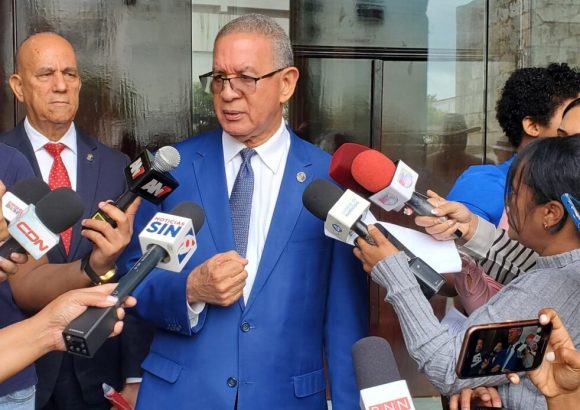
    SANTIAGO DE LOS CABALLEROS – A high-level strategic dialogue unfolded in Santiago as Mayor Ulises Rodríguez hosted a pivotal meeting with U.S. Ambassador to the Dominican Republic, Leah Francis Campos, and Dominican Vice President Raquel Peña. The trilateral discussion centered on positioning Santiago as the paramount economic and institutional nucleus of the Cibao region.

    Mayor Rodríguez articulated a comprehensive vision for the city’s accelerated development, underscoring its emergent role as a strategic epicenter for multifaceted growth. The dialogue produced a reinforced consensus on amplifying cooperative efforts between municipal authorities, the national government, and international stakeholders. This collaborative framework is deemed essential for catalyzing sustainable development initiatives and enhancing regional competitiveness.

    Critical to the agenda was the examination of nascent opportunities arising from Santiago’s ongoing urban consolidation. All parties acknowledged the city’s profound dynamism and its increasing significance as a primary engine of national progress. The meeting concluded with a mutual pledge to sustain this high-level dialogue, ensuring Santiago remains a cornerstone of the nation’s public policy agenda and a model of effective international partnership.

  • Mathoera: Initiatiefwetten ad hoc en lichtvaardig voorbereid

    Mathoera: Initiatiefwetten ad hoc en lichtvaardig voorbereid

    Suriname’s National Assembly convened on Thursday to debate four legislative initiatives, three of which propose significant alterations to the nation’s judicial organization. The proceedings have sparked intense controversy, with opposition parliamentarian Krishna Mathoera (VHP) warning that these measures threaten the fundamental independence of the judiciary.

    Mathoera contends that the proposed reforms appear hastily prepared without demonstrable necessity and lack both substantive justification and broad societal support. She emphasizes that the structure of Suriname’s three governmental branches—judicial, executive, and legislative—represents fundamental constitutional choices ratified by popular referendum in 1987. These institutions, she argues, must maintain independence while providing mutual checks and balances within a democratic framework.

    Among the most contentious proposals is the amendment to the Regulation on the Organization and Composition of the Judiciary (Wet RIS), which would introduce new consultation procedures for judicial appointments. Mathoera questions the proposal’s legal coherence, noting that Article 4 of the existing law addresses different matters entirely and contains no first clause to which additional clauses could logically be appended.

    The initiative to establish a College of Prosecutors General has drawn particular criticism. While President Jennifer Simons has cited prolonged processing of criminal cases as justification, Mathoera argues this structural change would not address core inefficiencies. Instead, she advocates for strengthening existing institutions through improved planning, additional personnel, enhanced investigative capabilities, and digital transformation.

    Mathoera further warns that allowing political channels rather than the Public Prosecutor’s Office to nominate judicial officials creates dangerous potential for partisan appointments. In Suriname’s compact society, she cautions, this could exacerbate political influence, potentially prioritizing party loyalty over professional competence. Multiple prosecutorial authorities might also produce operational delays, unclear directives, reduced cooperation, and diminished authority throughout the judicial system.

    The parliamentarian concludes that structural governmental challenges require foundational strengthening rather than new institutions. She specifically calls for investment in police capabilities, crime prevention, serious case handling, improved investigative work, higher-quality case files, and expanded digital processes—arguing that these measures would more effectively enhance judicial quality and efficiency.

  • Electoral Office confirms system breach; Police say no report received

    Electoral Office confirms system breach; Police say no report received

    BASSETERRE, St. Kitts – Electoral authorities in St. Kitts have confirmed a significant cybersecurity incident involving unauthorized remote access to their computer systems, which reportedly persisted for several months before detection. The breach at the Central Street, Basseterre facility prompted immediate intervention from the Information Technology Department, which successfully disabled the illicit access channels.

    According to an official statement released through the St. Kitts Information Service, preliminary investigations suggest that perpetrators extracted electoral lists and related information. Despite this access, initial assessments indicate no compromise, alteration, or corruption of the Voter Registers occurred during the incident.

    The Electoral Office has engaged the White Collar Crime Unit of the Royal Saint Christopher and Nevis Police Force to support their investigation. However, initial police communications revealed contradictory information, with authorities initially stating they had not received any formal report—a claim later retracted in an editor’s note confirming the report had indeed been filed and was under investigation.

    Electoral officials emphasized their commitment to pursuing legal action against those responsible, vowing that ‘no stone will be left unturned’ in the investigation. The office urged political parties and the public to rely exclusively on officially published electoral lists distributed in accordance with established legal frameworks.

    Several critical questions remain unanswered regarding the breach’s timeline, responsibility for system security, potential personnel changes, and specific detection methods. The incident has raised concerns about electoral integrity safeguards and the protection of sensitive voter information in the digital age.

  • Removing obstacles from thought and unleashing al the Forces of creation

    Removing obstacles from thought and unleashing al the Forces of creation

    In a series of extraordinary plenary sessions held across three Cuban provinces on Wednesday, top Communist Party officials outlined an ambitious agenda focused on economic transformation and systemic reform. The meetings in Las Tunas, Camagüey, and Ciego de Ávila featured direct participation from Miguel Díaz-Canel Bermúdez, First Secretary of the Central Committee, and Roberto Morales Ojeda, Political Bureau member and Secretary of Organization.

    The gatherings emphasized concrete measures to overcome economic challenges through increased production efficiency, export expansion, and reduced dependency on imports. Officials presented detailed assessments of each province’s 2025 accomplishments while establishing specific commitments for 2026, with particular focus on municipal self-sufficiency as a cornerstone for national progress.

    In Las Tunas, provincial First Secretary Osbel Lorenzo Rodríguez detailed 228 defined commitments aimed at transforming the region’s economic landscape. These include reducing budget deficits, boosting export revenues, and enhancing food production capabilities. The province also committed to optimizing business structures, addressing critical water availability issues, and expanding renewable energy implementation.

    Camagüey’s session revealed significant progress in deficit reduction, with over 90% of current commitments targeting economic and productive spheres. The meeting highlighted challenging objectives including restructuring loss-making enterprises and continuing land redistribution programs.

    Ciego de Ávila’s discussions centered on agricultural production improvements, with emphasis on allocating land to capable cultivators and leveraging scientific innovation. The province, recognized for its outstanding performance in 2024 and selection as host for the National Commemoration of July 26th in 2025, was urged to build upon its established talent and experience.

    Throughout all sessions, officials stressed the necessity of mindset transformation, urging party members to move beyond attributing shortcomings solely to external factors like the U.S. embargo. Instead, they emphasized internal accountability, proactive problem-solving, and disciplined implementation of realistic plans. The leadership called for strengthened cohesion between political and mass organizations, replication of successful practices, and enhanced communication with citizens to collectively address national challenges.