分类: politics

  • LISTEN: PM says ABLP will match or implement any “sensible” opposition promises during campaign

    LISTEN: PM says ABLP will match or implement any “sensible” opposition promises during campaign

    As general election campaigning gains momentum across Antigua and Barbuda, Gaston Browne, leader of the incumbent Antigua and Barbuda Labour Party (ABLP), has drawn a clear line in the sand: his administration will not be outbid by opposition parties when it comes to overinflated campaign pledges. In an exclusive interview with local outlet Pointe FM, Browne doubled down on this position, stating firmly, “No opposition is going to out-promise my government.”

    Beyond challenging the opposition’s history of pledges, Browne struck a surprisingly collaborative tone: the ABLP government remains fully open to integrating feasible, public-facing proposals from rival political groups into its governing agenda. “Any promise that… makes sense, my government will implement,” he added, emphasizing that policy utility, rather than partisan origin, will guide the administration’s decisions.

    Browne’s comments arrive at a critical juncture for Antigua and Barbuda’s electoral cycle, as all competing parties ramp up public outreach, finalize election manifestos, and roll out policy platforms to win over undecided voters in the final stretch before polling day.

    To back his confidence in the ABLP’s pledge delivery, Browne pointed to the governing party’s existing track record of completing and rolling out major public initiatives across key sectors that matter most to voters, including affordable housing development, large-scale infrastructure upgrades, and expanded social support programs for vulnerable communities.

    The ABLP leader also pushed back against past opposition policy proposals, arguing that a number of the pledges put forward by rival parties in previous cycles were rooted in unrealistic assumptions and failed to account for long-term fiscal sustainability. Even with this criticism, Browne reaffirmed that the door remains open to good ideas from any source, as long as they can deliver tangible benefits to the Antigua and Barbuda public without putting the country’s public finances at risk.

    Political analysts frame Browne’s recent remarks as a deliberate two-pronged electoral strategy: it directly counters the opposition’s likely focus on ambitious, crowd-pleasing campaign promises while simultaneously highlighting the ABLP’s established track record of delivery, giving voters a clear contrast between incumbent delivery and untested opposition pledges as they head to the polls.

  • “Surrender is not part of the revolutionaries’ mindset”

    “Surrender is not part of the revolutionaries’ mindset”

    In a wide-ranging April 9, 2026 interview with NBC News *Meet the Press* moderator Kristen Welker, conducted at Havana’s José Martí Memorial, Cuban President Miguel Mario Díaz-Canel Bermúdez addressed mounting threats from U.S. leadership, the crippling impact of the decades-long American blockade, and Cuba’s longstanding commitment to national sovereignty.

    Welker opened the conversation by pressing Díaz-Canel on recent aggressive rhetoric from former president and current U.S. leader Donald Trump, who has claimed he “can do whatever I want with Cuba” and implied plans to take control of the island nation. Díaz-Canel framed the threats as a reflection of long-standing U.S. aggression against Cuba, rooted in a 150-year struggle for Cuban independence from foreign domination. He emphasized that Cuba’s national identity is inextricably tied to sovereignty, noting that the 1959 Cuban Revolution ended decades of foreign subjugation and delivered transformative social gains that the Cuban people will never abandon. Echoing legendary Cuban independence hero Antonio Maceo, he stated: “Whoever attempts to seize Cuba will only gather the dust of its blood-soaked soil, if they do not perish in the struggle.”

    While affirming Cuba’s commitment to peace and regional solidarity, Díaz-Canel made clear that the country is not intimidated by threats and remains fully prepared to defend itself against any invasion. He rejected U.S. claims that Cuba is on the brink of collapse, pointing to the island’s six decades of resilience in the face of the longest-running blockade in modern history, which he described as a “criminal, genocidal” act of aggression. When asked if he feared assassination or arrest by the U.S. following Trump’s pattern of aggressive actions against foreign leaders, Díaz-Canel said he holds no personal fear, noting that all Cuban revolutionary leaders are prepared to sacrifice their lives for the nation. He pushed back on the framing that the Cuban Revolution’s leadership is centered on a single individual, explaining that Cuba operates under a unified collective leadership structure where hundreds of leaders are prepared to step into any role if needed. Any attack on Cuba would be met with full national resistance, he added, noting that the Cuban national anthem’s mantra “To die for the Fatherland is to live” is not an empty slogan but a core value held by all Cubans from childhood to old age.

    Confirming that Cuba is actively preparing for potential U.S. attack, Díaz-Canel stressed that Cuba’s defense doctrine is entirely defensive. The country’s “War of the Entire People” strategy, developed during past periods of heightened U.S. threat, organizes every Cuban citizen to participate in national defense, ensuring that any invasion would be unsustainable for foreign forces, even one as powerful as the United States. “Preparing to defend ourselves is the best way to avoid war and the best way to preserve peace,” he said, adding that the only legitimate path forward for U.S.-Cuba relations is dialogue, not confrontation, which would bring unnecessary loss of life and instability to both nations and the entire Caribbean region.

    Turning to the ongoing energy crisis, Díaz-Canel addressed the recent U.S. suspension of all fuel supplies to Cuba and the arrival of a Russian fuel shipment delivered as humanitarian aid. He explained that the new U.S. energy blockade is just the latest escalation of 67 years of economic war and 60+ years of total blockade, a policy that was first intensified during Trump’s first term in 2019, maintained through the Biden administration, and is now being ramped up to unprecedented levels. He noted that the Russian shipment only covers one-third of Cuba’s monthly fuel demand, and while the aid is greatly appreciated, it does not resolve the ongoing crisis. Díaz-Canel outlined Cuba’s comprehensive long-term strategy to achieve energy independence, including expanding domestic oil production, welcoming foreign investment in the energy sector (including from U.S. companies, if the blockade allows), investing in renewable energy, and developing domestic refining technology for Cuba’s heavy high-sulfur crude. He stressed that despite external pressure, Cuba will persist and adapt through the resilience and creativity of its people.

    Responding to claims that Cuba requires Russian support to survive and is on the edge of collapse, Díaz-Canel emphasized that Cuba’s strength ultimately comes from its own people, who have consistently demonstrated creative resistance to decades of blockade. He welcomed aid from partner nations including Russia, China, Vietnam, and Mexico, but noted that the U.S. could also choose to abandon its hostile policy and contribute to Cuba’s development. Rejecting the U.S. narrative of imminent collapse, he asked: “What country in the world would be capable, as Cuba has been, of withstanding 67 years of sustained aggression from the world’s most powerful nation… and not collapse?” He pointed to Cuba’s enduring social gains, including universal free healthcare and education, top global Olympic medal per capita rates, world-leading biotechnology innovation, and a society free of corruption, drug trafficking, and organized crime, arguing that these achievements are impossible under a “failed state.”

    When pressed on widespread suffering from energy and food shortages, Díaz-Canel placed full blame on the intensified U.S. blockade, noting that the 2019 escalation cut off all external financing, imposed harsh secondary sanctions on any country or company that trades with Cuba, and crippled key sectors including tourism, manufacturing, and public infrastructure. He pushed back on claims that the Cuban government is responsible for economic decline, pointing to the cumulative impact of decades of escalating blockade pressure. He highlighted Cuba’s response to the COVID-19 pandemic as evidence of the government’s commitment to its people: when the U.S. blocked access to vaccines, ventilators, and medical oxygen, Cuban scientists developed domestic mRNA vaccines, locally produced ventilators, and achieved better COVID mortality outcomes than the United States, despite decades of blockade. “It is unjust to blame a government whose sole purpose is to serve its people… for these evils,” he said. “The U.S. government should reflect on how cruel it has been toward Cuba and the Cuban people. It has no right to present itself as our savior, nor does it have the moral authority to do so.”

    Addressing calls for economic reform and a shift away from Cuba’s one-party socialist system, Díaz-Canel noted that the Cuban government regularly conducts self-critical assessments and works to improve its policies, but that the national political system, approved by the Cuban people via popular referendum, is not the cause of the country’s hardships. He pointed to the successful development of socialist economies in China and Vietnam, which advanced rapidly once their blockades were lifted, noting that Cuba has studied their reforms as a reference but must adapt to its own unique context: an island nation 90 miles from the U.S. that has lived under an unbroken six-decade blockade. “Lift the blockade and let’s see how we fare,” he challenged. “If even under the blockade we have achieved victories and shown solidarity to other nations, imagine what we could do without it.”

    On the topic of potential negotiations with the Trump administration, Díaz-Canel said that while a civilized, mutually respectful agreement between the two nations is possible, deep mistrust remains after 67 years of U.S. hostility and repeated American violations of past bilateral agreements. Cuba has always been open to dialogue based on mutual respect and equality, with no preconditions, he said, and there are many areas of potential cooperation including counter-narcotics, counter-terrorism, migration, trade, investment, cultural exchange, and public health collaboration. He highlighted two ongoing groundbreaking cooperative projects: a joint decade-long clinical trial for a Cuban lung cancer vaccine with a top U.S. cancer research center, which has produced extremely encouraging results, and a collaboration on an innovative Cuban Alzheimer’s treatment with a Colorado clinic, where American patients have seen better outcomes than with existing U.S. medications. “We cannot allow a blockade policy that serves only minorities and elites to undermine the relationship that our two peoples could have,” he said.

    When asked about U.S. demands for political reforms including free press, the release of purported political prisoners, and fair elections, Díaz-Canel said Cuba’s internal constitutional order is not up for negotiation with the United States. He rejected the narrative that Cuba holds political prisoners, explaining that people are only incarcerated for committing violent or disruptive criminal acts, often encouraged and funded by U.S. subversion programs, not for peaceful protest. Peaceful protests are regularly held and addressed by government officials without imprisonment, he added, noting that the narrative of political prisoners is a manufactured slander designed to discredit the Cuban Revolution. When asked if he would resign to meet U.S. demands, Díaz-Canel rejected the premise of the question, noting that no U.S. journalist would ask any other sitting head of state to resign at the demand of a foreign power. He stressed that Cuban leaders are elected by the Cuban people via a grassroots democratic system, and only the Cuban people have the right to remove their leadership. The U.S. has no moral standing to demand changes to Cuba’s political system, he said, as it bears full responsibility for the suffering the Cuban people endure.

    Closing the interview, Díaz-Canel reiterated that Cuba remains open to good-faith dialogue with the United States, focused on mutual respect, shared interests, and avoiding confrontation, to build a relationship of good neighborliness that benefits both peoples, the Caribbean, and Latin America. He thanked Welker for the opportunity to speak directly to the American people and extended an invitation for further discussion on unresolved issues.

  • “We call for a May Day that will stir us as a nation through unity and a commitment to making a difference”

    “We call for a May Day that will stir us as a nation through unity and a commitment to making a difference”

    In mid-April 2026, the Cuban Workers’ Central (CTC) and its affiliated national unions issued a formal call for nationwide celebrations of International Workers’ Day on May 1, centered on the rallying slogan “The Homeland Must Be Defended”. The call comes on the heels of a collective volunteer work day focused on boosting domestic food production, an event organized to reaffirm Cuba’s commitment to national food sovereignty in the face of mounting external pressure.

    The initiative was spearheaded by high-ranking Cuban leaders, including Liván Izquierdo Alonso, First Secretary of the Communist Party of Cuba in Havana, Havana Governor Yanet Hernández Pérez, alongside leaders of the Union of Young Communists and local Party bodies. Osnay Miguel Colina Rodríguez, president of the organizing committee for the 22nd CTC Congress, emphasized that against the backdrop of escalating threats from the U.S. government—most recently a new executive order in January 2026 that added an energy blockade to the 65-plus-year intensified economic, commercial and financial embargo—collective labor and national unity stand as Cuba’s most powerful defensive tools. “There is nothing more important and decisive today than working together and growing as a country,” Colina Rodríguez stated.

    For Cuban organizers, this year’s May Day celebration is far more than a traditional observance of international labor. It is framed as a public demonstration of national unity and unwavering patriotism, rooted in Cuba’s long history of anti-colonial and sovereign struggle. Colina Rodríguez drew parallels between the current moment and the 1878 protest at Baraguá, where independence leader Antonio Maceo refused to accept a peace deal that would sacrifice Cuban independence, noting that May Day 2026 represents another opportunity to “break the circle” of external pressure. The event also evokes the foundational independence ideals of José Martí and the revolutionary vision of former Commander-in-Chief Fidel Castro Ruz, laid out in his 2000 May Day address, coming in the centennial year of Fidel’s birth.

    The CTC’s call outlines plans for parades and community celebrations across every workplace, municipality, and province across Cuba, with organizers urging participants to adhere to practical precautions shaped by the constraints imposed by the U.S. embargo. Cuban workers are called upon to defend national sovereignty from every sector of society: from agricultural fields and manufacturing factories to classrooms, scientific research centers, energy facilities, hospitals, cultural institutions, and sports organizations—every space is framed as a “combat trench” for the defense of the homeland.

    Consistent with longstanding tradition, the invitation to join this year’s International Workers’ Day celebration extends to global allies of Cuba. In the official call, organizers expressed advance gratitude for international solidarity, noting that even amid rising military and economic threats, Cuban people remain optimistic in their fight for sovereignty, echoing the iconic line from the Cuban national anthem: “To die for the Fatherland is to live.”

    This year’s May Day observance builds on a series of weekend volunteer work initiatives organized by the CTC throughout 2026. Union leaders note these volunteer events echo the vision of revolutionary icon Che Guevara, who championed voluntary collective labor in the 1960s as a mechanism to sustain national development even amid external pressure. Today, these initiatives serve as a living demonstration of cross-organizational unity and the collective vitality Cuba needs to persevere under what organizers call the “genocidal” U.S. blockade.

    Guided by the priorities set by the Communist Party of Cuba, under the leadership of First Secretary and President of the Republic Miguel Díaz-Canel Bermúdez, the 2026 May Day celebration aligns with core national priorities: defending the socialist homeland, transforming Cuba’s energy matrix to offset the impacts of the energy blockade, expanding domestic food production, and solving daily challenges facing the Cuban people. Organizers emphasize that Cuban revolutionary commitment stems not from dogma, but from deeply held conviction in the right to build a sovereign, dignified nation.

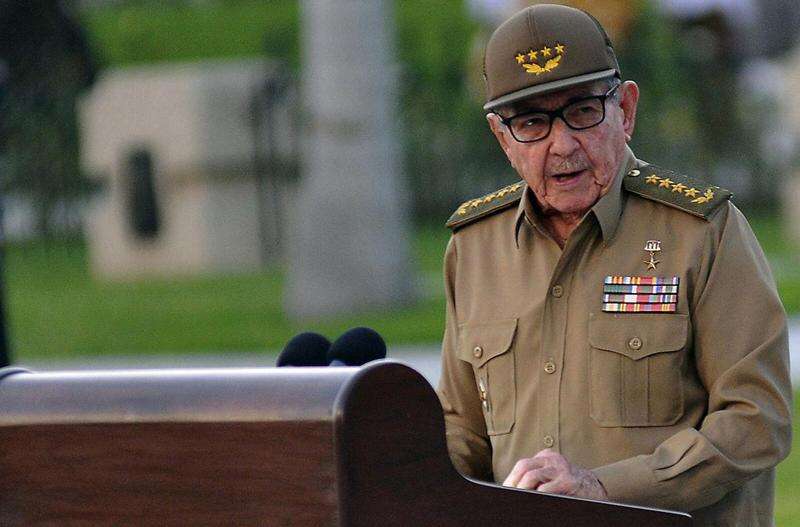
    In closing the official call, the CTC, its national unions, and the National Association of Innovators and Rationalizers (ANIR) urged all Cuban workers and citizens to come together with the vibrant colors of the Cuban flag, carrying forward the teachings of Army General Raúl Castro Ruz. Ahead of the upcoming 22nd CTC Congress, organizers called for a May Day that unites the nation around a shared commitment to defending the revolutionary project that Martí envisioned, Fidel brought to fruition, and current Cuban leaders are committed to preserving. The call closes with the iconic revolutionary slogans: “Long live the Cuban Revolution! Fatherland or Death! We shall overcome! See you on May 1.”

  • WATCH: Pringle says UPP will remove ALL duties and taxes on personal vehicle imports, if elected

    WATCH: Pringle says UPP will remove ALL duties and taxes on personal vehicle imports, if elected

    As electoral competition heats up, the leader of the United Progressive Party (UPP) has made a bold campaign promise that is already drawing significant public attention: if his party secures victory in the upcoming polls, the UPP administration will eliminate every single duty and tax applied to imports of personal passenger vehicles.

    In a publicly shared video address that has begun circulating across social media and local news platforms, party leader Pringle laid out the details of the proposal, framing the policy as a direct response to growing financial pressures that have placed vehicle ownership out of reach for thousands of ordinary working households across the country. Pringle argued that the current tax regime on imported personal vehicles is overly burdensome, inflating purchase prices and preventing average citizens from accessing reliable private transportation, which he notes is a critical resource for commuting to work, accessing healthcare, and supporting family mobility.

    The pledge marks one of the most concrete and high-profile policy commitments the UPP has released ahead of the election, positioning the party as focused on easing cost-of-living burdens for everyday people. Political analysts note that cutting vehicle import taxes is a popular policy proposal among broad segments of the electorate, from young professionals looking to buy their first car to low-income families that need an affordable vehicle for daily travel. If implemented, the full elimination of all duties and taxes would cut the cost of imported personal vehicles dramatically, though experts have already begun raising preliminary questions about how the policy would impact government revenue and domestic automotive markets. As the election campaign progresses, the pledge is expected to become a key point of debate between the UPP and competing political parties, with the proposal likely to shape voter discussions in the lead-up to polling day.

  • A new state-of-the-art fire truck put into service at Cap

    A new state-of-the-art fire truck put into service at Cap

    In a landmark move aligned with the Haitian government’s broader agenda to upgrade urban governance and modernize critical public infrastructure, the country has officially commissioned a cutting-edge fire and rescue truck at Hugo Chavez International Airport in Cap-Haïtien. The project, which marks a tangible step forward in upgrading national public safety infrastructure, was directly spearheaded by Haitian Prime Minister Fils-Aimé, and delivered through the country’s Ministry of Transport.

  • Abinader declares regional emergency in five provinces and National District

    Abinader declares regional emergency in five provinces and National District

    In response to widespread destruction caused by an active low-pressure weather system moving across the Dominican Republic, national president Luis Abinader has enacted Decree 234-26, establishing a regional state of emergency across six hard-hit jurisdictions. The official measure, announced publicly on April 12, extends emergency status to the provinces of Puerto Plata, Espaillat, Valverde, Santiago, Santo Domingo, as well as the country’s National District, the capital’s administrative core.

    The declaration of emergency was not an arbitrary action: it follows all formal procedural requirements laid out in the nation’s 147-02 Risk Management Law, and was prompted by urgent damage assessments submitted by two of the country’s top disaster response bodies, the Emergency Operations Center (known locally by its Spanish acronym COE) and the National Emergency Commission (CNE). Government officials confirmed that days of unrelenting heavy downpours, intense thunderstorms and gusty strong winds have left a trail of destruction across multiple sectors of the impacted regions. Critical public infrastructure, private residential housing, commercial agricultural operations and other key productive industries have all sustained significant harm that has disrupted daily life for local residents.

    By formally activating the state of emergency, the Dominican government has cleared the way for faster deployment of critical assets to affected communities. The accelerated rollout of dedicated financial resources, heavy response equipment and trained disaster response teams is now authorized, with two core goals: first, to reduce the ongoing harm inflicted by the adverse weather system, and second, to restore full normal operations and daily life to the most severely impacted communities in the shortest possible timeline.

  • HAPPENING NOW: UPP Launches 2026 Election Campaign

    HAPPENING NOW: UPP Launches 2026 Election Campaign

    In a major political development unfolding this week, the United Progressive Party (UPP) has formally initiated its campaign for the 2026 national general election, marking the official start of what is expected to be one of the most competitive electoral cycles in recent national history.

    The launch event, held at the party’s national headquarters and broadcast live to thousands of party members and political observers across the country, brought together hundreds of grassroots activists, elected officials, and key party donors. Party leadership used the occasion to outline a broad policy platform focused on three core pillars: economic revitalization for working-class households, expanded access to affordable healthcare, and climate action that balances environmental protection with job creation in emerging green industries.

    Addressing the crowd, UPP’s party president emphasized that the campaign would center on amplifying the voices of voters who have felt overlooked by the current governing administration. “For too long, working families across this nation have watched cost of living surge while their wages have stayed stagnant,” the president stated in their keynote address. “This campaign is not just about winning votes—it’s about rebuilding a government that works for every citizen, not just wealthy special interests.”

    Party organizers confirmed that the campaign structure will prioritize grassroots outreach, with hundreds of field organizers set to deploy to competitive swing districts over the coming 18 months. The UPP is also expected to ramp up digital advertising and voter registration efforts targeting young voters, a demographic that has increasingly shifted toward opposition parties in recent elections.

    The launch comes as polling data shows the race remains effectively tied, with neither the ruling party nor the leading opposition bloc holding a clear lead among likely voters 18 months ahead of election day. Political analysts note that an early campaign launch gives the UPP a significant opportunity to define its message to voters before the official election period begins, and could force the incumbent administration to adjust its policy and campaign strategy ahead of the vote.

  • WATCH: 17 ABLP candidates ratified at National Convention

    WATCH: 17 ABLP candidates ratified at National Convention

    In a decisive move to formalize its election campaign, the Antigua and Barbuda Labour Party (ABLP) locked in its complete roster of candidates for the upcoming general election during a national convention held Sunday at the People’s Place on Lady Nugent Avenue.

    The official confirmation was delivered by ABLP General Secretary Shenella Govia, who told assembled party members that the party’s Central Executive Committee had already signed off on all parliamentary candidates and constituency caretakers ahead of the delegate vote. Reading the full list of approved nominees to attendees, Govia formalized the Central Executive’s resolution approving all individuals that would stand for the party in the impending national vote.

    Following the announcement, voting delegates in attendance formally backed the entire candidate slate, passing the endorsement resolution with unanimous support. This unanimous approval solidifies the party’s full lineup ahead of ballots being cast on April 30.

    High-profile nominees on the ratified list include party leader Gaston Browne, who will stand for re-election in the St John’s City West constituency, and Kendra Beazer, the ABLP’s candidate for the Barbuda constituency. Additional candidates include Dr. Philmore Benjamin for St Mary’s North, Michael Joseph for St John’s Rural West, Dwayne George for St Mary’s South, and Randy Baltimore for St Philip North.

    The roster also features multiple incumbent government ministers and senior party figures. These include E.P. Chet Greene, who will contest the St Paul constituency, Daryll Matthew for St John’s Rural South, Maria Browne for St John’s Rural East, and Charles Fernandez for St John’s Rural North.

    The candidate ratification marks a critical milestone in the ABLP’s pre-election preparations, putting the party on track to shift its focus to grassroots mobilization and campaigning across all constituencies in the lead-up to the April 30 vote.

  • Gaston Browne Returned Unopposed as ABLP Leader, Urges Supporters to Reject ‘Experiment’ in Upcoming Election

    Gaston Browne Returned Unopposed as ABLP Leader, Urges Supporters to Reject ‘Experiment’ in Upcoming Election

    In a clear show of unified party support, Gaston Browne was re-elected unopposed as the leader of Antigua and Barbuda’s ruling Labour Party during the party’s national convention held Sunday. Speaking from the party’s longstanding headquarters, branded The People’s Place, Browne used his keynote address to cast the upcoming general election as a binary, high-stakes decision that will shape the trajectory of the Caribbean nation for years to come.

    Browne laid out stark contrasts between his incumbent administration and the opposition ahead of the contest, telling assembled supporters: “The choice before this nation is clear… between certainty and confusion, between progress and paralysis, between tested leadership and the untested ambition of the ignorant.” He repeatedly warned against what he framed as the danger of handing national governance to unproven, unqualified opponents, emphasizing that the ballot will determine whether Antigua and Barbuda continues along its current developmental path or abandons the progress the current government has achieved.

    As he enters the official election campaign at the head of the governing party, Browne stressed that the upcoming vote is fundamentally centered on the country’s long-term future, rather than partisan point-scoring. “This is not the time for unnecessary risk-taking… to experiment with failed and incompetent leadership,” he added.

    Beyond electoral messaging, Browne also used the convention to outline intentional internal party renewal, noting that the Labour Party is actively grooming a new generation of political leaders to ensure long-term continuity. “We have competent leaders, young, bright leaders… to ensure future leadership,” he said, confirming that structured training programs are already underway to prepare these emerging politicians to take on senior leadership roles when the time comes.

    On the policy front, the incumbent leader highlighted the interconnected relationship between public safety and sustainable economic expansion, noting that “you cannot grow an economy in an unsafe environment.” He went on to reaffirm Antigua and Barbuda’s reputation as one of the most secure destinations in the Caribbean, a status that underpins the nation’s key tourism and investment sectors.

    In his closing remarks, Browne called on every Labour Party member to act as a public advocate for the administration’s track record ahead of the campaign. “You are ambassadors… you must defend the track record of this great institution,” he said, urging supporters to spread the party’s message of hope, proven delivery, and effective governance to voters across the country.

  • Barbados to make licence applications digital

    Barbados to make licence applications digital

    Barbados’ Deputy Prime Minister Santia Bradshaw has announced an ambitious government-wide initiative to modernize public services through digital transformation, with license applications and secure payments set to move entirely online in the coming months. The announcement was made during the 50th Anniversary Thanksgiving Service for the National Security Division, held Sunday at the People’s Cathedral.

    Bradshaw outlined that the digital push extends far beyond just online licensing, framing it as a comprehensive overhaul of public sector operations. The administration is currently upgrading core technological systems, integrating cutting-edge digital tools, and revising outdated pieces of legislation to ensure all regulatory frameworks align with modern operational needs. The ultimate goals of this transition are to boost service efficiency, strengthen government transparency, and make critical public services more accessible to all citizens and industry stakeholders.

    Beyond licensing and payment processing, the broader modernization agenda includes full digitization of public records, expansion of existing e-government platforms, and the rollout of integrated cross-agency data systems designed to improve coordination between separate ministries and government departments. Bradshaw confirmed that preparatory work, including investments in national information and communications technology infrastructure and specialized training for public sector staff, is already underway to support a smooth transition to the new digital systems.

    The modernization drive also reaches into national security operations, where long-used manual processes are being replaced by technology-driven solutions to strengthen accountability and speed up service delivery. Speaking to the gathered congregation about the National Security Division’s five decades of work, Bradshaw celebrated the agency’s 50-year legacy of upholding safety and stability across all government institutions. She noted that the division, founded on April 1, 1976, now employs more than 200 dedicated personnel, and praised both retired and current members for their unwavering commitment to national service.

    While emphasizing the transformative power of new technology to improve public and security operations, Bradshaw stressed that human expertise and judgment remain irreplaceable for effective governance and national safety. “A nation is not made safe by systems alone; it is made safe by its people choosing every single day to be their brother’s keeper,” she said.

    Closing her remarks, Bradshaw called on all Barbadians, especially young people, to uphold the core values of peace, collective responsibility, and community engagement. She reminded attendees that a nation’s strength stems not only from robust, modern systems, but also from the small, consistent choices its people make every day to support one another.