分类: politics

  • UPP Launches Campaign with Prayer-Focused ‘Ignite’ Event

    UPP Launches Campaign with Prayer-Focused ‘Ignite’ Event

    As Antigua and Barbuda prepares for its April 30 general election, the United Progressive Party (UPP) has formally kicked off its bid to unseat the incumbent government, opening its campaign with a spiritually charged, prayer-centered rally named “Ignite.” The event, which blended Christian worship, policy messaging, and candidate introductions, was framed by party organizers as both a political starting line and a spiritual awakening, built around three core pillars: faith, national unity, and transformative change.

    The kickoff event drew hundreds of gathered supporters, with a live online broadcast extending the rally’s reach to voters across the twin-island nation and abroad. Opening the night, a host set the tone for the campaign, declaring, “Tonight is the night to ignite the campaign… the campaign to victory,” as crowds rallied behind the party’s message.

    Religious elements remained the throughline of the entire gathering, starting with an extended opening session of prayer and praise led by local faith leaders. Religious figures called for divine guidance for UPP candidates and divine intervention in the country’s national affairs. One opening prayer framed the campaign as a moment of national deliverance, declaring that “the wind of change will begin to blow… across the nation of Antigua and Barbuda.”

    Throughout the evening, every political address tied the party’s policy and electoral ambitions back to its faith-centered framing. One senior organizer told the assembled crowd that “there’s no igniting without God,” encouraging attendees to anchor the campaign’s slogan by pairing “Ignite” with calls for widespread national change. Another speaker emphasized the party’s goal of turning over power, stating the UPP aimed to “usher in a new day under the leadership of Jamale Pringle and the United Progressive Party.”

    Toward the end of the rally, all UPP candidates were invited onto the stage to receive a collective blessing from attending pastors. One faith leader told the candidates that “God has chosen each one of you for such a time as this,” praying for unity among the party’s ranks and resilience through the weeks of campaigning ahead. The event also featured live gospel music performances that interspersed the political addresses, keeping the spiritual tone of the rally consistent from start to finish.

    Beyond messaging and blessings, party organizers used the launch rally to mobilize supporters ahead of voting day. Attendees were urged to prioritize turning out to the polls on April 30, encourage friends and family to vote, and actively canvass for UPP candidates in their local communities.

    The rally marks the official start of formal campaign activities for the UPP, which is seeking to end the current tenure of the ruling Antigua and Barbuda Labour Party and take control of the national government in the upcoming election.

  • Peneux: Overheidsapparaat ontregeld door politiek ingrijpen en scheve beloningen

    Peneux: Overheidsapparaat ontregeld door politiek ingrijpen en scheve beloningen

    On April 13, former Surinamese Minister of Education, Science and Culture Robert Peneux outlined deep-rooted systemic failures plaguing the country’s public sector in an exclusive interview with local outlet Starnieuws, tracing most of the current dysfunction to the elimination of the decades-old Functie Informatie Systeem Overheid (FISO) civil service framework.

    Implemented during the administration of former president Ronald Venetiaan, FISO was designed to bring structure and transparency to the sprawling government bureaucracy. Under the system, every public sector role came with clearly defined qualification requirements, creating a clear career progression path that incentivized civil servants to pursue continuous professional development to qualify for senior positions.

    According to Peneux, years of political decision-making and pressure from labor unions gradually eroded the FISO framework until it lost its core function. The dismantling of the system has fully decoupled job roles and civil service ranks from required professional qualifications, creating skewed, unfair dynamics across all levels of government. Unqualified candidates with political connections now hold many senior leadership roles, a reality that has bred deep resentment among career civil servants with the right credentials and directly undermined the quality of national policy development, Peneux explained.

    Beyond the qualification mismatch, Peneux added, the government suffers from a fundamental lack of clear policy domain boundaries between individual ministries. No department has formally documented the exact scope of policy areas it manages, leading to overlapping roles, redundant teams of policy advisors and widespread systemic inefficiency that slows public service delivery.

    Peneux also called out the broken pay structure across both government agencies and state-owned parastatal companies, noting that chief executives at state-owned firms earn drastically higher salaries than the cabinet ministers who oversee their work. At the same time, stagnant low base salaries for rank-and-file civil servants have triggered a mass exodus of skilled, qualified workers from the public sector.

    This brain drain is particularly visible in the education sector, Peneux said. Teacher training instructors at the Instituut voor de Opleiding van Leraren (IOL) are leaving in droves for higher-paying positions at Anton de Kom University of Suriname or for roles abroad, creating a shortage of full-time teaching faculty that is damaging the country’s pipeline of new educators. Peneux emphasized that the scale of the pay gap has made retaining qualified full-time instructors nearly impossible for IOL.

    The former minister stressed that the public sector’s troubles extend far beyond uneven compensation. Ministries now face a chronic shortage of implementation capacity, in large part because political loyalty is routinely prioritized over professional expertise when hiring and promoting public servants.

    “Effective policy can only succeed when the civil service has the right people with the right qualifications in place,” Peneux said. He called for a full, comprehensive audit of the entire public administration apparatus, including a full review of the national pay scale and job evaluation system. Without urgent, large-scale intervention, Peneux warned, the public sector will face further systemic erosion that will undermine its ability to serve Surinamese citizens.

    In closing, Peneux criticized the national policy debate for lacking meaningful depth, noting that while political actors engage in extensive discussion, concrete action plans and long-term structural solutions remain out of reach. “We talk a great deal, but real, tangible results still fail to materialize,” he said.

  • Morris eyes PNM  ‘rebirth’ in Tobago

    Morris eyes PNM ‘rebirth’ in Tobago

    The race for leadership of the People’s National Movement (PNM) Tobago Council kicked into its final nomination phase on Friday, with two high-profile candidates launching distinctly different campaigns that have set the tone for the upcoming internal vote on April 26.

    Kelvon Morris, a former minority leader of the Tobago House of Assembly, arrived to file his nomination papers accompanied by fanfare, drumming performances and cultural dancing, marking the official launch of his leadership bid under the unified “Team Unity” banner. Morris has put forward a full slate of 16 candidates contesting all available positions on the council executive, drawing a diverse group of participants that balances young and experienced politicians, male and female candidates, and representatives from both the Tobago East and Tobago West regions.

    In comments after submitting his nomination, Morris framed his campaign as a push for long-overdue renewal and reunification of the PNM’s Tobago branch. “This is a moment for rebirth and renewal for our great party,” he said. “What we have built here is a coalition that reflects every corner of our political community, and our goal is to reunify the PNM and re-energize our movement ahead of upcoming elections.”

    Morris enters the race with notable institutional backing: he has secured public endorsements from two former PNM Tobago Council leaders, Tracy Davidson-Celestine and Kelvin Charles, who previously served as Chief Secretary of Tobago. His slate includes other established political figures: Clarence Jacob, a former Settlements Secretary, is running for treasurer, while Petal Daniel-Benoit, a former minority councillor, has joined the ticket as a candidate for vice chairman.

    Outlining his first policy priorities if elected, Morris identified unresolved financial obligations to party members from the last election cycle as his top issue. “Finances were extremely tight following the last election, and we owe outstanding payments to many of our members who stepped forward to run,” he explained. “That will be my number one priority if I take office, and we already have plans in place to resolve that issue. Beyond that, my core mission is unifying the party: every member has value, and every candidate who runs in this election has a place in our movement moving forward.”

    Morris’s long-term vision is anchored in a strategic plan called the “People’s Roadmap to Victory,” a six-pillar framework designed to prepare the PNM for the 2030 Tobago House of Assembly and national general elections.

    In a stark contrast to Morris’s high-energy campaign launch, former Tobago West Member of Parliament Shamfa Cudjoe-Lewis filed her nomination for the leadership post without a full slate, fanfare, or public celebration, positioning her candidacy as a humble, member-focused alternative. Cudjoe-Lewis, who is running in her first internal election for a seat on the PNM Tobago Council executive, submitted her paperwork at the council’s uptown Scarborough office, emphasizing that unnecessary campaign spending would be irresponsible given the party’s current financial strain.

    “I don’t see any need for extravagant fanfare right now. We owe money to a lot of people, and if I had campaign funds to spare, the first thing I would do is pay those outstanding debts,” she said. “This internal election is about having quiet, honest conversations with our members. You don’t need songs and dances to do that work.”

    Cudjoe-Lewis chose to run for leader without a pre-assembled full slate, noting that some of her supporters are also backing Morris’s Team Unity. She framed this overlapping support as a strength of the process, arguing that the contest will ultimately produce stronger ideas for rebuilding the party regardless of who wins.

    “After the votes are counted on April 26, we will all still be members of the PNM,” she said. “There are people in my camp who are also working with Kelvon, and that’s okay. This process is about bringing different ideas together to figure out how we rebuild our party.”

    Cudjoe-Lewis pledged to run a clean, positive campaign with no personal attacks or mudslinging, focused on offering party members a credible, independent option for leadership. “I’m here to give PNMites a competent choice, and then it’s up to them to decide what direction they want to go,” she said. “I’m not someone who can be controlled or pushed around. To get the PNM back into office, we need to make hard decisions and take bold action, and I’m ready to do that work with every member of this party, no matter who they supported in this election.”

    Following the close of nominations on Friday, the PNM released the final list of 17 candidates contesting executive positions on the Tobago Council on Saturday night.

  • Heads decided on  Barnett at retreat

    Heads decided on Barnett at retreat

    A growing internal dispute has shaken the Caribbean Community (Caricom), centered on the controversial reappointment of Secretary-General Dr. Carla Barnett that has pitted regional leadership against the government of Trinidad and Tobago. In a detailed April 11 statement, Caricom Chairman and Prime Minister of St. Kitts and Nevis Dr. Terrance Drew has pushed back against claims of procedural impropriety, laying out a full timeline of events to defend the February decision made during a closed-door heads of government retreat on the island of Nevis.

    Drew confirmed that Barnett’s reappointment was not explicitly listed on the original public agenda for the retreat, held on February 26 on the sidelines of Caricom’s 50th Regular Conference of Heads of Government. On the day of the closed gathering, regional leaders opted to take up the appointment under the pre-existing agenda topic of “Financing and Governance of the Community”, a procedural path Drew says aligns fully with Article 24 of the Revised Treaty of Chaguaramas, which grants the Caricom Conference authority to appoint and reappoint the Secretary-General for up to five-year terms. Drew also noted that Barnett left the room prior to the discussion of her reappointment to avoid any conflict of interest.

    The core of the dispute stems from objections raised by Trinidad and Tobago Prime Minister Kamla Persad-Bissessar and Foreign Minister Sean Sobers, who argue the decision was procedurally invalid because their nation was not represented at the retreat. They were joined in their objection by leaders of Antigua and Barbuda and The Bahamas, which were also absent from the closed gathering. Trinidad and Tobago has gone as far as stating it will not recognize Barnett’s tenure beyond August 2026, when her original five-year term is set to expire, and has boycotted all Caricom meetings until it receives full access to all correspondence related to the reappointment. A planned April 10, 2026 meeting to address Trinidad and Tobago’s grievances went forward without the nation’s representation after Persad-Bissessar declined to attend.

    Drew pushed back against claims that Trinidad and Tobago was not properly notified of the retreat, noting all member states received detailed advance correspondence outlining the full conference schedule, including the February 26 heads-only retreat, its agenda structure and venue. He added that all head of government offices were updated multiple times on the retreat details both before and during the main conference. Persad-Bissessar had been present in St. Kitts and Nevis for the opening of the conference on February 24, holding bilateral meetings and meeting with U.S. Secretary of State Marco Rubio, but departed the island on the evening of February 25, hours before the retreat was scheduled to begin.

    In a release of private correspondence detailing the lead-up to the retreat, Drew shared exchanges between Sobers, Barnett and himself that he says confirm the foreign minister declined to attend. According to the shared WhatsApp logs, at 10:33 p.m. on February 25, Sobers contacted Barnett to ask if he could attend the retreat in Persad-Bissessar’s absence, and Barnett confirmed foreign ministers could substitute for absent heads. In the same exchange, Sobers mentioned he suffered from seasickness, as the retreat venue on Nevis required a boat ride from the main island of St. Kitts. Barnett replied hours later that the chairman would understand if he opted out due to seasickness, and Drew says Sobers never followed up to confirm he would attend despite the note.

    Sobers has contested this narrative, telling reporters his comment about seasickness was made in jest, and claims a later message from the Caricom Secretariat stated only heads of government were allowed to attend the retreat, leaving him uncertain of his eligibility to join. He has repeatedly described the reappointment process as “surreptitious” and in violation of regional governing treaties.

    After the retreat decision was made, Drew said leaders agreed to delay the official announcement out of courtesy to allow notification of absent heads. Attempts to contact Persad-Bissessar by email and phone were unsuccessful, so officials reached out directly to Sobers instead. In his statement, Drew released all correspondence related to the pre-conference planning and retreat discussions in line with commitments made at the April 10 governance meeting.

    Closing his statement, Drew urged all sides to resolve the dispute through Caricom’s established internal mechanisms, warning that public missteps and erroneous claims could undermine decades of progress toward deeper regional integration that delivers tangible benefits to all Caribbean people. As the crisis stands, the standoff has left the regional body facing an unprecedented leadership dispute just months before Barnett’s original term is set to end.

  • Gonsalves to represent teen girl charged with attempted murder

    Gonsalves to represent teen girl charged with attempted murder

    Almost a quarter century after stepping away from his legal career to lead the country as Prime Minister, former St. Vincent and the Grenadines Prime Minister and current Opposition Leader Ralph Gonsalves is set to make a notable return to the courtroom this Monday. The 80-year-old, who will celebrate his birthday in August, will step into the role of defense counsel for a 16-year-old constituent facing a serious criminal charge.

    The minor, Antonia Thomas of Colonarie, has been formally charged with attempted murder in connection with a violent public altercation that unfolded last Thursday. Prosecutors from the police service allege that Thomas attacked 65-year-old Winston McMillan during the confrontation, striking him repeatedly in the head. McMillan was immediately rushed to a local hospital for emergency care, where his condition has since been updated to brain dead.

    Medical experts define brain death as the complete and irreversible cessation of all brain function, with any residual life signs such as breathing or a sustained heartbeat only maintained through mechanical life support. Individuals confirmed to be brain dead cannot regain consciousness or breathe independently, and most legal jurisdictions recognize brain death as official legal death. Gonsalves is scheduled to present his defense during the preliminary hearing at the Serious Offences Court, the jurisdiction that handles initial proceedings for attempted murder cases in the country.

    Gonsalves’ return to legal practice comes on the heels of a devastating electoral defeat for his long-ruling Unity Labour Party (ULP) in the November 27 general election. The ULP, which held power for nearly 25 years, was ousted by the New Democratic Party, which secured a landslide victory, winning 14 out of the 15 available parliamentary seats. Gonsalves was the sole ULP candidate to retain his parliamentary seat, leaving him as the formal leader of the opposition. Shortly after the election results were finalized, Gonsalves confirmed he had paid all required regulatory fees to reinstate his license to practice law, a career he put on hold at the turn of the 21st century to focus exclusively on his prime ministerial duties.

    A notable detail of the upcoming hearing is that Gonsalves will appear before Chief Magistrate Colin John, who previously served as one of the country’s police commissioners during Gonsalves’ time in office. This is not Gonsalves’ first experience handling high-profile criminal cases across the Caribbean region. Before his entry into national leadership, he built a decades-long legal career representing clients throughout the Caribbean bloc. One of his most famous cases came in 1997, when he successfully defended Jim and Penny Fletcher, an American couple charged with the 1996 murder of 30-year-old Vincentian water taxi operator Jerome “Jolly” Joseph, who was fatally shot in Bequia. The Fletchers were ultimately found not guilty by the court.

  • Telemicro demands government action over Channel 3 conflict

    Telemicro demands government action over Channel 3 conflict

    In the capital city of Santo Domingo, a major media organization has escalated a long-running frequency dispute to the highest level of Dominican government, calling on executive intervention to defend its legally recognized operating rights. Telemicro Media Group has publicly asked President Luis Abinader to step into the conflict surrounding the use of television Channel 3, pressing authorities to implement long-standing judicial rulings and secure the company’s legal claim to the broadcast frequency.

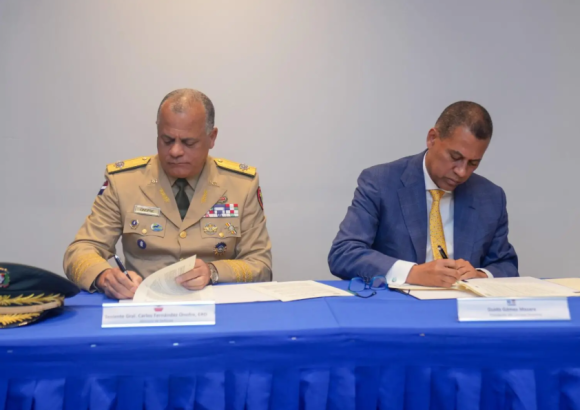
    In its official public statement, the media group delivered sharp criticism of the Dominican Telecommunications Institute (INDOTEL) and its governing board, which is headed by Guido Gómez Mazara. Telemicro accuses the national telecom regulator of unlawful inaction, claiming the body has refused to enforce binding court orders and has permitted unapproved third-party companies to occupy the Channel 3 frequency even amid explicit judicial restrictions barring such use.

    According to Telemicro’s position, multiple successive court decisions—including landmark rulings from both the Superior Administrative Court and the Supreme Court of Justice of the Dominican Republic—have formally recognized the company’s full ownership rights to Channel 3, a status that dates back to 1994. Despite this decades-long legal recognition, INDOTEL’s 2025 Resolution 027-25 has left the status of the frequency unresolved, keeping the dispute open pending a final ruling even as outside firms including Fransyl SRL have laid claims to control of the channel.

    Beyond its criticism of the regulator’s inaction, Telemicro has publicly denounced repeated violations of court orders by external parties seeking to seize control of the frequency. The company has also raised questions about the root of INDOTEL’s failure to act, asking whether the regulator’s lack of enforcement stems from institutional negligence or deliberate bias favoring the competing claimants. Echoing President Abinader’s own public commitment to the principle that “no one is above the law,” Telemicro has called on national authorities to uphold legal certainty and enforce existing regulatory and judicial frameworks to bring an end to the ongoing dispute.

  • ABLP Candidate Anthony Smith Jr. Rejects Claims Over Poster Removal in All Saints West

    ABLP Candidate Anthony Smith Jr. Rejects Claims Over Poster Removal in All Saints West

    As campaigning for Antigua and Barbuda’s upcoming April 30 general election gains momentum and political friction builds across multiple electoral districts, Anthony Smith Jr., the candidate of the Antigua Barbuda Labour Party (ABLP) for the All Saints West constituency, has publicly pushed back against damaging claims that tie him to the unauthorized removal of opposing political campaign posters. In his first public response to the circulating allegations, Smith made clear that the accusations are entirely fabricated and rooted in partisan political maneuvering rather than factual evidence.

    Smith emphasized that the deliberate tearing down of political campaign material is an unethical tactic that no democratic candidate should endorse, stating that he stands firmly against this kind of petty political behavior and has never encouraged any member of his campaign team or affiliated supporters to engage in such actions. The ABLP candidate also specifically addressed accusations attributed to Harold Lovell, a key opposition figure, calling on Lovell to immediately cease spreading misleading, false claims that are designed to damage Smith’s credibility and gain unfair public sympathy for the opposition.

    Dismissing outright the assertion that he personally issued orders to supporters to tear down opposing candidates’ posters, Smith underlined that his entire campaign has stayed focused on delivering concrete, tangible improvements for the residents of All Saints West, rather than engaging in dirty political tricks. Reaffirming his campaign’s core priorities, Smith noted that his platform centers on advancing constituency-level development across critical infrastructure and public service sectors.

    These priorities, he said, include upgrading local road networks, improving storm drainage systems, expanding access to reliable potable water, strengthening local healthcare services, boosting educational opportunities for constituents, and upgrading public recreational facilities for community use. Smith stressed that his mission throughout the campaign has been to empower the people of All Saints West, not to engage in the dishonest, divisive political games that his opponents have attempted to provoke. This public back-and-forth between the ABLP campaign and opposition figures is part of a broader trend of rising political polarization as the country approaches the general election polling date.

  • Candidates to Be Nominated Today as Antigua and Barbuda’s 2026 General Election Process Moves Forward

    Candidates to Be Nominated Today as Antigua and Barbuda’s 2026 General Election Process Moves Forward

    The Caribbean nation of Antigua and Barbuda is entering a critical phase of its 2026 general election cycle on Monday, as political parties and independent candidates gather across the country to complete formal nomination proceedings for the upcoming vote.

    Multiple political blocs are fielding contenders for the nation’s 17 parliamentary constituencies, including the incumbent ruling party, the Antigua and Barbuda Labour Party (ABLP), the nation’s largest opposition bloc the United Progressive Party (UPP), and the Barbuda People’s Movement (BPM), a regionally focused party representing interests on the island of Barbuda. A slate of unaffiliated independent candidates is also standing for election, and all contenders are required to complete their formal registration on this official Nomination Day to secure a spot on the April 30 ballot.

    Nomination activities are being hosted at 17 designated, secure venues spread across both main islands of the nation. These venues are primarily public educational institutions, chosen for their accessibility and existing infrastructure to accommodate candidate delegations and assembled supporters. Key sites include Villa Government School in the St. John’s City West constituency, Clare Hall Secondary School in St. John’s Rural East, and Sir McChesney George Secondary School on the island of Barbuda.

    Framed rules released by the Antigua and Barbuda Electoral Commission lay out a strict 10-hour window for nominations, running from 8 a.m. local time through 6 p.m. During this period, all aspiring candidates must submit fully completed nomination documentation and confirm they meet every statutory eligibility requirement to appear on the general election ballot.

    The commission outlines clear, non-negotiable eligibility criteria for all candidates. To qualify, a person must be at least 21 years of age, hold full citizenship of Antigua and Barbuda, and have maintained permanent residence in the nation for no less than 12 months immediately preceding the election. Beyond basic personal eligibility, candidates must secure nomination signatures from a registered proposer, a registered seconder, and eight additional registered voters who are residents of the same constituency the candidate seeks to represent.

    Additional administrative requirements include a non-refundable 500 Eastern Caribbean dollar deposit, and a formal signed document confirming the candidate’s consent to be named on the ballot. Every constituency’s nomination process is overseen by an official returning officer appointed by the Electoral Commission, who is responsible for verifying all documentation and confirming eligibility on site.

    As a foundational milestone in the national electoral calendar, Nomination Day serves to formally lock in the full slate of candidates that will campaign for voter support ahead of the general election. Once all nomination proceedings conclude at 6 p.m., the Antigua and Barbuda Electoral Commission is expected to release the final, official list of confirmed candidates to the public.

    Political analysts and local observers expect large gatherings of party supporters at nomination venues across the country, as all competing political organizations wrap up their preliminary mobilization efforts ahead of the April 30 polling date. The day’s events set the stage for the final five weeks of public campaigning, as parties and candidates work to win over undecided voters ahead of the general election.

  • ABLP honours longtime members with loyalty awards

    ABLP honours longtime members with loyalty awards

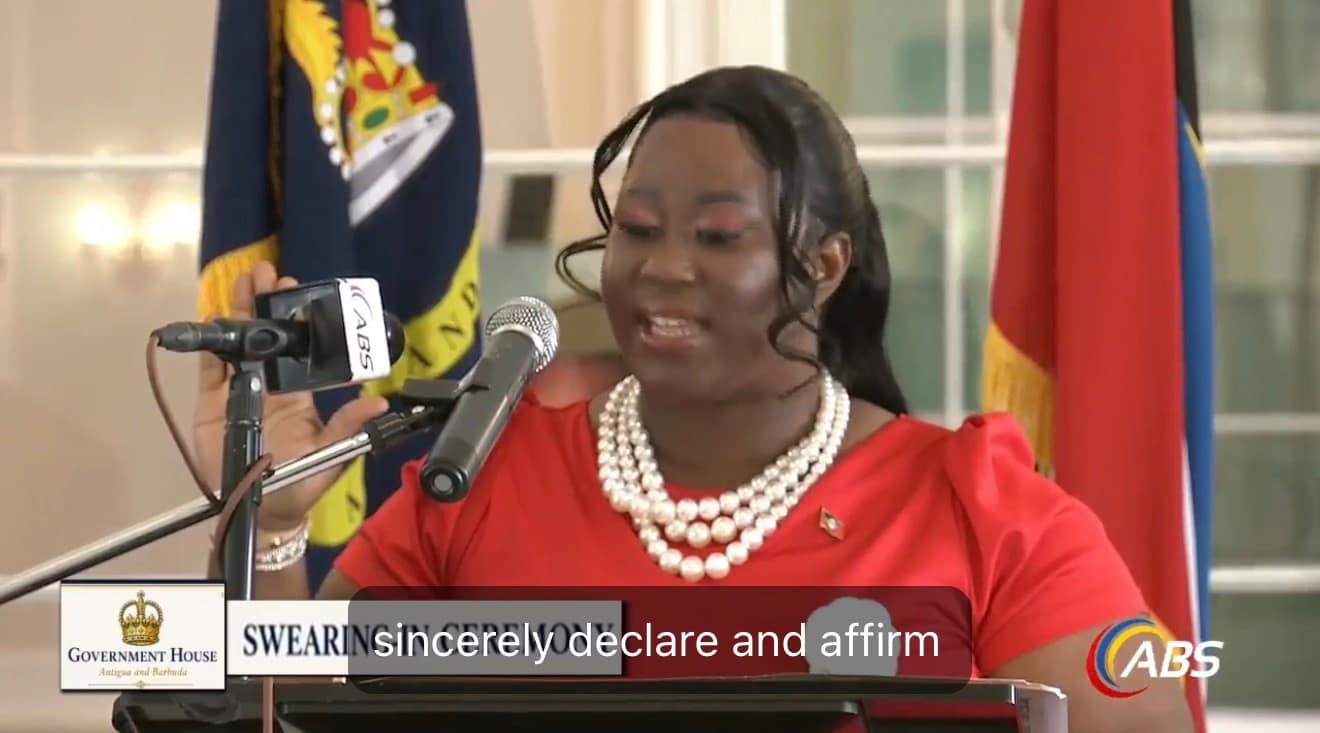
    On Sunday, the Antigua and Barbuda Labour Party (ABLP) capped off its national convention with a heartfelt ceremony to honor five of its most enduring members, celebrating decades of unwavering dedication and service to the political organization. The awards presentation came immediately after a keynote address from ABLP’s sitting political leader, Gaston Browne, who is also the country’s current prime minister. Party organizers acted as masters of ceremonies, inviting each honoree to the stage individually to receive their commemorative plaques before a crowd of assembled delegates.

    The five party veterans recognized for their contributions were Phillip Isaac Sr., Christine Anthony, Robertine De Silva, Leonard “Popcorn” Aaron, and Conrad “Suki” Simon. Each plaque bore a formal inscription highlighting the recipients’ contributions: “In recognition of your unwavering loyalty, dedicated service, and steadfast commitment to the advancement of the Antigua and Barbuda Labour Party.”

    The closing honorary segment wrapped up a full day of party business and celebration at ABLP’s national headquarters. Earlier sessions included policy-focused speeches from party leadership, formal ratification of the party’s election candidates across the country, and cultural performances that brought together party members from across the nation. In total, delegates representing all 17 of Antigua and Barbuda’s electoral constituencies were in attendance for the convention. The gathering comes as ABLP makes its final preparations ahead of the upcoming national general election scheduled to take place on April 30, with the event serving both to honor party legacy and unify members ahead of the national vote.

  • ABLP chairman Chet Greene says party’s manifesto will set out detailed plan for jobs, infrastructure and social services

    ABLP chairman Chet Greene says party’s manifesto will set out detailed plan for jobs, infrastructure and social services

    As the Caribbean nation of Antigua and Barbuda prepares for its upcoming general election on April 30, the ruling Antigua and Barbuda Labour Party has announced that its upcoming policy manifesto will deliver far more than vague campaign pledges, framing it as a binding policy covenant with voters. Party chairman E. P. Chet Greene made the announcement during an address to delegates at the party’s national convention on Sunday, outlining the party’s vision if it is re-elected to lead the country.

    Greene confirmed that the full manifesto will be officially released to the public on April 20, and emphasized that the document will not rely on broad, unfulfillable slogans. Instead, it will lay out a granular, step-by-step policy roadmap focused on three core national priorities: expanding employment opportunities across sectors, upgrading the country’s public infrastructure, and strengthening the nation’s social safety net services. “Voters will see clearly, line by line, measure by measure, how this nation will move forward,” Greene told assembled delegates. “It is not a document of promises… it is a covenant with the people of Antigua and Barbuda.”