分类: politics

  • PM and Church leaders reject FNM lottery plan

    PM and Church leaders reject FNM lottery plan

    A fresh political and social clash has erupted in The Bahamas over the opposition’s plan to launch a state-run national lottery, with Prime Minister Philip “Brave” Davis publicly dismissing the idea as a headline-grabbing, ill-conceived gimmick aligned with a proven failed, corruption-plagued model.

    The proposal was put forward Sunday by Michael Pintard, leader of the Free National Movement (FNM), who framed the independent board-overseen lottery as an untapped revenue source to drive national development. Pintard argued the new state system could operate alongside the country’s existing private gaming operators, pointing to frameworks already in place in jurisdictions including the Dominican Republic, Curaçao, Saint Martin and Ghana as successful blueprints for the plan.

    But Davis rejected the proposal outright during a press briefing with reporters, calling it a transparent political stunt born of desperation rather than a thoughtful policy solution. He pushed back particularly hard on Pintard’s choice of a model, noting the Dominican Republic’s national lottery has long been mired in confirmed corruption and fraud scandals. Davis questioned the opposition’s true motivations behind the push, suggesting the plan could create a slush fund open to abuse by corrupt actors. He also criticized the proposal for ignoring potential harm to the thousands of Bahamians already employed in the existing gaming industry, as well as the steady tax revenue the country already collects from private gaming operations. “It’s rather odd that you want to turn the Treasury into a gaming house,” Davis told reporters.

    The FNM’s announcement has reignited a decades-long contentious national debate that has killed every previous attempt to launch a national lottery in The Bahamas. Multiple past administrations have explored the policy, but all efforts have stalled amid fierce political pushback and widespread public concern. The Christie administration most recently attempted to legalize a lottery through provisions included in the 2014 Gaming Bill, but the plan collapsed after organized opposition from religious groups and large swathes of the public.

    Public resistance was clearly demonstrated in the 2013 national gambling referendum, when 59 percent of more than 81,000 participating voters cast ballots against approving a national lottery. Critics of the policy have repeatedly raised overlapping concerns: they question whether The Bahamas’ small population can support a state lottery without eating into existing tax revenues from private gaming, and they warn of persistent risks around lack of transparency, weak regulation, institutional corruption, and disproportionate social harm to low-income households. Supporters of a national lottery, by contrast, argue that a well-regulated system could generate significant new funding for critical public services including education and infrastructure, while also strengthening government oversight of the country’s entire gaming sector.

    In line with past opposition to the policy, senior church leaders have already renewed their vocal rejection of the new proposal, echoing the prime minister’s criticism. Bishop Walter Hanchell argued that a national lottery directly contradicts core Christian principles, pointing back to the 2013 referendum’s clear rejection of the policy. He recalled that even after voters rejected expanded gambling and lottery legalization a decade ago, then-Prime Minister Perry Christie moved forward with legalization anyway, against the explicit will of the Bahamian people. Hanchell said every negative outcome the church warned of at the time has since come to pass: rates of gambling addiction have risen sharply, and countless low-income Bahamians lose money earmarked for mortgages, rent and basic groceries to gambling operators every day. He called on national political leaders to abandon the lottery push and instead focus policy efforts on expanding social support and economic empowerment for vulnerable communities.

    Bishop Delton Fernander, president of the Bahamas Christian Council, echoed these concerns, noting that the proposal would disproportionately shift the burden of revenue generation onto low- and middle-income Bahamians. He pointed out that the public has already rejected the idea once, yet political actors continue to bring it back to the table. Fernander questioned whether repeated pushes for a national lottery are ultimately aimed at privatizing the lucrative sector for the benefit of a small, connected group of private actors. The Bahamas Christian Council has long maintained an unwavering opposition to the policy, he said, and past data already confirmed the country’s population is too small to sustain the system without major harm. Fernander added that critical public safeguards remain unaddressed more than a decade after the last debate, including targeted rehabilitation programs for people living with gambling addiction and formal systems to identify and support compulsive gamblers. Introducing a national lottery without first putting these protections in place, he warned, would only deepen the country’s existing social and economic inequalities.

  • Individuals who trade in lobster now able to sell during closed season—Green

    Individuals who trade in lobster now able to sell during closed season—Green

    KINGSTON, Jamaica — In a landmark update to the Caribbean nation’s fisheries governance, Jamaica has rolled out new regulations that permit licensed industry participants to legally hold, sell, process, and export legally caught Caribbean spiny lobster during the annual closed season — a long-awaited reform meant to fix critical flaws in the old management framework.

    Agriculture and Fisheries Minister Floyd Green announced the formal entry into force of the New Spiny Lobster Regulations 2026 during an address to the House of Representatives on Tuesday, noting the policy delivers on the government’s promise to modernize the fisheries sector while protecting one of the country’s most valuable marine assets.

    “I am pleased to advise this honourable House that the Fisheries (Spiny Lobster) Regulations, 2026 were promulgated on March 20, 2026, and are now in full force and effect,” Green told lawmakers.

    For decades, Green explained, Jamaica’s existing spiny lobster rules created a confusing, counterproductive contradiction for local fishers and fishing communities. Lobster harvesters could legally catch the species during the open fishing season, investing significant time, fuel, and labor into a legitimate catch — but once the closed season began, their lawfully harvested product became commercially trapped, with no legal path to move it through the supply chain.

    “Fishers who did everything right found themselves unable to sell, store, process or export what they had lawfully caught. The system did not distinguish between illegal harvesting and legitimate stock that was already in circulation,” Green said.

    Far from advancing conservation goals, the old framework produced widespread waste, significant economic losses, and constant uncertainty across the entire lobster value chain. It also left a critical supply gap during the closed season, leaving businesses that rely on lobster sales with few legal options to source inventory.

    That market gap, Green noted, created systemic pressure that in some cases incentivized the illegal poaching that regulations are meant to eliminate — an outcome that undermined both conservation and economic outcomes for licensed industry members.

    The new 2026 regulations are designed to correct this long-standing deficiency through a structured, tightly controlled regulatory framework. Under the updated rules, lawfully harvested lobster caught during open season can be officially declared, logged into a centralized tracking system, and handled through regulated channels during the closed season. All activities including storage, processing, domestic sale, and export remain under strict ongoing oversight from Jamaica’s National Fisheries Authority to prevent abuse.

    Green was clear to emphasize that the reform does not weaken protections against illegal fishing during the closed season. The core prohibition on capturing new spiny lobster during the closed period remains fully in place, with no changes to that long-standing conservation rule. What has shifted, he said, is the intelligence of how the sector is managed.

    “What has changed is that we are now managing the system more intelligently. We are protecting the resource while allowing legitimate economic activity to continue in a way that is transparent, traceable and enforceable. This ensures balance, so that our conservation objectives are met while our fishers, vendors, processors and exporters are not penalised for operating within the law,” Green stated.

    The reform also brings greater transparency and organizational structure to the entire sector. Mandatory declaration requirements, clear notification thresholds, and strengthened record-keeping rules now allow regulators to track lobster movement through the supply chain during the closed season in a way that was impossible under the old system.

    “This is what modern fisheries management looks like. It is deliberate, it is data-driven and it is designed to protect both the resource and the people who depend on it,” Green added.

    Core conservation rules remain intact under the new regulations. The capture, possession, or sale of undersized lobster or egg-bearing female lobster continues to be prohibited during both open and closed seasons, and any accidentally caught protected individuals must be returned to the water immediately. These rules remain central to protecting Jamaica’s breeding lobster stock, allowing juvenile lobsters to reach maturity and maintain a healthy, sustainable wild population for future generations.

    Reporting by Lynford Simpson

  • Mitchell, Pinder and Bonaby top list of most absent MPs in House

    Mitchell, Pinder and Bonaby top list of most absent MPs in House

    Newly obtained official records from The Tribune have pulled back the curtain on attendance trends among members of the Bahamas’ House of Assembly, exposing significant disparities in participation among sitting lawmakers since the Davis administration took power in 2021. At the top of the list of the most frequently absent parliamentarians are three senior figures from the ruling Progressive Liberal Party (PLP): Foreign Affairs Minister and PLP Chairman Fred Mitchell, Central and South Abaco MP John Pinder, and Mount Moriah MP and Bahamas Public Parks and Beaches Authority chairman McKell Bonaby. All three have maintained attendance rates below 80 percent across the two parliamentary sessions covered in the data.

    The dataset spans two full parliamentary periods: 88 sittings held between October 2021 and August 2023, and an additional 106 sittings running from October 2023 through March 2026. Mitchell, who represents the Fox Hill constituency, has missed 76 total sittings, translating to an attendance rate of just 60.8 percent – the lowest among all sitting members. When reached for comment by The Tribune, Mitchell declined to provide any explanation for his high number of absences.

    Following closely behind Mitchell is Pinder, who has missed 55 sittings for a 71.6 percent attendance rate, and Bonaby, with 52 absences and a 73.2 percent attendance rate. Neither lawmaker responded to repeated requests for comment from The Tribune regarding their poor attendance track records. Energy Minister JoBeth Coleby-Davis came just behind this trio, missing 47 sittings to notch a 75.8 percent attendance rate. Seabreeze MP Leslia Miller-Brice missed 43 sittings, while North Andros and Berry Islands MP Leonardo Lightbourne missed 41 – with official records noting that one of Lightbourne’s absences was excused due to his participation in an official parliamentary conference.

    On the opposite end of the spectrum, opposition Free National Movement (FNM) lawmakers claim the top three spots for the most consistent attendance. FNM leader and Marco City MP Michael Pintard, MICAL MP Basil McIntosh, and St Barnabas MP Shanendon Cartwright hold the best attendance records in the entire body. After these three opposition figures, Englerston MP Glenys Hanna-Martin, North Eleuthera MP Sylvanus Petty, Carmichael MP Keith Bell and Freetown MP Wayne Munroe all posted attendance rates at or above 90 percent, placing them among the most active participants in House proceedings.

    One particularly notable entry in the records is the late Obie Wilchcombe, former MP for West Grand Bahama and Bimini, who maintained a perfect attendance record with zero absences before his unexpected passing in September 2023. The vast majority of other sitting lawmakers, including Prime Minister Philip Davis, Deputy Prime Minister Chester Cooper, and former Prime Minister Dr Hubert Minnis, all hold attendance rates above the 80 percent threshold. Kingsley Smith, who won the 2023 by-election to fill Wilchcombe’s vacant West Grand Bahama and Bimini seat, has missed 14 sittings since taking office, while Darron Pickstock – who won the Golden Isles by-election last November – has only missed one sitting in his short tenure so far.

  • Jamaican dancehall artiste received $118 million via TikTok from Canadian non-profit exec, lawsuit claims

    Jamaican dancehall artiste received $118 million via TikTok from Canadian non-profit exec, lawsuit claims

    A high-stakes fraud lawsuit filed in Canada has unveiled explosive allegations: a former senior finance executive at an Indigenous-led non-profit illegally siphoned more than CA$6 million in federal public funds earmarked for Indigenous conservation programs, with hundreds of thousands of dollars ending up in the hands of a Jamaican dancehall artist. Court filings paint a detailed picture of how the former executive exploited a gap in organizational oversight to funnel public money through multiple channels, prompting the Canadian federal government to seize control of remaining program funds and roil communities that rely on the initiative for conservation work and local employment.

    According to reporting from Canadian public broadcaster CBC News, the March 20 lawsuit names Melanie Desjarlais, former financial director of the First Nations National Guardians Network (FNNGN), as the sole perpetrator of the alleged fraud. The FNNGN is a federally funded non-profit founded in 2022, based in the cross-border Mohawk community of Akwesasne spanning Ontario, Quebec, and New York. The organization was tapped in 2024 to independently administer CA$27.6 million in federal funding for 80 separate Indigenous Guardians programs across Canada, which train and employ Indigenous community members to carry out critical conservation and ecological research on their traditional territories.

    Court documents outline that when the FNNGN executive director took medical leave in August 2025, Desjarlais became the only staff member with full day-to-day control over the non-profit’s finances. Over the following seven months, through August 2025 to March 2026, she is accused of making more than CA$6.3 million in unauthorized charges on the organization’s corporate credit cards. These charges were diverted to personal spending, including multiple vacations, tickets to professional hockey games, and systematic transfers to the Jamaican artist, the suit alleges.

    The court filings detail a multi-step alleged money laundering scheme. Desjarlais is accused of spending nearly US$2.78 million of the non-profit’s funds to purchase TikTok coins, the platform’s virtual currency that users can gift to content creators during live streams. Gifted coins convert to diamonds, which creators can cash out for real funds, and court documents note that this system can be exploited as a vehicle for illicit money movement. In addition to the TikTok coin transfers, direct PayPal records show more than US$750,000 was sent directly from Desjarlais to the dancehall artist. Some of these transfers included personal messages such as “Happy early birthday!” and one CA$5,000 transfer was labeled: “This is the last payment, the other one was an error. Love you and I’m sorry for everything.” Court documents also note court filings indicate Desjarlais and the artist may have had a romantic relationship. The Jamaican artist’s name is being withheld at this time by media outlets covering the case.

    Further records show Desjarlais traveled to Jamaica twice on the non-profit’s dime, once in October 2025 and again in January 2026. By late November 2025, the non-profit had depleted so much funds that scheduled payments to local Indigenous Guardians programs across the country halted due to insufficient balances, according to court filings.

    To date, none of the allegations against Desjarlais have been tested or proven in court. Desjarlais has declined to comment on the allegations through her legal representation.

    The revelation of the alleged fraud has already triggered major administrative and regulatory changes. The Canadian federal government, through Environment and Climate Change Canada, which originally provided the program funding, has stepped in to take over all future distribution of Indigenous Guardians funds allocated to FNNGN. A government spokesperson confirmed Ottawa was notified of the unauthorized transactions and is expanding a routine audit of the non-profit’s financial practices.

    The FNNGN’s legal counsel, Matthew Sammon, told reporters the organization is actively and aggressively working to recover the misappropriated public funds. Sammon emphasized that the alleged financial misconduct stems from the actions of a single individual and does not reflect the core mission or values of the network.

    Canadian courts have already taken emergency action to protect potential recovery of the funds: an injunction freezing all of Desjarlais’s global assets was granted last month and extended by the court on April 2. The lawsuit itself seeks CA$10 million in combined damages and restitution on charges of deceit, conversion, breach of contract, breach of fiduciary duty, and unjust enrichment.

    For Indigenous communities that rely on the program for funding and employment, the allegations have sparked acute concern. Elder David Scott, who trains young Guardians at Manitoba’s Swan Lake First Nation, told CBC the funding is critical to the success of local conservation work, leaving the program’s future in his community uncertain as the case moves forward.

  • War in the Middle East: Latest developments

    War in the Middle East: Latest developments

    In a series of interconnected developments shaking the Middle East on Monday, multiple key actors have laid out stark new positions that deepen ongoing conflict and complicate diplomatic efforts to de-escalate the crisis.

    First, in Beirut, Hezbollah leader Naim Qassem delivered a televised address urging Lebanese officials to scrap a scheduled Tuesday meeting between Lebanese and Israeli ambassadors to the U.S. set to take place in Washington. The Iran-backed militant group, which has been engaged in open conflict with Israel since March 2, has long rejected direct negotiations with the Israeli state. Qassem called on Lebanon to take a “historic and heroic stance” by canceling the planned talks entirely.

    Meanwhile, global energy markets are bracing for growing strain as the conflict disrupts critical supply chains, International Energy Agency chief Fatih Birol warned Monday. Speaking to reporters on the sidelines of an International Monetary Fund gathering in Washington, Birol noted that March energy shipments were largely filled with cargo loaded before the current Middle Eastern crisis erupted. But April will bring a far tighter market, he stressed, explaining that “during the month of April, nothing has been loaded.” Birol added that the severity of the global energy shortage will grow in lockstep with how long the current supply disruption persists.

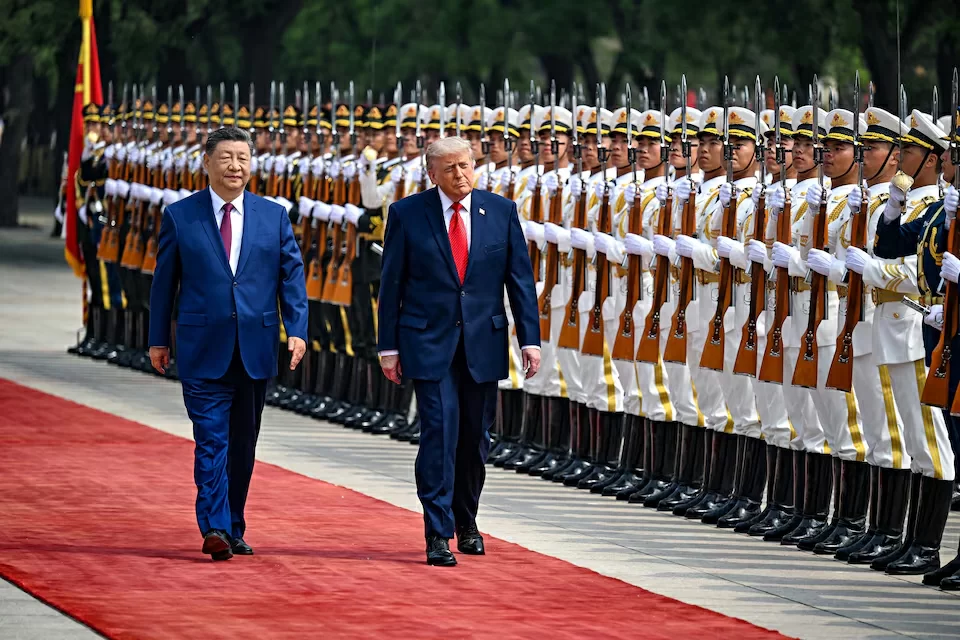
    U.S. President Donald Trump has issued a series of conflicting and uncorroborated claims along with sharp new threats against Iran amid the escalating standoff. On Truth Social, Trump claimed that 34 commercial vessels have successfully traversed the Strait of Hormuz, one of the world’s most critical energy chokepoints, calling this the highest number recorded since what he labeled a “foolish closure” of the strait began. The figure could not be independently verified by outlets as of Monday.

    Trump also doubled down on criticism of Pope Leo XIV, who recently called for an immediate end to Middle East hostilities, saying he had “nothing to apologise for” for his earlier remarks. The president argued the Pope had gotten his position wrong, claiming the pontiff opposed Trump’s hardline policy on preventing Iran from acquiring nuclear weapons, and lambasted the U.S-born Pope as “very weak on crime and other things.” The criticism drew a swift rebuke from Italian Prime Minister Giorgia Meloni, who called Trump’s remarks about the head of the Catholic Church “unacceptable.”

    Despite the heightened tensions, Trump claimed Monday that Iranian officials have reached out to the U.S. seeking to negotiate a peace agreement, just days after weekend talks hosted by Pakistan ended without a breakthrough. Speaking to reporters outside the Oval Office, Trump said “I can tell you that we’ve been called by the other side. They’d like to make a deal. Very badly, very badly,” though he declined to name which Iranian officials had initiated contact.

    Alongside announcing a new U.S. naval blockade of Iranian ports that took effect Monday, Trump issued a blunt warning that American forces would destroy any Iranian fast attack craft that approached the blockade line. “Warning: If any of these ships come anywhere close to our BLOCKADE, they will be immediately ELIMINATED,” he wrote on Truth Social, claiming that the rest of Iran’s navy had already been “completely obliterated.” Trump added that U.S. forces would use the same airstrike tactics employed against suspected drug trafficking vessels off the Venezuelan coast to target the Iranian craft.

    Even after the failed Pakistan-hosted talks over the weekend, Pakistani Prime Minister Shehbaz Sharif confirmed in brief televised remarks to his cabinet that the U.S.-Iran ceasefire remains in place. “The ceasefire is still holding and, as I speak, full efforts are underway to resolve the outstanding issues,” Sharif said, confirming that diplomatic negotiations are still ongoing to reach a lasting peace deal.

  • PAC summons former UHWI leaders over audit findings

    PAC summons former UHWI leaders over audit findings

    Jamaica’s parliamentary Public Accounts Committee (PAC) has launched a deeper investigation into operational irregularities at the University Hospital of the West Indies (UHWI), moving to summon three key current and former leaders of the institution to answer for red flags raised in a critical Auditor General performance audit.

    The decision to call in the witnesses was formalized at the opening of the PAC’s weekly sitting on Tuesday, as committee members continued their review of the audit, which focused on three high-stakes areas of UHWI operations: procurement practices, institutional governance, and financial management.

    PAC Chairman Julian Robinson told fellow committee members that ongoing inquiry had already made one fact clear: the UHWI’s current sitting management team does not have the ability to provide satisfactory responses to a host of critical questions outlined in the Auditor General’s December 2025 report.

    “From our first meeting two weeks ago, it has been apparent to me that the current management of the university hospital is not positioned to answer many of our questions related to the facility’s day-to-day and strategic operations,” Robinson explained in remarks to the committee. “I am seeking this body’s approval to summon current CEO Fitzgerald Mitchell—who is currently on leave—former CEO Kevin Allen, and ex-board chairman Wayne Chai Chong, so we can get clear answers to the outstanding questions we have about this institution.”

    Mitchell, the UHWI’s sitting chief executive, has already been on approved leave since the public scrutiny of the hospital’s operations began. Allen led the facility’s operations in his tenure as the top executive, while Chai Chong oversaw the UHWI’s board and held ultimate governance and oversight responsibility during his time as chairman.

    The committee unanimously backed Robinson’s proposal, and parliamentary staff have already been instructed to draft and deliver formal summons letters to all three individuals ahead of the next scheduled PAC probe session.

    The damning Auditor General report, which was formally tabled in Jamaica’s parliament in December 2025, outlined a series of severe deficiencies across UHWI’s operational framework. Among the most pressing concerns highlighted in the audit are dysfunctional and high-risk procurement systems, gaping weaknesses in internal financial controls, missing or incomplete documentation for major transactions, and repeated, documented breaches of the government’s established public institutional operating procedures.

  • Pringle Promises Year-Round Barrel Concessions as Part of Cost-of-Living Plan

    Pringle Promises Year-Round Barrel Concessions as Part of Cost-of-Living Plan

    ST JOHN’S, Antigua — With less than two months to go until Antigua and Barbuda’s April 30 general election, cost-of-living pressures have taken center stage as a key voting issue, prompting the main opposition United Progressive Party (UPP) to roll out a sweeping package of household affordability measures led by an expansion of existing barrel concessions.

    Speaking to supporters at the party’s official campaign launch on Sunday evening, UPP leader Jamale Pringle laid out the full slate of policy proposals, framing the plan as a direct response to the growing financial strain that working families across the twin-island nation are facing amid soaring prices for basic necessities. Pringle emphasized that the current restricted barrel concession program, which allows reduced duties on goods shipped to residents in barrels, would be broadened to deliver ongoing, meaningful relief to households grappling with steady food price inflation.

    Beyond the expanded barrel concessions, Pringle announced a new targeted Water Tanks and Accessories Relief Program, designed to address longstanding inconsistent water access across the country. Under the proposal, all taxes on critical water storage and delivery equipment—including holding tanks, pressure tanks, and water pumps—would be eliminated entirely. Pringle clarified that the tax removal would act as an interim solution for households until the UPP, if elected, can implement a permanent fix to deliver consistent, daily piped water service to all communities.

    The opposition leader also put forward major changes to vehicle import policy to cut transportation costs for residents, promising to fully remove import duties on personal passenger vehicles. The move would bring down the upfront cost of vehicle ownership, making private transportation far more accessible for working families that rely on cars for daily commutes, school runs, and essential travel.

    Pringle tied all the party’s proposals directly to what he framed as failing cost management under the current sitting administration, arguing that everyday Antiguans and Barbudans have seen unchecked increases in prices and public fees over the current government’s term. He outlined the UPP’s core governing promise as delivering tangible improvements to daily quality of life: accessible food that families can afford, well-maintained safe roads, vehicles that do not force households into debt, reliable running water, and accessible healthcare when people need it.

    For Pringle, the package of relief measures is far more than a campaign platform—it is a binding commitment to the electorate. “This is not a wish. This is a contract with the people of Antigua and Barbuda,” he told supporters.

    As the election campaign intensifies, cost-of-living issues have emerged as the central battleground between the country’s two major political parties, with both the governing party and the UPP working to convince voters that their respective policy agendas offer the most effective path to reducing household financial strain and delivering long-term economic stability.

  • HAPPENING NOW: UPP Leader and Candidates Begin Nomination Process

    HAPPENING NOW: UPP Leader and Candidates Begin Nomination Process

    As election season gains momentum, the United Progressive Party (UPP) has entered a critical new phase this week, with party leader and all endorsed candidates officially launching their nomination process at party headquarters across multiple regional constituencies.

    The nomination period, a mandatory procedural step required by the national electoral commission, marks the formal start of candidates’ qualification for the upcoming general election, scheduled to take place in six weeks. Party officials confirmed that the UPP leader was the first to file their nomination papers early Monday morning, accompanied by senior party members, before proceeding to meet with grassroots supporters outside the commission’s local office.

    Representatives from the electoral commission have stated that all nomination materials submitted so far by UPP candidates appear to meet all regulatory requirements, with preliminary reviews expected to be completed within three business days. The process, which requires candidates to submit valid voter signatures, registration documents, and financial disclosure forms, is a foundational step that all aspiring elected officials must complete to appear on the final ballot.

    In a brief press statement following the submission of his nomination, the UPP leader emphasized that the party’s slate of candidates reflects a broad cross-section of national society, including first-time political candidates, community organizers, and incumbent representatives with proven legislative records. “This nomination process is not just a bureaucratic step—it is a commitment to the voters that we are ready to deliver on the promises we have laid out for economic growth, healthcare reform, and expanded educational opportunity,” the leader told assembled reporters.

    Grassroots supporters gathered outside the nomination venue to cheer on the UPP team, holding campaign signs and chanting party slogans, in a display of early enthusiasm for the party’s election bid. Political analysts note that the early launch of the nomination process gives the UPP a strategic advantage, allowing candidates extra time to campaign in key swing constituencies before early voting begins next month.

    Opposition parties have also begun their own nomination processes this week, with all candidates required to complete their submissions by the end of the two-week nomination window set by the electoral commission. The finalized list of all qualified candidates will be published by the commission one week after the nomination period closes, clearing the way for the official campaign period to begin in full.

  • VAT relief extended for four months

    VAT relief extended for four months

    Facing renewed global economic uncertainty driven by shifting geopolitical tensions, the government of Dominica has approved a four-month extension of value-added tax (VAT) and import duty exemptions on 26 staple consumer goods, pushing the end date of the relief program to July 31, 2026. The announcement was made by Finance Minister Dr. Irving McIntyre during Friday’s plenary sitting of the Sixth Meeting of the Third Session of the Eleventh Parliament, as part of the government’s ongoing response to cost-of-living pressures across the island nation.

    The original VAT exemption scheme for the 26 essential goods – covering core food items, hygiene products, and household necessities – took effect on October 1, 2025, and was scheduled to expire on March 31, 2026. The expanded list of exempt goods, which includes salted herrings, codfish, multiple legume varieties, cereals, canned meats and fish, cornmeal, oats, biscuits, orange juice, tomato ketchup, toothpaste, laundry detergent, toilet paper, and sanitary napkins, was formally affirmed by parliamentary resolution in November 2025.

    When the program was first drafted, government officials designed it as a six-month buffer to offset the impact of elevated imported inflation on Dominican households and residents. While an International Monetary Fund (IMF) assessment released in recent months confirmed that regional and domestic inflation has been gradually easing, unforeseen geopolitical developments in the Middle East have triggered a sharp uptick in global crude oil prices, creating new ripple effects that threaten to raise transportation and commodity costs across small import-dependent economies like Dominica.

    Against this evolving backdrop, the Dominican government has opted to reverse its original plan to reinstate VAT on the 26 goods at the end of March. “In this circumstance, government has determined that it is necessary to extend the period of exemptions for another four months, ending on 31st of July 2026, in order to mitigate the impact of rising prices on consumers,” McIntyre told parliament. Alongside the VAT extension, the government has also extended parallel import duty exemptions for the same 26 goods over the identical four-month window, doubling down on efforts to cut overall landed costs for these essential products.

    McIntyre emphasized that the administration remains focused on prioritizing household financial wellbeing amid volatility. “To avoid hardships on our people we find ways other than through taxes to raise revenue and provide relief when required,” he said, adding an appeal to suppliers and retailers: he encouraged all businesses in the supply chain for these goods to fully pass on the cost savings generated by the exemptions to end consumers, rather than retaining the margin as extra profit.

    Prime Minister Roosevelt Skerrit reinforced the government’s commitment to supporting working and middle-class families in his remarks on the extension. “We reaffirm our commitment to stand with the people, not only in times of stability, but more importantly, in times of uncertainty,” Skerrit said. He added that the current Dominican administration, which he leads, has proven unmatched in its focus on centering public needs: “the history of Dominica will show that no government in Dominica has been more people-centered, more compassionate, more caring and more empathetic, than this government that I have the honour to lead.”

    The extension was formalized through the Value Added Tax (Schedule) (Amendment) Order 2026, which was introduced to parliament on April 10, 2026, and approved via affirmative resolution in line with the provisions of Dominica’s 2017 Value Added Tax Act. The law grants the Finance Minister authority to amend VAT exemption schedules via official gazette order, with any changes required to receive formal parliamentary approval to take effect. Following the vote on the order, parliament was adjourned Sine Die.

  • HAPPENING NOW: ABLP Candidates Begin Nomination Process

    HAPPENING NOW: ABLP Candidates Begin Nomination Process

    The formal candidate nomination process for Antigua and Barbuda’s upcoming general election officially got underway on Monday, with Attorney General Steadroy “Cutie” Benjamin making history as the first official nominee from the ruling Antigua and Barbuda Labour Party (ABLP).

    Benjamin’s early completion of nomination requirements sets the stage for a packed electoral field, with all major political groups moving to finalize their candidate rosters. Alongside the incumbent ABLP, the main opposition United Progressive Party (UPP), the Barbuda-based Barbuda People’s Movement (BPM), and a number of independent hopefuls are all expected to field candidates across the country’s legislative districts.

    Across all 17 of Antigua and Barbuda’s electoral constituencies, nomination activities are unfolding in parallel. Candidates are presenting their official nomination paperwork at local nomination centers, with each submission overseen by appointed returning officers tasked with verifying eligibility and documentation.

    Thousands of party supporters have gathered at nomination centers across the islands to rally behind their respective candidates as proceedings continue through the day. The entire nomination window is scheduled to close sharply at 6 p.m. local time.

    Following the closure of nominations, the Antigua and Barbuda Electoral Commission (ABEC) will begin compiling and validating submissions, with plans to publish a complete official list of all confirmed candidates later this evening. This formal list will lock in the contenders set to compete in the April 30 general election, one of the most highly anticipated political events in the region this year.

    As a key milestone in the national electoral timeline, Nomination Day formally marks the transition to the official campaign period. Political analysts and voters across the country are already framing this election as one of the most competitive in recent decades, with close contests expected in multiple key constituencies.