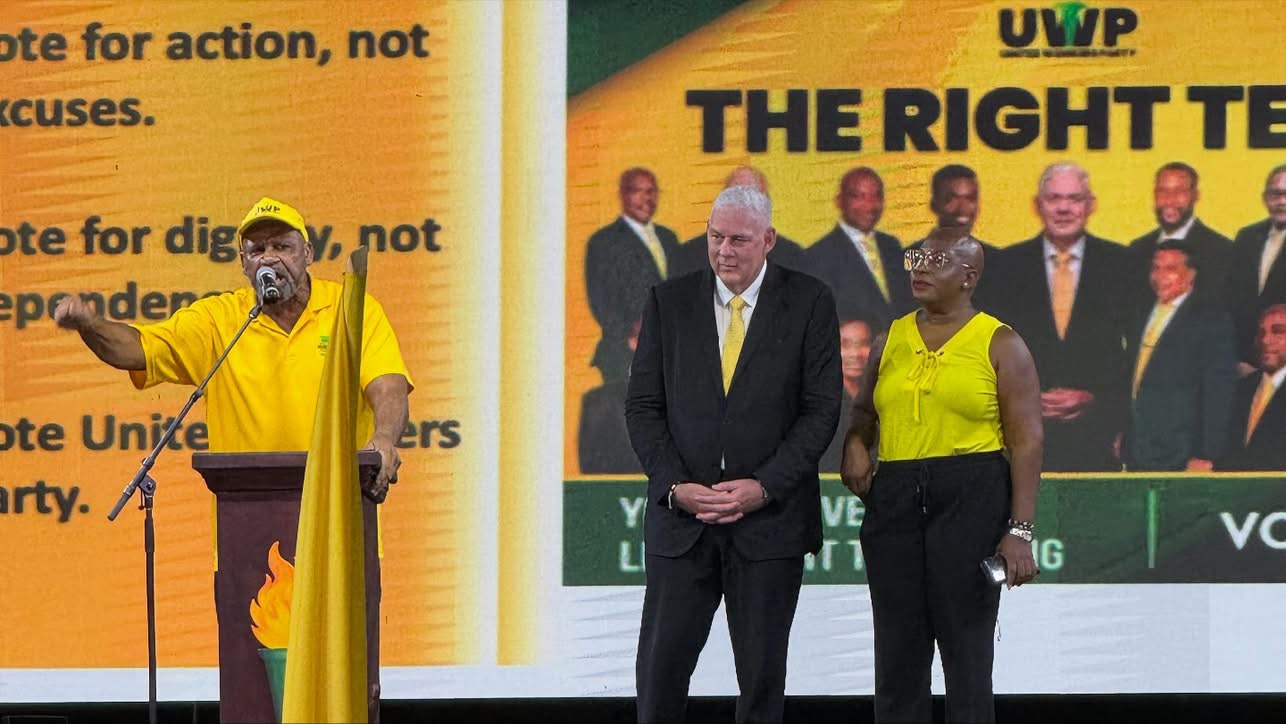
In a surprising turn of events, former United Workers Party (UWP) Deputy Leaders Gale Rigobert and Ezechiel Joseph made a notable return to the political arena on November 23. Their appearance at the UWP’s General Election Manifesto Launch in La Caye, Dennery, ended weeks of speculation about their political allegiances. The event, marked by fervent speeches and strategic endorsements, underscored their unwavering support for the party. Earlier in the evening, UWP Public Relations Officer Lenard “Spider” Montoute hinted at significant developments, teasing the crowd with the statement, “All the big fish are here tonight.” This followed comments by SLP Political Leader Philip J. Pierre, who had fueled rumors during a November 12 public meeting in Dennery South, suggesting that the UWP was unaware of impending political shifts. The speculation intensified after former UWP MP Edmund Estephane announced his decision to switch allegiance to the SLP. However, Rigobert and Joseph’s presence at the UWP event dispelled any doubts about their loyalty. Rigobert, a former Micoud North MP and Education Minister, delivered a passionate rallying cry, urging supporters to reclaim governance on December 1. Joseph, former MP for Babonneau and Agriculture Minister, emphasized his commitment despite personal challenges, endorsing UWP leader Allen Michael Chastanet as the next Prime Minister of Saint Lucia. He also dismissed rumors of discord with Chastanet, stating, “There is no divorce between Allen and myself.” Additionally, Joseph endorsed the party’s new candidate for Babonneau, Titus Preville, and firmly rejected any notion of wavering allegiance.
分类: politics
-
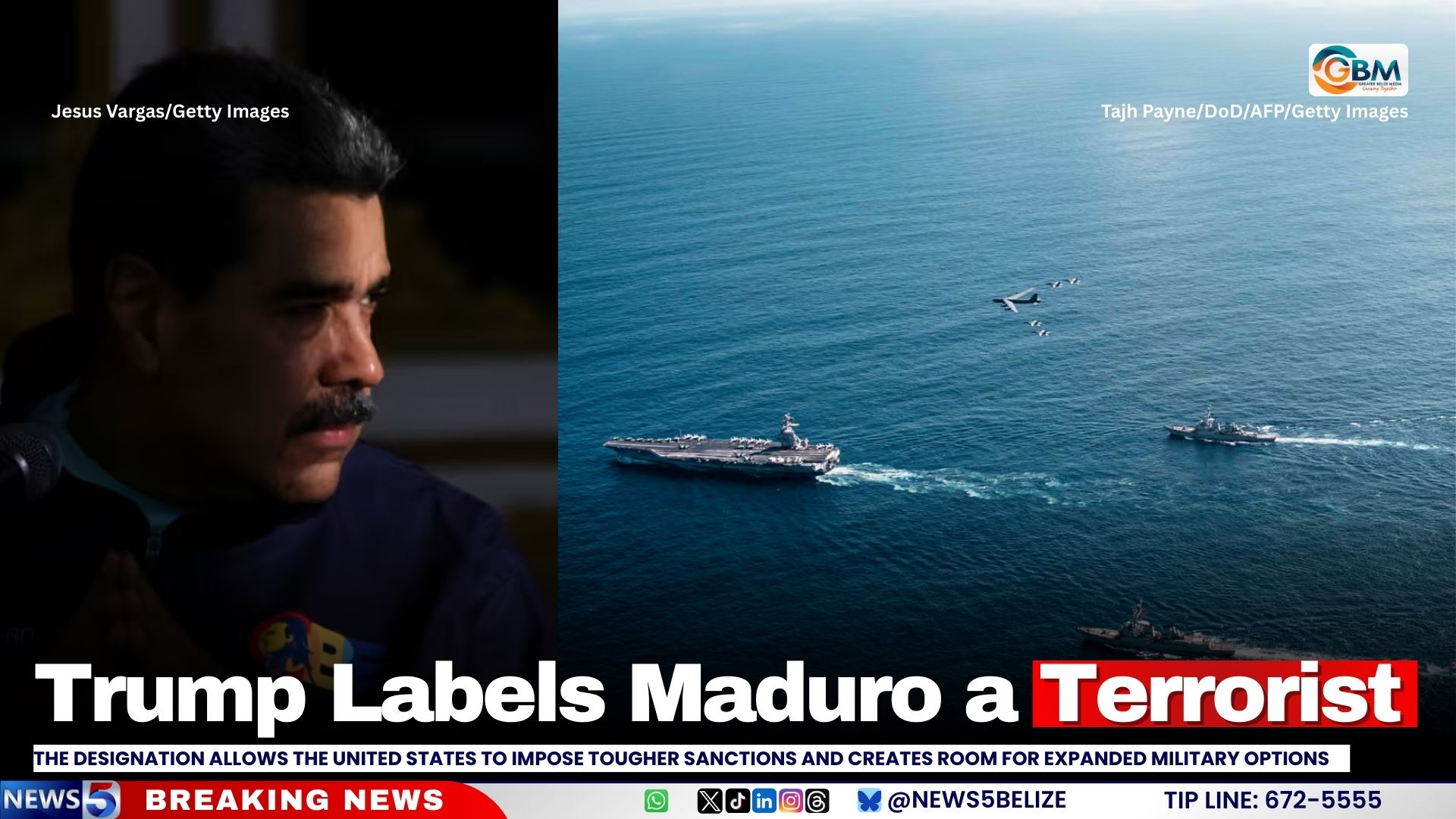
Trump Labels Maduro a Terrorist
In a significant escalation of tensions between the United States and Venezuela, the Trump administration has officially labeled Venezuelan President Nicolás Maduro and his associates as members of a foreign terrorist organization. This designation targets the so-called ‘Cartel de los Soles,’ a term used to describe alleged corrupt Venezuelan officials, though it is not formally recognized as a criminal group. The move grants the U.S. government broader authority to impose stringent sanctions and explore expanded military options within Venezuela. As part of ‘Operation Southern Spear,’ the U.S. has already deployed warships and thousands of troops to the region, with recent bomber and fighter jet flights conducted near Venezuela’s coastline. Maduro has vehemently denied any involvement in drug trafficking and dismissed the existence of the cartel. Meanwhile, Reuters reported that three international airlines canceled flights departing Venezuela over the weekend following a U.S. Federal Aviation Administration warning about ‘potentially hazardous’ airspace. Despite the heightened tensions, both leaders have hinted at a possible willingness to engage in future talks, with Trump stating he might speak with Maduro ‘at a certain time.’
-
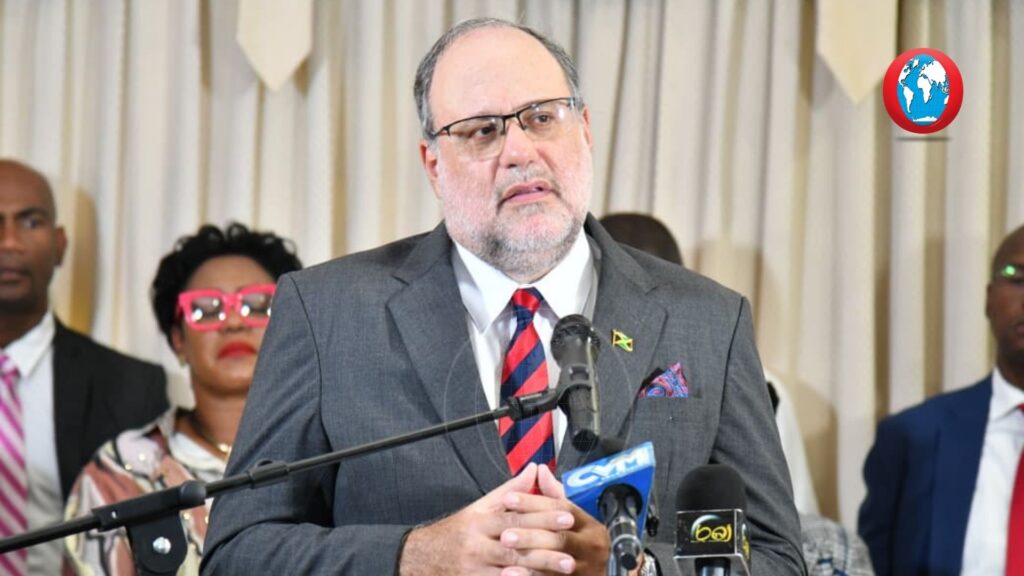
Golding says Opposition being excluded from national recovery process
KINGSTON, Jamaica — Mark Golding, President of the People’s National Party (PNP), has publicly criticized the Jamaican Government for allegedly sidelining the parliamentary Opposition in critical decision-making processes related to national recovery efforts following Hurricane Melissa. Speaking at a press briefing on Tuesday at the Office of the Leader of the Opposition, Golding emphasized that the exclusion of the Opposition threatens transparency and public confidence in the recovery measures. He clarified that the Opposition’s concerns are not politically motivated but aimed at improving the management and distribution of relief resources. Golding highlighted reports that government-funded and donor-funded relief supplies are being distributed through political representatives of the ruling party rather than through established legal channels. He argued that this practice lacks constitutional legitimacy and risks undermining equity in the response. Golding stressed the importance of including elected representatives in constituency-level decisions and called for collaboration across political lines to achieve effective solutions. He also revealed that repeated attempts to communicate with Prime Minister Andrew Holness regarding these issues have gone unanswered. Golding further commented on the Government’s introduction of legislation to establish the National Reconstruction and Resilience Authority (NaRRA), cautioning that bypassing normal procedures makes transparency even more critical. He expressed concern over the absence of the Opposition from all Cabinet-established committees, including those involving the private sector, and reiterated the Opposition’s willingness to contribute to the recovery process.
-
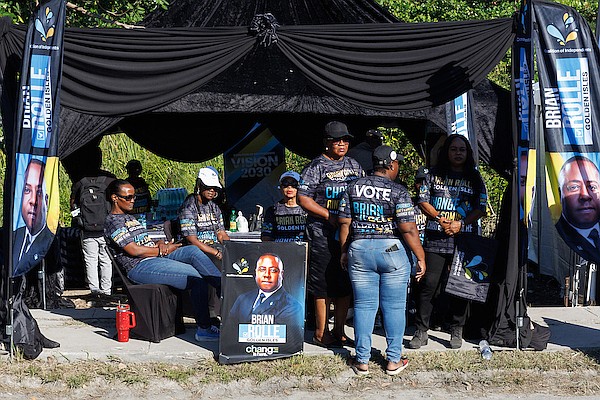
Golden Isles vote exposes COI’s ‘political ceiling’ as third party fails to advance
The recent Golden Isles by-election has cast a spotlight on the Coalition of Independents (COI), revealing its inability to emerge as a viable national alternative to the dominant Progressive Liberal Party (PLP) and Free National Movement (FNM). Despite widespread public discontent with the two major parties, the COI’s performance in the by-election demonstrated minimal electoral progress, securing only 348 votes, or 8.99 percent of the total ballots cast. This result mirrors the party’s 2021 General Election performance, where it garnered approximately 6 percent of the vote, highlighting its stagnant growth in voter support. Established in 2020 as a response to decades of PLP–FNM dominance, the COI initially promised to disrupt the political landscape. Over the years, it has expanded its organizational structure, ratified numerous candidates, and even gained its first sitting Member of Parliament earlier this year. However, the Golden Isles outcome underscores that these efforts have not translated into widespread voter acceptance. The constituency remained a two-party contest, with COI support concentrated in a few polling divisions—14.23 percent in Division 4 and 15.46 percent in Division 6B—while remaining significantly lower elsewhere. This pattern of isolated enthusiasm without sustained momentum suggests that the COI has yet to pose a credible challenge to the established political order. As of press time, The Tribune was unable to obtain comments from COI officials.
-
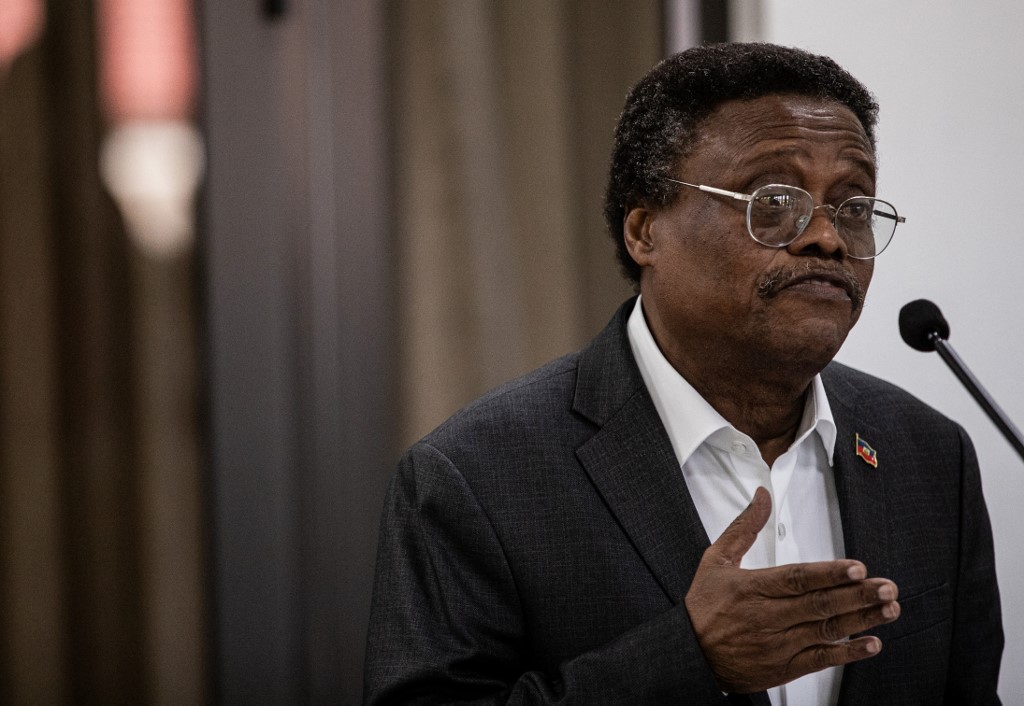
US revokes visa of Haitian official accused of backing gangs
The United States State Department has announced visa sanctions against a Haitian government official accused of aiding criminal gangs and obstructing efforts to combat organized crime in Haiti. While the department did not disclose the official’s name or the specific gangs involved, it confirmed that any existing visas held by the individual would be revoked. A source close to the matter identified the sanctioned official as Fritz Alphonse Jean, a member of Haiti’s transitional presidential council. Jean, during a press conference, dismissed the allegations as a ‘masquerade’ but did not directly confirm he was the target of the sanctions. He vowed to continue advocating for good governance and opposing systemic chaos in Haiti. The US had previously designated two Haitian gangs, Viv Ansanm and Gran Grif, as terrorist organizations in May 2024. The State Department reiterated its commitment to supporting Haiti’s stability and emphasized the need for progress toward free and fair elections. This development follows the arrest and deportation of prominent Haitian businessman Dmitri Vorbe in September 2023, who was accused of backing gangs. Another businessman, Pierre Reginald Boulos, was arrested in July 2023 for allegedly contributing to Haiti’s destabilization. Haiti, the poorest country in the Americas, has long grappled with rampant gang violence, including murders, rapes, looting, and kidnappings, exacerbated by chronic political instability. The crisis deepened in early 2024 when gangs forced then-Prime Minister Ariel Henry to resign.
-
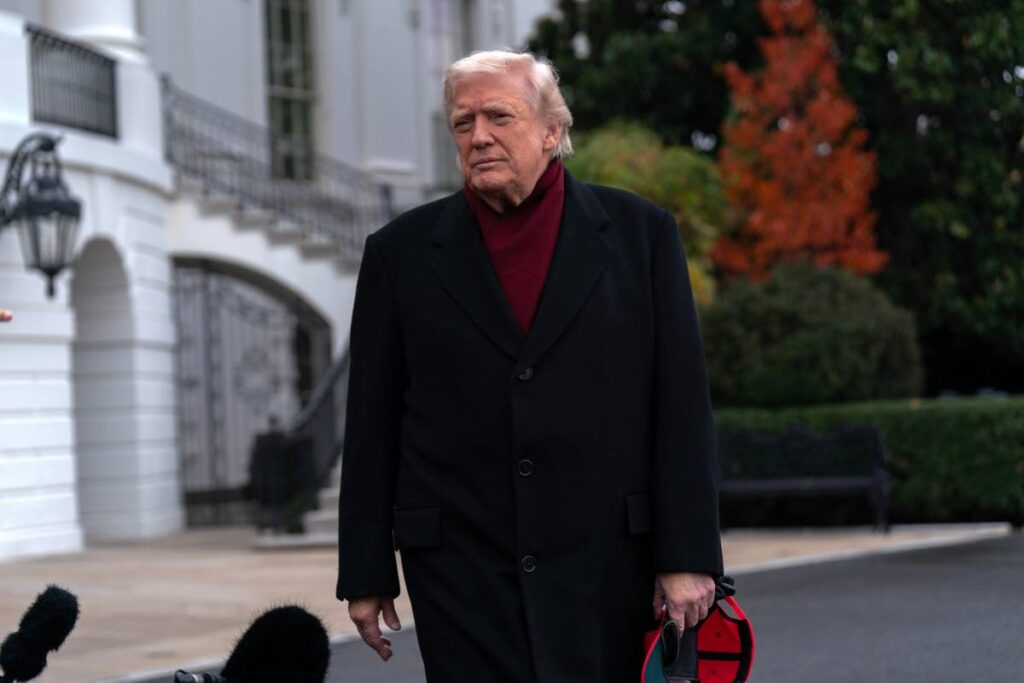
Will Trump invade Venezuela?
The possibility of U.S. military intervention in Venezuela has become a topic of intense speculation, particularly among citizens of Trinidad and Tobago and Guyana. Many Guyanese view Venezuelan President Nicolás Maduro as a threat, given his territorial claims over two-thirds of Guyana and his veiled threats. The question of whether U.S. President Donald Trump will authorize strikes or an invasion to remove Maduro has been repeatedly posed to the President by reporters. While Trump has not directly addressed these queries, he has hinted at potential land strikes targeting drug-manufacturing facilities and camps labeled as terrorist organizations, which are allegedly responsible for shipping drugs to the U.S., causing thousands of deaths annually. Maduro, who has been accused of leading a terrorist organization, has denied these allegations and expressed a willingness to engage in discussions with the Trump administration. Trump has indicated openness to meeting with Venezuelan leadership and may send emissaries to negotiate Maduro’s departure from office. However, any talks would likely delay immediate military action. Strikes could be avoided if Maduro agrees to concessions, such as compensating Exxon and other oil companies nationalized by Venezuela, dismantling drug labs, and cracking down on criminal gangs. Venezuela’s role in drug production is relatively minor compared to Colombia and Bolivia, but its jungle airstrips are used to transport drugs to Central America, Mexico, and beyond. Reports from Guyana have uncovered secret airstrips and small aircraft linked to drug trafficking, implicating local police and military personnel. American intelligence has identified Guyana as a transshipment point for drugs destined for developed countries. Despite these issues, it is unlikely that Maduro will make sweeping concessions, leaving the door open for further U.S. strikes. Trump’s cabinet members have labeled Maduro an illegitimate ruler due to alleged election rigging, increasing the likelihood of targeted military action. However, Trump has previously expressed a desire to reduce U.S. foreign involvement, citing the country’s poor track record with regime changes in nations like Guyana, Haiti, and Iraq. A full-scale invasion of Venezuela carries significant risks, reminiscent of costly quagmires in Afghanistan and Iraq. While the U.S. military is prepared for such an operation, immediate large-scale intervention seems improbable. Air-powered strikes, however, remain a likely scenario, and the fall of the Maduro regime would likely be met with indifference or relief by Guyanese citizens.
-
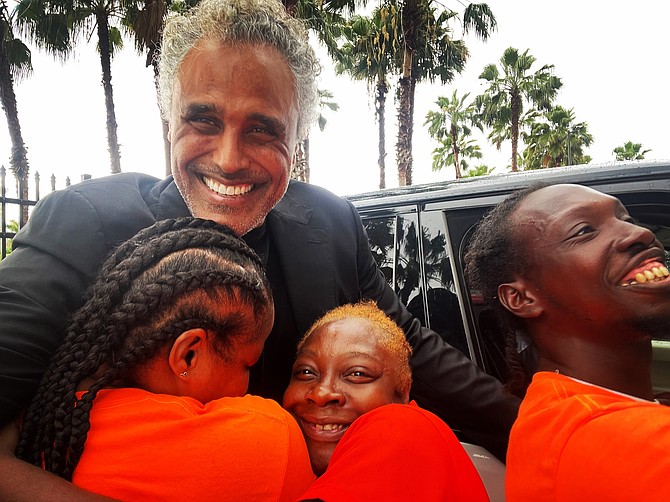
Rick Fox announces election bid but doesn’t reveal party alignment
Former NBA player and ambassador-at-large Rick Fox has officially declared his intention to run in the upcoming Bahamas general election, putting an end to weeks of speculation about his political aspirations. In a heartfelt social media announcement, Fox emphasized his deep commitment to the nation, stating that the Bahamas he envisions can no longer remain a distant dream. He highlighted the urgent need for transparency, a modernized economy, and equitable opportunities for all citizens. Fox’s decision to enter politics stems from months of listening to the concerns and aspirations of Bahamians, who have expressed frustration with the current state of affairs. While he has not yet revealed whether he will run independently or align with a political party, Fox disclosed that he has engaged in discussions with both major parties. He noted that Free National Movement (FNM) leader Michael Pintard had been particularly persistent in courting his candidacy. Fox underscored the critical importance of addressing pressing issues such as youth empowerment, healthcare, housing, and public safety, warning that the country is running out of time to act. He pledged to champion transparency, integrity, and excellence in leadership, framing his campaign as a fight for the Bahamas on the global stage. Fox’s announcement comes amid criticism of politicians for their perceived inaction and opportunism, which he recently mocked in a Halloween-themed post. His candidacy has already sparked controversy, with some questioning the appropriateness of his diplomatic role in light of his political ambitions. Foreign Affairs Minister Fred Mitchell issued a veiled rebuke, reminding ambassadors of their duty to serve the government that appointed them. Despite the backlash, Fox remains steadfast in his mission to transform the Bahamas into a nation where every citizen feels secure, empowered, and proud.
-
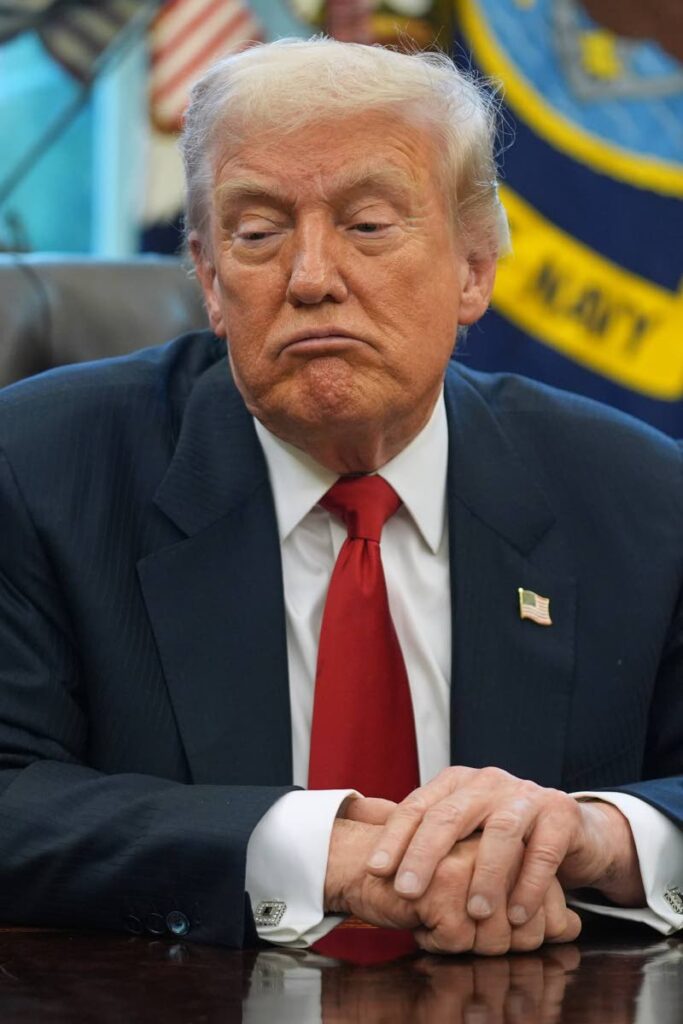
Tariff relief for Trinidad and Tobago
In a recent letter to the editor, Dr. Errol N. Benjamin reflects on the strategic implications of Trinidad and Tobago’s (TT) alliance with the United States, particularly in the context of the ongoing Venezuelan crisis. Dr. Benjamin, who has been vocal about this issue for some time, underscores the benefits of this partnership, citing the recent tariff relief on fertilizers and other products as a tangible outcome. He argues that Prime Minister Kamla Persad-Bissessar’s decision to align with the US demonstrates astute leadership, given the economic and security advantages it brings to TT.
Dr. Benjamin acknowledges the prevailing anti-Trump sentiment in the region, fueled by concerns over US hegemonic intentions and the desire for regime change in Venezuela, ostensibly for its oil and gas resources. He also notes the Caribbean’s aspiration to be a ‘zone of peace’ and the importance of sovereignty. However, he contends that these concerns, while valid, should not overshadow the pragmatic benefits of aligning with a global powerhouse like the US, especially when TT relies on the US for markets, financing, and security.
Addressing fears of becoming a military target, Dr. Benjamin questions the likelihood of such an outcome under Trump’s administration. He also highlights the strategic necessity of this alliance, particularly with Venezuela’s aggressive posturing in the region, including accusations of TT’s complicity in guerrilla warfare. Dr. Benjamin leaves the final judgment to the readers, urging them to critically evaluate the merits of this alliance in the broader geopolitical context.
-
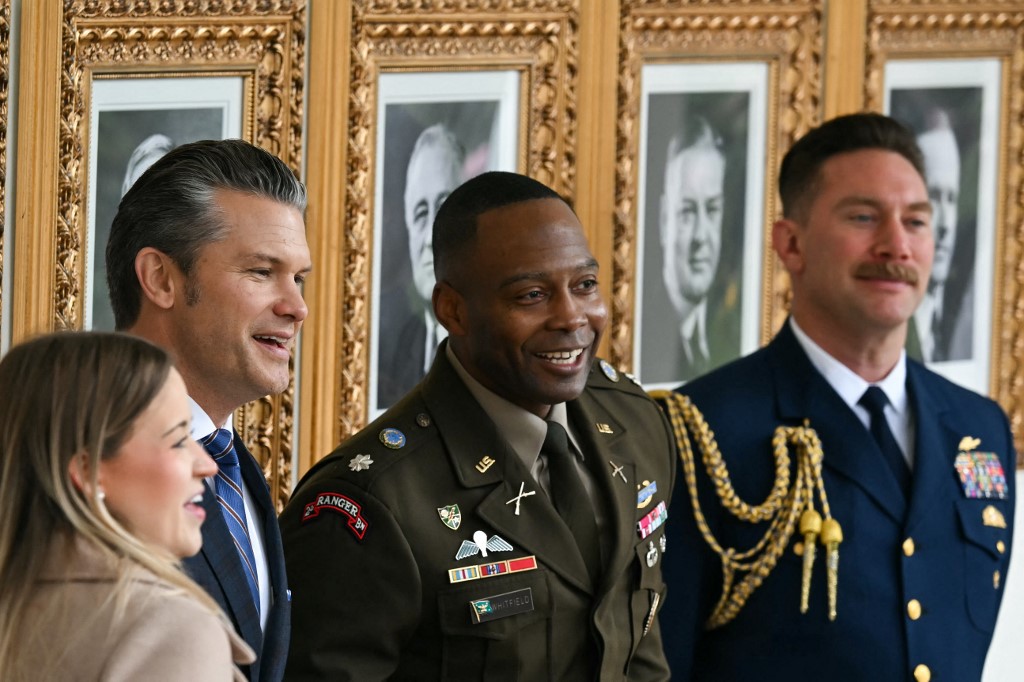
Pentagon boss to visit Dominican Republic amid US-Venezuela row
SANTO DOMINGO, Dominican Republic — U.S. Defense Secretary Pete Hegseth is set to visit the Dominican Republic on Wednesday, marking a significant diplomatic move in the Caribbean region. The visit underscores the United States’ commitment to bolstering defense ties with its Caribbean ally, particularly in the context of escalating tensions with Venezuela. The Pentagon confirmed the trip, which coincides with heightened pressure from the Trump administration on Venezuelan President Nicolas Maduro, whom Washington accuses of leading a drug cartel.
Hegseth’s itinerary includes meetings with Dominican President Luis Abinader, the country’s defense minister, and other key cabinet members. The discussions are expected to focus on strengthening bilateral defense cooperation, reaffirming U.S. support for regional security, and addressing the growing threat of drug trafficking in the Americas. This visit follows the recent designation of Venezuela’s alleged Cartel de los Soles (Cartel of the Suns) as a foreign terrorist organization by the U.S. government, a move that grants legal authority for further actions against Venezuelan authorities.
In response to the designation, the Venezuelan government organized an anti-U.S. protest in Caracas, with participants accusing Washington of fabricating scenarios to justify intervention. Meanwhile, the U.S. has intensified military pressure on Venezuela, deploying its largest aircraft carrier and a fleet of warships to the region. The Dominican Republic has been a key partner in U.S.-led anti-drug operations, with recent joint efforts resulting in the seizure of 500 kilograms of cocaine. President Abinader emphasized the importance of continued collaboration, citing the rising production of cocaine in South America as a critical challenge.
-
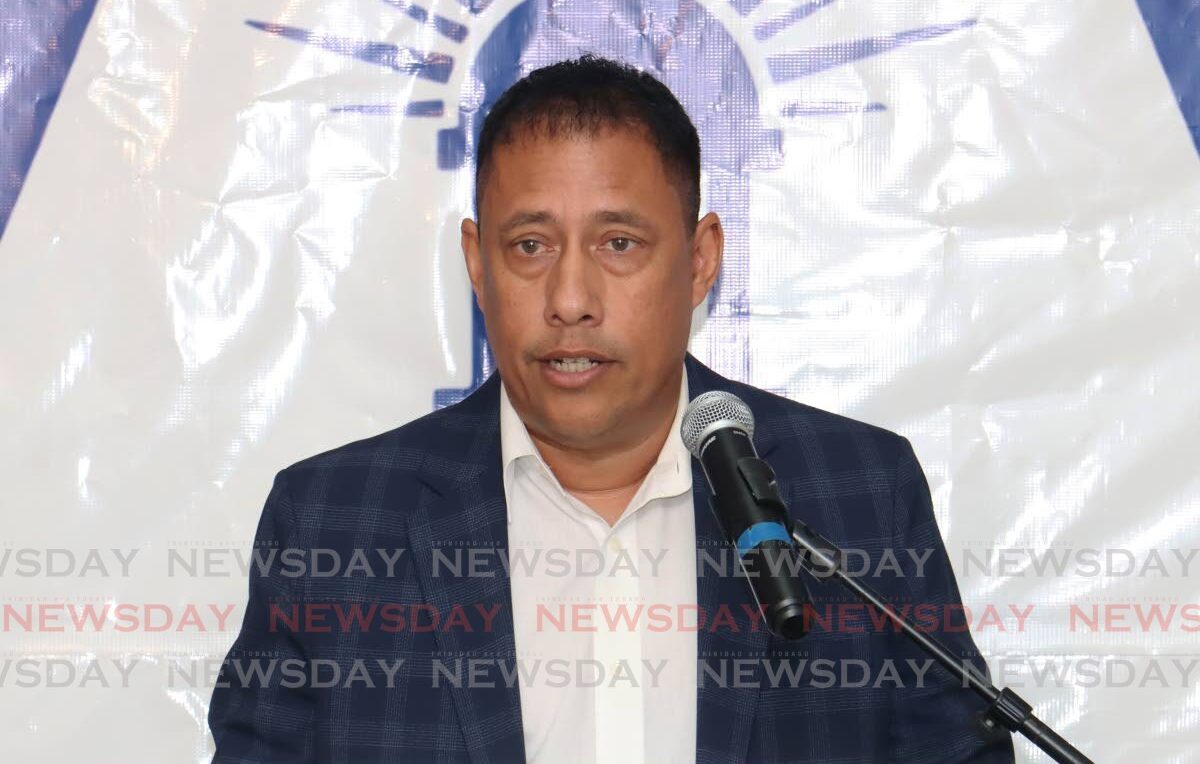
Griffith: ‘Government shouldn’t ask others to revoke visas’
Former National Security Minister Gary Griffith has raised alarms over reports that Homeland Security Minister Roger Alexander is seeking assistance from the US Embassy to revoke visas of US-based social media users, including bloggers with dual nationality, who are allegedly spreading propaganda and fear about Trinidad and Tobago. This development follows the recent revocation of the US visa of Gary Aboud, secretary of Fisherman and Friends of the Sea, who claims it was due to his opposition to the government’s support for US military deployment in the southern Caribbean, which began in August. In a video posted on November 24, Griffith acknowledged a country’s right to deny visas to individuals who violate its laws but expressed concern over the unprecedented move of a government official requesting another country to revoke visas of its own citizens. Griffith, who served as national security minister and adviser during Prime Minister Kamla Persad-Bissessar’s administration (2010-2015), stated he was confident Persad-Bissessar would not endorse such actions, which could be perceived as silencing dissent. He emphasized that while individuals are entitled to their views, legal action should be taken only if laws are broken. Aboud, in a November 21 statement, questioned the government’s role in his visa revocation, to which Persad-Bissessar responded by denying any involvement and labeling his comments as reckless. She has publicly supported the US military deployment, described by the Trump administration as an anti-narcotics initiative targeting drug trafficking from Venezuela.