分类: politics

  • Attorney Slams Customs Dept. Over ‘Illegal’ Checkpoint

    Attorney Slams Customs Dept. Over ‘Illegal’ Checkpoint

    A dramatic confrontation between legal authority and constitutional rights unfolded on Belize’s George Price Highway, sparking intense national debate over customs enforcement powers. Prominent attorney Tiffany Cadle has launched scathing accusations against the Customs and Excise Department following a high-speed pursuit she characterizes as an illegal overreach of authority.

    The incident originated when Cadle, accompanied by her elderly mother, drove through what she identified as an unauthorized checkpoint in Sandhill. According to the attorney, the checkpoint lacked proper police presence and identifiable law enforcement personnel, featuring instead customs officers who she claims lacked reasonable suspicion to conduct vehicle searches.

    Cadle’s real-time documentation via Facebook Live captured the escalating tension as customs vehicles pursued her vehicle to the second roundabout in Belize City, where police intervention eventually occurred. The situation intensified when officers emerged with high-powered rifles before conducting a search that yielded only a black cake and bottles of ‘rum popo’—traditional alcoholic beverages.

    The Customs Department has vigorously defended its actions through an official press release, revealing the operation was part of a multi-agency initiative involving the Belize Police Department, Belize Defense Force, Coast Guard, and Immigration Department. Authorities maintain these coordinated efforts are essential for combating smuggling operations and transnational criminal activities, asserting their jurisdictional authority extends beyond traditional ports of entry.

    Legal experts are now examining Section Ninety-one of the Customs Regulations, which permits officers to stop and examine vehicles when reasonable suspicion of smuggling exists. Cadle contends this provision was improperly applied in her case and plans to pursue both formal complaints and potential litigation against the department, citing endangerment during the highway interception and violation of constitutional freedom of movement protections.

    The incident has ignited broader discussions about law enforcement boundaries, constitutional protections, and the balance between security operations and civil liberties in Belize.
  • Municipalities Losing Revenues with New Cycle Regulations

    Municipalities Losing Revenues with New Cycle Regulations

    Belize City has instituted a comprehensive $120 licensing fee for new motorcycle operators, with half allocated to application and testing procedures required for legal road operation. This financial structure emerges alongside newly enacted cycling regulations that fundamentally alter rider training and certification protocols nationwide.

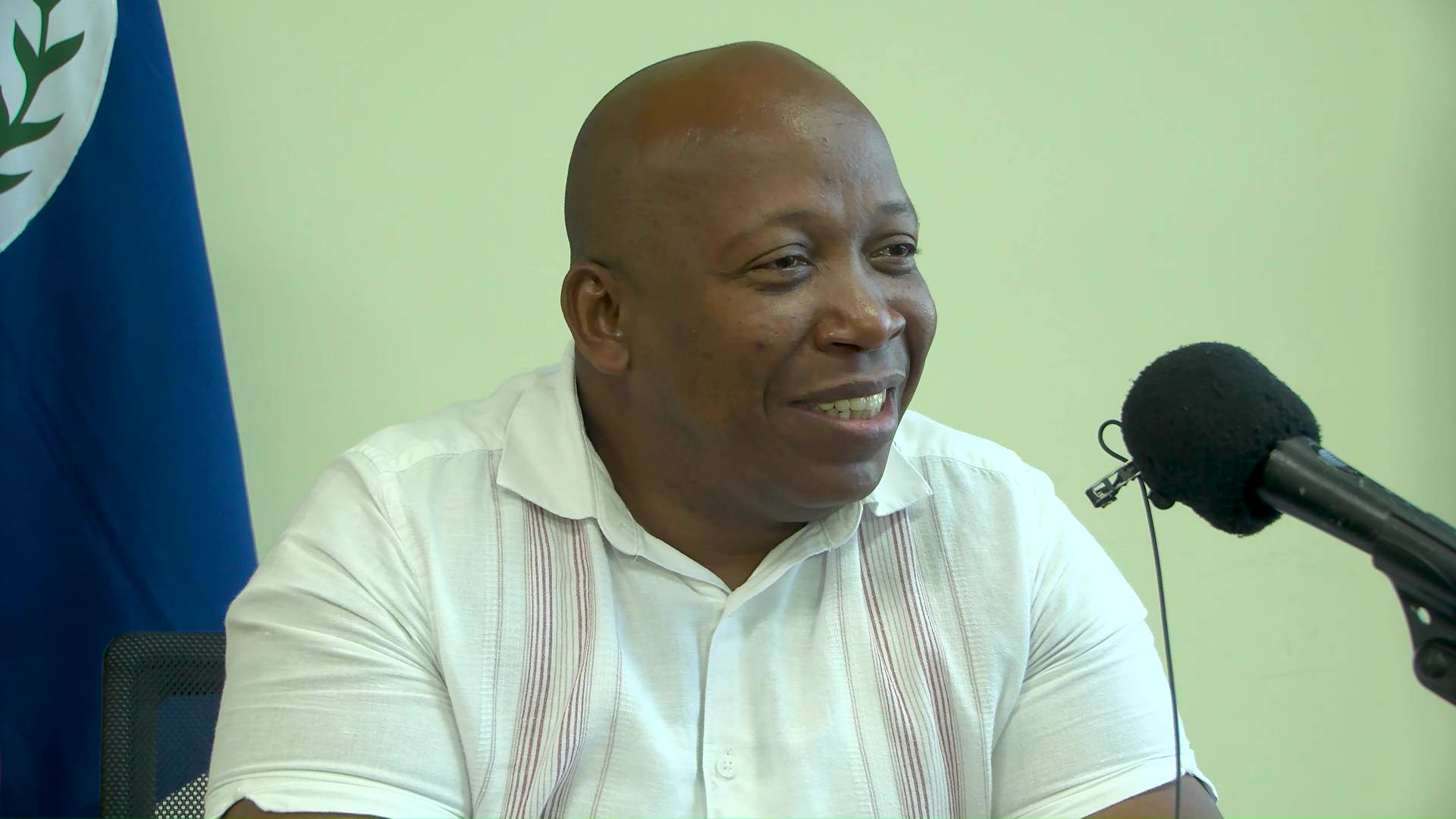
    The regulatory overhaul has prompted significant concerns from municipal authorities anticipating substantial revenue losses from redistributed fee allocations. Chester Williams, CEO of the Ministry of Transport, maintains that the primary objective remains enhancing public safety rather than fiscal generation. “These are national laws, not municipal laws,” Williams emphasized. “Once legislation is formally enacted, municipal bodies must comply with nationally established standards.”

    Williams acknowledged municipal apprehensions regarding redirected portions of application fees previously dedicated to local training, theoretical instruction, and driving examinations. However, he presented an uncompromising perspective: “If they lose revenue for the greater good of people, then so shall it be. This shouldn’t be about revenue generation—it should be about saving lives. If revenue loss translates to lives saved, that constitutes a fundamentally fair exchange.”

    The Transport Department asserts its statutory mandate to establish uniform national safety standards, positioning the regulations as essential measures for preventing traffic fatalities and serious injuries nationwide. The implementation reflects a centralized approach to transportation policy that prioritizes safety outcomes over local financial considerations.

  • Chester Cagey on Home Affairs Job

    Chester Cagey on Home Affairs Job

    BELIZE CITY – Following the recent cabinet reorganization that installed Oscar Mira as Minister of Home Affairs, intense speculation has emerged regarding the crucial appointment of Chief Executive Officer for the ministry. Minister Mira has explicitly stated his preference for a trusted collaborator, effectively eliminating Sharole Carr-Saldivar, current CEO under Kareem Musa, from consideration.

    Among the potential candidates circulating in political circles is Francis Usher, the incumbent CEO at the Ministry of Defense. Usher’s extensive background with the Belize Defense Force positions him as ideally suited for his current role, much as former Police Commissioner Chester Williams would represent a natural fit for Home Affairs leadership.

    Williams, currently serving as CEO of the Ministry of Transport, maintained an uncharacteristically reserved stance when questioned about a potential lateral transition. Known for his typically forthright communication style, the veteran public servant offered a rare “no comment” when directly asked about any official contact regarding the position.

    In elaborated remarks, Williams emphasized his commitment to serving at the Prime Minister’s discretion: “I serve at the pleasure of the Prime Minister. It is where the Prime Minister believes his CEOs would best serve or would be best fit. Certainly within the wisdom of the Prime Minister, if he believes I would be better fit in the Ministry of Home Affairs and I am asked, I will accept the offer.”

    The Transport CEO additionally noted his positive working relationship with current minister Dr. Zabaneh, describing them as “a very good team” that has accomplished significant work with more objectives pending completion. Williams concluded that he would accept whatever decision the Prime Minister makes regarding the matter.

  • Government of Grenada 2026 Budget Statement

    Government of Grenada 2026 Budget Statement

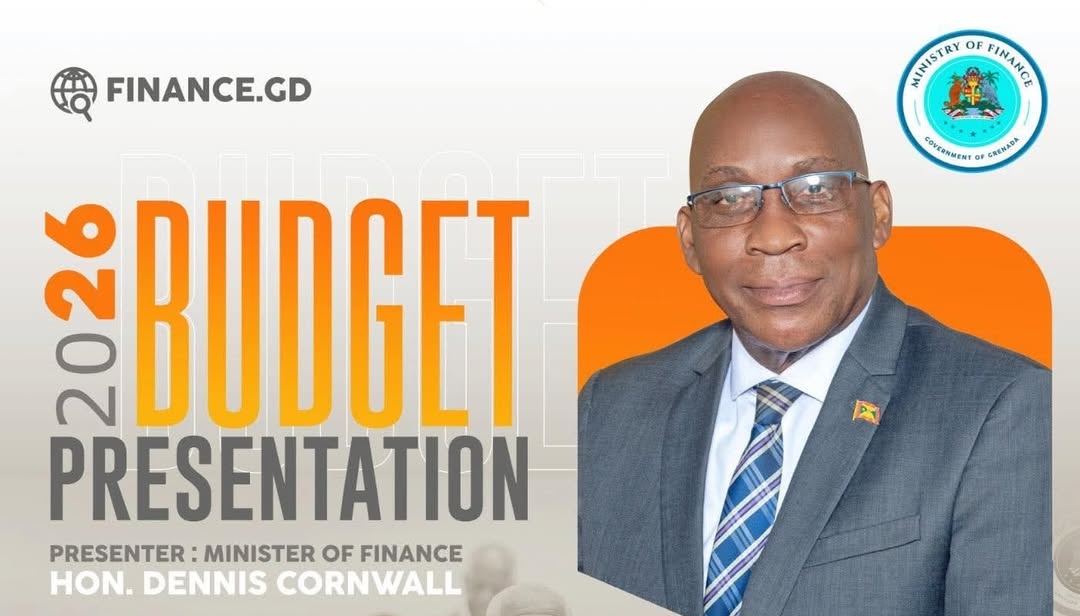
    In a landmark address to Parliament on December 1, 2025, Grenada’s Finance Minister Honourable Dennis Cornwall unveiled a comprehensive $1.96 billion budget for 2026, marking the fourth fiscal plan under the current administration. The budget, themed “Towards Vision 75: Powering Progress Through People’s Participation and Innovation,” represents a strategic blueprint for national development as the nation approaches its 75th independence anniversary.

    The fiscal framework allocates $1.3 billion in recurrent revenue against $1.1 billion in recurrent expenditure, with a substantial $370.4 million dedicated to capital projects and $206.7 million for strategic initiatives. Despite projecting an overall deficit of $309.8 million, Minister Cornwall emphasized the budget’s full financing through a drawdown of $257.3 million from government deposits complemented by limited domestic and external financing.

    Economic performance indicators reveal remarkable progress, with GDP growth reaching 6.2% in 2025—significantly exceeding IMF projections—and unemployment dropping to a historic low of 7.5% from 16.6% in 2021. Youth unemployment saw dramatic improvement, falling from 42% to 20.2% over the same period.

    The budget outlines transformative investments across twenty-two strategic sectors, including healthcare modernization through Project Polaris—a state-of-the-art teaching hospital—and significant advancements in renewable energy transition featuring geothermal development and solar initiatives. Education receives $179.6 million with expanded scholarship programs, while housing initiatives address longstanding deficits through Project 500 and climate-resilient rebuilding post-Hurricane Beryl.

    Notable allocations include $155.7 million for health and mental wellness, $187.2 million for infrastructure development, $64.8 million for Carriacou and Petite Martinique recovery, and $53.1 million for tourism and creative economy development. The budget maintains cost-of-living relief measures valued at $47 million, including transportation subsidies, VAT exemptions on essential goods, and energy support programs.

    Minister Cornwall highlighted the administration’s commitment to fiscal responsibility while temporarily suspending Fiscal Resilience Act targets to support reconstruction efforts. The address emphasized tangible progress across all sectors, countering critics with evidence of transformative achievements since assuming office three and a half years earlier.

    The budget represents a holistic approach to national development, balancing economic growth with social inclusion, environmental sustainability, and institutional strengthening, positioning Grenada as a regional leader in progressive governance and sustainable development.

  • Elections : The electoral decree unanimously adopted by the Council of Ministers.

    Elections : The electoral decree unanimously adopted by the Council of Ministers.

    In a landmark development for Haiti’s political landscape, the Presidential Transitional Council (CPT) has unanimously ratified an electoral decree during a pivotal Council of Ministers session on December 1st. The meeting, presided over by CPT President pro tempore Laurent Saint Cyr and attended by Prime Minister Alix Didier Fils-Aimé alongside government members, represents a decisive advancement toward organizing national elections despite internal political divisions.

    The adoption occurred notwithstanding the notable absence of three Councilors—Fritz Alphonse Jean, Edgard Leblanc Fils, and Leslie Voltaire—who maintain their position advocating for the Prime Minister’s resignation. This absence highlights persistent tensions within the transitional government structure.

    President Saint Cyr heralded the decree as a fundamental commitment to enabling the Haitian populace to “freely and responsibly choose those who will lead them.” He emphasized that this legislative milestone, coupled with ongoing security restoration efforts, demonstrates the government’s dedication to reestablishing democratic legitimacy and stability.

    Prime Minister Fils-Aimé and cabinet members underscored their determination to implement comprehensive measures ensuring a transparent, inclusive, and secure electoral process. The ratified decree meticulously outlines procedures, deadlines, and operational mechanisms necessary for expediting representative elections to consolidate democratic foundations.

    The Prime Minister declared electoral organization an “absolute priority,” confirming that all state resources would be mobilized toward this objective. The imminent publication of the Electoral Decree in Le Moniteur, Haiti’s official gazette, is characterized as a potent signal to both the nation and international community regarding Haiti’s return to democratic governance.

    This official publication will enable the Provisional Electoral Council (CEP) to subsequently release the detailed electoral calendar through the same official channel. The Council of Ministers concluded proceedings by affirming the “irreversible” nature of the electoral path and pledging continued cooperation with national institutions and international partners to meticulously adhere to established electoral timelines.

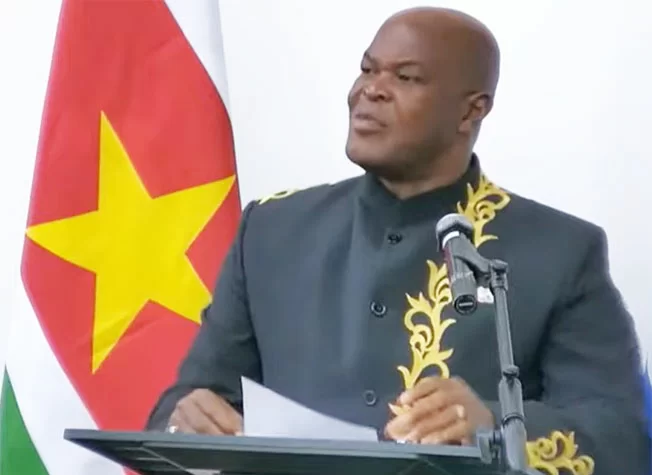
  • Bronto Somohardjo: Suriname loopt niet achter maar naast Nederland

    Bronto Somohardjo: Suriname loopt niet achter maar naast Nederland

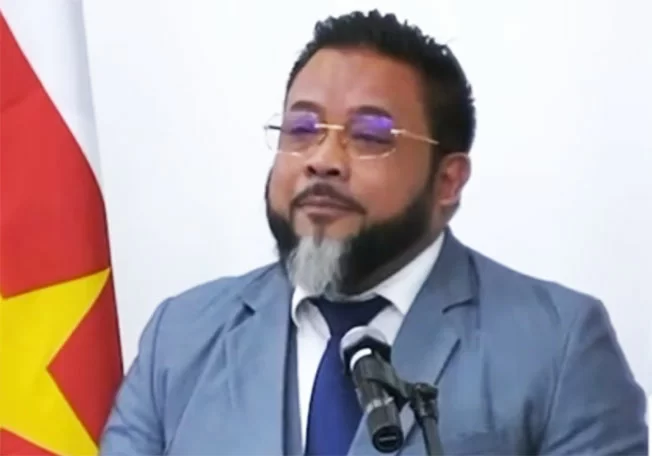
    In an extraordinary public session of De Nationale Assemblée, Pertjajah Luhur faction leader Bronto Somohardjo delivered a remarkably personal address to King Willem-Alexander that redefined Suriname’s relationship with its former colonial ruler. The speech emphasized generational change, mutual equality, and Suriname’s sovereign right to determine its own future.

    Somohardjo opened with personal greetings to the king and Surinamese citizens in the Netherlands, revealing his own background as a former Dutch citizen after his family was forced to flee to the Netherlands decades ago. He acknowledged difficult historical periods marked by political turmoil and acknowledged that his father ‘didn’t make it easy for you either,’ referencing occupations, protests, and incidents broadcast live on Dutch television.

    Despite this contentious past, Somohardjo noted his family received fair treatment from the Netherlands and was naturalized by the king’s mother, Queen Beatrix, whom he described as ‘a warm and human woman remembered fondly by many here.’ He clarified that his voluntary exchange of a Dutch passport for a Surinamese one was ‘not out of ingratitude, but conviction’—wanting to be ‘buried in the same soil as my combaté.’

    Addressing Queen Máxima directly, Somohardjo humorously noted her South American background, suggesting ‘a South American woman deserves extra attention.’

    The core of his speech delivered a powerful message: ‘Suriname is not a paragraph in Dutch history. Suriname writes its own book.’ He described this ongoing narrative as being written by ‘Surinamese students in your cities, Dutch interns in my cities, and especially by families separated by thousands of kilometers yet remaining connected.’

    Adopting what he called ‘Dutch bluntness’ learned during his upbringing in the Netherlands, Somohardjo stated plainly: ‘You are not here because our sun shines so pleasantly. You are not here for our beautiful nature or that delicious Parbo beer you can now find in Albert Heijn. You are here because you are Dutch. And Dutch people see opportunities—especially in trade.’

    He issued a significant warning: ‘The generation your mother dealt with is not the generation facing you today. We are different. We dare more. We know our worth. And we will let no one—friend, partner, or country—take the cheese from our bread.’

    The central message called for a completely redefined relationship based on equality: ‘We, King, do not walk behind you. But walk beside you. And that must be the new chapter between Suriname and the Netherlands.’ He advocated for mutual rediscovery without subservience or confrontation: ‘Not with bowed heads. Not with clenched fists. But out of respect for each other.’

    Somohardjo concluded by welcoming the royal couple while firmly asserting Suriname’s self-determination: ‘Welcome to Suriname. The country that knows and acknowledges its history. But will write its own future.’

  • Norberts note encouraging turnout as Micoud North votes

    Norberts note encouraging turnout as Micoud North votes

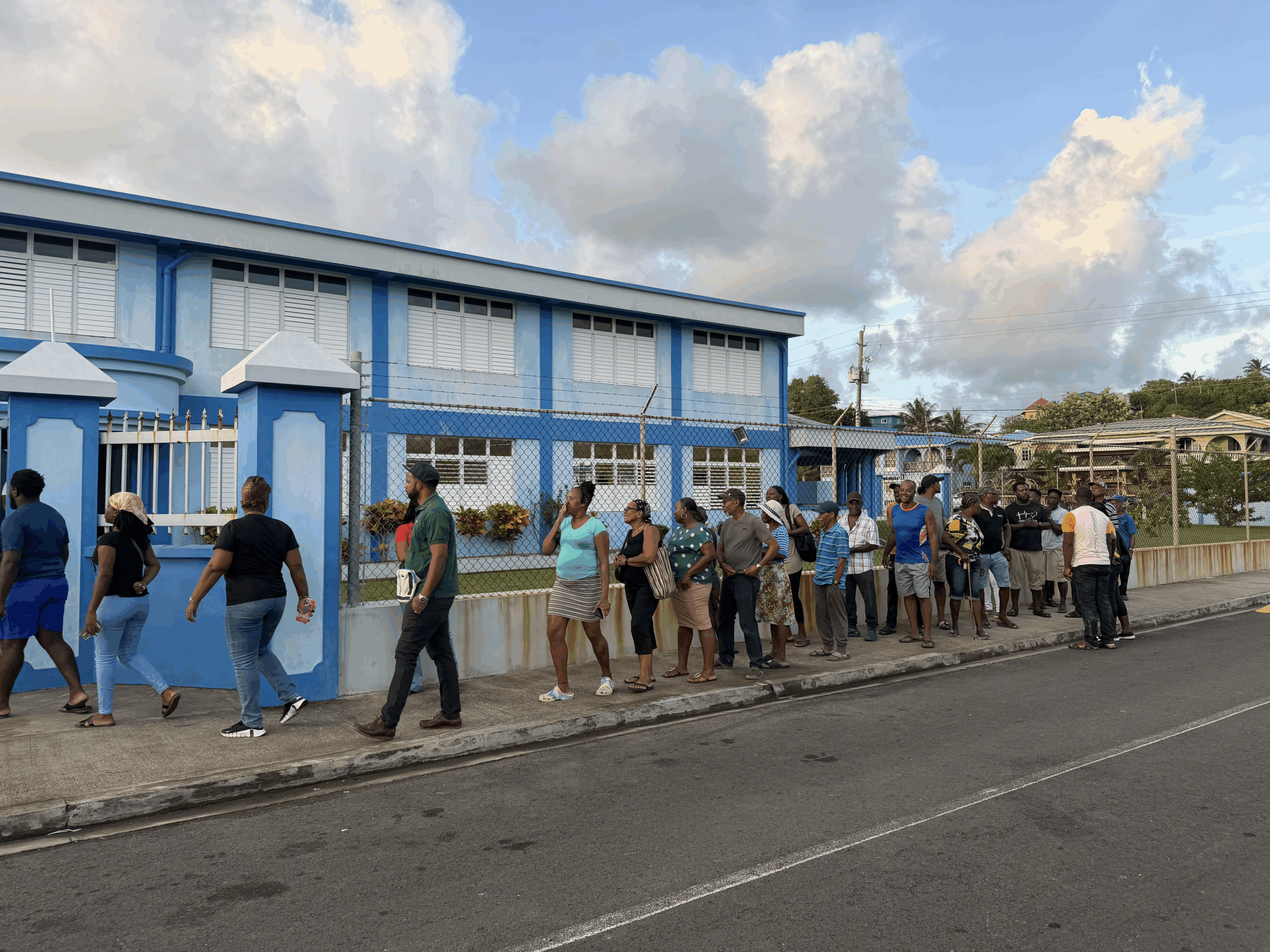
    The Micoud North constituency witnessed robust electoral participation during recent polling activities, with representatives from major political parties reporting generally positive voter engagement. United Workers Party (UWP) candidate Elisha Norbert conducted extensive visits to multiple polling stations, observing what he described as “quite encouraging” turnout numbers. He expressed gratitude to constituents who endured waiting lines to exercise their democratic rights.

    His opponent, incumbent Saint Lucia Labour Party (SLP) representative Jeremiah Norbert, reported similar observations regarding voter enthusiasm. “I’m happy with the rate at which I see the lines moving,” the defending candidate remarked, acknowledging the consistent flow of voters throughout the morning hours.

    Despite the overall positive atmosphere, the electoral process encountered minor operational challenges. Elisha Norbert highlighted instances where some prospective voters were reportedly turned away from polling stations due to identification issues or unclear instructions from election officials. These incidents prompted the UWP candidate to advocate for enhanced civic education initiatives, suggesting that voting procedures should be incorporated into school curricula to better prepare future electorates.

    Both candidates transcended partisan perspectives to reflect on the broader significance of democratic participation. Elisha Norbert emphasized the importance of unity and progress, stating: “Every election day should be a day that makes St. Lucia better and not worse.” He envisioned elections evolving into “more of an enjoyable experience and not a tense one” in future cycles.

    Voters themselves expressed diverse motivations for participation. One resident described the voting process as remarkably efficient, noting that the actual ballot casting took approximately twenty seconds. Another voter cited satisfaction with current governance as their primary motivation, while a first-time voter simply sought “better” outcomes through democratic engagement.

  • Live coverage of Election Day 2025 in St. Lucia

    Live coverage of Election Day 2025 in St. Lucia

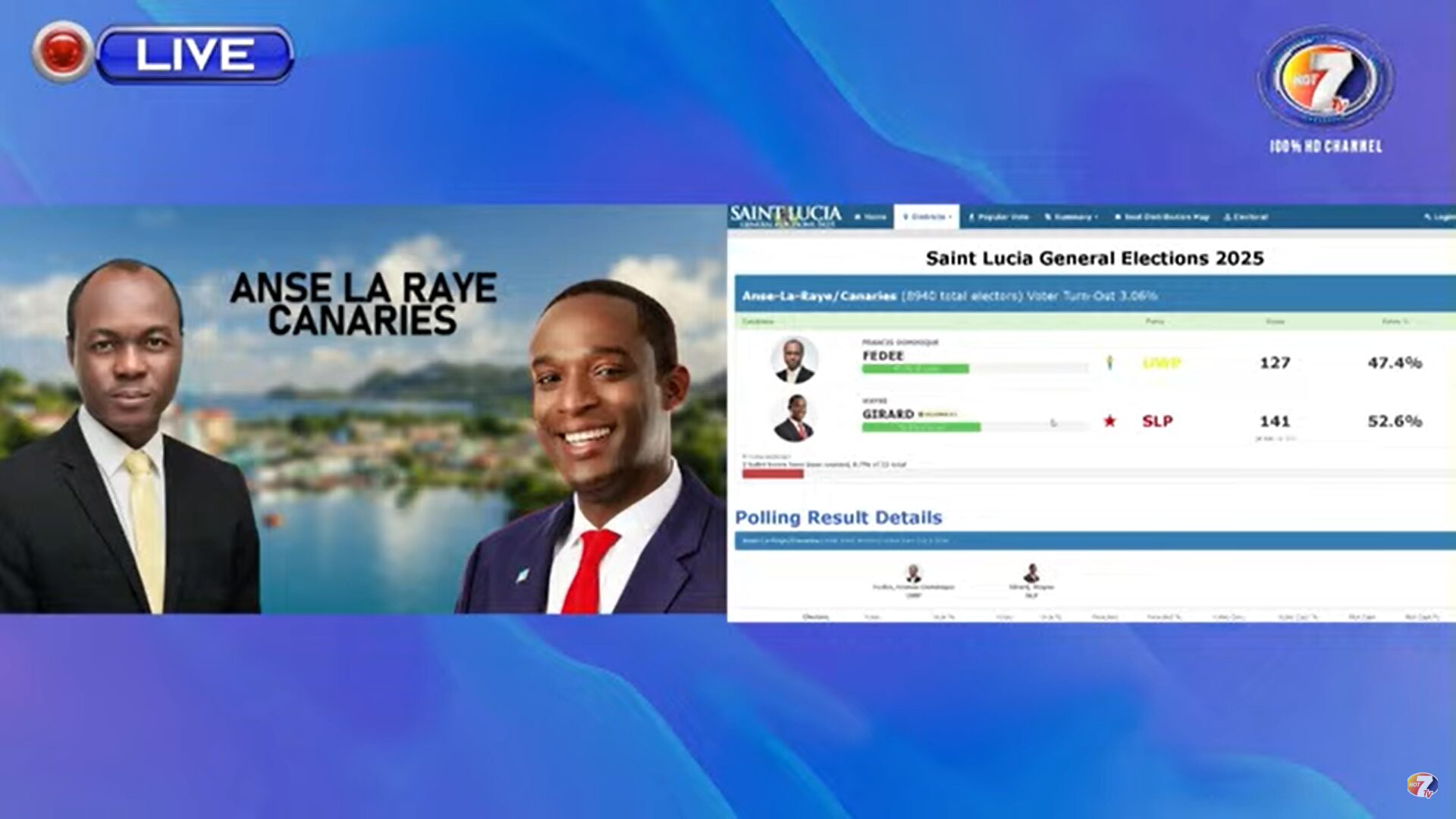
    St. Lucia witnessed a significant surge in civic participation during its 2025 General Election, with preliminary reports indicating substantially higher voter turnout compared to the previous electoral cycle in 2021. Election officials and independent observers have characterized the participation rate as remarkably elevated, reflecting heightened public engagement in the democratic process.

    The increased voter activity occurred amid comprehensive media coverage, with major news organizations including DNO and Hot7 TV providing extensive real-time reporting from polling stations across the island nation. These media outlets deployed teams of journalists to deliver continuous updates and analytical commentary throughout the election day proceedings.

    The substantial rise in voter participation suggests growing political awareness among the St. Lucian electorate, potentially influenced by contemporary issues facing the Caribbean community. This electoral engagement demonstrates the vitality of democratic institutions within the Commonwealth nation and underscores the population’s commitment to shaping their governance future through constitutional processes.

    As ballot counting progresses, citizens and international observers await the official declaration of results that will determine the composition of the next government and political leadership direction for the eastern Caribbean state.

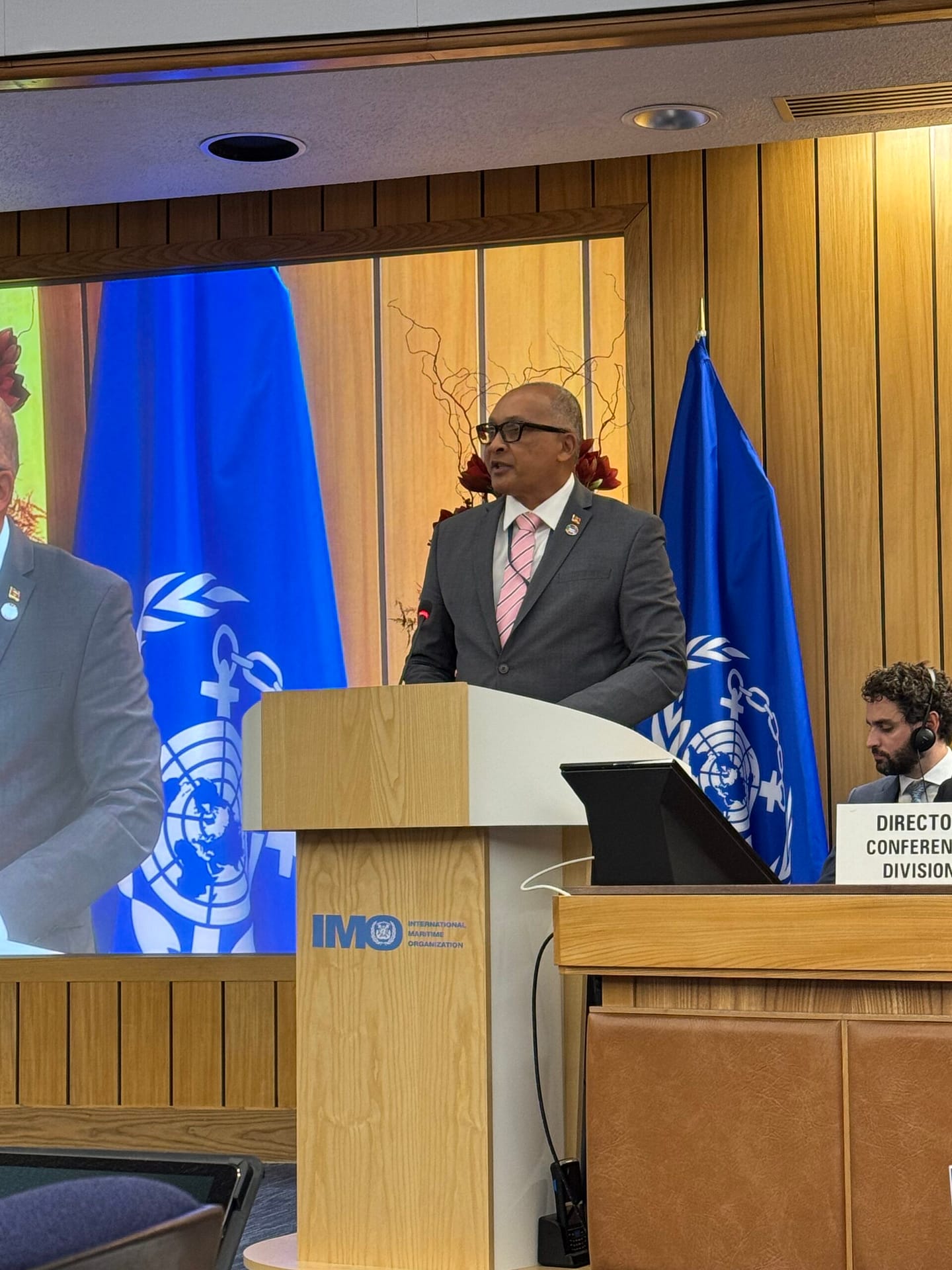
  • Antigua and Barbuda reaffirms strong maritime leadership at 34th IMO Assembly in London

    Antigua and Barbuda reaffirms strong maritime leadership at 34th IMO Assembly in London

    The Caribbean nation of Antigua and Barbuda has demonstrated robust maritime leadership during the 34th session of the International Maritime Organization (IMO) Assembly in London, positioning itself as a significant voice in global maritime governance. The delegation, led by Prime Minister Gaston Browne, emphasized the country’s commitment to advancing sustainable shipping practices and enhancing maritime security protocols.

    During the assembly, Antigua and Barbuda advocated for strengthened international cooperation to address pressing maritime challenges, including climate change impacts on shipping routes and the need for technological adaptation in maritime operations. The nation’s representatives highlighted their successful implementation of the IMO’s maritime safety and environmental protection standards across their registry, which ranks among the world’s largest for vessel registration.

    The delegation also presented initiatives focused on supporting seafarer welfare and promoting digital transformation in maritime administration. Through bilateral meetings with other member states, Antigua and Barbuda forged partnerships to enhance maritime infrastructure development and capacity building in small island developing states.

    This active participation reinforces Antigua and Barbuda’s strategic position within international maritime policymaking and demonstrates its growing influence in shaping the future of global maritime operations.

  • Brunswijk: Historisch besef belangrijk bij vormgeven relatie Suriname-Nederland

    Brunswijk: Historisch besef belangrijk bij vormgeven relatie Suriname-Nederland

    In an extraordinary parliamentary session attended by Dutch King Willem-Alexander, ABOP faction leader Ronnie Brunswijk delivered a powerful address emphasizing the necessity of acknowledging colonial history to build a mature partnership between Suriname and the Netherlands. Speaking directly to the government table where President Jennifer Simons sat alongside the Dutch monarch, Brunswijk—descendant of enslaved Africans and member of the Maroon community—highlighted the courage, struggle, and sacrifices made by his ancestors for freedom long before it was codified in law.

    The political leader asserted that recognizing the colonial past represents not an attempt to sow division but an essential step toward establishing a balanced relationship. ‘History contains painful aspects, but also moments of cooperation and shared values. This demands an honest and balanced approach to dealing with one another,’ Brunswijk stated during the special parliamentary gathering.

    While emphasizing Suriname’s forward-looking perspective, Brunswijk positioned the state visit as a potential starting point for a new phase of cooperation that must deliver concrete benefits for both nations. He expressed particular appreciation for the presence of the Dutch king and queen, interpreting their visit as demonstrating genuine willingness to strengthen bilateral relations.

    ‘Suriname welcomes you with pride, honesty, and dignity—as a people who know their history, acknowledge their pain, and look toward the future with confidence,’ declared Brunswijk, framing the occasion as symbolic of evolving diplomatic relations between the former colony and its former colonial power.