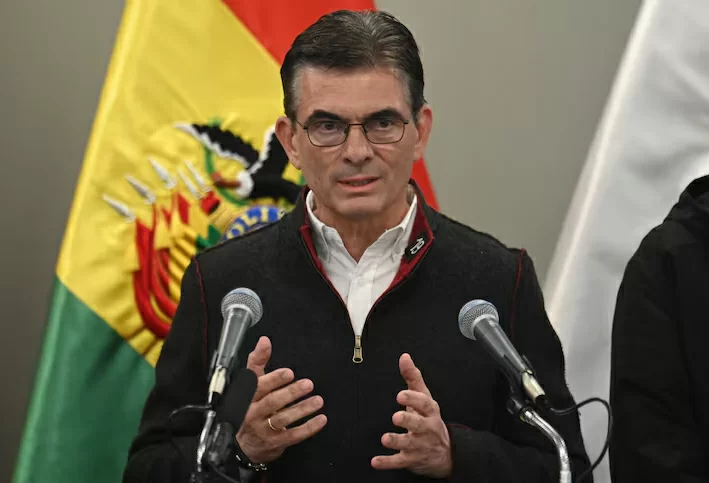
LA PAZ, BOLIVIA – In a move that reshapes the executive branch’s emergency powers amid ongoing nationwide unrest, Bolivian President Rodrigo Paz has formally revoked a law that previously set strict parameters and limits on the declaration of national states of emergency. Official government gazette confirmed the revocation on Wednesday, a change that streamlines the process for the Paz administration to enact emergency measures when facing public instability.
分类: politics
-
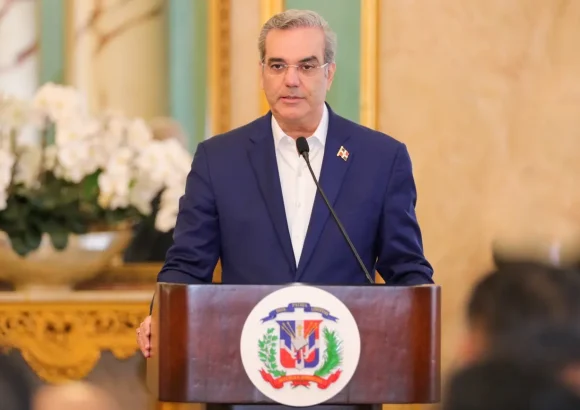
President Abinader donates entire 2025 salary to support social and community projects
In a striking demonstration of commitment to public service and marginalized communities, Dominican Republic President Luis Abinader has announced he will donate his entire 2025 presidential salary to 16 non-profit organizations and religious institutions across the country. The total contribution amounts to 5,344,000 Dominican pesos, all earmarked for social welfare programs designed to lift up vulnerable populations.
Each of the 16 recipient groups will receive an equal disbursement of 334,000 Dominican pesos, a decision aligned with Abinader’s long-stated pledge to direct all of his public earnings toward projects that deliver tangible social impact and raise living standards for citizens facing economic hardship.
The allocated funds are spread across a diverse set of high-priority areas, spanning community development, public health, child and youth welfare, vocational training, grassroots sports, and religious infrastructure upgrades. Community development projects receive the largest share of funding, totaling 2,338,000 Dominican pesos distributed across seven local organizations.
One key supported initiative is the Dominican Foundation for Integral Development (FUNDESI)’s vector-borne disease prevention campaigns, which target dengue, malaria, and Zika in high-risk low-income neighborhoods including Capotillo and Gualey. Other community-focused projects include the reconstruction of a rural healthcare clinic led by the Despertando Sonrisas Foundation, and the construction of new public recreational and community gathering spaces by the FUHUESAN Foundation and Colinas del Manzano Association.
For public health and disability support programming, 1,336,000 Dominican pesos has been set aside. This funding supports cleft lip and palate corrective surgery campaigns run by the Operation Smile Foundation, covers the down payment for a new emergency ambulance for the Huellas Misioneras Volunteer Program, sustains housing operations for low-income cancer patients managed by the Faces Dominicana Foundation, and expands in-home medical care services for stroke survivors through the Dominican Stroke Foundation.
Children and youth-focused initiatives receive a total allocation of 1,002,000 Dominican pesos. Funds will go toward therapeutic sponsorship programs and classroom accessibility modifications for children on the autism spectrum, run by the Manos Unidas por Autismo Foundation. Additional youth programming includes social inclusion activities for children in the municipality of Haina organized by FUNDECEV, and personal development workshops and skills training camps hosted by the Fundasocial Foundation.
Remaining funding supports two other causes: the MC Deportes Foundation will use its allocation to purchase athletic equipment for community volleyball and baseball tournaments, while the Santa Lucía Mártir Parish will put its contribution toward construction of a new perimeter fence and facility air conditioning upgrades.
The Dominican Presidency emphasized in its official statement that all donations are structured to deliver direct, publicly auditable impact across operations, equipment purchases, clinical services, and distribution of essential supplies to communities in need. Through this gesture, President Abinader has reaffirmed his commitment to partnering with grassroots organizations to reduce systemic social inequality and expand access to critical support services for vulnerable populations across the nation.
-
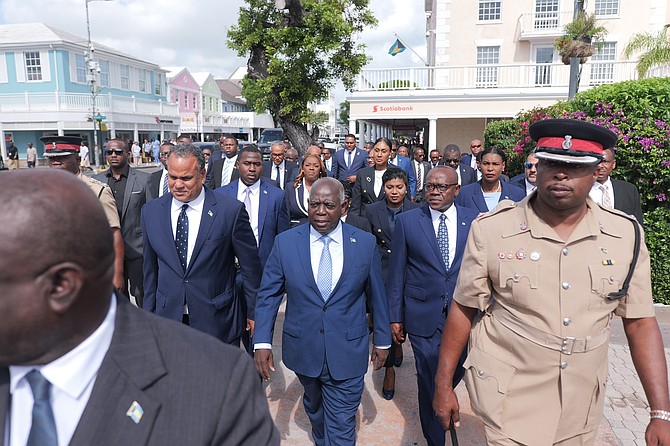
Healthcare the focus of 2026 govt budget
Fresh off its re-election victory in the May 12 general election, the Davis administration of The Bahamas has laid out its ambitious fiscal roadmap in the 2026-2027 budget, unveiling a plan to boost recurrent revenues by $470 million even as it cuts its projected surplus by 24 percent and navigates ongoing global economic volatility. Newly sworn-in Finance Minister Michael Halkitis delivered his maiden budget address to the House of Assembly on Wednesday, outlining that the projected 2026-2027 fiscal surplus has been revised downward from the previously forecast $291.4 million to $223.1 million, a $68.3 million reduction that Halkitis framed as a deliberate policy choice.
Halkitis explained the downward adjustment stems from two key driving forces: first, the administration’s commitment to prioritizing Bahamian citizens’ livelihoods by directing additional funding to upgrade the country’s healthcare system, and second, persistent volatility sparked by the unresolved Middle East conflict, which has disrupted global energy and fuel markets and reignited inflationary pressures that raise import costs for small open economies like The Bahamas. Despite the narrower surplus, Halkitis emphasized that the country’s overall fiscal position remains positive, noting that the projected $223.1 million surplus still means government revenue will outpace total spending.
The administration is holding firm to its existing $75.5 million surplus target for the 2025-2026 fiscal year, which concludes at the end of June, even amid widespread volatility in global economic and trade conditions that threaten to dampen tourism demand — the backbone of The Bahamas’ economy — and push up consumer prices. Halkitis did not provide an updated closing surplus figure for the current fiscal year, but expressed confidence the target will be met, citing disciplined government spending restraint and growing optimism that the full $130 million in projected Domestic Minimum Top-Up Tax (DMTT) revenues will be collected before the fiscal year closes.
The government’s bold $470 million, 12 percent revenue growth target for 2026-2027 — which would lift total recurrent revenues to $4.357 billion from the current 2025-2026 projection of $3.887 billion — comes against a mixed backdrop. Data shows that for the first nine months of 2025-2026 through the end of March, revenue collection has lagged the prior year’s pace, with only 65.3 percent of the full-year target collected, compared to 69.4 percent at the same stage in 2024-2025. Additionally, the budget forecasts that real GDP growth will slow sharply from 6.5 percent in the current fiscal year to 1.8 percent in 2026-2027, a rate that is projected to remain steady the following year. This growth projection also differs from the 3.8 percent 2025 growth estimate released last week by the Bahamas National Statistical Institute, which was stronger than the budget forecast. The disconnect between slowing projected growth and the large revenue increase has drawn attention, given The Bahamas’ consumption-focused tax system that ties revenue growth closely to economic expansion.
A large portion of the projected revenue gain is expected to come from a dramatic expansion of DMTT collections. The 15 percent minimum corporate tax, introduced to bring The Bahamas into compliance with the G-20/OECD global minimum corporate tax initiative designed to curb profit shifting by multinationals to low-tax jurisdictions, is projected to see revenues nearly triple from $130 million in 2025-2026 to $350 million in 2026-2027, a 169 percent year-over-year increase. This $220 million year-over-year jump will account for nearly 47 percent of the total $470 million revenue increase the government is targeting.
The Bahamas’ top independent fiscal watchdog, the Fiscal Responsibility Council, previously raised doubts that the full $130 million in 2025-2026 DMTT revenues would be collected on time, as the necessary collection frameworks, regulatory guidance and implementing mechanisms had not been finalized by the time of its mid-year assessment. But Halkitis pushed back on those concerns Wednesday, confirming he expects the first full round of DMTT revenues to be received in June, just before the current fiscal year closes. He also revealed that the expected taxpayer base for the new levy is larger than initial projections: when the 2025-2026 budget was drafted, officials expected fewer than five entities to be subject to the tax, but updated data shows the number of liable taxpayers will exceed that initial estimate, creating an upside surprise for the current year-end fiscal position.
Major entities already expected to fall into the DMTT net include the country’s two largest resort complexes, Atlantis (owned by Canada’s Brookfield Asset Management) and Baha Mar (owned by Hong Kong’s Chow Tai Fook Enterprises), as well as regional resort chain Sandals. All three major Canadian banks operating in The Bahamas — Royal Bank of Canada, Scotiabank and CIBC — have already set aside funds to cover their DMTT liabilities. Other notable entities that will likely be subject to the tax include Commonwealth Brewery, the leading Bahamian beer maker majority-owned by Heineken, Bahamas Telecommunications Company (BTC) controlled by Liberty Latin America, and Hutchison Whampoa’s Freeport port and container terminal assets. Shell’s Bahamian subsidiary already reported a $248 million accrued corporate tax liability on its 2024 books, per prior reporting by Tribune Business. Commonwealth Brewery even requested an extension to publish its 2025 year-end financial statements to accurately calculate its full DMTT tax obligations.
Beyond DMTT, the government has identified three additional key revenue streams to hit its $470 million target. First, it has added a $99.228 million charge to the Grand Bahama Port Authority to cover the cost of public services provided in the Freeport port area that exceed tax revenues generated by the city. Second, it projects $24 million in new annual revenue from a revised real property tax category for foreign-owned primary residences: the new 0.625 percent rate will be applied to properties qualifying as the owner’s primary residence (down from the previous 180-day annual occupancy requirement), while the maximum annual tax liability (or cap) for these properties will rise 33 percent from $150,000 to $200,000. Third, the government forecasts VAT revenues will rise $110 million year-over-year to $1.635 billion in 2026-2027, with more than 60 percent of that increase coming from VAT on property sales over $1 million, which is projected to rise from $170.472 million in 2025-2026 to $237.366 million. Current year VAT collection is already on pace to exceed its $1.525 billion 2025-2026 target.
Outlining the full 2026-2027 fiscal breakdown, Halkitis confirmed total revenues are projected to hit $4.4 billion, equal to 23.6 percent of GDP, while total expenditure will reach $4.1 billion (22.4 percent of GDP). Recurrent expenditure accounts for $3.7 billion (20.1 percent of GDP), with capital expenditure totaling $415.8 million (2.2 percent of GDP). The $223.1 million surplus equals 1.2 percent of GDP, with a primary surplus of 5.2 percent of GDP, and the debt-to-GDP ratio is projected to fall to 59.9 percent by the end of the 2026-2027 fiscal year.
“While this surplus is lower than previously projected in the Fiscal Strategy Report 2025, the revision reflects a changing global and domestic environment. Ongoing tensions in the Middle East have increased uncertainty, particularly around energy and import costs,” Halkitis said. “At the same time, we have made the deliberate decision to strengthen our healthcare system, including increased support for the Public Hospitals Authority and further investment in hospital services. These are necessary and responsible choices. Although they have narrowed the surplus, the fiscal position remains positive, underscoring this Government’s continued commitment to sound financial management while prioritising the needs of the Bahamian people.”
-
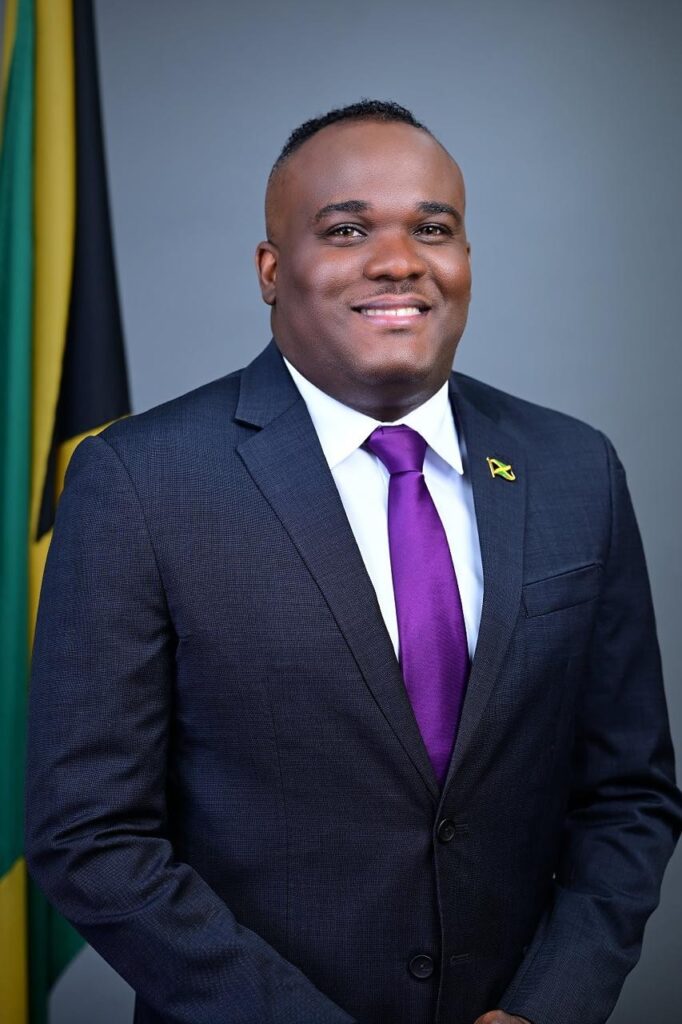
Fitz-Henley rejects criticism of Anderson appointment, accuses PNP of ‘maligning patriotic Jamaicans’
KINGSTON, Jamaica — A senior ruling party official has launched a sharp rebuke of Jamaica’s main opposition party, accusing it of a pattern of bad-faith attacks against qualified public servants who agree to serve in key government roles.
Senator Abka Fitz-Henley, State Minister in the Office of the Prime Minister, made the comments in response to recent questions from the Opposition People’s National Party (PNP) over the appointment of Ambassador Antony Anderson as chief executive officer of the newly established National Reconstruction and Resilience Authority (NaRRA). The PNP’s public statement, released earlier this week, centered on whether Anderson completed the formal application process for the high-stakes post before Prime Minister Andrew Holness finalized his appointment Wednesday.
While the PNP acknowledged Anderson’s long record as a trusted technocrat with decades of experience in Jamaica’s military and policing sectors, the party said it held legitimate concerns about transparency and fairness in the NaRRA CEO recruitment and selection process.
Fitz-Henley pushed back against these claims in an official statement released Thursday, defending Anderson’s appointment and dismissing the PNP’s scrutiny as a regrettable and unfounded smear campaign. He emphasized that Anderson, a retired Major General, has a long track record of cross-partisan public service to Jamaica, including serving as chief of defence staff of the Jamaica Defence Force (JDF) during most of the previous PNP administration. The minister argued that the opposition’s attempt to cast doubt on Anderson’s ability to lead NaRRA is entirely unprofessional and unwarranted.
To further back up the appointment, Fitz-Henley outlined Anderson’s deep professional qualifications: he is a trained engineer who previously commanded the JDF Engineer Regiment before rising to lead the entire armed force. He also noted that the selection process was fully legitimate, pushing back against the PNP’s claims of irregularity. Per details shared by the prime minister, 85 candidates submitted formal applications for the role, which was eventually narrowed down to a shortlist of seven finalists. Anderson was the top candidate selected from that group, Fitz-Henley confirmed.
He also rejected any questions about the integrity of the selection panel, noting that its members are widely respected public figures with experience serving on similar panels across multiple government administrations. The panel included the cabinet secretary, chairman of the Port Authority of Jamaica, and chairman of the Public Services Commission, three senior institutional leaders with long records of public service.
Beyond the specifics of Anderson’s appointment, Fitz-Henley argued that the PNP’s criticism fits a broader pattern of the opposition unfairly targeting Jamaicans who take on critical public service roles under the current government. He cited a list of other public servants, including prosecutor Paula Llewelyn, Ambassador Rocky Meade, financial expert Kedesha Rochester, economist Professor Peter Blair Henry, and policy analyst Dennis Chung, all of whom he claimed were subjected to unfair opposition attacks in the past.
-

Dominican Republic and United Nations analyze impact of Haiti crisis
In a high-level diplomatic gathering hosted in Santo Domingo, officials from the Dominican Government and the United Nations System convened their Fourth Political Dialogue this week, centering discussions on the far-reaching political, economic, social and security ramifications of Haiti’s prolonged ongoing crisis, and its disproportionate cross-border effects on the Dominican Republic.
Leading the closed-door talks were Dominican Republic Foreign Minister Roberto Álvarez and Julia del Carmen Sánchez, United Nations Resident Coordinator for the country. Throughout the meeting, the two top representatives delved into how Haiti’s multifaceted breakdown of order continues to strain core pillars of Dominican national life, including domestic stability, societal cohesion, long-term sustainable development progress, and the country’s standing within the broader Caribbean region.
Attendees used the dialogue as an opportunity to conduct a full review of policy measures the Dominican state has already rolled out to mitigate the cascading consequences of the neighboring crisis. Particular focus was placed on key priority areas: cross-border administration and control, the strain on local public services, the protection of national security, upholding human rights standards for both migrants and local populations, and preserving domestic social stability along the shared border.
Beyond assessing existing response efforts, the two sides also mapped out new avenues to deepen collaborative work between the Dominican government and the United Nations. These potential next steps include designing flexible adaptive mechanisms for UN support to the Dominican response, and maintaining continuous, up-to-date analysis of the fast-shifting situation on the ground in Haiti to inform evidence-based policy adjustments.
By the close of the gathering, both the Dominican Government and the United Nations System issued a joint reaffirmation of their shared commitment to sustaining strategic dialogue and coordinated cooperation. The long-term partnership remains focused on addressing regional instability, tackling growing humanitarian needs stemming from the Haitian crisis, and advancing inclusive sustainable development across the island of Hispaniola.
-
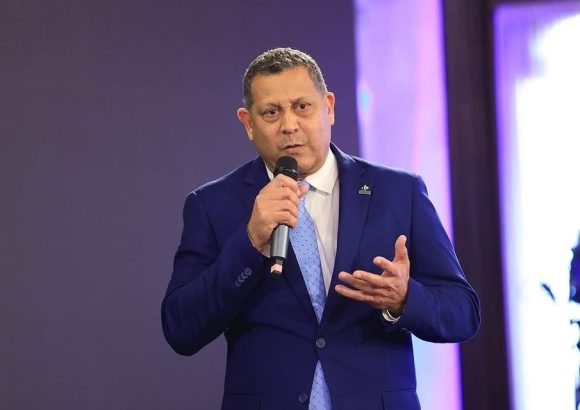
Fedomu claims electricity companies owe municipalities millions
A public dispute over reciprocal financial obligations has erupted between Dominican Republic’s municipal governments and the country’s main electricity distribution companies (EDEs), with the nation’s top municipal association leader challenging recent claims that local governments owe hundreds of millions in unpaid power bills.
Speaking publicly this Wednesday, Nelson Núñez — who leads the Dominican Federation of Municipalities (Fedomu) and also holds the position of mayor of Samaná — pushed back against recent remarks from economist and former public official Celso Marranzini. Marranzini recently drew attention to the growing debt of municipal governments, arguing that unpaid electricity bills from local councils have become a massive strain on Dominican public finances, hitting a total of roughly US$300 million by last year.
While Núñez does not dismiss the existence of outstanding municipal payments for power used by public infrastructure and street lighting, he says the narrative that only local governments are in debt is deeply one-sided. He argues that the EDEs have themselves failed to uphold binding legal requirements laid out both in the country’s General Electricity Law 125-01 and a 2013 landmark ruling from the Dominican Constitutional Court.
That specific ruling, labeled TC/0100/13, establishes a clear reciprocal framework: electricity distributors are required to transfer 3% of all revenue they collect from customers within each municipal jurisdiction and municipal district to local governments every month. In exchange, local governments are legally obligated to cover the cost of electricity for public streetlights and municipal-owned public facilities.
Crucially, Núñez clarified that the 3% transfer is not an arbitrary tax imposed on power providers, as some critics have framed it. The Constitutional Court itself explicitly confirmed that the payment qualifies as a legally authorized compensation fee for municipalities, he noted.
Yet according to Fedomu’s records, the EDEs have failed to comply with this ruling consistently ever since it was issued in 2013. The cumulative sum that power distributors owe to municipalities across the country is “incalculable,” Núñez stated, and this long-running noncompliance has been a major contributing factor to the tight financial straits many local councils now face. The missing funds have made it especially difficult for municipalities to cover the very street lighting costs they are obligated to pay, exacerbating the current standoff over mutual debts.
Núñez closed by emphasizing that financial responsibilities run both ways: if municipalities owe the EDEs for power delivered, the power distributors owe municipalities for the legally mandated funds they have withheld for more than a decade.
-
PM silent on Gardiner crash amid ‘Politician-1’ protests
A growing political firestorm has engulfed the Bahamas’ ruling Progressive Liberal Party (PLP) this week, after a recent plane crash off Florida’s coast linked to a well-known figure with alleged drug trafficking connections opened up fresh allegations of corruption and inappropriate ties between senior government officials and organized crime. The opposition Free National Movement (FNM) has taken to the streets outside Parliament to demand transparency, while top PLP leaders have repeatedly refused to address pressing public questions about the incident.
The crash, which left 11 survivors after the unlicensed aircraft suffered dual engine failure and was forced to ditch into the ocean, centers on Eric “Player” Gardiner, a passenger who was reportedly found carrying $30,000 in cash when rescue teams reached him. One survivor told U.S. local media that Kingsley Smith, a sitting PLP member of parliament for West Grand Bahama and Bimini, helped secure their seats on the chartered flight traveling from Marsh Harbour to Grand Bahama. To date, Smith has not responded to repeated requests for comment on his role in arranging the flight.
When reporters approached Prime Minister Philip Davis and Aviation Minister Jobeth Coleby-Davis on Wednesday to ask about the crash, both officials dodged all questions. Davis walked away without answering queries about any potential PLP connections to Gardiner or details of how the flight was authorized, while Coleby-Davis ignored questions about whether a full investigation would be launched into how an unlicensed aircraft was permitted to operate in Bahamian airspace.
The opposition has amplified its demands, focusing additional scrutiny on Top Notch Builders, a construction firm linked to Gardiner that has been awarded multiple government contracts. FNM leader Michael Pintard has publicly questioned whether Finance Minister Michael Halkitis ever held a leadership role as president or director of the company. Halkitis has denied holding any such position, but has declined to explain how a firm tied to a convicted drug trafficker was able to secure public sector contracts.
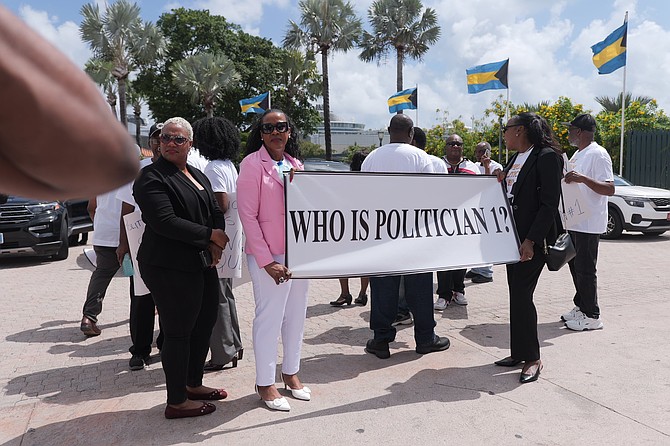
Outside the House of Assembly on Wednesday, FNM deputy leader Shanendon Cartwright led a small protest of around a dozen demonstrators holding signs calling for the public identification of the unnamed “Politician-1” referenced in recent U.S. Drug Enforcement Administration (DEA) court filings. Opposition members wore custom name tags reading “not politician-1”, a gesture Pintard said was meant to signal that FNM members are not the individuals targeted in U.S. law enforcement investigations.
Pintard launched a blistering attack on the Davis administration, accusing the prime minister of turning a blind eye to “gangsterism” within his own government. He claimed Davis has long been aware of the alleged ties between PLP officials and criminal figures, pointing to past public housing and infrastructure projects that have been linked to individuals now in U.S. custody. “We’re saying that he should speak up and deal with the individual or individuals,” Pintard said. “This is the same prime minister who was clearly aware when he signed the contracts related to the housing project, or he was involved as minister of works with the Eight Mile Rock project that involves a Bahamian now in US custody, he knew all along who the individuals were.”
Pintard also criticized Foreign Affairs Minister Fred Mitchell for dismissing the entire controversy as a “nothingburger” that will fade away once all facts come to light, arguing that the downplaying of the allegations ignores severe damage to the Bahamas’ international reputation. “It’s a nothingburger to somebody who lacks concern about the reputation of the country being savaged, because people believe politicians are working with gangsters to move drugs from south to the US through The Bahamas,” Pintard said. “Five years of having people in government positions working with gangsters is worrisome. We’re gonna have more of this, more reputational damage, and that’s the cause for deep concern.”
Speaking during the protest, Cartwright emphasized that a generic statement from the Prime Minister’s Office does not go far enough to address public concerns, and that continued silence from government leaders is unacceptable. He pointedly questioned how an elected MP who took their parliamentary oath just one week prior is alleged to have attempted to arrange a cocaine deal. “Today, as the government chuckled into the House of Parliament, one of those persons is Politician-1,” Cartwright said.
Cartwright stressed that the prime minister has a clear constitutional and ethical duty to protect the Bahamas’ international standing and answer the questions that Bahamian citizens are asking. He warned that dismissing the serious allegations as an overblown controversy will only further erode public trust in government and democratic institutions. “This cuts at the heart of our democracy, and every day, every session that the government does not give answers, it will continue to leak confidence from this government and continue to call into question this institution,” he said, adding that Bahamian citizens are “enraged, hurt and disgusted” by the DEA allegations that a sitting MP was involved in coordinating drug trafficking activities from within Parliament.
-
Dominican government introduces first fully digital minor travel permit
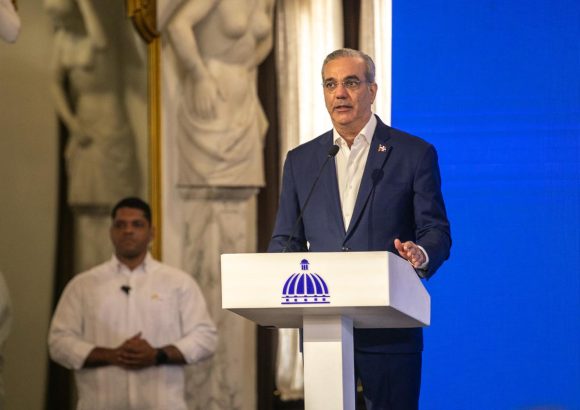
In a major step forward for public administration modernization in the Caribbean, Dominican Republic President Luis Abinader has officially unveiled the nation’s first completely digital Minor’s Exit Permit (PSM), an innovative online tool crafted to cut through red tape for traveling families and advance the government’s broader digital transformation agenda. This rollout marks a key milestone under the administration’s flagship Zero Bureaucracy Program, a sweeping initiative that targets the elimination of unnecessary administrative barriers and aims to cement the Dominican Republic’s position as one of Latin America’s most digitally advanced public sectors by 2028.
Unlike the outdated, paper-heavy system it replaces, the new digital platform empowers eligible parents and legal guardians to complete the entire exit authorization process remotely from any location across the globe. Gone are the requirements for in-person office visits, printed physical documentation, and days-long waiting periods that once plagued the permit application process. The new system integrates cutting-edge digital tools including biometric identity verification, legally recognized digital signatures, and electronic notarization, while also enabling seamless data interoperability with the country’s Central Electoral Board. This connected infrastructure allows the approved permit to be electronically linked directly to a minor’s passport, enabling instant digital validation at border checkpoints during travel.
Speaking at the official launch ceremony, President Abinader emphasized that the push to modernize government services is rooted in a core commitment to improving daily life for all Dominican citizens. By overhauling clunky outdated processes, the administration is delivering services that are not only more efficient, but also more transparent and secure for users. Senior government officials also outlined the shortcomings of the old system that made the overhaul necessary: for years, applicants faced extensive wait times, convoluted paperwork requirements, and in some cases, informal and formal costs that added up to as much as 30,000 Dominican pesos per application.
The complete redesign of the Minor’s Exit Permit service was a collaborative effort between the Dominican Republic’s General Directorate of Migration and the Zero Bureaucracy Program, with technical and financial support from global philanthropic organization Bloomberg Philanthropies. Officials used the launch event to tease upcoming reforms, confirming that additional high-impact government services — including new business registration and commercial construction permitting — will undergo the same full digital transformation in the coming months and years, as part of the nation’s long-term public sector modernization strategy.
-
All right with Anderson
Nearly eight months after Category 5 Hurricane Melissa carved a path of destruction across Jamaica, the island nation’s government has tapped a decorated veteran public servant to lead its long-awaited recovery and resilience-building effort, drawing measured praise and cautious scrutiny from private sector and civil society leaders.
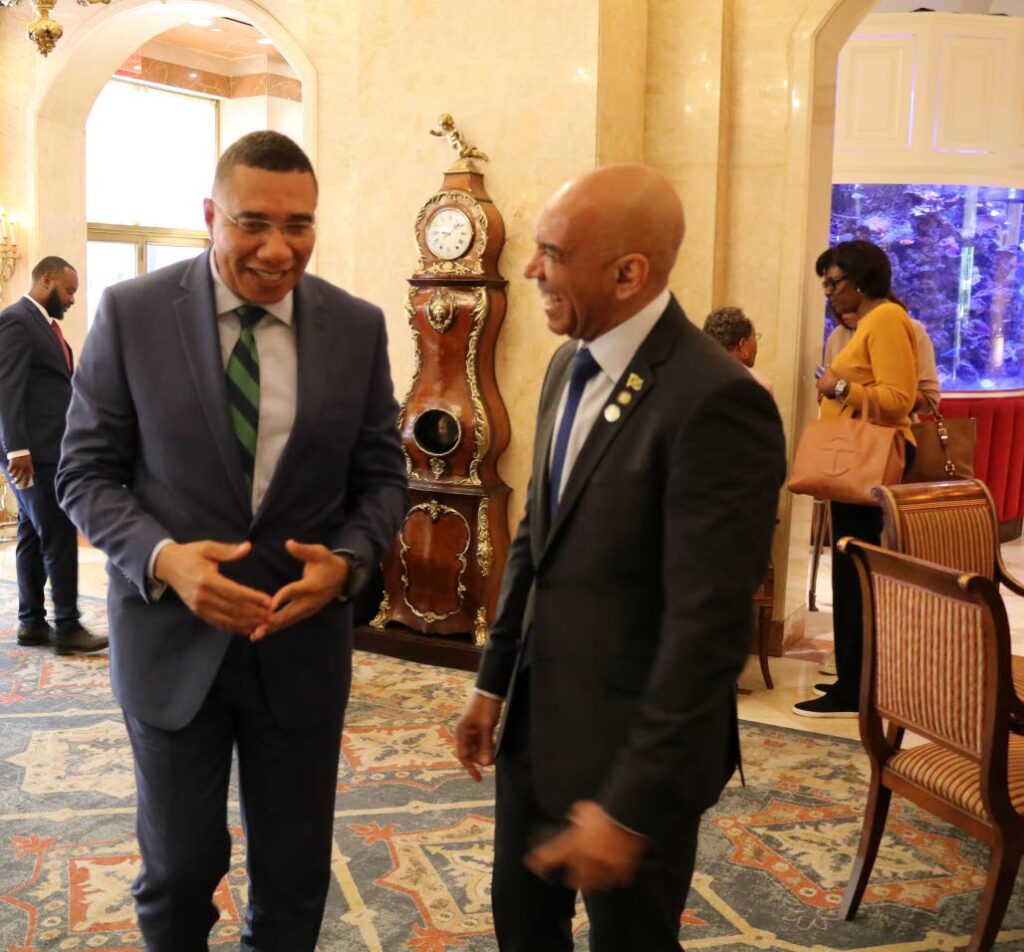
Prime Minister Dr Andrew Holness announced the appointment of Major General (Ret’d) Antony Anderson as the inaugural chief executive officer of the National Reconstruction and Resilience Authority (NaRRA) during a special post-Cabinet media briefing at Jamaica House on Wednesday, confirming the retired military leader will officially take up his post on June 1. The announcement comes just days after the NaRRA Bill was signed into law, formalizing the new agency’s mandate to coordinate and accelerate the island’s post-storm reconstruction while strengthening national capacity to withstand future climate disasters.
With more than 40 years of public service spanning multiple critical national leadership roles, Anderson brings an unparalleled resume of crisis management and institutional leadership to the new position. His career began with a 34-year tenure in the Jamaica Defence Force, where he rose to the top post of chief of defence staff. He went on to become Jamaica’s first national security advisor to the prime minister, later served as commissioner of the Jamaica Police Force, and most recently held the role of Jamaica’s ambassador to the United States. Now, he is tasked with delivering a timely, transparent and accountable recovery for communities devastated by the October 2024 storm.
In his remarks Wednesday, Holness emphasized that Anderson’s appointment comes at a make-or-break juncture for Jamaica’s recovery program. The government is moving to scale up reconstruction work while embedding strict frameworks for accountability, transparency and fiscal stewardship over billions in recovery funding.
“Major General Antony Anderson brings to NaRRA the discipline, integrity, and operational command required for this moment,” Holness said. “Jamaica is entering a period of reconstruction that must be defined by speed, but also by transparency, proper planning, and accountability. His experience leading national institutions, responding to crises, and strengthening disaster risk management systems makes him well-suited to drive this mandate.” The prime minister added that NaRRA’s core mission is to build stronger, more disaster-resilient communities across the island, and that his administration will ensure every dollar of recovery funding advances long-term national development, productivity and economic growth.
Early reactions from Jamaica’s leading private sector bodies have been overwhelmingly positive, with leaders pointing to Anderson’s proven track record of integrity and leadership as exactly what the high-stakes role demands. Patrick Hylton, president of the Private Sector Organisation of Jamaica, called the appointment a welcome choice for the critical post.
“From my personal knowledge of him, as well as his track record, he is the consummate professional, very experienced, very knowledgeable, with a good sense of judgement and great personal and professional integrity,” Hylton told the Jamaica Observer. He added that Anderson’s decades of public service, deep understanding of Jamaica’s local context, extensive professional networks and broad public respect make him uniquely positioned to deliver results for the recovery effort.
Kathryn Silvera, president of the Jamaica Manufacturers and Exporters Association (JMEA), echoed Hylton’s assessment, noting that past challenges with relief fund management make disciplined, ethical leadership non-negotiable for NaRRA. “His track record of integrity and results gives confidence that he will act with transparency, resist undue influence, and ensure accountability in this critical role,” Silvera said.
Not all stakeholders have offered unqualified endorsement, however. While civil society leaders universally praised Anderson’s qualifications and decades of distinguished service, many have retained cautious reservations about the structural transparency of NaRRA itself, calling for clearer public disclosure of the agency’s mandates, timelines and budget allocations ahead of its launch.
Dr Gavin Myers, principal director of national anti-corruption watchdog National Integrity Action, noted that Anderson’s career across the military, law enforcement and diplomacy leaves no question about his qualifications for the role. But he emphasized that Jamaica’s longstanding culture of low public trust means proactive transparency is essential to build public confidence in the recovery effort.
“We would value information up front rather than things coming out trickle by trickle,” Myers said. He called for full public disclosure of Anderson’s core duties, key operational milestones and allocated recovery budgets ahead of the June 1 launch, so Jamaican citizens can hold agency leadership accountable from day one. “It would be good to know these from early so that we the citizens can work with and watch with Major Anderson,” he added.
Emile Leiba, president of the Jamaica Chamber of Commerce, echoed that wait-and-see approach, affirming confidence in Anderson’s capabilities but noting that the proof of NaRRA’s success will be in its operational performance. “Based on his track record in his leadership positions prior to this, I think he would be a good pick because the role does require significant organisational skills to monitor and keep track of the large-scale projects outlined in the NaRRA legislation,” Leiba said. “However, it’s very early days yet, so we’ll have to see how it all works out in practice.”
Leiba extended well wishes to Anderson and the government, noting that the entire nation has a stake in NaRRA’s success. “For the sake of the country, we certainly hope it’s a viable venture. If it’s not, then that has very serious implications. But the country needs NaRRA to succeed, and so we should all make reasonable efforts for that success to happen,” he said. “It’s one thing to legislate, it’s quite another for it to be operationalised, and so we have to wait and see how it operates from a functional perspective and then we take it from there.”
-
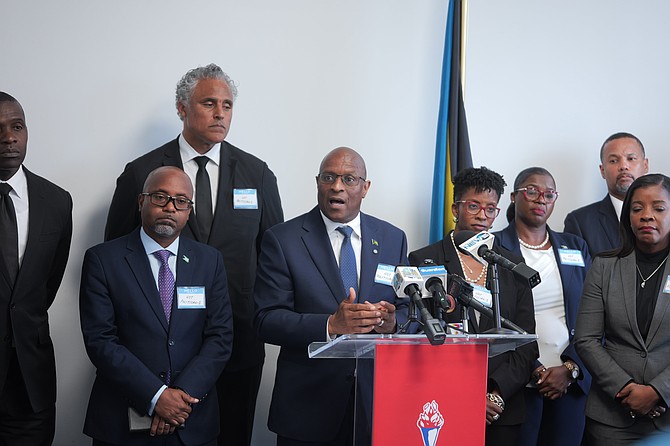
Opposition leader slams budget, demands accounting of funds
As the Bahamian government tables its 2026/2027 national budget, the country’s Opposition Leader Michael Pintard has launched a sweeping critique of the fiscal plan, centered on a fiery demand for answers over an alleged scandal involving hundreds of thousands in public funds misused for political gain ahead of the last general election.
At the heart of the controversy is a reported $200,000+ in publicly funded gift certificates said to have been distributed to voters in Abaco, framed as Hurricane Dorian disaster relief, but issued under the names of ruling Progressive Liberal Party (PLP) candidates and party officials. According to Chris Lleida, chief executive officer of Premier Importers — the commercial entity that printed and distributed the vouchers — the entire cost of the gift certificates was covered directly by the Ministry of Finance.
Speaking in response to Finance Minister Michael Halkitis’s official budget presentation, Pintard argued that Halkitis had a non-negotiable obligation to address the unaddressed allegations in his opening address to parliament. Pintard called the apparent diversion of public treasury funds to partisan political campaigning a clear case of illegal misappropriation, saying the public deserves a full accounting of how public money left the ministry of finance and ended up in Abaco to benefit the governing party’s election effort.
“At a minimum, the Minister of Finance should have advised the country on the status of any investigation into how public monies were moved from the Treasury to advance a political campaign,” Pintard said. “Our minister of finance must give an accounting for that.”
Pintard’s demands over the Abaco voucher scandal formed the opening of a broader rejection of the government’s full budget proposal, which he scored at less than 50 out of 100, arguing the plan fails to deliver tangible policy improvements that would ease daily burdens for ordinary Bahamian citizens. He pushed back against the governing administration’s claims of progress on three key voter priorities: energy sector reform, cost of living relief, and accessible affordable housing, saying everyday residents have not experienced the positive changes the government has touted.
The Opposition Leader also challenged the government’s narrative of improving national public finances, accusing the administration of hiding major unacknowledged fiscal risks and failing to explain a sharp, unexpected uptick in the country’s total public debt. Official data from the Ministry of Finance puts total public sector debt at an estimated $14.1 billion as of the end of March 2026 — a $689.2 million increase from just nine months prior in June 2025, and a $57 million rise from the end of December 2025.
Pintard noted that the government’s original annual borrowing plan had explicitly stated no new borrowing would be needed over the period, raising urgent questions about how the national debt grew by nearly $700 million without the administration returning to parliament to secure additional borrowing approval. He accused the government of consistently avoiding parliamentary oversight of public spending, warning that this new debt burden will create fiscal strain that extends far beyond the current 2026/2027 fiscal year.
Further, Pintard claimed the administration is intentionally shifting public fiscal exposure to state-owned enterprises (SOEs) through off-budget loans, long-term contracts and financing arrangements that do not appear in the full budget figures shared with lawmakers. He pointed to a dramatic surge in direct Treasury lending to public authorities, which he said grew from less than $100 million at the end of 2022 to more than $600 million today.
“In just over three years, more than a half a billion dollars have been advanced to state-owned entities, and all of those have been under the guise of loans,” he said. “We’ve not been told which budgetary appropriations these funds came from. What was the legal authority that allowed the government to do this, and what are the terms of each of these loans, and how will these funds be repaid? This matters because the law is clear: the government lending must come from properly appropriated funds approved by parliament. If these loans were not drawn from such appropriations, the government must explain what legal basis it relied on — and over and over, their answer has been silence.”
Using Bahamas Power and Light, the country’s primary national utility, as a key example, Pintard said tens of millions of dollars in Treasury funds have been transferred to the state-owned power provider without any adequate public explanation. He added that he has submitted formal questions to Prime Minister Philip Davis and raised the issue repeatedly in the House of Assembly, but has yet to receive any substantive response.
Pintard also backed up his claims by referencing official warnings from the independent Fiscal Responsibility Council, which has flagged unreported fiscal risks tied to SOEs, missing key fiscal data, and liabilities that are not properly disclosed in national public accounts. He added that the government is artificially inflating its reported surplus by relying on unpaid public bills, and structuring large infrastructure projects in opaque ways to hide their full total cost from the public and parliament.
While the bulk of Pintard’s address was critical, he did acknowledge a small number of positive housing-focused measures included in the budget, most notably value-added tax reductions for first-time home buyers and owners of multipurpose properties. Even on housing policy, however, Pintard raised unaddressed questions about $40.2 million in public spending allocated to the Carmichael Village Project, part of the government’s broader Housing Project Renaissance initiative. He said neither current nor former housing ministers have explained how the public funds allocated to the development were spent, and called for the issue to be fully debated during parliament’s budget consideration process, questioning whether the completed housing stock delivers public value matching the investment.
Closing his response to the budget presentation, Pintard rejected the government’s optimistic assessment of the national economy, emphasizing that public trust in government depends entirely on full transparency around how public money is used. “We do not believe that this budget speaks to the real issues Bahamians are dealing with,” he said. “Transparency is not optional. It’s the price for public trust.”