
Delivered at a landmark Labour Day gathering honoring three-quarters of a century of organized labor in Antigua and Barbuda, Prime Minister Gaston Browne has announced a bold reorientation of the country’s worker compensation policy: the administration is moving beyond outdated minimum wage frameworks to prioritize a livable wage that aligns with the real cost of living for working people. The policy shift was revealed during the joint rally held by the Antigua Trades and Labour Union (AT&LU) and the Antigua and Barbuda Labour Party, where Browne framed the change as a central pillar of the administration’s broader mission to raise living standards across the country. “We’re also moving from a minimum wage to a livable wage,” Browne told the assembled crowd of union members, workers, and political supporters. The prime minister explained that this new policy direction grows out of incremental salary increases already being rolled out, as the government works to guarantee that every working resident can cover their basic needs and build a higher quality of life. Unlike rigid minimum wage policies that often fail to keep pace with rising living costs, a livable wage framework is designed to ensure earnings match the actual cost of housing, food, healthcare and other essentials. However, Browne emphasized that improved compensation must go hand in hand with increased productivity across all sectors of the workforce. “You must increase your productivity,” he said, stressing that long-term, sustained economic progress can only be achieved when workers match wage gains with stronger performance. The prime minister made clear that the government is committed to balancing rising worker earnings with steady economic expansion, pointing to consistent growth across the nation’s key industries as evidence that this balanced approach is already working. Sunday’s Labour Day rally carried extra significance this year, as it marked the 75th anniversary of Antigua and Barbuda’s formal labor movement, with the entire event centered on advancing worker interests and securing long-term economic stability for the nation. Browne concluded by reaffirming that the transition to a livable wage will remain a top policy priority for his administration, designed to ensure that broad national economic growth translates into tangible, meaningful improvements in the daily lives of working people across Antigua and Barbuda.
分类: politics
-

LETTER: Shugy, I am sorry to hear about your loss
The 2026 general election in Antigua delivered a stunning upset in the St. Mary’s South constituency, where well-known incumbent Shugy lost his seat to senator Dwayne George — a result that has left many political observers, including former supporter Alex, shocked and searching for answers.
Looking back at Shugy’s recent political trajectory, his 2023 performance painted a far different picture of his electoral prospects. That year, Shugy made history in Antiguan politics by securing victory in two separate elections: a general election and a subsequent by-election. On both occasions, voters overwhelmingly rejected candidates from the Antigua and Barbuda Labour Party (ABLP) — Samantha Marshall and Dwayne George respectively — and threw their support behind Shugy as their preferred representative. Going into the 2026 contest, pre-election polling consistently showed Shugy holding a wide lead over his challenger, making his eventual defeat all the more unexpected.
George, for his part, had been widely dismissed by Shugy’s supporters in previous cycles, labeled with derogatory monikers ranging from “flip-flopper” to “Judas” and “betrayer” for his political shifts. Yet in 2026, the same electorate that once rejected George embraced him, a reversal that Alex compares to the biblical story of Barabbas, where a crowd chose to free a condemned rebel over Jesus. Alex argues that the turning of the tide against Shugy can be traced directly to missteps on the incumbent’s part that eroded voter trust over his term.
First, Alex points to a growing lack of focus on constituent needs as Shugy settled into his role as a sitting member of parliament. His increasingly abrasive and unprofessional behavior in office left many constituents disappointed, alienating the base that once supported him. A particularly damaging misstep was the public disrespect Shugy directed toward the prime minister during parliamentary proceedings, a breach of institutional decorum that went over poorly with voters who value respect and political civility.
Another key point of contention was Shugy’s frequent travel abroad during his term. While Shugy framed these trips as research missions to develop ideas for improving Antigua’s iconic carnival, Alex claims the trips were actually centered on personal leisure and partying in other countries. While Shugy was outside the country enjoying himself, challenger Dwayne George prioritized on-the-ground engagement, spending consistent time in St. Mary’s South addressing constituent concerns and managing local constituency business.
Over time, Alex argues, voters came to recognize that Shugy’s loyalty was focused on his own personal gain rather than the betterment of the constituency. Many of his campaign promises went unfulfilled, leaving voters feeling neglected and betrayed. This upset result, Alex notes, should serve as a critical wake-up call not just for Shugy, but for the entire opposition United Progressive Party (UPP).
Alex holds out hope that the defeat does not mark the end of Shugy’s political career, suggesting a future appointment as a senator could still be possible. But for that to happen, Shugy must take full responsibility for his loss — no external factors or other actors are to blame for the outcome. The core lesson from the 2026 result, Alex emphasizes, is that humility and respect remain foundational to successful political leadership, and service to one’s community must always come before personal interest.
-

PM Browne Defends Giving Cash to Supporters as ‘Obligation to Share’
ST. JOHN’S, Antigua — At a joint Labour Day rally organized by the Antigua Trades and Labour Union (AT&LU) and the Antigua and Barbuda Labour Party, Prime Minister Gaston Browne has pushed back against growing criticism of his habit of giving personal cash assistance to members of the public who approach him at public gatherings, framing the practice as a reflection of his personal commitment to supporting vulnerable citizens rather than any form of inappropriate political conduct.
Browne openly confirmed that when members of the public approach him after he leaves official event platforms to request small sums ranging from $100 to $200, he almost always complies with their requests. “When you see I leave the platform… and they say they want $100, $200… and I give them… I have an obligation to share,” the prime minister told attendees of the rally.
Rejecting any attempts to frame the gesture as inappropriate or politically motivated, Browne positioned the cash handouts as a natural expression of his care and connection to the people of Antigua and Barbuda. “I have an obligation to care… to love the people of this country,” he emphasized.
The prime minister explained that his willingness to give direct assistance stems from deep empathy for ordinary working people, rooted in his own working-class upbringing and that of many senior members of his administration. “We are product of you,” he said, stressing that he has never lost touch with the everyday struggles that many citizens face, and remains dedicated to delivering tangible, on-the-ground support to those in need.
Browne’s public defense of the practice comes as the practice has sparked ongoing political debate across the country, with some observers questioning whether direct cash handouts by a sitting prime minister at public events are appropriate for public office.
The remarks about cash assistance formed one part of Browne’s wider Labour Day policy address, in which he also laid out his administration’s upcoming plans to address worker wages, improve national working conditions, expand social support programs, and reaffirmed the government’s core priority of lifting living standards for working people and the country’s most vulnerable demographic groups.
Closing his remarks on the issue, Browne made clear that he has no intention of ending the practice, saying that providing direct help to citizens where he is able is simply part of his core responsibility as a national leader.
-

Belize Moves Closer to Drone Laws, Public Consultation Set for Wednesday
As drone usage surges across multiple sectors of Belize’s economy and public life, the country’s Department of Civil Aviation is advancing toward formal rules for unmanned aerial systems, with a nationwide public consultation scheduled for Wednesday, May 6. The upcoming session, which will be hosted in-person at Belize City’s St. Catherine Academy Mercy Centre from 9 a.m. to 12 p.m. alongside a remote participation option, marks a key milestone in months of policy development aimed at balancing technological innovation with public aviation safety.
The push for formal drone regulations comes after rising concerns over growing airspace congestion over the past year. Back in January 2026, aviation officials issued a formal warning that the rapid expansion of drone activity — spanning commercial uses from real estate mapping and agricultural monitoring to media production, plus recreational hobbyist flights — had significantly increased the risk of mid-air collisions with manned aircraft. Unlike larger nations where commercial and general aviation aircraft typically cruise at higher altitudes, Belize’s air traffic often operates as low as 500 feet above ground level during transit, creating extensive overlap with the operating altitude of most consumer and commercial drones. This overlapping airspace makes unregulated drone flights a critical public safety hazard, according to Department of Civil Aviation Director Nigel Carter.
Following the January warning, the department released an Aeronautical Information Circular to collect initial public input on draft regulatory measures. The current proposal includes standardized operator licensing, geographically and altitude-based operational limits, and formal enforcement mechanisms with legal penalties for operators that fail to comply with the new rules. Ahead of Wednesday’s consultation, the department emphasized that the policy process is designed to be fully transparent and inclusive, inviting input from a broad range of stakeholders: commercial drone service providers, recreational hobbyists, environmental conservation organizations, legal scholars and industry experts. All groups with a vested interest in drone operations are encouraged to participate and share their perspectives to shape a final regulatory framework that meets the needs of all airspace users, the department said.
The policy effort has already sparked mixed reactions from affected groups. While many stakeholders have framed the new regulations as a necessary step to avoid catastrophic safety incidents, some business owners that rely heavily on drone technology have raised concerns that overly restrictive rules could increase operational costs and limit innovation. Director Carter has pushed back on these concerns by acknowledging the economic value of drone technology, while reaffirming that safety must remain the top policy priority. This is particularly critical for Belize, he noted, because the country’s tourism industry and domestic connectivity depend heavily on consistent, safe aviation operations.
Beyond commercial and recreational use, drones have already become an increasingly important tool for Belize’s national security and law enforcement agencies. Local police have integrated aerial surveillance into their regular crime reduction strategies, using drones to monitor high-crime hotspots, track criminal suspects, and coordinate ground patrols more effectively. Just last month in April, law enforcement used drone reconnaissance to locate and destroy dozens of illegal cannabis plants growing in remote, hard-to-access terrain in the Toledo District, demonstrating the public benefit of expanding legal, regulated drone use for government operations.
Wednesday’s consultation is the final major public engagement step before the department finalizes the draft drone regulations and moves to formal adoption. Officials say the ongoing regulatory process reflects Belize’s proactive approach to managing the fast-growing adoption of unmanned aerial systems, aiming to create a clear, sustainable framework that supports innovation while protecting the safety of all airspace users.
-
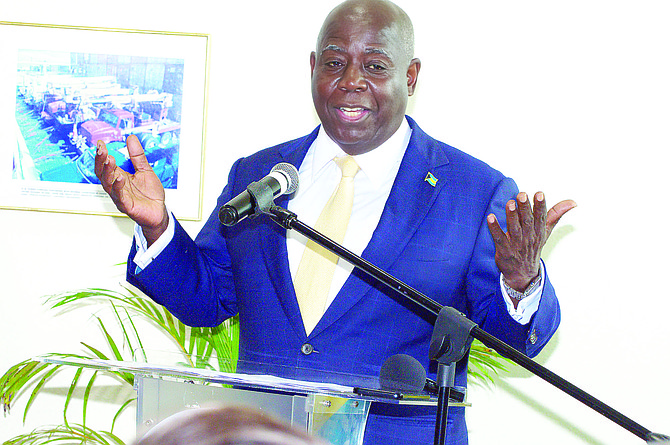
Govt buys GB Power – promises 37% cut
One week ahead of the country’s hotly contested general election, the Bahamian government has finalized a deal to purchase all outstanding shares of the Grand Bahama Power Company (GBPC), a move Prime Minister Philip “Brave” Davis says will deliver an average 37 percent reduction in electricity bills for residential and commercial customers across the island.
Under the terms of the acquisition, GBPC will align its pricing structure with the national tariff schedule already in use by Bahamas Power and Light (BPL), bringing Grand Bahama’s electricity rates in line with what consumers pay in other regions of The Bahamas. Davis confirmed that cost savings will appear on customer bills as early as the next billing cycle.
“This decision was made with a clear purpose: to bring down the cost of electricity for the people of Grand Bahama and place this island inside our national energy strategy,” Davis told reporters. He added that the rate cut will reduce overall cost of living for local families and boost the competitiveness of Grand Bahama’s business community, supporting long-term economic growth on the island.
The government executed the acquisition through a newly created special purpose entity, the Grand Bahama Electricity Company. The transaction received full funding from loans issued by Standard Chartered and Scotiabank, with the Bahamian government serving as guarantor for the borrowing.
In addition to consumer savings, Davis outlined three core policy benefits of the move: it integrates Grand Bahama into the government’s national energy strategy, strengthening the island’s overall investment climate; it preserves all existing jobs, benefits and the current Bahamian management team at GBPC; and it lays the groundwork for GBPC to access international development support for future energy projects.
The timing of the high-profile utility acquisition, coming just days before voters head to the polls, has sparked questions about political motivations behind the announcement. Davis rejected calls to delay the reveal until after the election, arguing that governing does not pause during campaign season.
“Why do I have to defend a move?” Davis said. “Governance don’t stop because election is in the air. We still have to govern, and this transaction has been in the making for quite a while. The process just happened to be ending now. Should we abandon it when we’re going to be able to bring relief to the people of Grand Bahama immediately? We will bring relief now. I have nothing to defend, other than to say I’m bringing relief to Grand Bahama.”
For the immediate future, GBPC will continue normal operations under a transitional framework designed to avoid service disruptions while pricing structures are aligned with national standards. Over time, the utility will be gradually integrated into the government’s ongoing national energy reform program. The acquisition brings an end to Canadian energy firm Emera’s 13-year tenure as the majority owner of GBPC, after Emera first acquired a stake in the company in 2010.
Davis thanked Emera for its years of management of the utility, noting that additional details on the transitional process will be released to the public in the coming weeks. Karen Hutt, executive vice-president of corporate development for Emera in The Bahamas, framed the ownership transfer as a “watershed moment” for both the company and the island.
“This transition of ownership from Emera to the government provides a historic opportunity for Grand Bahama power and the island of Grand Bahama to play a pivotal role in the nation’s energy future under The Bahamas comprehensive and progressive national energy policy,” Hutt said.
Nikita Mullings, GBPC’s chief operating officer, reassured customers that the ownership change will not impact the utility’s core service commitments. “Today’s announcement is a big one for us here at Grand Bahama Power, but it does not change what defines us,” Mullings said. “Our commitment to safety, reliability and service excellence remains unchanged, and it does not change our shared responsibility to our customers and this community.”
Energy Minister Jobeth Coleby-Davis explained that the acquisition will deliver tangible benefits to more than 17,000 households and over 1,500 small and medium-sized businesses across Grand Bahama, framing the move as a critical step toward pricing fairness and regulatory consistency across the country. For years, Grand Bahama consumers faced drastically higher electricity rates than customers in other parts of The Bahamas under the previous private ownership structure. To illustrate the gap, Coleby-Davis shared that a 495 kilowatt-hour bill in Grand Bahama’s Pineridge neighborhood cost $200.09, while the same usage on Long Island cost just $121.38 under BPL’s tariff— a difference of nearly $79, translating to a 39.3 percent savings after alignment. Similarly, a 1,424 kilowatt-hour bill in Grand Bahama’s West End cost $700.21, compared to $481.50 for the same usage in New Providence, delivering a 31.2 percent savings for local customers after the change.
The minister added that the national policy’s low-income protection, which sets a zero base rate for households using less than 200 kilowatt-hours of electricity monthly, will now extend to Grand Bahama, putting thousands of dollars in annual savings back into the pockets of vulnerable families.
Grand Bahama Minister Ginger Moxey noted that the acquisition addresses decades of constituent complaints about unsustainably high energy costs on the island. “For too long, families and businesses have carried the weight of extremely high electricity costs,” Moxey said. “This Davis administration has heard the cry and meaningful change is here to address this vexing legacy issue, not years down the road, but with your next billing.”
Davis confirmed that the government has not yet made a decision to change GBPC’s name, and will consult local residents on any potential rebranding. He also linked the acquisition to his broader campaign promise to revitalize Freeport and Grand Bahama’s economy. “I have committed myself that while I have the ability to do it, I will try to bring back the magic to the city and I dare say we are well on the way,” Davis said.
-
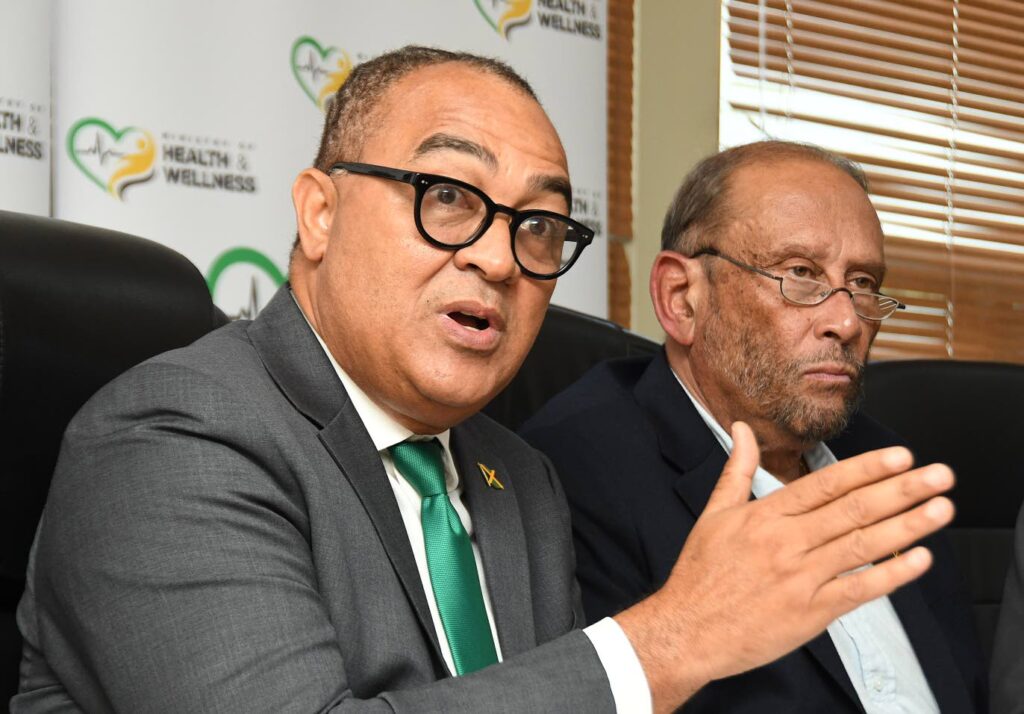
Leaky law
A government-appointed review committee has sounded the alarm over widespread governance vulnerabilities at Jamaica’s University Hospital of the West Indies (UHWI), tracing decades of systemic flaws to the facility’s outdated 76-year-old founding legislation. The UHWI Institutional Review Committee, led by chairman Howard Mitchell, is pushing for comprehensive updates to the 1948 University Hospital Act, arguing that the decades-old law has left gaping accountability loopholes that have opened the door to institutional abuse.
The call for legislative reform comes as a direct response to a damning auditor general’s report that exposed significant governance failures at the public teaching hospital, prompting the Jamaican government to task the independent committee with investigating identified weaknesses and drafting actionable remedies to strengthen oversight, accountability and long-term operational performance.
Addressing reporters at a Tuesday press briefing, Mitchell emphasized that the 1948 legislation was crafted for a vastly different healthcare and governance landscape, and has failed to adapt to Jamaica’s modern standards of public sector accountability. He cited one striking example of regulatory gaps in the law: Section 14 of the act grants the hospital’s board of management unrestricted duty-free import privileges, with no clear limitations on what types of goods can be imported or under what conditions. While the provision was intended for hospital-related imports, the unregulated open door has evolved into a pathway for misuse that demands urgent correction, Mitchell explained.
The committee’s final assessment confirmed that the law, which established UHWI’s governance structure nearly 80 years ago, is completely misaligned with the practical demands of running a 21st-century public teaching hospital. Beyond broad regulatory gaps, investigators identified a litany of specific structural issues: an oversized board of management, overlapping official appointments, ambiguous lines of operational authority, weak internal oversight mechanisms, and persistent confusion over the division of responsibilities between the Jamaican government and The University of the West Indies (UWI), which shares governance of the facility.
Mitchell noted that this dual governance model has created dangerous ambiguity around accountability and decision-making power. “The legislation may have been acceptable at the time and appropriate at the time, but it has created a confusion between board oversight and operational roles, and that is a cardinal sin in management. The board governs, the management manages, and we have seen situations where that line has been crossed,” he said.
Another critical finding centered on long-running uncertainty around UHWI’s legal status as a public body, which has enabled years of non-compliance with mandatory government procurement and financial reporting rules. Many hospital officials have operated under the incorrect assumption that UHWI’s partial UWI administration and position outside the traditional public health system exempts it from full adherence to Jamaica’s public sector accountability framework.
Committee member Professor Alvin Wint, an emeritus professor of international business at UWI, revealed that this confusion persisted as recently as 2023, months before the current review was launched. Prior to the appointment of current UHWI chairman Patrick Hylton, UHWI’s own legal officer retained a private law firm to issue a formal determination on whether the hospital qualified as a public body under Jamaican law. This step struck the review committee as particularly remarkable, Wint explained, because Jamaican law clearly defines a public body as any entity established by statutory legislation under government control — a description that applies unambiguously to UHWI.
This fundamental misunderstanding fostered a years-long institutional culture where compliance with the Public Bodies Management and Accountability Act was treated as optional rather than mandatory, the committee found.
To address these systemic flaws, the panel has put forward a series of core recommendations: downsizing the hospital’s oversized board, implementing formal term limits for board appointments, immediately hiring a dedicated corporate secretary to strengthen administrative compliance, tightening procurement oversight, and restructuring UHWI’s operational framework to meet modern teaching hospital standards. Additional proposals include clarifying the authority of UHWI management over UWI clinical staff assigned to the facility, and rebuilding strategic governance systems that have eroded over decades of neglect.
Health and Wellness Minister Dr Christopher Tufton confirmed that the Jamaican government has already prioritized the legislative reform process, after Cabinet discussed the committee’s findings and formally backed the overhaul. “That’s a Government of Jamaica, Ministry of Health mandate, and we intend to put whatever systems are in place to immediately commence a review of the legislation in keeping with modern times and the mandate of the institution,” Tufton said.
The minister added that the reform push is a core component of a broader government effort to rebuild public trust in UHWI, which was severely damaged following the release of the auditor general’s report and the subsequent public controversy. “There is a confidence issue that we need to resolve. We need to bridge that gap and we need to show that we are willing to confront the issues, to face them head on, and to do something about them,” Tufton said.
-

‘Highway for abuse’
A government-commissioned independent review of Jamaica’s flagship medical facility, the University Hospital of the West Indies (UHWI), has uncovered critical systemic failures rooted in 75-year-old governing legislation that opened the door to widespread misconduct and significant institutional harm. The review panel, led by seasoned Jamaican attorney Howard Mitchell, concluded that the aging 1948 University Hospital Act is riddled with unaddressed loopholes that have effectively created an unregulated space for abuse across multiple areas of the hospital’s operations. Mitchell is now pushing for urgent, comprehensive overhauls to the decades-old law, emphasizing that outdated regulatory frameworks have left gaping holes in institutional accountability that cannot be allowed to remain in place. He argues that modernizing the legislation is a non-negotiable step to realign UHWI’s governance structure with the operational and ethical demands of 21st-century public healthcare. Beyond the systemic governance gaps, the committee’s findings paint a stark picture of tangible harm to both public finances and patient care: the weak regulatory environment allowed the hospital to lose billions of dollars over time, while thousands of Jamaican residents relying on the premier facility have been failed by the system and denied access to appropriate medical treatment. The full, detailed findings of the review committee are scheduled to be published in extended reports on pages 4 and 5 of the relevant publication.
-

National ride-hailing policy coming — Vaz
Nearly a year after a brutal murder of a schoolteacher linked to unregulated ride-hailing services prompted an immediate industry ban, Jamaica’s government has taken a major step toward formalizing long-term rules for the rapidly growing mobility sector. Transport Minister Daryl Vaz confirmed Tuesday that the national Cabinet has formally signed off on plans to develop a country-wide ride-hailing policy, which will serve as the bedrock for a full regulatory regime to govern all app-based ride services operating across the island.
Speaking during his contribution to the 2026/27 Sectoral Debate in Parliament, Vaz emphasized that bringing structure and oversight to ride-hailing remains one of the administration’s top priorities as it works to modernize Jamaica’s entire transport network. “Our goal is to build a system that delivers safe, regulated, and accessible mobility for every Jamaican,” he told lawmakers.
To keep the policy development process on track and ensure all affected parties have a seat at the table, Vaz announced that a dedicated steering committee has already been formed to provide cross-sector oversight and facilitate ongoing stakeholder engagement. The next critical milestone in the process will be the drafting of a policy Green Paper, which outlines the government’s initial proposals for public discussion. Vaz confirmed that work on this draft is already progressing at pace, with a target to table the document in Parliament within the next four months.
In a commitment to full transparency, the minister added that once the draft policy is completed, it will be opened up to wide-ranging public scrutiny. This open consultation period will allow ordinary citizens, existing ride-hailing operators, transport unions, and other key stakeholders to share feedback that will shape the final regulatory framework. Vaz outlined the core priorities the new policy will deliver: beyond just bringing unregulated services into compliance, the framework will protect public safety, foster fair competition between all transport providers, and improve overall mobility access for communities across Jamaica.
Vaz also issued a clear warning to any unlicensed operators currently working outside existing Jamaican transport laws. “There are already laws and regulations that govern the transport sector in this country, and nobody — no matter how large or powerful they are — will be allowed to undermine that,” he said. “You either operate within the rules we have put in place, or we will take appropriate enforcement action.”
In a parallel move to address ongoing industry concerns, Vaz noted that he has agreed with Tourism Minister Edmund Bartlett to hold a dedicated meeting with sector stakeholders, following multiple requests for discussions to align ongoing industry needs with the government’s policy rollout.
The current push for formal regulation traces back to June 2024, when Vaz announced an immediate ban on all unregulated ride-hailing and ride-sharing apps, a decision that came in direct response to a national tragedy. Just one day before the ban was announced, Jamaican police confirmed that human remains found in Salt River, Clarendon, were believed to be those of Danielle Anglin, a missing primary and infant school teacher from St Peter Claver. Anglin had disappeared on May 13 while traveling to work from her home in Hellshire, St Catherine, after booking a trip through a ride-hailing app.
Then Deputy Commissioner of Police Fitz Bailey told reporters at the time that the primary suspect in Anglin’s kidnapping and murder had already been arrested on sexual assault charges back in 2015. He also highlighted a critical gap in oversight: the lack of formal information sharing between local law enforcement and unregulated ride-hailing companies had created major barriers to the investigation. In July 2024, forensic testing officially confirmed the remains belonged to Anglin, and 45-year-old Lascelles Morgan, a convicted sex offender and taxi operator from Willowdene, St Catherine, was arrested and charged with murder and kidnapping. Morgan died in November 2024, 12 days after attempting suicide while in custody at Portmore Police Station.
When announcing the 2024 ban during his contribution to that year’s Sectoral Debate, Vaz explained he had been compelled to act after receiving formal correspondence from a senior police official outlining the public safety risks. At the time, he proposed the ban remain in place until formal regulations could be put in place to require mandatory background checks for all ride-hailing drivers, conducted jointly by app operators and Jamaican law enforcement and transport authorities. The new national policy is designed to address exactly these gaps, tackling longstanding safety vulnerabilities while creating a fair, level operating environment for all transport service providers across the country.
-
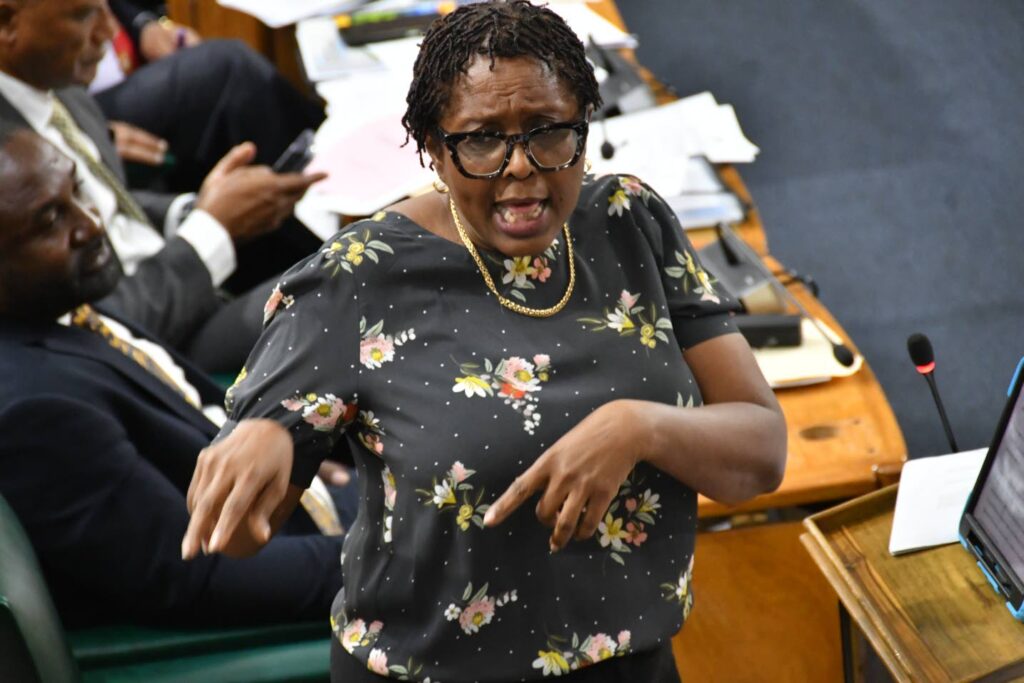
Mace fallout intensifies
The political fallout from a chaotic mace confrontation during last week’s parliamentary sitting in Jamaica deepened dramatically on Tuesday, as House Speaker Juliet Holness publicly called out Opposition Member of Parliament Angela Brown Burke, revealing a pattern of defiance against the presiding officer’s authority that stretches back months. The high-profile clash, which unfolded during debate on the critical National Reconstruction and Resilience Authority (NaRRA) Bill, has thrown a spotlight on long-simmering divisions between the government and opposition inside Gordon House, Jamaica’s parliamentary building.
Opening Tuesday’s scheduled sitting of the House of Representatives, Holness opened with a lengthy, formal statement addressing the explosive scenes from the prior week, centering her remarks on defending the foundational role of parliamentary discipline and the authority of the institution itself. The Speaker confirmed that Brown Burke, who represents the St Andrew South Western constituency, had already disrupted legislative business during a tense sitting held on March 5 this year. Holness recalled that on that earlier occasion, Brown Burke left her seat and loudly declared, “Yuh waan mi fi behave like a virago? Mi a go behave like a virago.”
“This was not the first occasion on which conduct of this nature has tested the authority of the Chair by the same member,” Holness told assembled lawmakers. “Restraint was exercised in the hope that the matter would not be repeated. But restraint must never be mistaken for permission, patience must never be mistaken for weakness, and silence must never be mistaken for acceptance.”
The Tuesday remarks came days after Brown Burke was formally named and suspended from Parliament after grabbing the ceremonial mace — a centuries-old symbol of parliamentary authority — during heated committee-stage debate on the NaRRA Bill. The incident triggered chaotic scenes in the chamber that forced officials to temporarily suspend all proceedings.
But in an interview with the Jamaica Observer conducted hours after Holness’ Tuesday address, Brown Burke forcefully pushed back against the Speaker’s narrative, rejecting the framing of her actions as an unprovoked breach of protocol. She argued that the confrontation was the end result of months of growing frustration, rooted in what she describes as systemic efforts to sideline and silence opposition lawmakers during parliamentary debates.
“We haven’t made the case to the Jamaican people. We have sat quietly, we have protested inside of the House, we have spoken to the Speaker, we have spoken to others about the attitude in the House, which prevents individuals on the Opposition side from actually participating in the discussions and in the debate,” Brown Burke said.
The opposition MP alleged that parliamentary standing orders are enforced inconsistently across government and opposition members, with opposition lawmakers routinely blocked from accessing speaking time during key debates. “What someone on the Government side will get away with, we won’t,” she said, accusing the Speaker of overt partisan bias in how she presides over proceedings. She further claimed that the parliamentary microphone system has been “weaponized” against opposition members, who are often muted or blocked from having their remarks included in the official parliamentary record.
Brown Burke explained that tensions boiled over during last week’s NaRRA debate after she made three separate attempts to intervene in discussion, only to be intentionally ignored by the Speaker. “On three different occasions I wanted to make a statement to intervene in the discussion… The Speaker looked at me and just turned her head and looked to the other side,” she claimed.
While she openly acknowledged that grabbing the mace violated formal parliamentary rules, she maintained that her action was a deliberate act of protest against what she called consistent, ongoing disrespect toward opposition representatives. “And so I got up. And, as I put it, I interfaced with the mace. And we know what the standing order says. I’m not pretending that it is sanctioned by the standing orders. Not at all. But it was because of that pushing, that ignoring, that disrespectful behaviour of the Speaker, time and time again,” she said.
Brown Burke also pushed back against Holness’ recounting of the March 5 “virago” incident, saying her original remarks were misrepresented. “I said, ‘Do I have to behave like a virago for me to be heard?’ That was what I said, and I thought that was an appropriate question. Because I don’t believe that I should have to behave like a virago to be heard,” she told the Observer.
In her address to parliament, Holness emphasized that the dispute goes far beyond the conduct of a single lawmaker, framing it as a fundamental challenge to the institutional order and authority of Jamaica’s parliament. “The mace is not a decoration. It is not a prop. It is not an object to be used in protest. It is the symbol of the authority of this House,” the Speaker declared.
She also criticized broader opposition behavior after Brown Burke’s suspension, noting that the opposition leader and other opposition lawmakers staged a standing protest with chants in direct defiance of the Chair’s authority. Holness further revealed that she had previously overlooked “derogatory sotto voce references, slurs, and disrespectful posturing” from a small group of opposition lawmakers, choosing to allow legislative business to proceed rather than escalate conflict.
Despite the sharp escalation of tensions between the two sides, both Holness and Brown Burke have called for a broader reassessment of the tone and rules of engagement inside Jamaica’s parliament. “Order is not the enemy of democracy. Order is what makes democracy possible,” Holness told lawmakers.
For her part, Brown Burke said she hopes the high-profile controversy will force the institution to confront and address the systemic inequities that have stoked tension between government and opposition members. “Let’s draw a line. Let’s determine how we interface with each other. But let us stop the hypocrisy,” she said.
-
Dominica PM expresses support for Barnett’s reappointment as Caricom secretary general
Amidst a growing public rift across the Caribbean Community (Caricom) over the reappointment of Belizean economist Dr. Carla Barnett as the bloc’s secretary-general, Dominica’s Prime Minister Roosevelt Skerrit has publicly thrown his full weight behind the move, confirming his government’s endorsement of the outcome of the regional vote.
Speaking at a press briefing held in Roseau on Wednesday, Skerrit made clear that from his administration’s perspective, Barnett’s reappointment is a settled matter. “As far as I’m concerned, Dr. Carla Barnett has been reappointed as secretary-general, and in Dominica’s style, we are team players, we support the decision and we move on,” Skerrit told reporters. He added that while he would not object to reopening discussions if the Caricom Bureau or Conference of Heads of Government chooses to do so, the existing process already followed proper procedure, delivered a clear majority in Barnett’s favor, and should be respected as the final outcome.
The controversy surrounding Barnett’s second term dates back to February’s Caricom summit hosted in Basseterre, St. Kitts and Nevis. In March, Caricom chairman and St. Kitts and Nevis Prime Minister Dr. Terrance Drew released a short statement confirming that Barnett had secured the “required majority” of regional leader votes to earn reappointment. However, the process has been challenged by several high-profile regional leaders ever since.
Prime Minister Kamla Persad-Bissessar of Trinidad and Tobago, who was absent from the closed-door retreat where the vote was held, has openly questioned the legitimacy of the procedure. She has rejected Drew’s claim that Trinidad and Tobago was not uninvited to the meeting, and is demanding access to official meeting minutes, documentation of Barnett’s performance appraisal, and records of the 2021 appointment process to verify that current procedures align with the rules established for that cycle. Though Trinidad and Tobago first called for a special regional leaders’ meeting to debate the dispute, it did not attend a virtual heads gathering held to address the issue in April.
Last month, the debate escalated when Sir Ronald Sanders, Antigua and Barbuda’s ambassador to the United States and the Organization of American States, publicly called on Barnett to step down. Speaking on ABS Television, Sanders argued that the ongoing controversy created a barrier to regional integration progress. “If I were the secretary general of Caricom and I’m being quite serious here and this had occurred, I would have resigned and I would have resigned because I would have said I must not stand in the way of Caribbean integration and the movement forward,” Sanders said.
Jamaica’s Prime Minister Andrew Holness has meanwhile pushed for a full special heads of government meeting to resolve the deadlock, noting that public discourse around the dispute has sown widespread unease across the bloc. Speaking to the *Trinidad Guardian* in New York in April, where he was honored by the American Foundation for the University of the West Indies, Holness said behind-the-scenes talks are already underway to organize direct engagement between all regional leaders. “I think it is distressing for a lot of persons within the region regarding what is being said in the public domain, but I know that all the heads are working behind the scenes to have this matter resolved,” he said, adding that further diplomatic consultations are imminent, including a planned conversation with Persad-Bissessar as part of the process.