分类: politics

  • Public Procurement : Strategic Agreement between UEH and Expertise France

    Public Procurement : Strategic Agreement between UEH and Expertise France

    In a landmark move to strengthen Haiti’s governance infrastructure, the State University of Haiti (UEH) and Expertise France have formalized a strategic partnership backed by European Union funding. The agreement, signed at the National Commission for Public Procurement (CNMP) headquarters, establishes comprehensive support for the Chair of Training, Studies, and Research in Public Procurement alongside the Master’s program in Public Procurement, Management, and Governance.

    The signing ceremony witnessed high-level participation from European and Haitian officials, including EU Ambassador Hélène Roos, UEH Rector Professor Dieuseul Prédélus, CNMP Coordinator Claude Dalberg, and Professor Adma Dessein of the National Institute of Administration. Multiple regulatory bodies and academic partners also attended the significant event.

    Ambassador Roos positioned this initiative within the broader context of the ‘Building Contract 2’ cooperation program, operational since 2017 with projections through 2027. She emphasized that public procurement represents a fundamental mechanism for advancing governance transparency, spending efficiency, and institutional credibility. The EU’s investment in the Master’s program specifically targets capacity-building within Haiti’s public administration, reflecting the conviction that professional skill development is indispensable for constructing a more effective and trustworthy government apparatus.

    Rector Prédélus characterized the agreement as demonstrating UEH’s strategic repositioning as a central catalyst for national development. He described the partnership as transcending conventional academic training, instead representing the university’s commitment to addressing Haiti’s practical challenges. Notably, Prédélus framed the program as ‘a powerful weapon against corruption’ that would establish ‘a lasting culture of integrity in public affairs management.’ He directly addressed attending students, challenging them to become transformative agents within Haiti’s public sector modernization.

    CNMP Coordinator Claude Dalberg acknowledged the agreement’s potential structural impact on Haitian governance, expressing particular gratitude for the support enabling both the Master’s program and research chair. He articulated hope that this collaboration would mark a new epoch for procurement practices in Haiti while recognizing UEH’s academic leadership in making the chair a center for both education and practical research.

    This tripartite collaboration between CNMP, UEH, and the European Union through Expertise France converges institutional expertise, academic knowledge, and international cooperation to establish specialized training and applied research as foundational elements in modernizing Haiti’s public procurement systems.

  • Verkiezingen Bangladesh 2026: wie won, wie verloor en wat staat er te gebeuren?

    Verkiezingen Bangladesh 2026: wie won, wie verloor en wat staat er te gebeuren?

    Bangladesh has witnessed a dramatic political transformation as the Bangladesh Nationalist Party (BNP), led by Tarique Rahman, achieved a landslide victory in the nation’s first parliamentary elections since the 2024 uprising that ousted long-serving Prime Minister Sheikh Hasina.

    The Election Commission confirmed the BNP secured 212 of the 299 declared seats in the 350-member Jatiya Sangsad parliament. Jamaat-e-Islami, previously banned under Hasina’s administration, emerged as the principal opposition force with 77 seats in alliance with the newly formed National Citizen Party (NCP), which captured six seats. NCP leader Nahid Islam, among the youngest parliamentarians, won his constituency.

    Hasina’s Awami League was barred from participation, culminating her 15-year authoritarian rule that ended with her fleeing to India. The elections coincided with a national referendum on the ‘July Charter,’ proposing comprehensive institutional reforms including enhanced female representation, prime ministerial term limits, strengthened presidential powers, and judicial independence protections. Preliminary counts indicate over 60% voter approval for the charter.

    Despite the BNP’s anticipated victory—built upon months of protests addressing unemployment and inflation—both the NCP and Jamaat-e-Islami raised concerns about potential electoral irregularities and alleged ‘election engineering.’ The Election Commission reported a 59.88% voter turnout and characterized the process as relatively peaceful and credible.

    Political analysts interpret this outcome as a triumph for democratic forces, though challenges persist in establishing good governance, rule of law, and political stability. The absence of the Awami League from parliament is expected to foster greater political diversity and potentially enhance parliamentary functionality.

    Meanwhile, Sheikh Hasina remains in India following her 2023 conviction for war crimes related to her government’s harsh treatment of protesters, a situation that continues to strain Bangladesh-India relations.

  • Loonreeksen rechters lopen op tot ruim SRD 600.000 per maand

    Loonreeksen rechters lopen op tot ruim SRD 600.000 per maand

    Suriname has implemented a comprehensive salary restructuring for judicial officials that has ignited significant public and political discourse. The new compensation framework, formally established through Court of Justice President’s directive on July 14, 2025, and detailed in State Decree No. 104 of 2025, creates a remuneration system where judiciary members now earn substantially more than the country’s president.

    The compensation structure, jointly endorsed on September 3 by Court President Iwan Rasoelbaks and Interior Minister Marinus Bee—who previously served as Assembly Speaker when the legislation passed in November 2024—introduces progressive salary scales with periodic 5% annual increments extending through 35 years of service.

    According to the decree’s annex, the President of the Court of Justice will receive a starting monthly salary of SRD 123,845, potentially reaching over SRD 600,000 at maximum scale. The Vice President’s compensation begins at SRD 105,289 (85% of presidential scale) with ceiling earnings exceeding SRD 510,000. Judges commence between SRD 48,000-65,000 monthly (50-55% scale) with maximum potential earnings of SRD 250,000-300,000, while junior/senior category members start at SRD 76,000-96,000 (62-70% scale) rising to approximately SRD 430,000.

    The substantial increases have prompted scrutiny from legislators including NPS assembly member Poetini Atompai, who has raised concerns regarding proportionality, reasonableness, and budgetary implications. Critical questions have emerged about gross salaries per position, total monthly state expenditures, comparative compensation with other government officials, and pre-adjustment compensation levels.

    Further attention emerged through Eugène van der San’s disclosure of the Prosecutor General’s remuneration documents, generating additional public inquiry about overall income structures within the judiciary. The legal foundation rests upon the amended Judicial Remuneration Act passed in November 2024, supplemented by the Court President’s July 2025 directive and the September State Decree.

  • Nobel Winner Machado Could Make Political Comeback in Venezuela

    Nobel Winner Machado Could Make Political Comeback in Venezuela

    Caracas witnessed massive parallel demonstrations on Thursday as Venezuela’s National Assembly engaged in heated debates over groundbreaking amnesty legislation that could reshape the country’s political landscape. The proposed bill, which represents the most significant political reform initiative since interim President Delcy Rodriguez assumed power following Nicolas Maduro’s controversial extradition in January, has ignited both hope and controversy across the nation.

    The opposing rallies, each drawing substantial crowds, highlighted the deep political divisions that continue to characterize Venezuelan society. Rodriguez’s administration mobilized supporters to stage counterprotests against opposition demonstrators, marking the first major public confrontation since the leadership transition.

    The comprehensive amnesty proposal seeks to nullify charges historically used to imprison government critics since 1999, including allegations of treason, terrorism, and hate speech propagation. However, the legislation maintains specific exclusions for individuals convicted of murder, corruption, drug trafficking, or human rights violations.

    President Rodriguez characterized the bill as a necessary reconciliation measure designed to ‘heal the wounds left by the political confrontation fuelled by violence and extremism.’ Despite this overture toward political normalization, over 600 individuals categorized as political prisoners remain detained pending the legislation’s outcome.

    Most notably, the proposed amnesty would remove electoral disqualifications against opposition figures, potentially clearing the path for Nobel Peace Prize recipient Maria Corina Machado to reenter Venezuela’s political arena. This development could significantly alter the country’s political dynamics and open possibilities for Machado’s potential political resurgence.

  • Salarisstrook SRD 1 miljoen pg duikt op na kritiek Van der San

    Salarisstrook SRD 1 miljoen pg duikt op na kritiek Van der San

    A significant development has emerged in Suriname’s ongoing judicial compensation controversy as former Cabinet Director Eugène van der San has obtained and publicly revealed the official pay stub of Attorney General Garcia Paragsingh. The document, reportedly delivered to Van der San’s mailbox, provides concrete evidence of the substantial compensation package that has ignited political debate.

    The salary breakdown reveals a gross monthly income exceeding SRD 1.4 million, with net earnings amounting to over SRD 1 million after deductions. The compensation structure includes a base salary of SRD 562,018 supplemented by numerous allowances for representation, vehicle, housing, and management responsibilities. Employer contributions for pension and social security benefits are also detailed, alongside standard deductions for income tax and social fund contributions.

    This disclosure follows intense political scrutiny initiated by National Assembly member Poetini Atompai (NPS), who recently demanded full transparency regarding judicial branch compensation during parliamentary proceedings. Atompai raised concerns about proportionality and reasonableness, suggesting some judicial salaries might exceed the President’s compensation by three to five times. The lawmaker urgently called for immediate government transparency regarding salary structures, entry dates, monthly state burdens, and cumulative budgetary impacts.

    The controversy intensified when both Van der San’s calculations and Starnieuws news outlet, which conducted independent verification, faced substantial criticism from various quarters. The emerging debate highlights growing concerns about income disparity within Suriname’s public sector and calls for comprehensive reform of judicial compensation transparency.

  • Commonwealth SG commends Barbados’ peaceful polls

    Commonwealth SG commends Barbados’ peaceful polls

    The Commonwealth has formally recognized Barbados’ February 11, 2026 general election as an exemplary model of democratic governance, praising the Caribbean nation for its peaceful electoral process and clear demonstration of popular sovereignty. In an official statement, Commonwealth Secretary General Shirley Botchwey emphasized that the election’s conduct reinforced Barbados’ enduring democratic traditions and alignment with core Commonwealth Charter values.

    While acknowledging minor administrative issues that prevented a small number of voters from casting ballots due to missing names on registration lists, Botchwey confirmed these incidents did not materially impact the overall electoral outcome. The Secretary General specifically commended Barbados’ Electoral and Boundaries Commission, polling officials, security services, and civil society organizations for their professional execution of electoral duties.

    This election marked a significant milestone as the first in Barbadian history to feature international observer missions, including a Commonwealth Expert Team that conducted comprehensive assessment across multiple constituencies. The team’s preliminary findings confirmed the election proceeded in a calm, respectful, and orderly environment consistent with democratic standards.

    Botchwey’s statement highlighted how Barbados’ political vibrancy and peaceful electoral atmosphere demonstrate the nation’s profound commitment to democratic engagement. The Secretary General noted that as an active Commonwealth member, Barbados continues to embody principles of inclusivity and human rights central to the organization’s charter.

    The Commonwealth Expert Team is preparing a comprehensive report with detailed findings and practical recommendations aimed at strengthening electoral administration, enhancing accessibility, and reinforcing public trust in Barbados’ legal and electoral frameworks. The Commonwealth reaffirmed its commitment to supporting inclusive political participation worldwide, citing Barbados as a positive example for other nations.

    Looking forward, the Commonwealth encouraged continued efforts to strengthen democratic institutions, ensure inclusive governance, and uphold the rule of law—fundamental pillars that contribute to global peace, stability, and prosperity.

  • Cut red tape when lives on the line

    Cut red tape when lives on the line

    Jamaica’s Energy and Telecommunications Minister Daryl Vaz has ignited a crucial debate about emergency governance by advocating for significant amendments to the nation’s procurement legislation. This push for reform comes in response to controversies surrounding the government’s acquisition of Starlink satellite devices during the aftermath of Hurricane Melissa in October 2025.

    Minister Vaz, speaking at a post-Cabinet press briefing, defended his decision to bypass standard procurement protocols during the national crisis. He asserted that existing frameworks fail to distinguish between routine government purchases and urgent disaster response requirements. “Extreme times require extreme actions,” Vaz stated, emphasizing that people suffering and awaiting rescue “can’t wait on a procurement process that takes weeks.”

    The hurricane, which struck Jamaica on October 28, 2025, caused catastrophic damage to telecommunications infrastructure, leaving numerous communities completely isolated. The government’s deployment of Starlink technology successfully restored internet connectivity for emergency agencies, healthcare facilities, and relief centers, potentially saving countless lives.

    Despite the practical success of the intervention, Jamaica’s auditor general subsequently reported that the procurement violated established legal procedures. This finding triggered extensive political debate regarding the balance between regulatory compliance and emergency responsiveness.

    Vaz clarified that his advocacy for legislative reform isn’t about expanding ministerial power but about creating practical mechanisms for crisis management. “You cannot have the same guidelines in normal times that you have in extreme times,” he argued, noting that the current system makes no provision for emergency scenarios where immediate action is required.

    The minister maintained respect for oversight institutions while defending his actions. “I accept fully what was said by the auditor general in relation to me getting involved in the procurement,” Vaz acknowledged, while simultaneously justifying his position based on the extraordinary circumstances.

    Prime Minister Andrew Holness has previously indicated support for reviewing procurement legislation, suggesting potential government backing for such reforms. Vaz expressed confidence that changes would be implemented, describing the need for distinction between normal and emergency procedures as “an absolute no-brainer.”

    The controversy highlights the ongoing challenge governments face in balancing accountability with operational flexibility during national emergencies. As climate change increases the frequency and intensity of natural disasters, Jamaica’s experience may serve as a case study for other nations grappling with similar regulatory dilemmas.

  • Guyanese Opposition Leader and father want suspension of extradition committal proceedings

    Guyanese Opposition Leader and father want suspension of extradition committal proceedings

    Attorneys representing Guyanese Opposition Leader Azruddin Mohamed and his father, prominent billionaire businessman Nazar ‘Shell’ Mohamed, have petitioned the Court of Appeal to suspend ongoing extradition proceedings in the magistrate’s court. The Mohameds face fraud and related charges in the United States and seek a stay pending their substantive appeal of a High Court ruling that validated the Authority to Proceed (ATP) with their extradition.

    The legal team, comprising Roysdale Forde, Siand Dhurjon, and Damien Da Silva, contends that without an immediate suspension, the magistrate court proceedings could conclude within a month—potentially rendering their appeal moot and resulting in their clients’ detention. They argue that Chief Justice Navindra Singh’s dismissal of their initial challenge contained multiple legal and factual errors that compromised justice.

    Central to their appeal is the allegation of governmental persecution and bias within the ruling People’s Progressive Party Civic-led administration. The lawyers assert that Home Affairs Minister Oneidge Walrond and Attorney General Anil Nandlall operated with ‘presumed and apparent bias,’ violating natural justice principles by acting as judges in their own cause. They maintain that the ATP—which empowers Principal Magistrate Judy Latchman to conduct committal hearings—is fundamentally flawed and should be quashed.

    The Mohameds, sanctioned by the US Treasury for alleged gold smuggling and tax evasion, face an 11-count indictment including wire fraud, mail fraud, and money laundering. Their legal team argues that the extradition process jeopardizes their fundamental rights and that the Minister’s impartiality is indispensable for a fair hearing. They claim their appeal demonstrates a strong prima facie case and that neither the US nor Guyanese authorities would suffer prejudice from a stay.

  • Relatives of Venezuela political prisoners begin hunger strike after 17 freed

    Relatives of Venezuela political prisoners begin hunger strike after 17 freed

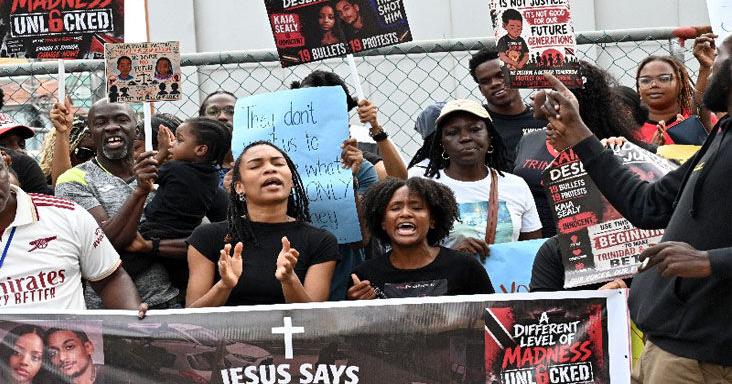
    CARACAS, Venezuela — In a dramatic display of protest, relatives of Venezuelan political detainees initiated a hunger strike outside a Caracas prison facility this Saturday. This demonstration follows the conditional release of 17 prisoners and occurs against the backdrop of stalled legislative negotiations regarding a promised amnesty law.

    Approximately ten women, wearing protective face masks, positioned themselves in a horizontal formation at the entrance to Zone 7, a national police compound. Several participants were observed sleeping during the daytime hours, with one anonymous protester explaining to AFP that sleep provided temporary relief from hunger sensations.

    Evelin Quiaro, a 46-year-old immigration official whose son faces terrorism-related charges dating back to November, expressed cautious optimism: ‘The pressure has yielded results; we intend to remain here until every political prisoner gains freedom.’ Quiaro confirmed she had consumed her final meal around 1:00 am prior to commencing the strike.

    The early morning hours preceding the protest saw National Assembly President Jorge Rodriguez announcing via social media the liberation of 17 detainees, though no specific identities were disclosed. Rodriguez urged citizens to ‘persist on this pathway toward peaceful democratic coexistence.’

    This developing situation originates from the landmark amnesty initiative spearheaded by Acting President Delcy Rodriguez following the January 3rd capture of former leader Nicolas Maduro by U.S. special forces. The proposed legislation aims to dismantle nearly three decades of state-sponsored repression, potentially exonerating dissidents charged with ‘treason,’ ‘terrorism,’ and hate-speech allegations during the Maduro and Chavez administrations.

    However, the legislative process hit an impasse last Thursday when lawmakers, after approving the bill’s initial reading, suspended final adoption due to contentious debates regarding implementation procedures. A particular point of contention emerged over requirements for amnesty seekers to personally appear in court to petition for clemency.

    Both government-aligned and opposition legislators have agreed to resume deliberations on February 19, leaving hundreds of political prisoners’ fates in limbo and their families maintaining vigil through extreme protest measures.

  • Monorath: Duizenden vreemdelingen zonder geldige verblijfsstatus drukken zwaar op voorzieningen

    Monorath: Duizenden vreemdelingen zonder geldige verblijfsstatus drukken zwaar op voorzieningen

    Suriname’s Justice and Police Minister Harish Monorath has officially acknowledged a significant migration challenge, revealing that thousands of foreign nationals reside in the country without proper documentation. The minister’s statements came during a National Assembly session in response to inquiries from opposition member Ingrid Karta-Bink regarding foreign citizen registration and mounting pressure on public services.

    Minister Monorath identified citizens from Cuba, Haiti, Venezuela, and the Dominican Republic as the primary groups entering Suriname legally through tourist cards or CEA forms, but subsequently failing to regularize their immigration status. The minister highlighted a concerning pattern of ‘significant inflow versus limited outflow,’ noting that flights regularly arrive with 180-200 Cuban passengers while departing with fewer than 30 individuals.

    Government data suggests tens of thousands of Cuban nationals alone may have remained in Suriname without proper registration since 2019. While Surinamese law provides clear pathways for temporary residence permits (6-24 months), work authorization, and eventual naturalization, thousands have bypassed these legal requirements, creating substantial strain on the national budget.

    The unregistered migrant population has generated multidimensional consequences, particularly within healthcare and social services. Hospitals continue to provide medical care regardless of documentation status, with treatment costs reaching approximately $900 daily per patient. Additional indirect costs accumulate through traffic accidents and other emergencies that ultimately burden state resources.

    Minister Monorath expressed particular concern about children of undocumented migrants who remain outside the education system, potentially violating international child rights obligations. The minister referenced ongoing consultations with relevant agencies regarding a report to be presented in Geneva.

    In response to the crisis, interministerial discussions are underway between Foreign Affairs, Public Health, Labor, and Defense ministries to better coordinate migration and residence policies. Minister Monorath confirmed that comprehensive policy proposals addressing broader immigration and population challenges will soon be presented to the president, emphasizing the urgent need for structural solutions from financial, legal, and social perspectives.