分类: politics

  • Ministry of Defense Preparing for Cartel Violence Spill Over

    Ministry of Defense Preparing for Cartel Violence Spill Over

    Belizean defense authorities are implementing enhanced security measures along the northern border region as escalating cartel violence in Mexico’s Quintana Roo state raises concerns about potential spillover effects. The Ministry of Defense has confirmed a strategic shift toward proactive security deployment without disclosing specific operational details regarding troop movements or resource allocation.

    Francis Usher, CEO of Belize’s Ministry of Defense, emphasized the government’s coordinated approach to monitoring developing tensions among narco groups in the Mexican border city of Chetumal. While declining to elaborate on tactical specifics, Usher confirmed increased military presence and resource allocation along both northern and southern borders. The southern deployment addresses concerns about transnational organized crime networks utilizing Belize’s terrain for logistical operations.

    Security agencies maintain continuous coordination while observing developments across the border, with particular attention to Quintana Roo’s deteriorating security situation. The defense strategy prioritizes preventive measures over reactive responses, reflecting heightened alert status within Belize’s security apparatus. This border security enhancement occurs amid broader regional concerns about cartel violence expansion beyond traditional conflict zones.

  • Earl Trapp Officially Declares Candidacy for Fifth Term

    Earl Trapp Officially Declares Candidacy for Fifth Term

    In a significant political development within the twin towns of San Ignacio and Santa Elena, long-serving Mayor Earl Trapp has formally declared his intention to seek an unprecedented fifth consecutive term. The announcement comes as the political landscape begins to take shape for the 2027 municipal elections, despite the considerable time remaining until voters head to the polls.

    The political dynamics gained new complexity when the People’s United Party (P.U.P.) designated Town Councilor Aaron Mai as their mayoral candidate. Councilor Mai currently represents the sole P.U.P. voice on a town council predominantly controlled by Trapp’s United Democratic Party (U.D.P.), setting the stage for an intriguing electoral confrontation between established colleagues.

    When questioned about working alongside a council member who now plans to challenge his leadership, Mayor Trapp responded with diplomatic grace, acknowledging every individual’s democratic right to pursue elected office. “If he believes that is a call for him, he has a right to put his name on the ballot,” Trapp stated, emphasizing that ultimately, “the people will decide.”

    The veteran mayor expressed strong confidence in his electoral prospects, citing his continuous dedication to public service throughout his nearly twelve-year tenure. “From the moment I got into office almost twelve years ago, I’ve been working. That has not stopped,” Trapp asserted, highlighting his Monday-to-Monday commitment to community development.

    Trapp pointed to visible transformations within the municipality as evidence of his effective leadership, stating, “The people have seen the changes in this community. I believe that the people are enjoying the developments that have come to this community under my tenure.”

    Remarkably, despite the emerging electoral competition, Trapp characterized his relationship with Councilor Mai as exceptionally positive, noting, “We have been very good friends. I cannot remember one day we had any disagreements or altercation.” This sentiment underscores the professional respect maintained between the political adversaries, even as they prepare to contest the mayoral position.

    The early political maneuvering signals an engaged electoral process ahead, with voters ultimately positioned to determine whether Trapp’s extensive experience and development record will secure his continued leadership or whether Mai’s challenge will successfully redirect the twin towns’ political trajectory.

  • Diplomacy : Official ceremony to greet the new Haitian Chancellor

    Diplomacy : Official ceremony to greet the new Haitian Chancellor

    In a significant diplomatic gathering, Haiti’s newly appointed Minister of Foreign Affairs, Raina Forbin, was formally received by the international community during an official ceremony in Port-au-Prince. The event brought together ambassadors, representatives of international organizations, and consular officials accredited to Haiti, marking a crucial moment in the nation’s diplomatic calendar.

    Minister Forbin assumed her position following a comprehensive government restructuring, stepping into her role as Haiti’s chief diplomat during a period of profound national challenges. The ceremonial reception, conducted in accordance with established diplomatic protocols, provided foreign representatives the opportunity to extend formal greetings to the incoming chancellor.

    In her inaugural address to the diplomatic corps, Minister Forbin articulated a clear vision for Haiti’s foreign policy direction. She expressed profound appreciation for the international community’s sustained engagement with Haiti and emphasized the government’s commitment to fostering dialogue and mutual respect in international relations. The minister specifically highlighted four critical priority areas requiring urgent attention: national security restoration, the organization of transparent elections, economic revitalization, and addressing the ongoing humanitarian emergency.

    Minister Forbin explicitly acknowledged Haiti’s gratitude toward international partners supporting institutional strengthening initiatives, particularly those aimed at enhancing security capabilities and promoting national stabilization. She affirmed that Haitian diplomacy would maintain an actively mobilized stance to facilitate enhanced cooperation mechanisms with global partners.

    Concluding her remarks, the Foreign Minister reaffirmed the government’s dedication to steering Haiti through its current transitional period while appealing for sustained international solidarity to support the nation’s journey toward security, institutional stability, and sustainable development.

  • COMMENTARY: How to vote in the Upcoming General Election

    COMMENTARY: How to vote in the Upcoming General Election

    With national elections approaching in Antigua and Barbuda, a critical examination of governance patterns reveals compelling arguments for political rotation. Drawing parallels between financial cooperatives and national governance, this analysis presents a framework for strategic voting centered on accountability rather than personal allegiance.

    Credit unions serve as a powerful metaphor for effective collective action. These member-owned financial cooperatives demonstrate how ordinary citizens can achieve remarkable progress through resource pooling, term-limited leadership, and continuous innovation. Over four decades, these institutions have evolved from offering modest personal loans to providing substantial mortgages and business capital—a testament to what structured collaboration can accomplish.

    This cooperative success story contrasts sharply with national governance outcomes. Despite a national budget exceeding two billion dollars—the highest in the country’s history—Antigua and Barbuda continues struggling with fundamental infrastructure and services. The water distribution system remains unreliable, road networks deteriorate, and judicial processes face significant delays.

    A striking political imbalance emerges from historical analysis: since gaining independence 44 years ago, a single party has governed for 34 years (approximately 78% of the time). This extended dominance has created what analysts might describe as a democratic deficit, where regular leadership rotation—proven beneficial in successful nations like the United States and Barbados—has been notably absent.

    The foundational pillars of effective governance provide a measurable framework for assessment:

    1. Judicial System: The current judiciary lacks sufficient resources to adjudicate cases efficiently, creating a backlog that undermines justice.
    2. Law Enforcement: Police capabilities appear disproportionately focused on managing protests rather than solving crimes affecting ordinary citizens.
    3. Border Security: Documented security lapses include unauthorized aircraft arrivals and uncontrolled border transitions.
    4. Infrastructure: Reactive crisis management replaces systematic maintenance, with deteriorating public facilities and controversial land sales reducing public assets.

    These systemic shortcomings have tangible consequences: reduced tourist confidence due to security concerns, increased vehicle maintenance costs from poor roads, and bureaucratic hurdles that discourage legitimate business formation.

    The electoral recommendation presented here advocates for dispassionate, strategic voting. Rather than supporting individuals based on personal relationships, voters should evaluate which alternative has the greatest likelihood of replacing underperforming incumbents. This approach mirrors successful democratic models worldwide where regular political rotation prevents entrenched interests and stimulates fresh solutions.

    As the nation stands at a crossroads, the electoral decision transcends party loyalty and enters the realm of national interest. The choice ultimately revolves around whether citizens prefer continued stagnation or potential progress through renewed leadership and accountability mechanisms.

  • OP-ED: The Shield and the Silence – What the Doral Summit reveals about the Caribbean’s position  in a changing hemisphere

    OP-ED: The Shield and the Silence – What the Doral Summit reveals about the Caribbean’s position in a changing hemisphere

    At a recent gathering of Caribbean leaders in St. Kitts and Nevis, Trinidad and Tobago’s Prime Minister Kamla Persad-Bissessar deployed a local proverb that encapsulates a growing geopolitical schism: “Who vex loss.” This phrase, meaning “If you’re upset by my choices, that’s your problem,” preceded a significant development in hemispheric relations—the Shield of the Americas Summit in Doral, Florida.

    The White House-organized event, focused on security, counter-narcotics, and containing Chinese influence, has drawn a selective roster of hemispheric partners. Notably absent were Mexico, Brazil, and Colombia—the three largest Latin American economies—while only two Caribbean Community (CARICOM) leaders received invitations: Guyana’s President Irfaan Ali and Prime Minister Persad-Bissessar.

    This selective invitation strategy emerged immediately after US Secretary of State Marco Rubio attended CARICOM’s 50th Heads of Government Meeting in Basseterre, where regional priorities included climate finance, food security, reparatory justice, and the Guyana-Venezuela border controversy. None of these issues appear on the Doral summit agenda, which instead emphasizes Washington’s strategic priorities.

    The divergence highlights a fundamental asymmetry between American interests and Caribbean development needs. While Trinidad faces urgent security concerns evidenced by rising murder rates, and Guyana confronts territorial pressures, their participation in Washington’s framework comes at the cost of sidelining collective regional priorities.

    CARICOM Chairman Drew maintains the bloc remains unified, but the reality suggests fragmentation. The organization’s strength has historically derived from its collective voice, particularly evident in climate finance advocacy through the Bridgetown Initiative. Washington, however, benefits from engaging individual states rather than confronting a unified regional position.

    Historical precedents offer cautionary tales. Venezuelan opposition leader María Corina Machado, once celebrated by the Trump administration, was swiftly sidelined after offering her Nobel medal to the former president. Similarly, a former Homeland Security secretary who implemented controversial immigration policies was eventually dismissed to a ceremonial role.

    The central question for Caribbean nations remains whether bilateral engagement with superpowers ultimately serves long-term interests. While immediate security and economic concerns drive some leaders to accept Washington’s terms, the region must consider whether this approach sacrifices the leverage needed to address existential threats like climate change and economic vulnerability.

    The true cost of participation in hemispheric power dynamics may be measured in silence—the inability to advocate for issues that will determine whether future generations inherit viable nations.

  • “If They Fire Me Over This, It Is a Worthy Cause” Senator Dennison Says

    “If They Fire Me Over This, It Is a Worthy Cause” Senator Dennison Says

    In a deeply personal stand against corporate practices, Senator Glenfield Dennison has declared his advocacy in the BTL severance dispute constitutes “a worthy cause,” even at potential professional cost. The senator revealed his motivation stems from honoring his late father, who served as a BTL linesman for over a decade before passing away in 2014.

    Dennison articulated the emotional foundation of his campaign during a recent address. “My father scaled lampposts daily. That labor provided our sustenance, funded my education, and ultimately enabled me to receive a Digi scholarship for high school,” he stated. “This fight transcends politics or financial gain—it embodies a son’s devotion to his father’s memory.”

    When questioned about potential repercussions from a recently leaked invoice controversy, the senator responded unequivocally: “I have encountered no professional consequences thus far.” He disclosed having preemptively strategized with BCWJ spokesperson Emily Turner regarding potential ramifications. “We thoroughly analyzed possible implications for my position,” Dennison explained. “I explicitly told Emily: if termination results from this advocacy, it remains a justified sacrifice.”

    The senator emphasized his collaboration with the workers’ rights organization has been entirely voluntary and motivated by principles of social justice rather than political expediency. His stance has ignited discussions about corporate responsibility and filial legacy within Belize’s political landscape.

  • Koopkrachtversterkingambtenaren kost SRD 1,8 miljard; regering wil verspilling aanpakken

    Koopkrachtversterkingambtenaren kost SRD 1,8 miljard; regering wil verspilling aanpakken

    The Surinamese government has unveiled a comprehensive economic stabilization plan designed to bolster purchasing power for civil servants and vulnerable populations while implementing stringent measures to curb government waste. President Jennifer Simons acknowledged during a March 6th press conference that public sector wages have significantly eroded due to currency devaluation, though she emphasized that across-the-board salary increases remain economically unfeasible.

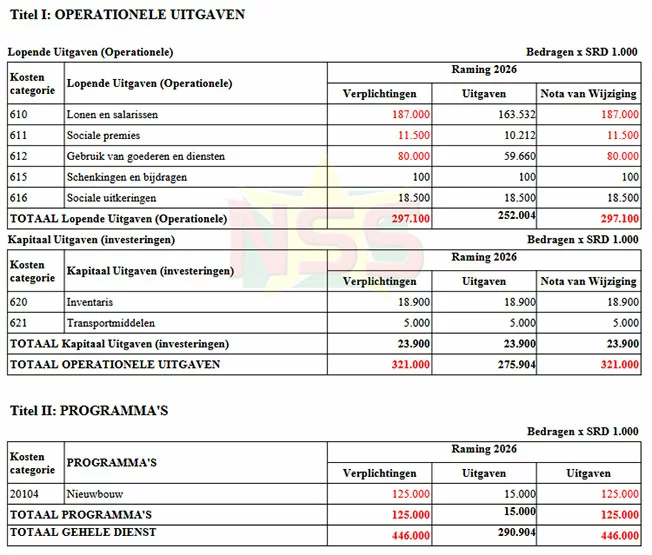
    Two primary relief models are under consideration: adjustment of income tax brackets benefiting all working citizens, and temporary inflation compensation measures. Finance and Planning Minister Adelien Wijnerman detailed the immediate relief package, which includes monthly allowances for civil servants ranging from SRD 1,000 (March-May) to SRD 1,500 (September-December). Educators will receive bridging allowances escalating from SRD 500 to SRD 1,000 monthly between March and June.

    Additional support extends to pensioners, disabled citizens, and low-income households through SRD 250 monthly supplements from March through June. The universal child benefit (AKB) increases to SRD 250 per child monthly. Notably, directors and senior officials are excluded from these benefits. The total relief package requires approximately SRD 1.8 billion in funding.

    Concurrently, the government is implementing aggressive anti-corruption measures. Interior Ministry interventions have already blocked salaries of non-working or overseas-based personnel, generating annual savings of SRD 300 million. A religious institution audit resulted in blocking over 100 fraudulent salaries, saving nearly SRD 1 million yearly. Telecommunications expenditures were slashed from SRD 16 million to under SRD 2 million monthly at the Interior Ministry alone.

    The administration has launched digital registration verifying actual residency, with 15,000 individuals already processed. This data will integrate with border management systems to identify and terminate salaries of permanent overseas residents. President Simons asserted that government cannot serve as a social safety net for non-workers, stating: ‘People must work and receive commensurate wages. We aim to make those wages dignified.’

    The reforms include stricter personnel policies requiring new appointments to fit within established organizational frameworks, fundamentally restructuring Suriname’s public sector compensation system.

  • Trump Says ‘Cuba is going to fall pretty soon’

    Trump Says ‘Cuba is going to fall pretty soon’

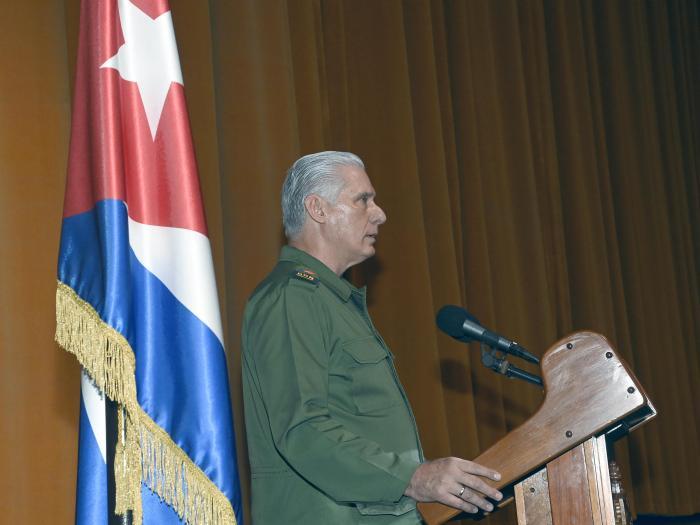
    In a striking declaration during a CNN interview on Friday, United States President Donald Trump asserted that Cuba’s communist government is on the verge of collapse. Trump indicated that Cuban leadership is demonstrating unprecedented eagerness to engage in diplomatic negotiations with Washington.

    “Cuba is going to fall pretty soon,” the president stated emphatically. “They want to make a deal so badly.”

    Trump revealed his consideration of assigning Secretary of State Marco Rubio to manage potential talks with Havana, marking a significant development in U.S.-Cuba relations. “They want to make a deal, and so I’m going to put Marco over there, and we’ll see how that works out,” Trump commented during the exchange.

    This represents the second instance in forty-eight hours that Trump has addressed Cuba’s political future. Speaking before a White House audience just a day earlier, he suggested Americans might soon regain travel access to the Caribbean nation, stating it could be “a question of time.”

    The administration’s current foreign policy priorities, however, remain centered on resolving tensions with Iran before pivoting to other international matters. “We want to finish this one [Iran] first,” Trump clarified, indicating a sequential approach to diplomatic engagements.

    These statements emerge amid growing economic instability in Cuba, including a massive recent blackout that affected approximately two-thirds of the island. The widespread power outage, which encompassed the capital city of Havana, represents the latest manifestation of an escalating energy crisis confronting the nation.

  • Alex Browne Challenges Randy Baltimore’s Nomination in St. Philip’s North By-Election

    Alex Browne Challenges Randy Baltimore’s Nomination in St. Philip’s North By-Election

    A significant legal challenge has emerged in Antigua and Barbuda’s upcoming by-election, casting uncertainty over the candidacy of Randy Baltimore for the St. Philip’s North constituency. Alex Browne has formally contested Baltimore’s nomination, citing constitutional violations regarding his civil service status.

    The controversy centers on Section 39(g) of the nation’s Constitution, which explicitly prohibits public office holders from being elected to the House of Representatives. Baltimore, who served as Principal Inspector of Customs, announced his resignation effective February 20 through a press release dated February 19, just days before his nomination on February 25.

    However, Browne’s challenge references Section 28(1) of the Civil Service Regulations, which mandates that permanent officers must provide at least three months’ notice before resigning. According to this interpretation, Baltimore should have initiated his resignation process by November 2025 to qualify for the March 16 election.

    The electoral dispute presents a complex constitutional interpretation regarding the transition from civil service to political candidacy. Browne’s notice, dated March 5, 2026, directly advises voters that Baltimore is constitutionally disqualified from parliamentary election, creating potential voter confusion ahead of the scheduled by-election.

    This development introduces unexpected legal dimensions to the electoral process, potentially affecting campaign strategies and voter decisions. The challenge highlights the intricate balance between civil service regulations and political participation rights within Antigua and Barbuda’s democratic framework.

  • St. Vincent and the Grenadines Prime Minister and Foreign Minister face election petition over dual citizenship

    St. Vincent and the Grenadines Prime Minister and Foreign Minister face election petition over dual citizenship

    The High Court of Kingstown has commenced proceedings in a pivotal constitutional case that challenges the parliamentary eligibility of Prime Minister Dr. Godwin Friday and Foreign Affairs Minister Dwight Fitzgerald Bramble. The litigation, initiated by Unity Labour Party (ULP) representatives Carlos Williams and Luke Browne, centers on whether the officials’ dual Vincentian-Canadian citizenship violates constitutional mandates prohibiting allegiance to foreign powers.

    Legal arguments presented before Justice Gertel Thom focus on Section 26 of the Constitution of St. Vincent and the Grenadines, which bars individuals acknowledging foreign allegiance from holding elected office. Both officials secured their parliamentary positions in the November 2025 general elections—Friday representing East Kingstown and Bramble the Northern Grenadines—before these citizenship revelations emerged.

    Following Thursday’s case management hearing, Prime Minister Friday offered an optimistic but non-committal assessment, noting the ‘wonderful day’ while deferring legal inquiries to his counsel. The government’s lead attorney, Anand Ramlogan S.C. of Trinidad and Tobago, characterized the proceedings as ‘an interesting, if not amusing experience,’ expressing confidence in their defense based on the elected officials’ ‘overwhelming mandate’ from voters.

    The legal teams represent an international collaboration, with petitioners represented by Stewart Richard Young S.C., Al Elliott, and Carlos James, while the respondents’ defense includes counsel from Trinidad and Tobago and England.

    The court has established an extensive litigation timeline requiring respondent disclosure of election declarations by March 12, 2026, followed by petitioner evidence submission by March 27. Respondents must file replies by May 11, with another management hearing scheduled for May 19. The substantive trial will occur over three consecutive days from July 28-30, 2026.

    This judicial review carries significant constitutional implications, potentially validating the election outcomes or establishing precedent regarding dual citizenship as disqualifying allegiance under Vincentian law.