分类: politics

  • NDP benadrukt rol van vrouwen en wijst op leiderschap Simons

    NDP benadrukt rol van vrouwen en wijst op leiderschap Simons

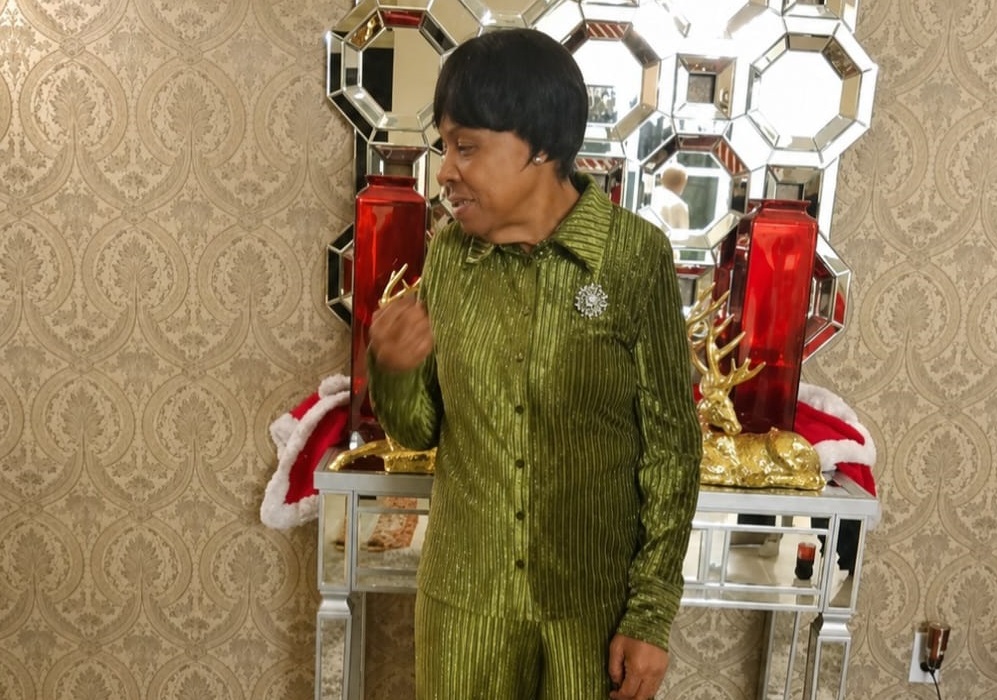
    In a significant political statement marking International Women’s Day, Suriname’s National Democratic Party (NDP) has issued a powerful declaration celebrating women’s pivotal role in national development and governance. The party emphasized its longstanding commitment to advancing women’s rights, particularly highlighting its instrumental role in eliminating legal barriers through the landmark Decree 11C, which abolished women’s legal incapacity.

    The NDP pointed to its current leadership as embodiment of this vision, noting that ‘the ship of state is steered by a strong woman: our chairperson Jennifer Geerlings-Simons.’ The party characterized her leadership as representing stability, balance, and determination during a period requiring steadfastness, courage, and moral guidance.

    Beyond political representation, the statement acknowledged women’s multifaceted contributions across all societal sectors—as mothers, educators, healthcare professionals, entrepreneurs, civil servants, agricultural workers, and volunteers. The NDP articulated its foundational belief that women should not stand behind others but rather lead independently across ministries, corporations, directorates, and critical institutions.

    While asserting that women’s achievements are valued daily, the party designated March 8th as a particularly significant occasion to reflect on hard-won rights, societal contributions, and the continuing role of women in national advancement. The statement serves as both a celebration of progress and a reaffirmation of the party’s commitment to gender equality in Surinamese society.

  • Visserijsector waarschuwt voor aantasting onafhankelijkheid Viskeuringsinstituut

    Visserijsector waarschuwt voor aantasting onafhankelijkheid Viskeuringsinstituut

    Suriname’s parliamentary Committee on Agriculture, Livestock, and Fisheries recently convened to address growing concerns surrounding the Fish Inspection Institute (VKI), a critical regulatory body overseeing the nation’s seafood safety standards. During the session, Minister Mike Noersalim detailed the institution’s ongoing transformation and announced the appointment of a new supervisory board chaired by Emanuel Enjoem.

    The VKI maintains responsibility for monitoring fishery product safety throughout production, processing, import, and export operations, serving as a cornerstone in upholding international quality standards essential for Suriname’s global trade relationships. However, recent governmental moves have sparked significant apprehension within the fisheries sector.

    Udo Karg, President of the Suriname Seafood Association (SSA), expressed astonishment at the minister’s declarations, highlighting that the VKI has long been regarded as a model institution throughout the Caribbean region. Karg emphasized the institute’s international acclaim and recent commendations for its operational excellence. The sector further noted that the VKI operates with complete financial independence without relying on state funds—a crucial aspect that ensures its regulatory autonomy.

    Industry representatives warned that political interference could jeopardize Suriname’s standing in international markets, particularly the European Union. Any compromise to the inspection system’s independence might potentially affect the country’s export listings, with far-reaching economic consequences. The sector previously raised concerns about the supervisory board appointments, claiming initial selections disregarded legal requirements for industry representation, necessitating subsequent adjustments.

    Additional unease followed announcements of potential internal reorganization within VKI, prompting calls to prevent recurrence of issues experienced by other regulatory bodies. The fisheries sector has committed to vigilant monitoring of developments, emphasizing the imperative to preserve VKI’s autonomous status to maintain international credibility and market access.

  • Justice : Towards the implementation of the new penal and criminal procedure codes

    Justice : Towards the implementation of the new penal and criminal procedure codes

    Haiti has initiated a comprehensive overhaul of its judicial system with the forthcoming implementation of new penal and criminal procedure codes. The transformative process was formally launched at a workshop held at the Montana Hotel, presided over by Patrick Pelissier, the Minister of Justice and Public Security. The event gathered key stakeholders, including representatives from international donor organizations committed to supporting the Haitian government’s legislative modernization efforts.

    Minister Pelissier underscored the profound significance of the reforms, describing their implementation—scheduled for 2027—as a cornerstone for establishing a true rule of law and ensuring the respect of human rights throughout the nation. The initiative represents a pivotal shift in Haiti’s approach to justice and public security.

    Detailing the roadmap for effective execution, Ms. Sabine Boucher, President of the Presidential Commission on the Implementation of Criminal Reform, outlined critical prerequisites. These include the formal adoption of approximately forty implementing texts and the development of a robust training cascade. A core group of twenty trainers will be educated first, who will subsequently be responsible for instructing judicial actors across all jurisdictions nationwide.

    The new legal frameworks integrate international human rights conventions ratified by Haiti, introducing several groundbreaking provisions. Key innovations include a strengthened focus on fundamental rights, enhanced measures to combat organized and financial crime, and updated statutes addressing technology-related offenses. The codes also promote alternatives to imprisonment, signaling a move toward more rehabilitative justice.

    Structural changes within the judicial hierarchy are equally significant. The reform will see the transformation of the Government Commissioner into the role of Public Prosecutor and the establishment of a dedicated judge to review the legality of arrests. Furthermore, it redefines the scope of the Justice of the Peace by removing their capacity to act as a Judicial Police Officer (OPJ), while simultaneously empowering the judicial police with a more substantial role in conducting criminal investigations.

    This monumental project is a collaborative endeavor. The Ministry of Justice is being actively supported by a consortium of major state institutions, including the Superior Council of the Judiciary (CSPJ), the National School for the Judiciary, the State University of Haiti, the Bar School, and the Haitian National Police (PNH). Their combined efforts mark a unified national commitment to modernizing Haiti’s penal legislation and strengthening its entire judicial infrastructure.

  • Shield of the Americas Luis Abinader arrives in Miami to participate in the summit called by Donald Trump

    Shield of the Americas Luis Abinader arrives in Miami to participate in the summit called by Donald Trump

    President Luis Abinader of the Dominican Republic touched down at Miami International Airport at 2:24 PM local time on Friday, commencing his diplomatic mission for the high-profile presidential summit convened by U.S. President Donald Trump. The gathering, formally designated as the ‘Shield of the Americas’ summit, is scheduled for Saturday, March 7th, and will assemble heads of state to deliberate on pressing regional and global challenges.

    The central objective of the multilateral forum is to advance core principles of freedom, security, and shared prosperity throughout the Western Hemisphere. President Trump’s agenda for the discussions is set to focus on crafting collaborative strategies to counter illegal and mass migration flows, a priority issue for the United States and neighboring nations. Further deliberations will target transnational threats, including the operations of criminal gangs, drug trafficking networks, and terrorist organizations, underscoring a unified commitment to enhancing security and dismantling organized crime.

    Beyond the plenary sessions, President Abinader’s itinerary includes a strategic series of bilateral meetings on the summit’s sidelines. These engagements are designed to actively promote the Dominican Republic’s national interests and to fortify diplomatic and cooperative relationships with key regional partners.

    This diplomatic excursion to Miami constitutes a segment of an extensive international travel schedule President Abinader will pursue throughout March. His itinerary also features official state duties in Chile and France, signaling the Dominican Republic’s sustained and proactive engagement in influential global forums and its dedication to multilateral cooperation.

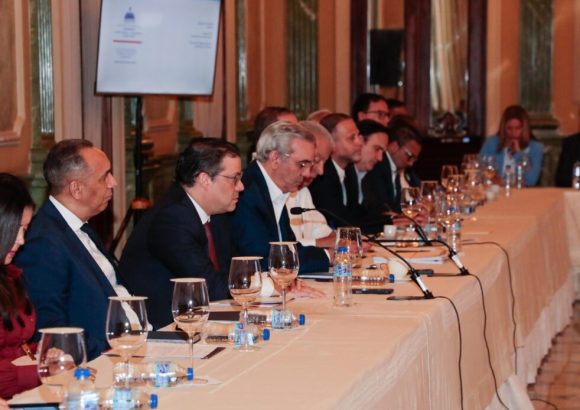
  • Politic : PM convened all Gov member’s to discuss efficiency and republican discipline

    Politic : PM convened all Gov member’s to discuss efficiency and republican discipline

    In a decisive move to break from historical inefficiencies, Haitian Prime Minister Alix Didier Fils-Aimé convened a comprehensive working session with all government members on March 7, 2026. The meeting at Villa d’accueil served as the operational launch of the administration’s governance framework, emphasizing strategic priorities and performance-based governance.

    The gathering transcended ceremonial formalities to establish concrete operational parameters. Ministers received detailed sectoral roadmaps complete with control mechanisms and precise performance indicators designed to ensure rigorous implementation of public policies. The administration’s focus on measurable outcomes represents a significant departure from previous governance approaches.

    Financial governance took center stage during discussions, with particular emphasis on Haiti’s macroeconomic situation and public finance management. New authorizing officers received comprehensive briefings on budget preparation and execution protocols, including critical distinctions between operational and investment budgets. The session clarified disbursement procedures under public financial law and reinforced the complementary roles of financial controllers and public accountants in maintaining expenditure regularity and transparency.

    Government authorities highlighted ongoing efforts to strengthen domestic resource mobilization and consolidate fiscal balance within the framework of the 2025-2026 Finance Law. The Prime Minister articulated expectations for united, competent, and action-oriented governance, mandating quarterly submission of ministerial action plans with performance indicators subject to periodic evaluation during Cabinet meetings.

    This conclave established a new paradigm of republican discipline, demanding accountability through structured performance metrics and transparent financial management practices that prioritize national service over previous operational norms.

  • Dominican Republic reaffirms commitment to confront drug trafficking and terrorism in the Western Hemisphere alongside the United States

    Dominican Republic reaffirms commitment to confront drug trafficking and terrorism in the Western Hemisphere alongside the United States

    DORAL, FL – In a significant display of hemispheric solidarity, the Dominican Republic has declared its unwavering commitment to combat narcoterrorism and drug trafficking alongside the United States. The announcement came from Lieutenant General Carlos Antonio Fernández Onofre, the nation’s Defense Minister, during the pivotal ‘Anti-Cartels of the Americas’ Conference held at the U.S. military headquarters in Miami.

    The high-level gathering, orchestrated by U.S. Secretary of War Pete Hegseth and attended by National Security Advisor Stephen Miller, assembled over twenty regional leaders. Minister Fernández Onofre articulated a stark reality facing the region: “There can be no sustainable development without security. There can be no prosperity without stability.” Emphasizing the Dominican Republic’s critical geostrategic position in the Caribbean, he positioned the nation as a responsible actor confronting transnational organized crime and emerging threats that jeopardize societal safety.

    The conference served as a foundational platform for the forthcoming Shield of the Americas Presidential Summit, scheduled at the Donald Trump National Golf Club in Doral. This subsequent event will see participation from Dominican President Luis Abinader, U.S. President Donald Trump, and numerous other Latin American heads of state. The summit aims to broaden the dialogue to encompass strengthening regional democracy and fostering prosperity, themes repeatedly emphasized by President Trump.

    Security for the upcoming event is unprecedented, orchestrated by a coalition of the U.S. Secret Service, major federal agencies, and the City of Doral Police, transforming Doral into a temporary epicenter of global geopolitical attention. Local officials, including Mayor Christi Fraga, have dedicated immense effort to ensure the event’s success and the dignified reception of hemispheric leaders.

    Minister Fernández Onofre’s address culminated in a powerful call for collective action, stating, “These challenges know no borders; therefore, our response must be collective as a region.” He framed the creation of a hemispheric coalition not as a mere option but as a “historical necessity,” advocating for aligned priorities, shared best practices, and enhanced collaborative opportunities to deter threats and protect citizens across the Western Hemisphere.

  • ULP to call Canadian citizenship experts to testify against gov’t MPs

    ULP to call Canadian citizenship experts to testify against gov’t MPs

    A landmark legal battle challenging the eligibility of two senior St. Vincent and the Grenadines government officials is unfolding in Kingstown’s High Court. The opposition Unity Labour Party (ULP) has launched constitutional petitions against Prime Minister Godwin Friday and Foreign Minister Dwight Fitzgerald Bramble, alleging their Canadian citizenship disqualifies them from holding parliamentary office.

    During a case management hearing presided over by Justice Gertel Thom, both legal teams revealed intentions to summon Canadian citizenship experts as witnesses. Lead counsel for the petitioners, former Trinidad and Tobago prime minister Stuart Young, SC, successfully secured court-ordered disclosure of critical nomination documents (Forms 2 and 3) from both defendants by March 12, 2026.

    The constitutional challenge hinges on Section 26(1)(a) of the SVG Constitution, which prohibits parliamentary members from holding “acknowledgment of allegiance, obedience or adherence to a foreign power or state” through their own actions. The petitioners contend that although Canada is a Commonwealth nation, it constitutes a “foreign power” under constitutional interpretation.

    Justice Thom has established an accelerated timeline for the joint trial, scheduling hearings for July 28-30, 2026, while cautioning against procedural delays. The court must determine two pivotal issues: whether Canada qualifies as a foreign state under constitutional provisions, and the circumstances under which both officials obtained Canadian citizenship.

    The petitioners’ legal team received three weeks to file additional evidence, while the respondents’ counsel secured eight weeks for their evidentiary preparations. The next case management conference is scheduled for May 19, 2026.

    This unprecedented legal challenge marks the first electoral petition against Prime Minister Friday, who has held the Northern Grenadines seat for six consecutive terms since 2001. Both ministers acknowledge acquiring Canadian citizenship voluntarily rather than through birthright, potentially placing their parliamentary qualifications in constitutional jeopardy.

  • Time for “status quo”change in Cuba- Irfaan Ali

    Time for “status quo”change in Cuba- Irfaan Ali

    In a significant foreign policy declaration, Guyana’s President Irfaan Ali has publicly advocated for a fundamental transformation of Cuba’s political system towards democracy and freedom. Speaking on Fox News from Florida on Saturday, March 7, 2026, President Ali asserted that the current political status quo in Cuba cannot persist indefinitely.

    ‘The consensus is clear that the existing situation cannot remain unchanged,’ stated Dr. Ali during his television appearance. ‘We recognize the necessity for modification and acknowledge that implementation will require time.’ The Guyanese leader emphasized that any transition must ultimately benefit the Cuban population through improved living conditions, strengthened rule of law, and greater democratic freedoms.

    President Ali’s remarks coincided with his participation in the Shield of the Americas Summit, where he joined U.S. President Donald Trump and numerous Latin American and Caribbean leaders in signing a proclamation targeting cartel criminal operations.

    This diplomatic positioning occurs against the backdrop of shifting regional alliances, as several Caribbean Community (CARICOM) nations gradually disengage from Cuba’s Medical Brigade program. This disengagement follows U.S. warnings last year about potential visa revocations for government officials and their families from participating countries. American authorities have characterized Cuba’s medical deployment program as a form of forced labor comparable to human trafficking.

    The Caribbean bloc, acknowledging its complex relationships with both Cuba and the United States, recently concluded its February summit in St. Kitts with a commitment to participate in initiatives benefiting the Cuban people while maintaining regional stability.

    Jamaica’s recent termination of its medical cooperation agreement with Cuba has drawn strong criticism from Havana, which accused the Jamaican government of succumbing to U.S. pressure. The Cuban Foreign Ministry maintained that this decision would deprive Jamaicans of quality healthcare and reaffirmed Cuba’s ‘unwavering commitment to the Jamaican people.’

    Meanwhile, Guyana has quietly restructured its engagement with Cuban healthcare professionals by dismantling the Medical Brigade program framework and opting instead for direct employment arrangements.

  • PM Briceño: “Belize Was Not Invited”

    PM Briceño: “Belize Was Not Invited”

    In a significant diplomatic development, Belize found itself excluded from the high-level Shield of the Americas Summit 2026, hosted by U.S. President Donald Trump in Florida. The strategic gathering brought together a carefully selected group of twelve hemispheric leaders to address defense cooperation, governance frameworks, and countermeasures against China’s expanding influence throughout the region.

    Prime Minister John Briceño formally confirmed Belize’s absence from the invitation list, stating simply: “Belize was not invited.” This exclusion places Belize among several notable absentees including regional powers Brazil and Mexico, plus Colombia—historically a cornerstone of U.S. counter-narcotics operations in the hemisphere.

    A pre-summit statement from Marco Rubio of the U.S. Department of State outlined the summit’s objectives, emphasizing the assembly of “strongest like-minded allies” to advance regional freedom, security, and prosperity. The coalition agenda focuses on combating foreign interference, dismantling criminal cartels and narco-terrorist networks, and addressing challenges posed by illegal and mass immigration.

    Confirmed participants include leaders from Argentina, Bolivia, Chile, Costa Rica, the Dominican Republic, Ecuador, El Salvador, Guyana, Honduras, Panama, Paraguay, and Trinidad and Tobago.

    Despite this diplomatic exclusion, Belize maintains active engagement in regional security initiatives. Defense Minister Florencio Marin recently represented the nation at the Americas Counter Cartel Conference 2026 held at the United States Southern Command headquarters. There, Belize joined sixteen other nations in signing a multilateral declaration to enhance border security measures and intensify the fight against transnational drug trafficking organizations.

  • Trump lanceert militaire coalitie tegen drugskartels met Latijns-Amerikaanse leiders

    Trump lanceert militaire coalitie tegen drugskartels met Latijns-Amerikaanse leiders

    In a significant strategic move following recent military operations in Iran, former U.S. President Donald Trump convened leaders from Latin America and the Caribbean in Miami, Florida, to formally establish a multinational military coalition targeting drug trafficking organizations. The Saturday summit, dubbed “Shield of the Americas,” represents a cornerstone of Trump’s broader regional security initiative aimed at dismantling criminal networks operating throughout the Western Hemisphere.

    The gathering brought together at least twelve heads of state, including Argentine President Javier Milei, Salvadoran President Nayib Bukele, Chilean President-elect José Antonio Kast, Honduran President Nasry Asfura, and Ecuadorean President Daniel Noboa. During the proceedings, Trump characterized drug cartels as “savage animals” and signed an official proclamation launching the coalition framework. The former president appointed recently resigned Homeland Security Secretary Kristi Noem as special envoy to the initiative, despite congressional criticism surrounding her prior tenure.

    Analysts view the coalition as serving dual purposes: demonstrating domestic strength amid Middle East instability affecting energy prices, and countering China’s expanding influence across Latin America. The development comes ahead of Trump’s planned March meetings with Chinese President Xi Jinping in Beijing.

    Participants predominantly share Trump’s right-leaning approach to security and migration, favoring aggressive law enforcement tactics over social reforms and promoting private enterprise rather than state intervention. This alignment reflects a broader conservative shift in several Latin American nations as the region navigates competing influences from Washington and Beijing.

    China’s growing economic footprint in the region has raised concerns in U.S. policy circles. bilateral trade reached a record $518 billion in 2024, while Beijing provided over $120 billion in loans supporting infrastructure projects from Argentine satellite stations to Peruvian ports. In response, the U.S. has pressured regional governments to restrict Chinese involvement in critical infrastructure, recently supporting Panamanian actions against a Hong Kong-based company operating in the vital Panama Canal waterway.

    Additional measures include the January capture of Venezuelan President Nicolas Maduro and strengthened sanctions against Cuba, signaling a determined U.S. effort to diminish Chinese regional influence and end what officials characterize as an era of cheap oil in exchange for debt financing.