分类: politics

  • Abinader guarantees support for flour industry to help stabilize bread costs

    Abinader guarantees support for flour industry to help stabilize bread costs

    On the occasion of the 37th Ordinary General Assembly of the Union of Medium and Small Flour Industries (UMPIH) held in Santo Domingo, Dominican Republic President Luis Abinader stood before industry stakeholders to restate his administration’s unwavering backing for the nation’s flour-processing industry. In his address, he outlined a continued package of government assistance, encompassing upgraded equipment access, targeted technical guidance, and coordinated public-private collaboration—all designed to preserve accessible bread prices for households across the country.

    Abinader emphasized that the domestic flour sector holds significant weight in the Dominican Republic’s broader economic ecosystem, noting that its stable operation directly impacts the food security and cost of living for millions of citizens. He committed to ongoing joint problem-solving between the government and flour producers, working collectively to navigate emerging industry challenges and guarantee a consistent, reliable supply of this staple food product. Beyond the flour sector, the president also expressed guarded optimism about the country’s overall economic trajectory, highlighting sustained expansion across key growth drivers including international tourism, export-focused free trade zones, and incoming foreign direct investment.

    Eduardo “Yayo” Sanz Lovatón, the nation’s Minister of Industry, Commerce and Micro, Small and Medium-sized Enterprises (MSMEs), expanded on the administration’s collaborative approach with the flour industry. He detailed that more than 500 targeted training programs focused on business automation have already been rolled out to small and medium flour producers, equipping them with tools to modernize operations and boost long-term competitiveness. Sanz Lovatón framed the domestic flour-processing sector as a strategically critical component of national development, noting that intentional government support will allow firms to scale their output while keeping bread prices fair and sustainable for consumers.

    During the course of the general assembly, UMPIH President José Radhamés Bruno extended public gratitude to the administration for its consistent backing of the sector. He also announced that this year’s gathering is dedicated to Rafael Sánchez, the organization’s pioneering historic leader. Fernando Pinales, president of the Dominican Confederation of Micro, Small and Medium Enterprises (CODOPYME), further commended Abinader for maintaining an open, transparent channel of dialogue between the government and small-scale food producers. In a closing recognition ceremony, President Abinader, Minister Sanz Lovatón, and National Institute of School Meals (INABIE) Executive Director Rafael Adolfo Pérez all received honorary plaques in acknowledgment of their key contributions to the growth and development of the Dominican flour industry.

  • Convicted FTX founder Sam Bankman-Fried seeking Trump pardon

    Convicted FTX founder Sam Bankman-Fried seeking Trump pardon

    Convicted cryptocurrency fraudster and disgraced FTX founder Sam Bankman-Fried has formally submitted a pardon petition to U.S. President Donald Trump, official government records confirm. The 34-year-old, who is currently serving a 25-year federal prison sentence after being found guilty on multiple corruption and fraud charges, has his request listed as pending in the public database of the Department of Justice’s Office of the Pardon Attorney.

    The development comes months after Trump made his position clear in a January interview with *The New York Times*, where he stated he had no intention of granting a pardon to Bankman-Fried. Despite this early refusal hint, the convicted founder moved forward with the formal clemency application, marking the latest chapter in a high-profile financial scandal that shook the global crypto industry.

    Since his inauguration for his second term last year, the Republican president has exercised his clemency power repeatedly in favor of white-collar offenders, drawing ongoing public and media attention. Most recently, he pardoned a former Republican U.S. representative from Indiana who had been convicted of insider trading, a decision that fueled speculation about what cases he may prioritize for clemency going forward.

    Once hailed as a wunderkind of the digital finance space, Bankman-Fried built his empire at a staggering pace. After co-founding FTX as a small startup crypto trading platform in 2019, he grew the exchange into the world’s second-largest player in the sector, amassing a multi-billion dollar personal fortune before he turned 30. That meteoric ascent collapsed spectacularly in November 2022, when a massive bank run of customer withdrawals exposed that roughly $8 billion in client funds had been secretly and illegally diverted from FTX to Bankman-Fried’s private hedge fund, Alameda Research.

    A federal jury in New York convicted him on seven counts of fraud, embezzlement, and criminal conspiracy in November 2023. In addition to his pardon petition, Bankman-Fried has also filed an appeal challenging the guilty verdict, marking the next step in his ongoing legal battle.

  • Trump gets cold hometown welcome at NBA finals in New York

    Trump gets cold hometown welcome at NBA finals in New York

    NEW YORK – When former President Donald Trump stepped into the public spotlight via the big screen at Madison Square Garden during the national anthem ahead of Monday’s pivotal NBA Finals game, the response from thousands of fans inside the storied New York arena was immediate: loud, sustained boos. The high-profile appearance of the Republican leader at the matchup between the New York Knicks and San Antonio Spurs triggered a massive, unprecedented security operation that upended game-day traditions for the city’s basketball-crazed fanbase and drew sharp criticism from local officials and residents.

    Trump, a self-proclaimed lifelong Knicks fan and native New Yorker, watched the game from a private executive suite. But his presence transformed one of the city’s most iconic public gathering spaces into a locked-down security zone, a shift that disrupted the jubilant celebrations that had defined the first two games of the series. The New York Police Department (NYPD) and U.S. Secret Service implemented sweeping restrictions: unauthorized members of the public were barred from accessing several blocks surrounding the arena, public watch parties immediately outside Madison Square Garden were canceled entirely, ticket holders were ordered to arrive two hours early to clear airport-style screenings, and all bags were banned from the venue.

    On the ground, AFP reporters observed a 10-foot temporary fence ring portions of the arena, with hundreds of heavily armed Secret Service agents and NYPD officers deployed to secure the perimeter. Counter-drone technology was also added to the security arsenal, a precaution that comes as Trump has survived three separate alleged assassination attempts in less than two years. This operation marks one of the largest security deployments for a presidential public appearance in New York in recent memory.

    “Our message is simple: celebrate the Knicks, but avoid the MSG area tonight if you do not have tickets for the game,” NYPD Commissioner Jessica Tisch told reporters ahead of the tip-off. Secret Service Special Agent Matt McCool added that the agency’s core priority was clear: “to ensure everyone attending the game can enjoy the game and have a safe experience, while we carry out our responsibility to protect the President of the United States.”

    The sweeping disruptions sparked swift pushback from New York’s Democratic leadership and ordinary residents. “During one of the best moments NYC has enjoyed in decades, (Trump) makes it all about himself. Trump should LEAVE US ALONE! He’s not wanted here,” Senate Minority Leader Chuck Schumer wrote on social media platform X. As Trump’s motorcade traveled through Manhattan to the arena, protesters gathered along the route holding signs reading “Trump must go,” and at least two people flipped off the passing vehicles.

    Even some fans who supported Trump’s attendance acknowledged the disruption put a damper on the historic moment for the Knicks, who are chasing their first NBA championship since 1973 and have already built a 2-0 lead in the best-of-seven series. Forty-three-year-old Knicks fan Anthony Pulley told AFP: “I think it sucks. I think it really put a damper on all the watch parties. But it’s pretty cool he wants to show up and be a part of it.”

    Despite sky-high ticket prices that put attendance out of reach for most New Yorkers, the arena was packed to capacity for the game, with a slew of celebrity fans filling the courtside seats. New York Mayor Zohran Mamdani was among the attendees, confirming to reporters he paid roughly $1,000 for his seat.

    The security operation comes less than 24 hours after a stabbing incident at Penn Station, the major transit hub located directly beneath Madison Square Garden, that left six people wounded. Police have stressed the attack, carried out by an emotionally disturbed male suspect, has no ties to terrorism and does not represent a broader threat to the NBA Finals event. Monday’s appearance marks Trump’s second visit to Madison Square Garden since his 2024 election victory, following a November trip to watch a UFC fight at the venue; he previously held a campaign rally at the iconic arena during his 2024 presidential run.

  • President says Iran still at negotiating table after attacks on Israel halted

    President says Iran still at negotiating table after attacks on Israel halted

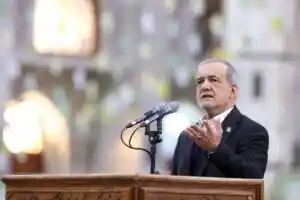
    TEHRAN, Iran – In a public statement posted to the social media platform X on Monday, Iranian President Masoud Pezeshkian has clarified Tehran’s position following a recent flare-up of cross-border hostilities with Israel, the first armed exchange between the two adversaries since a truce was reached back in April. After Iran halted its targeted attacks on Israel, Pezeshkian emphasized that the country maintains a balanced approach to national security, framing diplomacy and defensive readiness as two complementary pillars of Iranian state power. “Diplomacy and defence are the two wings of national power; we have neither left the battlefield nor the negotiating table,” the president wrote in his post. He added that Tehran will stand firm against all external pressure, stressing that the Iranian government will not back down in the face of any threat to the country’s national interests. The statement comes amid heightened regional tensions that have reignited international calls for renewed diplomatic efforts to prevent a wider escalation of conflict across the Middle East. By publicly committing to both continued dialogue and unwavering defensive preparedness, Pezeshkian’s administration has signaled it intends to pursue a dual strategy that preserves the option for negotiation while rejecting any attempts at intimidation from regional rivals.

  • Carolina Mejía declares herself ready to take on the presidency

    Carolina Mejía declares herself ready to take on the presidency

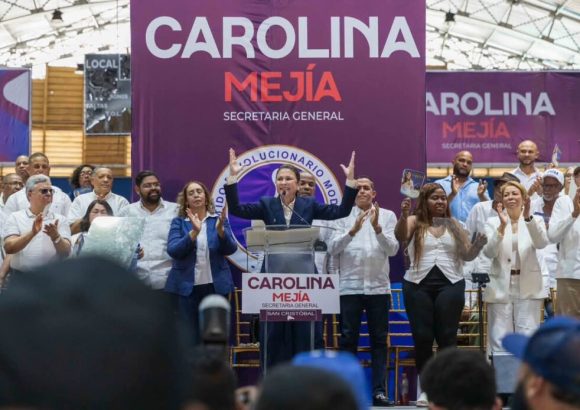
    In a gathering of party leadership and grassroots supporters focused on accountability held in San Cristóbal, Carolina Mejía — general secretary of the Modern Revolutionary Party (PRM) and a leading contender for the party’s upcoming presidential nomination — has publicly reaffirmed her readiness to embrace new national political challenges and sustain her work to advance the Dominican Republic’s progress.

    Speaking directly to assembled PRM members at the event, Mejía pushed back against narratives that frame internal party ambition as a top priority, outlining that the organization’s core mission is rooted in two non-negotiable goals: protecting the PRM’s long-term institutional future and driving inclusive national development. She underscored that activists who have worked tirelessly to deliver the PRM’s electoral wins deserve equal access to the benefits of those victories, and restated her unwavering commitment to upholding the foundational values that have allowed the party to expand its influence and legitimacy across the country.

    Mejía reflected on her eight-year tenure as the PRM’s general secretary, a period during which she worked closely with party figure José Ignacio Paliza to build out the party’s national organizational infrastructure. She noted that this collaborative institutional strengthening directly paved the way for the PRM’s two consecutive presidential election victories, which have put incumbent President Luis Abinader in office. She also made a formal pledge to continue supporting the Abinader administration’s policy achievements, while working to build a more cohesive, connected political organization that bridges gaps between national leadership and local communities.

    The accountability event drew a cross-section of key political stakeholders from across the San Cristóbal region, including sitting local officials, national legislators, municipal government leaders, and grassroots party organizers. Mejía attributed the PRM’s steady national expansion not to top-down leadership alone, but to the consistent dedication of the party’s base: grassroots members, young activists, women organizers, and local community leaders. She closed by emphasizing that the loyalty and commitment of these on-the-ground actors will remain indispensable to both strengthening the PRM as an institution and moving forward transformative national development goals.

  • Bahamas urges citizens to avoid all non-essential travel to Cuba

    Bahamas urges citizens to avoid all non-essential travel to Cuba

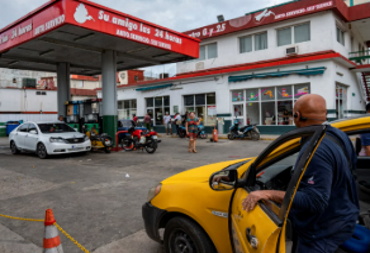
    Amid a deepening economic and infrastructure crisis driven by tightened U.S. sanctions, the government of the Bahamas has issued an urgent advisory urging its citizens to cancel all non-essential travel to neighboring Cuba. The official statement from Nassau outlines ongoing systemic disruptions across Cuba that have upended daily life for residents and created major risks for foreign visitors. These disruptions include persistent, widespread power outages, acute fuel shortages, broken-down public and private transportation networks, and limited access to basic necessities including food, medicine and essential services.

    The Bahamas Ministry of Foreign Affairs emphasized that conditions on the island can shift rapidly and without warning, advising Bahamian nationals already in Cuba or planning travel to maintain constant vigilance and stay updated on evolving local developments. Beyond safety warnings, the advisory also lays out strict entry requirements that all Bahamian travelers must follow to avoid immigration complications. All visitors must hold a valid passport with a minimum six-month validity remaining from their date of entry, at least one blank page for entry and exit stamps, pre-confirmed proof of accommodation, and a confirmed return or onward travel ticket. A Cuban entry visa, valid for stays of up to 90 days, is mandatory for all Bahamian citizens, and the government stressed that all visitors must adhere fully to Cuban immigration laws and regulations.

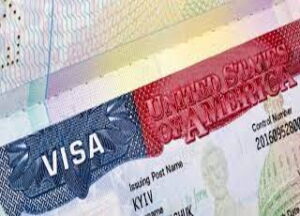
    A key part of the advisory focuses on Cuba’s unique financial landscape, which has been drastically altered by decades of U.S. trade embargo and recent sanctions expansions. Cuba operates almost entirely on a cash economy, with extremely limited access to international banking services. As of June 6, all international Visa and Mastercard transactions have been suspended across the country, meaning travelers cannot rely on foreign-issued credit or debit cards for in-person purchases or cash withdrawals at ATMs. The Bahamian government urges all visitors to bring enough cash, in either U.S. dollars or euros, to cover every expected expense for the full length of their stay. It also reminds travelers of strict currency declaration rules: any amount of cash exceeding 5,000 U.S. dollars must be declared to Cuban customs officials upon entry, and any amount above this threshold carried during departure must also be reported to local authorities. Failure to disclose excess cash can lead to an immediate seizure of all undeclared funds by authorities, the advisory warns.

    The advisory also urges Bahamian travelers to avoid all public demonstrations, protests and large public gatherings, and to comply with any instructions issued by local Cuban security and government officials at all times.

    The current crisis gripping Cuba stems directly from recent shifts in U.S. foreign policy toward the island and its long-time ally Venezuela. After the U.S. moved to oust Venezuelan President Nicolas Maduro from office in January, it imposed a new, stricter oil embargo on Cuba. For years, Venezuela had been Cuba’s primary, discounted supplier of crude oil, and the cutoff of this critical supply has created a crippling, nationwide crisis that has exacerbated all of the current infrastructure and supply chain problems.

    Cuba’s ambassador to the Bahamas, Marcof Sanchez, recently described the situation in his country as extremely severe during an appearance on a local Bahamian radio program. He called on Caribbean and regional nations to show solidarity with Havana in opposing what he framed as U.S.-led military and economic aggression against the island. Sanchez warned that any escalation of U.S. military aggression toward Cuba would have immediate, far-reaching negative consequences for the entire Caribbean region. He also reaffirmed the Cuban government’s long-standing position that it is open to holding respectful, constructive dialogue with the United States, which has maintained a sweeping trade and economic embargo against Cuba for more than six decades.

  • Third time unlucky?

    Third time unlucky?

    Amid months of nationwide U.S. political upheaval driven by congressional redistricting, a heated intra-Democratic primary battle has erupted in Florida’s newly redrawn 20th Congressional District, where Jamaican-American candidate Dale Holness is mounting his third bid for the seat and criticizing a veteran white Democrat’s decision to enter the race.

    Holness, a former Broward County mayor and commissioner born in Jamaica, shared his deep disappointment with Debbie Wasserman Schultz’s decision to abandon her long-held 22nd District seat to run in the 20th, a heavily Democratic constituency with a voting population that is nearly 50% Black and home to a large community of Jamaican and Caribbean immigrants. In an exclusive interview with the *Jamaica Observer*, Holness argued that the 21-year congressional incumbent should stay in her original district, where she boasts $2.5 million in cash on hand and deep, decades-long roots with local voters. That move, he contended, would actually strengthen the Democratic Party’s overall chances of picking up more seats across Florida, as Wasserman Schultz would remain a far more competitive candidate in her home territory than she would be as a newcomer to the 20th.

    Wasserman Schultz’s internal campaign polls have claimed that the incumbent enjoys strong favorable ratings from the district’s Black electorate, but Holness has pushed back on that data, noting that poll outcomes are heavily shaped by sampling choices and question framing. More critically, he emphasized that the veteran lawmaker’s entrance into the race has already split the Democratic field and sparked significant anger and anxiety among the district’s Black community, who have raised widespread questions about whether the race will erode long-standing Black representation for the district.

    In response to the split, negotiations have been ongoing to consolidate support behind a single Black candidate to avoid splitting the vote, and Holness confirmed that a final agreement could come as soon as the Monday following the interview. Already, two Black candidates have exited the primary, with one set to launch a bid for a different congressional seat. Holness, who has collaborated with Wasserman Schultz on local projects in the past, acknowledged that every eligible candidate has a constitutional right to run for office, and despite his concerns, he remains optimistic about his own path forward.

    As of the first fundraising quarter before Wasserman Schultz joined the race, Holness led all candidates in campaign contributions, raising $312,000 with zero financial support from political action committees (PACs). By contrast, Federal Election Commission filings show Wasserman Schultz has already received more than $500,000 in PAC contributions for her 20th District bid. When asked whether he would consider stepping aside to support a stronger unified Black candidate, Holness said he would only withdraw if he becomes convinced another candidate is better positioned to win and serve the district. He emphasized his deep, long-standing ties to the 20th District, noting he has remained rooted in the community through its toughest challenges and has a comprehensive policy agenda to improve local quality of life.

    This marks Holness’ third attempt to win the seat: he first ran in a 2021 special election, losing by a narrow margin of just five votes to Sheila Cherfilus-McCormick. He lost again to McCormick in 2022, when he was vastly outspent by the incumbent. McCormick resigned from Congress in April 2024 after facing ethics investigations, and was later indicted by a federal grand jury on multiple fraud charges connected to the misuse of $5 million in Federal Emergency Management Agency disaster funds, some of which prosecutors allege was diverted to her 2022 campaign. McCormick has repeatedly denied all wrongdoing, and has announced she will still run for re-election.

    The winner of the August 18 Democratic primary is all but guaranteed to win the November 2026 general election in the deep-blue district. If Holness prevails, he will make history as the first Jamaican-born person ever elected to the U.S. Congress. Currently, the only congressperson of Jamaican descent serving in Washington is New York’s Yvette Clarke, who was born in the United States to Jamaican immigrant parents.

  • US imposes visa restrictions on Nicaraguans after activist death

    US imposes visa restrictions on Nicaraguans after activist death

    In a sharp rebuke to the Nicaraguan government of Daniel Ortega and Rosario Murillo, the U.S. State Department announced new visa restrictions on Monday targeting more than 100 Nicaraguan officials and their immediate family members. The punitive measure comes in direct response to the death of 73-year-old Brooklyn Rivera, a detained Indigenous political leader who died in government custody late last month, a case that has drawn international condemnation.

    Rivera, a respected former congressman and head of Nicaragua’s Miskito Indigenous community, was taken into custody by Ortega’s administration in September 2023. From the day of his arrest, the left-wing authoritarian government never publicly outlined the formal charges against him. It was not until months later, in November 2024, that local press reports confirmed Nicaraguan authorities had informed the UN Office of the High Commissioner for Human Rights that Rivera’s congressional immunity had been revoked to open an investigation into allegations of serious crimes including treason.

    During his detention, Rivera was denied access to both legal representation and his family, a status that led Amnesty International to categorize him as a prisoner of conscience. His declining health became a global point of concern after the Nicaraguan government released photos showing the severely emaciated Rivera connected to a ventilator, prompting the U.S. to formally call for his immediate release. On May 30, Rivera died in custody; the Nicaraguan Ministry of Health announced his death the following day, attributing it to organ failure caused by a bacterial infection stemming from a prior COVID-19 infection. He was buried within 24 hours without any of his family members present, a detail that amplified international outrage.

    Speaking from exile in Costa Rica, Rivera’s daughter Tininiska Rivera told AFP the intentionally released photos of her dying father were a deliberate show of force. “They don’t care how they’re perceived abroad, they just want to demonstrate their control and power inside Nicaragua,” she said last week. The United Nations Secretary-General Antonio Guterres issued a formal call for an independent investigation into Rivera’s death on June 2.

    In his official statement announcing the new visa restrictions, U.S. Secretary of State Marco Rubio held the ruling Murillo-Ortega regime directly accountable for Rivera’s “horrific death” as a political prisoner. “The United States will not ignore the Murillo-Ortega dictatorship’s responsibility,” Rubio emphasized. This latest action brings the total number of Nicaraguan officials and their family members subject to U.S. visa bans to more than 2,350, all sanctioned for their complicity in enabling the authoritarian rule of Ortega and his wife, Vice President and co-ruler Rosario Murillo. The State Department did not release the names of the 100+ newly targeted individuals.

    The current crisis between Washington and Managua is rooted in more than 17 years of Ortega’s rule. An 80-year-old firebrand Marxist who rose to prominence leading a revolution against a U.S.-backed autocrat in the 20th century, Ortega has retained power since 2007 through a series of elections widely decried as unfair and non-democratic by the international community. He has faced consistent accusations of brutal repression to crush all political dissent, a crackdown that has pushed the small, poor Central American nation into deeper international isolation. Nicaragua’s government is already subject to sweeping economic and political sanctions from both the United States and the European Union. Since the crackdown on opposition intensified, thousands of Nicaraguans have fled into exile, hundreds of perceived and actual political opponents have been jailed, and dozens have been stripped of their Nicaraguan citizenship.

  • Rural communities not forgotten, says Holness

    Rural communities not forgotten, says Holness

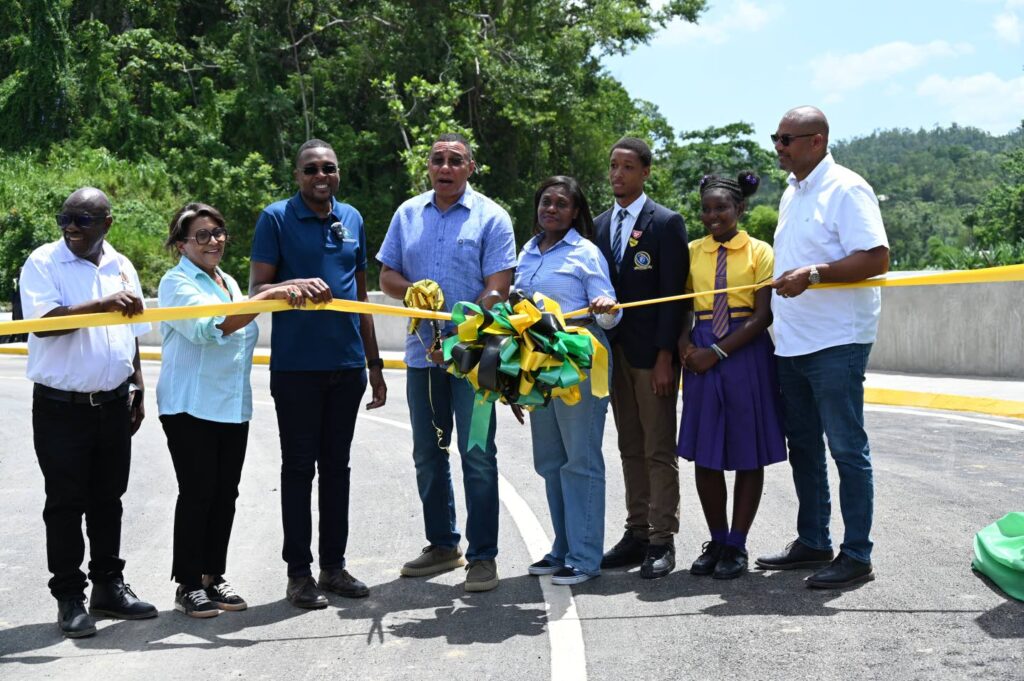
    TROY, Trelawny — At the official inauguration of the new $230-million Troy Bridge last Friday, Prime Minister Dr Andrew Holness delivered a public reassurance to rural Jamaican residents, pushing back against widespread perceptions that deep-rural communities have been sidelined from national infrastructure investment and economic growth.

    The span connects the Manchester North Western constituency, represented by Opposition Member of Parliament Mikael Phillips, to Trelawny Southern, making it a critical transportation link for thousands of cross-community residents, farmers, and commuters. During the opening ceremony, Phillips used the occasion to raise a longstanding concern from rural constituents: that major infrastructure spending has disproportionately focused on urban hubs and large towns, leaving marginalized deep-rural areas underfunded and disconnected.

    “Kingston is not Jamaica alone, Mandeville is not Manchester alone, Falmouth is not Trelawny alone,” Phillips told the gathered crowd. He made a direct appeal to Minister of Works Robert Morgan to ensure deep-rural communities receive fair representation in national road development planning, urging policymakers to set aside the urban-centric approach to infrastructure investment: “Remember us in deep-rural Jamaica whenever you’re crafting that road programme, because we want some of it too.”

    In response to Phillips’ appeal, Holness acknowledged that rural communities have long carried a sense of being overlooked by national governments, a feeling that erodes personal dignity, community respect, and public confidence in state institutions. He made clear the current administration’s policy priorities directly counter this trend. “It’s a loss of dignity, a loss of respect, a loss of confidence — and let me assure you, your Government does not forget the rural communities,” the prime minister stated.

    Holness outlined the government’s core objective for rural infrastructure: to expand connectivity so rural residents can easily access jobs, open markets, and critical public services, while fully integrating these communities into the country’s core economic networks. “What Government is trying hard to do is to rapidly integrate the rural communities into the nerve centres of economic activities,” he explained. Improved rural road and bridge networks, he added, create flexible opportunity: they allow residents to make their homes in rural areas while accessing employment in urban hubs, and cut transit costs and time for agricultural producers moving goods to domestic markets. The $230-million investment in the Troy Bridge itself, he emphasized, serves as tangible proof of the government’s commitment, not just empty rhetoric: “We’re not forgetting rural communities — and the $230 [million]-odd spent here is a symbol that you are top of mind and not forgotten.”

    Works Minister Robert Morgan, who himself represents a rural constituency, echoed Holness’ reassurance, noting that rural development remains a central priority for the administration. He shared details of two major upcoming infrastructure initiatives that will benefit rural Jamaica. First, last Monday, the Jamaican Cabinet approved the Accelerated Bridge Project, a multi-year plan that will replace more than 50 deteriorating or destroyed bridges across the island over the next two and a half years. The western region of Jamaica, which suffered the worst damage from Hurricane Melissa, will receive the majority of funding and support under the program. Second, the $280-million Troy to Warsaw Road full rehabilitation project will move forward under the government’s Shared Prosperity through Accelerated Improvement to our Road Network (SPARK) initiative. Unlike patchwork repairs, this project will deliver a full, long-lasting upgrade to the key rural thoroughfare that serves residents of Troy, Manchester, and Trelawny. Morgan added that more rural infrastructure projects will be announced for the region in the coming weeks.

    Alongside broader policy announcements, the opening ceremony saw cross-party praise for the completed bridge. Opposition MP Phillips was joined by ruling Jamaica Labour Party representatives Trelawny Southern MP Marisa Dalrymple Philibert and Falmouth mayor Councillor Junior Gager, who represents the local Warsop Division, in welcoming the new span.

    Gager, a Troy native who resides within walking distance of the bridge, recalled the widespread disruption that followed the original structure’s 2021 collapse, triggered by flooding from Tropical Storm Grace. For years after the collapse, the broken span created daily hardships for everyone who relied on it: local residents, commuting workers, farm producers, students traveling to school, teachers, and small business owners. He joked that the constant requests for repairs from frustrated constituents became a daily part of his life: “I live in this little district, I was born here. And when this bridge collapsed, many times you hear the people passing my place, Prime Minister, I hear dem bawl out, ‘Gager, yuh nah fix the bridge?’ So I am more than happy,” he said to laughter from the gathered audience.

    Dalrymple Philibert highlighted the steady commitment the government demonstrated to see the project across the finish line, even in the face of significant headwinds: global supply chain-driven rising construction costs, unforeseen construction delays, and widespread damage from Category 5 Hurricane Melissa. This commitment, she argued, reflects the administration’s understanding of just how critical the bridge is to the daily lives and economic vitality of Troy and surrounding communities. “This morning as we cut the ribbon, we do so with gratitude to the engineers, contractors, workers, public servants, and community members whose work made this achievement possible to everyone gathered here today,” she said.

    The new Troy Bridge opening comes as the Jamaican government moves forward with plans to consolidate road governance under a new One Road Authority, an institutional reform designed to modernize, streamline, and strengthen the management, regulation, and expansion of the country’s entire national road network.

  • Pope promises abuse victims Church will do more to change

    Pope promises abuse victims Church will do more to change

    MADRID, Spain – On the third day of his seven-day state visit to Spain, Pope Leo XIV held a pivotal closed-door meeting with six survivors of clergy-committed sexual violence, where he pledged the Catholic Church would deepen its institutional reforms to address the long-running abuse crisis that has shaken global confidence in the Church hierarchy, Vatican officials confirmed Monday.

    The hour-long gathering, held at the Vatican’s apostolic nunciature in Madrid, gave each survivor space to share their harrowing personal accounts of abuse and submit concrete recommendations to strengthen the Church’s response to these devastating cases. In a formal statement released after the meeting, the Vatican noted that Pope Leo committed to centering these proposals as a foundation for expanded action, with the goal of transforming the Church into a truly safe and spiritually healthy environment for all.

    Earlier the same day, speaking to a assembly of Spanish bishops, the pontiff described clergy sexual abuse as a devastating “scourge” that demands unflinching response: “We must meet this crisis with intentional listening, radical transparency, full accountability for perpetrators, just reparations for survivors, and a relentless commitment to prevention and a culture of care that puts vulnerable people first.”

    The meeting came amid public criticism from victim advocacy groups, who slammed the pontiff for excluding broader representation of survivors from the gathering. Speaking to AFP outside the nunciature, Juan Cuatrecasas, spokesperson for leading Spanish survivor organization Infancia Robada (Stolen Childhood), expressed deep disappointment: “We are disappointed that the pope, instead of listening to a sufficiently large and solid representation of victims, prefers to leave us out.”

    The scale of the abuse crisis in Spain is staggering: a 2023 official report from Spain’s national ombudsman estimated that at least 200,000 minors have suffered sexual abuse at the hands of Catholic clergy in the country since 1940. After decades of institutional denial and opacity from the Spanish Catholic Church, the national government led by Prime Minister Pedro Sanchez reached a landmark compensation agreement with the Spanish Church in March of this year, marking a major turning point for survivor justice.

    Pope Leo, who has repeatedly acknowledged the ongoing harm of the abuse scandal, reiterated Saturday that the crisis remains “an open wound” for the global Catholic community, which counts 1.4 billion adherents worldwide.

    Monday’s schedule also included a historic first: the 70-year-old, U.S.-born pontiff became the first pope to address the Spanish parliament, where his remarks received an extended standing ovation from lawmakers. In his address, he turned to pressing global issues, starting with the growing migration crisis that has reshaped European politics. He called for coordinated global action to address the “tragic drama” of forced migration, urging world leaders to create “safe and legal pathways” for migration and ensure all displaced people receive “a respectful welcome and real opportunities for integration.”

    His remarks align with the relatively liberal immigration stance of Prime Minister Sanchez, whose government has faced intense political pressure over the policy from the conservative Popular Party and far-right Vox, which is now Spain’s third-largest political party. The pope is set to travel to the Canary Islands later in his visit, a major Atlantic entry point for irregular migrants traveling from North Africa to Europe, where he will honor the thousands of migrants who have died during the dangerous ocean crossing.

    The pontiff also used the parliamentary address to make a forceful case for global peace, just hours after a deadly exchange of fire between Israel and Iran threatened to collapse a fragile regional ceasefire. Echoing his longstanding anti-war position – which has drawn fierce criticism from former U.S. President Donald Trump, alongside criticism of Sanchez – Pope Leo called for “patient dialogue” over armed conflict and escalating rearmament across Europe and the globe. “Weapons may impose a temporary silence but they can never build a genuine and lasting peace,” he told lawmakers.

    Closing his address, the pontiff reaffirmed the Catholic Church’s anti-abortion and anti-euthanasia stance, urging Spanish legislators to defend life “from conception to its natural end.” This position puts him at odds with Sanchez’s left-wing government, which has legalized euthanasia under regulated conditions and is pushing to enshrine abortion rights in the Spanish constitution.

    To cap off his full day of engagements, Pope Leo was scheduled to meet with the Madrid diocesan community at Real Madrid’s iconic Santiago Bernabéu Stadium. AFP correspondents on the ground reported that more than 80,000 supporters filled the venue an hour and a half before his expected arrival, singing hymns, waving flags of Spain, the Vatican and Latin American nations, and chanting “We are lions! We are lions!” – a playful reference to the name Leo, which means lion in Spanish.

    Thus far, the papal visit has drawn massive public turnout: event organizers reported that more than 1.5 million worshippers attended an open-air mass Pope Leo celebrated in central Madrid on Sunday.

    Upcoming stops on the visit include Barcelona on Wednesday, where the pontiff will bless the newly completed tower of the Sagrada Familia Basilica, Antoni Gaudí’s unfinished architectural masterpiece that recently became the tallest church in the world. The visit will conclude Thursday and Friday in the Canary Islands, where Pope Leo will be joined by Prime Minister Sanchez for formal engagements.