分类: politics

  • Barbados to launch app to report potholes

    Barbados to launch app to report potholes

    The government of Barbados is preparing to roll out an innovative digital platform designed to bridge the gap between residents and public service providers, putting the power to report community issues directly into the hands of citizens through their smartphones.

    Named the Pearly App, the new tool is scheduled for its official public launch this coming Tuesday. Developed under the Mia Mottley administration, the platform gives users flexible, user-friendly options to document the issues they encounter: residents can attach geotagged location data, clear photos, video footage, and detailed written descriptions of problems ranging from dangerous potholes on public roads to unplanned water service outages and missed municipal waste collection, alongside a wide range of other non-emergency and urgent public service concerns.

    Once a report is submitted through the app, the system automatically routes the request to the appropriate government agency responsible for addressing that specific type of issue, cutting down on bureaucratic red tape that often delays resolution. Beyond basic reporting capabilities, the platform also includes built-in features that allow citizens to track the progress of their submitted requests in real time, as well as a dedicated function for submitting emergency reports when urgent public safety or service issues arise.

    Officials from the administration emphasized that the launch of the Pearly App is not just a standalone tech project, but a core component of the government’s broader ongoing strategy to modernize how public services are delivered to the Barbadian public. By leveraging accessible digital technology, the government aims to increase transparency, speed up response times to community concerns, and create more meaningful, ongoing engagement between residents and their government.

  • New vehicle expected to improve response times and visibility in Delices

    New vehicle expected to improve response times and visibility in Delices

    In a formal ceremony held on Friday, June 5, 2026, Dominican Police Commissioner Lincoln Corbette formally transferred ownership of a newly purchased police service vehicle to the Delices area Police Station. Per an official release issued by the Commonwealth of Dominica Police Force (CDPF), the keys to the vehicle were accepted by Constable Dave Robinson, a serving officer assigned to the Delices outpost.

    The official statement framed the handover as tangible proof of the current government’s track record of fulfilling its public commitments. It underscored that this addition to the station’s fleet is part of the Skerrit administration’s sustained pledge to ensure every law enforcement outpost across the island nation has the full set of resources required to deliver efficient, responsive public service to local communities.

    CDPF officials outlined three core improvements the new vehicle will bring to local policing. First, it will cut down response times to emergency calls and incident reports, allowing officers to reach scenes far faster than with outdated, unreliable transport. Second, it will boost regular police presence across the Delices service area, increasing visibility that both deters potential crime and reassures local residents. Finally, the enhanced mobility will strengthen ongoing law enforcement work to protect the well-being and security of both Dominican citizens and international tourists visiting the region.

    The statement closed by reaffirming the CDPF’s long-term commitment to collaborative partnerships with local communities and cross-sector stakeholders, with the shared ultimate goal of building a safer, more secure Dominica for every person who lives and travels in the country.

  • Ex-Ombudsman Files Historic Constitutional Claim Against GOB

    Ex-Ombudsman Files Historic Constitutional Claim Against GOB

    In a groundbreaking legal action that tests the boundaries of institutional independence in Belize, retired Major H. Gilbert Swaso, the country’s former Ombudsman, has submitted a landmark constitutional claim against the Government of Belize. The suit alleges that the state violated its own founding constitution by disregarding the legally mandated terms and protections of the Ombudsman’s office, and that it blocked the renewal of Swaso’s appointment as direct retaliation for a high-stakes Freedom of Information ruling that went against the sitting government.

    The dispute stretches back to a Freedom of Information request filed by Jeremy Enriquez, a prominent local public transparency activist. Enriquez sought the release of details surrounding public funds spent on legal fees paid to outside lawyers hired by the Attorney General’s office. The legal work in question was tied to a controversial redistricting process, a matter widely recognized as politically sensitive in Belize’s domestic politics.

    As the sitting Ombudsman at the time, Swaso was tasked with reviewing the Attorney General’s decision to deny Enriquez’s disclosure request. Exercising the statutory authority granted to his office, Swaso ruled in favor of transparency, ordering the release of both the identities of the contracted legal practitioners or firms and the full sum of public money allocated to their services.

    In comments on the upcoming legal challenge, Swaso defended his original ruling, saying: “I was of the view that the government’s expenditure of public funds — that is, taxpayers’ money — was not a matter that should be kept secret from the people because it was, after all, their money that was being spent. It was therefore necessary for the government to account to the people for same.”

    Swaso emphasized that his 202X ruling was made in good faith, aligned with the core mandates of his role to uphold government accountability. He now maintains that the government’s documented displeasure with that decision was the determining factor behind its refusal to extend his appointment when his term expired.

    The former ombudsman argues that his non-renewal was clearly punitive in nature, designed to send a message to independent public officials. In his constitutional filing, he notes that penalizing any public officeholder for carrying out their statutory duties fairly and without fear undermines the very foundation of the Ombudsman’s constitutionally guaranteed independence. Without protection from retaliation for unpopular but legally sound rulings, the office cannot fulfill its role as a check on executive overreach, Swaso contends.

    Full unredacted details of the constitutional claim will be aired during a special segment on News 5 Live’s 6pm broadcast the same day, with on-the-ground analysis from legal correspondents and interviews with policy experts.

  • Immigration advocates hail court rejection of Trump’s ‘unlawful’ immigration restrictions

    Immigration advocates hail court rejection of Trump’s ‘unlawful’ immigration restrictions

    Two separate federal court rulings have invalidated controversial, unlawful immigration policies implemented during the Donald Trump administration, drawing widespread applause from immigration advocates, legal organizations and state officials who have pushed back against the administration’s restrictive, anti-immigrant agenda.

  • Abinader meets with private sector to discuss global price volatility

    Abinader meets with private sector to discuss global price volatility

    SANTO DOMINGO – On Monday, Dominican Republic President Luis Abinader gathered top leaders from the country’s key productive sectors for a high-stakes meeting at the National Palace, where officials and private representatives aligned on strategies to buffer the national economy and everyday consumers from the ripple effects of unpredictable global market shifts.

    The closed-door working session centered on three core priorities: updating the national standardized price table, evaluating the latest trends unfolding across international commodity markets, and coordinating targeted interventions that can curb the spillover damage of global economic volatility. A particular focus of the discussion was addressing ongoing swings in global oil and natural gas prices, a key driver of inflation and cost of living pressures that have impacted economies around the world in recent years.

    Speaking after the meeting, Abinader highlighted that sustained, open dialogue between the national government and the country’s commercial, industrial, agricultural, and broader business communities has already proven instrumental in forging broad consensus. These cross-sector discussions have also produced actionable recommendations that reinforce existing government policies aimed at insulating the Dominican economy from external economic shocks, he noted.

    The president emphasized that ongoing collaboration between public officials and leading organizations representing business, manufacturing, trade, and agriculture remains non-negotiable for protecting the nation’s hard-won economic stability, and shielding household budgets from the weight of international economic pressures. Attendees at the gathering included multiple senior government officials, alongside leadership representatives from the Dominican Republic’s most prominent industry groups: the National Business Council (CONEP), the Association of Industries of the Dominican Republic (AIRD), the National Business Owners Organization (ONEC), the National Union of Agricultural Producers (ÚNASE), and the Dominican Agribusiness Board.

  • Purkiss accuses Bartlett of promoting ‘diversification myth’

    Purkiss accuses Bartlett of promoting ‘diversification myth’

    KINGSTON, Jamaica — In a sharp rebuke delivered during Tuesday’s Sectoral Debate in the House of Representatives, opposition tourism spokesperson Andrea Purkiss has called into question the Jamaican government’s flagship tourism diversification strategy, accusing incumbent Tourism Minister Edmund Bartlett of peddling a harmful “diversification myth” that has wasted hundreds of billions of Jamaican dollars with little to show for the investment. For years, Bartlett has framed the island nation’s overreliance on the U.S. travel market — which supplies more than 80% of all visitors to Jamaica — as an existential economic vulnerability. The minister first amplified this concern during the COVID-19 pandemic, when border closures and travel restrictions in North America brought Jamaica’s core tourism industry to a near-standstill. On multiple occasions, he has argued that over-dependence on U.S. and Canadian travelers leaves Jamaica exposed to external shocks ranging from foreign policy changes to flight cancellations and public health advisories, framing diversification as not just a policy choice, but a matter of long-term economic survival. As the centerpiece of his five-point plan to grow the tourism sector, Bartlett pledged to open new visitor corridors across emerging markets: the Middle East, Africa, South Asia, and other regions disconnected from North America’s economic cycles. But Purkiss says the results of years of investment tell a very different story. Since 2015, the tourism ministry has allocated a total of J$2.86 billion to so-called “seat support” programs — taxpayer-funded subsidies designed to incentivize airlines to add new routes to these non-traditional markets. Purkiss argues that this massive spending has produced negligible returns. To back up her critique, she laid out concrete arrival data for each of Bartlett’s priority emerging markets: For the Middle East corridor Bartlett promoted during high-profile trips to Riyadh and Dubai, the net increase in visitor arrivals by the end of 2025 was just 330 people. Following Bartlett’s 2021 publicity-heavy trip to Nigeria, billed as opening a “historic gateway” for African travelers, net growth in visitor numbers from the region hit only 320, bringing total African arrivals to just 1,440. Even a push to tap India, one of the world’s largest and fastest-growing outbound travel markets, yielded only an additional 360 visitors. All told, these years of investment in new markets have delivered less than half a percent of Jamaica’s total annual visitor arrivals, with most new routes still operating well below capacity. “That is not diversification. That is expensive theatre,” Purkiss told parliament, noting that many of the subsidized new routes continue to fly with massive numbers of empty seats, failing to deliver the consistent visitor growth Bartlett promised. Echoing a common Jamaican idiom, she argued that while Bartlett’s rhetoric around diversification has been prolific, the costly policy has delivered no meaningful economic benefit to the island. Purkiss called on the minister to publicly account for the billions in taxpayer spending that has yielded such underwhelming results, putting renewed pressure on the government to defend its tourism strategy ahead of upcoming budget reviews.

  • Strachan pledges reform for Public Parks Authority

    Strachan pledges reform for Public Parks Authority

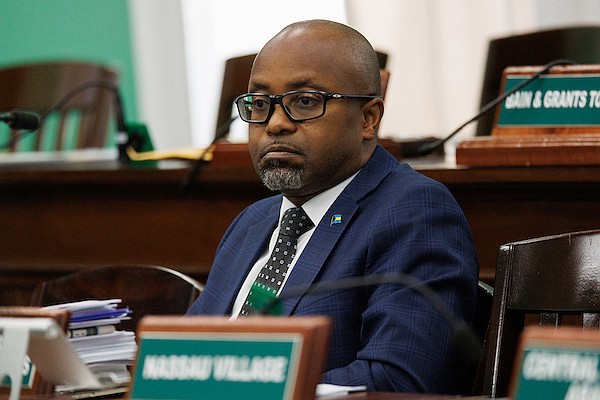
    In a heated parliamentary session that sparked immediate cross-aisle tension, Jamahl Strachan, the newly appointed Executive Chairman of the Bahamas Public Parks and Public Beaches Authority, outlined an ambitious reform agenda yesterday, aimed at pulling the agency out of a damaging spending scandal that marred his predecessor McKell Bonaby’s tenure. The announcement triggered visible friction among lawmakers, with an opposition MP accusing Strachan of publicly scapegoating Bonaby, a moment that drew awkward exchanges and muted laughter across the chamber.

    Rising to speak for the first time in a prominent public role after keeping a low profile through the Davis administration’s first term, Strachan framed his appointment as a critical turning point for the embattled authority. “The Bahamian people deserve to see tangible, visible evidence of how public resources are being invested in their communities,” he told the House, emphasizing his commitment to wholesale institutional overhaul. “We intend to deliver visible, measurable, and meaningful improvements on the ground. Our vision is clear: we are building a more transparent, more accountable, safer, and more technologically advanced authority.”

    Strachan’s remarks did not go unnoticed by lawmakers, with attention immediately turning to Bonaby, who serves as the Member of Parliament for Mount Moriah and held the executive chairman post before Strachan. MPs exchanged quiet glances and made offhand jokes, with Bonaby exiting the chamber briefly before returning shortly after. Long Island MP Dr. Andre Rollins, an opposition figure, quickly condemned the address, claiming Strachan had thrown Bonaby “under the bus” to score political points.

    Strachan pushed back firmly against the accusation, arguing Rollins was twisting his words to create unnecessary conflict: “He is trying to savage the environment by putting his spin on this presentation.” Rollins doubled down on his critique, noting Strachan’s pledge to modernize the agency amounted to an admission that the $141 million spent under Bonaby’s leadership over the past four years delivered no meaningful public benefit.

    Under Bonaby’s tenure, the authority was engulfed in sustained controversy over unchecked high spending and the persistent lack of a independent public audit. Despite repeated public pledges to release a breakdown of expenditures, Bonaby never provided a detailed account of how public funds were allocated.

    Strachan reiterated that reforms to boost transparency are already underway, with new auditing protocols and formal operational procedures already implemented. The authority is currently conducting a comprehensive, unflinching review of its staffing model, operational workflows, procurement processes and overall institutional capacity, he confirmed. Strachan stressed that transparency without accountability is meaningless: “Accountability must walk hand in hand with transparency. Bahamians deserve assurance that every dollar allocated to the authority is spent responsibly and produces real, measurable results.”

    A full review of internal policies, reporting hierarchies and governance controls is currently in progress, Strachan confirmed. Where overlapping responsibilities and inefficiencies are found, departments will be restructured to cut duplication, clarify role boundaries, streamline workflows and strengthen decision-making. “There must be clear lines of authority, clear mandates, and clear accountability,” he said. “Every department must know its role. Every employee must know their responsibilities. Every dollar spent must advance the Authority’s mission.”

    To build public trust, all updated policies, procedures and operational guidelines will be published on the authority’s official website for full public access, he added. Beyond governance reform, Strachan laid out a broad policy agenda centered on public safety, community renewal, digital modernization and regulated commercial use of public spaces.

    Public safety will be a top priority, with an ongoing review of security frameworks for parks and beaches. Proposed upgrades include deploying additional lifeguards, expanding the park warden program, and increasing the use of modern surveillance monitoring across high-traffic public areas. Strachan also outlined plans to beautify green and coastal spaces across New Providence, revitalizing these areas to encourage greater community use and connection.

    Rebuilding public trust will rely on open communication, Strachan said, with plans to expand public outreach initiatives and improve two-way communication between the authority and Bahamian residents. On the digital front, the authority will upgrade its online infrastructure with a fully redesigned website and a dedicated public portal for submitting complaints and service requests.

    A new Digital Permit System is also in the works, which will allow electronic permit issuance for beach and park vendors, event organizers, billboard operators, concessionaires and other commercial users of public spaces. Billboard and signage regulation will be a key early focus, Strachan said, noting that unpermitted advertising structures have proliferated across public lands without proper oversight, consistency or planning.

    Going forward, the authority will implement a clear, transparent permitting framework with standardized rules for location, design, size and placement of all commercial signage. Strachan also announced a nationwide compliance review to target unapproved advertising structures—billboards, signs, and banners—built on public property without required permits. “The rules must apply equally to everyone,” he said. “Those who follow the law should not be undercut by those who ignore it. This initiative is not about punishment; it is about restoring order, fairness, accountability and public confidence in the management of public land.”


  • JLP mourns passing of former councillor Lorna Leslie

    JLP mourns passing of former councillor Lorna Leslie

    The Jamaica political community is mourning the loss of one of its most dedicated public servants, Lorna Joy Leslie, the former long-serving Councillor for the Denham Town Division who passed away on Tuesday following a prolonged battle with illness. Leslie holds the distinction of being the longest-serving Jamaica Labour Party (JLP) representative to ever serve on the Kingston and St Andrew Municipal Corporation (KSAMC), and her decades of advocacy for marginalized communities have left an enduring legacy across the nation.

    In the wake of Leslie’s passing, senior JLP figures have led tributes celebrating her decades of service. Desmond McKenzie, Deputy Leader of the JLP, Member of Parliament for Kingston West, and Jamaica’s current Local Government Minister, offered a heartfelt reflection on Leslie’s decades-long commitment to public life. “Lorna Leslie was a true stalwart of the Jamaica Labour Party,” McKenzie shared in his statement. “She served the residents of Denham Town and the wider West Kingston area with extraordinary distinction until her retirement from office in 2011.”

    McKenzie extended the party’s deepest sympathies to Leslie’s loved ones, acknowledging the sacrifice her family made to enable her decades of public service. “The entire Jamaica Labour Party, and especially the West Kingston political family, send our most sincere and heartfelt condolences to Lorna’s family,” he said. “We are endlessly grateful for her extraordinary contributions to our party and our country, and we thank her family for sharing her with us throughout all these years of service.”

    McKenzie went on to highlight Leslie’s lifelong work advancing the rights and needs of Jamaica’s most vulnerable populations, describing her as an “undisputed champion of the poor and dispossessed.” He emphasized that Leslie was unafraid to speak up for marginalized communities, and her advocacy delivered tangible improvements for countless low-income Jamaicans. “She was fearless and incredibly effective in advocating for the under-privileged across our society,” McKenzie explained. “Lorna’s work, her dedication, and her passion will never be forgotten. She was an exceptional public representative who always went above and beyond to fight for elderly and low-income residents.”

    Leslie’s commitment to supporting vulnerable communities extended beyond her work as a division councillor. She served with notable distinction as chair of the KSAMC’s Poor Relief Committee, and also made significant contributions to the daily operations and improvement of the Denham Town Golden Age Home, a long-term care facility for elderly Kingston residents.

    Leslie’s legacy has already been formally honored by the KSAMC: in 2021, the municipal body unanimously approved a resolution to rename Metcalfe Street, a major thoroughfare in Denham Town, to Leslie Street in recognition of her 35 years of continuous service to the division. The renaming effort enjoyed broad grassroots support, with 174 local residents signing a petition in favor of the change. Even across party lines, Leslie won widespread respect for her work: at the time of the renaming, councillors from both major Jamaican political parties recognized her as a tireless advocate for the poor, praising her unwavering passion and dedication to improving the lives of the most vulnerable members of Jamaican society.

  • Thompson slams BPL for ‘excuses’ over power outages

    Thompson slams BPL for ‘excuses’ over power outages

    A senior opposition lawmaker in the Bahamas has launched a scathing critique of the ruling Progressive Liberal Party (PLP) government, accusing state power utility Bahamas Power and Light (BPL) of hiding behind excuses instead of resolving chronic power outages and holding the administration accountable for broken pledges on affordable, reliable electricity.

    Speaking during parliamentary debate Monday, Kwasi Thompson, the member of parliament for East Grand Bahama, pushed back against a recent public statement from BPL that blamed recent widespread service disruptions on a combination of unexpected equipment breakdowns, underreported underground cable faults, and an earlier-than-usual summer heat wave. Thompson argued that these explanations do nothing to address the daily struggles Bahamian households and business owners face, telling lawmakers that residents have every right to demand concrete action instead of vague justifications.

    “The PLP came into office in 2021 promising voters sweeping changes to the country’s energy sector: lower monthly bills and a far more consistent power supply,” Thompson noted. “Instead, we have seen electricity costs climb steadily year after year. Working families have been forced to slash spending on groceries and other essential household items just to cover their energy bills, while small and medium businesses have seen their operating costs surge — costs that are ultimately passed on to already cash-strapped consumers.”

    Thompson emphasized that the financial relief the government promised to ease energy burdens has never materialized, leaving millions of households across the country facing growing financial pressure. Beyond rising costs, he added, the government has also failed to deliver on its pledge to improve service reliability, particularly for residents of the Bahamas’ outer Family Islands, where persistent outages have been a years-long problem that disrupts every part of daily life. He highlighted a recent island-wide blackout on Cat Island that shut down economic activity during the island’s popular annual Rake and Scrape festival, with local business owners describing the disruption as tragic for their livelihoods.

    “Power outages do more than just turn off the lights — they undercut new economic opportunities, drive away tourists, and upend daily routines for entire communities,” Thompson said. He warned that even New Providence, the country’s most populous island and home to the capital Nassau, is on track for another summer of repeated service interruptions, pointing to recent reports of rolling blackouts across multiple residential communities in the city.

    With the PLP having now completed a full term in office and won re-election, Thompson said the government can no longer shift blame to previous administrations and must accept full responsibility for resolving the country’s long-running energy crisis. “You have had more than enough time to fix these problems,” he said. “At this stage, responsibility rests squarely with the government.”

    Thompson laid out three core questions that Bahamian voters want answered: when will electricity costs come down, when will service reliability improve, and when will the government release a detailed, public roadmap to modernize the country’s aging power infrastructure. For residents of Grand Bahama, he added, the promised benefits of energy reform have yet to materialize, leaving communities still waiting for the change they were promised ahead of the 2021 election.

    He also questioned the timeline for one of the government’s flagship energy reform pledges: allowing Bahamian citizens to take ownership stakes in the national power utility and share in the benefits of a restructured energy sector. While the government frames its current energy agenda as progress, Thompson said that for the vast majority of ordinary Bahamians, what the government calls progress has only translated to greater financial pressure and more uncertainty about access to reliable power.

  • HEART of the problem

    HEART of the problem

    As Jamaica grapples with a persistent, debilitating shortage of skilled tradespeople to fuel its growing construction and infrastructure pipeline, a prominent high school principal has launched a scathing rebuke of the government’s mismanagement of the country’s flagship vocational training agency, the HEART/NSTA Trust, describing the well-funded institution as a “fat calf” that delivers little tangible value for the nation.

    Linvern Wright, principal of William Knibb Memorial High School and immediate former president of the Jamaica Association of Principals of Secondary Schools, made the criticisms during an address at the Jamaica Teachers’ Association’s *Go Public! Fund Education* national forum on Monday. His remarks came just days after Government Senator Kavan Gayle sounded the alarm in the upper chamber of parliament about the acute skilled labor crisis gripping Jamaica’s construction sector.

    Gayle told senators during debate on the 2026 National Housing Trust (Amendment) (Special Provisions) Act that the industry is currently facing devastating shortfalls of qualified workers across every key trade, including carpenters, masons, steel workers, electricians, plumbers, and construction finishers. He outlined multiple overlapping drivers of the crisis: large-scale emigration of skilled tradespeople seeking higher wages overseas, a rapidly ageing domestic workforce, chronically low graduation rates from the country’s vocational training programs, and intensifying competition for limited labor from the wave of major infrastructure projects now underway across the island. The shortage, Gayle confirmed, is already triggering costly project delays, persistent staffing gaps, and widespread productivity dips across the construction sector, which is central to meeting Jamaica’s growing demand for new housing, public infrastructure, and post-disaster school reconstruction.

    Against this urgent backdrop, Wright says the labor gap forces uncomfortable questions about the decades of public investment poured into HEART/NSTA Trust, the country’s primary provider of technical and vocational education and training. He argues that the institution has failed to deliver a return on that investment, noting that no other segment of Jamaica’s education system—from early childhood learning to tertiary education—has received the same level of cumulative funding that HEART has secured over the years.

    “No other sector of education — tertiary, primary, early childhood — none of them has got the amount of funding that HEART has got, and what we have is a really fat calf that is not producing much for the country, so we have got to look at how we deal with these kinds of things in terms of how we fund things,” Wright told the forum.

    Wright recalled that Jamaica’s technical and vocational education ecosystem once thrived thanks to robust, sustained partnerships between secondary schools and private industry, a model that produced strong outcomes through the 1970s and 1980s. Major private companies such as Alcan invested directly in vocational programs at prominent secondary schools including STETHS and Holmwood Technical High School, but Wright says that level of private sector engagement and strategic investment has long since disappeared, leaving once-strong programs rusted and outdated.

    Beyond the specific failures of HEART/NSTA Trust, Wright framed the skilled labor crisis as a symptom of a deeper, long-standing structural failure: successive Jamaican governments have consistently refused to treat education as a top national priority, denying it the level of focused attention and sustained financial commitment granted to other high-priority policy initiatives.

    To illustrate this disparity, he pointed to the extensive, high-profile parliamentary deliberations that preceded the passage of legislation establishing the National Reconstruction and Resilience Authority (NaRRA). “I want all of you to think of how long our Government spent to discuss the NaRRA Bill. They never slept because that was important to them. It was priority. I have never in my life as an educator seen them spend past maybe two hours talking about education. NaRRA was priority, with all its ills and all its issues. It was priority,” Wright said.

    Wright argued that until legislative leaders commit to extended, focused debate and put in place binding commitments to education funding, the sector will continue to lack the resources it needs to meet national needs. To insulate long-term education investment from shifting political priorities and fluctuating economic conditions, he called for the introduction of legislation that enshrines a legally protected minimum level of public investment in education, guaranteeing sustained funding regardless of changes in government direction.