分类: politics

  • UWP leadership extends olive branch amid internal discord, calls for unity and focus on Dominica’s future

    UWP leadership extends olive branch amid internal discord, calls for unity and focus on Dominica’s future

    Against a backdrop of simmering internal divisions that have drawn public scrutiny across Dominica’s traditional and social media spaces, the leader of the opposition United Workers Party (UWP), Dr. Thomson Fontaine, has launched a public push for reconciliation, calling on party members and the broader Dominican public to set aside disagreements and refocus on solving the country’s pressing economic and social challenges.

    In a comprehensive public statement addressing recent unrest within the party, Fontaine acknowledged that divergent opinions are a natural and healthy component of any democratic political organization. But he stressed that the current moment, which he described as a critical crossroads for the island nation, demands an end to infighting that distracts from national priorities. “I welcome differing views as part of a healthy democracy,” Fontaine noted in his address. “However, I will not allow distraction, division, or misrepresentation to derail the serious national conversation we must now have.”

    With the current ruling administration having held power for more than 25 years, Fontaine argued that Dominica has grown stagnant, with widespread economic hardship, missed development opportunities, and a political culture that prioritizes incumbents’ survival over public good. He positioned the UWP as a responsible, solution-focused opposition ready to govern, rather than merely criticize government policy. The UWP leader emphasized that the opposition is prepared to offer tangible, actionable fixes for the challenges that hold the country back.

    A core priority of Fontaine’s address was healing long-simmering rifts within the UWP itself. He revealed that party leadership has spent months working behind the scenes to bridge internal divides and rebuild collaborative relationships between factions. In a direct appeal to disaffected party members, Fontaine extended an olive branch, inviting those who have grown alienated to return to the fold and work through outstanding disagreements openly. Acknowledging his own imperfections as a leader, he emphasized his commitment to centering all productive ideas in the party’s mission to serve the Dominican public. “I do not pretend to be a perfect servant, but I am a public servant committed to taking all ideas on board,” he said.

    To outline the party’s vision for national progress, Fontaine highlighted the UWP’s signature policy platform: the “Ten Pillars to Shared Economic Prosperity for all Dominicans.” The plan centers on five key priorities: reviving Dominica’s struggling agriculture sector, expanding domestic manufacturing to create new jobs and reduce import dependence, unlocking commercial potential in the country’s water resources, reforming the national tax system to create greater fairness, and delivering immediate relief to households grappling with skyrocketing cost of living.

    Fontaine urged UWP supporters to remain calm and disciplined, avoiding provocations that could further deepen divisions. He stressed that the party’s long-term success depends entirely on unity, shared purpose, and constructive engagement with all segments of Dominican society, rather than performative political conflict. He extended his call for collaboration beyond party ranks, appealing to all Dominican citizens regardless of political affiliation to set aside personal and partisan ego for the national good.

    Describing the current moment as a rare opening for national renewal, Fontaine framed collective action as the only path to building a stronger, more prosperous Dominica that delivers opportunity for all residents, particularly young people. “This is not a moment for political gamesmanship. This is a moment for national renewal,” he said, closing his statement with a call for collective wisdom and shared commitment to advancing the country’s development.


  • Dominica’s main Opposition Extends The Olive Branch To disaffected members

    Dominica’s main Opposition Extends The Olive Branch To disaffected members

    In a calculated political move that signals shifting dynamics within Dominica’s party landscape, the Caribbean nation’s primary opposition bloc has extended an invitation to disaffected members of the ruling administration to join their ranks. The outreach, framed by opposition leaders as a unifying step rather than a power grab, comes amid growing reports of internal friction within the governing party, where several lawmakers and grassroots organizers have publicly expressed frustration with policy direction and leadership decision-making in recent months.

    Opposition spokespersons have characterized the overture as an “olive branch” aimed at creating a broader, more cohesive coalition that can challenge the incumbent government’s agenda in upcoming electoral cycles. Leaders of the opposition note that their movement welcomes any political figures who align with their core priorities: boosting economic resilience for small businesses, addressing rising cost of living pressures for working-class households, strengthening transparency in government contracting, and expanding access to affordable healthcare and education across the island’s rural and coastal communities.

    Political analysts based in the Eastern Caribbean note that this outreach follows months of rising discontent within the ruling party, where a number of mid-ranking officials have stepped away from formal roles or criticized leadership publicly over the past year. The opposition’s move is widely interpreted as a strategic effort to capitalize on this internal unrest, building momentum ahead of the next general election, which is scheduled to be held no later than 2025. While it remains unclear how many disaffected ruling party members will accept the invitation, the development has already reshaped public discourse around Dominican politics, forcing both parties to address growing voter frustration with partisan gridlock on key policy issues.

  • Drone Industry Group Accuses Civil Aviation of Regulatory Railroading

    Drone Industry Group Accuses Civil Aviation of Regulatory Railroading

    A high-stakes dispute over new drone regulations has broken out in Belize, with the nation’s leading drone industry trade group leveling serious accusations of rushed, unfair rule-making against the country’s civil aviation regulator that could threaten the future of Belize’s burgeoning unmanned aerial systems (UAS) sector.

    The Belize National UAS Industry Association (BNUIA) claims the Belize Department of Civil Aviation (BDCA) has cut corners on stakeholder input and pushed forward with a flawed regulatory framework that fails to address industry concerns, putting the fast-growing local drone market at unnecessary risk.

    The conflict centers on a planned two-day collaborative line-by-line review of the draft regulations, scheduled for May 21 and 22 of this year. According to the BNUIA, the BDCA unexpectedly slashed the workshop agenda just 24 hours before it kicked off, truncating the session to just a day and a half. When the workshop concluded, regulators and industry stakeholders had only reviewed 24 of the 55 pages included in the proposed regulatory text.

    The remaining 31 unreviewed pages contain provisions that deviate sharply from globally accepted UAS regulatory standards, the association says. BNUIA leaders add that their formal request to reconvene the workshop to finish the full review was rejected outright by BDCA leadership.

    Further controversy emerged over the meeting minutes distributed to participants after the workshop. The BNUIA says the original draft described the review as fully completed, a characterization that participants refused to sign off on. The wording was only altered to reflect that only a partial review of concerns had been completed after industry pushback. BDCA director Nigel Carter frames the disagreement over the minutes as a simple miscommunication, explaining that the document was intended to outline workshop goals and note that stakeholders would submit additional feedback post-meeting.

    Carter pushed back against the industry’s claims of a rushed process, noting that public consultation on the draft regulations first launched back in July 2025 – nearly 11 months before the May workshop. He added that the BDCA granted multiple extensions to the comment period at the industry’s request, with the final extension ending on January 5, 2026, and that the department continued to accept public input even after that date.

    Following the workshop, Carter sent a formal letter to all stakeholders setting a May 29 deadline for submission of any remaining outstanding concerns. The BNUIA points out that this same letter laid out BDCA’s plan to publish a final version of the regulations by June 30, with a possible future forum only to explain how public comments were addressed, not to revisit unresolved disagreements. For the industry association, this timeline confirms that the BDCA intends to finalize the rules before all stakeholder concerns are fully resolved.

    Carter refuted this claim in comments to local outlet News 5, stressing that the consultation process remains open. After the department analyzes all submitted feedback, a revised draft will be released for additional public review, and a second full public consultation session will be held, he said. “It is just that we had to say, listen, we are at a point now where we must move on,” Carter explained, noting that the department has a range of other mandatory regulatory responsibilities to advance. He committed that all feasible changes to the draft will be made based on feedback, and that the BDCA will publish a clear public rationale for any adjustments that are not adopted.

    Transparency has emerged as a second core flashpoint in the dispute. The BNUIA filed a Freedom of Information Act (FOIA) request on April 24, 2026, seeking records from the BDCA, the civil aviation ministry’s CEO, and other relevant government agencies. By law, agencies are required to respond to FOIA requests within 30 days, but the association says that 30-day window has now expired with no acknowledgement or response from any of the named agencies. Carter responded that the requested records are currently being compiled and will be released to the association within the next week to 10 days.

    The industry association also argues that the proposed regulations are largely a copy-paste of international rules that are poorly suited to Belize’s local drone market, imposing unnecessary heavy burdens on small local operators and stifling the sector’s growth. BNUIA claims the rushed process is driven primarily by a desire to meet international auditor requirements rather than to craft rules that support the development of Belize’s domestic drone industry.

    Carter countered that Belize has had a binding obligation to implement International Civil Aviation Organisation (ICAO) standards since the country joined the Convention on International Civil Aviation back in 1991. Aligning local rules with global international standards improves aviation safety for all operators, he explained, creating a consistent, predictable regulatory environment that both local and foreign operators can rely on when operating in Belizean airspace.

    The disagreement comes as drone technology emerges as a fast-growing economic sector in Belize, with applications ranging from agricultural mapping and infrastructure inspection to tourism and delivery services, making the final shape of the country’s first comprehensive UAS regulations critical to the sector’s long-term trajectory.

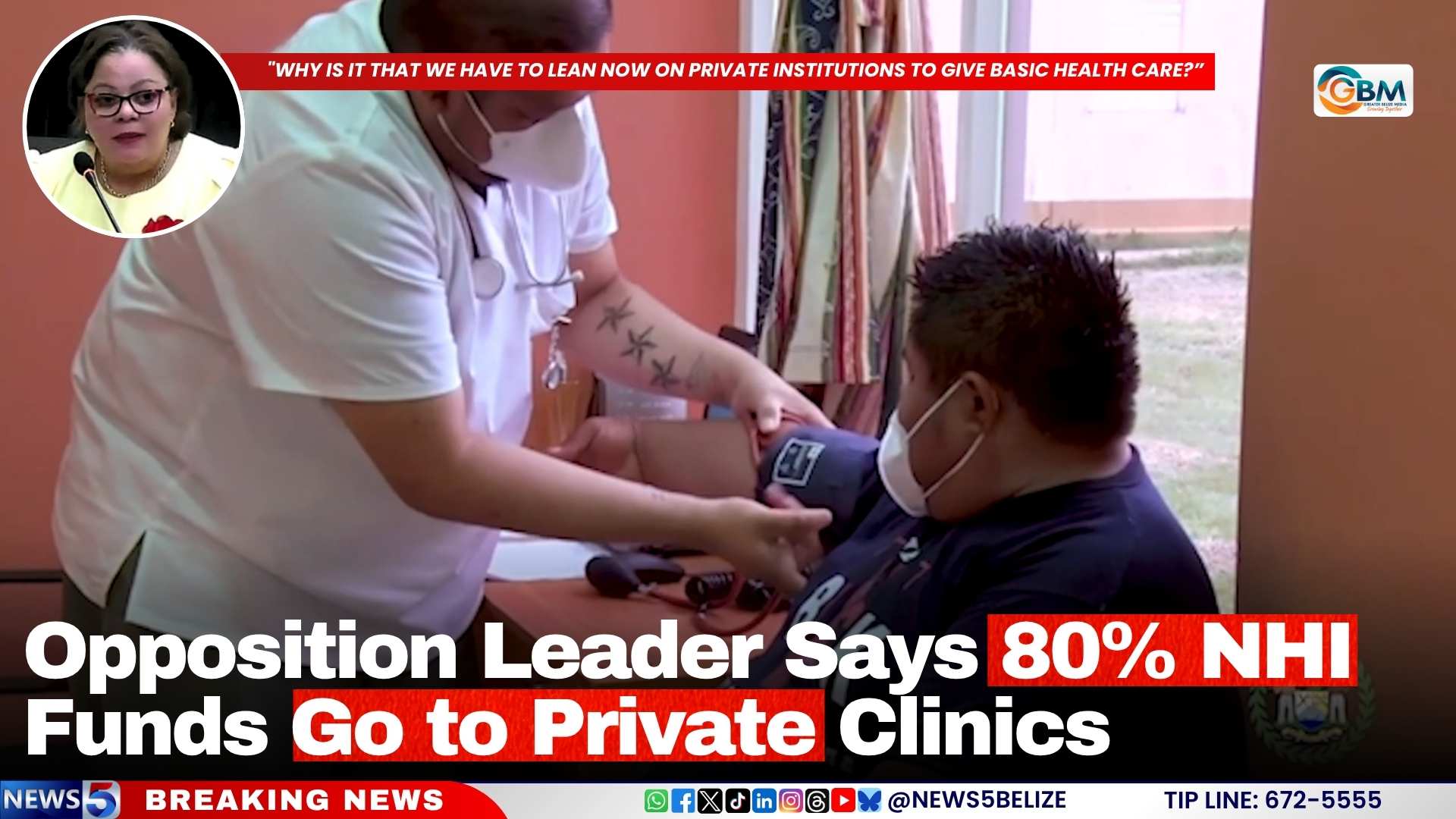
  • Opposition Leader Says 80% NHI Funds Go to Private Clinics

    Opposition Leader Says 80% NHI Funds Go to Private Clinics

    On Thursday, June 8, 2026, Belize’s House of Representatives approved the second reading of the National Health Insurance Authority Bill 2026, capping off a heated debate that exposed deep partisan divides over the future direction of the Central American nation’s public healthcare system. The core point of contention revolves around the government’s growing reliance on private clinics to deliver services under the existing National Health Insurance (NHI) program, with the opposition accusing the ruling administration of sidelining public healthcare institutions to funnel the vast majority of program funds and contracts to private operators.

    Opposition Leader Tracy Panton levelled the sharpest critique of the government’s model during floor remarks, revealing that 80 percent of all NHI service contracts are currently awarded to private healthcare facilities, leaving just 20 percent for public sector providers. She questioned the logic of outsourcing core basic healthcare services to private entities, arguing that public institutions are better positioned to deliver equitable, universal primary care to all Belizeans. Panton called for a redirection of existing NHI procurement funds to upgrade underfunded public healthcare facilities, rather than continuing to channel resources to the private sector.

    Panton further warned that the new legislation, which formalizes the structure of the NHI authority, concentrates excessive regulatory power in the executive branch without adequate accountability safeguards. She argued that the current trajectory risks creating a parallel funding system that socializes financial risk for taxpayers while concentrating private profit for healthcare operators, warning that without urgent oversight reforms the program could become another corrupt, mismanaged public body similar to the troubled former LIU.

    Prime Minister John Briceño, who frames the NHI bill as a foundational long-term nation-building initiative, defended the mixed public-private delivery model on efficiency and cost-saving grounds. Briceño argued that contracting both public and private providers allows the NHI program to leverage bulk purchasing power to drive down service and medication costs for the system. He illustrated the savings with a concrete example: while an average patient pays $50 out of pocket for a private clinic appointment, the NHI negotiates a rate of just $12 per visit, thanks to the guarantee of more than 4,000 patients annually for participating providers. Briceño noted that this same bulk negotiation principle applies to pharmaceutical procurement, delivering broader savings across the entire program.

    Health and Wellness Minister Kevin Bernard did not directly refute Panton’s 80-20 funding split claim, but pushed back against her critique by highlighting the addition of seven new public sector NHI providers across the country, including new polyclinics in high-demand population centers Orange Walk, Belmopan, and San Ignacio. The bill now moves forward in the legislative process, as debates over the balance between public and private healthcare delivery in Belize continue to dominate political discourse.

  • GBB moet SRD 128 miljoen betalen aan vonnissen, slechts SRD 32 miljoen op begroting

    GBB moet SRD 128 miljoen betalen aan vonnissen, slechts SRD 32 miljoen op begroting

    Suriname’s Ministry of Land Policy and Forest Management (GBB) is confronting a significant budget gap as it prepares to meet financial obligations stemming from binding court judgments for the 2026 fiscal year. According to budget documents released by the ministry, the department estimates it will require a total of SRD 128 million to satisfy all outstanding monetary obligations attached to court rulings against the state. However, constrained by tight national budget limits, only SRD 32 million has been allocated to the dedicated line item for court judgment payments, leaving a massive SRD 96 million deficit between identified needs and available funding.

    GBB officials have confirmed that there are roughly 25 active court rulings that impose enforceable financial responsibilities on the Surinamese state. Of these outstanding cases, the most urgent claims collectively add up to approximately SRD 55 million alone – an amount that already far outpaces the full SRD 32 million allocation granted for all 2026 obligations.

    In its budget documentation, the ministry noted that it has established a separate, dedicated budget line specifically for these court-ordered payments, as part of its formal commitment to fulfilling all judicial rulings in a timely manner. All payments stemming from judicial decisions against the state are supposed to be drawn from this dedicated allocation.

    The SRD 32 million allocation approved for 2026 actually represents a modest increase from the original budget proposal submitted in September 2024, which only earmarked SRD 23 million for court judgments. Even with the adjustment in the amended budget note, the total available funding still falls 75 percent short of the ministry’s projected full-year need.

    Notably, the published budget documents do not include detailed breakdowns of the specific cases covered by the outstanding judgments, nor do they identify which claims have been classified as urgent, or provide timelines for when the obligations were first incurred. What the budget documentation does make clear is that the ministry has fully accounted for the substantial financial impact of these rulings, and has openly acknowledged that current appropriations are insufficient to settle all outstanding obligations in full during 2026.

    This funding shortfall raises pressing questions about the ministry’s ability to comply with all judicial orders within the required timelines in the coming year. Based on information included in the budget documents, GBB plans to prioritize settling the most urgent claims first, leaving many lower-priority financial obligations without full funding for the foreseeable future.

  • Trump’s $100,000 H-1B visa fee is unlawful, US judge rules

    Trump’s $100,000 H-1B visa fee is unlawful, US judge rules

    In a landmark legal ruling that has sent ripples through America’s immigration and employment sectors, a federal judge has determined that the $100,000 H-1B visa fee imposed by the Trump administration was implemented outside the bounds of U.S. law. The H-1B visa program, a long-standing framework that allows U.S. companies to hire skilled foreign workers in specialized fields such as technology, healthcare, and engineering, has been the subject of fierce policy debate for decades. The Trump administration first introduced the steep fee increase as part of a broader set of immigration restrictions aimed at curbing what it framed as excessive reliance on foreign labor and protecting domestic job opportunities for U.S.-born workers.

    The legal challenge to the policy was brought by a coalition of business groups, technology companies, and industry associations who argued that the administration had overstepped its executive authority when it imposed the fee. They claimed the unprecedented fee would create crippling financial burdens for businesses that rely on the H-1B program to fill critical skill gaps that cannot be met by the domestic workforce, particularly in fast-growing tech sectors.

    In his final ruling, the judge agreed with the challengers, finding that the administration had failed to follow proper administrative rule-making procedures required by federal law when enacting the fee change. The decision marks a significant reversal of one of the Trump administration’s most controversial immigration policies, and it is expected to provide immediate relief to thousands of employers who would have faced the exorbitant cost. The ruling also reignites debates over the balance of executive power in shaping immigration policy, and it comes as the future of the H-1B program remains a key point of contention in national policy discussions. Supporters of the program have welcomed the ruling, noting that it preserves access to global talent that drives U.S. economic growth and innovation, while critics of the H-1B program have expressed disappointment, arguing that higher fees were necessary to protect domestic workers.

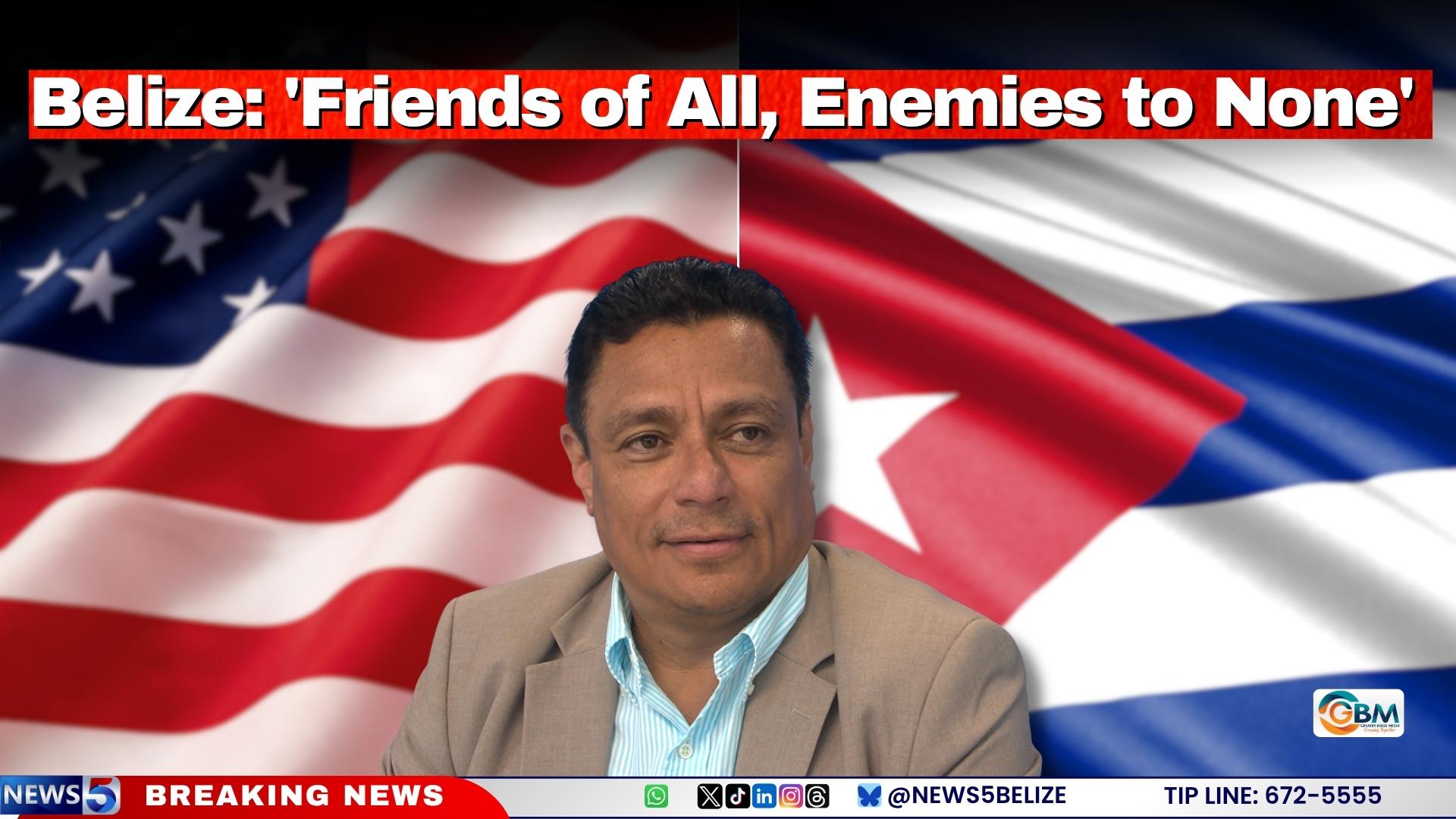
  • Belize: ‘Friends of All, Enemies to None’

    Belize: ‘Friends of All, Enemies to None’

    As Belize navigates an increasingly fragmented and complex global geopolitical landscape, the Central American nation’s long-standing core diplomatic principles of self-determination and non-intervention in the affairs of other states remain fully intact, according to the newly appointed Chief Executive Officer of Belize’s Ministry of Foreign Affairs.

    In an exclusive interview with local outlet News 5, the top foreign affairs official, identified only as Arnold, opened up about how historical alliances continue to shape Belize’s modern foreign policy, specifically highlighting the decades-long friendship between Belize and Cuba. He emphasized that Belize has not forgotten the critical support Cuba provided during Belize’s fight for independence and in the fragile early years of its sovereignty as a young nation. This deep-rooted solidarity, Arnold noted, continues to guide the country’s diplomatic decision-making to this day.

    “You don’t turn your back on the partners that stood by you when you needed it most,” Arnold stated. “True friendship does not get discarded when global pressures shift.”

    Despite this unwavering commitment to the bilateral friendship, Arnold acknowledged that the long-running Cuban Medical Brigade program in Belize was always structured as a temporary initiative. With the program’s scheduled end rapidly approaching, he confirmed that Belize’s Ministry of Foreign Affairs and Ministry of Health are currently grappling with weighty policy decisions. The challenge stems from Belize’s heavy reliance on Cuban medical professionals to fill critical specialist healthcare positions that would otherwise remain unfilled due to local staffing gaps.

    Arnold was careful to clarify that Belize’s close ties to Cuba do not equate to opposition to the United States, Belize’s largest trading partner by a significant margin. “Our diplomatic approach has always been clear: extending friendship to one nation does not require us to treat another as an adversary,” he explained. “We maintain an open posture of friendship to every country in the global community, and we do not seek out conflict with any nation.”

    This balanced diplomatic approach was on full display just days before the interview, when Belize joined neighboring Mexico to deliver a 1,700-tonne shipment of humanitarian aid to Cuba. The aid arrives as Cuba continues to grapple with the far-reaching impacts of a long-standing U.S. oil blockade that has reshaped daily life for the island nation’s approximately 10 million residents.

  • Opposition Backs Disaster Funding, But Wants Every Dollar Tracked

    Opposition Backs Disaster Funding, But Wants Every Dollar Tracked

    In a House of Representatives sitting held Thursday, Belize’s parliamentary opposition has confirmed it will greenlight emergency disaster and public health crisis funding, but only on the condition that every cent of public money is subjected to rigorous transparency tracking and parliamentary oversight. Opposition Leader Tracy Panton emphasized that the bloc has no intention of blocking critical emergency resourcing, but is standing firm on requirements that all spending adhere to strict accountability and prudent financial management standards for the Belizean public.

    Panton directly addressed Prime Minister Briceño during the debate, calling on the administration to deliver on its pledge of the “gold standard of transparency.” She reiterated that permanent parliamentary oversight must be baked into the management of all emergency appropriations, to ensure funds are used for their intended public purposes.

    Following the discussion, Minister of Public Service and Disaster Risk Management Henry Charles Usher updated the House on pre-emptive drought preparedness measures already underway. He confirmed that the government has activated its anticipatory disaster funding mechanism, issuing early cash advances to agricultural producers across the northern and western districts of Corozal, Orange Walk and Cayo. The region is bracing for a projected prolonged drought throughout 2026, and the allocated funding will be directed to upgrading on-farm water storage infrastructure, expanding irrigation access, and procuring drought-resistant seed varieties for smallholder and commercial farmers.

    Usher noted that while the initial advance disbursements were modest in size, the early activation of the fund represents a proactive shift in disaster planning that prioritizes mitigation before a crisis escalates. He added that even though meteorological forecasts predict a below-average Atlantic hurricane season for 2026, the government cannot afford to be complacent about climate-related disaster risk, making advance preparedness funding all the more critical.

    The funding motion ultimately earned bipartisan support from all members of the House, and has now been forwarded to the Finance and Economic Development Committee for detailed procedural review before moving toward final approval.

  • Victims to be prioritised in criminal justice reforms

    Victims to be prioritised in criminal justice reforms

    Barbados has kickstarted a transformative overhaul of its national criminal justice framework that shifts the long-standing institutional focus from offender prosecution to victim-centered support and healing. The launch of the initiative took place Monday at the opening of a high-profile two-day stakeholder symposium held at the Radisson Hotel, where government officials outlined a plan to build a rigorous, compassionate and tightly coordinated support system that ensures trauma survivors do not have to navigate the aftermath of violence and crime on their own.

    The symposium brought together a cross-section of key stakeholders, including senior judiciary representatives, officers from the Barbados Police Service, officials from multiple government ministries, licensed social workers, trauma counsellors, and leaders from local non-governmental organisations focused on victim support. Addressing the gathered delegation, Minister of Legal Affairs and Criminal Justice Michael Lashley pledged rapid, tangible action to close long-standing gaps in institutional care for vulnerable crime survivors.

    Lashley acknowledged that while Barbados’ existing criminal justice system has long been recognised as fair and impartial, its historical structure has always prioritised the investigation and prosecution of offenders over the physical, emotional and legal healing of the people harmed by crime. “We have built our criminal justice system around the investigation of offences and the prosecution of offenders. One thing you can say about our system is that it is fair and that it is impartial, but we have not focused centrally on victims. How we treat the most vulnerable among us is a measure of who we are as a nation. If we are working on rebuilding the Barbadian civilisation, this matters,” Lashley told attendees.

    Drawing on decades of professional experience as a practicing attorney, Lashley shared first-hand accounts of the profound fear and secondary trauma that victims often face when navigating the country’s current legal ecosystem. He recalled a specific case from his private practice involving a domestic violence survivor who had successfully obtained a court-issued protection order, but was left trembling in terror after the perpetrator easily accessed her confidential safe housing location.

    Lashley explained that the current fragmented system, lacking a centralised, cross-agency coordination unit, leaves victims exposed to unnecessary harm when they enter the often-intimidating court environment. Survivors are regularly forced to relive traumatic events repeatedly during testimony and face aggressive cross-examination from experienced defence legal teams, he added. “Ask yourself what happens to the victim after the police report is filed. Who calls them weekly to check and see if they are safe? Who explains what bail means? Imagine a victim going into the court for the first time in their life, having to face trained and experienced legal counsel in a courtroom with jurors, and then the media is there too to report everything. The system itself can feel like a further burden through delays and complexity,” Lashley argued.

    Under the proposed reform plan, a dedicated specialised victim advisory unit will likely be established to conduct individual needs assessments, advocate on behalf of survivors within the legal system, and connect victims to critical support services including trauma counselling, emergency alternative housing, and personalised legal guidance. Lashley noted that recent legislative updates, including the recently passed anti-gang legislation, upcoming parliamentary debates on a specialised gun court, and proposed amendments to the Evidence Act, all work hand-in-hand with the new victim-centered reforms to strengthen overall public safety.

    To address deep-rooted systemic gaps, the Ministry of Legal Affairs and Criminal Justice has already conducted extensive cross-sector consultations with the Office of the Director of Public Prosecutions, national prison authorities, domestic violence and victim shelters, and individual trauma survivors to gather on-the-ground insight. Preliminary findings from these consultations confirmed that while a range of victim support services currently exist across Barbados, they operate in isolated institutional silos that create gaps in care, eroding public trust in the rule of law.

    Lashley emphasised that legislative change means little without consistent, robust implementation and enforcement, particularly when it comes to domestic violence protection orders. “An order on paper is only as good as its enforcement. We need to ensure that victims understand how to report breaches, and that breaches are responded to in a swift manner. Any new system must be designed with survivors, not just for them. Their feedback must drive continuous improvement,” he said.

    The minister assured attending stakeholders that the outcomes of the two-day symposium would not be left unused, pledging that a dedicated inter-agency working group would be formed immediately after the event’s closing session to translate symposium recommendations and priority actions into enforceable operational policy. “We are not just about talk. I don’t want out of this symposium a document dated and signed and then there is no action on it. There will be action on it. No victim should navigate the aftermath of crime alone,” he stated.

    Marilyn Rice-Bowen, event chairperson and a victim support program practitioner with 22 years of direct experience, echoed Lashley’s call for tangible action, stressing that the symposium must move beyond abstract academic debate to deliver concrete structural change for vulnerable Barbadian citizens. “Over the next two days, we will not be debating whether Barbados needs a national victim support framework; that question has already been answered. What we will be doing is something more purposeful. We will be designing it together with rigour, with compassion, and with a commitment to those who need it most at the centre of every decision we make,” Rice-Bowen said.

  • CARICOM Secretariat hosts Guyana Defence Force Senior officers for eecurity Engagement

    CARICOM Secretariat hosts Guyana Defence Force Senior officers for eecurity Engagement

    In a move designed to deepen ties with regional security bodies across the Caribbean, the CARICOM Secretariat recently hosted a cohort of senior military leaders from the Guyana Defence Force (GDF) participating in the 20th iteration of its Senior Command and Staff Course (SCSC #20).

    The official visit, held on June 4, centered on a structured knowledge-sharing workshop organized by the Secretariat’s specialized Crime and Security Programme, according to an official statement released by CARICOM. The interactive session was designed to give participating GDF officers firsthand, nuanced insight into how CARICOM operates to advance and synchronize cross-border security initiatives across the Caribbean bloc.

    Leading the discussion were two senior leaders from the CARICOM Crime and Security Programme: Sherwin Stephenson, the programme manager, and Mareesha Stephens, the programme’s project officer. Over the course of the workshop, participants engaged in open dialogue and collaborative problem-solving, exploring the CARICOM framework for tackling both longstanding and newly emerging crime and security risks that impact countries across the region. Attendees also received a detailed briefing on how the regional bloc facilitates functional cooperation between its 15 member states and specialized regional institutions, with the goal of building more robust, coordinated collective responses to shared security threats.

    Beyond the technical policy discussions, the GDF delegation took part in a guided tour of the CARICOM Secretariat headquarters in Georgetown, Guyana. The tour gave officers the chance to gain a clearer understanding of the organization’s governing structure, core mandates, and overarching mission to drive deeper regional integration and cross-sector cooperation across the Caribbean. As a formal gesture of gratitude for the Secretariat’s hospitality and the opportunity for engagement, Captain Stephion Gordan of the GDF delegation presented a commemorative plaque to Stephens, in a moment captured by CARICOM Communications photographers.

    CARICOM officials emphasized that the visit underscores the critical value of sustained, intentional partnership between the regional bloc and national defense and security agencies across the Caribbean. It also reaffirmed the organization’s longstanding commitment to developing aligned, collective strategies that strengthen cross-border crime prevention, deepen security cooperation, and uphold lasting stability for all CARICOM member states.