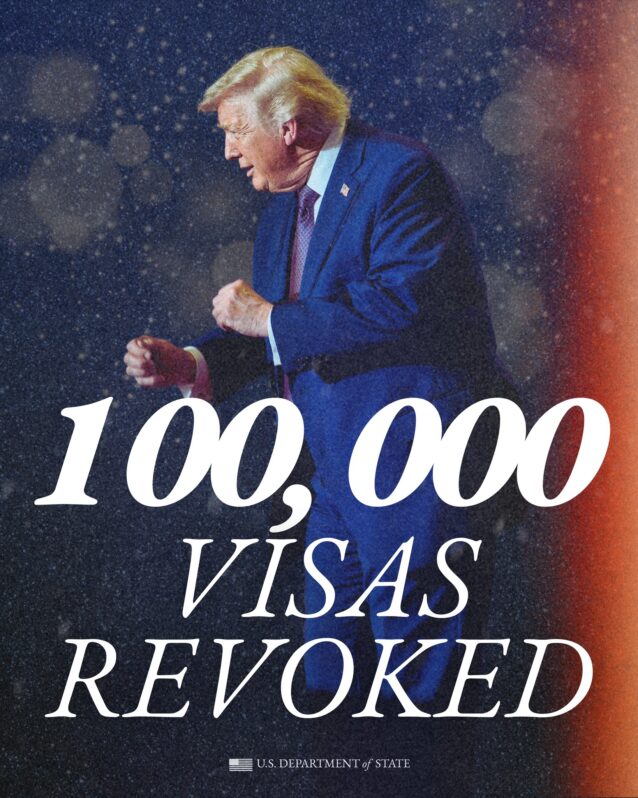
In a landmark legal ruling that has sent ripples through America’s immigration and employment sectors, a federal judge has determined that the $100,000 H-1B visa fee imposed by the Trump administration was implemented outside the bounds of U.S. law. The H-1B visa program, a long-standing framework that allows U.S. companies to hire skilled foreign workers in specialized fields such as technology, healthcare, and engineering, has been the subject of fierce policy debate for decades. The Trump administration first introduced the steep fee increase as part of a broader set of immigration restrictions aimed at curbing what it framed as excessive reliance on foreign labor and protecting domestic job opportunities for U.S.-born workers.
The legal challenge to the policy was brought by a coalition of business groups, technology companies, and industry associations who argued that the administration had overstepped its executive authority when it imposed the fee. They claimed the unprecedented fee would create crippling financial burdens for businesses that rely on the H-1B program to fill critical skill gaps that cannot be met by the domestic workforce, particularly in fast-growing tech sectors.
In his final ruling, the judge agreed with the challengers, finding that the administration had failed to follow proper administrative rule-making procedures required by federal law when enacting the fee change. The decision marks a significant reversal of one of the Trump administration’s most controversial immigration policies, and it is expected to provide immediate relief to thousands of employers who would have faced the exorbitant cost. The ruling also reignites debates over the balance of executive power in shaping immigration policy, and it comes as the future of the H-1B program remains a key point of contention in national policy discussions. Supporters of the program have welcomed the ruling, noting that it preserves access to global talent that drives U.S. economic growth and innovation, while critics of the H-1B program have expressed disappointment, arguing that higher fees were necessary to protect domestic workers.